Fun Is a Practice, Not a Reward

“If you’re not having fun, you’re not learning. There’s a pleasure in finding things out.” – Richard Feynman

What if fun isn’t a reward for getting everything done—but a skill that helps us live better right now?

Recently as I was driving ten-year-old Miss O to a rehearsal for a musical, she said, “I always have fun at rehearsals.” Six-year-old Mr. D had a similar answer as I was bringing him home from baseball practice the other night. I asked what he liked best – the base running practice, the scrimmage, the throwing contest? His answer was, “I like all of it.

What kids know and grown-ups seem to forget (speaking for myself) is that fun is a day-to-day practice, not a reward only to be savored when we get everything else done. Fortunately, my guest for The Life of Try podcast this week, Mike Rucker, PhD, reminded me that parents have some agency in this too. We aren’t just Uber drivers getting our kids to the places they need to go. And that prompted me to put on my mitt and take part of the scrimmage at Mr. D’s baseball practice. The ball didn’t come to me but I enjoyed standing in the field and being part of the fun immensely for a couple of innings.

In this episode of Life of Try, I talk with Mike Rucker, PhD author of The Fun Habit, about the science-backed value of fun and why it matters for stress relief, resilience, creativity, relationships, and well-being. We discuss positive psychology, the “sandwich generation,” burnout, parenting, savoring joyful moments, and how to create simple systems that bring more play, rest, and connection into daily life.

Here are some of my favorite takeaways from this great book and fantastic, science-backed conversation about fun:

  • Fun is not frivolous — it’s restorative.
    Being intentional about fun can help reduce burnout, restore energy, and bring more meaning into everyday life.
  • Happiness and fun are not the same thing.
    As Mike says, “Happiness is a state of mind, but fun is something we can do.”
  • Agency matters.
    When we feel like we have a say in how we spend our time and energy, life becomes more enjoyable and sustainable.
  • Small “pattern interrupts” can change everything.
    Breaking our routines in creative ways can open up more space for joy, connection, and better habits.
  • Fun looks different for everyone.
    It doesn’t have to be loud, social, or high-energy. Fun can be calm, quiet, and personal.
  • Burnout narrows our thinking.
    When we’re depleted, we tend to rely on autopilot. Renewal helps us think more creatively, flexibly, and expansively.
  • Enjoyment is a powerful predictor of sticking with a habit.
    If you want to build sustainable habits, choose approaches you genuinely like—not just ones you think you “should” do.
  • You don’t need a total life overhaul.
    Reclaiming fun can start with just a few intentional hours, a simple list, or one activity that brings you back to yourself.
  • The “Fun File” is a practical tool.
    Keeping a running list of activities that genuinely light you up can make it easier to choose joy on purpose.
  • Making life better doesn’t always mean adding more.
    Sometimes it means removing, reframing, outsourcing, or rethinking routines that quietly drain you.

Here is a clip of one of Mike’s eye-opening points – that having fun is an upward spiral that creates more capacity for challenge and growth:

This conversation is for anyone looking for better work-life balance, more joy, and practical strategies for living with greater intention.

Here are some other ways you can listen and watch this great episode:

When should we celebrate progress—only at the finish line, or all along the way?In this episode of The Life of Try, Wynne Leon explores the power of small wins, tiny habits, and incremental progress. Drawing from a personal story about preparing her home for an Airbnb experiment during the World Cup in Seattle, Wynne reflects on what it means to keep going when growth is messy, nonlinear, and full of setbacks.Along the way, she connects insights from BJ Fogg, creator of Tiny Habits and director of Stanford’s Behavior Design Lab, with the long-term philosophy of Toyota’s Kaizen culture, where small daily improvements add up over time, and the practical courage found in the checklist mindset associated with Captain Sullenberger. This episode is about personal growth, habit formation, celebrating small victories, and learning to recognize that progress doesn’t have to be dramatic to matter.In this episode, we discuss: → Why celebrating small wins can help you stay motivated even when progress feels slow or messy → How BJ Fogg’s Tiny Habits approach shows that tiny celebrations can reinforce lasting behavior change → What Toyota’s Kaizen philosophy teaches about the long-term power of small, consistent improvements → How checklists and small-step courage can help you keep going when you feel overwhelmed or stuck → Why growth often looks nonlinear, and how to recognize progress before the final result arrives → How honoring effort along the way can help you build resilience, confidence, and momentum If you’ve ever felt stuck, overlooked your own progress, or wondered whether the little steps count, this conversation will remind you that they do. Small wins matter. Tiny steps matter. And trying counts, even before the big outcome arrives.🌍 Show notes and more inspiration: https://wynneleon.com🔔 Subscribe for more: Subscribe to The Life of Try for more conversations on: personal growth, creativity, reinvention, resilience, writing, and mindset.ABOUT ME: Hi, I’m Wynne Leon — host of The Life of Try, a personal growth and self-improvement podcast exploring resilience, reinvention, uncertainty, and the courage to keep trying. Through thoughtful interviews, reflective conversations, and real-life stories, I share insights to help you navigate change, get unstuck, and move forward with more intention.🌍 Website: https://wynneleon.com━━━━━━━━━━━━━━━🎥 Watch Next➡️ Letting Go Of Outcomes: The Mindset That Keeps You Moving➡️ 48: How to Get Unstuck: Michael Yang on Saying Yes, Resilience and Coming Alive➡️ How to Reclaim Fun in Adult Life | Mike Rucker, PhD, on Joy, Burnout and the Fun Habit🔗 CONNECT WITH ME:• Website:→ https://wynneleon.com/• Instagram:→ https://www.instagram.com/wynneleon/• Facebook:→ https://www.facebook.com/wynne.leon/
  1. How to Celebrate the Try
  2. How to Reclaim Fun in Adult Life; Michael Rucker, PhD on Joy, Burnout, and The Fun Habit
  3. Reinvention, Resilience and The Courage to Try| Lindsey Goldstein on Gap Year
  4. 51: Letting Go of Outcomes: The Mindset That Keeps You Moving
  5. 50: How to Write the Book You've Been Meaning to Write | Dr. Victoria Atkinson (Slivers)

Links for this episode:

How to Reclaim Fun in Adult Life | Mike Rucker, PhD on Joy, Burnout and the Fun Habit transcript

The Fun Habit on Amazon and Barnes & Noble

Mike Rucker, PhD’s website

Michael Rucker, Ph.D. on LinkedIn

(featured photo from Pexels)

Lessons in Persistence: A Child’s Perspective

Children are great imitators, so give them something great to imitate.” – unknown

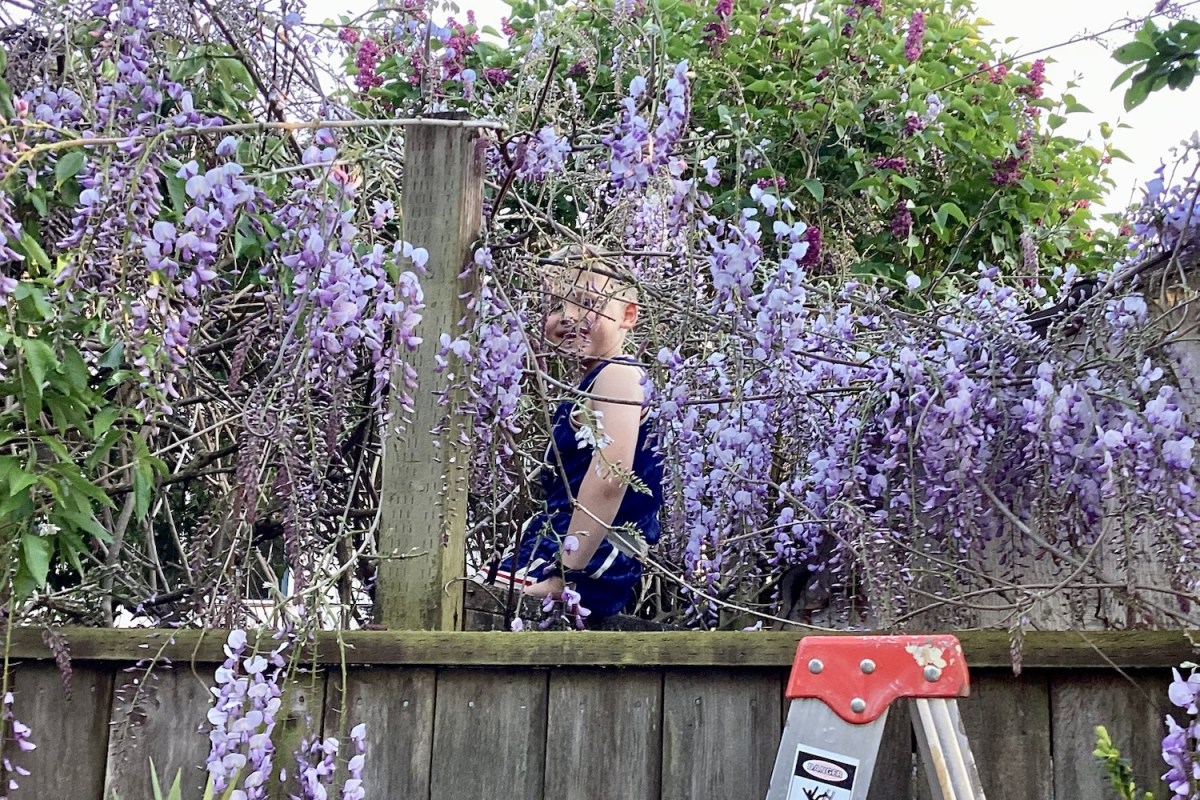
On any given sunny day, it’s not a question of if we’ll hit something over the fence, it’s a question of which fence. In fact, six-year-old Mr. D hits baseballs over the fence so often, we call them “neighbors” instead of “homers” because they are our opportunity to visit our neighbors.

So it was no surprise that on one of the many warm and lingering light evenings last week, Mr. D and I were playing in the back yard and lost a stomp rocket over the fence. But it went into our neighbor’s yard that is not next door but lives on the street behind us. Those retrievals mean we have to either walk around the block to knock on the door…or try to retrieve it without leaving our yard by leaning over the fence to grab it if it hasn’t fallen too far.

On this occasion, we looked over the fence and saw the stomp rocket was stuck in a tree and almost in reach. So Mr. D tried to use a rake to get it. It fell lower.

Then we got out the duct tape, created a sticky end of a pole and tried to grab it. It was two inches too short.

By this point our yard was strewn with the ladder, rake and every other tool we’d considered for the project. I decided to attempt one last thing by using the extendible branch trimmer. I touched the rocket, it shifted, but I didn’t get it.

So I said to Mr. D, “We should just walk around and get it from their yard.

He looked at me and said, “We can’t give up now!

I had to chuckle. Serves me right for teaching my kids to try and to not give up. Then they parrot it back to me at all the important moments.

I gave it one more try and bingo, we got it.

I’m still laughing. And am taking it as confirmation that I chose the right name for my podcast, The Life of Try. 🙂

(featured photo is Mr. D during the retrieval process)

You can find me on LinkedIn: https://www.linkedin.com/in/wynneleon/ and Instagram @wynneleon

Please check out the The Life of Try podcast Where trying becomes the spark for personal growth, discovery, and re-invention!

The Life of Try

Sometimes magic is just someone spending more time on something than anyone else might reasonably expect.” – Teller

In 44 episodes of producing the How to Share podcast, I realized that while I’m passionate about how to share, what I’m really interested is trying. Trying is a little upstream from sharing. We try experiments in our life, we learn, and then we share.

Trying feels right to me because matches my background as an engineer and consultant. Also, I see it in my kids as they develop new skills. And I’m fascinated by how we conduct experiments as foundational part of building confidence.

So I’ve spent some time reswizzling the podcast as The Life of Try – a podcast focusing on where innovation, reinvention, personal growth, and discovery begin with one simple choice: to try. Even when it’s uncomfortable. Even when you’d rather not. Even when life makes the decision for you.

The Life of Try will feature conversations with authors, scientists, athletes, researchers, coaches, and more to help inspire your personal try-cycle. And I’m debuting a brand-new segment—one that “reverse engineers” what world-class trying really looks like.

In this episode our case study is professional climber Alex Honnold, whose headline-making feats—from free soloing El Capitan in Yosemite to scaling the Taipei 101 Tower this January—offer a masterclass in what it takes to attempt the extraordinary.

I break down the real ingredients behind big outcomes: preparation, learning from others, and staying steady through setbacks—and how those same principles apply to the goals we’re chasing every day. Whether you’re gearing up to speak in public, throw a pitch, or learn a new song, you can borrow these lessons and put them to work in your own try-cycle.

This is The Life of Try.

Here’s a teaser clip that shows a bit of what I think is so compelling about Alex Honnold:

Here are some ways you can listen and watch this inspiring episode:

Please listen, watch, provide feedback and subscribe.

When should we celebrate progress—only at the finish line, or all along the way?In this episode of The Life of Try, Wynne Leon explores the power of small wins, tiny habits, and incremental progress. Drawing from a personal story about preparing her home for an Airbnb experiment during the World Cup in Seattle, Wynne reflects on what it means to keep going when growth is messy, nonlinear, and full of setbacks.Along the way, she connects insights from BJ Fogg, creator of Tiny Habits and director of Stanford’s Behavior Design Lab, with the long-term philosophy of Toyota’s Kaizen culture, where small daily improvements add up over time, and the practical courage found in the checklist mindset associated with Captain Sullenberger. This episode is about personal growth, habit formation, celebrating small victories, and learning to recognize that progress doesn’t have to be dramatic to matter.In this episode, we discuss: → Why celebrating small wins can help you stay motivated even when progress feels slow or messy → How BJ Fogg’s Tiny Habits approach shows that tiny celebrations can reinforce lasting behavior change → What Toyota’s Kaizen philosophy teaches about the long-term power of small, consistent improvements → How checklists and small-step courage can help you keep going when you feel overwhelmed or stuck → Why growth often looks nonlinear, and how to recognize progress before the final result arrives → How honoring effort along the way can help you build resilience, confidence, and momentum If you’ve ever felt stuck, overlooked your own progress, or wondered whether the little steps count, this conversation will remind you that they do. Small wins matter. Tiny steps matter. And trying counts, even before the big outcome arrives.🌍 Show notes and more inspiration: https://wynneleon.com🔔 Subscribe for more: Subscribe to The Life of Try for more conversations on: personal growth, creativity, reinvention, resilience, writing, and mindset.ABOUT ME: Hi, I’m Wynne Leon — host of The Life of Try, a personal growth and self-improvement podcast exploring resilience, reinvention, uncertainty, and the courage to keep trying. Through thoughtful interviews, reflective conversations, and real-life stories, I share insights to help you navigate change, get unstuck, and move forward with more intention.🌍 Website: https://wynneleon.com━━━━━━━━━━━━━━━🎥 Watch Next➡️ Letting Go Of Outcomes: The Mindset That Keeps You Moving➡️ 48: How to Get Unstuck: Michael Yang on Saying Yes, Resilience and Coming Alive➡️ How to Reclaim Fun in Adult Life | Mike Rucker, PhD, on Joy, Burnout and the Fun Habit🔗 CONNECT WITH ME:• Website:→ https://wynneleon.com/• Instagram:→ https://www.instagram.com/wynneleon/• Facebook:→ https://www.facebook.com/wynne.leon/
  1. How to Celebrate the Try
  2. How to Reclaim Fun in Adult Life; Michael Rucker, PhD on Joy, Burnout, and The Fun Habit
  3. Reinvention, Resilience and The Courage to Try| Lindsey Goldstein on Gap Year
  4. 51: Letting Go of Outcomes: The Mindset That Keeps You Moving
  5. 50: How to Write the Book You've Been Meaning to Write | Dr. Victoria Atkinson (Slivers)

Links for this episode:

The Life of Try: Alex Honnold Case Study transcript

⁠Free Solo: A National Geographic documentary⁠

⁠Alex Honnold Free Solo Climbs Tapei 101 Skyscraper⁠

(featured photo is of El Capitan and sourced from Pexels)

Speed Reading

No two readers can or will ever read the same book, because the reader builds the book in collaboration with the author.” – Neil Gaiman

This was originally published on 10/11/2023. Heads up – you may have already read this!


I’ve been speed reading blogs lately. My apologies to anyone with whom I haven’t done a good job of keeping in touch. Somehow, I got behind (I say it somehow like I don’t know how, but we all know how life piles up sometimes). Then with notifications that I had 200+ blogs to read, just from the blogs that I follow, I endeavored to speed read my way through.

Interesting thing though. When I did that, I got a glimpse of the bigger picture of our collective writing. Something like flipping through a book with a drawing in the corner to get the feel of animation. I picked up Word Press like a magazine to thumb through and get a sense of what kind of publication it was.

We all have a story to tell

It’s magical when we are treated to another person’s story. We get a little moment of being able to inhabit someone else’s shoes. In the posts I sped through, I found so much vitality created by writers opening up a vein, to steal from Ernest Hemingway, and leaving a bit of themselves on the page.

The narratives range from trauma to kindness, optimistic to pessimistic, factual to fiction which makes it hard to figure out what this collection has in common. But my speed read led to an a-ha. What binds it together is a rich tradition of story-telling.

We are trying mightily to understand what it all means

To borrow another writing quote, Anne Lamott said “Books help us understand who we are and how we are to behave.  They show us what community and friendship mean; they show us how to live and die.” There is something in the practice of putting words on a page that defines the outline of what we are trying to live. And as we draft new versions, we keep reshaping what that looks like. We are writing things into life.

It seems this was even more palpable during the beginning of the Covid pandemic when we were faced with something most of us had never seen in our lifetimes. Collectively we were trying to understand the landscape of socialization and security as conditions changed. We faced fear and grief by writing about it.

Now that those concerns have receded, or at least become a familiar backdrop, I see us wrestling with love, parenting, the state of our planet, success, family, aging. Sometimes with humor, and other times with tears, but we show up on the page as real people writing it out.

There is a beautiful persistent vibe of trying to get better

That leads to the final gem that I gleaned from the pile of posts I sped through. There was a consistent spirit of trying to share knowledge. The collective is telling their stories, processing life through writing, and when we learn a lesson, we memorialize it in words.

This might be the highest hurdles of our collective writing. How to offer up the individual lessons so that others can heal and learn. What I noticed is that we are learning through teaching. Often humbly, and with a dose of personal perspective, but as Yale sociologist Nicholas Christoff says, one of the incredible things we do as humans is cooperate with genetically unrelated individuals, “We teach each other things. People take this for granted, but it’s actually unbelievable.

iWe are publishing a magazine every day. A lifestyle magazine. An inspirational writing journal. A guide to healing. I’m sorry I’ve missed your individual posts but I’m glad for the opportunity to thumb through this magazine. Well done!

(featured photo from Pexels)

Expressive Writing

Fill the paper with the breathings of your heart.” – William Wordsworth

My 6-year-old daughter, Miss O, brought home her journal from first grade because she’d filled the composition notebook. The teacher gives them a topic and they write a little bit every day.  Miss O sat me down to show me how in the beginning of the school year she wrote a couple of words and doodled. By her entries in March, she was writing a couple of paragraphs. She was incredibly proud of her work.

It reminded me of a recent reference I heard to the work of James Pennebaker, a professor of psychology (and formerly the chair of the department) at the University of Texas, Austin. In the late 90’s, he wrote a paper summarizing the findings of studies he’d done that showed that people who practiced expressive writing, writing about thoughts and feelings, tended to have positive health outcomes (less visits to the campus health center or evidenced by blood pressure and heart rate).

In a summary paper published in 2017, Dr. Pennebaker theorizes that expressive writing helps because keeping things secret causes stress. I’d say that many of us creative non-fiction bloggers, know the benefits of expressive writing anecdotally – in the community that we create and the support we get from others. Sharing our thoughts and feelings, even though unnecessary to reap the health benefits according to Dr. Pennebaker, makes them feel more normal.

It feels to me like words give our thoughts and feelings definite shape. It morphs them into things that can be actionable. There is a magic that comes from owning our stories.

This brings to mind the post I wrote about humorist Kevin Kling whose therapist was helping him through a bout of PTSD stemming from a motorcycle accident in which he lost his arm. He was angry and unable to sleep until his therapist had him tell his story about that day as if the accident didn’t happen and he reached his destination unharmed. It worked like a charm and Kevin’s takeaway was, “we need to rewrite our story sometimes just so we can get some sleep.”

Flipping through Miss O’s journal, I find this entry that I share with her permission:

“Wen I grow up I want to be caring. Because caring is nise [nice] and I’m areredey [already] nise. Caring is what you shod be!”

Miss O’s 1st Grade Journal

Secrets

Put your ear down close to your soul and listen hard.” – Anne Sexton

This week when we are returning from holiday breaks always reminds me of one of the wackiest stories from when I was in business with two partners and we had almost 20 employees. On the Monday after New Years Day in 2008, I was in the office when the office manager came in to say that we hadn’t heard from our program manager, JE, since the Christmas party two weeks prior.

JE didn’t work for me but in a small company, I certainly knew him. I liked him too. He was smart, quiet and diligent about getting his work done. He’d left Microsoft six months before to come work for us and except for one scheduled break in late October, he’d always shown up. It wasn’t unusual for our folks to work from home, especially over the holidays but not answering emails and phone calls was definitely odd.

Since my two business partners to whom JE did report were in Mexico on a hang gliding trip, I jumped in to help. Thinking that maybe we could find his girlfriend’s name and call her to check in, I googled his name. The top result was a memo from the United Stated Department of Justice dated in October of the previous year (the same days of his scheduled absence) that read something like this:

“<JE’s full name>, 27, of <city>, WA was sentenced to six month in prison for his role as the leader of a software pirating group. He will be reporting to <low security prison> on January 1, 2008.”

Well, that explained why we couldn’t get ahold of him! When we finally talked with his girlfriend, she said that JE would be disappointed to know we’d found out because he didn’t want to let us down.

Of course, had he quit before he went to prison, we would have never looked for him!! Granted he had bigger things to worry about in the 8 weeks between sentencing and reporting to the facility but as a logical young man, it seemed obvious that if you don’t want people to look for you, you need to break up with them first.

I think of this often when someone is carrying a secret. It is an immense burden that sometimes precludes thinking and acting rationally. And often the secret itself prevents the carrier from finding the tools to heal – because developing any depth is dangerous, lest it unearth the core of what they are carrying. The secret has a life of its own that requires it to stay buried and drains a lot of energy to support itself.

At the time of my life when this happened, I had a secret too. I was unhappy in my marriage and way of life and I was diligently trying to keep that a secret, mostly from myself. I drank too much wine and then smoked cigarettes when I drank as a way to numb myself from feeling what was really going on.

Thinking back now, I realize that I was forcing myself daily to keep walking down a path that didn’t feel right. I was in a relationship that wasn’t supportive of me, I was in a business partnership with a charismatic that was making me crazy and I had developed no spiritual depth with which I could heal these wounds. All these secrets were a prison in their own way.

As it turned out, I kept my misery under wraps for another year after JE went to prison. Then the charismatic business partner told me of my husband’s infidelities and it all blew apart – the business and my marriage. Finally, no one had any secrets left and I could begin to heal. With nothing left buried, it was finally safe to develop some spiritual depth that carried me out of my prison. I can only hope that JE was able to heal once his secret was out as well.

(featured image from Pexels)

Growing and Blooming

What we love, others will love and we will show them how.” – Wordsworth

When I was 22-years-old and moving into my first post-college rental, my dad helped me find some used furniture. Some people he knew where moving into a retirement community so we looked at the items they were getting rid of and bought a kitchen table, two chairs and a Christmas cactus. I donated the table and chairs when I bought my first house a few years later but the Christmas cactus has been with me now for 30 years.

It was my first proof that I could keep something other than myself alive. Now I look at that cactus and see it as a reminder of my most important lessons.

It blooms beautifully once a year and then sheds all those flowers as it prepares for its next feat. It’s best to shed the past so you can work towards the next thing.

The cactus does not appear to be doing anything for 50 weeks but then bursts with color for 2 weeks. Most of our work happens on the inside.

Every now and then it’s drooped in the soil it is in and needs to be repotted as its roots grow deeper. We need some new perspective/work/material from time to time in order to stay vivid.

Sometimes it blooms closer to Thanksgiving rather than Christmas. As you get older, you learn to care less about expectations and more about flourishing in the way that works for you.

The growth on the side nearest the light blooms first but eventually, the darker side blooms too. If you water all of yourself, both your bright side and the shadow side will bear fruit.

 Although it’s a cactus, it has no prickly parts. It’s possible to live a long and beautiful life without thorns to protect you.

This weekend I came across my son picking up the dropped flowers with some tweezers and putting them on the stand. It made me think of my most important work. Trying to create a calm, loving space in which others treat things with kindness.

The Conditions for Change

A careful inventory of all your past experiences may disclose the startling fact that everything has happened for the best.” – unknown

I heard a story about a woman complaining about her ex-husband. When they were married he drank heavily but once divorced, he stopped drinking, remarried and turned his life around. His ex-wife said, “Why couldn’t he quit when he was married to ME?” and the punch line of the story was “People change, but not when and how we want them to.”

When I was married, I refused to have children. I had an instinct based on raising a dog with my now ex-husband. It was difficult enough that I didn’t want to extend that experience to kids. My husband would ask and I would say, “I don’t want to have kids.” But in my head, I knew the whole sentence was “I don’t want to have kids with you.”

My ex was not a bad guy. But he had a difficult childhood where he was both beaten and neglected. Before we were together, he’d raised a puppy with a previous partner. He told me he’d hit it with a newspaper if it peed on the floor. Only by experience did he find out that made the dog afraid of him and he stopped hitting it. To his credit, he then learned so that when we got a puppy together, he didn’t hit it.

But every step of the way was my husband having to learn a lesson directly before it sank in. He wouldn’t take my suggestion for how something needed to be done, he couldn’t trust an experts work for what might be best, he had to do the cause and effect himself. I didn’t want to raise kids with someone who had to experiment with them to find out what did, or more painfully, didn’t work.

I imagine that it’s pretty obvious now that I’ve had two kids on my own, that the whole sentence was “I don’t want to have kids with you.” But fortunately I’ve never had to say that sentence directly to him. We are on fine terms with each other but he’s moved away and gotten remarried to someone who has grown children so we rarely interact.

More than that, I am grateful for that divorce because it turned me to meditation, strengthened my faith and set me on the path that I’m on. The bigger issues of my marriage such as his infidelities and the things we valued created a relationship that was not meant to survive. But it still gives me rich ground to learn from.

People change, but not when and how we want them to. I think of that now that my life is so different than when I was married. We can’t control how others change but as I watch my children change every day, I see that we can control the conditions that help change to happen. Curiosity, openness and support work like the seed, soil and sunshine with which people grow.

I see as I create the conditions for my kids to change, I also create the curiosity, openness and support for myself to change. As I grow, I realize that even I don’t know when and how I’ll change but in these rich conditions, I trust it’ll be towards something good.

Crevasse Climbing

Be a fountain, not a drain.” – Rex Hurdler

My day job is to help corporate clients collaborate – create structure for creating and finding documents, workflows to smooth out processes, write some white papers. It isn’t the type of work that is typically full of emergencies. But recently I’ve had a couple of situations that were the corporate equivalent of people running around with their hair on fire.

The client has a possible security breach – AHHH. Someone deleted the collab site that everyone was saving their files to – AHHH!

These situations have reminded me how hard it is to stay centered while everyone around is in a panic. Trying instead to be open and even while listening and contributing to the solution is a difficult practice.

On one of my first mountaineering expeditions, the guides were teaching crevasse rescue techniques. When someone on your rope team falls in and the first thing you do is self-arrest. And then once you are stable and have assessed the situation, you can set up a pulley system to pull them out. You just make it worse if you fall or jump into the crevasse yourself. You have to pull from the top instead of push from below.

So I’m envisioning the meditation equivalent of staying out of the crevasses. Dropping on my belly, digging into the snow with the tip of my ice-axe and the crampon on my toes to self-arrest instead of jumping in to the panic.

What I’ve learned is that there is real wisdom in slowing down when life starts swirling around. It is too easy to create secondary problems when blundering around in reaction.

The last person on a rope team is called the anchor. They earn that title when they can stay grounded while everyone else is sliding towards the abyss.

The Tool Kit

Life is 10% what happens to you and 90% how you react to it.” – Charles R. Swindoll

The other day I was making a cup of green tea and the pod got stuck in the machine. Immediately my brain assessed that I had something shaped like a cylinder trying to come out of a space shaped like a cone.

It started me thinking about metaphorical toolkits and how we go to them. It seems, at least in my family, that when faced with a problem or a project, we each have a sweet spot tool that lines up with our vocation or avocation.

And for me, an engineer, my tendency to face anything is problem-solving.

My mom, who by education and mindset is a great linguist, edits her way out of problems.

My dad was a Presbyterian pastor. And his primary tool for everything good and bad was to find a scriptural reference.

For the litigator in my family, history has shown her go-to is taking legal action.

My brother, an entrepreneur, always looks to innovate himself out of a tight spot.

My sister-in-law, who has many talents and careers, organizes when pressed.

Have you heard the joke about the person holding a hammer? When you are holding a hammer, everything looks like a nail.

But as I watch my young kids who have not yet trained to be anything, I see their instinct is to hug, cry, sing or dance when faced with anything big.

After I solved my problem and was sipping my tea, I wondered if all of us who have “become something” are missing a key first step in the process – to allow our bodies to feel it all the way through. To take in a moment of pause to acknowledge where we are and use it to breathe underneath our programming. At the very least, we might at least acknowledge that there we are predisposed to handle things in just one way of many, and then tackle it wisely from there.

(photo from Pexels)