Fun Is a Practice, Not a Reward

“If you’re not having fun, you’re not learning. There’s a pleasure in finding things out.” – Richard Feynman

What if fun isn’t a reward for getting everything done—but a skill that helps us live better right now?

Recently as I was driving ten-year-old Miss O to a rehearsal for a musical, she said, “I always have fun at rehearsals.” Six-year-old Mr. D had a similar answer as I was bringing him home from baseball practice the other night. I asked what he liked best – the base running practice, the scrimmage, the throwing contest? His answer was, “I like all of it.

What kids know and grown-ups seem to forget (speaking for myself) is that fun is a day-to-day practice, not a reward only to be savored when we get everything else done. Fortunately, my guest for The Life of Try podcast this week, Mike Rucker, PhD, reminded me that parents have some agency in this too. We aren’t just Uber drivers getting our kids to the places they need to go. And that prompted me to put on my mitt and take part of the scrimmage at Mr. D’s baseball practice. The ball didn’t come to me but I enjoyed standing in the field and being part of the fun immensely for a couple of innings.

In this episode of Life of Try, I talk with Mike Rucker, PhD author of The Fun Habit, about the science-backed value of fun and why it matters for stress relief, resilience, creativity, relationships, and well-being. We discuss positive psychology, the “sandwich generation,” burnout, parenting, savoring joyful moments, and how to create simple systems that bring more play, rest, and connection into daily life.

Here are some of my favorite takeaways from this great book and fantastic, science-backed conversation about fun:

  • Fun is not frivolous — it’s restorative.
    Being intentional about fun can help reduce burnout, restore energy, and bring more meaning into everyday life.
  • Happiness and fun are not the same thing.
    As Mike says, “Happiness is a state of mind, but fun is something we can do.”
  • Agency matters.
    When we feel like we have a say in how we spend our time and energy, life becomes more enjoyable and sustainable.
  • Small “pattern interrupts” can change everything.
    Breaking our routines in creative ways can open up more space for joy, connection, and better habits.
  • Fun looks different for everyone.
    It doesn’t have to be loud, social, or high-energy. Fun can be calm, quiet, and personal.
  • Burnout narrows our thinking.
    When we’re depleted, we tend to rely on autopilot. Renewal helps us think more creatively, flexibly, and expansively.
  • Enjoyment is a powerful predictor of sticking with a habit.
    If you want to build sustainable habits, choose approaches you genuinely like—not just ones you think you “should” do.
  • You don’t need a total life overhaul.
    Reclaiming fun can start with just a few intentional hours, a simple list, or one activity that brings you back to yourself.
  • The “Fun File” is a practical tool.
    Keeping a running list of activities that genuinely light you up can make it easier to choose joy on purpose.
  • Making life better doesn’t always mean adding more.
    Sometimes it means removing, reframing, outsourcing, or rethinking routines that quietly drain you.

Here is a clip of one of Mike’s eye-opening points – that having fun is an upward spiral that creates more capacity for challenge and growth:

This conversation is for anyone looking for better work-life balance, more joy, and practical strategies for living with greater intention.

Here are some other ways you can listen and watch this great episode:

How Writing Helps Us Survive Chronic Illness and Loss The Life of Try: Personal growth, one try at a time.

What does it means to keep showing up when life asks more of you than seems possible?In this episode of The Life of Try, Wynne Leon talks with Kathryn M. B. Johnson, author of Invisible, Until I’m Not, a memoir-in-essays about chronic illness, caregiving, grief, and resilience. Together, they explore what it means to live with fibromyalgia and invisible illness, how caregiving reshapes identity, and why being seen matters so deeply when pain is hard to explain. This conversation offers honest insight, emotional validation, and hope for anyone navigating chronic pain, caregiver burnout, loss, or the daily work of endurance. If you’re looking for a thoughtful podcast episode about chronic illness, caregiving, trauma, faith, and finding strength in difficult seasons, this episode is for you.In this episode, we discuss: → Chronic illness can reshape identity, relationships, and daily life in ways that are often invisible to others. → Caregiving is an act of love, but it also carries grief, exhaustion, and the need for self-compassion. → Writing can become a lifeline—a way to process pain, preserve connection, and reclaim a sense of self. → Being believed and truly seen matters deeply for people living with chronic pain or complex health conditions. → Rest is not laziness; caring for yourself is part of being able to care for others.📘 Order Invisible, Until I'm Not: https://www.amazon.com/Invisible-Until-Im-Not-Illness-ebook/dp/B0GSB7QQMH/🌍 Show notes and more inspiration: https://wynneleon.com🔔 Subscribe to The Life of Try for more conversations on: personal growth, creativity, reinvention, resilience, writing, and mindset.📌 Subscribe & Stay Updated: → https://www.youtube.com/@thelifeoftry?sub_confirmation=1ABOUT ME Hi, I’m Wynne Leon — host of The Life of Try, a personal growth and self-improvement podcast exploring resilience, reinvention, uncertainty, and the courage to keep trying. Through thoughtful interviews, reflective conversations, and real-life stories, I share insights to help you navigate change, get unstuck, and move forward with more intention.🎥 Watch Next➡️ Letting Go Of Outcomes: The Mindset That Keeps You Moving➡️ 48: How to Get Unstuck: Michael Yang on Saying Yes, Resilience and Coming Alive
  1. How Writing Helps Us Survive Chronic Illness and Loss
  2. Near Death, Deep Faith, New Life | Liza Anderson’s Extraordinary Story
  3. Encouraging Effort, Not Outcome: The Secret to Helping People Keep Trying
  4. How to Celebrate the Try
  5. How to Reclaim Fun in Adult Life; Michael Rucker, PhD on Joy, Burnout, and The Fun Habit

Links for this episode:

How to Reclaim Fun in Adult Life | Mike Rucker, PhD on Joy, Burnout and the Fun Habit transcript

The Fun Habit on Amazon and Barnes & Noble

Mike Rucker, PhD’s website

Michael Rucker, Ph.D. on LinkedIn

(featured photo from Pexels)

Creating Without Elbow Grease

Do the difficult things when they are easy and do the great things when they are small. A journey of a thousand miles must begin with a single step.” – Lao Tzu

What if “trying” doesn’t have to mean pushing harder?

I’ve been in a flow state often enough to know it exists but not so often to know how to reliably get there. Is it really possible to regularly create — to write, to connect with others, to co-author life in a way that doesn’t leave me sweaty and tired? My guest on this week’s podcast had some insight about finding flow. Even if it falls into the category of easier said than done, it’s the quietness of the approach that makes me think it’s possible

In this Life of Try episode, I talk with author and New York Insight Meditation Center co-founder Joseph Schmidt about The Torchbearer—a collection of short stories born from an unexpectedly effortless creative process. Together we explore the mindset shift from effort to openness: how letting go of the agenda can create space for insight, transformation, and a deeper, more alive way of meeting each moment.

  • Try smarter, not harder: why forcing outcomes can block creativity—and what changes when you partner with the process instead.
  • Mindset shift to “empty hands”: Joseph’s Zen chaplaincy training and the practice of entering a room (or a moment) without an agenda.
  • Personal growth through discovery: how his characters—and we as readers—find the next move by noticing what’s already here.
  • Feeling alive at the edge of the unknown: mindfulness as the place where consciousness meets what happens next.
  • Belonging as a practice: building a bond of belonging by showing up with curiosity, care, and presence.

If you’ve been working hard but feeling flat, this conversation is an invitation to loosen your grip, step back into the present, and discover a more natural flow—one where growth comes from attention, not strain. Listen in for a gentler (and often more powerful) way to create, connect, and keep beginning again.

Here’s great clip of Joseph describing the lesson he learned from a Zen monk about a powerful mindset shift:

This is a great episode if you’re craving a mindset reset, rebuilding your creative confidence, deepening a mindfulness practice, or simply want to feel more awake and engaged in your everyday life.

Here are some ways you can listen and watch this inspiring episode:

Please listen, watch, provide feedback and subscribe.

How Writing Helps Us Survive Chronic Illness and Loss The Life of Try: Personal growth, one try at a time.

What does it means to keep showing up when life asks more of you than seems possible?In this episode of The Life of Try, Wynne Leon talks with Kathryn M. B. Johnson, author of Invisible, Until I’m Not, a memoir-in-essays about chronic illness, caregiving, grief, and resilience. Together, they explore what it means to live with fibromyalgia and invisible illness, how caregiving reshapes identity, and why being seen matters so deeply when pain is hard to explain. This conversation offers honest insight, emotional validation, and hope for anyone navigating chronic pain, caregiver burnout, loss, or the daily work of endurance. If you’re looking for a thoughtful podcast episode about chronic illness, caregiving, trauma, faith, and finding strength in difficult seasons, this episode is for you.In this episode, we discuss: → Chronic illness can reshape identity, relationships, and daily life in ways that are often invisible to others. → Caregiving is an act of love, but it also carries grief, exhaustion, and the need for self-compassion. → Writing can become a lifeline—a way to process pain, preserve connection, and reclaim a sense of self. → Being believed and truly seen matters deeply for people living with chronic pain or complex health conditions. → Rest is not laziness; caring for yourself is part of being able to care for others.📘 Order Invisible, Until I'm Not: https://www.amazon.com/Invisible-Until-Im-Not-Illness-ebook/dp/B0GSB7QQMH/🌍 Show notes and more inspiration: https://wynneleon.com🔔 Subscribe to The Life of Try for more conversations on: personal growth, creativity, reinvention, resilience, writing, and mindset.📌 Subscribe & Stay Updated: → https://www.youtube.com/@thelifeoftry?sub_confirmation=1ABOUT ME Hi, I’m Wynne Leon — host of The Life of Try, a personal growth and self-improvement podcast exploring resilience, reinvention, uncertainty, and the courage to keep trying. Through thoughtful interviews, reflective conversations, and real-life stories, I share insights to help you navigate change, get unstuck, and move forward with more intention.🎥 Watch Next➡️ Letting Go Of Outcomes: The Mindset That Keeps You Moving➡️ 48: How to Get Unstuck: Michael Yang on Saying Yes, Resilience and Coming Alive
  1. How Writing Helps Us Survive Chronic Illness and Loss
  2. Near Death, Deep Faith, New Life | Liza Anderson’s Extraordinary Story
  3. Encouraging Effort, Not Outcome: The Secret to Helping People Keep Trying
  4. How to Celebrate the Try
  5. How to Reclaim Fun in Adult Life; Michael Rucker, PhD on Joy, Burnout, and The Fun Habit

Links for this episode:

The Transformation That Changes Everything transcript

The Torchbearer: and other Stories of Borderline Redemption by Joseph Schmidt on Amazon

Joseph Schmidt bio – New York Insight Meditation Center

(featured photo from Pexels)

Now I Lay Me Down To Sleep

Faith and prayer both are invisible but they make impossible things possible.” – unknown

About a dozen years ago, a good friend told me a story about her son who was about seven or eight-years-old at the time. Their neighbor’s dog had gone missing and her son was worried. So they looked everywhere they could think of. When they didn’t find the dog, they went home and said a prayer for its safe return. By the next morning, the dog had returned home.

Shortly after, her son was worried about getting a new class seating assignment. He didn’t want to have to sit next to a particular kid. So he prayed about it before he went to bed.

When he came home from school the next day, his mom asked him about the seating arrangement. Did he have to sit next to the kid he didn’t want?

Her son answered, “Of course not. I prayed about it.

Ah, the wisdom of kids.

I love the time talking with my kids right before bedtime. They snuggle in to bed, we talk about the highs and lows of the day, and if there is a nagging worry or hurt, it usually comes tumbling out.

Then we pray, I kiss them goodnight and turn off the light. Rarely does a worry persist to the morning. They turn it over to a Higher Power and then let it go.

Of course they have smaller worries – but they also have a good practice. One that I need to remember for myself.

We need to empty our cups before we fill them.

(featured photo from Pexels)

Even 10-year-olds Know Better

There is no better test of a man’s integrity than his behavior when he is wrong.” – Marvin Williams

About 10 days ago I was making breakfast for my family on a calm Saturday morning. The news was on in the background and Donald Trump was responding to the Supreme Court ruling about tariffs.

He started, “I am ashamed…”

And then ended the sentence, “…that a couple of members of the Supreme Court don’t have the courage….

I don’t recall saying anything. But the next thing I knew my 10-year-old daughter, Miss O, was standing on the couch with a pretend microphone in her hand offering an alternate response.

I apologize. It was my fault. How can I fix it?”

Miss O is not an expert in the workings of the three branches of the US government. But she does possess the emotional intelligence to know that people should take responsibility for their decisions and actions.

I suspect this US presidency resonates in a unique way for those of us who’ve had significant entanglements with a narcissist.

  • The chaos.
  • The willingness to say anything, believable or not, in order to shift the conversation.
  • The loyalty tests.
  • The genuine belief that they should not be held to the same standard of behavior as normal people.
  • The constant need for more recognition and validation.

Being around people who make up their own rules and then blame others when they lose is exhausting. Even 10-year-olds know better.

When I had a business partner who was a narcissist, I was forced to learn the difference between what I can control and what I can’t. The wisdom of Prentis Hemphill helped me cope, “Boundaries are the distance at which I can love you and me simultaneously.

Not only did I gain a lot of clarity about boundaries, but I also developed a deep appreciation for the people in my life who are trustworthy enough to hold close. I came through that period with a huge amount of gratitude for when life is calm.

There are enough tariffs being levied these days. So I try to remember not to let narcissists tax my energy more than necessary.

(featured photo from Pexels)

You can find me on LinkedIn: https://www.linkedin.com/in/wynneleon/ and Instagram @wynneleon

Please check out the How to Share podcast, a podcast where guests share what they’ve lived and learned!

Did I Do Enough Today? Embracing Daily Accomplishments

“It is every man’s obligation to put back into the world at least the equivalent of what he takes out of it.” – Albert Einstein

At the end of yesterday, I looked at the three holiday cards that I intended to send off this week and grimaced. I didn’t get them done.

And yet at the end of the day I asked my 10-year-old daughter if she’d had a good day and she said, “Yes, and it’s all because of you, Mom.

I don’t know if I can take credit for that but I did take four kids to the Museum of Flight (my two kids and a friend each). I fed everyone, did the laundry, took Cooper the dog for two walks, touched base with a few friends, and even managed to take a shower, meditate, and create some calm to carry with me throughout the day.

But I still looked at those cards and asked the question that I frequently wrestle with, “Did I do enough today?”

The answer that I usually come to is that I did as much as I could and it was enough. I might not be changing the world or getting things done at the pace I would like, but I show up and will eventually get where I’m going. I’ve done a lot of work to accept that as enough. Thank goodness I manage to sleep at night so I can start again the next day.

So here’s my question to you – do you ask yourself, “Did I do enough today?” And if so, what’s your answer?

(featured photo is the Space Shuttle Trainer at the Museum of Flight)

You can find me on LinkedIn: https://www.linkedin.com/in/wynneleon/ and Instagram @wynneleon

Please check out the How to Share podcast, a podcast celebrates the art of teaching, learning, giving, and growing!

How to Share Compassionate Stories that Inspire and Connect

My mission in life is not merely to survive, but to thrive; and to do so with some passion, some compassion, some humour, and some style.” – Maya Angelou

The other day, as I was driving my kids home from school, a car cut in front of me and then sped off. My 10-year-old daughter said from the back seat, “Wow, that was rude.” And she wasn’t wrong.

But we often play a game where we imagine why someone might have done something that irritated us. Like with the driver of that car:

  • “Maybe they were grossed out by the bathrooms at Tiger Mountain and are racing home to go instead.”
  • “Maybe they are going to the airport to meet a long lost friend and have to buy some Top Pot donuts on the way.”
  • “Maybe they just realized they left a lasagna in the oven and were supposed to take it out…three hours ago.”

This game doesn’t just amuse us – it makes us feel better. It creates some compassion for the other person and shifts us out of our indignation.

It also makes for a better story and resonates with social psychologist, writer, and editor Anne Beall’s wisdom about compassion. On the How To Share podcast, I recently sat down with Anne to explore the ideas behind her book The Compassionate Writer. Anne shares her journey from researcher to founder of the Chicago Story Press Literary Magazine and offers a compelling elevator pitch for her transformative approach to writing with compassion.

We dive into the four pillars of compassionate writing—compassion for ourselves, for others, for the reader, and throughout the writing process—and discuss how these practices can elevate both storytelling and personal growth. Anne also breaks down the thoughtful structure of her book, which blends explanation, real‑world examples, practical exercises, writing prompts, and guided visualizations to help writers deepen their craft.

In this podcast episode, you’ll hear Anne reflect on her unique superpower of seeing stories from a fresh perspective, how her background shaped that lens, and why it can be both an asset and a challenge. We also explore her other works, including Cinderella Didn’t Live Happily Ever After, and talk about the impact of fairy tales and how reframing their messages can empower us.

If you’re looking for inspiration, creative insight, or tools to become a more mindful and empathetic writer, this conversation is packed with value. It’s a rich, energizing episode you won’t want to miss!

Takeaways

  • Compassion is essential for effective storytelling.
  • Understanding our own narratives requires empathy.
  • Writers should be gentle with themselves during the process.
  • Compassion for the reader enhances engagement.
  • Psychological biases affect how we perceive our writing.
  • Different learning styles require varied teaching methods.
  • Visualizations can aid in the writing process.
  • Seeing stories from multiple perspectives enriches writing.
  • The tone of writing can create a more relatable experience.

Here’s a fabulous short clip of Anne telling why compassion makes such a difference in our writing:

Here are some ways you can watch or listen to all of this insightful and helpful episode:

Please listen, watch, provide feedback and subscribe.

How Writing Helps Us Survive Chronic Illness and Loss The Life of Try: Personal growth, one try at a time.

What does it means to keep showing up when life asks more of you than seems possible?In this episode of The Life of Try, Wynne Leon talks with Kathryn M. B. Johnson, author of Invisible, Until I’m Not, a memoir-in-essays about chronic illness, caregiving, grief, and resilience. Together, they explore what it means to live with fibromyalgia and invisible illness, how caregiving reshapes identity, and why being seen matters so deeply when pain is hard to explain. This conversation offers honest insight, emotional validation, and hope for anyone navigating chronic pain, caregiver burnout, loss, or the daily work of endurance. If you’re looking for a thoughtful podcast episode about chronic illness, caregiving, trauma, faith, and finding strength in difficult seasons, this episode is for you.In this episode, we discuss: → Chronic illness can reshape identity, relationships, and daily life in ways that are often invisible to others. → Caregiving is an act of love, but it also carries grief, exhaustion, and the need for self-compassion. → Writing can become a lifeline—a way to process pain, preserve connection, and reclaim a sense of self. → Being believed and truly seen matters deeply for people living with chronic pain or complex health conditions. → Rest is not laziness; caring for yourself is part of being able to care for others.📘 Order Invisible, Until I'm Not: https://www.amazon.com/Invisible-Until-Im-Not-Illness-ebook/dp/B0GSB7QQMH/🌍 Show notes and more inspiration: https://wynneleon.com🔔 Subscribe to The Life of Try for more conversations on: personal growth, creativity, reinvention, resilience, writing, and mindset.📌 Subscribe & Stay Updated: → https://www.youtube.com/@thelifeoftry?sub_confirmation=1ABOUT ME Hi, I’m Wynne Leon — host of The Life of Try, a personal growth and self-improvement podcast exploring resilience, reinvention, uncertainty, and the courage to keep trying. Through thoughtful interviews, reflective conversations, and real-life stories, I share insights to help you navigate change, get unstuck, and move forward with more intention.🎥 Watch Next➡️ Letting Go Of Outcomes: The Mindset That Keeps You Moving➡️ 48: How to Get Unstuck: Michael Yang on Saying Yes, Resilience and Coming Alive
  1. How Writing Helps Us Survive Chronic Illness and Loss
  2. Near Death, Deep Faith, New Life | Liza Anderson’s Extraordinary Story
  3. Encouraging Effort, Not Outcome: The Secret to Helping People Keep Trying
  4. How to Celebrate the Try
  5. How to Reclaim Fun in Adult Life; Michael Rucker, PhD on Joy, Burnout, and The Fun Habit

Links for this episode:

How to Share Compassionate Stories That Inspire and Connect transcript

The Compassionate Writer on Barnes & Noble, and Amazon

Anne Beall’s website

Anne Beall on Substack

Chicago Story Press Literary Journal

From the host:

My book about my beloved father: Finding My Father’s Faith

(featured photo from Pexels)

Clearing the Path for Healing

On an airplane, you are always told to put on your oxygen mask first. The same way in life, you need to take care of your health first. If you are not happy and healthy, you cannot make anyone else happy and healthy..” – Rajashree Choudhury

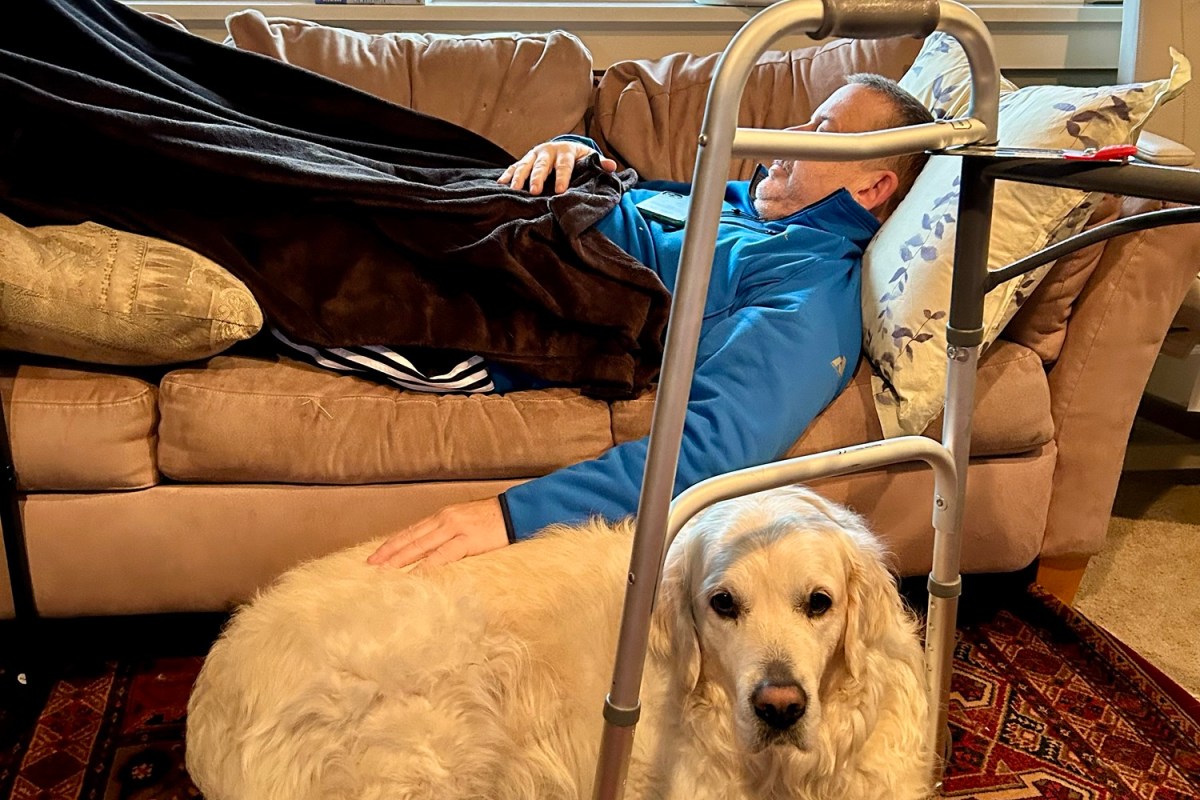
About ten days ago, my friend got a hip replacement and was staying with us in the initial recovery period. My beloved neighbor who was a physical therapist for 40 years came over to give him tips. The one that caught my ear was to make sure he had a clear path.

He was talking about how to successfully navigate with a walker. I noticed the advice because we were trying to find a way to help. In a house with me, two kids, a 2-year-old dog, a cat, and a crested gecko, the floor is often cluttered. Not that the cat and the gecko have much to do with it. It was a good reminder to tend to the Legos, stuffies, and balls that regularly find their way to the floor.

But it also struck me as it’s such a great way to think about what we need in times we are repairing ourselves, inside and out. Sometimes  we need to make sure we have a clear path for healing. To Lego of the grand ambitions, to clear the stuffies from our calendars, and to stop juggling the balls that are thrown our way.

My friend did a lot of thoughtful preparation for his hip replacement recovery. He parked his car in a different spot so people could come pick him up and drop him off with ease. He left a key outside the door so that others could let themselves in. Things to clear the path as he recovered.

As I learned when I got sick last week, we don’t always have the time to prepare to heal. But we can clear the path to assist our recovery when we need it.

(featured photo is Cooper the dog doing his best as a therapy dog)

You can find me on LinkedIn: https://www.linkedin.com/in/wynneleon/ and Instagram @wynneleon

Please check out the How to Share podcast, a podcast celebrates the art of teaching, learning, giving, and growing!

Showing Up

Please remember, it is what you are that heals, not what you know.” – Carl Jung

My ten-year-old daughter, Miss O, had a stomach bug this weekend. It hit hard on Friday night and then followed that typical 24 hour course where she felt miserable and threw up a half dozen times and then was mostly done.

When six-year-old Mr D realized that his sister wasn’t feeling well, he set out to make her his famous medium water. You know – not too hot and not too cold. In a lovely confluence where the one thing he knows how to make and the only thing she could keep down met, it was a beautiful gesture.

There was little else that Mr. D and I could do for her. She spent most of her day crying out in agony. Witnessing suffering like that makes me feel crummy. For me, helplessness usually turns into irritability. Fortunately, I was reminded of three things that I’ve heard/read lately:

From poet Mark Nepo, “… someone I love comes along in pain and I start dumping my pockets, looking for the one thing I know that will help them. But time and time again, the only thing they want is for me to open my heart like a sponge to them. They only want to be heard and held.” I swear my pockets are hanging out for how often I dig to try to find something to help only to learn this again and again.

When I talked with Sharon Eubank on the How to Share podcast she related some great lessons from her decades trying to help others as Global Director of Humanitarian Services for the LDS church. The one that really stuck with me was “My solution to your problem will always be wrong.” In this case, the foods that Miss O wanted to eat when she started to feel better wouldn’t have been my picks – but they worked for her.

And then in my most recent podcast conversation with author Amy Weinland Daughters she spoke of not knowing what to do for her friend, Dana, whose teenage son had cancer and then died. Amy started writing letters as a way to show up. She didn’t think it would make a difference but when Dana’s daughters asked Dana when she thought Amy would stop, Dana replied with something like, “I hope never.” We think what we are doing for someone who is suffering or grieving isn’t enough. But it does make a difference.

So I made an effort to pause my productivity efforts that made me feel like I was doing something by washing sheets and sanitizing bathrooms to just show up and stay present when Miss O cried out in pain and discomfort. I rubbed her back or her feet, told stories, and ordered more medium water from Mr. D. It really is what you are that heals. It’s all part of the magic of being there for someone.

(featured photo from Pexels)

You can find me on LinkedIn: https://www.linkedin.com/in/wynneleon/ and Instagram @wynneleon

I host the How to Share podcast, a podcast celebrates the art of teaching, learning, giving, and growing.

I also co-host the Sharing the Heart of the Matter podcast, an author, creator and storytelling podcast with the amazing Vicki Atkinson.

Ropes are Relational

A friend may well be reckoned the masterpiece of nature.” – Ralph Waldo Emerson

I awoke Friday morning to the sound of a drip in my bathroom. Amazing how a drop of water in another room landing on a bath mat that’s designed to absorb water can penetrate the unconscious. It felt like I came abruptly awake and then sat straight up listening. It reminds me of something I heard from acoustic ecologist Gordon Hempton that our ears never sleep, even when our brain does.

The vent on the fan was the source of the leak. So this weekend I got out one of my climbing ropes so that I could do some repair work on the roof. Afterwords, as I was coiling the rope, I was struck by how ropes are like friendship. It takes me a long time to coil a 60 meter rope so perhaps I was just delirious but I don’t think it’s too much of a stretch.

Ropes help us cross dangerous terrain: In the mountains when conditions are icy, steep, or pitted with crevasses, being roped to a team helps ensure safety if someone falls. We know from research, like the longitudinal study that Dr. Robert Wallinger talks about in his TED talk, that friendship has a similar effect. Good relationships keep us happy and healthy.

It’s easier to unkink a rope when it’s not frozen: Ropes, like friendships, get knotted and kinked sometimes. Ropes, like friendships, are easier to unkink when they aren’t frozen. When guides come back into camp after a summit or training exercise, they take care of the ropes right away. Even when the conditions are rough and people are tired and sore, it’s worth the effort to straighten and coil it before it freezes. In my experience, this is true for friendships as well.

Ropes are heavy: Carrying a climbing rope adds around 10 pounds to your pack, more if the rope is wet. When my friends and I climbed together, we’d divvy up the group gear to spread the load. But often when a climber isn’t feeling well, a team member will carry the rope for them. In my experience of good friendships, the same thing happens with carrying the weight of the relationship. Often, it isn’t a completely equitable split of time and effort that makes a friendship work but the willingness of both parties to switch off carrying the load when things get rough or busy.

Here’s the other thing that I love about ropes – they require me to find someone to hold the other end. I tend towards the stubbornly independent so this slows me down enough to get help. As I coiled the rope back up, I also appreciated how reassuring it was to have my mom and sister-in-law there when I roped up to repair the seal around the fan vent. I never slipped or needed the rope to catch me but I knew it was there and it made me feel safer. Just like my friendships.

(featured photo is mine of a rope coiling at the climbing gym)

You can find me on LinkedIn: https://www.linkedin.com/in/wynneleon/ and Instagram @wynneleon

I host the How to Share podcast, a podcast celebrates the art of teaching, learning, giving, and growing.

I also co-host the Sharing the Heart of the Matter podcast, an author, creator and storytelling podcast with the amazing Vicki Atkinson.

How to Share Nutrition and Safety

Nutrition requires nuance—it’s personal.” – Meg Bowman

I’ve spent a good portion of my career helping people organize data in a way so that it is informative. For example, saving a file to a misnamed or wrong location makes the content practically useless. So much of passing on wisdom and goodness requires it to be in context to be helpful.

I’m thinking of context and the bigger picture because of the How to Share podcast episode this week. Vicki Atkinson and I were fortunate enough to talk with licensed nutritionist and author, Meg Bowman. Meg’s newly released book, This is Your Body on Trauma, is incredible because in it she maps out how nutrition is interconnected with our other systems. Meg explains why safety is the most important nutrient for our nervous systems.

She also explains why how you eat is as important as what you eat. She encourages us to understand that we need two strategies at play. One is the toolkit we build for when we are underwater and the second is for when we are feeling safe.

Meg tells us about how to meet our bodies with more care and less judgment. We talk about how this extends to others, especially in the food season we are in with the holidays ahead.

This is a fantastic conversation about a topic that affects us all. As Meg says, when we are well-nourished, it lessens our experience of stress at any age. This is an episode that will leave you feeling satisfied. We know you’ll love it!

Takeaways

  • Safety is the most important nutrient for the nervous system.
  • How you eat is as important as what you eat.
  • Understanding your nervous system state can influence food choices.
  • Food is often a reflection of deeper needs for safety and stability.
  • Nutrition requires a personal and nuanced approach.
  • Creating a safe eating environment can enhance well-being.
  • The FIGS protocol helps assess individual nutritional needs.
  • Storytelling and emotional state impact our relationship with food.
  • Removing shame from food choices is crucial for healing.
  • Self-care should focus on centering individual needs.

Here’s Meg’s compelling elevator pitch for This Is Your Body on Trauma:

Here are some ways you can watch this fascinating and informative episode:

Links for this episode:

How to Share Nutrition and Safety transcript

This Is Your Body on Trauma — Meg Bowman

This Is Your Body on Trauma | Book by Meg Bowman | Official Publisher Page | Simon & Schuster

This Is Your Body on Trauma on Barnes & Noble and Amazon

Nutrition Hive

From the Hosts:

Vicki’s book about resilience and love: Surviving Sue; Blog: https://victoriaponders.com/

My book about my beloved father: Finding My Father’s Faith

(featured photo from Pexels)