A Recipe for Life

Dreams are the souls pantry, keep it well stocked and your soul will never hunger.” – Shirley Feeney

I tried not to wince when I walked into the kitchen the other day and my 10-year-old daughter, Miss O, pointed to an appliance on the counter and asked “Is that an air fryer?

Cooking has been a new interest for Miss O. She’s been finding recipes that she wants to try, mostly fruit bowls, oatmeal concoctions, and the occasional air frying two pieces of bread together. Then she gets into the kitchen, opens all the cupboards, makes a holy mess, and gets frustrated when she doesn’t like the outcome.

Cooper the dog, however, is a big fan of Miss O’s cooking projects. There’s usually at least one thing that falls on the floor or ends up in his bowl.

The other day when I asked her to clean up after her experiment in the kitchen, she wailed, “But you make it look so easy!” She was so exhausted from the effort that one more step felt overwhelming.

As I’ve been trying to help her, I’ve realized there are so many things I’ve done so long that I’ve forgotten how essential they are.

  1. Start with the ingredients you have. Last weekend when we were at an AirBnB, Miss O asked if we had something like almond flour. She needed that along with chia seeds for a recipe.

    A recipe that doesn’t take into consideration what we have on hand is like facing one “no” after another. It’s demoralizing and frustrating. When we start with the ingredients that we have on hand, it’s so much easier to find flow.
  2. Make sure you have the time and energy to both cook and clean. I think cooking is a little like mountain climbing — it’s a round trip sport. Understanding the time considerations to both cook and clean didn’t come naturally to Miss O. Allowing time to prepare and then make something, especially if it needs to set or bake helps to make room for the creative juices to flow. Also to clean up when the juices flow all over the kitchen. 🙂
  3. Don’t try new recipes if your goal is to impress. One motivation she’s had to try something in the kitchen is to impress her friends. So she’s trying to handle cooking and entertaining at the same time. Then when she tries something new that no one likes, it feels crushing. If she’s experimented ahead of time so it’s something she likes and is familiar with, it’s far easier for her to riff on it or even make it look easy.

It’s funny as I write these things out – these basics seem like a recipe for life, not just cooking.

(featured photo from Pexels)

You can find me on LinkedIn: https://www.linkedin.com/in/wynneleon/ and Instagram @wynneleon

Please check out the The Life of Try podcast Where trying becomes the spark for personal growth, discovery, and re-invention!

The Life of Try

Sometimes magic is just someone spending more time on something than anyone else might reasonably expect.” – Teller

In 44 episodes of producing the How to Share podcast, I realized that while I’m passionate about how to share, what I’m really interested is trying. Trying is a little upstream from sharing. We try experiments in our life, we learn, and then we share.

Trying feels right to me because matches my background as an engineer and consultant. Also, I see it in my kids as they develop new skills. And I’m fascinated by how we conduct experiments as foundational part of building confidence.

So I’ve spent some time reswizzling the podcast as The Life of Try – a podcast focusing on where innovation, reinvention, personal growth, and discovery begin with one simple choice: to try. Even when it’s uncomfortable. Even when you’d rather not. Even when life makes the decision for you.

The Life of Try will feature conversations with authors, scientists, athletes, researchers, coaches, and more to help inspire your personal try-cycle. And I’m debuting a brand-new segment—one that “reverse engineers” what world-class trying really looks like.

In this episode our case study is professional climber Alex Honnold, whose headline-making feats—from free soloing El Capitan in Yosemite to scaling the Taipei 101 Tower this January—offer a masterclass in what it takes to attempt the extraordinary.

I break down the real ingredients behind big outcomes: preparation, learning from others, and staying steady through setbacks—and how those same principles apply to the goals we’re chasing every day. Whether you’re gearing up to speak in public, throw a pitch, or learn a new song, you can borrow these lessons and put them to work in your own try-cycle.

This is The Life of Try.

Here’s a teaser clip that shows a bit of what I think is so compelling about Alex Honnold:

Here are some ways you can listen and watch this inspiring episode:

Please listen, watch, provide feedback and subscribe.

49: Personal Growth Pivot Points: Pause, Quit or Keep Going? The Life of Try: Personal growth, one try at a time.

How do you know when to stop trying—especially when you’re someone who prides yourself on perseverance? In this episode of The Life of Try, Wynne Leon explores the moments when quitting isn’t failure, but wisdom: when our efforts are overly controlled, when something deep inside says “it’s time,” or when passion turns obsessive and starts costing more than it gives. Along the way, she draws lessons from Marion Jones, Olympic figure skater Alysa Liu, Oprah Winfrey, and Andre Agassi, plus insights on harmoniousvs. obsessive passion.If you’re wrestling with whether to push through or letgo, this conversation offers language, perspective, and permission to choose what’s healthy—and what’s next.The Life of Try podcast: Personal growth, one try at a time.What happens when trying becomes more important thangetting it right?The Life of Try is a personal growth and self‑help podcast about getting unstuck, navigating uncertainty, and choosing to try—even when it’s uncomfortable, inconvenient, or not your idea.Hosted by Wynne Leon, the show explores how real growth, reinvention, and discovery often begin not with confidence or clarity—but with a single attempt. Through thoughtful interviews, reflective conversations, and real‑world case studies, each episode examines what it looks like to keep going when doubt shows up, plans fall apart, or life forces a change you didn’t ask for.This podcast is for anyone who:Feels stuck or uncertain about what’s nextIs navigating change, burnout, or reinventionWants to live intentionally without pretending growth is easyBelieves progress starts by trying – again and againThe Life of Try isn’t about hustle or perfection. It’s about learning as you go, surfacing what matters, and sharing what you discover along the way.If you’re ready to surf the uncertainty, outlast the doubts, and step into your own try‑cycle, you’re in the right place.Links for this episode:The Fun Habit: How the Pursuit of Joy and Wonder Can Change Your Life: Mike Rucker, PhDOpen: An Autobiography by Andre AgassiMarion Jones Reflects on Her Kids Living with 'Reality' of Her Doping ScandalFrom Oakland to Olympic gold: Alysa Liu takes figure skating crownAlysa Liu's Olympic figure skating comeback is golden, true to herselfHow Alysa Liu Found Her Love for Figure Skating AgainWinfrey Announces Show's End in 2011 – CBS News
  1. 49: Personal Growth Pivot Points: Pause, Quit or Keep Going?
  2. 48-How to Get Unstuck: Michael Yang on Saying Yes, Resilience, and Coming Alive
  3. 47-From Stuck to Momentum: Thomas Edison’s Method for Progress (Try, Learn, Improve, Repeat)
  4. 46: The Quiet Transformation That Changes Everything
  5. 45: The Life of Try: Alex Honnold Case Study

Links for this episode:

The Life of Try: Alex Honnold Case Study transcript

⁠Free Solo: A National Geographic documentary⁠

⁠Alex Honnold Free Solo Climbs Tapei 101 Skyscraper⁠

(featured photo is of El Capitan and sourced from Pexels)

How to Share Feedback

Some of the best advice I’ve been given: ‘Don’t take criticism from people you would never go to for advice.‘” – Morgan Freeman

My dad used the Oreo method when he delivered feedback. It was fitting because he loved Oreos. Perhaps that’s what made him so good at layering in the salty truth between delicious goodness.

He’d start with what was working, add in feedback about what could be better, and then finish it off with a compelling overall vision or motivation. It sounds straightforward when laid out as a formula but as anyone who’s eaten fake Oreos knows, it has to be authentic to work. And the recipient needs to at least be a little hungry for it.

Feedback is tricky, isn’t it? It’s often necessary for us to fuel personal and creative growth, especially with writing, and we sometimes don’t want to hear it. That’s why I love this How to Share podcast episode with Dr. Vicki Atkinson because she is such a pro at both giving and receiving feedback.

Vicki tells us about her project in the works, a novel that builds on her fascinating and intriguing family history. She has done the hard work to not only to write but also to seek out and incorporate feedback. She tells us what she learned from her doctoral dissertation about separating the ego from the work and how that is an essential part of being able to really take in someone else’s input.

We talk about asking the right questions when someone solicits our feedback and also being specific when we want input. And Vicki shows us what having a growth mindset looks like when it comes to incorporating comments.

Vicki walks us through the discernment necessary to pick out what is helpful when it comes to feedback and gives us permission to disregard what doesn’t fit.

This is a great conversation about this tricky subject and Vicki’s wisdom shines brightly through. I know you’ll love it.

Takeaways

  • Feedback is a tricky subject that requires discernment.
  • Separating ego from work is essential for growth.
  • Asking the right questions can lead to more useful feedback.
  • Timing and context matter when giving feedback.
  • Not all feedback is created equal; choose your sources wisely.
  • It’s important to let your work develop before seeking feedback.
  • You can choose which feedback to integrate into your work.

Here’s a great clip of how Vicki practices the art of letting go of the ego:

Here are some ways you can watch this inspiring and helpful episode:

Please listen, watch, provide feedback and subscribe.

49: Personal Growth Pivot Points: Pause, Quit or Keep Going? The Life of Try: Personal growth, one try at a time.

How do you know when to stop trying—especially when you’re someone who prides yourself on perseverance? In this episode of The Life of Try, Wynne Leon explores the moments when quitting isn’t failure, but wisdom: when our efforts are overly controlled, when something deep inside says “it’s time,” or when passion turns obsessive and starts costing more than it gives. Along the way, she draws lessons from Marion Jones, Olympic figure skater Alysa Liu, Oprah Winfrey, and Andre Agassi, plus insights on harmoniousvs. obsessive passion.If you’re wrestling with whether to push through or letgo, this conversation offers language, perspective, and permission to choose what’s healthy—and what’s next.The Life of Try podcast: Personal growth, one try at a time.What happens when trying becomes more important thangetting it right?The Life of Try is a personal growth and self‑help podcast about getting unstuck, navigating uncertainty, and choosing to try—even when it’s uncomfortable, inconvenient, or not your idea.Hosted by Wynne Leon, the show explores how real growth, reinvention, and discovery often begin not with confidence or clarity—but with a single attempt. Through thoughtful interviews, reflective conversations, and real‑world case studies, each episode examines what it looks like to keep going when doubt shows up, plans fall apart, or life forces a change you didn’t ask for.This podcast is for anyone who:Feels stuck or uncertain about what’s nextIs navigating change, burnout, or reinventionWants to live intentionally without pretending growth is easyBelieves progress starts by trying – again and againThe Life of Try isn’t about hustle or perfection. It’s about learning as you go, surfacing what matters, and sharing what you discover along the way.If you’re ready to surf the uncertainty, outlast the doubts, and step into your own try‑cycle, you’re in the right place.Links for this episode:The Fun Habit: How the Pursuit of Joy and Wonder Can Change Your Life: Mike Rucker, PhDOpen: An Autobiography by Andre AgassiMarion Jones Reflects on Her Kids Living with 'Reality' of Her Doping ScandalFrom Oakland to Olympic gold: Alysa Liu takes figure skating crownAlysa Liu's Olympic figure skating comeback is golden, true to herselfHow Alysa Liu Found Her Love for Figure Skating AgainWinfrey Announces Show's End in 2011 – CBS News
  1. 49: Personal Growth Pivot Points: Pause, Quit or Keep Going?
  2. 48-How to Get Unstuck: Michael Yang on Saying Yes, Resilience, and Coming Alive
  3. 47-From Stuck to Momentum: Thomas Edison’s Method for Progress (Try, Learn, Improve, Repeat)
  4. 46: The Quiet Transformation That Changes Everything
  5. 45: The Life of Try: Alex Honnold Case Study

Links for this episode:

How to Share Feedback transcript

Vicki’s book about resilience and love: Surviving Sue; Blog: https://victoriaponders.com/

My book about my beloved father: Finding My Father’s Faith

(featured photo from Pexels)

Recycling and Enlightenment

Do the best you can until you know better. Then, when you know better, do better.” – Maya Angelou

Seattle has great recycling. I know that’s probably not on the list of things that makes you want to come visit but I think it’s pretty cool. We don’t have to sort things into separate bins for aluminum, plastic and cardboard anymore and it’s free.

Also in 2015, Seattle declared that food waste was no longer okay to put in the garbage. They improved the composting capabilities so that food waste can be put in our yard waste bins for weekly curbside pickup service. The estimate was that a third of food in America is thrown away. When put in garbage, it rots and produces methane but if composted, it can become rich material to facilitate growth.

Here’s the complication – it makes it awkward when we travel. We’ve been on Whidbey Island for a week. One of my favorite places in the world. But they don’t have composting and they don’t pick up recycling.

To be fair, there are big garbage dumpsters at the place we are staying so there’s plenty of space to just throw everything in to go out with the garbage service. Except that I can’t do it – and none of my Seattle friends can either. We make our little piles of recyclables and create schemes to haul them away.

I find this incredibly hopeful. Just like the Maya Angelou quote for this post. Because as we up our game, whether it be in how we dispose of things, or our relationships to others and the world, it becomes very hard to go back.

Isn’t it interesting that when you stumble on enlightenment, that you can’t unsee it? Perhaps this is a stretch but I’m recycling the analogy – it’s kinda like self-awareness. Once I notice that I see something through a lens of fear, greed, or selfishness, it’s harder to maintain that lens.

It means that when we know better, we do better. Also, that progress can be sticky and have an impact. We just need to keep upping the game.

(featured photo from Pexels)

You can find me on LinkedIn: https://www.linkedin.com/in/wynneleon/ and Instagram @wynneleon

I host the How to Share podcast, a podcast about collaboration – in our families, friendships, at work and in the world.

I also co-host the Sharing the Heart of the Matter podcast, an author, creator and storytelling podcast with the amazing Vicki Atkinson.

Those Pesky Bugs

The human race has one really effective weapon, and that is laughter.” – Mark Twain

Heads up: this post might bug you.

Oh boy, there are so many great puns about lice. I’ve been thinking about that because we got them last week. Lice, that is, not puns. Well, maybe both.

Funny thing about lice is that they come with an acute sense of shame. This has been going around the school – and seems to be worse after the classes rotated through the bike unit in PE. But even knowing that AND after finding out that four other families from our school were booked at the treatment clinic, I still felt it. It must be a powerful trigger of the fear of community ostracization.

I managed to get over it long enough to tell the school, the teachers, and the families we’d played with recently. Like I’ve found with my other vulnerabilities, it turns out that sharing came with a blessed sense of camaraderie. Most families with elementary school kids have gone through this and the parents had hilarious stories.

There was the family who had sent their three kids to a camp in France. The whole camp played a game where they passed a hat so that the hat wearer got a turn to speak, sing, or dance. Every single kid in the camp came home with lice.

And a mom told me the story of having to go to the clinic to be checked. As she was sitting in the chair getting her hair combed out, a former work colleague came in also to get checked. He launched in to a long conversation with her despite her best, “Can we talk another time?” face.

Someone shared a hilarious video with me that mapped the lifecycle of a mom’s feelings about lice: the shame, the fear, the disgust, the exhaustion, the acceptance.

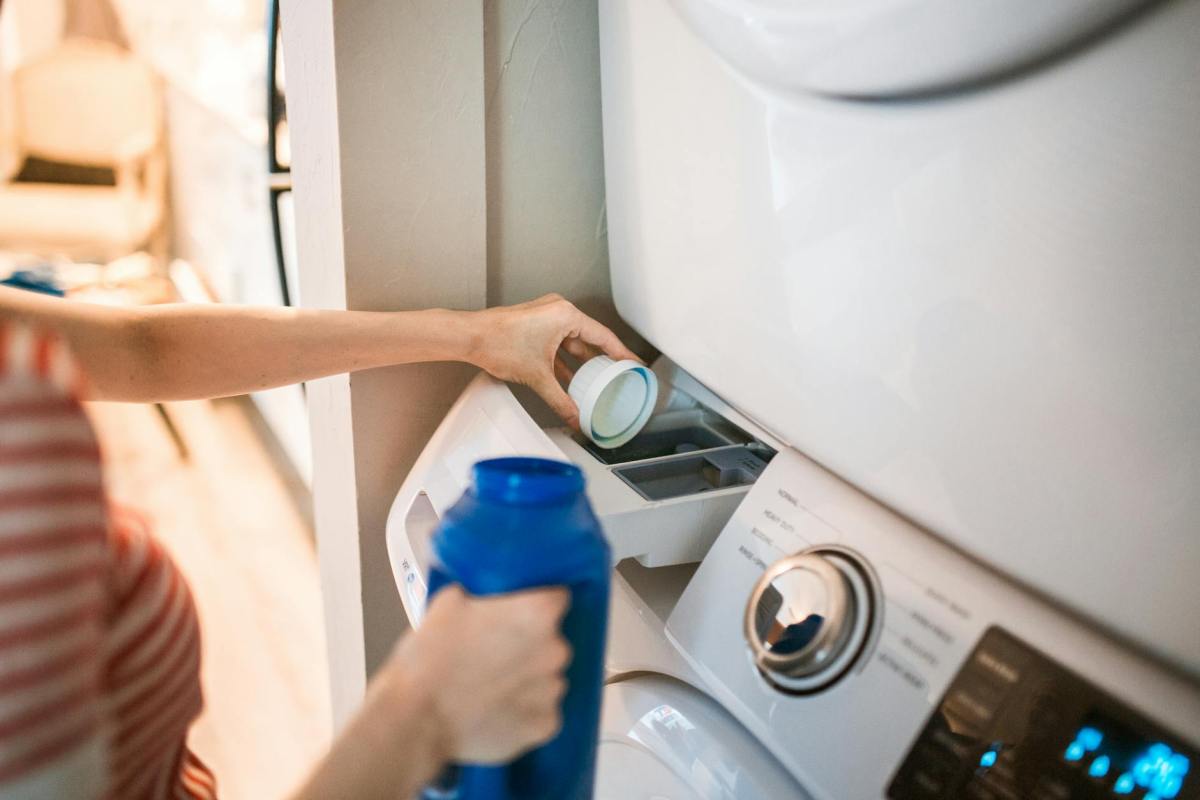
It makes me scratch my head to wonder why I need to keep learning that being vulnerable results in benefits. I mean benefits in addition to immediately knowing the washing machine cycles answer in a recent NY Times Connections game because I’ve spent so much quality time with my washer in the last week.

These things that come with life aren’t easy. But when we put our heads together, [oops, don’t do that], they can be at least a little funny!

(featured photo from Pexels)

You can find me on Instagram @wynneleon and LinkedIn: https://www.linkedin.com/in/wynneleon/

I co-host a storytelling podcast featuring authors and artists with the amazing Vicki Atkinson. To tune in, search for Sharing the Heart of the Matter on Spotify, Apple, Amazon Music or Pocketcasts (and subscribe) or click here. Or the YouTube channel features videos of our interviews. Please subscribe!

My other projects include work as a CEO (Chief Encouragement Officer), speaking about creativity and AI through the Chicago Writer’s Association, and my book about my journey to find what fueled my dad’s indelible spark and twinkle can be found on Amazon: Finding My Father’s Faith.

But I Love Them Wholeheartedly

Every child comes with the message that God is not yet discouraged of man.” – Rabindranath Tagore

Kids! They bicker with each other
and leave their shoes around.
Tears flow too easily
usually because they’re low on fuel.

It takes so much work
To make a family work
Keeping their hearts and minds engaged
And bodies well.

But I love them wholeheartedly
And not just when they are sleeping
Curled up with an arm akimbo
And sideways on the bed.

Because there’s a fierceness
Of love and loyalty
When we know we belong together
And commit to making repair

The laughter and dance parties
Curiosity and attentiveness
Is so damn inspiring
That one cannot help but grow

I’m so profoundly proud
Of the effort my kids put in to every day
Really of all of us
Forging a path through all the busy-ness
To the heart of the way

Family has a myriad of definitions
Depending on our point of view
But I’ll keep mine – work and everything
Because there is so much love to do!

Writing Worth Doing

Words have magical power. They can bring either the greatest happiness or deepest despair.” – Sigmund Freud

Last Friday was Mr. D’s last day at his pre-school/daycare. He’s been there for nearly four years. In three different classrooms with so many great teachers, this school has been such a wonderful influence.

When I went to write the amazing staff a thank you note, I did so through a veil of tears. When I was done, it felt like a piece of writing as worthy as anything else I’ve composed because:

  1. It was from my heart
  2. I provided others with a perspective on their impact that would be hard for them to know otherwise
  3. The feelings it elicited were worth rippling out in the world

Here’s the note:

This morning before [Mr. D] left for school, he took his plate to the sink, washed his hands after going to the bathroom, and used his words when he wanted to play with something his sister had. Those three skills are just some of the wonderful building blocks that he learned in his time at GLPCC.

I know it’s hard to measure the positive impact that you have on one child or one family’s life. Just as a stream doesn’t count the rocks it touches as it flows, the kindnesses and fundamentals you all bestow with your patience, creativity, and caring make such a difference.

I get choked up thinking about all the ways your consistency and hard work have made my life better during the years D has been at GLPCC. From the pandemic to surviving the hard drop off days, I have been able to navigate life and work because I was absolutely certain D was in good, kind and loving hands.

So I send you all immense gratitude for the amazing work that you do. And if there is any day that feels tough – think about what our world would look like if everyone took their dishes to the sink, washed their hands, and used their words when they wanted something. It would be amazing. You all are building a better world.


Have you written something simple that turned into a worthwhile project?

(featured photo from Pexels)

It’s Just Like Riding a Bike

I have great respect for the past. If you don’t know where you’ve come from, you don’t know where you’re going.” – Maya Angelou

Riding bikes with my kids has given me a new appreciation for the learning process. That is to say, I’ve come to see “two steps forward, one step back,” in a more growth-minded way.

I bought eight-year-old Miss O a bigger bike (24 inch wheel) with gears. She hopped on and owned it. It was like she aged five years in that one move because it was bigger and sat her up higher.

As a result, four-your old Mr. D got her old bike, a medium sized bike (18 inch wheel). I moved the training wheels over from his small bike. But even with training wheels, he got a huge boost in confidence and speed from having a bigger sprocket.

We’ve spent the week riding everywhere and in all sorts of conditions. We’ve gone round the block so many times we must have worn a groove. Then one night we rode around our local little lake to get pizza. The next night we went up the hill to get pie. All the while, I’m riding behind Mr. D watching him wobble back and forth before he gains his balance, my fingers crossed that the training wheels will hold.

Then, we got the small bike out of the garage to pass on to another kid in the neighborhood. Mr. D hopped on his old bike, now without training wheels.

I held the back of the small bike for a moment. Before any of us could really think about it, Mr. D took off – riding the bike without training wheels. So, Miss O and I took turns running up and down the block a dozen times holding the seat for the start until Mr. D mastered that too.

All this has made me think of the rhythm of growth. Sometimes you have to go back a step to see how far you’ve gone.

It makes me think of the feeling I get when I go back to the town where I went to high school. With the swirl of old memories all around, it’s easier to see where I’ve grown.

Or when I dust off an old favorite recipe and discover how I’m better at trusting the timing.

Or when I hike a familiar trail and feel the burn of my muscles within the certainty that I can make the summit.

Or when I re-read something I wrote years ago and I can discern how it’s gotten easier to put my authentic self on the page.

Sometimes we have to go back to figure out how much we’ve learned.

Guides for Transformation

‘Understand that the hardest times in life to go through are when you are transforming from one version of yourself to another.” – Mysticool

This post was originally published on 3/29/2023. Heads up – you may have already read this.


It’s something that I’ve found again and again in life – when I need to transform, someone or something shows up to be the catalyst. The Universe sends me a guide in some form or another. Here are some of my favorite examples:

When I was bored after a break-up with a boyfriend and I drove around a corner and Mt Rainier was squarely in my view. It started my amateur climbing career.

After I suffered from being stuck and closed down for a couple of years after my divorce, I received an invitation for a mediation class from my friend, Deirdre.

In my 40s when I was working out what was next in life, I would see images of the English Duchess Kate and start to cry. It totally unnerved me since I wasn’t much of a royal watcher and had eschewed having a family until then. And then I finally realized that I wanted to have kids.

I haven’t known all my guides. For example, researcher and author Brené Brown has been my guide towards being vulnerable and whole-hearted simply through the act of reading her books and listening to her.

As my meditation teacher, Deirdre says – transformation is what we need to be our best selves. Yes, it involves change but our spirits are wired to keep growing and finding the balance of all we can be when we need to evolve or simply have gone too far in one direction.

For me this goes in waves, I’ve changed my body to become a mountain climber only to find after years of doing that, my mind and soul needed to also get in shape through meditation. That change helped me open to understanding it was time for me to become a parent. And then I transformed almost completely to become a parent only to find as my kids age, it’s time to transform again to someone who remembers she has an individual, alive part that needs to dance too.

Perhaps this goes without saying, but the other part that I’ve noticed is that I don’t always get the message the first time. When I ignore the call, sometimes it builds into a crisis. In climbing terms, it goes from being a part of a team with a guide at the front to a rescue where I have to flail at the end of the rope.

Some of these changes are inspired from within and feel like evolution. Others come from the outside with disappointment and heart break and feel like erosion. However it comes, I’ve found it easier to take when I bow my head, put aside my opinion on whether I want it or not, and then look for guides.

Because I’ve found is that the Universe hasn’t left me to do this alone. It sends a guide or a catalyst to kick off the reaction. If you don’t believe in any Higher Power, I think that statement could also be cloaked in social learning theory – that all the people around us are walking advertisements for what we can be next. Whichever it is you believe, my experience has shown me that the guide may or may not be in our lives for the duration but they show up to help us over the threshold to what’s next.

(featured photo from Pexels)

Wide Angle Moments

We are like someone in a very dark night over whom lightning flashes again and again.” Maimonides

Last weekend, I had a moment of clarity-induced panic. Unfortunately, it happened to come while I was giving a short presentation at a company meeting to about 200+ people.

The company I work for has bi-annual events where families are invited. I’d flown with my kids to this event in New Orleans. The event planners did a great job of getting us all set up at the hotel, arranging group meals, and scheduling some fun outings. It was a nice opportunity to see people face-to-face that we only get to work with remotely.

Then came the company meeting for just the employees. I rushed Mr. D and Miss O through breakfast, got them settled down in our hotel room, and left them with three instructions:

  1. Don’t leave the room
  2. If you need anything, I’m on the 10th floor
  3. Stay together no matter what

When it came time for my five-minute presentation, I walked up to the podium and glanced at my notes. I started with a joke. Then looking at the audience, I had that moment of clarity-induced panic.

  1. I was the only woman leading a business unit and the only woman presenting at the meeting
  2. No one else with small children had traveled by themselves
  3. What the heck was I thinking?

I’ve come to think of these “what the heck” moments as wide-angle views of my life. The ones where I get a glimpse of a little bit more than just the task at hand. I’ve had them in mountain and rock climbing, my marriage, and parenting.

Often they come with panic of wondering, “Am I on the right path?” Sometimes, and I’m thinking of my marriage, the answer is “no,” but they always flash a wider view of purpose and trajectory. Whether I go forward or back, they’ve always required me to muster up some courage in order to proceed.

In the case of my presentation, it was a sense of wondering whether I’d bitten off more than I could chew and if I belonged. I felt my voice waver and looked down at my slides. I knew the material cold, I’d practiced aloud in my room, so I took a deep breath, and let my muscle memory carry me through.

(featured photo from Pexels)