Just Start

What’s your worst earworm? I’m not going to mention mine lest I pass it to you. Mum’s the word for that UB40 song. But I recently learned something fascinating about earworms – they can be chalked up to the Zeigarnik effect. Named after a Russian psychologist who first published about this almost 100 years ago — “Uncompleted tasks and unmet goals tend to pop into one’s mind.”

In their book, Willpower, psychologist Roy Baumeister and science writer John Tierney explain the Zeigarnik effect and why songs we don’t like tend to pop up as earworms. “We’re more likely to turn off the bad one in midsong, so it’s the one that returns to haunt us.”

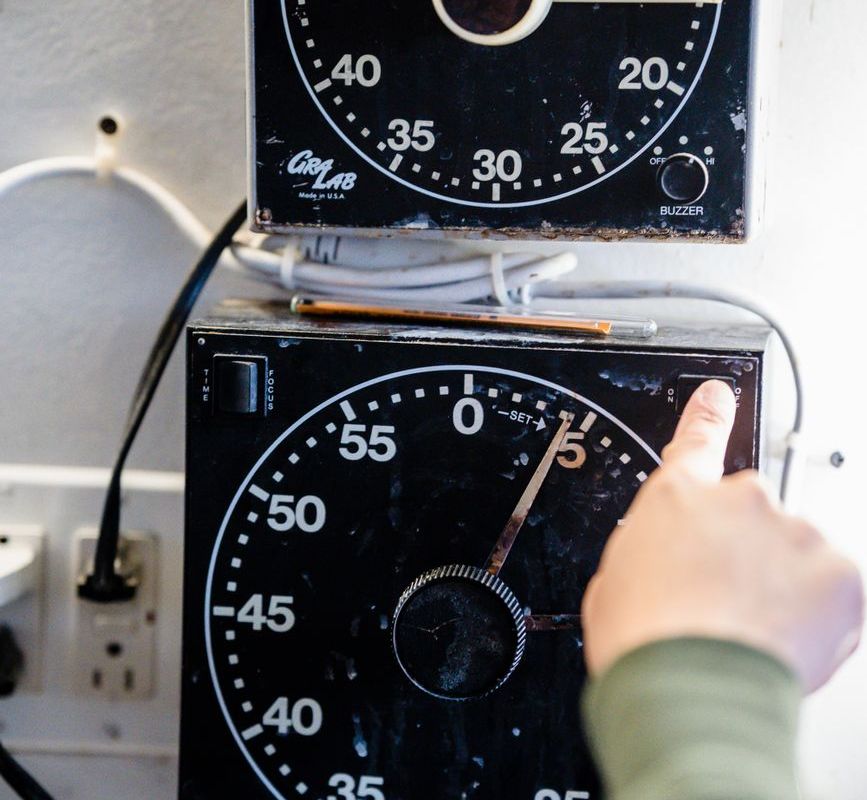
I don’t play any ear worms in this week’s Life of Try episode, but I do explore how the Zeigarnik effect can amplify the power of taking one small, imperfect step. I offer a simple 10-minute strategy can help you overcome resistance, build momentum, and move forward and dig in to why starting before you feel confident can give your mind something useful to work on.

If a goal feels overwhelming, the blank page feels intimidating, or uncertainty keeps you stuck, this episode offers a practical way to begin without pressuring yourself to finish.

In this episode, I cover:
• How the 10-minute rule can reduce procrastination
• Why imperfect action builds confidence and momentum
• How unfinished tasks can keep ideas active in your mind
• Why your own rough first attempt still matters in the age of AI
• How to take the first step when a goal feels overwhelming


Don’t ask yourself to finish it today. Ask yourself to begin it. Set a timer, make one imperfect move, and leave yourself a clear next step.

Links for this episode:

How to Stop Procrastinating and Start: The 10-Minute Rule for Taking Action transcript

Related Episodes

Why Fun is the Secret to Building Better Habits with Mike Rucker, PhD – a Life of Try short

Success isn’t always about finishing first. Sometimes the greatest victories belong to those who stay prepared, keep growing, and never stop trying.

(featured photo from Pexels)

If my work has encouraged, inspired, or helped you try something new, consider supporting it with a small “cup of coffee” donation. Your support helps me keep creating conversations, stories, and resources that cheer people on as they do brave, meaningful work.

You can find me on LinkedIn: https://www.linkedin.com/in/wynneleon/ and Instagram wynneleon
How Badly Do You Want It?

“A child can teach an adult three things:
To be happy for no reason,
To always be busy with something, and
To know how to demand with all his might that which he desires.” – Paulo Coehlo

I think we are born with a great capacity for persistence. It’s not just the quote that makes me think so.

The other day I was out beach combing with my kids. After we spent about 45 minutes tickling the clams so they’d squirt, picking up the jagged sea glass (that sounds so much better than broken bottles) so it wouldn’t cut any paws, and hunting for moon snail shells, my seven-year-old son, Mr. D discovered a wide tide pool.

There were tiny fish in the pool. He declared he wanted to catch one. I wandered nearby looking at the rocks and shells and watching his efforts out of the corner of my eye. All the while thinking, “He’s never going to catch a fish with his hands.”

So I emptied out our little beach bucket that I’d collected the broken glass and shells in and handed it to him.  The sand was too wet to sit so I kept circling as I daydreamed about sitting down with another cup of tea.

Finally, I took off my shoes and socks and waded in to the tide pool with him. It was warm and about the size a swimming pool with plenty of seaweed for the fish to hide under. I thought I could scare the fish towards him and hopefully speed up the process.

We spotted a flat fish that was almost an inch wide and the color of the sand. He was bigger than the other fish Mr. D had been chasing so he named him, “The King.” Every time Mr. D would get close, the fish would embed himself in the sand. The King’s camouflage was so good that he was nearly impossible to spot.

But Mr. D stayed at it and within minutes, we’d spot him again. As much as I wanted Mr. D to have success, I also was tiring of what seemed like a fruitless process. Isn’t this where we give up and call it a lesson in resilience?

I stepped out of the tide pool and started walking towards my shoes. I called over to Mr. D that we were heading back in five minutes. He responded with a verbal groan but kept working at catching The King.

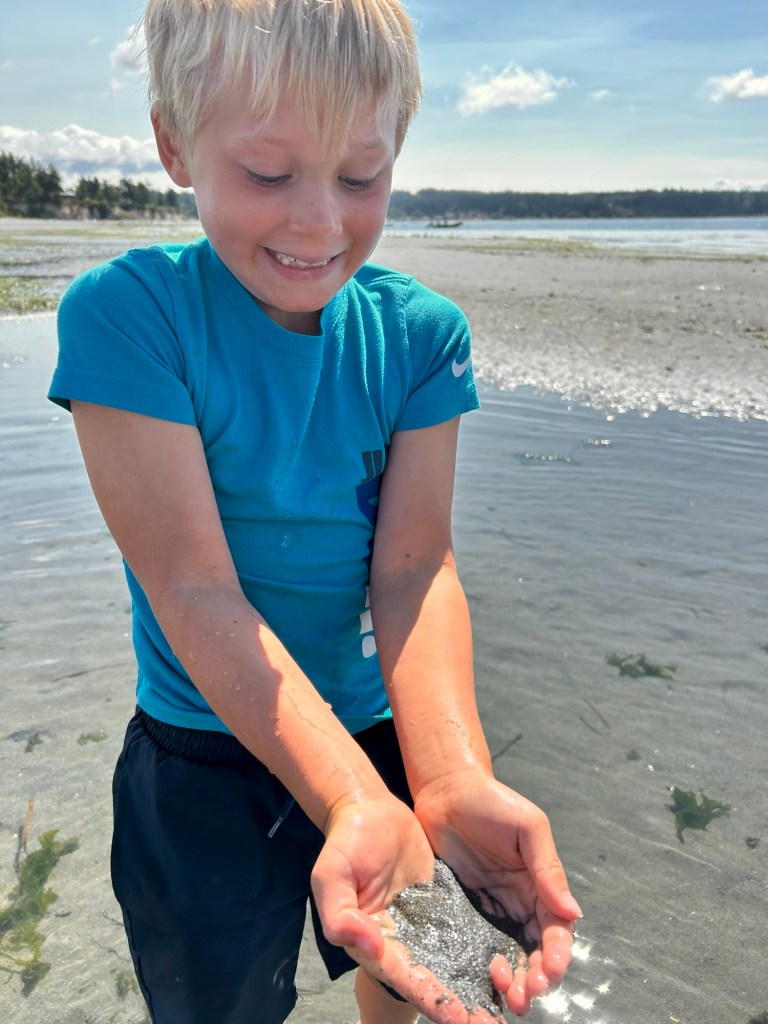
And about five minutes later, he bent down with his hands together and scooped up some sand. He shouted, “I caught The King!!”

Indeed he did – with his bare hands. I took in his glowing grin as I brought him the bucket to put The King in. Then we happily headed back to where we were staying so Mr. D could show his sister the fish.

Then, after taking a couple of photos and telling the story, he walked The King down to the water and returned him to the bay.

That’s when I realized that persistence was something purer than I often see it these days: it’s keeping with our goals, finding the people that will wade in and help, ignoring anyone that tells us we can’t do it. And that staying with it doesn’t have to preclude being kind and accepting – because we can still tell the story and then let the fish swim away.

So… how badly do you want it?

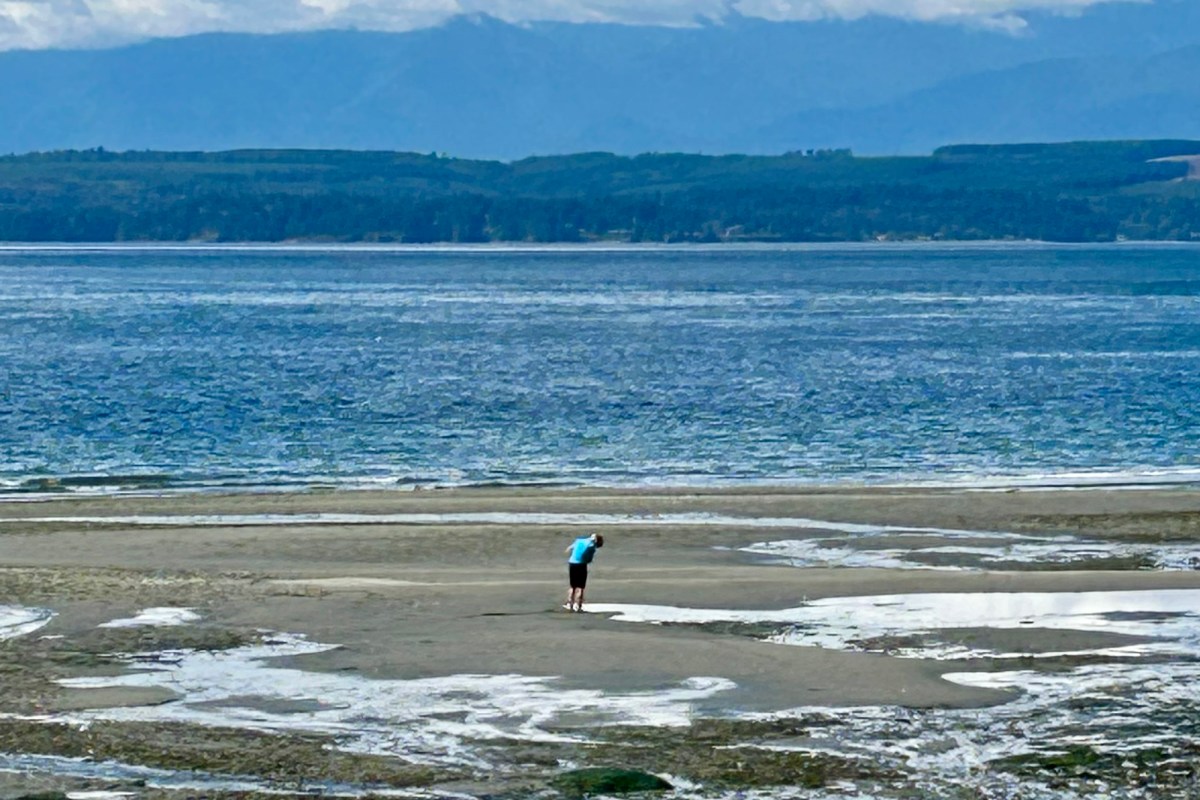
(featured photo is mine of Mr. D returning The King to the water, second picture is of Mr. D with The King)

If my work has encouraged, inspired, or helped you try something new, consider supporting it with a small “cup of coffee” donation. Your support helps me keep creating conversations, stories, and resources that cheer people on as they do brave, meaningful work.

You can find me on LinkedIn: https://www.linkedin.com/in/wynneleon/ and Instagram wynneleon
Please check out the The Life of Try podcast Where trying becomes the spark for personal growth, discovery, and re-invention!

The Life of Try

“Sometimes magic is just someone spending more time on something than anyone else might reasonably expect.” – Teller

In 44 episodes of producing the How to Share podcast, I realized that while I’m passionate about how to share, what I’m really interested is trying. Trying is a little upstream from sharing. We try experiments in our life, we learn, and then we share.

Trying feels right to me because matches my background as an engineer and consultant. Also, I see it in my kids as they develop new skills. And I’m fascinated by how we conduct experiments as foundational part of building confidence.

So I’ve spent some time reswizzling the podcast as The Life of Try – a podcast focusing on where innovation, reinvention, personal growth, and discovery begin with one simple choice: to try. Even when it’s uncomfortable. Even when you’d rather not. Even when life makes the decision for you.

The Life of Try will feature conversations with authors, scientists, athletes, researchers, coaches, and more to help inspire your personal try-cycle. And I’m debuting a brand-new segment—one that “reverse engineers” what world-class trying really looks like.

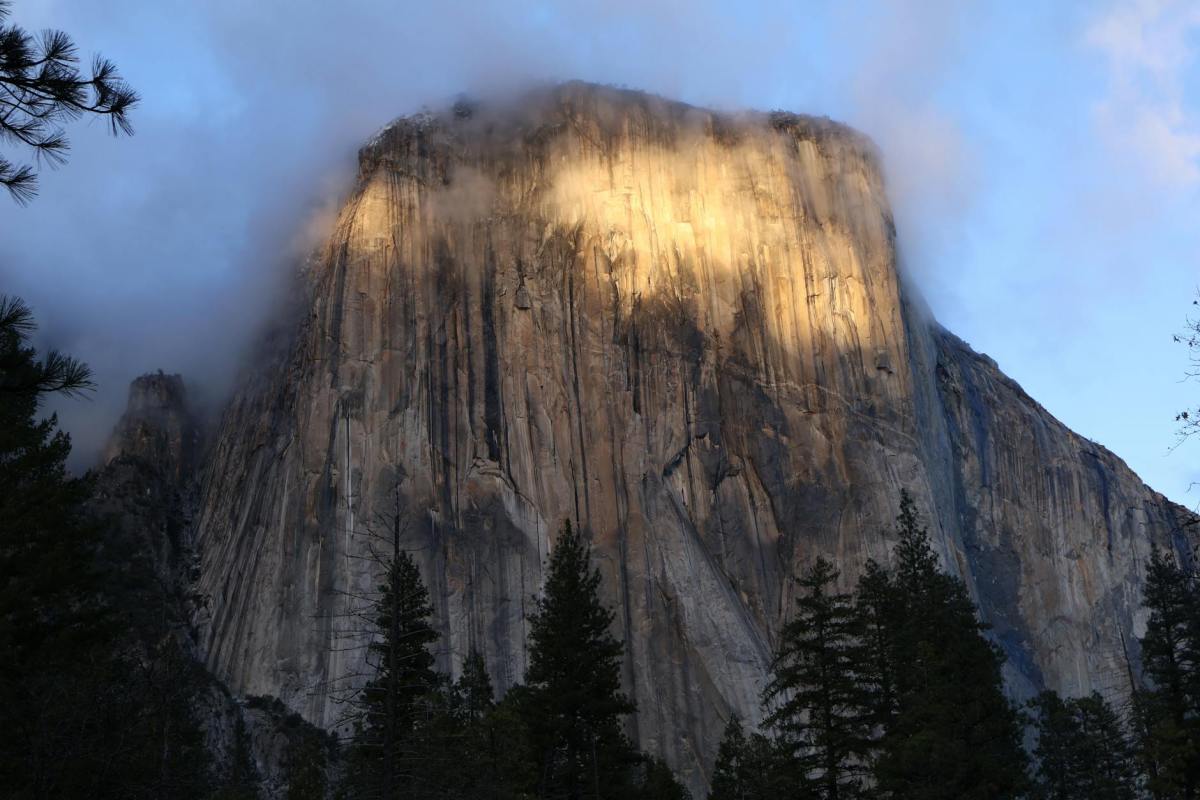
In this episode our case study is professional climber Alex Honnold, whose headline-making feats—from free soloing El Capitan in Yosemite to scaling the Taipei 101 Tower this January—offer a masterclass in what it takes to attempt the extraordinary.

I break down the real ingredients behind big outcomes: preparation, learning from others, and staying steady through setbacks—and how those same principles apply to the goals we’re chasing every day. Whether you’re gearing up to speak in public, throw a pitch, or learn a new song, you can borrow these lessons and put them to work in your own try-cycle.

This is The Life of Try.

Here’s a teaser clip that shows a bit of what I think is so compelling about Alex Honnold:

Here are some ways you can listen and watch this inspiring episode:

Please listen, watch, provide feedback and subscribe.

Stop Hustling For Your Worth: A Better Way to Grow – The Life of Try: Personal growth, one try at a time.

What separates healthy ambition from hustling for your worth?In this motivational episode of Life of Try, Wynne Leon explores the hidden connection between hustle culture, perfectionism, productivity, and self-worth.A baseball camp “hustle” award sparks an honest reflection on why we try—and how effort driven by curiosity and courage feels different from striving for approval.Through personal stories and insights inspired by Brené Brown and Dr. Vicki Atkinson, Wynne shares how to recognize fear-driven productivity, step away from the pressure to prove yourself, and choose a more wholehearted path to personalgrowth.You will learn how to:·       Recognize when achievement is tied to self-worth·       Distinguish purposeful effort from approval-seeking·       Replace perfectionism with curiosity and courage·       Use two simple questions to reconnect with gratitude and meaningListen next to Art of Meaningful Conversation with Dr. Vicki Atkinson, celebrating 200 episodes. Follow Life of Try on Spotify for more episodes about courage, resilience, mindset, self-worth, and beginning before you feel ready.
  1. Stop Hustling For Your Worth: A Better Way to Grow
  2. Way Will Open: How To Trust Life's Timing
  3. How to Stop Procrastinating and Start: The 10-Minute Rule for Taking Action
  4. The Art of Meaningful Conversations: Lessons from 200 podcast episodes
  5. The Power of Saying Yes

Links for this episode:

The Life of Try: Alex Honnold Case Study transcript

⁠Free Solo: A National Geographic documentary⁠

⁠Alex Honnold Free Solo Climbs Tapei 101 Skyscraper⁠

(featured photo is of El Capitan and sourced from Pexels)

Preparing to Have Fun

“It’s not the will to win that matters – everyone has that. It’s the will to prepare to win that matters.” – Paul “Bear” Bryant

I wasn’t a particularly athletic or outdoorsy kid. It wasn’t until my late 20’s that the climbing bug bit me. I was driving my car to work. I came around a corner, saw Mt. Rainier dominating the skyline and thought, “I should climb that.” From there climbing became not only one of my passions but also in many ways my metaphor for tackling the challenges of life.

Summits, blisters, carrying a pack, one step at a time, working as a rope team, objective versus subjective dangers – all of it gave me such great perspective on life.

Give me a pebble in my shoe and I’ll turn it into an essay about self-care. I’ve failed to take the time to stop to get rid of something little before it gets big enough times to have a lot to say about that lesson.

All of this to say that I came to hiking and climbing mountains as an adult. So when I proposed to my kids in mid-December that we climb Tiger Mountain on New Years Day and they enthusiastically said they wanted to, I had to think carefully about how to make it a good experience for them.

Go ahead and groan now because here comes the point cloaked in a climbing story. The first time that I tried to climb Mt. Rainier, it hurt like hell. We made it to our base camp at 10,000 feet and then a storm came in. We couldn’t leave for our summit bid at midnight as planned because it was still snowing so at 6am, the lead guide came in and said, “Whoever wants to try for the top can go ahead and gear up. But we’ll have to go twice as fast as our normal pace to get this done in half the time.”

My friends and I made it 11,000 feet before dropping out. Only 3 out of the 24 climbers made it to the top that day.

And I learned that the better shape you are in, the more fun you’ll have climbing. There are two levels of readiness – the first is to get yourself up (and down) a mountain. The second is to train enough to climb the mountain AND have some more in the tank in case you need to do a little more. It’s more likely to be fun if you’ve trained to the second level.

This applies to other things as well. Like getting ready for a presentation. The first level accounts for doing the preparation of putting together the slide deck. The second is doing that, practicing the presentation out loud, preparing the Q&A, and doing it well enough in advance to have a cup of tea to calm the nerves before starting. I’ve done that both ways as well and the second one is way more fun.

Circling back to inviting my kids along for a hike up Tiger Mountain, I wanted them not only to be able to do it but also to have fun. That meant that we all had to do the work to train to that second level. Working out on the stairs in our home, going to the Capital Hill stairs to train, walking the trail at Discovery Park, doing a pre-NY day hike up Little Mt. Si – I tried to vary it and make it fun. We had some bad moments along with the good but ten-year-old Miss O and six-year-old Mr. D were pretty good sports about it all.

I told my friend, Bill, that we’d done the hike and he sent me the Bear Bryant quote for this post. It matches what I’ve experienced. There are a lot of things we can white knuckle and get through. Having fun doing it requires some preparation.

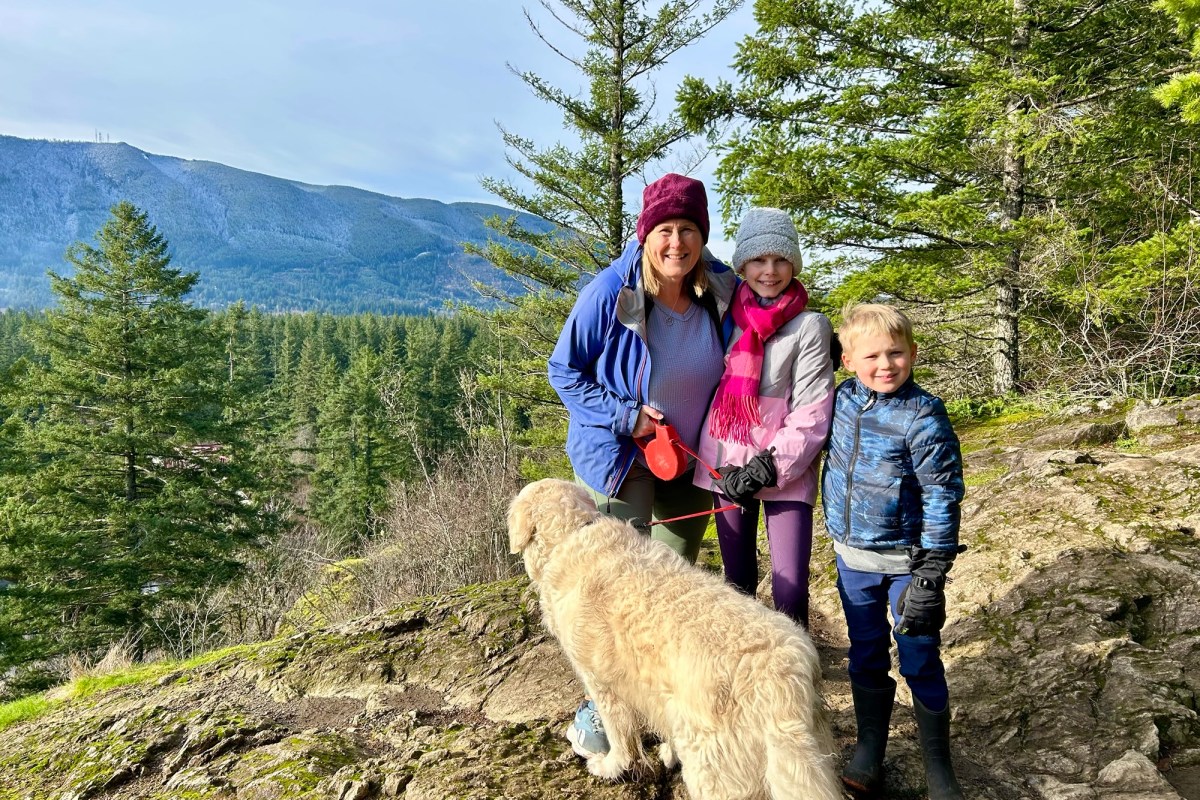
(featured photo is the kids and I on a training hike)

You can find me on LinkedIn: https://www.linkedin.com/in/wynneleon/ and Instagram @wynneleon

Please check out the How to Share podcast, a podcast celebrates the art of teaching, learning, giving, and growing!

The Feeling of a Fresh New Year

“Be humble. Be teachable. The world is bigger than your view of the world. There’s always room for a new idea, a new step…a new beginning.” – marcandangel

There’s a noticeable expansiveness in the January 1st  entry in meditation books. Setting the tone. Regardless of the theology or philosophy, there seems to be a commonality in the approach to start with the most fresh, audacious, “let’s jump in” message that the author can summon.

I’m not a resolution person but I do like celebrating beginnings. Aren’t fresh starts great? They make me think of the feeling at the bottom of the mountain that encapsulates all the potential energy. Or the intentions at the start of the project, or new job, about how it’ll turn out. And the appeal of a new relationship when the shared history remains to be written. Also the appreciation for babies and children because of their innocence and freshness.

The beginning is before we’ve had to make decisions to change the scope, mitigate the pain, or slip into automatic responses in order to save energy. Before we’ve accepted that most endeavors come with their share of pain, healing, and learning. And that we sometimes fail to deliver even when we intend to do our best.

I have a bad habit of believing I know how things will play out. Especially when new people I meet elicit a reminder of someone else and it feels like I can see a preview of the relationship to come. That habit cuts me off from potential. So I love the fresh energy of messages like January 1st meditation essays that open me back up to uncertainty and a wider perspective.

It’s like new shoes. We don’t know where they’ll take us but we have to get them dirty to find out.

The beginning is important. For me it’s a reminder to stretch – to set our sights on the most expansive goals and being the best human/parent/partner/athlete we can. And to allow space for uncertainty.  Then when the messy middle comes, we have some room for scaling back while still getting somewhere worth going.

So here’s to a great 2026! Happy New Year!

(featured photo from Pexels)

You can find me on LinkedIn: https://www.linkedin.com/in/wynneleon/ and Instagram @wynneleon

Please check out the How to Share podcast, a podcast celebrates the art of teaching, learning, giving, and growing!

All You Have to Do Is Ask

“Our problem is not that we aim too high and miss, but that we aim too low and hit.” – Aristotle

Last week, nine-year-old Miss O came home from school disappointed that she’d missed the opportunity to sign up for her school Glee Club. Apparently we’d missed the memo.

So I suggested that we contact the music teacher to see if we could join now. “No,” she moaned, “we’re too late.”

I doubled-down with the parenting trope “It never hurts to ask” but apparently Miss O was sure that it would.

I remember being about Miss O’s age when my mom told me to call the store I wanted to shop at to ask when they would close. I was completely intimidated. It took a lot of drama and role-playing practice. When I finally did it, I discovered that it was a pretty straightforward query.

So I’m completely clear on the many reasons we have not to ask for what we want. I still feel twinges to this day. Asking might reveal that we weren’t on the ball or should have already known. What if we are being disrespectful or disruptive? Perhaps it’ll bring unwanted attention on ourselves. And what if they say ‘no’? What if they say something I don’t know how to respond to?

But despite all this, I remembered late that night to send an email to the music teacher. She responded the next day that she’d be delighted to have Miss O join. In fact, she’d already let Miss O know when she’d seen her that morning.

When I picked Miss O up from school that day, I gleefully said, “Wuhoo, you got in to Glee club! See, you just have to ask.”

She laughed and said, “Yep.” And then she added, “What do you do in Glee club anyway?”

Oh dear – that’s next week lesson: know what you are signing up for before you do so. It’s a lesson I’m still regularly learning…

(featured photo from pexels)

You can find me on Instagram @wynneleon and LinkedIn: https://www.linkedin.com/in/wynneleon/

I co-host a storytelling podcast featuring authors and artists with the amazing Vicki Atkinson. To tune in, search for Sharing the Heart of the Matter on Spotify, Apple, Amazon Music or Pocketcasts (and subscribe) or click here. Or the YouTube channel features videos of our interviews. Please subscribe!

My other projects include work as a CEO (Chief Encouragement Officer), speaking about creativity and AI through the Chicago Writer’s Association, and my book about my journey to find what fueled my dad’s indelible spark and twinkle can be found on Amazon: Finding My Father’s Faith.

Loving and Learning

“Life isn’t about getting and having, it’s about giving and being.” – Kevin Kruse

I was chatting with another parent at a party the other night. Let’s call her Casey, because, well, that’s her name. Casey was telling me about spending the night prior sleeping on the floor next to their new puppy’s crate. Since I was fresh off of sleeping on the couch for my puppy when he was getting adjusted, I was nodding along.

Then Casey said that a friend of hers told her she had made a mistake by getting a puppy. The opinion was logical: she laid out all the plans Casey had said she wanted to do like rebuilding her acupuncture practice in a new location and thought the puppy was not conducive to Casey’s goals.

Hmm, is love ever directly conducive to our goals?

Perhaps when it is the goal itself but from my experience, love is the big disruptor that often interrupts our progress on the things we can measure.

I’m thinking of this past weekend when my four-year-old son wanted to sit on my lap as I was writing a post so I switched to typing one-handed.

Or the time 20 years ago when I screwed up a work presentation because my new love wanted to spend time and so I forgot to practice.

And the swollen eyes I had for weeks after I had to say goodbye to my last dog, making it nearly impossible to concentrate or pull myself together.

And yet:

My four-year-old, Mr. D, has been bounding out of bed in the morning to say “hi” to the puppy. I find him with his arm around the dog or the cat as he tries to broker peace for his new best friend. And having a puppy has also made him more organized to keep track of his Bun Bun stuffy so that it stays out of the dog’s sharp teeth.

My eight-year-old daughter, Miss O, has a new way to make friends. We stood outside the school gate this afternoon letting kid after kid pet the puppy while she proudly showed them how she’s trained him to sit. And the puppy is also making her grow up because she’s having to find her inner discipline in order to deliver clear commands to him.

I feel the rumbling at my feet of puppy snores as I type this and feel less alone. I’m also feeling the exhaustion that comes with the extra discernment, communication, and enthusiasm I’m expending to train my kids to train the puppy.

We’re loving and learning. I’m not sure there is anything more conducive to my parenting goals than that. I’ve lost sleep for far less worthy reasons!

What do you think is worth losing sleep for?

Pursuing Goals Passionately

“The world needs dreamers and the world needs doers. But above all, the world needs dreamers who do.” – unknown-

When I was in third grade, Olivia Newton-John released her Totally Hot album. I had never wanted anything so much in my whole life (all eight years of it). My 25 cent allowance and lack of savings made a $7 album seem way out of reach.

The way I remember it, my mom thought it was a silly thing to spend money on and informed me I didn’t have enough money. But I wouldn’t be deterred. Eventually, I begged, borrowed, and did extra chores until I bought Totally Hot as my first album (and yes, it was a true vinyl album.)

I thought of this story when listening to the Ten Percent Happier podcast, The Science of Manifestation with Dr. James R. Doty. He has six steps for manifestation:

  1. Reclaim your power to focus
  2. Clarify what you truly want
  3. Remove the obstacles in your mind
  4. Embed the intention into our subconscious
  5. Pursue your goal passionately
  6. Let go of attachment to any particular outcome

[Side note: Dr. Doty also mentions the empty satisfaction of materialism, much preferring community and service for true happiness. For the record, I used Totally Hot to create dance routines with my friends. :)]

The Ten Percent Happier podcast also made me of blogging friend and author, Mark Petruska, who is a master manifester. So Vicki Atkinson and I talked with Mark in the latest episode of our podcast.

Mark tells us a great story about how he willed a campsite into existence. Even better, it was for his wife’s birthday! And it was in one of my favorite places – Mt. Rainier National Park!

We love Mark’s incredible mix of optimism, focus, and passion. So Vicki and I get him to elaborate how he harnesses the power of manifestation.

Building on the published work of Stanford professor, Dr. James Doty, we talk about the steps Dr. Doty suggests for manifesting outcomes in our lives. This isn’t just wishing for something, it is digging one’s heels in and passionately pursuing an outcome.

Which Mark illustrates beautifully with a great story about manifesting a refund.

This is a great episode about the power of setting our intentions, not listening to naysayers, and manifesting the things that are important. It’s inspirational, powerful, and fun!

I’m certain you’ll enjoy the scenic and beautiful places we go when we share the power of story.

We know you’ll love it!

Search (and subscribe!) for Sharing the Heart of the Matter on Apple, Amazon, Spotify or Pocket Casts OR Listen to it from your computer on Anchor: Episode 80: Mastering Manifestation with Mark Petruska

AND subscribe to our YouTube channel to see a video clip of each story: @SharingtheHeartoftheMatter.

Transcript for this episode: HoTM episode 80 transcript

Links for this Episode:

Mark My Words – MARK PETRUSKA | WRITER

Ohanapecosh, By Gosh! – Mark My Words (markpetruska.com)

(featured image from Pexels)

Pause to Celebrate

“Sometimes you will never know the value of a moment until becomes a memory.” – Dr. Seuss

The first time I summitted a mountain, 14,411 foot Mt. Rainier, I was too cold to stand around and celebrate. I huddled with about five other climbers in the lee of some rocks waiting for the rest of the group to be ready to start the descent.

For the big summits I’ve stood on, that first one was the most uncomfortable, but none have been particularly pleasant.

I was thinking about this recently after we finished a big work project. The feeling upon a successful completion wasn’t that we were ready to celebrate – but that we were collectively exhausted.

Putting it together with mountain climbing, I realized that often, success feels like exhaustion. That applies to growth too. It’s only in retrospect that I can feel or recognize that something remarkable is finished.

Of course, the really good and experienced climbers that I climbed with would always say “Climbing is a round trip sport.” But even when we finished our round trip and went to the pub afterwards, we’d toast the summit, and quickly move on to spending most of the time talking about what we were going to do next.

Sometimes, we just need to take a pause to celebrate. Like now. Even on a Monday. If nothing else, we deserve a moment of applause for just showing up. Happy Monday!

I’ve written a post about recognizing our courage on the Heart of the Matter blog: We’ll Call it Courage Anyway

The Power of Stories

“See, broken things always have a story to tell, don’t they?” – Sara Pennypacker

Shortly after I returned from Everest Base Camp in 2001, I went with my dad to hear Beck Weathers speak. Anyone that has read Jon Krakauer’s book Into Thin Air or any of the other books about the 1996 disaster on Everest, is probably familiar with his story. Here’s my abridged version:

Beck was a pathologist from Texas that was climbing in New Zealand guide Rob Hall’s group during the 1996 Everest climbing season. He was high up on the mountain nearing the top when he went snow blind. So, Rob dug out a spot for him to sit and wait until Rob summitted with the other clients and returned for him.

Rob never returned for him because Rob died trying to help another climber and didn’t adhere to his turn-around time, the time when they needed to go back down no matter whether they’d summitted or not. But one of the other guides from Beck’s group came by and now that the storm was descending, Beck went down with them to Camp 4. They got within 150 yards of the camp but couldn’t find it in the blizzard conditions. As they circled in the storm, Beck just fell over and they left him lying in the snow. He laid there for 15 hours at 26,000 feet during a storm with his face and hand exposed.

And then he miraculously “woke up” and managed to make his way to camp. The other climbers were in complete disarray after the storm and were shocked to see him. They helped him into a tent – and then left him there, expecting that he’d die during the night. As Beck screamed because he couldn’t eat, drink or even keep himself covered with sleeping bags, they couldn’t hear him over the howling winds.

Beck didn’t die that night so the next morning the other climbers rallied to find a way to help him down the mountain as he was suffering frostbite to his hands, arm and face. He was short-roped (pretty much tied right to) a dream team of amazing climbers, Ed Viesturs and David Breashears. Ed and David weren’t from Beck’s group but were up there filming a Imax film about Everest and had aborted their climb to help others.

The Dream Team got Beck down to 20,000 feet where a helicopter that was rallied by Beck’s wife in Texas attempted to land. The air is so thin that the helicopter rotor blades could barely keep the machine aloft and to even try to do this once, the pilot off-loaded every bit of weight that he could. He was on the knife-edge of not making it when he came over the ridge to find the landing pad the Dream Team had marked with red Kool-aid.

And just as Beck is about to get on the helicopter, a climber who has more severe injuries from the Taiwanese team arrived. The helicopter could only take one person and Beck gave up his seat to the more injured climber. Beck assumed he’d just signed his death warrant because he couldn’t make it through the Khumbu icefall with his injuries, not even with the Dream team’s help because they’d have to cross huge blocks of ice on ladders. As he’s contemplating this, the helicopter rose one more time over the ridge – the pilot came back for Beck.

Beck lost his arm from his elbow down plus all the fingers on his other hand and parts of his feet. He had a prosthetic nose that they grew for 6 months on his forehead. He could never work as a pathologist again. He wrote a book called Left for Dead that recounts with detail those four times he was left for dead on Everest and began a second career as an inspirational speaker.

Sitting in the front row, I was transfixed watching Beck tell his story. Great story-tellers have a way of raising questions in us that have nothing to do with Mt. Everest. As author Brandon Mull said, “Sharp people learn from their mistakes. But the real sharp ones learn from the mistakes of others.”

Have you ever pursued a goal so obsessively you gave up everything else? Would you be able to keep going after being left for dead? Would you give up your seat to someone else that’s more injured or give up your IMAX filming to help someone else? Have you been able to find your way to a new career?

(featured photo from Pexels)