Standing Up for Democracy: Lessons from Kids

To understand where you stand in own your life, you cannot remain seated.” – Christine E. Szymanski

I can rely on my kids to have a nose for what’s authentic. At 6 and 10 years old, they might not be able to tell me exactly why, but they can tell the difference between people who are phoning it in and others who are genuinely present.

At the end of the day this past Saturday, I asked them what they liked most about the day and what they could have done better. It’s part of our nighttime routine. Unless we are so tired that we’ve flipped our lids. That happens sometimes too.

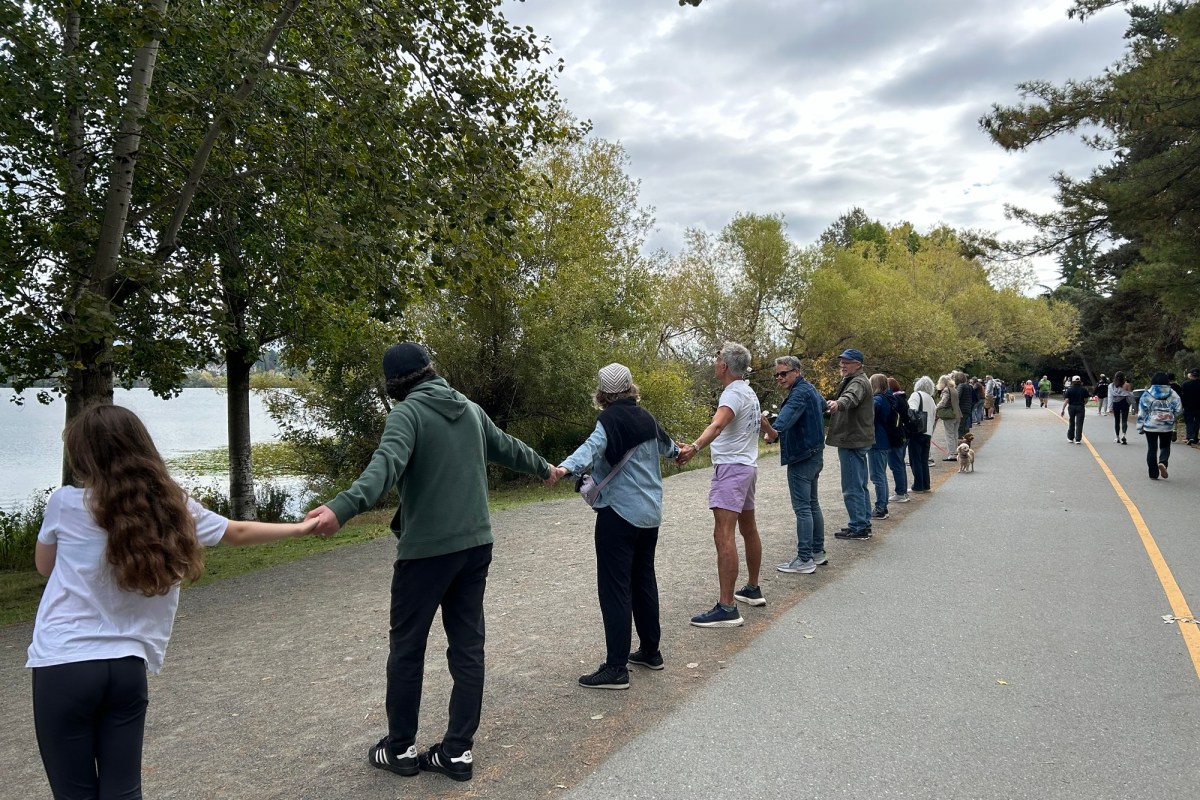
They both answered that their favorite part when we went down to the little lake that is a five minute walk from our house and participated in a Stand Up For Democracy event. The organizers were trying to gather enough people to create a continuous loop of people to encircle the lake which is three miles in circumference.

What surprised me about the answer was they liked that even more than watching the Mariners down at the pub with our friend, Eric. Or playing with their friends, skateboarding, or building imaginary spaceships.

My kids can’t yet spell out the details of what makes a democracy, monarchy, or autocracy. But they can tell the good feeling of standing up for what matters and the sense of community that comes from people trying to quietly show their commitment. It’s authentic, it’s strong, and it feels better than worry.

I think they’ve got that right.

(featured photo is mine)

You can find me on LinkedIn: https://www.linkedin.com/in/wynneleon/ and Instagram @wynneleon

I host the How to Share podcast, a podcast about collaboration – sharing leads to success.

I also co-host the Sharing the Heart of the Matter podcast, an author, creator and storytelling podcast with the amazing Vicki Atkinson.

How to Share: Secrets of Collaborative Leadership

The best leader is the one who has sense enough to pick good men to do what he wants done, and the self-restraint to keep from meddling with them while they do it.” – Theodore Roosevelt

I played on a tennis team when I was in my 20’s. It was a loosely organized group of women who played at the public tennis courts. We were part of a league that created matches with other teams, some of whom were the “fancy” ones who belonged to a club with a pro.

But my team had a secret weapon: our coach, Evan. A quiet-spoken man who seemed to take everything in. He’d meet with us at practice and not only run drills to improve our skills but also strategically position who should play singles versus doubles, and forehand versus backhand.

I don’t remember our records of wins and losses so it probably wasn’t that great. But I know we got better as a team and also as individuals. It was largely because of Evan. He could see our strengths and vulnerabilities and help us position them to the best advantage.

I was reminded of Coach Evan when I recently talked with John Hernandez, the Director of IT at Leisure Care on the How to Share podcast. John has an incredibly collaborative leadership style and knows how to balance giving people on his team leadership, agency, and backup when needed.

In short, he’s a very good coach for a strong team.

John told me how he landed on this leadership style and how it’s worked as his team and responsibilities have grown. We talked about how people in technology can sometimes be protective of their knowledge and not want to share. And we discussed how AI changes the game for so many people in technology and how to wrangle it as an asset, not a competitor.

I asked John about how he adapts his message for people who are less technical. He brought it back to the power of telling a story and finding key beats, regardless of the topic.

This is a great episode about how leadership, openness, curiosity translates to infectious passion for sharing – and for team building. I know you’ll love it!

Takeaways

  • John emphasizes the importance of sharing knowledge to build effective teams.
  • A collaborative leadership style fosters a culture of openness and mentorship.
  • Technology professionals often hoard knowledge due to fear of job security.
  • AI is changing the landscape of IT, enabling more collaboration.
  • Storytelling can help convey complex technical concepts.
  • Creating a supportive environment encourages team members to grow.
  • Passion for technology can be infectious and motivate others.
  • Adapting messages for different audiences is crucial in IT.
  • Building a knowledge-sharing culture can lead to better team dynamics.

Here’s a clip of John describing how he landed on his leadership style:

Here are some ways you can listen and watch this infectiously energizing episode:

Please listen, watch, provide feedback and subscribe.

Secrets of Collaborative Leadership transcript

How to Share Our Luck with Gil Gillenwater How To Share

In this enlightening conversation, Gil Gillenwater is with host Wynne Leon and shares his experiences and insights from over 35 years of philanthropic work along the US-Mexico border. He discusses his book, 'Hope on the Border,' which highlights the transformative power of education and community service. Gil emphasizes the importance of enlightened self-interest over traditional charity, advocating for a model that empowers individuals and fosters dignity. He explores the duality of poverty, the need for sustainable opportunities, and the joy found in serving others, ultimately presenting a vision for a more connected and compassionate world.TakeawaysEducation is the key to breaking the cycle of poverty.Enlightened self-interest can lead to personal and communal growth.Charity should not be viewed as a sacrifice but as a mutual benefit.Volunteering provides a sense of purpose and fulfillment.Welfare can disempower individuals and communities.Community service fosters connections and shared humanity.The disparity in wealth is a significant issue that needs addressing.Experiencing poverty firsthand can change perspectives.Creating opportunities in one's home country can reduce migration.The joy of service is a pathway to personal happiness.Links for this episode:How to Share homeHope on the Border at AmazonGil's organization: Rancho FelizGil Gillenwater on FacebookWynne’s book about her beloved father: Finding My Father’s Faith; Blog: https://wynneleon.com/; Substack: https://wynneleon930758.substack.com/
  1. How to Share Our Luck with Gil Gillenwater
  2. How to Share 1970's Chicago with Doug. E. Jones
  3. How to Share Feedback with Dr. Vicki Atkinson
  4. How to Share the Next Generation with Mari Sarkisian Wyatt
  5. How to Share Impactfully with Social Media Friends with Amy Weinland Daughters

Links for this episode:

John Hernandez on LinkedIn

How to Share Direction

A leader is anyone who holds him or herself accountable for finding potential in people or processes.” – Brené Brown

Years ago I was talking with a man who was a member of the last church my dad led. Were we talking about my dear father and the man quipped, “You can’t say ‘no’ to Dick Leon.

I had a good laugh about the truth of that statement. My dad asked a lot of people to do a lot of things – serve on committees, volunteer, contribute to a capital campaign. And if you said, “no,” it wasn’t that my dad would judge you, get mad, try the silent treatment, or blackball you. It was worse.

He’d get to know you.

When I talked with him about his leadership style, my dad told me:

“One of the problems that I see with a lot of young pastors is that they’ve been attracted to the ministry because they have seen someone up front doing a nice job preaching or teaching and they love the presentation side.

I keep saying to them, ministry is in the details. It’s getting systems that work in terms of management of the church, people who want to get involved, you want to make sure that they have a meaningful task and that they are rewarded, listened to, and that they feel befriended.

One of the things that I would often teach is when you have an elder that is going to give themselves to leadership for three years, the question you should ask yourself is, ‘At the end of the three years, do these people love the Lord, love the church and love their sense of ministry more than when you met them?’ It’s not ‘How do I put up with them for three years?’ but ‘How can I help them grow as people during their three years?’

It changes the whole sense from how do I get my things done to how do I serve these people? How do I befriend them? How can I help them? How do we nurture them? With a committee or an elder or a deacon or an officer of the church, you’ve got a window into their life that you’ll never have again so how do you use that? How are you doing? What is going on in your life? How can I be of help?”

Yeah…very few people said “no” to Dick Leon. But it’s a hard example to put into action, especially in different industries or scenarios. When heading a volunteer team full of big personalities or working within a competitive company where everyone is super smart, how do you bring that same attitude of empowerment and sharing?

To answer that question, I recorded a How To Share podcast conversation with my friend and climbing buddy, Doug Hauger. Doug had a very successful career as a technology executive and leads personal and professional projects with a similar style to my father’s.

In this episode, Doug and I talk about the intricacies of leadership, emphasizing the importance of sharing, vulnerability, and empowerment. We explore how confidence plays a role in leadership, the necessity of embracing uncertainty, and the dynamics of team interactions, especially when faced with challenging personalities. Doug shares insights from his extensive experience in tech leadership, highlighting the value of wisdom and the importance of creating an environment where team members feel empowered to share and learn from failures. The conversation culminates in the realization that true leadership involves being open, vulnerable, and willing to adapt, ultimately leading to a more liberated and effective leadership style.

We also tell quite a few climbing stories which are very good analogies for leadership success and direction.

Takeaways

  • Leadership requires confidence and the ability to embrace uncertainty.
  • Being open to feedback is crucial for effective leadership.
  • Vulnerability fosters trust and encourages team sharing.
  • Successful leaders create an environment of two-way communication.
  • Wisdom and experience are essential in guiding teams.
  • Empowering others leads to a more productive team dynamic.
  • Acknowledging failure is part of the learning process.
  • Humility allows leaders to learn from others.
  • Navigating team dynamics requires transparency and honesty.
  • Lack of transparency can add weight that hinders success and leadership effectiveness.

This is a great episode that delves into the heart of sharing power and the power of sharing. I know you’ll love it!

Here’s a short clip from our episode to give you a taste of the great conversation with the always amazing Doug Hauger:

Here are some ways you can listen and watch to the full episode:

Please listen, watch, provide feedback and subscribe.

How to Share Our Luck with Gil Gillenwater How To Share

In this enlightening conversation, Gil Gillenwater is with host Wynne Leon and shares his experiences and insights from over 35 years of philanthropic work along the US-Mexico border. He discusses his book, 'Hope on the Border,' which highlights the transformative power of education and community service. Gil emphasizes the importance of enlightened self-interest over traditional charity, advocating for a model that empowers individuals and fosters dignity. He explores the duality of poverty, the need for sustainable opportunities, and the joy found in serving others, ultimately presenting a vision for a more connected and compassionate world.TakeawaysEducation is the key to breaking the cycle of poverty.Enlightened self-interest can lead to personal and communal growth.Charity should not be viewed as a sacrifice but as a mutual benefit.Volunteering provides a sense of purpose and fulfillment.Welfare can disempower individuals and communities.Community service fosters connections and shared humanity.The disparity in wealth is a significant issue that needs addressing.Experiencing poverty firsthand can change perspectives.Creating opportunities in one's home country can reduce migration.The joy of service is a pathway to personal happiness.Links for this episode:How to Share homeHope on the Border at AmazonGil's organization: Rancho FelizGil Gillenwater on FacebookWynne’s book about her beloved father: Finding My Father’s Faith; Blog: https://wynneleon.com/; Substack: https://wynneleon930758.substack.com/
  1. How to Share Our Luck with Gil Gillenwater
  2. How to Share 1970's Chicago with Doug. E. Jones
  3. How to Share Feedback with Dr. Vicki Atkinson
  4. How to Share the Next Generation with Mari Sarkisian Wyatt
  5. How to Share Impactfully with Social Media Friends with Amy Weinland Daughters

Links for this episode:

Doug Hauger on LinkedIn

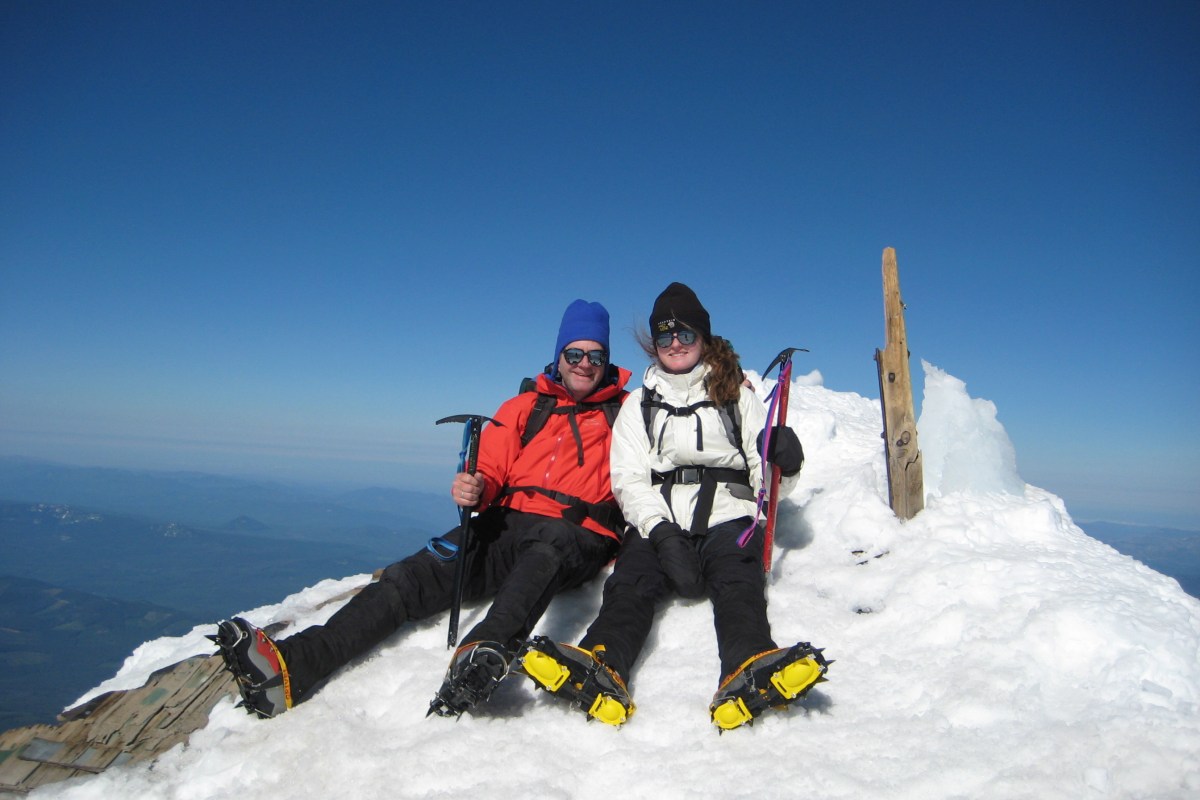
(featured photo is a picture of Doug and his daughter atop Mt. Adams – one of the climbs we talk about in this podcast)

How To Receive

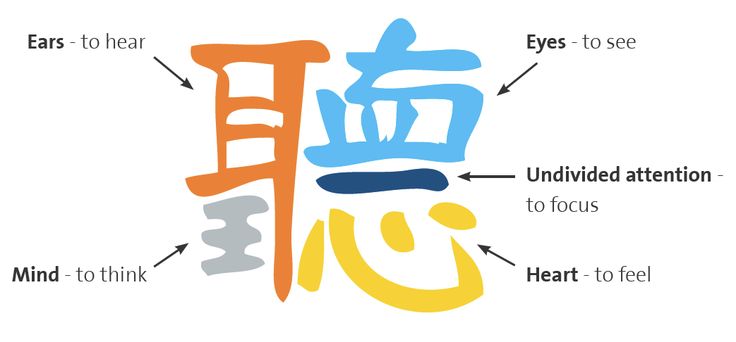
If you want to be truly understood, you need to say everything three times, in three different ways. Once for each ear…and once for the heart.” – Paula Underwood Spencer

Eight years ago at a birthday party for a friend, I met a remarkable woman. It was a milestone birthday which is why I can pinpoint it that precisely.

This woman stood out not because of what she did (a therapist I later learned) or what we talked about (stand up paddle boarding in Puget Sound) but because she listened like a lake. That was the image that came to me when talking with her. She absorbed the conversation instead of volleying back and forth like tennis. Also it seemed like her words came from her depth.

It reminds me of a phrase I heard in a eulogy almost three years ago. We were honoring a man who was the father of a childhood friend. His grandson said about him, “He loved by listening.”

Two examples that stand out in the last ten years because they were great listeners. I often make the mistake of thinking I need to say something to be remembered – but these examples remind me that just learning how to listen well is remarkable in itself.

Fortunately, I was able to have a great conversation with my dear friend, Dr. Vicki Atkinson about how to receive for the How to Share podcast. In this episode, Vicki discusses the essential skills of listening and receiving in conversations. She emphasizes the importance of reflective listening techniques, being present, and using the SLANT method to enhance communication.

Our conversation explores how to navigate conversations with empathy, the role of affirmation, and the significance of maintaining boundaries while supporting others. Vicki also highlights the growth opportunities that arise from effective listening and the need for authenticity in communication.

Here are some key takeaways:

  • Everyone can learn how to be a better listener (as Vicki says, the runway is wide!)
  • Reflective listening helps slow things down and enhances understanding.
  • Tonality is crucial in reflective listening to ensure the speaker feels heard.
  • Active listening involves being present and engaged in the conversation.
  • The SLANT method is a practical approach to effective listening.
  • Asking clarifying questions shows genuine interest in the speaker’s message.
  • Affirmation and encouragement are key components of effective listening.
  • Setting boundaries is important to avoid taking on others’ burdens.
  • Listening well can mitigate stress and prevent larger issues.
  • Authenticity in communication fosters trust and connection.

And a short clip from the episode to whet your appetite:

I’d be honored if you’d listen, watch, provide feedback and subscribe. Here are some ways you can listen and watch to the full episode:

How to Share Our Luck with Gil Gillenwater How To Share

In this enlightening conversation, Gil Gillenwater is with host Wynne Leon and shares his experiences and insights from over 35 years of philanthropic work along the US-Mexico border. He discusses his book, 'Hope on the Border,' which highlights the transformative power of education and community service. Gil emphasizes the importance of enlightened self-interest over traditional charity, advocating for a model that empowers individuals and fosters dignity. He explores the duality of poverty, the need for sustainable opportunities, and the joy found in serving others, ultimately presenting a vision for a more connected and compassionate world.TakeawaysEducation is the key to breaking the cycle of poverty.Enlightened self-interest can lead to personal and communal growth.Charity should not be viewed as a sacrifice but as a mutual benefit.Volunteering provides a sense of purpose and fulfillment.Welfare can disempower individuals and communities.Community service fosters connections and shared humanity.The disparity in wealth is a significant issue that needs addressing.Experiencing poverty firsthand can change perspectives.Creating opportunities in one's home country can reduce migration.The joy of service is a pathway to personal happiness.Links for this episode:How to Share homeHope on the Border at AmazonGil's organization: Rancho FelizGil Gillenwater on FacebookWynne’s book about her beloved father: Finding My Father’s Faith; Blog: https://wynneleon.com/; Substack: https://wynneleon930758.substack.com/
  1. How to Share Our Luck with Gil Gillenwater
  2. How to Share 1970's Chicago with Doug. E. Jones
  3. How to Share Feedback with Dr. Vicki Atkinson
  4. How to Share the Next Generation with Mari Sarkisian Wyatt
  5. How to Share Impactfully with Social Media Friends with Amy Weinland Daughters

How to Receive with Dr. Vicki Atkinson transcript

Links for this episode:

Dr. Vicki Atkinson at the ⁠Atkinson Group Solutions⁠; Vicki’s book about resilience and love: Surviving Sue; Blog: https://victoriaponders.com/

⁠A is for Ambivalence⁠ by Vicki Atkinson

(Featured photo stems from Vicki’s comment about the Chinese ideogram for undivided attention in this episode. It’s sourced from undivided attention from Pinterest by Nancy Sherr)

Leadership Lessons From Climbing

Great people are those who make others feel that they, too, can become great.” – Mark Twain

We went to Mt. Rainier this weekend and spent two nights at Paradise Inn, one of the historical National Park Lodges first opened in 1917. It’s has no Wi-Fi connectivity: instead it has this fantastic lobby area where guests can hang out by the fireplaces, listen to ranger talks in the evening, find a majestic wood table and play cards, or post a postcard in the “mail stump” – a huge stump next to the registration desk. The rooms are like tiny postage stamps in which you have to be creative about where to hang your wet clothes.

Paradise Inn is at 5,420 feet and is the entry point for most of the guided climbs. There are many routes up the mountain, but this is the route I took for the times I climbed on Mt. Rainier (summit is at 14,410 feet). That sounds like I did a lot, which is not the case – four climbs, two of which we summitted. But I did spend a lot of time doing training hikes on the paths out of Paradise.

Arriving at Paradise was like plugging myself into a higher voltage circuit. I don’t think I stopped grinning all weekend. So, buckle up for some climbing metaphors….

My friend Eric traveled with us this weekend. He did a fair amount of climbing back in the day as well so between the two of us, we have a fair number of climbing stories.

Leading my kids out for a couple of hikes this weekend reminded me of all the good and bad things about hiking with a group. The path up from Paradise starts out paved. But at this time of year, it was still covered with slushy snow.

Eric had a story about a guy he used to climb with named Dave. Dave was 6’3” with size 13 shoes. Apparently, everyone cheered when Dave was leading because he’d kick in the best steps. When the snow is fresh or icy, the person in the lead does the work to kick in solid steps. It’s like doing two or three stomps with each step. It’s exhausting. But for the rest of the team, if the steps kicked in are nicely spaced and solid, it’s a far easier experience, somewhat akin to climbing a set of stairs.

And that’s just one factor in which the person leading can affect the whole group. Going at a steady pace, not too fast and not too slow, and calling breaks at the right time all help everyone settle into a rhythm. Then there’s also the matter of encouragement.

I remember a practice climb on Mt. Rainier I did years ago when I felt totally spent halfway through. My friend encouraged me to take a break to eat and drink before deciding whether I could continue. He was absolutely right – I was totally fine to continue. Great guides are so good at making this call, knowing who needs to take a break and who needs to turn back. It’s not a one-size-fit-all encouragement train.

And climbers have great phrases to encapsulate the down sides, not that they own them by any stretch. There’s “Embrace the suck” to encourage leaning in when the going is tough. And there’s also the acknowledgement that someone has to carry the poop bucket – literally and metaphorically, our stuff goes with us.

Funny that my happy place is one where all those realities, including the suck, are parts of the experience.

Leading my own little team reminded me that life is better when we kick in steps for others, set a sustainable pace, and get a feel for when to encourage and when to walk alongside others when they need to go down to camp.

(featured photo is mine: Mt. Rainier taken from Paradise)

Related climbing metaphor posts:

Frozen Heart

Guides for Transformation

Finding a Rhythm

Climbing Out of My Gunk

Friendship Brownies

The Return Trip

Family Dynamics

Gotta move different when you want different.” – unknown

Last Monday I got frustrated with Miss O when we were getting ready for school. Or should I say, not getting ready for school. I prompted her five times to get her shoes on, she got mad at me for repeating myself. I told her that I wouldn’t have to repeat myself if she would put her shoes on…nothing new. I’m sure a conversation that happens between kids and parents in households all over the world since the beginning of time. Or at least since shoes became a thing.

So we were both irritated when I dropped her off to school. And then Mr. D was silent as we drove on. By the time we walked in the front door of his pre-school, it was clear that he was upset. We sat in the chairs outside his classroom for a while, and then had a tearful drop-off which is unusual for Mr. D.

This has happened enough times for me to discern the pattern – Mr. D is so attuned to the emotions of the household that any disturbances in our mostly good natured vibe affect him, even when the upset doesn’t involve him.   

Wow, families are complex. Now I don’t have to just be responsible for my own emotions but also the impact that I’m having on the group and vice versa?

I think about what it was like in my family growing up. My sister was usually upset about something, my brother was tired of hearing her complain and just disconnected, and I felt that I needed to be no problem since my parents were having to deal with my sister. It’s a pattern we maintain, by and large, to this day.

My mathematical nature likes patterns – they are so useful to predict what will happen next. But sometimes patterns just hold us in a mindless call and response. Until one person breaks out by saying, “I’m so tired of this banter that keeps us from saying anything real,” the other person(s) in the pattern may not realize there is something habitual that has been holding everyone in place.

Thinking back to my little family, I think this applies too. When I get tired of the same conversation about the same shoes, I’m always surprised how effective it is to change the dynamic by changing the order. Shoes before breakfast helps break the stalemate. What’s harder is changing the natural tendency that Mr. D has to carry the tension. Maybe that’s a case of where making it visible helps to dispel it. Hopefully that works because we aren’t going to stop wearing shoes.

I’ve written a companion piece on the Heart of the Matter blog about some advice I got from a friend long ago to never back a kid into a corner and instead always offer them a way out: Building Bridges to Each Other. Please check it out if you have a moment.

(featured photo is a pair of Converse high tops that Miss O got as hand-me-downs)

Take Me To Your Leader

The best leader is the one who has sense enough to pick good men to do what he wants done, and the self-restraint to keep from meddling with them while they do it.” – Theodore Roosevelt

Can you picture the best leader you’ve ever worked for or witnessed? If your experience is anything like mine, I’m guessing that’s a quick question to answer because I think good leaders are fairly rare. People that can competently manage are more common and it seems, at least in the tech industry, the field in which I’ve always worked, that they are often given leadership positions because they can bridge the divide between technology and vision. Against that field, the folks that can really lead shine like stars in a dark sky.

Years ago I was part of a team putting on an event for which Jeff Raikes was the keynote speaker. At the time, Jeff was a senior VP at Microsoft and he’d later go on to be president of Microsoft and then CEO of the Bill & Melinda Gates foundation. I was a consultant responsible for the technology of the event so not directly or indirectly part of Jeff’s team but we all worked long hours getting the show polished.

Jeff had come in for a rehearsal late one afternoon and then was back the next morning for another practice. At that second practice, someone handed him his script and it didn’t include the edits from the evening before. Jeff exploded, throwing the script, screaming at the person who handed it to him, and then marching off the stage. As immature as it seemed – this was reportedly par for the course for Microsoft whose top management team was filled with people GREAT at speaking to vision but often tantrum-driven managers.

In contrast to that, I’m thinking of my friend, Dave, as the best leader I’ve ever worked for. I’m going by Brené Brown’s definition of a leader, “anyone who holds him or herself accountable for finding potential in people or processes.” Here are some of the things that made Dave stand out for me:

  • He rarely spent any time at his desk. His absences had two benefits. First, they allowed his people to solve their own problems instead of running to him. Those solutions were often better because they were engineered from the inside instead of dictated from the outside.
    Secondly, Dave wasn’t in his office because he spent the majority of his time managing up. Instead of waiting for meetings to deliver news about progress, good and bad, he used regular and informal conversations so nothing was surprising to his management.
  • Dave cared about the growth of his people. So, if someone wanted to try something outside their normal lane, he was all for it. He’d ask how he could help – and not just at the beginning but on an ongoing basis.
  • The most remarkable thing about him was that Dave wasn’t scared. When we encountered setbacks or side discoveries, Dave led from a place of courage. One of his favorite books was Rules for Revolutionaries by Guy Kawasaki. Mixing things up to see what boundaries or mindsets could be torn down seemed to be Dave’s favorite role – and he exceled at it.

As a bonus, Dave is funny and has some of the best aphorisms I’ve ever heard. People or solutions who don’t deliver were “all sizzle and no steak.” And when talking about how to find customers is “looking for someone who had pain and the checkbook in the same pocket.” Dysfunctional teams are “goat rodeos.” And I learned from Dave, goat rodeos are a real thing for young kids to practice their rodeo skills before they graduate to horses. He says, “Once you’ve seen one, they are the perfect analogy for a disastrous team or situation. The goats always win. 🙂 “

It’s been more than 20 years since I’ve worked for Dave but I still think of him fondly and often as the example what we can do when we work from courage instead of fear. And maybe that’s the mark of a true leader – they leave a lasting impression!

I was inspired to write this post after a recent encounter with someone who wasn’t demonstrating leadership skills. It pushed me to wonder – was this person doing his best? I’ve written about that on my Heart of the Matter post today: Doing the Best I Can.

(featured photo from Pexels)

The Vibe of the Group

If you want to lift yourself up, lift up someone else.” – Booker T. Washington

In my job as an IT consultant, I get to be the fly on the wall of other people’s businesses and watch how organizations work (or not work together). In the twenty-five years I’ve done this, it’s become a game to figure out the personality of the leader based on the vibe of the group. Or vice versa, if I meet the leader first, and then I try to guess the vibe of the group.

In a large organization like Microsoft, I might work with a group that is harsh and quick to blame and when I meet the manager, it’s no surprise that he’s a complete jerk – and willing to wear that persona on the outside.

I’ve seen it in so many ways: if the group is loud and comical, the manager is likely the life of the party character; if the group vibe is nerdy and quiet, then the manager is often brilliant and introverted.

So I was fascinated recently to work with a small company of independent, self-starters who felt to me as if they were disconnected and uninterested. They were all doing really great work but when the language switched to what the company was doing, it felt flat.

And then I met the leader — someone who was saying all the right things about being a great group of people but frequently only used “I” language. As in, “what I’m looking to accomplish, this is what I’m good at, and here’s what I need.”

Over a few months, I’ve watched how that is reflected in meetings and their work. If the leader is doing something, he wants to know how he did and will share his metrics. But if anyone else presents or finishes a project, he rarely comments or even seems to notice.

Brené Brown defines a leader as “anyone who holds him or herself accountable for finding potential in people or processes.”  I come back to that definition again and again because I’ve seen many styles of leadership – and tried it myself. Groups seem to be more successful, no matter what the persona, as long as the leader is interested in something bigger than themselves.

As Booker T. Washington says in the quote for this post, if we lift up others, it will lift us up as well. In many ways that is self-serving – but the paradox lies in the fact that if people are truly self-serving, they can’t do it authentically.

My little game keeps me entertained and less nervous when I’m meeting a group of new people. But it has also taught me, again and again, that who we are influences the people around us in ways that we might not even know. And if who we are is someone who lifts others up, it’s rippling out in a vibe to everyone around.

(featured photo from Pexels)

Leading In My Microcosm

If you think you are too small to make a difference, try sleeping with a mosquito.” – Dalai Lama

I got angry at my kids yesterday morning. It was a mixture of things – things were tense on a work project so I was already primed and then Miss O’s first words on a Monday morning were “Why does Mr. D get to?” But it was a completely whopper of one – “Why does Mr. D get to sleep in his own bed?”

Umm, it’s as if all the efforts I’ve made to get her to sleep in her own room instead of mine were completely forgotten. The lighting, the sheets, the help cleaning her room, the cozy warm blankets. And I’ve done this multiple times, over and over and still she wanders into my bed in the night or chooses to start there.

So the injustice of the question pricked me and I got angry. I didn’t yell but I said it was a completely unfair question that not only had we had talked about before but also was her choice, walked out of the room and slammed a few cupboards as I was making lunches.

Anger is not an emotion I’m comfortable with. I grew up with an older sister that was consistently angry and my mom can flash pretty hot although she doesn’t do it very often. It’s not that I swallow my anger – it’s that I don’t feel it very often. I feel frustrated, disappointed, discouraged much more often than I feel mad. Or at least so I think.

But it was what happened next that surprised me. My kids didn’t fuss at all at getting ready for school on a Monday morning. They did everything they were supposed to when they were supposed to do it more or less without whining, crying or protesting. They banded together, helped each other, and cooperated beautifully.

In that respect, my anger made things work way better for me. And it made me wonder if it’s such an effective tool, why would I not choose to use it more often? Other than the fact that I’m not a very good actor and couldn’t pull it off.

That’s a theoretical question of course. My experience growing up taught me how corrosive anger is. If I used anger as a tool, I might get what I want on the surface but I wouldn’t have many real relationships – not ones where people were vulnerable and shared. Not relationships where we could dare to explore together. And it would undercut the honest expression of growth and humanity.

It reminds me of the “power over” model. Researcher and author Brené Brown differentiates power over as power that leverages fear as opposed to power to, power with and power within which are collaborative and growth models for power.

In respect to my kids, I might be able to control them better for a time if I tried to pull off a power over model but it feels like it would be a step backwards in all the learning we’ve done to try to acknowledge our emotions and still do what needs to be done. Moreover, it feels like it would prime them to go out into the world thinking that fear is an effective strategy in dealing with others. And my teeny, tiny microcosm, that feels like I’d be adding to the aggression of the world instead of the compassion of the world.

In short, it feels like that the power over/anger/fear model is being a crappy leader. Especially when using Brené Brown’s definition of a leader as “anyone who holds him or herself accountable for finding potential in people or processes.” 

So, on the Monday morning in question, I choose to instead apologize for my anger and we went off to school and work with hugs all around. I sense that I’m choosing a style of parenting that takes more energy for now but in the end benefits our relationships with each other and the world. And that seems worth the effort.

(featured photo from Pexels)