How Badly Do You Want It?

A child can teach an adult three things:
To be happy for no reason,
To always be busy with something, and
To know how to demand with all his might that which he desires.” – Paulo Coehlo

I think we are born with a great capacity for persistence. It’s not just the quote that makes me think so.

The other day I was out beach combing with my kids. After we spent about 45 minutes tickling the clams so they’d squirt, picking up the jagged sea glass (that sounds so much better than broken bottles) so it wouldn’t cut any paws, and hunting for moon snail shells, my seven-year-old son, Mr. D discovered a wide tide pool.

There were tiny fish in the pool. He declared he wanted to catch one. I wandered nearby looking at the rocks and shells and watching his efforts out of the corner of my eye. All the while thinking, “He’s never going to catch a fish with his hands.

So I emptied out our little beach bucket that I’d collected the broken glass and shells in and handed it to him.  The sand was too wet to sit so I kept circling as I daydreamed about sitting down with another cup of tea.

Finally, I took off my shoes and socks and waded in to the tide pool with him. It was warm and about the size a swimming pool with plenty of seaweed for the fish to hide under. I thought I could scare the fish towards him and hopefully speed up the process.

We spotted a flat fish that was almost an inch wide and the color of the sand. He was bigger than the other fish Mr. D had been chasing so he named him, “The King.” Every time Mr. D would get close, the fish would embed himself in the sand. The King’s camouflage was so good that he was nearly impossible to spot.

But Mr. D stayed at it and within minutes, we’d spot him again. As much as I wanted Mr. D to have success, I also was tiring of what seemed like a fruitless process. Isn’t this where we give up and call it a lesson in resilience?

I stepped out of the tide pool and started walking towards my shoes. I called over to Mr. D that we were heading back in five minutes. He responded with a verbal groan but kept working at catching The King.

And about five minutes later, he bent down with his hands together and scooped up some sand. He shouted, “I caught The King!!”

Indeed he did – with his bare hands. I took in his glowing grin as I brought him the bucket to put The King in. Then we happily headed back to where we were staying so Mr. D could show his sister the fish.

Then, after taking a couple of photos and telling the story, he walked The King down to the water and returned him to the bay.

That’s when I realized that persistence was something purer than I often see it these days: it’s keeping with our goals, finding the people that will wade in and help, ignoring anyone that tells us we can’t do it. And that staying with it doesn’t have to preclude being kind and accepting – because we can still tell the story and then let the fish swim away.

So… how badly do you want it?
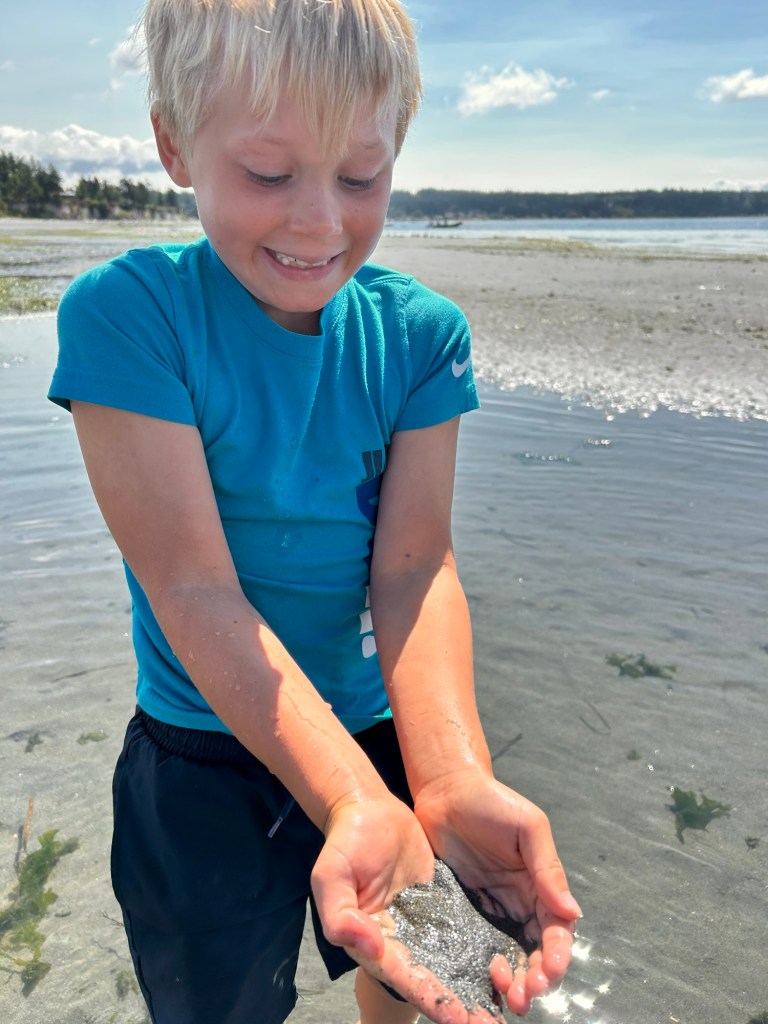
(featured photo is mine of Mr. D returning The King to the water, second picture is of Mr. D with The King)

If my work has encouraged, inspired, or helped you try something new, consider supporting it with a small “cup of coffee” donation. Your support helps me keep creating conversations, stories, and resources that cheer people on as they do brave, meaningful work.

You can find me on LinkedIn: https://www.linkedin.com/in/wynneleon/ and Instagram wynneleon

Please check out the The Life of Try podcast Where trying becomes the spark for personal growth, discovery, and re-invention!

Self-Limiting Beliefs

Man often becomes what he believes himself to be. If I keep on saying to myself that I cannot do a certain thing, it is possible that I may end by really becoming incapable of doing it. On the contrary, if I have the belief that I can do it, I shall surely acquire the capacity to do it even if I may not have it at the beginning.” – Mahatma Gandhi

When I was 22-years-old, a cute boy that I had just started dating invited me on a backpacking trip on the Olympic Peninsula to visit some natural hot springs. The group that was going included another couple that I liked hanging out with because they their conversational patter was a perfect mix of smart, fun, and cool.

I hesitated because I didn’t think I was outdoorsy. Outside of organized groups, I hadn’t really camped or hiked much in my life so far. But the prospect of spending time with my date and other interesting people outweighed my reluctance. And I was rewarded with a great weekend fording streams, soaking in hot springs, and having interesting conversations by the campfire. It was enough to plant a seed that maybe I was outdoorsy. It was an important identity shift that made way for my thought seven years later when I saw Mt. Rainier in the morning sun, “I should climb that.”

And… that opened the door for me to climb not only the Pacific NW volcanoes, but also peaks in Mexico, Russia, Nepal, Italy and Peru. Thank goodness for that cute guy! Even though the relationship wasn’t a significant one in my life, the change in mentality was.

So in this episode of The Life of Try, I talk with Kevin Yoder, creator of Infinite U, about identity-first transformation and why lasting personal growth begins with who we believe we are becoming. What if the reason you feel stuck isn’t a lack of discipline, strategy, or ambition—but an outdated identity you’ve outgrown?

Kevin brings more than two decades of experience in real estate, leadership, coaching, and personal development to a powerful conversation about self-image, paradigms, confidence ceilings, income ceilings, and the invisible patterns that keep capable people from reaching their next level.

Together, Kevin and I explore the question he learned from Bob Proctor—“How are your results?”—and how honest awareness can open the door to meaningful change.

Key Takeaways

  • Lasting change begins with identity: the way we see ourselves often shapes what we believe is possible, more than strategy alone.
  • Invisible ceilings—around confidence, income, consistency, or growth—can point to outdated self-image patterns that are ready to be examined.
  • The question “How are your results?” offers a simple but powerful way to practice honesty, awareness, and intentional transformation.
  • Attitude becomes the bridge between belief and behavior when our thoughts, words, feelings, and actions become more aligned with who we are trying to become.

If you’ve ever started strong and stalled out, felt like you had “weights around your ankles,” or wondered why the next version of your life still feels just out of reach, this episode offers a hopeful, practical look at how to begin again from the inside out. Listen for insights on identity transformation, personal growth, self-concept, mindset, attitude, and building a life that reflects who you are ready to become.

Here are some other ways you can listen and watch this episode:

Links for this episode:

Identity Before Strategy: How To Break Through Invisible Glass Ceilings With Kevin Yoder transcript

Infinite U

Infinite U Self-Assessment: https://infiniteuassessment.com

 Other episodes you might enjoy

⁠The Power of Looking At Your Life Through a New Lens⁠

⁠How to Create Opportunities In Life | Motive + Means = Success Mindset⁠

⁠How to Tell Relatable Stories⁠

(featured photo from Pexels)

If my work has encouraged, inspired, or helped you try something new, consider supporting it with a small “cup of coffee” donation. Your support helps me keep creating conversations, stories, and resources that cheer people on as they do brave, meaningful work.

You can find me on LinkedIn: https://www.linkedin.com/in/wynneleon/ and Instagram wynneleon

Effort Keeps You Eligible for Opportunity

Start where you are. Use what you have. Do what you can.” – Arthur Ashe

Golf is the sport that proves that I love my family. That is to say, it’s not my favorite sport but I’ll play if my people want to. So the other day I was playing with my almost seven-year-old son.

We were at a local city-run pitch and putt course where we can play nine par three holes for $12. I stepped up to the tee on the eighth hole, swung hard, and…completely and embarrassingly missed the ball. After a moment to regain my balance and composure, I swung again. It was my best hit of the round. The ball landed two feet from the hole and I got a birdie.

It made me laugh, and it also brought me back to a question I’ve been sitting with. What if coming in second, or a getting a second chance, is not failure but preparation?

In this episode of The Life of Try, I explore the hidden power of effort, persistence, and staying ready when life does not put you out front.

Through a business lesson about losing a big opportunity, Nathan Martin’s dramatic 2026 LA Marathon finish (thanks to Brian from Writing From the Heart with Brian), and the long-build success story of Dutch Bros Coffee, this episode is a reminder that effort keeps you eligible for the opening when it appears.

Key Takeaways:

  • Second place is not always failure; sometimes it is the place where patience, preparation, and readiness are built.
  • Effort keeps you eligible for opportunity, even when you are not out front or visible to everyone else.
  • Staying in the race matters because the opening often appears after most people have already slowed down or stopped trying.
  • A disappointing loss can still position you for a future win if you keep showing up with humility and persistence.
  • Nathan Martin’s dramatic LA Marathon finish is a reminder that you do not have to be in the picture early to have a meaningful finish.
  • Long-term success, like the Dutch Bros story, is often built through years of unseen work, reinvention, and consistent effort.

If you are learning how to keep going, build resilience, try again after disappointment, or trust the unseen work behind personal growth, this episode will encourage you to stay in position, keep showing up, and keep trying.

Here are some other ways you can listen and watch this episode:

Links for this episode:

Why Second Place Might be Preparation, Not Failure transcript

➡️Brian Hannon’s post ⁠It’s a Sprint to the Finish and the Winner Is… ⁠

🎥  Other episodes you might enjoy

➡️ ⁠Encourage Effort, Not Results | How to Build Resilience and Confidence⁠

➡️ ⁠The Courage to Try Something New with Lindsey Goldstein⁠

➡️ ⁠How to Write the Book You’ve Been Dreaming About with Dr. Vicki Atkinson

(featured photo from Pexels)

The Power of Small Wins

One of the secrets of a happy life is continuous small treats.” – Iris Murdoch

I learned this reflective practice from my meditation teacher, Deirdre: before stepping out of a space at the end of the day (the office, a studio, the kitchen), pause for a moment to think about what you did, who you saw, any breakthroughs (or breakdowns, for that matter) you had. It’s a chance to absorb the day before you turn out the lights and leave.

I’m not very consistent in remembering to do this practice. But when I do, I find that it helps me to savor the day as well as to honor the small steps that mark progress. It counterbalances my inclination to be focused on the next thing and helps to answer a question that I struggle with: when should we celebrate progress—only at the finish line, or all along the way?

In this episode of The Life of Try, I explore the power of small wins, tiny habits, and incremental progress. Drawing from a personal story about preparing my home for an Airbnb experiment during the World Cup in Seattle, I reflect on what it means to keep going when growth is messy, nonlinear, and full of setbacks.

I offer some insights from Director of Stanford’s Behavior Design Lab, BJ Fogg, PhD, plus the long-term philosophy of Toyota’s Kaizen culture, where small daily improvements add up over time, and the practical courage found in the checklist mindset associated with Captain Sullenberger.

This episode is about personal growth, habit formation, celebrating small victories, and learning to recognize that progress doesn’t have to be dramatic to matter.

Here are some takeaways:

  • Why celebrating small wins can help you stay motivated even when progress feels slow or messy
  • How BJ Fogg’s Tiny Habits approach shows that tiny celebrations can reinforce lasting behavior change
  • What Toyota’s Kaizen philosophy teaches about the long-term power of small, consistent improvements
  • How checklists and small-step courage can help you keep going when you feel overwhelmed or stuck
  • Why growth often looks nonlinear, and how to recognize progress before the final result arrives
  • How honoring effort along the way can help you build resilience, confidence, and momentum

If you’ve ever felt stuck, overlooked your own progress, or wondered whether the little steps count, this episode will remind you that they do. Small wins matter. Tiny steps matter. And trying counts, even before the big outcome arrives.

Here are some other ways you can listen and watch this episode:

Brand Strategy for Humans with Nancy Martira The Life of Try: Personal growth, one try at a time.

In this episode of The Life of Try, Wynne Leon talks with brand strategist Nancy Martira of Clew Strategy about how to market yourself, promote your work, and build a personal brand without losing your humanity.Nancy helps expert-led businesses, authors, job seekers, and knowledge-based professionals find what makes them impossible to ignore. Together, Wynne and Nancy explore the difference between brand and reputation, the “say-do gap” between what we claim and how people experience us, and why authentic personal branding begins with believing you have something of real value to offer.This conversation is especially helpful for writers, creators, entrepreneurs, and professionals who feel uncomfortable with self-promotion. Nancy offers a practical and compassionate reframe: instead of trying to be everywhere or shouting into every algorithm, go where you’re wanted. Find the people who are already looking for what you have to give.Wynne and Nancy also talk about finding your unique value proposition, identifying your “iconic space,” using storytelling in book marketing and job searches, and navigating AI tools without sacrificing your voice, ethics, or originality. Nancy’s approach to brand strategy is deeply human, clear, and encouraging — perfect for anyone trying to become more visible while staying true to themselves.If you’ve ever wondered how to market a book, promote your business, refresh your LinkedIn profile, stand out in a crowded job market, or build a personal brand that feels authentic, this episode will help you think more clearly about reputation, positioning, storytelling, and the courage to be seen.Key Takeaways• Marketing works better when you go where you’re wanted. Instead of trying to be everywhere, focus on the audiences already looking for what you offer—readers, clients, employers, or communities who are most likely to value your work.• Find your iconic space. The goal isn’t just to list credentials or follow a formula. It’s to discover the unique value, story, and perspective that only you can bring.• Use AI as a tool, not a substitute for voice. Technology can help with SEO, titles, and tactics, but the strategy, values, and humanity behind your work need to come from you.🌐 Nancy Martira at Clew Strategy: https://www.clewstrategy.com/ Show notes and more inspiration: https://wynneleon.com🔔 Subscribe to The Life of Try for more conversations on: personal growth, creativity, reinvention, resilience, writing, and mindset.📌 Subscribe To Our YouTube Channel & Stay Updated: ABOUT MEHi, I’m Wynne Leon — host of The Life of Try, a personal growth and self-improvement podcast exploring resilience, reinvention, uncertainty, and the courage to keep trying.Through thoughtful interviews, reflective conversations, and real-life stories, I share insights to help you navigate change, get unstuck, and move forward with more intention.🌍 Website: https://wynneleon.com━━━━━━━━━━━━━━━🎥 Watch NextIdentity Before Strategy: How to Break Through Invisible Ceilings with Kevin YoderThe Power of Looking At Your Life Through a New LensHow to Tell Relatable Stories
  1. Brand Strategy for Humans with Nancy Martira
  2. Identity Before Strategy: How To Break Through Invisible Ceilings with Kevin Yoder
  3. The Power of Looking At Your Life Through a New Lens
  4. How To Tell Relatable Stories About Life
  5. Why Second Place Might Be Preparation, Not Failure

Links for this episode:

Tiny Habits by BJ Fogg, PhD on Amazon

The Tiny Habits Toolkit from BJ Fogg, PhD

How I recovered from a bout of anxiety-induced paralysis by Dan Harris

Other Episodes you Might Enjoy:

➡️⁠ Letting Go Of Outcomes: The Mindset That Keeps You Moving⁠

➡️ 4⁠8: How to Get Unstuck: Michael Yang on Saying Yes, Resilience and Coming Alive⁠

➡️ ⁠How to Reclaim Fun in Adult Life | Mike Rucker, PhD, on Joy, Burnout and the Fun Habit⁠

(featured photo from Pexels)

What Do You Know To Be True?

“You never fail until you stop trying.” – Albert Einstein

I suspect that my podcast guests rarely listen back to the episodes that they record with me. After all, they lived it once, why listen to it again? (Anyone that has podcasted with me or Vicki, feel free to jump in and contradict me on this!)

And, speaking for myself, there’s a smidge of fear when watching myself that I’ll discover something terribly wrong that I said or spinach in my teeth that I can’t undo.

But there’s a huge upside in listening back to what we’ve recorded in that it helps to see ourselves from another angle.

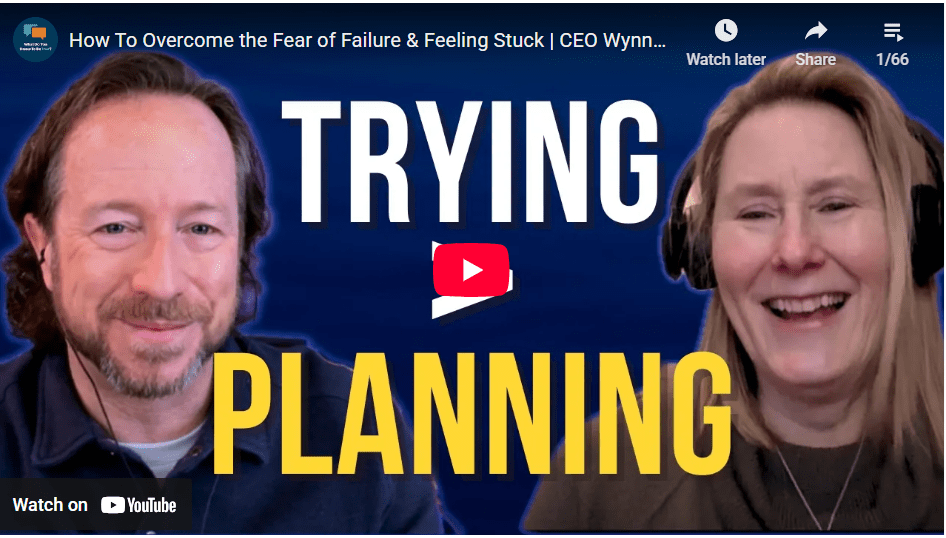
I recently was a guest on the What Do You Know To Be True? podcast with the incredible host, Roger Kastner. What Do You Know To Be True? features conversations at the intersection of leadership, neuroscience, belonging, and personal growth—inviting guests to explore the truths that shape how they lead and live.

Roger is a master at getting his guests to reveal their superpower. Watching back the episode I did with him, I was blown away by how skillful Roger is at digging into the heart of what I know to be true. [It also reminds me that I like to talk with my hands and tell a lot of climbing stories!]

In my case, my superpower is trying. In this conversation, Roger and I talk about:

  • How my electrical engineering background helped me develop my superpower
  • Why trying is different than persistence
  • How mountain climbing helped shape and shift my ability to try
  • What my system is for creating order when trying
  • How trying helps keep us from being stuck
  • How documenting what we’ve tried helps us to pass on the learning to others

Here’s the podcast episode on What Do You Know to Be True?

Other ways to watch this episode:

  • Apple podcasts and Spotify: How To Overcome the Fear of Failure & Feeling Stuck | Wynne Leon
  • YouTube: How to Overcome the Fear of Failure & Feeling Stuck | Wynne Leon on

Links for this episode:

What Do You Know To Be True? website

What Do You Know to Be True? on YouTube

Roger Kastner on LinkedIn

The Scarcity Loop

Enough is abundance to the wise.” – Euripides

Fair to say that Cooper the dog steals something in our house nearly every day. I think most of my photos of the week posts capture him with some contraband. It’s easy to do the math and figure out that he must be doing that a lot in order for me to have that many photographs.

I learned of some research this week that was a huge a-ha for me. It shed light not only on Cooper’s habits but also some of my own. On the Ten Percent Happier podcast, journalist and author Michael Easter (his most recent book is Scarcity Brain) was talking about how our ancient brain mechanisms loop us in to always wanting more.

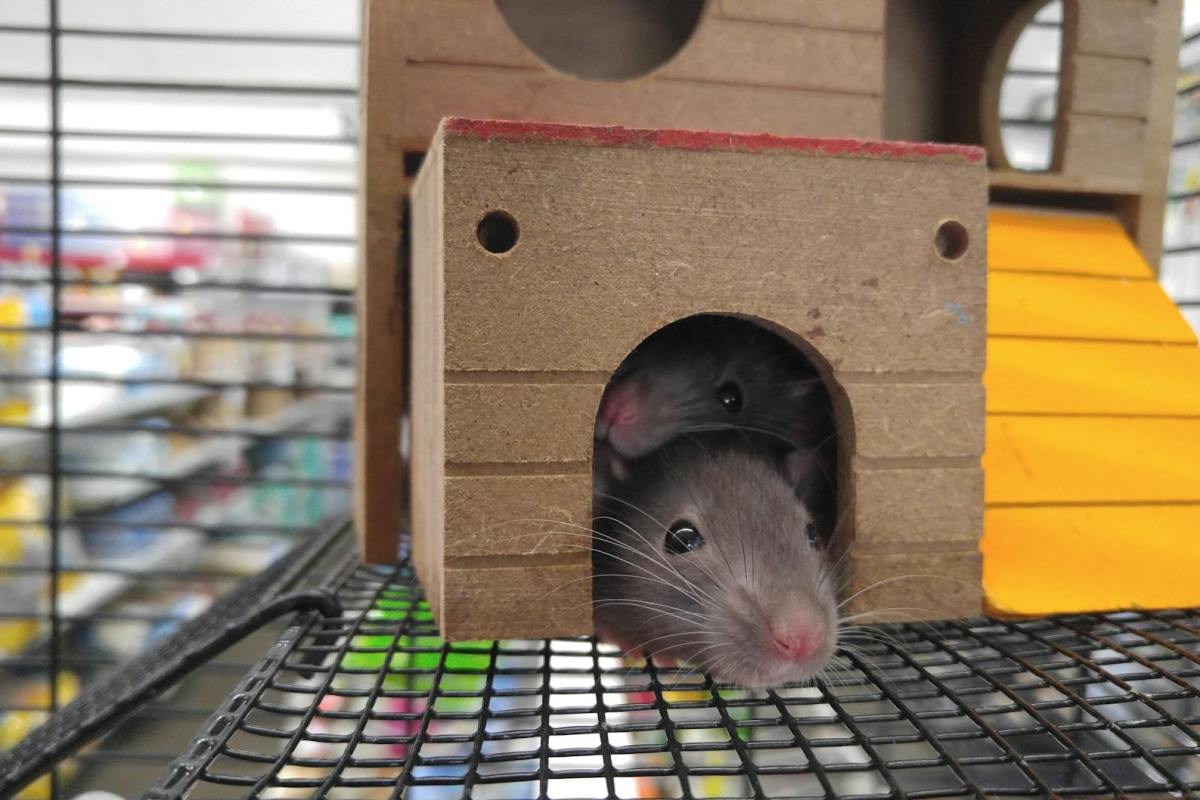
He described a research project in which rats were given a choice. The first choice was one reward system that gave them food every other time they pushed a button. The other choice was a reward system that didn’t have predictable cadence but gave them slightly more food when it did pay off (like an average of every 5th time).

The rats were choosing the second choice withe the unpredictable payoff which was surprising to the researchers. Usually they will choose what gets them the most food. The payoff of the first choice, the predictable every other time system was much higher.

The rats were living in small, plain cages. Then they changed the rats’ environment so they were living amongst plants in an environment that mimicked a natural habitat for rats. Once they changed the habitat, the rats switched to picking the every other time reward system.

The conclusion was that when we don’t have enough stimuli, we’ll make odd choices in order to spice things up. Like doomscrolling through social media, thinking we’re hungry when we aren’t, or in Cooper’s case, stealing the Christmas gnome.  

And Michael Easter’s take away on that research and other studies about what one of the best ways to get more stimuli? Getting out of our climate controlled houses to spend time in nature.

It’s funny but when I took Cooper out for a hike last week, he didn’t steal anything after we got home. Not even a dirty, sweaty sock that smelled of the trail. And for that matter – neither did I.

(featured photo from Pexels)

You can find me on LinkedIn: https://www.linkedin.com/in/wynneleon/ and Instagram @wynneleon

I host the How to Share podcast, a podcast celebrates the art of teaching, learning, giving, and growing.

I also co-host the Sharing the Heart of the Matter podcast with the amazing Vicki Atkinson.

When You Fall On Your Face

Our greatest glory is not in never falling, but in rising every time we fall.” – Confucius

This isn’t a story about me falling on my face (although I have plenty of those stories) but a recent incident when my 6-year-old son, Mr. D, fell on his. Although I’m sure I echo the sentiments of many parents when I say I’d happily take my kids’ falls for them if I could.

It happened when we were playing Little League summer ball. Ten-year-old Miss O was able to play on the team too and it was an informal sandlot team that would divide into two teams and scrimmage with whoever showed up.

There was one difference between summer ball and the first season of baseball that Mr. D played – they played outs. If someone got the ball and forced an out or tagged an out, the player would go back to the dugout.

But in this hodgepodge of rules, the teams still batted everyone in their lineup each turn at bat. The last person at bat was the “homerun hitter” meaning they and anyone else who was on base would run home.

On the last inning of a scrimmage one night in July, Mr. D was the homerun hitter. He hit the ball squarely. But by the time he’d gotten to third base and was rounding to home, the other team had gotten the ball. All the players on the other team were chasing him down the third base line. It was only about five of them but it still felt like a terrifying and mad pursuit. That’s when he fell on his face.

He was furious! His sister tried to give him a hand up and he slapped it away. So she was furious because he’d refused her help. I tried to help too but he was inconsolable. Since he was the last hitter of the last inning of the game we managed to get to the car and leave but not before everyone was well aware of our upset.

On the way home, we talked about how sports makes us want to try and how it hurts when we don’t make the play. But the tradeoff is not trying at all. Actually, Miss O and I talked about that, Mr. D said very little.

At bedtime, Mr. D went to get his journal and wrote the very first thing he’s ever written in it. He asked me, “Mom, how do you spell ‘Slide like this?’

The next morning he told me he wouldn’t be able to go to camp because he was still thinking about the baseball thing. I responded that he’d probably think about the baseball thing all day and it would be more tolerable at camp when he was busy than at home when he was not. He finally agreed to go to camp.

When we picked up the boys we were carpooling to camp with, he said to them, “I have to tell you a baseball story. It’s not good.” I was astounded. He’s not nearly as verbose as his sister.

It was only when he told the story to them that I understood that he didn’t fall on his face – he was trying to slide. But he’d never tried it before and didn’t know that you can’t slide from halfway down the base line. Or maybe you can – but it takes a lot more practice.

So, he fell on his face. He wrote about it. He told others about it. And once he did, seemed to be over it.

Here’s my takeaway. Sometimes we try new things and it doesn’t go well. It hurts like hell but you recover more quickly when you share.

(featured photo from Pexels)

You can find me on LinkedIn: https://www.linkedin.com/in/wynneleon/ and Instagram @wynneleon

I host the How to Share podcast, a podcast about collaboration – in our families, friendships, at work and in the world.

I also co-host the Sharing the Heart of the Matter podcast, an author, creator and storytelling podcast with the amazing Vicki Atkinson.

How to Share Direction

A leader is anyone who holds him or herself accountable for finding potential in people or processes.” – Brené Brown

Years ago I was talking with a man who was a member of the last church my dad led. Were we talking about my dear father and the man quipped, “You can’t say ‘no’ to Dick Leon.

I had a good laugh about the truth of that statement. My dad asked a lot of people to do a lot of things – serve on committees, volunteer, contribute to a capital campaign. And if you said, “no,” it wasn’t that my dad would judge you, get mad, try the silent treatment, or blackball you. It was worse.

He’d get to know you.

When I talked with him about his leadership style, my dad told me:

“One of the problems that I see with a lot of young pastors is that they’ve been attracted to the ministry because they have seen someone up front doing a nice job preaching or teaching and they love the presentation side.

I keep saying to them, ministry is in the details. It’s getting systems that work in terms of management of the church, people who want to get involved, you want to make sure that they have a meaningful task and that they are rewarded, listened to, and that they feel befriended.

One of the things that I would often teach is when you have an elder that is going to give themselves to leadership for three years, the question you should ask yourself is, ‘At the end of the three years, do these people love the Lord, love the church and love their sense of ministry more than when you met them?’ It’s not ‘How do I put up with them for three years?’ but ‘How can I help them grow as people during their three years?’

It changes the whole sense from how do I get my things done to how do I serve these people? How do I befriend them? How can I help them? How do we nurture them? With a committee or an elder or a deacon or an officer of the church, you’ve got a window into their life that you’ll never have again so how do you use that? How are you doing? What is going on in your life? How can I be of help?”

Yeah…very few people said “no” to Dick Leon. But it’s a hard example to put into action, especially in different industries or scenarios. When heading a volunteer team full of big personalities or working within a competitive company where everyone is super smart, how do you bring that same attitude of empowerment and sharing?

To answer that question, I recorded a How To Share podcast conversation with my friend and climbing buddy, Doug Hauger. Doug had a very successful career as a technology executive and leads personal and professional projects with a similar style to my father’s.

In this episode, Doug and I talk about the intricacies of leadership, emphasizing the importance of sharing, vulnerability, and empowerment. We explore how confidence plays a role in leadership, the necessity of embracing uncertainty, and the dynamics of team interactions, especially when faced with challenging personalities. Doug shares insights from his extensive experience in tech leadership, highlighting the value of wisdom and the importance of creating an environment where team members feel empowered to share and learn from failures. The conversation culminates in the realization that true leadership involves being open, vulnerable, and willing to adapt, ultimately leading to a more liberated and effective leadership style.

We also tell quite a few climbing stories which are very good analogies for leadership success and direction.

Takeaways

  • Leadership requires confidence and the ability to embrace uncertainty.
  • Being open to feedback is crucial for effective leadership.
  • Vulnerability fosters trust and encourages team sharing.
  • Successful leaders create an environment of two-way communication.
  • Wisdom and experience are essential in guiding teams.
  • Empowering others leads to a more productive team dynamic.
  • Acknowledging failure is part of the learning process.
  • Humility allows leaders to learn from others.
  • Navigating team dynamics requires transparency and honesty.
  • Lack of transparency can add weight that hinders success and leadership effectiveness.

This is a great episode that delves into the heart of sharing power and the power of sharing. I know you’ll love it!

Here’s a short clip from our episode to give you a taste of the great conversation with the always amazing Doug Hauger:

Here are some ways you can listen and watch to the full episode:

Please listen, watch, provide feedback and subscribe.

Brand Strategy for Humans with Nancy Martira The Life of Try: Personal growth, one try at a time.

In this episode of The Life of Try, Wynne Leon talks with brand strategist Nancy Martira of Clew Strategy about how to market yourself, promote your work, and build a personal brand without losing your humanity.Nancy helps expert-led businesses, authors, job seekers, and knowledge-based professionals find what makes them impossible to ignore. Together, Wynne and Nancy explore the difference between brand and reputation, the “say-do gap” between what we claim and how people experience us, and why authentic personal branding begins with believing you have something of real value to offer.This conversation is especially helpful for writers, creators, entrepreneurs, and professionals who feel uncomfortable with self-promotion. Nancy offers a practical and compassionate reframe: instead of trying to be everywhere or shouting into every algorithm, go where you’re wanted. Find the people who are already looking for what you have to give.Wynne and Nancy also talk about finding your unique value proposition, identifying your “iconic space,” using storytelling in book marketing and job searches, and navigating AI tools without sacrificing your voice, ethics, or originality. Nancy’s approach to brand strategy is deeply human, clear, and encouraging — perfect for anyone trying to become more visible while staying true to themselves.If you’ve ever wondered how to market a book, promote your business, refresh your LinkedIn profile, stand out in a crowded job market, or build a personal brand that feels authentic, this episode will help you think more clearly about reputation, positioning, storytelling, and the courage to be seen.Key Takeaways• Marketing works better when you go where you’re wanted. Instead of trying to be everywhere, focus on the audiences already looking for what you offer—readers, clients, employers, or communities who are most likely to value your work.• Find your iconic space. The goal isn’t just to list credentials or follow a formula. It’s to discover the unique value, story, and perspective that only you can bring.• Use AI as a tool, not a substitute for voice. Technology can help with SEO, titles, and tactics, but the strategy, values, and humanity behind your work need to come from you.🌐 Nancy Martira at Clew Strategy: https://www.clewstrategy.com/ Show notes and more inspiration: https://wynneleon.com🔔 Subscribe to The Life of Try for more conversations on: personal growth, creativity, reinvention, resilience, writing, and mindset.📌 Subscribe To Our YouTube Channel & Stay Updated: ABOUT MEHi, I’m Wynne Leon — host of The Life of Try, a personal growth and self-improvement podcast exploring resilience, reinvention, uncertainty, and the courage to keep trying.Through thoughtful interviews, reflective conversations, and real-life stories, I share insights to help you navigate change, get unstuck, and move forward with more intention.🌍 Website: https://wynneleon.com━━━━━━━━━━━━━━━🎥 Watch NextIdentity Before Strategy: How to Break Through Invisible Ceilings with Kevin YoderThe Power of Looking At Your Life Through a New LensHow to Tell Relatable Stories
  1. Brand Strategy for Humans with Nancy Martira
  2. Identity Before Strategy: How To Break Through Invisible Ceilings with Kevin Yoder
  3. The Power of Looking At Your Life Through a New Lens
  4. How To Tell Relatable Stories About Life
  5. Why Second Place Might Be Preparation, Not Failure

Links for this episode:

Doug Hauger on LinkedIn

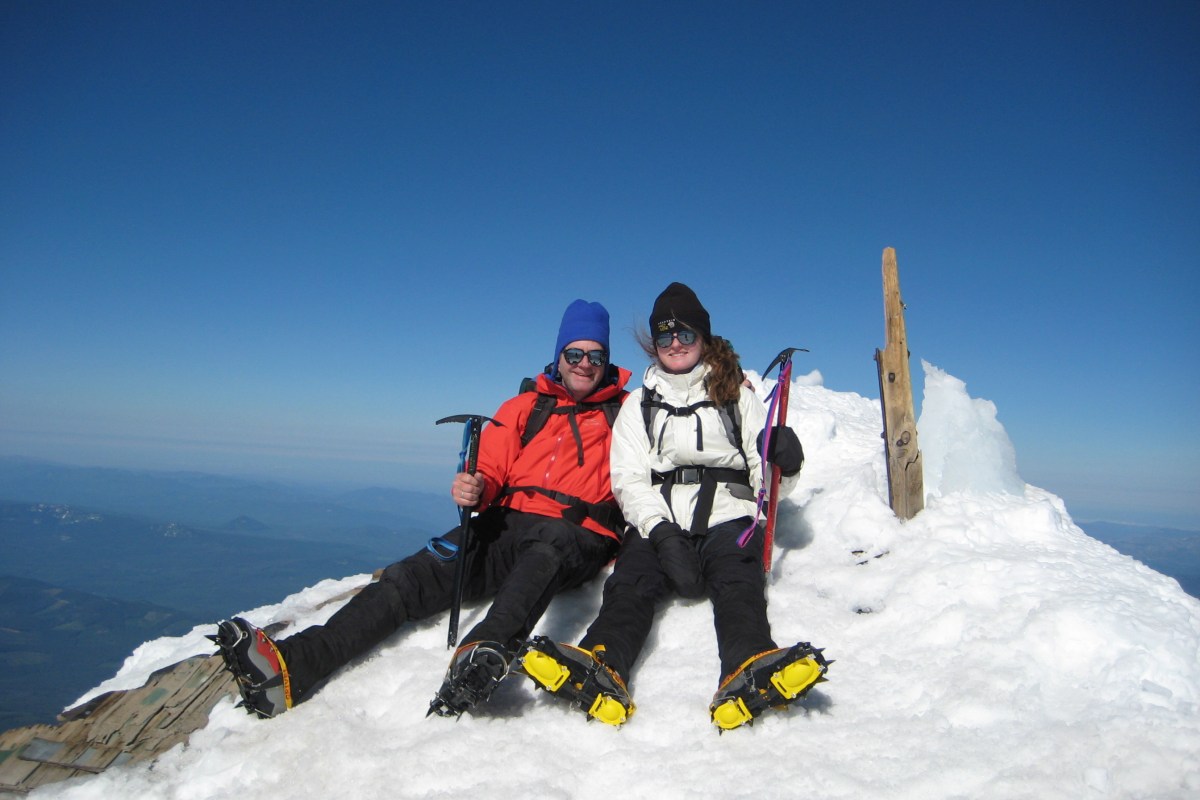
(featured photo is a picture of Doug and his daughter atop Mt. Adams – one of the climbs we talk about in this podcast)

The Ups and Downs of Adventure

“Jobs fill your pocket, adventures fill your soul.” – Jaime Lyn Beatty

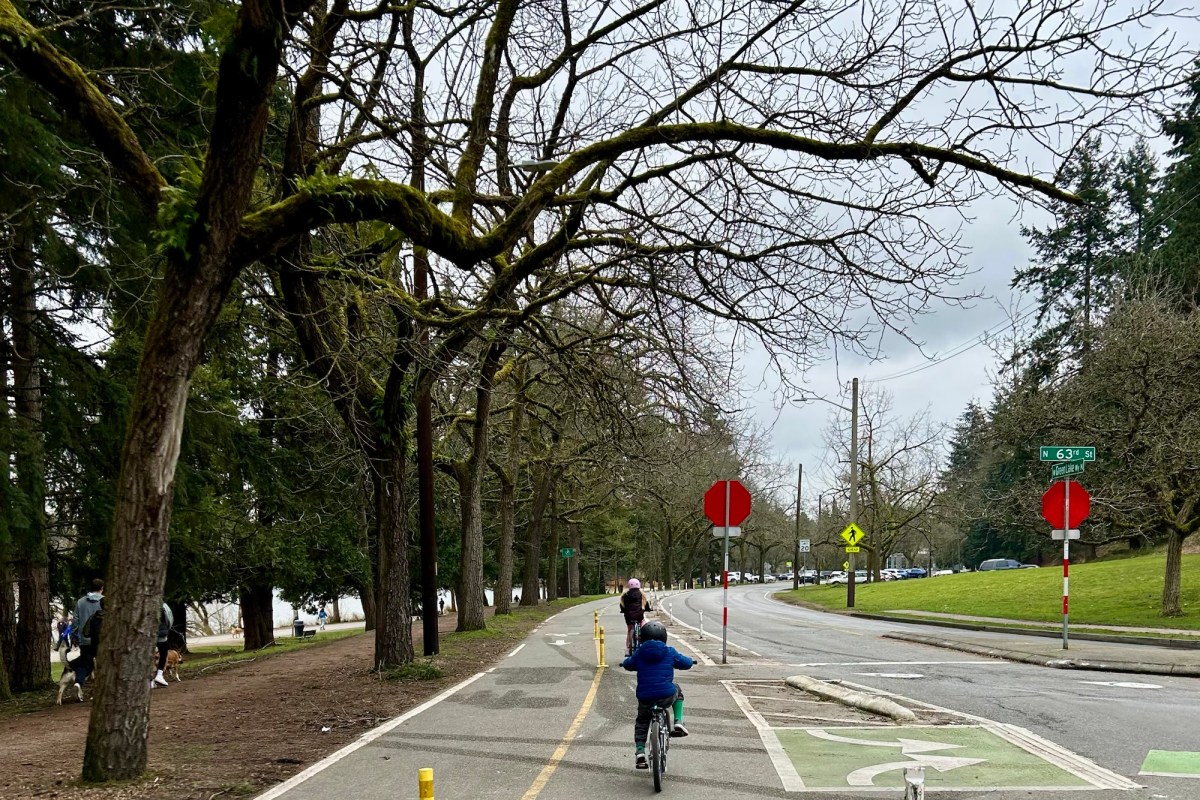
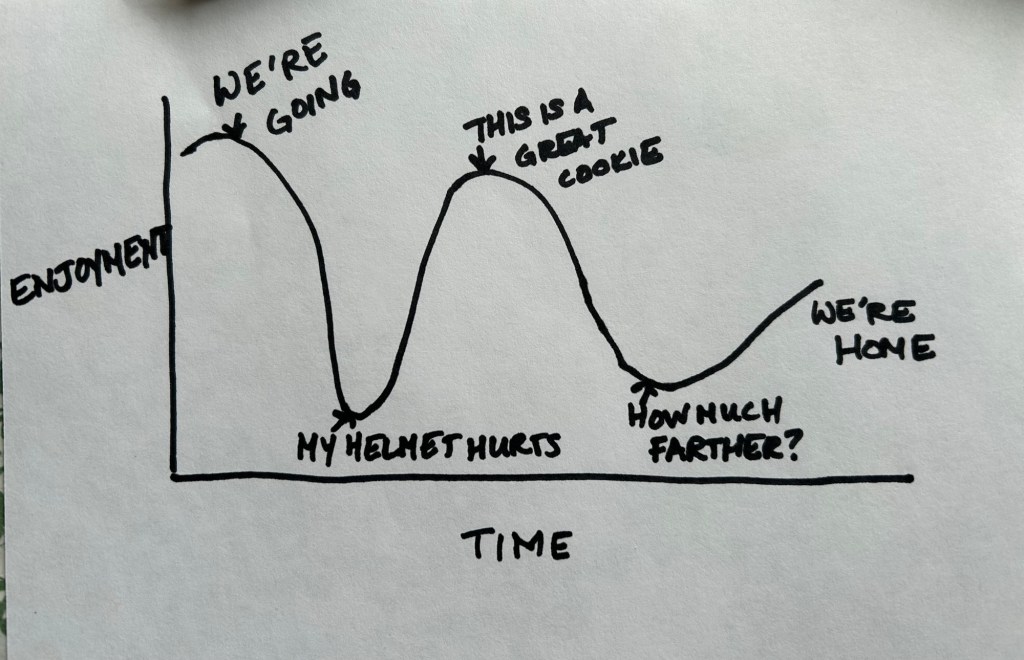
This past weekend I went on a bike ride with my kids. I think the below is a fairly accurate graph of the big emotions during the adventure. I didn’t chart the minor tremors as it’d look like we had been in an earthquake.

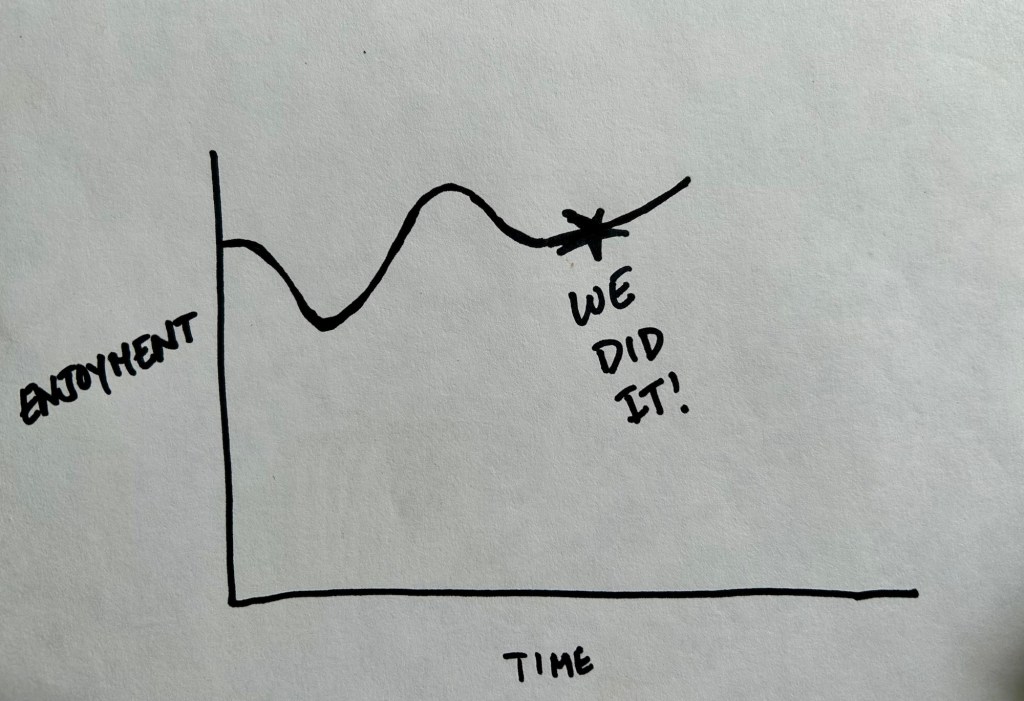
And this is how we remember it looking back four days later:

I don’t think this is limited to adventures with young kids. I’ve thought back and I can’t think of a single adventure that I have undertaken that didn’t come with at least one low moment. Tired, hungry, in pain, uncertain about success, sometimes all of the above. And yet, there are none that I wish I hadn’t done.

Now I’m just grateful that my kids keep my expedition muscles working. Because in the end, I think these adventures, big and small, teach us about life. We learn we can do it, survive the ups and downs, and in the process, do something worth remembering.

(all photos are mine)

You can find me on Instagram @wynneleon and LinkedIn: https://www.linkedin.com/in/wynneleon/

I co-host a storytelling podcast featuring authors and artists with the amazing Vicki Atkinson. To tune in, search for Sharing the Heart of the Matter on Spotify, Apple, Amazon Music or Pocketcasts (and subscribe) or click here. Or the YouTube channel features videos of our interviews. Please subscribe!

My other projects include work as a CEO (Chief Encouragement Officer), speaking about creativity and AI through the Chicago Writer’s Association, and my book about my journey to find what fueled my dad’s indelible spark and twinkle can be found on Amazon: Finding My Father’s Faith.

The Do-Overs

We do not heal the past by dwelling there; we heal the past by living fully in the present.” – Marianne Williamson

Funny how life sometimes provides a do-over.

Last spring I was talking to a mom whose oldest child was a pandemic virtual Kindergartner with Miss O. At the time of the conversation, her second child was just finishing Kindergarten. The Mom said to me, “I had no idea how healing it would be to have a normal Kindergarten year.”

I nodded and noted it, knowing that I didn’t really get it.

But now that Mr. D has been in Kindergarten for almost two months, I’m finding she was spot on. The field trips, waffle parties, recess, and gym class. All sorts of things that Miss O’s class couldn’t do. And all the learning – the ABC chant, the letters and numbers – I get to hear about but without having to sit alongside.

I wouldn’t have said that I needed to heal. I was surprised to find this do-over feels like balm for my nervous system; an edit to a storyline I wasn’t even aware had been written.

It feels like I’ve put down the weight of having to be a teaching assistant on top of everything else. There’s delineation between weekdays and weekends. I’m watching things happen like the socialization of five-year-olds without my facilitation. I’m able to take a big step back and breathe out what I didn’t even know I was carrying.

It makes me think of other do-overs that I’ve been able to do. My second attempt at climbing Mt. Rainier when I summitted after having to turn around on my first attempt. Falling in love again after a heart break. Re-doing a crochet project after unraveling a crooked line.

I also can think of do-overs that haven’t been so fun – colonoscopies come to mind. But my friend’s statement reminds me that each time, for better or for worse, is a chance to re-write the script. Seems like a good thing to remember, especially on a Monday.

(featured photo from Pexels)