How To Receive

If you want to be truly understood, you need to say everything three times, in three different ways. Once for each ear…and once for the heart.” – Paula Underwood Spencer

Eight years ago at a birthday party for a friend, I met a remarkable woman. It was a milestone birthday which is why I can pinpoint it that precisely.

This woman stood out not because of what she did (a therapist I later learned) or what we talked about (stand up paddle boarding in Puget Sound) but because she listened like a lake. That was the image that came to me when talking with her. She absorbed the conversation instead of volleying back and forth like tennis. Also it seemed like her words came from her depth.

It reminds me of a phrase I heard in a eulogy almost three years ago. We were honoring a man who was the father of a childhood friend. His grandson said about him, “He loved by listening.”

Two examples that stand out in the last ten years because they were great listeners. I often make the mistake of thinking I need to say something to be remembered – but these examples remind me that just learning how to listen well is remarkable in itself.

Fortunately, I was able to have a great conversation with my dear friend, Dr. Vicki Atkinson about how to receive for the How to Share podcast. In this episode, Vicki discusses the essential skills of listening and receiving in conversations. She emphasizes the importance of reflective listening techniques, being present, and using the SLANT method to enhance communication.

Our conversation explores how to navigate conversations with empathy, the role of affirmation, and the significance of maintaining boundaries while supporting others. Vicki also highlights the growth opportunities that arise from effective listening and the need for authenticity in communication.

Here are some key takeaways:

  • Everyone can learn how to be a better listener (as Vicki says, the runway is wide!)
  • Reflective listening helps slow things down and enhances understanding.
  • Tonality is crucial in reflective listening to ensure the speaker feels heard.
  • Active listening involves being present and engaged in the conversation.
  • The SLANT method is a practical approach to effective listening.
  • Asking clarifying questions shows genuine interest in the speaker’s message.
  • Affirmation and encouragement are key components of effective listening.
  • Setting boundaries is important to avoid taking on others’ burdens.
  • Listening well can mitigate stress and prevent larger issues.
  • Authenticity in communication fosters trust and connection.

And a short clip from the episode to whet your appetite:

I’d be honored if you’d listen, watch, provide feedback and subscribe. Here are some ways you can listen and watch to the full episode:

46: The Quiet Transformation That Changes Everything The Life of Try: Personal growth, one try at a time.

What if “trying” doesn’t have to mean pushing harder?In this episode, host Wynne Leon talks with author and New York Insight Meditation Center co-founder Joseph Schmidt about The Torchbearer—a collection of short stories born from an unexpectedly effortless creative process. Together they explore the mindset shift from effort to openness:how letting go of the agenda can create space for insight, transformation, and a deeper, more alive way of meeting each moment.Try smarter, not harder: why forcing outcomes can block creativity—and what changes when you partner with the process instead.Mindset shift to “empty hands”: Joseph’s Zen chaplaincy training and the practice of entering a room (or a moment) without an agenda.Personal growth through discovery: how his characters—and we as readers—find the next move by noticing what’s already here.Feeling alive at the edge of the unknown: mindfulness as the place where consciousness meets what happens next.Belonging as a practice: building a bond of belonging by showing up with curiosity, care, and presence.If you’ve been working hard but feeling flat, this conversation is an invitation to loosen your grip, step back into the present, and discover a more natural flow—one where growth comes from attention, not strain. Listen in for a gentler (and often more powerful) way to create, connect, and keep beginning again.Perfect for you if:you’re craving a mindset reset, rebuilding your creative confidence, deepening a mindfulness practice, or simply want to feel more awake and engaged in your everyday life.The Life of Try is a personal growth and self‑help podcast about getting unstuck, navigating uncertainty, and choosing to try—even when it’s uncomfortable, inconvenient, or not your idea.Hosted by Wynne Leon, the show explores how realgrowth, reinvention, and discovery often begin not with confidence or clarity—but with a single attempt. Through thoughtful interviews, reflective conversations, and real‑world case studies, each episode examines what it lookslike to keep going when doubt shows up, plans fall apart, or life forces a change you didn’t ask for.This podcast is for anyone who:Feels stuck or uncertain about what's nextIs navigating change, burnout, or reinventionWants to live more intentionally without pretending that growth is easyBelieves (or wants to believe) progress starts by trying – again and againThe Life of Try isn’t about hustle or perfection.It’s about learning as you go, surfacing what matters, and sharing what you discover along the way.If you’re ready to surf the uncertainty, outlast the doubts, and step into your own try‑cycle, you’re in the right place.Links for this episode:Creating Without Elbow Grease transcriptThe Torchbearer: and other Stories of Borderline Redemption by Joseph Schmidt on AmazonJoseph Schmidt bio – New York Insight Meditation Center
  1. 46: The Quiet Transformation That Changes Everything
  2. 45: The Life of Try: Alex Honnold Case Study
  3. How to Share a Reimagined Sci-Fi Trilogy with Dr. Wayne Runde
  4. How to Share Advocacy with Sam Daley-Harris Part 2
  5. What Do You Know To Be True?

How to Receive with Dr. Vicki Atkinson transcript

Links for this episode:

Dr. Vicki Atkinson at the ⁠Atkinson Group Solutions⁠; Vicki’s book about resilience and love: Surviving Sue; Blog: https://victoriaponders.com/

⁠A is for Ambivalence⁠ by Vicki Atkinson

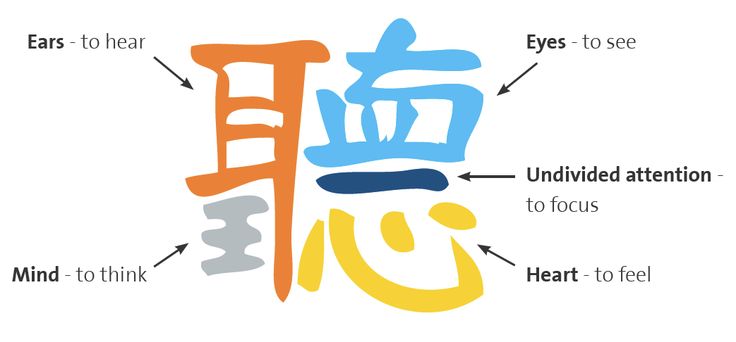
(Featured photo stems from Vicki’s comment about the Chinese ideogram for undivided attention in this episode. It’s sourced from undivided attention from Pinterest by Nancy Sherr)

Too Mad To Listen

Anger is an acid that can do more harm to the vessel in which it is stored than to anything on which it is poured.” – Mark Twain

I saw this gas station sign and it reminded me of a story from many years ago.

The house next door to mine used to be a duplex. On the main floor lived a 40-something year old opera singer and music teacher who had lived there for nearly twenty years. She gardened and was friendly with all the neighbors so it was easy to get to know her.

One summer, a new renter moved into the top floor. She was younger than the opera singer – maybe in her early 30’s. I frequently saw her roller skating around the little lake we live near wearing bright red lipstick. She was noticeable but harder to get to know beyond a wave here and there.

The roller skater frequently walked loudly in high heels when she was home and slammed her kitchen cupboards late at night. This was keeping the opera singer in the apartment below her awake past her bedtime. She tried to ask her to stop. The roller skater didn’t want to talk about it. So, the opera singer tried sending her an email. The roller skater’s dad who lived in Florida called her to tell her to stop bothering his daughter.

Then one night the roller skater came home, parked her car in the driveway and left her car lights on. The opera singer noticed and tried to call out to her but the roller skater slammed the door. The opera singer tried to call her on the phone but the roller skater hung up on her. So the opera singer sent her an email.

The next morning, the roller skater’s car battery was dead. The opera singer watched as she slammed the door crying, eventually getting AAA to come help. The roller skater moved out shortly after.

I heard this story from the opera singer so I only have that perspective. I think the roller skater was a sensitive soul that felt every comment deeply. But even so, it’s always reminded me that not listening to others can come at a cost.

I searched my memory banks for a story of when I was too mad to listen. Funny thing is that I came up empty. I take that as a sign that someone out there is right now telling a story about me not listening. I’m just not sure if it’s a blessing or a curse that we often are oblivious to the help never taken.

What do you think?

(featured photo from Pexels)

Room for More Learning

That is what learning is. You suddenly understand something you’ve understood all your life, but in a new way.” – Doris Lessing

The other day I went to help four-year-old Mr. D with his shoes, and he said, “I can do it. I’m an es-pert!

It reminded me of a story I had just re-read in Mark Nepo’s Book of Awakening. He credits it to Leroy Little Bear:

“Two scientists traveled halfway round the world to ask a Hindu sage what he thought about their theories. When they arrived, he kindly brought them into his garden and poured them tea. Though the two small cups were full, the sage kept pouring.

Tea kept overflowing and the scientists politely but awkwardly said, ‘Your holiness, the cups can hold no more.’

The sage stopped pouring and said, ‘Your minds are like the cups. You know too much. Empty your minds and come back. Then we’ll talk.’”

Leroy Little Bear

This is my invitation when I think I know something, to stop, empty my mind, and fill my heart.

I went to the memorial service of the father of one of my childhood friends this weekend. He was a psychologist by vocation and long before I knew what that was, I understood that he had a healing presence.

One of the phrases that stuck out to me in the eulogies was one from his grandson. He said that this man “led by listening.” Ah yes, that’s it exactly.

Which brings me back to my four-year-old es-pert at shoes. I am so grateful for his help with the routine by getting his own shoes on. But anytime I’m feeling expert at anything, I remember that most of the time Mr. D, the es-pert, wears his shoes on the wrong feet. There’s always room for more listening and more learning.

For more about lifelong learning, please see my Heart of the Matter Post: Learning the Easy Way or the Hard Way

(featured photo from Pexels)

(quote from Reflections on Learning on the Real Life of an MSW blog)

The Wisdom of Dogs

Dogs do speak, but only to those who know how to listen.” – Orhan Pamuk

When my beloved dog, Biscuit, was alive he was one of the wisest creatures I knew. That is a bold claim to make about a golden retriever who loved people so much that when his favorite ones came over he’d start running at one end of the house, and then end up sliding the last ten feet before gently slamming into them. Not really the image of wisdom that is tip of mind when the word is uttered, but I just think of that as part of his charm.

Because his wisdom showed up in other ways. Loving people being one of them. Also the ability to be excited about life wherever it took him, even if he wasn’t in the driver seat, and he embodied the Carl Jung quote, “Please remember, it is who you are that heals, not what you know.”

I’d put signs on him and take pictures and while it seemed like I was the one doing the work, I swear it was just some observational connection to what he was telling me.

I say goodnight to dear departed Biscuit on my way to bed every night. I go into the living room, pick my way past the toys on the floor in the darkened room lit only by the street lights outside, to touch the cherry wood box that holds his ashes, and simply say “hi” or “love you” or a sentence about my day.

On the night before we were to pick up the new puppy, Cooper, I delivered the news to Biscuit and to my great surprise, he answered back. I know, it sounds like a Peanuts cartoon, but I swear the thought just came into my head, “Okay, you’ve gotten a new dog sooner than you’ve found new love.

Yikes! In the six and a half years he’s been gone, that has never happened before. Of course, the effect was much more impactful since that’s the case. If I thought I’d been talking to my dead dog for all these years, I wouldn’t have much listened.

So what was Biscuit teaching me in this instance?

My observation about life is that life follows our intention, even for things like love that aren’t in our control. It reminds me of a podcast with Mark Petruska where he explained being a master manifester – really picturing what we want, clearly setting the intention, and then participating in the way things fall in place.

I think dear Biscuit was pointing out that my intentions have been ambivalent where romantic love is concerned. I haven’t spent much energy on it, and every time I try to imagine it in the life that I have now, I waver a bit.

When I went back to talk to him the next night, he was silent so I can only guess he’s said as much as he’s willing on that subject. Like all the wise ones, he knows not to talk too much and let the listener fill in their own blanks. Okay, my wonderful dog, I’ve hear you.

Speaking of podcasts, and listening, Vicki and I are doing a two part series about what we’ve learned so far about starting a podcast. This first part is about what we’ve learned about trying from doing a podcast: Episode 31: Trying Podcasting Part 1 with Vicki and Wynne. Check it out if you’re interested!

Say That Again

One of the most sincere forms of respect is actually listening to what another needs to say.” – Bryant McGill

My brief foray into podcasting has taught me something about listening. I tuned in to the podcast I did with playwright and friend, Jack Canfora, about his play Step 9 that was just released as a theatrical podcast. As the podcast played, I heard things that I didn’t remember from the conversation. And it wasn’t that I forgot, it was that I never caught some particular details.

This surprised me because recording a podcast conversation is about as ideal of a situation for listening as I can imagine. I was at home by myself, no distracting music (or family members), my email was turned off and I’d done the work to get myself completely comfortable before the conversation began. I was in a space of complete focus on listening and having a conversation.

The biggest lapse that struck me was in a part of our conversation when Jack was moving his computer. We recorded the podcast on a video call so my visual field changed as he changed spots. There isn’t any break in our dialogue but that little disturbance was enough so that I caught the major drift of what was happening but not the undertones.

Here’s my take-away – we never listen as well as we think we do. And since very few of our conversations are recorded, we don’t have the chance to go back and understand what we missed (and thank goodness – that would be time consuming!).

And if we’re talking and someone is looking us in the eye and nodding, they still might not be getting it all. Especially if there is ANYTHING in the environment to distract them.

This brings to mind the classic experiment on selective attention where researchers asked people to count how many times people in the white shirts passed the basketball to each other. And then asked if the people that had watch the video if they spotted anything unusual that happened in the background. The finding was that many miss the other things happening in and around the action.

Some of the best wisdom I’ve heard about speaking and listening is from author Paula Underwood Spencer, “If you want to be truly understood, you need to say everything three times, in three different ways. Once for each ear…and once for the heart.

If we assume we get it all the first time it’s said we’re probably wrong. I know because I recently heard myself on a podcast.

Our Relationship With Pain

These pains you feel are messengers. Listen to them.” – Rumi

About 15 years ago I was climbing Mt. Whitney in the winter with my friend Jill and about 7 other climbers and 2 guides. Though Mt Whitney claims the prize as the tallest mountain in the lower 48 states at 14,505 feet, by reputation it isn’t a hard climb in the summer.

But in the winter, our approach was a couple of miles longer because the parking lot was snowed in, we had to carry heavy 55 pound packs with all the gear we needed and the route was deep with crappy snow so that even in snowshoes, we were regularly sinking in to our thighs.

I started out feeling fine but by the time we were at about 10,000 feet, my left ear was incredibly painful. I kept trudging along, not listening to the pain because I figured there wasn’t anything I could do about it. By the time we made camp at 12,000 feet I was in tears. Fortunately I didn’t impact the teams plans to climb because a storm with 60 mile per hour winds came through and we all had to go back down the next morning.

Mountaineering books are filled with stories about people who ignored their pain – usually with more dire consequences than my ear on Mt. Whitney. And of course this seems to be a universal human experience to not listen to the signals we are receiving. It’s the topic of my latest Wise and Shine (formerly Pointless Overthinking) blog post: Do You Listen To Your Pain?

(featured photo from Pexels)

Tent Associations

And into the forest I go, to lose my mind and find my soul.” – John Muir

When my daughter told my mom’s 83-year-old gentleman friend that we were going to camp out in the backyard this weekend, he turned to me and said, “After I got out of the army, I told myself I’d never spend another night in a tent.” It seemed like a reasonable vow for him.

My friend, Phil, who was the first American to climb the north side of Everest quips that bivouac is French for mistake. It isn’t – it’s derived from a French word that means “by guard” according to Merriam Webster but since Phil had to once bivouac high up on Everest, he’s earned the right to that joke.

My association with tents comes from the first time I spent an extended amount of time in them. It was 5-week trip through Ecuador I did in college with a group. We lugged the tents up there in our backpacks and then huddled in them to stave off the cold of the Andes. I remember one of my tentmates, Ted, retelling the entire movie of Dead Calm with no interruption since we had nothing else to do. Then we sweltered in the humidity of the Amazon jungle in tents where we squished ants and spiders and talked about our dreams of what we’d be when we were full-fledged adults. I can still replay my tentmate, Lisa, talking at length of how great an ice cube would feel sliding over her forehead. We’d take to our tents every afternoon on a beach near the Galapagos that had no shade and told stories about things we’d seen on the trip.

So for me, tents are not only a base for adventure but also a safe place to lie on your back and just listen. Listen to your tentmates, listen to the wind and the rain on the nylon, listen to your heart beat in a new place where nothing is familiar.  To me they smell like hard work, feel like closeness, look like a kaleidoscope view of the world outside them, taste like crappy food that you are just so grateful to be eating and sound like everything you can’t hear when you are too close to life as usual.

No wonder I’m excited about back yard camping with my little ones even though the ground feels a little harder than when I was young. It was hard to go to sleep with all the excitement and the steady rain on the tent and we only made it til 4:20am and the birds woke us up. And maybe they’ll need their own adventures before we’ll really know but I can’t wait to find out what they associate a tent with!

How about you – how do you feel about tents?

The Right Thing To Do

We must be willing to let go of the life we planned so as to have the life that is waiting for us.” – Joseph Campbell

After I dropped my daughter and her friend at school yesterday, I kept driving towards my toddler’s daycare while an inner debate raged over whether I should take him to school. He had a cough that he’s 85% recovered from and never had a fever. I tested him and it wasn’t Covid. He was mostly fine but cranky enough that he’d likely not have an easy day. I could drop him off and still be within the guidelines of the school.

But I kept hearing my dad in my head saying, “If it’s the right thing to do, often it’s the hard thing to do.”

Not taking my son to daycare would definitely be the hard thing to do. It was a Monday morning and I had a day packed with work and things to get done. After spending a weekend primarily focused on my children, I was more than ready to switch gears to productivity.

Pondering why the right thing to do is often the hard thing to do, I think it’s because it requires a sacrifice. We give up our plans in order to help someone else. We give up our pride in order to say we are sorry. Or we are giving up the expected path in order to find a deeper answer.

But on the other hand, we gain a freedom of spaciousness within ourselves. It’s a little like telling the truth all the time and then you don’t have to remember all the lies you told. It’s also like forgiveness – where you free up that energy that you no longer have to hang on to. It’s got a payoff in inner unity and less worry.

When I turned the car for home instead of his daycare, I felt the reward immediately because I was listening to my inner voice. In this case it was the voice of my dad but it was also the voice of the wisdom within.

Listening to that voice is never easy because it always makes me wonder if I’m crazy to give up my plans to follow it. But I’ve found when I do, it always puts me into the Heart of life where I can be surprised by the joy. In this case, the joy of an uncomplicated day with my son.

What about you – is the right thing to do is often the hard thing to do?

(featured photo from Pexels)

Looking for Evidence

Remember it is who you are that heals not what you know.” – Carl Jung

Yesterday I came across some notes I jotted on my phone of books that my brother recommended the last time we were together.

I adore my brother. He’s 6-years-older than I am and has been the sibling that I’ve looked up to since I learned how to look up. I’ve lived near him my entire adult life, I was very close with his daughters when they were growing up and now he’s very close with my kids. There was even a time 20 years ago when I worked for my brother at his company.

So I think it’s safe to say we have a natural affinity for one-another – we have lovely conversations, enjoy our time together and have stuck together through the ups-and-downs of life.

But I can’t name a single book that I recommended to my brother that he has read. And he reads all the time so it isn’t because he doesn’t like to read. Same goes for podcasts, tv shows (back when I watched tv) and spiritual practices like meditation.

It’s taken me a lot of growing up to be able to say with certainty that it isn’t because I’m his younger sister. I know he thinks I’m smart and he respects me.

I’m sure I’m not the only person who has looked for evidence that they matter in the lives of the people close to them. I’m thinking of a comment I once heard a husband tell me that his wife had to vote exactly the same way on a ballot which surprised me for an independent couple.

When my brother eulogized my dad he described my dad’s ability to “meet you where you were at without leaving where he was at.” Coming back to that helps me remember that hearts are the center of friendships, not heads. The work of love is to meet each other so we all know we aren’t walking alone. Instead of looking for the ways I’ve influenced my brother, perhaps I should just count all the miles we’ve walked together.

 I ended up not checking out any of the books on the list from my brother. Not because he doesn’t read mine, but because I like it when he tells me the stories of what he’s read and where’s he been. It gives us something to talk about when our hearts meet.

Do the people in your lives read the books or content that you recommend? Does it matter?

Selective Hearing

The years teach much which the days never knew.” – unknown

Have you heard the advice that Ruth Bader Ginsburg gave to Jennifer Lopez about relationships? It was something like, “It’s good to be a little deaf sometimes.”

I’ve been working on practicing that lately. My daughter snapped at me yesterday first thing in the morning for waking her first or not getting her brother up first, I can’t remember which. Whichever it was, I’m quite certain it needed no response.

Here is the list of times that are usually the best candidates for being deaf in my house:

  • First thing in the morning
  • When anyone is hungry, cold or tired
  • Anytime someone is sick
  • When excitement because a friend has arrived is at its fevered pitch
  • Last thing at night

I’m working on my own balance of when things need to be addressed. Maybe it’s 10 days of being together with no interruption but I’m finding less retort and more love is more effective. It’s not that I’m abdicating in my role as a parent, just that I’m saving my breath for our quieter moments.

My beloved dog, Biscuit, went selectively deaf as he got older. Somehow he couldn’t hear me calling him when he was sniffing something with great interest. But he never failed to hear the sound of the food hitting his metal bowl. I’m starting to think that deafness might not an infirmity that comes with age. Instead it seems it’s a sign of wisdom.