Life Begins Now: The Parenting Trap

“It still amazes me that we insist on teaching algebra to all students when only about 20 percent will ever use it and fail to teach anything about parenting when the vast majority of our students will become parents.” – Nel Noddings

My dad used to tell this joke: Three religious leaders were asked the question, “When does life begin?”

The Catholic priest said, “At conception.

The Protestant pastor replied, “At birth.

The Rabbi answered, “When the last kid goes to college and the dog dies.

I’m laughing. Wow do I feel this. As a parent of young children, I do more things in a day that I wouldn’t choose to do than things I would choose. That alone can make me feel as if my life is not my own. Add in the noise and chaos and it’s hard to find peace. Taken all together, that can make this phase of life seem like one to rush through.

 But I know I can’t assume that I’ll be able to enjoy my kids when they are mature adults. I had my kids when I was aged 46 and then 50. When my youngest is 30, I’ll be 80-years-old. Hopefully an alive, healthy, and active 80 years old but nothing is a given. I know that’s true at any age.

So I try to flip the punchline and enjoy my kids, and life, now.

Cleaning up messes

Things in my house are spilled nearly every day. Sometimes by me. Often not very big deals like when a glass of milk with a top on spilled the other day. It just left a corona of milk dotting the carpet.

Here’s the thing I’ve realized. It’s a chance to convey to my dear children that I’ll love them when things are messy.

Bonus points: Longevity specialist Dr. Peter Attia includes getting up from the floor with max of one arm for support on his Centenarian Decathlon list. It includes the ten most important physical tasks you will want to be able to do for the rest of your life. Every time I’m down on the floor cleaning, I celebrate working out the strength and neuromuscular control that I need.

Helping with personal hygiene

It’s funny that kids don’t come with personal hygiene habits baked in. I’d prefer not to have to remind others to brush their teeth or wipe their tush. Add a dog, cat and a crested gecko in the mix and I can pretty much guarantee that most days will have some involvement in someone else’s hygiene.

I love this one because it’s foundational to my outlook. It’s forced me as a congenital optimist, to accept that every day is not going to be perfect, comfortable, or even pretty.

And long after I’m gone, I can trust my kids will have some idea of how to keep their bodies safe.

Bonus points: My personal hygiene has suffered as a parent. Kudos to me when I remember to take care of myself as well.

Feeding them

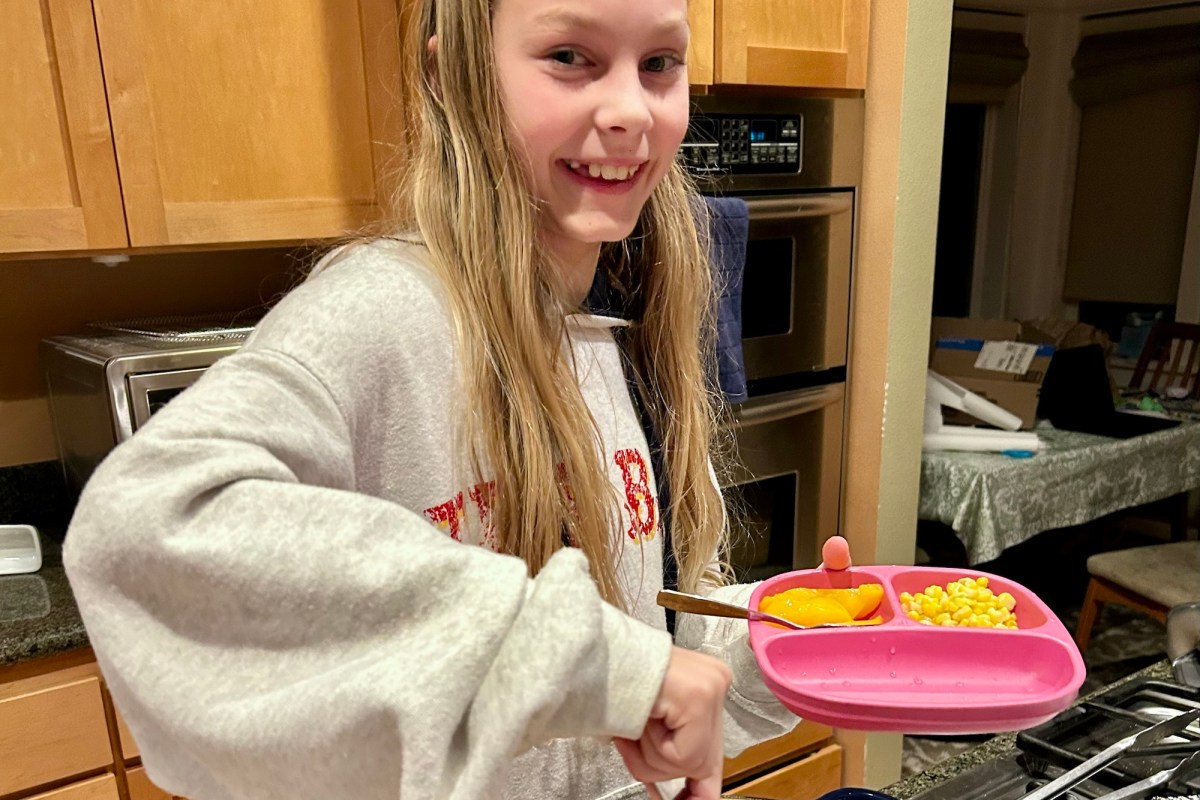
There are some days where I make food, clean up from making food, only to find that by that time, more food is already required.

But, whether real or metaphorical, I’d argue that giving others fuel to live by is what we are here for.

Bonus points: This is a reminder that cooking is all about exercising our creative muscles. How can I make something when I realize I’m missing an ingredient? How do I make something that’ll last with what I have?

Melt downs

Oh, those moments when big emotions take over and make us uncomfortable. And by us, I mean not only the person melting down but also everyone close at hand. It can be precarious, unpredictable, and draining. It’s also 100% real.

Recently, I took my kids rock climbing. My six-year-old son got stuck halfway up the rock face. He couldn’t find a way past – not moving right or left or shifting his weight. He started to cry. Since I was belaying him, there was nothing I could do except be there with him. And it was the perfect metaphor because I was connected to him by a rope.

From 40 feet away, I shouted up my empathy for his frustration, tried some suggestions, told him he could come down, emphasized that I knew he could do it – everything I could do to help from afar. Finally he shook it off. Then he managed the coolest move — palming the rock with his right hand and smearing the face with his left foot, he leveraged himself up high enough to the next good hold.

It was as rousing of a feat of personal triumph as I’ve ever witnessed.

Here’s where you get to pick your image: port in the storm, rope anchor on a mountain, sacred ground – you have the chance to be that for someone else. And to learn a little bit about what it kicks off in you as well. We don’t often get to see adults do that – the trying, melt down, return and overcoming is usually a longer (and more hidden) process for grown-up risks and triumphs. There is nothing as powerful as watching someone overcome some real adversity. With young kids we get to see that nearly every day.

And then we get to celebrate their success.

Bonus points: It’s hard to stay regulated when someone else is dysregulated. Whether it’s my verbal 10-year-old daughter talking grown-up sounding sass that covers for her childlike emotions underneath or a stranger at the store, I feel it all the way through. But all this practice is helping my central nervous system to be buff!

Distraction

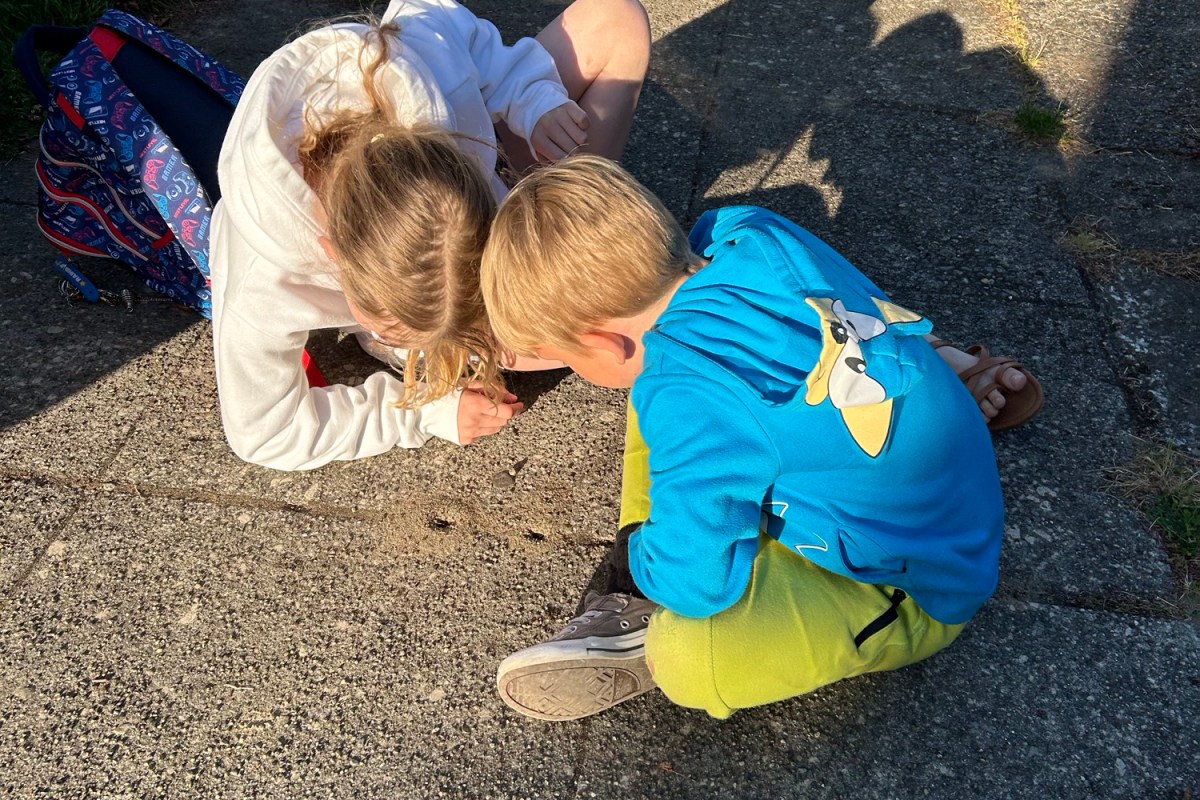
When awake and nearby, my kids provide continual distraction. I could be inside sitting at my computer typing and instead I’m out in a creek skipping rocks. Or I could be sitting on the couch with my phone in hand texting and instead I’m having a dance party and moving my hips. I hunt for snails and hold my kids’ hands while they learn to hoverboard.

Oh, that’s right – I’ve never once regretted a dance party, a rock skipping contest, time in nature, or moving my body.

Bonus points. Psychologist Dr. Alison Gopnik says that kids have lantern brain. They see everything that is around. Adults have spotlight brain – we focus on what needs to be done. Switching into lantern brain can help us solve problems, be creative, and open us to new insights. The distractions can actually help us with solutions for our work when we return to it.

Invasion of personal space

Yesterday my six-year-old son stuffed something in the pocket of my jeans. Gah.  

I’m all for enforcing the boundaries necessary to maintain healthy relationships. But before I decide what those boundaries are, I consider that my kids embody what we look like as open creatures that assume other people will help you carry your stuff.

Bonus points: Ask someone else to help you carry your stuff.

Time

I’m the only one that cares about time in my house. Being on time, getting to bed, the school bell is about to ring, dinner time, time for annual physicals, or it’s about time. All of it.

Because I’m the one that understands time is limited.

Bonus points: Stop caring about the future and enjoy the now.

I’m not guaranteed to get to 80 years old. But I bet that if I do, parenting will have extended my healthspan so that I enjoy it more. And I know I’ll be glad that I didn’t wait until the kids went to college and the dog died to begin living.

(featured photo is mine)

You can find me on LinkedIn: https://www.linkedin.com/in/wynneleon/ and Instagram @wynneleon

I host the How to Share podcast, a podcast about collaboration – sharing leads to success.

I also co-host the Sharing the Heart of the Matter podcast, an author, creator and storytelling podcast with the amazing Vicki Atkinson.

The Long Joke

“Your attitude is either the lock or the key to the door of success.” – Dennis Waitley

The lead up to this joke happened 13 months ago. I know because I blogged about it on Sharing the Heart of the Matter. Here’s the setup:

“This past weekend we were packing up to leave the vacation place we stayed at for two weeks. My nine-year-old daughter, Miss O, was helping my friend, Eric, put the rubber raft away. He’d purchased the raft for this trip so he had the original box.

After deflating it, they rolled it up and then Eric said to Miss O, “It’s never going to fit back in that box.

And Miss O retorted, “Not with that attitude. Let’s be like Mommy and at least give it a try.”

And when I asked if it fit, she replied, “It would have but when he thought I wasn’t looking, he went and put the pump into the box first.”

She recounted this story to me at bedtime the night before we left. Eric must have heard her voice (and my laughter) float down from the bedroom. When I came down after closing the door he laughingly said, “For the record, it was never going to fit back into the box.”

We mostly forgot about the raft until a couple of weeks ago when my kids and I went looking for sports equipment at Goodwill. My kids have never met a sport they didn’t like, or so it seems. My compromise with them is to buy used sports equipment. And we’ve found some great stuff there.

Like on this last visit, when tucked under a washtub for pets and an old lawn mower we found the exact same raft that Eric had. Miss O was so excited and said, “text a picture of it to Eric.

.

Eric’s response, “They must have had a great attitude.”

I’m still laughing. Wishing you all a great week and a fantastic attitude. 🙂

(featured photo is Eric’s markup on the original box)

You can find me on LinkedIn: https://www.linkedin.com/in/wynneleon/ and Instagram @wynneleon

I host the How to Share podcast, a podcast about collaboration – sharing leads to success.

I also co-host the Sharing the Heart of the Matter podcast, an author, creator and storytelling podcast with the amazing Vicki Atkinson.

The Mysterious Case of the Barking Dog

In school we learn that mistakes are bad, and we are punished for making them. Yet, if you look at the way humans are designed to learn, we learn by making mistakes. We learn to walk by falling down. If we never fell down, we would never walk.” – Robert Kiyosaki

On a recent afternoon I was going through the mail in the mailbox and found an unsigned, handwritten note on a plain piece of paper that read (including word error),
“Please do not leave you dog out barking. It is unpleasant for neighbors.”

My ten-year-old daughter, Miss O, saw the look on my face as I tried to discern the message. She came to read over my elbow. Sensing a family meeting, six-year-old Mr. D wandered over and asked what we were doing. We read the note through one more time.

But Cooper doesn’t bark,” Mr. D said. And he’s right, Cooper isn’t a barker. He’ll steal your socks and your steak but he’s quiet about it.

And we don’t leave him outside,” Miss O added. Also true. Cooper is in the habit of lying on the front porch to watch the neighborhood but that’s when we’re home and the door is open.

Maybe they have us confused with someone else,” I mused.

We couldn’t figure out the note but we were united in our righteous indignation in defense of Cooper’s honor. Mr. D suggested he rip up the note and throw it as far as he could.

It wasn’t until the next morning in the shower that I connected the dots. One day the week before we were getting ready to leave the house so that I could drive the kids to camp. Cooper was out on the front porch. I called him in and locked the door.

But when I came home about 90 minutes later after dropping the kids and picking up supplies, Cooper was on the front porch and the door was unlocked. One of the kids must have opened the door to check the weather and Cooper snuck out. He wasn’t barking when I came home so I didn’t realize it right away. He must have barked when he realized he was trapped out there.

The funny thing was that I almost didn’t tell the kids once I figured it out. Our righteous indignation felt so comfortable that I kinda wanted to keep wearing it.

But I also know that it builds up over time. The vulnerability of confession doesn’t come naturally to me, but I’ve found owning my errors and frailty keeps my pipes clean. Everything flows better when I don’t let the grime build up. More than that, I feel everything more fully when I shake off the protective coat of righteous indignation or defensiveness.

And it creates space for learning. When I told the kids my solution to the mysterious case of the barking dog, they both nodded and went, “Ooohhh, right!” I bet we’ll remember that lesson.

(featured photo is mine)

You can find me on LinkedIn: https://www.linkedin.com/in/wynneleon/ and Instagram @wynneleon

I host the How to Share podcast, a podcast about collaboration – sharing leads to success.

I also co-host the Sharing the Heart of the Matter podcast, an author, creator and storytelling podcast with the amazing Vicki Atkinson.

The Rope Team

“Sometimes life is too hard to be alone, and sometimes life is too good to be alone.” – Elizabeth Gilbert

When I was climbing mountains, I noticed a funny thing when we roped up on the higher slopes of a mountain. We transformed from being individual hikers to becoming a team. The physical manifestation made a psychological difference.

Fortunately, I’ve never had to arrest the fall of someone else while on a rope team. But I have willingly climbed into a crevasse. It made me immensely grateful for the people above holding on to the rope.

A similar team phenomenon happened to me and my kids a couple of weeks ago when we were on vacation.

It was perfectly smooth when the kids and I decided to go paddleboarding after dinner. But by the time we got our paddleboards into the water, it was starting to blow again.

We’d been paddling every day for ten days to get the feel for the tides and current. At the beginning of the vacation, six-year-old Mr. D was paddling with me riding on the back of his board. Once he’d gotten proficient enough with his strokes, he graduated to be on his own.

So Mr D was on his own paddleboard. Ten-year-old Miss O had decided she just wanted to ride along on mine. On this night, Mr. D wanted to go all the way down the bay to the pirate flag, a notable marker about a mile down the beach from where we launched.

When we were about halfway there, the wind was present but not too much of a factor. We held a family meeting to make sure we wanted to continue. Mr. D had looked at that flag for 10 days and was determined to get there.

We celebrated momentarily when we reached the pirate flag. Then Mr. D said he was tired and just wanted to rest. At nearly the same moment, the wind whipped up and started pushing us farther away from home.

I said aloud, mostly for Miss O’s benefit, “Please, God, help us.” We weren’t in immediate danger but it was going to be a hard paddle back. At any point, we could have paddled 20 yards to the to the beach and walked back. It would have been a slog pulling the boards but it was a viable option.

Miss O got philosophical about how we ask God for help. We weren’t asking for it to be easy – just for help in any form. As it was, Miss O volunteered to get on Mr. D’s board to both give it more weight and to paddle.

Even with the two of them, they were being pushed backwards by wind. So I attached my leash to their board and we paddled back as a team. I paddled on my board, Miss O and Mr. D took turns paddling on theirs. Roped together, we slowly made our way home.

The overall feeling when we hit the beach? Gratitude. Thank God Miss O had opted to ride along and had fresh arms. Thank God she made the transfer from one board to another without mishap. Thank God for making us a team.

Because that was what stuck with us. Just like with climbing, roping together turned paddling into a team building exercise -and it worked. There are so many ways we are buffeted by the winds of life. A team can make all the difference.

(featured photo is mine)

You can find me on LinkedIn: https://www.linkedin.com/in/wynneleon/ and Instagram @wynneleon

I host the How to Share podcast, a podcast about collaboration – in our families, friendships, at work and in the world.

I also co-host the Sharing the Heart of the Matter podcast, an author, creator and storytelling podcast with the amazing Vicki Atkinson.

And for anyone curious about the inside of a crevasse, here’s what it looks like:

It’s On Us

In true dialogue both sides are willing to change.” – Thich Nhat Hanh

It’s on me.” I was explaining my parenting approach to my neighbors who telling me a story about their daughter. They were mid-sentence in talking about how their son-in-law travels leaving their daughter with three kids. Then they realized I am always alone with my kids and the story died mid-way through.

I laughed it off and explained that I think it’s easier not having to adjust to absence. I’ve seen this reaction with other parents who start to complain to me about being left with the kids and then end up apologizing to me. No need – I chose to parent alone when I had my kids by IVF and I’ve known from day one that it’s on me.

What I find interesting is the balance that I’ve had to find – or tried to find. I can’t be too touchy feely because I also have to be the disciplinarian. Mind you, I’m still pretty touchy feely but it’s tempered me a bit.

I’ve observed this sometimes with my parenting couple friends. One can be the “fun” parent knowing that the other parent will bring order. Or someone can be the “let’s spend money” parent knowing that the other will temper it with budgets. And sometimes when things get out of hand, the non-involved one absolves themselves saying, “well, they started it, they can see it through.

Of course it goes beyond parenting. When there’s two, there’s an interplay that brings middle ground. One optimist and one pessimist. One adventurer and one safety-minded. One extravert and one introvert.

Being a single parent has made me more aware of the ways we can be extreme. Sure, we can make a mess, but knowing I’ll be the one to lead the clean-up keeps it in check. Sure, we can use our stockpiles (of food, art supplies, money, whatever), but knowing I’ll have to refill them makes me more conscious of the effort involved.

It makes me wonder if our cities, states, and countries would be better off if we all were Democans, Twigs, or whatever the country equivalent. Or at least behaved as if we were between elections. Would we do less of a pendulum swing if we knew we were the ones responsible for tempering it? I think we’d do more advocating for each cause we’re passionate about and less sitting back and bitching when it’s not “our guy” in office.

I’m sure I’m not the first person to suggest this. Well, here’s to remembering our responsibility in every arena and knowing it’s on us.

(featured photo from Pexels)

You can find me on LinkedIn: https://www.linkedin.com/in/wynneleon/ and Instagram @wynneleon

I host the How to Share podcast, a podcast about collaboration – in our families, friendships, at work and in the world.

I also co-host the Sharing the Heart of the Matter podcast, an author, creator and storytelling podcast with the amazing Vicki Atkinson.

Life(cycle) of the Party

You knew it would be hard and it would be uncomfortable and it might be awkward and you did it anyway. That’s courage.” – Arnold Schwarzenegger

I did it. We did it, I should say. We threw a backyard birthday party for Mr. D’s sixth birthday and hosted 21 kids under the age of eight plus about a dozen parents. And the we? I hired Miss O and two of her 10-year-old friends to help. I also had the invaluable assistance of a young woman who was Mr. D’s pre-school teacher and has become a great family friend.

Here are ten things I seem to learn and re-learn about the life(cycle) of the party.

  1. Parties are a great forcing function. I’m guessing it would be easier to rent a party venue. But I love the opportunity to invest in my home. I try to do a home improvement project and a purge project before every party. I don’t think I sat down for three days leading up to the event. But I laid more pavers to expand my backyard seating area and filled eight bags of dishware, textiles, and toys to give away. That alone made the party a win before it even started!
  2. You have to sleep on it to learn. I walked 22,160 steps on the day of the party. At the end of the day, I was too exhausted to know or feel anything…other than tired. The lessons learned didn’t show up til the next morning.
  3. Even the happiest of events will exhaust you. Mr. D loved his party. It was a fair theme with Crocodile Cave water slide on one side of the yard, an inflatable hot tub on the other and in between a bottle-ring toss game, Skee ball setup, fishing game, and a flipping rings game. After lunch and birthday cake, we made shaved ice cones, cotton candy, applied tattoos and had a ballon art station.

    Mr. D almost fell asleep in his dinner.
  4. You plan, plan, plan… and then let it happen. Miss O had beautifully drawn out the time table for three party phases: WET,  DRYING, and DRY. We had roles assigned for each. We were about 15 minutes into the party when we made our first substitution.
  5. There is that guy at parties regardless of age. In one terrifying moment, I came eyeball-to-eyeball with a six-year-old that said, “I’m going to open the gecko’s cage.” I had to race the kid to the keys. I never thought twice about leaving the enclosure key in the door like we always do.

    The party shtick of that guy (not meant to be gender specific) starts early.
  6. The messy middle happens every time. There was a moment right before birthday cake where it all felt impossible. We took a deep breath and made it through.
  7. No one naturally markets their stuff. Each of the “fair activities” had its own arc. But when the lines at a particular stand ebbed, nobody wanted to be the carnival barker to attract an audience.
  8. Mixing up the ages benefits everyone. In this case it was letting older kids take care of younger kids. It made both ages feel special.
  9. Save time for the after part. My favorite part was after all the guests left. The workers, Miss O, and Mr. D got to really enjoy the fun.
  10. There are a few people that will go the extra mile to appreciate the effort. Keep them close. All the parents were lovely and grateful. A couple went out of the way to tell me afterwards what they appreciated. I suspect these are also the people I know, online and in real life, that take the time to leave good reviews. I want to be more like them.

Looking this over, I think it might be the lifecycle of all the hard things I’ve done. What do you think – is there a predictable arc of big to-dos? Did I miss any lessons learned?

(featured photo from Pexels)

You can find me on LinkedIn: https://www.linkedin.com/in/wynneleon/ and Instagram @wynneleon

I host the How to Share podcast, a podcast about collaboration – in our families, friendships, at work and in the world.

I also co-host the Sharing the Heart of the Matter podcast, an author, creator and storytelling podcast with the amazing Vicki Atkinson.

Touchstone

When it’s over, it’s the happy memories that hurt.” – unknown

This car is packed with memories,” Miss O said as we pulled into the lot of the company we were selling it to.

I’d aimed to sell the car earlier in the day. But it was so old that the title was in my married name. Even with the proper documentation, it took longer than I’d anticipated so I had to return with my kids to finalize the deal.

Miss O was right – the car was packed with memories from the 18 years I owned it. And about a thousand goldfish crackers stuck in the cracks. We’d tried to get all the goldfish out but probably missed at least a dozen.

This was the car I’d trepidatiously drove Miss O home from the hospital in almost ten years ago. And made that same trip with Mr. D about six years ago filled with awe and a little bit of overwhelm. Speaking of family members, it was the car we picked up Cooper the dog in as a puppy two years ago. Miss O sat with him in a box on our lap in the back seat and explained the world, “This is a freeway. That is an airplane. And you are my new best friend.”

It’s carried us, our well-worn hiking shoes, and our stuffies to school, our favorite vacation spots, and the best hiking trails.

The car was the last car of mine that my dad rode in and helped fix. I can still see him taping plastic over the rear window on the driver’s side when it stopped working on a stormy November day.

Along with the goldfish crackers, the car probably has two pounds of dog hair even after we vacuumed and vacuumed. It was the car that carried me to say good-bye to my beloved dog, Biscuit when it was time for him to cross the rainbow bridge at nearly 14 years of age in 2017.

Like all touchstones, the car is just a gateway for all the tender, tense, and touching moments my family has stored in our hearts. Funny how touchstones make feelings so accessible. The car feeling was that life is adventurous, rich, and full of beloved characters we love.

The kids and I hugged the car and walked into the building a little teary-eyed. We sold the car but we are keeping the memories.

(featured photo is of our parking lot car hug)

You can find me on LinkedIn: https://www.linkedin.com/in/wynneleon/ and Instagram @wynneleon

I host the How to Share podcast, a podcast about collaboration – in our families, friendships, at work and in the world.

I also co-host the Sharing the Heart of the Matter podcast, an author, creator and storytelling podcast with the amazing Vicki Atkinson.

Figuring Out Feelings

These pains you feel are messengers. Listen to them.” – Rumi

There’s nothing like watching a kid trying to figure out what they’re feeling to remind me how hard it is to name what’s wrong.

We traveled this weekend to San Francisco for a family party. Tons of fun! Also lots of people to coordinate with. I’m sure I don’t need to tell you how traveling can decrease the easy access to food, increase how far we need to walk, and obliterate the routine. All in the name of doing fantastic things, of course, but a little disorienting nonetheless.

At one point on Friday afternoon, we walked to the Lucas Films office building to see the Star Wars memorabilia on display. They had the R2D2 in the lobby as well as the original Darth Vader costume. And tucked in glass shelving, they had Han Solo’s light saber and some other guns from the movie.

Yeah, you don’t even need to be a huge Star Wars buff to think that was cool!

We walked out of there and my son was upset. He wasn’t crying or saying anything but he parked himself on a wall a half dozen steps from the door and wouldn’t move. When I finally got him to talk, he said, “It’s not fair that they get to have those guns when I want one.”

Hmm… I didn’t think that was the root of it. Granted I’m not a five-year-old boy, but the guns didn’t seem amazing enough to spark a protest.

After some minutes of silent protest with his sister and me at his side and our family patiently waiting about 50 feet away, he finally could be persuaded to walk around the corner to a Starbucks. At least that was a little slice of familiar territory.

Even so, it probably was another ten minutes before he ate and drank enough to come back to himself. He still wanted a Star Wars original light saber but he could move on.

It made me wonder how many times I’ve hit the wall, mistaken the source of my depletion, and tried to climb the wrong tree to get over it. More times than there are Star Wars movies, for sure!

Being human is hard. Borrowing social psychologist Jonathan Haidt’s metaphor for the body (elephant) and the mind (rider) — the elephant stops moving and the rider, thinking it’s in charge, finds the best story why, but not necessarily the most accurate. And then we can find ourselves wanting to shoot our way into the Lucas Films lobby to steal priceless memorabilia when all we really need is a snack.

May the Force (of stopping long enough to get to the bottom of our angst) be with you.

(featured photo is mine)

You can find me on LinkedIn: https://www.linkedin.com/in/wynneleon/ and Instagram @wynneleon

I host the How to Share podcast, a podcast about how to share anything – to the appropriate audience, with the right permissions, at the most opportune time.

I also co-host the Sharing the Heart of the Matter podcast, an author, creator and storytelling podcast with the amazing Vicki Atkinson.

How to Share Life’s Challenges

In the middle of every difficulty lies opportunity.” – Albert Einstein

In 2009 when I had to tell my parents that my husband and I had separated, I agonized over having the conversation. It meant that I not only had to manage my emotions about what was going on but also be prepared for theirs. It turned out to be a great conversation because I no longer needed to maintain a veneer that everything was okay.

I’m thinking about this conversation because I was just talking with the thought-provoking and inspiring blogger and retirement coach, Michelle Oram, about how to share life’s challenges on the How To Share podcast. She reminded me that when we share the difficult things we are going through, we open up ourselves to support.

In this podcast episode, Michelle shares her experiences and insights on how to navigate life’s challenges, particularly in sharing difficult news such as a cancer diagnosis. She discusses the importance of prioritizing who to share with, the emotional fatigue that can come from repeated sharing, and the value of support from both close friends and strangers. Our conversation also touches on the nuances of communication in personal versus professional contexts, and how these experiences shape our understanding of support and empathy. I also got to hear about Michelle’s new venture in retirement coaching, emphasizing the emotional aspects of transitioning into retirement.

Takeaways

  • Navigating life’s challenges requires thoughtful communication.
  • Prioritizing who to share difficult news with is crucial.
  • Sharing can open doors to support and help.
  • It’s okay to use different methods to communicate news.
  • Listening is more important than talking when supporting others.
  • People often don’t know what to say, so guidance is helpful.
  • Empathy grows from personal experiences with challenges.
  • Support can come from unexpected places.
  • Retirement can be a significant life change that requires preparation.

Here’s a short clip from our episode to give you a taste of the great conversation. Michelle’s comments about the power of open communication match my experience telling my parents about my breakup and more – when we share life’s challenges, it allows others to be able to support us.

Here are some ways you can listen and watch to the full episode:

Please listen, watch, provide feedback and subscribe.

Reinvention, Resilience and The Courage to Try| Lindsey Goldstein on Gap Year The Life of Try: Personal growth, one try at a time.

What do you do when life falls apart? In this episode, Wynne Leon sits down with Lindsey Goldstein, author of Gap Year, for a conversation about personal growth, self-improvement, and finding the courage to try—even when the path ahead feels uncertain. From writing and running to parenting, failure, and fresh starts, they explore how confidence is built one brave step at a time. If you’ve ever wondered whether it’s too late to try something new, this uplifting episode is a reminder that growth often begins the moment we say yes to the challenge.In this episode, you’ll learn: → When life falls apart, it can also become an opening → Courage often starts before confidence → Trying, failing, and learning are all part of growth. → Small steps lead to bigger transformations. → It is never too late to begin again → You do not always end up where you expected—but you still growLindsey Goldstein shares how writing in short windows of time highlight that progress often comes from regular effort, not waiting for the ideal moment. Check out Lindsey's book Gap Year and experience Jane's courage vicariously – but beware, it's contagious!If your kids are leaving for college, you want to try a new hobby, or a travel spot is calling you, this episode is for you. 📘 Order Gap Year on Amazon🌐 Visit Lindsey Goldstein's website🌐 Show notes and more inspiration: https://wynneleon.com🔔 Subscribe for more:Subscribe to The Life of Try for more conversations on:personal growth, creativity, reinvention, resilience, writing, and mindset.📌 Subscribe & Stay UpdatedABOUT MEHi, I’m Wynne Leon — host of The Life of Try, a personal growth and self-improvement podcast exploring resilience, reinvention, uncertainty, and the courage to keep trying.Through thoughtful interviews, reflective conversations, and real-life stories, I share insights to help you navigate change, get unstuck, and move forward with more intention.🌍 Website: https://wynneleon.com━━━━━━━━━━━━━━━🎥 Watch Next➡️ Letting Go Of Outcomes: The Mindset That Keeps You Moving➡️ 48: How to Get Unstuck: Michael Yang on Saying Yes, Resilience and Coming Alive➡️ How to Finally Write That Book You've Been Dreaming About | Writing Motivation 🔗 CONNECT WITH ME:• Website:→ https://wynneleon.com/• Instagram:→ https://www.instagram.com/wynneleon/• Facebook:→ https://www.facebook.com/wynne.leon/
  1. Reinvention, Resilience and The Courage to Try| Lindsey Goldstein on Gap Year
  2. 51: Letting Go of Outcomes: The Mindset That Keeps You Moving
  3. 50: How to Write the Book You've Been Meaning to Write | Dr. Victoria Atkinson (Slivers)
  4. 49: Personal Growth Pivot Points: Pause, Quit or Keep Going?
  5. 48-How to Get Unstuck: Michael Yang on Saying Yes, Resilience, and Coming Alive

Links for this episode:

Michelle Oram’s blog: Boomer Eco Crusader

12 things you should never say to someone with cancer – Boomer Eco Crusader

Best ways to support someone with cancer – Boomer Eco Crusader

Michelle Oram’s Second Life Vision retirement coaching

How To Receive

If you want to be truly understood, you need to say everything three times, in three different ways. Once for each ear…and once for the heart.” – Paula Underwood Spencer

Eight years ago at a birthday party for a friend, I met a remarkable woman. It was a milestone birthday which is why I can pinpoint it that precisely.

This woman stood out not because of what she did (a therapist I later learned) or what we talked about (stand up paddle boarding in Puget Sound) but because she listened like a lake. That was the image that came to me when talking with her. She absorbed the conversation instead of volleying back and forth like tennis. Also it seemed like her words came from her depth.

It reminds me of a phrase I heard in a eulogy almost three years ago. We were honoring a man who was the father of a childhood friend. His grandson said about him, “He loved by listening.”

Two examples that stand out in the last ten years because they were great listeners. I often make the mistake of thinking I need to say something to be remembered – but these examples remind me that just learning how to listen well is remarkable in itself.

Fortunately, I was able to have a great conversation with my dear friend, Dr. Vicki Atkinson about how to receive for the How to Share podcast. In this episode, Vicki discusses the essential skills of listening and receiving in conversations. She emphasizes the importance of reflective listening techniques, being present, and using the SLANT method to enhance communication.

Our conversation explores how to navigate conversations with empathy, the role of affirmation, and the significance of maintaining boundaries while supporting others. Vicki also highlights the growth opportunities that arise from effective listening and the need for authenticity in communication.

Here are some key takeaways:

  • Everyone can learn how to be a better listener (as Vicki says, the runway is wide!)
  • Reflective listening helps slow things down and enhances understanding.
  • Tonality is crucial in reflective listening to ensure the speaker feels heard.
  • Active listening involves being present and engaged in the conversation.
  • The SLANT method is a practical approach to effective listening.
  • Asking clarifying questions shows genuine interest in the speaker’s message.
  • Affirmation and encouragement are key components of effective listening.
  • Setting boundaries is important to avoid taking on others’ burdens.
  • Listening well can mitigate stress and prevent larger issues.
  • Authenticity in communication fosters trust and connection.

And a short clip from the episode to whet your appetite:

I’d be honored if you’d listen, watch, provide feedback and subscribe. Here are some ways you can listen and watch to the full episode:

Reinvention, Resilience and The Courage to Try| Lindsey Goldstein on Gap Year The Life of Try: Personal growth, one try at a time.

What do you do when life falls apart? In this episode, Wynne Leon sits down with Lindsey Goldstein, author of Gap Year, for a conversation about personal growth, self-improvement, and finding the courage to try—even when the path ahead feels uncertain. From writing and running to parenting, failure, and fresh starts, they explore how confidence is built one brave step at a time. If you’ve ever wondered whether it’s too late to try something new, this uplifting episode is a reminder that growth often begins the moment we say yes to the challenge.In this episode, you’ll learn: → When life falls apart, it can also become an opening → Courage often starts before confidence → Trying, failing, and learning are all part of growth. → Small steps lead to bigger transformations. → It is never too late to begin again → You do not always end up where you expected—but you still growLindsey Goldstein shares how writing in short windows of time highlight that progress often comes from regular effort, not waiting for the ideal moment. Check out Lindsey's book Gap Year and experience Jane's courage vicariously – but beware, it's contagious!If your kids are leaving for college, you want to try a new hobby, or a travel spot is calling you, this episode is for you. 📘 Order Gap Year on Amazon🌐 Visit Lindsey Goldstein's website🌐 Show notes and more inspiration: https://wynneleon.com🔔 Subscribe for more:Subscribe to The Life of Try for more conversations on:personal growth, creativity, reinvention, resilience, writing, and mindset.📌 Subscribe & Stay UpdatedABOUT MEHi, I’m Wynne Leon — host of The Life of Try, a personal growth and self-improvement podcast exploring resilience, reinvention, uncertainty, and the courage to keep trying.Through thoughtful interviews, reflective conversations, and real-life stories, I share insights to help you navigate change, get unstuck, and move forward with more intention.🌍 Website: https://wynneleon.com━━━━━━━━━━━━━━━🎥 Watch Next➡️ Letting Go Of Outcomes: The Mindset That Keeps You Moving➡️ 48: How to Get Unstuck: Michael Yang on Saying Yes, Resilience and Coming Alive➡️ How to Finally Write That Book You've Been Dreaming About | Writing Motivation 🔗 CONNECT WITH ME:• Website:→ https://wynneleon.com/• Instagram:→ https://www.instagram.com/wynneleon/• Facebook:→ https://www.facebook.com/wynne.leon/
  1. Reinvention, Resilience and The Courage to Try| Lindsey Goldstein on Gap Year
  2. 51: Letting Go of Outcomes: The Mindset That Keeps You Moving
  3. 50: How to Write the Book You've Been Meaning to Write | Dr. Victoria Atkinson (Slivers)
  4. 49: Personal Growth Pivot Points: Pause, Quit or Keep Going?
  5. 48-How to Get Unstuck: Michael Yang on Saying Yes, Resilience, and Coming Alive

How to Receive with Dr. Vicki Atkinson transcript

Links for this episode:

Dr. Vicki Atkinson at the ⁠Atkinson Group Solutions⁠; Vicki’s book about resilience and love: Surviving Sue; Blog: https://victoriaponders.com/

⁠A is for Ambivalence⁠ by Vicki Atkinson

(Featured photo stems from Vicki’s comment about the Chinese ideogram for undivided attention in this episode. It’s sourced from undivided attention from Pinterest by Nancy Sherr)