Did I Do Enough Today? Embracing Daily Accomplishments

“It is every man’s obligation to put back into the world at least the equivalent of what he takes out of it.” – Albert Einstein

At the end of yesterday, I looked at the three holiday cards that I intended to send off this week and grimaced. I didn’t get them done.

And yet at the end of the day I asked my 10-year-old daughter if she’d had a good day and she said, “Yes, and it’s all because of you, Mom.

I don’t know if I can take credit for that but I did take four kids to the Museum of Flight (my two kids and a friend each). I fed everyone, did the laundry, took Cooper the dog for two walks, touched base with a few friends, and even managed to take a shower, meditate, and create some calm to carry with me throughout the day.

But I still looked at those cards and asked the question that I frequently wrestle with, “Did I do enough today?”

The answer that I usually come to is that I did as much as I could and it was enough. I might not be changing the world or getting things done at the pace I would like, but I show up and will eventually get where I’m going. I’ve done a lot of work to accept that as enough. Thank goodness I manage to sleep at night so I can start again the next day.

So here’s my question to you – do you ask yourself, “Did I do enough today?” And if so, what’s your answer?

(featured photo is the Space Shuttle Trainer at the Museum of Flight)

You can find me on LinkedIn: https://www.linkedin.com/in/wynneleon/ and Instagram @wynneleon

Please check out the How to Share podcast, a podcast celebrates the art of teaching, learning, giving, and growing!

Showing Up

Please remember, it is what you are that heals, not what you know.” – Carl Jung

My ten-year-old daughter, Miss O, had a stomach bug this weekend. It hit hard on Friday night and then followed that typical 24 hour course where she felt miserable and threw up a half dozen times and then was mostly done.

When six-year-old Mr D realized that his sister wasn’t feeling well, he set out to make her his famous medium water. You know – not too hot and not too cold. In a lovely confluence where the one thing he knows how to make and the only thing she could keep down met, it was a beautiful gesture.

There was little else that Mr. D and I could do for her. She spent most of her day crying out in agony. Witnessing suffering like that makes me feel crummy. For me, helplessness usually turns into irritability. Fortunately, I was reminded of three things that I’ve heard/read lately:

From poet Mark Nepo, “… someone I love comes along in pain and I start dumping my pockets, looking for the one thing I know that will help them. But time and time again, the only thing they want is for me to open my heart like a sponge to them. They only want to be heard and held.” I swear my pockets are hanging out for how often I dig to try to find something to help only to learn this again and again.

When I talked with Sharon Eubank on the How to Share podcast she related some great lessons from her decades trying to help others as Global Director of Humanitarian Services for the LDS church. The one that really stuck with me was “My solution to your problem will always be wrong.” In this case, the foods that Miss O wanted to eat when she started to feel better wouldn’t have been my picks – but they worked for her.

And then in my most recent podcast conversation with author Amy Weinland Daughters she spoke of not knowing what to do for her friend, Dana, whose teenage son had cancer and then died. Amy started writing letters as a way to show up. She didn’t think it would make a difference but when Dana’s daughters asked Dana when she thought Amy would stop, Dana replied with something like, “I hope never.” We think what we are doing for someone who is suffering or grieving isn’t enough. But it does make a difference.

So I made an effort to pause my productivity efforts that made me feel like I was doing something by washing sheets and sanitizing bathrooms to just show up and stay present when Miss O cried out in pain and discomfort. I rubbed her back or her feet, told stories, and ordered more medium water from Mr. D. It really is what you are that heals. It’s all part of the magic of being there for someone.

(featured photo from Pexels)

You can find me on LinkedIn: https://www.linkedin.com/in/wynneleon/ and Instagram @wynneleon

I host the How to Share podcast, a podcast celebrates the art of teaching, learning, giving, and growing.

I also co-host the Sharing the Heart of the Matter podcast, an author, creator and storytelling podcast with the amazing Vicki Atkinson.

How to Share Impactfully with Social Media Friends

A little consideration, a little thought to others, makes all the difference.” – Eeyore

About three weeks ago, I opened my laptop to start working and clicked on a Facebook message. A friend that I’d known from Miss O’s pre-school days had died. I burst into tears. It couldn’t be. She’s ten years younger than I am, her youngest child is only 11 years old. She loved being a mom more than anything and I couldn’t believe that she wouldn’t be there to see her beloved kids grow up.

And moreover, because I’d seen the posts where she’d had a car accident about nine months previous and then complications had kept coming up, I was bereft because I hadn’t done anything but post a couple of comments. She wasn’t someone I was particularly close to, but I had so much respect and adoration for her.

It hit me especially hard because I was also in the middle of reading Amy Weinland Daughter’s book, Dear Dana. Dear Dana, is a beautiful chronicle of a letter writing campaign – and a thoughtful reflection of how social media does and does not work for us when it comes to real relationships.

On the latest episode of the How to Share podcast, I was lucky enough to be able to talk with Amy about Dear Dana and the incredible insights she gleaned. Amy tells us how her project got started when she saw on Facebook that her friend from summer camp 30 years before had a son who was sick and needed prayers. Amy starting writing them letters.

She explains how this effort blossomed into a project to write each one of her 580 Facebook friends a letter. We talk about the level of effort involved in writing that many letters and how it was transformative for her.

Amy shares some of the research around the benefits of writing and we talk about the insights of what she learned about the benefits and limitations of social media in the process of her project. One of my favorite a-has is that we can use social as a jumping off points for real relationships because we lose the richness if there is no investment in relationships.

We talk about God-whispers and how listening to them can help us participate in making this world a better place. Amy’s perspective is so real and inspirational that I know it’ll leave you feeling motivated.

This is an incredible episode with a powerful story and loads of magic. I know you’ll love it.

Takeaways

  • The most changed participant in the writing process is often the writer themselves.
  • Writing doesn’t require formal skills or extensive practice.
  • A simple act of writing can have a significant emotional impact.
  • All you need is a postage stamp and a human heart to express yourself.
  • The power of writing has always been within us, waiting to be discovered.
  • Engaging in writing can lead to personal growth and transformation.
  • You don’t need to write hundreds of letters to make a difference.
  • The act of writing can break down barriers to communication.
  • Everyone has the potential to express themselves meaningfully.

Here’s an incredible clip from Amy reminding us that it’s never too late to care:

Here are some ways you can watch this amazing and inspiring episode:

Please listen, watch, provide feedback and subscribe.

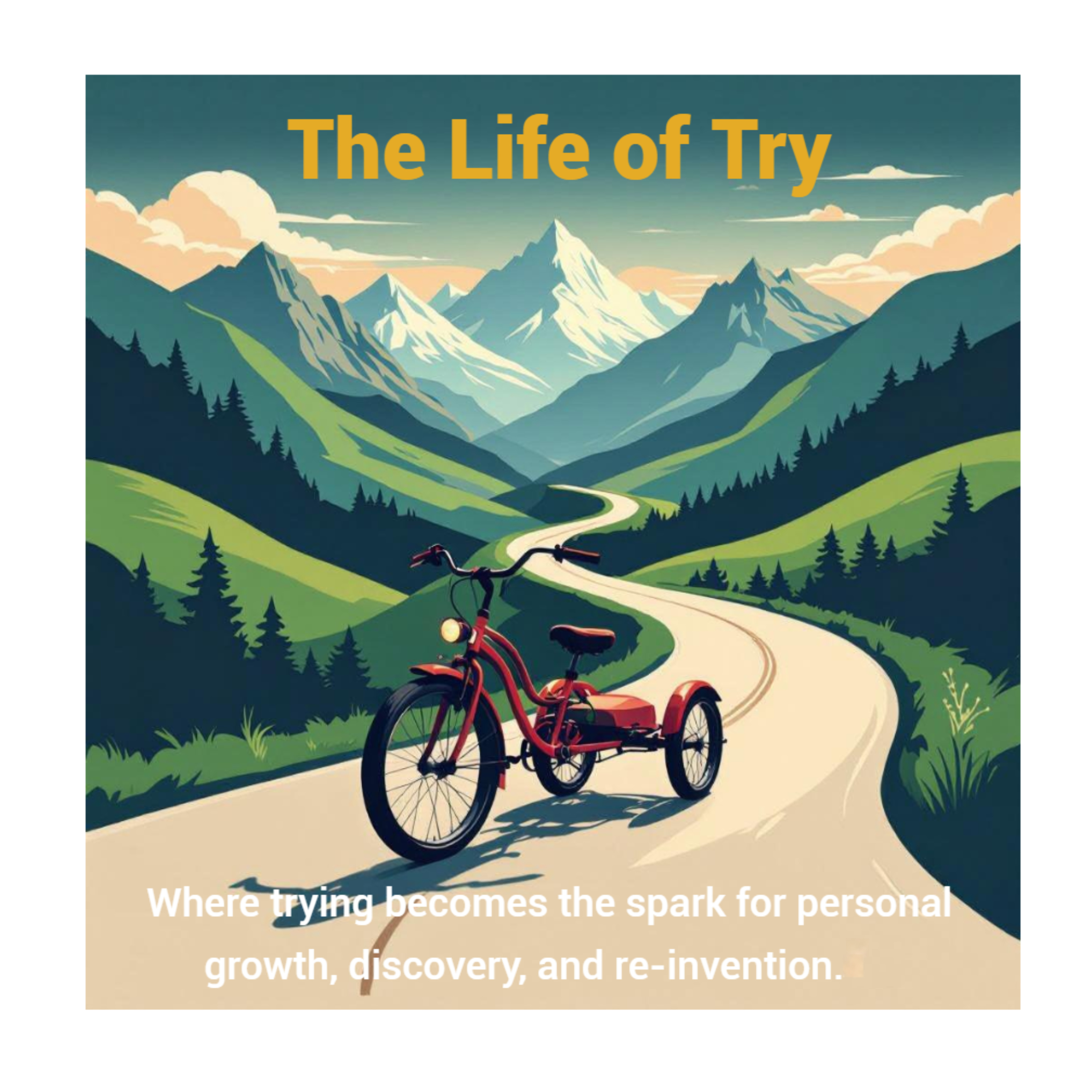
Reinvention, Resilience and The Courage to Try| Lindsey Goldstein on Gap Year The Life of Try: Personal growth, one try at a time.

What do you do when life falls apart? In this episode, Wynne Leon sits down with Lindsey Goldstein, author of Gap Year, for a conversation about personal growth, self-improvement, and finding the courage to try—even when the path ahead feels uncertain. From writing and running to parenting, failure, and fresh starts, they explore how confidence is built one brave step at a time. If you’ve ever wondered whether it’s too late to try something new, this uplifting episode is a reminder that growth often begins the moment we say yes to the challenge.In this episode, you’ll learn: → When life falls apart, it can also become an opening → Courage often starts before confidence → Trying, failing, and learning are all part of growth. → Small steps lead to bigger transformations. → It is never too late to begin again → You do not always end up where you expected—but you still growLindsey Goldstein shares how writing in short windows of time highlight that progress often comes from regular effort, not waiting for the ideal moment. Check out Lindsey's book Gap Year and experience Jane's courage vicariously – but beware, it's contagious!If your kids are leaving for college, you want to try a new hobby, or a travel spot is calling you, this episode is for you. 📘 Order Gap Year on Amazon🌐 Visit Lindsey Goldstein's website🌐 Show notes and more inspiration: https://wynneleon.com🔔 Subscribe for more:Subscribe to The Life of Try for more conversations on:personal growth, creativity, reinvention, resilience, writing, and mindset.📌 Subscribe & Stay UpdatedABOUT MEHi, I’m Wynne Leon — host of The Life of Try, a personal growth and self-improvement podcast exploring resilience, reinvention, uncertainty, and the courage to keep trying.Through thoughtful interviews, reflective conversations, and real-life stories, I share insights to help you navigate change, get unstuck, and move forward with more intention.🌍 Website: https://wynneleon.com━━━━━━━━━━━━━━━🎥 Watch Next➡️ Letting Go Of Outcomes: The Mindset That Keeps You Moving➡️ 48: How to Get Unstuck: Michael Yang on Saying Yes, Resilience and Coming Alive➡️ How to Finally Write That Book You've Been Dreaming About | Writing Motivation 🔗 CONNECT WITH ME:• Website:→ https://wynneleon.com/• Instagram:→ https://www.instagram.com/wynneleon/• Facebook:→ https://www.facebook.com/wynne.leon/
  1. Reinvention, Resilience and The Courage to Try| Lindsey Goldstein on Gap Year
  2. 51: Letting Go of Outcomes: The Mindset That Keeps You Moving
  3. 50: How to Write the Book You've Been Meaning to Write | Dr. Victoria Atkinson (Slivers)
  4. 49: Personal Growth Pivot Points: Pause, Quit or Keep Going?
  5. 48-How to Get Unstuck: Michael Yang on Saying Yes, Resilience, and Coming Alive

Links for this post:

How to Share Impactfully with Social Media Friends transcript

Dear Dana on Barnes & Noble and Amazon

Amy’s website

(featured photo from Pexels)

Ropes are Relational

A friend may well be reckoned the masterpiece of nature.” – Ralph Waldo Emerson

I awoke Friday morning to the sound of a drip in my bathroom. Amazing how a drop of water in another room landing on a bath mat that’s designed to absorb water can penetrate the unconscious. It felt like I came abruptly awake and then sat straight up listening. It reminds me of something I heard from acoustic ecologist Gordon Hempton that our ears never sleep, even when our brain does.

The vent on the fan was the source of the leak. So this weekend I got out one of my climbing ropes so that I could do some repair work on the roof. Afterwords, as I was coiling the rope, I was struck by how ropes are like friendship. It takes me a long time to coil a 60 meter rope so perhaps I was just delirious but I don’t think it’s too much of a stretch.

Ropes help us cross dangerous terrain: In the mountains when conditions are icy, steep, or pitted with crevasses, being roped to a team helps ensure safety if someone falls. We know from research, like the longitudinal study that Dr. Robert Wallinger talks about in his TED talk, that friendship has a similar effect. Good relationships keep us happy and healthy.

It’s easier to unkink a rope when it’s not frozen: Ropes, like friendships, get knotted and kinked sometimes. Ropes, like friendships, are easier to unkink when they aren’t frozen. When guides come back into camp after a summit or training exercise, they take care of the ropes right away. Even when the conditions are rough and people are tired and sore, it’s worth the effort to straighten and coil it before it freezes. In my experience, this is true for friendships as well.

Ropes are heavy: Carrying a climbing rope adds around 10 pounds to your pack, more if the rope is wet. When my friends and I climbed together, we’d divvy up the group gear to spread the load. But often when a climber isn’t feeling well, a team member will carry the rope for them. In my experience of good friendships, the same thing happens with carrying the weight of the relationship. Often, it isn’t a completely equitable split of time and effort that makes a friendship work but the willingness of both parties to switch off carrying the load when things get rough or busy.

Here’s the other thing that I love about ropes – they require me to find someone to hold the other end. I tend towards the stubbornly independent so this slows me down enough to get help. As I coiled the rope back up, I also appreciated how reassuring it was to have my mom and sister-in-law there when I roped up to repair the seal around the fan vent. I never slipped or needed the rope to catch me but I knew it was there and it made me feel safer. Just like my friendships.

(featured photo is mine of a rope coiling at the climbing gym)

You can find me on LinkedIn: https://www.linkedin.com/in/wynneleon/ and Instagram @wynneleon

I host the How to Share podcast, a podcast celebrates the art of teaching, learning, giving, and growing.

I also co-host the Sharing the Heart of the Matter podcast, an author, creator and storytelling podcast with the amazing Vicki Atkinson.

Share the Load

It’s not the load that weighs you down, it’s the way you carry it.” – C.S. Lewis

When my kids and I recently watched the movie, “A Boy Called Po,” 10-year-old Miss O asked what the description “heavy” meant. The movie is about a widowed father struggling to take care of his autistic son in the wake of his wife’s death and a lot of work pressure. Heavy applies but it’s also a delightful drama.

We’ve had some really interesting family conversations about this movie. Miss O really empathized with the boy in the story who seems to be about 10 or 12-years-old. She was also pretty critical of the dad who she thought should be more patient.

This came on the wake of comment she made to me that the staff at school working with disability students should be more patient. From my point of view, both the dad in the movie and the staff at school are doing the best they can and a pretty good job. So I countered that adults need empathy too.

This is where it gets interesting – because then Miss O said she wanted to do everything I do in a day just to see. We picked Saturday of this weekend. I gave her a list of all the food prep, pet care, chores, and special projects we had for the day.

I checked in to see how she was feeling at lunchtime. She said, “Right now I feel okay. We’ll see how I feel at the end of the day. I can see it might be okay to do for a day but it would be tiring to do all day, every day, for years.

Then we returned home a little before 5pm after a fun outing, and it was time feed the dog, the cat and make dinner. She made a plan of what she wanted to cook, then discovered she had to empty the dishwasher she’d run earlier, and in the midst of doing that, her younger brother said, “I’m hungry.”   

I offered to help and even so, it was almost two hours between when we came home from our activity and when she got to sit down and eat her dinner. Then the kitchen had to be cleaned, the gecko had to be fed, and there were snacks to prepare for while we watched shows.

At the end of the day she said, “I don’t know how you do it. It’s impossible to get it all done.” She’d finished one load of laundry but it needed to be pulled out of the dryer to fold so the second load could be dried. She observed, “it’d be okay if you could carry things over to the next day but then you have to start everything else all over again.”

For my part, I just tried to let her do it, do everything she asked, and roll with her decisions and timeframe. So I experienced what it’s like to not be in control of the flow and the timing. It was a great lesson for how adaptable my kids are. I also felt far more rested at the end of the day and it gave me an idea of how much wear and tear what I’m trying to do is.

So I’m scripting my own movie, “A Girl Called O.” It’s a comedy, with a side of drama, and the lead is pretty heroic. She cares enough to want to understand and try it all. In the end, not everything is tidied up but the characters care enough for each other to show up and share the load.  

(featured photo is mine)

You can find me on LinkedIn: https://www.linkedin.com/in/wynneleon/ and Instagram @wynneleon

I host the How to Share podcast, a podcast celebrates the art of teaching, learning, giving, and growing.

I also co-host the Sharing the Heart of the Matter podcast, an author, creator and storytelling podcast with the amazing Vicki Atkinson.

Out of the Mouth of Babes: Three Lines That Open Us Up

Kindness in words creates confidence. Kindness in thinking creates profoundness. Kindness in giving creates love.” – Lao Tzu

One of my takeaways from social psychologist Jonathan Haidt’s recent book The Anxious Generation is that kids need to practice working out their relationships with each other. Negotiating what they want and also how to take care of each other is invaluable experience.

So I try to give my kids a lot of room to relate before stepping in. It feels like I have one ear open for how they talk to each other, especially when it’s at high volume. I hear plenty of statements like: “You can’t do that, it’s not fair.” and “Don’t do that ever again.”

But this week I heard three lines that immediately changed the tenor of the conversation. And the best thing about them? They were not specific to childhood.

Line #1

  • Six-year-old said, “I wish Miss O wanted to help.”

And she did. But prior to Mr. D saying that, she wasn’t clued in that he needed help.

Line #2

  • Ten-year-old Miss O said, “Okay, I’m listening.

The conversation was tense before Miss O said this. Once she said it, they worked out whatever it was they were trying to do.

Line #3

Mr. D said, “Imagine we could…

And then they were off building a better world.

(featured photo is mine)

You can find me on LinkedIn: https://www.linkedin.com/in/wynneleon/ and Instagram @wynneleon

I host the How to Share podcast, a podcast celebrates the art of teaching, learning, giving, and growing.

I also co-host the Sharing the Heart of the Matter podcast, an author, creator and storytelling podcast with the amazing Vicki Atkinson.

Beyond the Assumptions

We’re all different. Don’t judge. Understand instead.” – Roy T. Bennett

Two things this weekend made me think of a date I went on a dozen years ago. The first was participating in the No Kings march in downtown Seattle with my kids. It was energizing, funny, and peaceful. Nothing that matched the divisive way some politicians characterized it in advance of the event.

The second was a quip from Dr. Stein’s post, “Laughing to Normalize Our Lives.” In it he humorously suggests, “Recall the worst date you ever endured. Phone the person and invite them out for another try. This will distract you from the state of the world.” And then adds, “Bring aspirin anyway.”

Back to the date — it was with a guy from a rural part of Washington. I thought he was from Olympia, the capital of the state of Washington. Turned out he was from a small town on the peninsula west of the city.

When he saw my neighborhood, he exclaimed, “Wow, this place is a zoo. Everyone is right on top of each other.” He wasn’t wrong. There’s probably 15 feet between my house and the houses on either side.

But it’s normal to me, not a zoo.

He told me that when he told his friend he was coming to Seattle, his friend quipped, “That’s where all the men drive Priuses and sit down to pee.

And to cap it all off, the guy brought a gun on the date.

Oh boy! All of this was surprising to me. I’ve lived in Seattle for almost 40 years and it doesn’t feel dangerous at all to me. Nor do the men seem like wimps.

But it was fascinating to get this peek into how others’ see us. The stereotypes, assumptions and fears that come with a different way of life. For example, when I told a friend about this guy’s reaction, he asked, “Did he drive a big truck?”

Seems like it should be the easiest baggage to put down our assumptions about others. But sometimes we don’t even realize we are carrying them.

I never did see that guy again but he had a really big heart. I’m pretty sure his veins flowed red when leaving the heart and appeared blue on the return. Just like mine.

(featured photo from Pexels)

You can find me on LinkedIn: https://www.linkedin.com/in/wynneleon/ and Instagram @wynneleon

I host the How to Share podcast, a podcast celebrates the art of teaching, learning, giving, and growing.

I also co-host the Sharing the Heart of the Matter podcast, an author, creator and storytelling podcast with the amazing Vicki Atkinson.

The Power of Sharing: Lessons from a Bunny Encounter

We form friendships with unrelated people. It’s universal in human groups. We cooperate with each other, altruistically. We’re kind to strangers — again, to unrelated individuals. This is different than many other types of cooperation, which are also seen in other animal species, but often that cooperation is between genetically related individuals. We do it with genetically unrelated individuals. We teach each other things. People take this for granted, but it’s actually unbelievable” – Nicholas Christakis

I find it fascinating when my kids demonstrate something that we do all the time as grown-ups. In this case, discern who to share with.

My six-year-old son, Mr. D, and I were walking on our favorite beach on Whidbey Island this weekend when we saw a bunny in trouble. It was trying to climb the bank back to the grassy top about 100 feet above. It kept on getting about two-thirds the way up. But then the incline was too vertical so the bunny fell back down.

Mr. D and I were watching it. He said the thing that was running through my head. “Take a rest. Calm down. Try another approach.

But its frantic efforts made it lose ground and attract our dog, Cooper’s attention. The bunny started running along the bank parallel to the beach about 10 feet up. Cooper started chasing it. Because he wasn’t on the leash, all I could do was call him (good luck with that) and run after him to try to leash him.

The bunny finally exhausted itself and fell to beach level. Cooper caught up and nosed it but I don’t think did any more damage than what happened when it fell. When Mr. D and I got there, it was breathing and moving its front paws, but I’m not sure its back paws worked any more. We put Cooper on leash and left the bunny to rest but we weren’t feeling hopeful about its survival. It was a tender moment.

Later that afternoon, Mr. D quietly said to me, “I told Miss O about the bunny. I didn’t tell Eric though. He’s too funny for that.

It was such a great example of what we all do when we share something. We evaluate who the audience is, whether they can be trusted with the information, and if it’s the appropriate time. It’s just like sharing a file in the office. Are we putting it in the correct location with the right permissions?

Sometimes we get it right, sometimes we get it wrong but we keep trying. Because to share is human, and as Yale sociologist Nicolas Christakis says, it’s unbelievable!

There are times I get rusty and the words for any experience that is hard or tender come out slowly. I’ve found that it’s easier to keep it flowing than let myself get encased in my armor. Thank goodness for kids that show me how. And for this beautiful blogging community who receives so beautifully!

Happy Thanksgiving, Canada!

(featured photo from Pexels)

You can find me on LinkedIn: https://www.linkedin.com/in/wynneleon/ and Instagram @wynneleon

I host the How to Share podcast, a podcast about collaboration – sharing leads to success.

I also co-host the Sharing the Heart of the Matter podcast, an author, creator and storytelling podcast with the amazing Vicki Atkinson.

Standing Up for Democracy: Lessons from Kids

To understand where you stand in own your life, you cannot remain seated.” – Christine E. Szymanski

I can rely on my kids to have a nose for what’s authentic. At 6 and 10 years old, they might not be able to tell me exactly why, but they can tell the difference between people who are phoning it in and others who are genuinely present.

At the end of the day this past Saturday, I asked them what they liked most about the day and what they could have done better. It’s part of our nighttime routine. Unless we are so tired that we’ve flipped our lids. That happens sometimes too.

They both answered that their favorite part when we went down to the little lake that is a five minute walk from our house and participated in a Stand Up For Democracy event. The organizers were trying to gather enough people to create a continuous loop of people to encircle the lake which is three miles in circumference.

What surprised me about the answer was they liked that even more than watching the Mariners down at the pub with our friend, Eric. Or playing with their friends, skateboarding, or building imaginary spaceships.

My kids can’t yet spell out the details of what makes a democracy, monarchy, or autocracy. But they can tell the good feeling of standing up for what matters and the sense of community that comes from people trying to quietly show their commitment. It’s authentic, it’s strong, and it feels better than worry.

I think they’ve got that right.

(featured photo is mine)

You can find me on LinkedIn: https://www.linkedin.com/in/wynneleon/ and Instagram @wynneleon

I host the How to Share podcast, a podcast about collaboration – sharing leads to success.

I also co-host the Sharing the Heart of the Matter podcast, an author, creator and storytelling podcast with the amazing Vicki Atkinson.

Not Too Hot, Not Too Cold: Medium Water

Use your passion to create a job.” – Lailah Gifty Akita

Recently, six-year-old Mr. D announced to his sister and me that he wanted to open a shop. After confessing that he didn’t know what he wanted to sell, we started brainstorming ideas based on his skills and interests.

Ten-year-old Miss O came up with the winning product: medium water. Mr. D’s recent foray into learning how to cook has led him to a new recipe that he calls medium water. He boils water for hot drinks and then adds ice so it isn’t too hot.

He sometimes asks people who come over if they’d like medium water. Funny that it usually takes some explanation what it is.

But I think with enough passion, he can pitch this idea. How about these taglines?

  • Mr. D’s Tepid Tea: All the enjoyment, none of the risk.
  • Mr. D’s Just Right Café: Why wait to sip your favorite beverage?
  • Mr. D’s Medium Water: Order a tall or a short, and get it medium

In Seattle, land of the coffee shops, where the weather is usually not too hot or not too cold, it actually might fly! Or perhaps the response might be lukewarm. If he ever does it, I’ll let you know.

(featured photo is mine of a past lemonade stand)

You can find me on LinkedIn: https://www.linkedin.com/in/wynneleon/ and Instagram @wynneleon

I host the How to Share podcast, a podcast about collaboration – sharing leads to success.

I also co-host the Sharing the Heart of the Matter podcast, an author, creator and storytelling podcast with the amazing Vicki Atkinson.