The Courage to Stop Trying

The important thing is to not stop questioning.” – Albert Einstein

We have a strong ethos of trying in my household. There’s an example that we often joke about. When my daughter was about 9, my friend Eric asked her to help deflate a rubber raft so we could take it home from vacation. When she went to put it back in the box, he said it’d never fit.

Her response was something like, “It won’t fit back in the box with that attitude!”

Safe to say, we are primed to try. But sometimes that overshadows the wisdom of when to stop trying. How do you know when to stop trying—especially when you’re someone who prides yourself on perseverance?

In this episode of The Life of Try, I explore the moments when quitting isn’t failure, but wisdom: when our efforts are overly controlled, when something deep inside says “it’s time,” or when passion turns obsessive and starts costing more than it gives.

Along the way, I draw lessons from Marion Jones, Olympic figure skater Alysa Liu, Oprah Winfrey, and Andre Agassi, plus insights on harmonious vs. obsessive passion.

Here’s a short section about mining the deep knowledge of when you know, you know:

If you’re wrestling with whether to push through or let go, this episode offers language, perspective, and permission to choose what’s healthy—and what’s next.

Here are some ways you can listen and watch this motivating episode:

49: Personal Growth Pivot Points: Pause, Quit or Keep Going? The Life of Try: Personal growth, one try at a time.

How do you know when to stop trying—especially when you’re someone who prides yourself on perseverance? In this episode of The Life of Try, Wynne Leon explores the moments when quitting isn’t failure, but wisdom: when our efforts are overly controlled, when something deep inside says “it’s time,” or when passion turns obsessive and starts costing more than it gives. Along the way, she draws lessons from Marion Jones, Olympic figure skater Alysa Liu, Oprah Winfrey, and Andre Agassi, plus insights on harmoniousvs. obsessive passion.If you’re wrestling with whether to push through or letgo, this conversation offers language, perspective, and permission to choose what’s healthy—and what’s next.The Life of Try podcast: Personal growth, one try at a time.What happens when trying becomes more important thangetting it right?The Life of Try is a personal growth and self‑help podcast about getting unstuck, navigating uncertainty, and choosing to try—even when it’s uncomfortable, inconvenient, or not your idea.Hosted by Wynne Leon, the show explores how real growth, reinvention, and discovery often begin not with confidence or clarity—but with a single attempt. Through thoughtful interviews, reflective conversations, and real‑world case studies, each episode examines what it looks like to keep going when doubt shows up, plans fall apart, or life forces a change you didn’t ask for.This podcast is for anyone who:Feels stuck or uncertain about what’s nextIs navigating change, burnout, or reinventionWants to live intentionally without pretending growth is easyBelieves progress starts by trying – again and againThe Life of Try isn’t about hustle or perfection. It’s about learning as you go, surfacing what matters, and sharing what you discover along the way.If you’re ready to surf the uncertainty, outlast the doubts, and step into your own try‑cycle, you’re in the right place.Links for this episode:The Fun Habit: How the Pursuit of Joy and Wonder Can Change Your Life: Mike Rucker, PhDOpen: An Autobiography by Andre AgassiMarion Jones Reflects on Her Kids Living with 'Reality' of Her Doping ScandalFrom Oakland to Olympic gold: Alysa Liu takes figure skating crownAlysa Liu's Olympic figure skating comeback is golden, true to herselfHow Alysa Liu Found Her Love for Figure Skating AgainWinfrey Announces Show's End in 2011 – CBS News
  1. 49: Personal Growth Pivot Points: Pause, Quit or Keep Going?
  2. 48-How to Get Unstuck: Michael Yang on Saying Yes, Resilience, and Coming Alive
  3. 47-From Stuck to Momentum: Thomas Edison’s Method for Progress (Try, Learn, Improve, Repeat)
  4. 46: The Quiet Transformation That Changes Everything
  5. 45: The Life of Try: Alex Honnold Case Study

Links for this episode:

Personal Growth Pivot Points: Pause, Quit, or Keep Going? transcript

The Fun Habit: How the Pursuit of Joy and Wonder Can Change Your Life: Mike Rucker, PhD

Open: An Autobiography by Andre Agassi

Marion Jones Reflects on Her Kids Living with ‘Reality’ of Her Doping Scandal

From Oakland to Olympic gold: Alysa Liu takes figure skating crown

Alysa Liu’s Olympic figure skating comeback is golden, true to herself

How Alysa Liu Found Her Love for Figure Skating Again

Winfrey Announces Show’s End in 2011 – CBS News

(featured photo from Pexels)

The Genius of Patience: Five Lessons from Thomas Edison

Nothing is impossible. The word itself says ‘I’m possible’!” – Audrey Hepburn

Last night, my six-year-old son, Mr. D, and I were out in our back yard at dusk. When night fell, the solar-powered string of LED lights that my friend Katie helped me string up about 4 years ago switched on. Mr. D wanted to know why some of the bulbs had water in them – a situation that has developed over time.

I’m amazed they still work. Especially after spending a couple of weeks delving into Thomas Edison and his efforts to invent the light bulb. In the time of Edison, bulbs had carbonized bamboo filaments in vacuum sealed glass. We’ve come along way in almost 150 years since his initial design but the light bulb still shines bright.

This episode of The Life of Try podcast is based on Thomas Edison and his methods to reframe progress: not as one perfect breakthrough, but as a steady practice of continuing to try. Behind the famous light bulb moment is a mindset of learning from what doesn’t work, building momentum through small improvements, and staying in motion long enough for the next step to appear.

I gleaned five practical lessons from Edison—be systematic, don’t do it alone, keep improving, apply what you learn across disciplines, and rest (yes, naps count)—plus a bonus insight on the tension between creativity and control.

  • Get unstuck by focusing on the next controllable step
  • Make progress through iteration—small wins that compound over time
  • Keep going with support, structure, and rest
  • Create more, control less

Here’s a snippet of Edison’s commitment to capture ideas:

If you’re working on a project, a habit change, or a long-shot goal, this conversation is an invitation to get unstuck by taking the next try. Here are some ways you can listen and watch this motivating episode:

49: Personal Growth Pivot Points: Pause, Quit or Keep Going? The Life of Try: Personal growth, one try at a time.

How do you know when to stop trying—especially when you’re someone who prides yourself on perseverance? In this episode of The Life of Try, Wynne Leon explores the moments when quitting isn’t failure, but wisdom: when our efforts are overly controlled, when something deep inside says “it’s time,” or when passion turns obsessive and starts costing more than it gives. Along the way, she draws lessons from Marion Jones, Olympic figure skater Alysa Liu, Oprah Winfrey, and Andre Agassi, plus insights on harmoniousvs. obsessive passion.If you’re wrestling with whether to push through or letgo, this conversation offers language, perspective, and permission to choose what’s healthy—and what’s next.The Life of Try podcast: Personal growth, one try at a time.What happens when trying becomes more important thangetting it right?The Life of Try is a personal growth and self‑help podcast about getting unstuck, navigating uncertainty, and choosing to try—even when it’s uncomfortable, inconvenient, or not your idea.Hosted by Wynne Leon, the show explores how real growth, reinvention, and discovery often begin not with confidence or clarity—but with a single attempt. Through thoughtful interviews, reflective conversations, and real‑world case studies, each episode examines what it looks like to keep going when doubt shows up, plans fall apart, or life forces a change you didn’t ask for.This podcast is for anyone who:Feels stuck or uncertain about what’s nextIs navigating change, burnout, or reinventionWants to live intentionally without pretending growth is easyBelieves progress starts by trying – again and againThe Life of Try isn’t about hustle or perfection. It’s about learning as you go, surfacing what matters, and sharing what you discover along the way.If you’re ready to surf the uncertainty, outlast the doubts, and step into your own try‑cycle, you’re in the right place.Links for this episode:The Fun Habit: How the Pursuit of Joy and Wonder Can Change Your Life: Mike Rucker, PhDOpen: An Autobiography by Andre AgassiMarion Jones Reflects on Her Kids Living with 'Reality' of Her Doping ScandalFrom Oakland to Olympic gold: Alysa Liu takes figure skating crownAlysa Liu's Olympic figure skating comeback is golden, true to herselfHow Alysa Liu Found Her Love for Figure Skating AgainWinfrey Announces Show's End in 2011 – CBS News
  1. 49: Personal Growth Pivot Points: Pause, Quit or Keep Going?
  2. 48-How to Get Unstuck: Michael Yang on Saying Yes, Resilience, and Coming Alive
  3. 47-From Stuck to Momentum: Thomas Edison’s Method for Progress (Try, Learn, Improve, Repeat)
  4. 46: The Quiet Transformation That Changes Everything
  5. 45: The Life of Try: Alex Honnold Case Study

Please listen, watch, provide feedback and subscribe.

Links for this episode:

From Stuck to Momentum: Thomas Edison’s Method for Progress transcript

Edison by Edmund Morris

Thomas Edison on Wikipedia

After the Super Bowl, Seahawks Coach Mike Macdonald Kept Repeating 2 Words. It’s a Lesson in How to Win on Inc.com

A Recipe for Life

Dreams are the souls pantry, keep it well stocked and your soul will never hunger.” – Shirley Feeney

I tried not to wince when I walked into the kitchen the other day and my 10-year-old daughter, Miss O, pointed to an appliance on the counter and asked “Is that an air fryer?

Cooking has been a new interest for Miss O. She’s been finding recipes that she wants to try, mostly fruit bowls, oatmeal concoctions, and the occasional air frying two pieces of bread together. Then she gets into the kitchen, opens all the cupboards, makes a holy mess, and gets frustrated when she doesn’t like the outcome.

Cooper the dog, however, is a big fan of Miss O’s cooking projects. There’s usually at least one thing that falls on the floor or ends up in his bowl.

The other day when I asked her to clean up after her experiment in the kitchen, she wailed, “But you make it look so easy!” She was so exhausted from the effort that one more step felt overwhelming.

As I’ve been trying to help her, I’ve realized there are so many things I’ve done so long that I’ve forgotten how essential they are.

  1. Start with the ingredients you have. Last weekend when we were at an AirBnB, Miss O asked if we had something like almond flour. She needed that along with chia seeds for a recipe.

    A recipe that doesn’t take into consideration what we have on hand is like facing one “no” after another. It’s demoralizing and frustrating. When we start with the ingredients that we have on hand, it’s so much easier to find flow.
  2. Make sure you have the time and energy to both cook and clean. I think cooking is a little like mountain climbing — it’s a round trip sport. Understanding the time considerations to both cook and clean didn’t come naturally to Miss O. Allowing time to prepare and then make something, especially if it needs to set or bake helps to make room for the creative juices to flow. Also to clean up when the juices flow all over the kitchen. 🙂
  3. Don’t try new recipes if your goal is to impress. One motivation she’s had to try something in the kitchen is to impress her friends. So she’s trying to handle cooking and entertaining at the same time. Then when she tries something new that no one likes, it feels crushing. If she’s experimented ahead of time so it’s something she likes and is familiar with, it’s far easier for her to riff on it or even make it look easy.

It’s funny as I write these things out – these basics seem like a recipe for life, not just cooking.

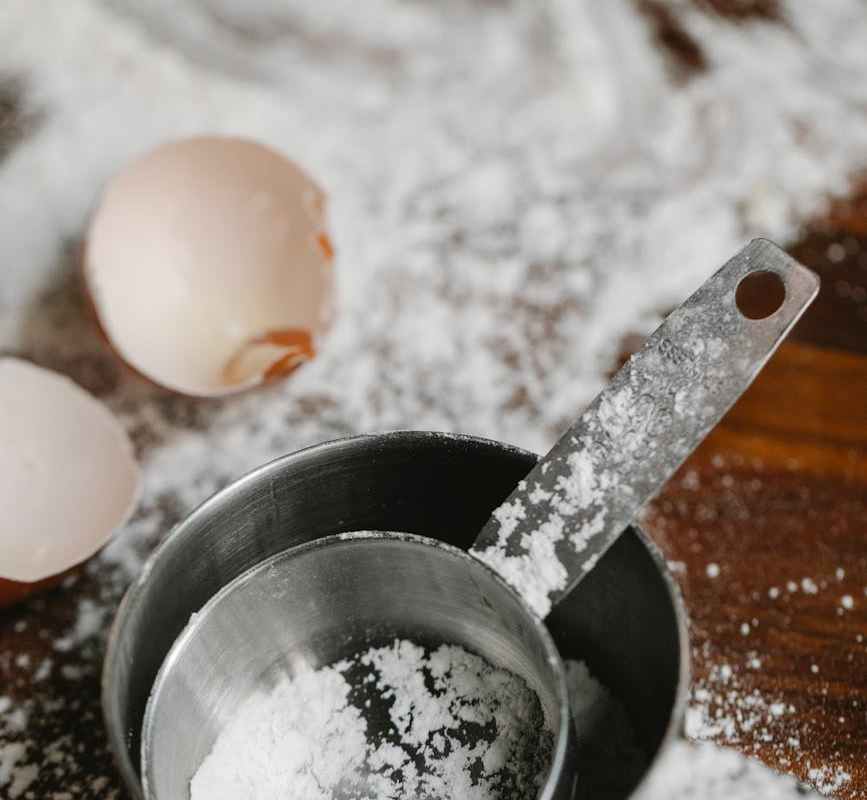
(featured photo from Pexels)

You can find me on LinkedIn: https://www.linkedin.com/in/wynneleon/ and Instagram @wynneleon

Please check out the The Life of Try podcast Where trying becomes the spark for personal growth, discovery, and re-invention!
Navigating Unwelcome Surprises

Living is the art of getting used to what we didn’t expect.” – Eleanor C. Wood

Last week, at an off-leash area for dogs, a dog latched on to my 18-month-old dog, Cooper’s, face. This dog, a pit bull mix, had been showing a lot of interest in Cooper. But Cooper doesn’t have, or hasn’t yet developed, any defensive postures – he doesn’t bark, raise his hackles, or growl. He’s bigger than many of the dogs and mostly runs away.

For whatever reason, this dog latched on to Cooper’s face between his eye and his ear. The dogs weren’t fighting – and neither dog was even growling. The owner was right there and was doing all that he could to get the dog to let go.

I can’t say how long it went on for – it felt like five minutes but could have been only one or two. As it went on, all the humans in the dog park circled around but no one seemed to be able to help the owner get the dog to let go.

And then finally the dog released. Cooper wimpered and scampered away. The owner said to me, “I’m so sorry. We’re never coming here again.” I’d like to report what I said but I have no idea. Maybe nothing.

I checked Cooper as we walked out of the park and he didn’t have any blood or wounds. The side of his face appeared to be a little puffier but undamaged.

These kinds of things always surprise me when they happen. It’s not that I’m unaware that they can. It’s that I’ve found carrying around the armor of anticipation to be too exhausting. It fends off bad and good things equally. It weighs me down too much in a way that keeps me from trying new things.

Instead I’ve come to figure out what works for me to process these things. I sit on my meditation cushion and breathe and pray. I write about it. I tell the story to others and it helps me to get a handle on it myself.

Somewhere during this process after we’d gotten home from the dog park, I started to settle down. The shaky feeling had lessened and after a time, I even stopped saying “I’m sorry that happened” to Cooper every time I looked at him.

Then as the kids settled into bed that night, Cooper featured high in our list of what we were grateful for. Five-year-old Mr. D was glad his buddy was okay. Nine-year-old Miss O pointed out that it was great that the other owner was helping and was apologetic. I was grateful that the kids weren’t there and it wasn’t any worse.

So in the end, we found bright spots in a story that started with “a dog latched on to Cooper’s face.” I’ve found that navigating unwelcome surprises often helps me to dig deep.

(featured photo is Cooper after the incident)

I co-host a storytelling podcast featuring authors and artists with the amazing Dr. Vicki Atkinson. To tune in, search for Sharing the Heart of the Matter on Spotify, Apple, Amazon Music or Pocketcasts (and subscribe) or click here. Or the YouTube channel features videos of our interviews. Please subscribe!

My other projects include work as a CEO (Chief Encouragement Officer), speaking about creativity and AI through the Chicago Writer’s Association, and my book about my journey to find what fueled my dad’s indelible spark and twinkle can be found on Amazon: Finding My Father’s Faith.

You can find me on Instagram and Twitter @wynneleon

The Risk Factor

Take risks: if you win, you will be happy; if you lose, you will be wise.” – unknown

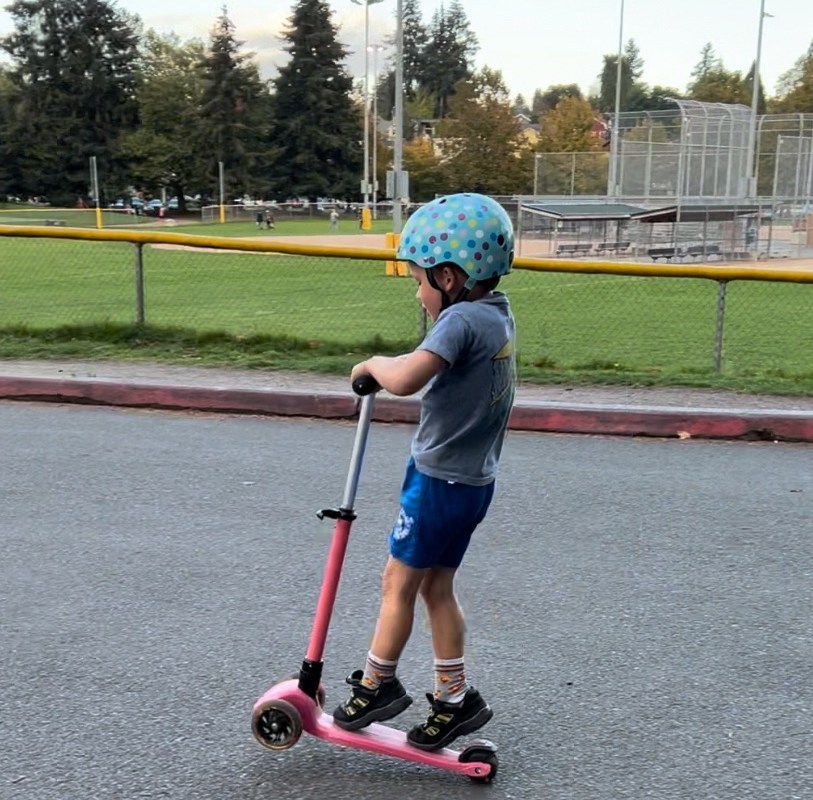
A couple of weeks ago, on the third time I took five-year-old Mr. D to the skate park, we ran into a fifth grader at school who is the boy that Mr. D admires the most. And this boy is a terrific scooter rider. Is that the right way to put it? I’m unsure of my skate park lingo.

This boy rides a scooter and can drop in to the steepest of the bowls, propel himself out, kick the base of the scooter around so it does a 360 and then land it, bringing all the energy to an elegant stop. It is truly impressive.

I watched Mr. D observing this boy and wondered if it would make him reckless. Mr. D stood quietly for a while just taking it all in and then he started scootering back and forth on the flat concrete practicing popping a wheelie.

On the next visit, he found the most gradual of the slopes and started practicing going down one side and back up the other. This sport is not in my wheelhouse so I’m of no help to him. But he figured out how to bend his knees at the bottom of the slope.

He keeps making incremental risks and discoveries with each visit. I remarked on this to my friend, Eric, and he quipped, “Even five-year-olds have a built in risk meter.

To which I’d add – “that works.A certain amount of risk is necessary in order to learn. We have to be willing to look foolish, expose ourselves as newbies, and try something in order to quit it. I mention that last one because it’s often my barrier – I hate quitting things so I often won’t start something so that I can prevent having to quit.

So, I’ll speak for myself when I say that one way that life becomes rutted for me is when my risk meter breaks. Everything new will peg too high on the meter so then I try nothing. I’ll claim my past risks as badges that insulate me from ever having to try anything new again. And then I stop learning.

The funny thing about risk is that it’s a little contagious as well. The next time we went to the skate park my nine-year-old daughter, Miss O, came along. Seeing her brother try the gradual slopes encouraged her to do the same.

So here’s to being open to taking the right risks in life.

It Makes Me a Learner

Courage doesn’t always roar. Sometimes courage is the quiet voice at the end of the day, saying, ‘I will try again tomorrow.’” – Mary Anne Radmacher

A couple of days before Miss O had her field day at school, I mentioned it to her. Much to my surprise she groaned.

Why that response?” I asked, thinking of past years where she loved all the silly games like the Mustache Dash where you run with a piece of licorice between your lip and nose, and the water balloon toss.

My almost nine-year-old daughter replied, “I don’t like it when I try my best and don’t win. It makes me feel like I’m a loser.”

Oh. All I could think to say in the moment was, “Well, the only way you have a chance of winning is to try.”

But I couldn’t stop thinking about how early we learn that it hurts not to win and the feeling of competition.

I think the trait that has served me the best is my willingness to try. So I find it fascinating to consider all the things that teach us not to try.

To be fair, parenting has also given me insight into the many things I’m not interested in trying. Weird foods, holding insects, and playing with slime come to mind. Even trying comes with some limits. Or wisdom. Whichever way you want to look at it.

Fortunately, the topic of field day came up the next day so I had another shot at handling it. Miss O brought up the topic of practicing. And I concurred that we don’t practice things like potato sack races on a regular enough basis to have any predictable chance that we’ll win.

But then I was magically gifted the next thing to say, “When I don’t win, I don’t think it makes me a loser. It makes me a LEARNER. There isn’t a thing I can think of that I’ve lost that hasn’t taught me something.

Funny how hard it is to continue to stay open to being a try-er!

(featured photo is Miss O trying a game at field day)

Fear and Confidence

Everything you’ve ever wanted is on the other side of fear.” – George Adair

The other night our iPad fell on the ground. My kids and I were getting in the car after visiting my brother and his wife. My brother folded the stroller and the iPad that my 6-year-old daughter always uses fell out of the pocket and landed on its corner. We picked it up and went on our way but as we drove, my daughter discovered that the power button had been slightly crimped down by the fall and so all the iPad would do was show the Apple icon and then go black over and over again.

This iPad is her favorite thing in the world. It represents her agency in the world to discover things that other 6-year-olds are doing. It has her books, videos and games so it is also her main source of entertainment. That iPad holds a lot of power and possibility in one sleek package.

She started wailing in the backseat that it was broken. I calmly said, “Don’t worry, I’ll take a look at it when we get home. We’ll try to fix it.” And she wailed back, “We can’t try. It won’t work.”

What?? We fix things all the time. This was the little girl that just an hour before had confidently stood up on a paddle board and was paddling it by herself on Lake Union. And then she was jumping off the paddle board over and over into the lake to swim around with not a worry in the world.

And now she was saying we couldn’t even try. That all was lost. Everything was broken and would stay broken. This wasn’t normal or rational, this was fear.

It struck me that confidence can’t show up when fear is running the show. So in my ongoing inquiry into confidence, I went digging in to get some perspective into this.

In their book The Confidence Code, authors Katty Kay and Claire Shipman distill the definition of confidence from all their sources of research and erudition into “Confidence is the stuff that turns thoughts into action.” They also describe the other positive attributes that often go hand in hand with confidence, what they label as the confidence cousins: self-esteem, optimism, self-compassion, and self-efficacy. But all of these things, confidence and the cousins that work to create belief that you can make something happen, are part of our rational/thinking brain.

Neuropsychiatrist Dan Siegel and parenting expert Tina Payne Bryson have great illustrations in their book The Whole-Brained Child that illustrate how fear is a downstairs (limbic) brain function and that when we flip our lids, we temporarily lose access to the upstairs brain that supports thinking. The downstairs brain that provides quick reaction so when we are in critical moments of fight of flight doesn’t stop to think about it.

So in our moments of fear we lose, maybe just momentarily, access to the stuff that creates confidence until we move though it. This brought to mind for me of one of the rapid fire questions Brené Brown often asks her guests on her podcast Unlocking Us: “You are called to be very brave but your fear is real and you can feel it in your throat, what is the very first thing do you do?” And the answers from her guests are things like:

  • Oprah: “Take a deep breath. Remind myself to breathe.
  • Dr. Angus Fletcher: “I think of the bravest person I know who happens to be my son who is much, much braver than me.
  • Dr. Julie Gottman: “Put my hand on my heart.

Coming back to my daughter in the car I asked her if what she was saying was because she was afraid of losing her iPad. She said she guessed it was. And owning that, we then could reason through the fact that the only sure outcome was the one if we didn’t try. If we did nothing, the iPad would stay broken. So we had nothing to lose by trying.

Sure enough, we got home, fiddled with the button and it came back to life. The button is a little tricky now but our confidence is restored. We could try – and it worked. As the quote for this post says, and it is one of my all-time favorite quotes because it has gotten me through many barriers of my own making, “Everything you’ve always wanted is on the other side of fear.

This is my second post delving into confidence. I Can was the first.

(featured photo from Pexels)

I Can

“Anyone who ever gave you confidence, you owe them a lot.” – Truman Capote

I was talking with my friend Scott the other day about confidence. How did he have the confidence to start his own business 25+ years ago? And does the person he’s picked to replace him have the confidence to run the business when he retires? In the course of the conversation, I told him a chain of events that sparked my interest about the subject of confidence.

About two years ago, in the spring of 2020, I had two things that I needed to replace. I’d torn the passenger side mirror of my car loose when I backed up too closely to the yard waste bin. And the torsion spring on my garage door had snapped, maybe after my 4-year-old hung from the door as it was going up. This was the very start of the pandemic so just calling someone to come fix the problems wasn’t a viable option and my inclination anyway is to at least triage things myself.

It took a little googling to figure out what I needed to do next to fix my problems but with help from the internet, I figured out what parts I needed and ordered them. Then I talked over the issues with my brother. He found YouTube videos for how to replace both things and said he’d help. But before he could come over, I did both on my own.

The way I saw it was that I could watch the videos and try. If I didn’t succeed, I could always ask for help but at least I’d learn something. And I did learn something – how to do both!

At this point in the story, Scott laughed at me because he thought I was leaving out the most obvious sign of confidence – that I’d had two kids as a single parent by choice. Right – there’s that. 😊

But what really got me thinking about this topic was that not long after I fixed my garage door and replaced my car mirror, my daughter who was then just 4 ½ years old had her pre-school graduation and the comments left for her from the other parents/teachers were things like:

I love your confidence and I appreciate how friendly you are to everyone!

I love your stories and your art and how confident you are sharing your ideas with the whole class.

I love how determined and confident you are. You are also so empathetic and such a kind and helpful friend to many.

As I was mulling over how confidence seemed to have been passed to my daughter, I heard an adult joke sarcastically about my daughter when she said she could do something, “Girl, you really need to work on your confidence.”

At that point, I knew I needed to understand confidence and if/how it’s passed from one generation to the next (because I’d say my parents were very confident people and my instinct is that I got the courage to try from my dad). More than anything what I really want to know is how to foster confidence in a child in a way that healthy, realistic and humble.

Writing for Psychology Today in an article called The Secret of Self-Esteem author and psychiatrist Neel Burton defines as being confident as to trust and have faith in the world. Merriam-Webster adds one more flavor to this with a kids definition of confident as having or showing sureness or optimism. Dr. Burton distinguishes confidence from similar concepts by explaining confidence is feeling “I can,” self-esteem is feeling “I am” and pride is the feeling of “I did.”

That resonates with me because what I often think is that I can try something and even without an expectation of victory, I have the belief it will get me to the next clue in the puzzle. I can try has a very different flavor than I will succeed.

It also matches what I learned from my dad. He taught me many of my house project skills and though we had to blunder and troubleshoot our ways through some projects there was no question that we would eventually get it done. Like the time we unknowingly bought bathroom drywall instead of regular drywall and then wondered why it was so heavy and had to figure out how to marry it with what was there. His attitude was always one of “we can.” Probably most influentially, he never told me that there was something that I couldn’t do.

When I was talking with Scott about confidence, I asked him where he thought he got his. He didn’t hesitate a moment before saying that it was from his dad. But I’ve heard other answers too – teachers, coaches, librarians – anyone influential that told us by word or by action, “You can!”

 I’m still working out many of my questions about confidence as I read through a pile of well-researched and thought out materials so I have many posts on this subject to come: what happens to confidence as we age, how to help a child build healthy confidence and what role does faith play in confidence?

Tell me how you think of confidence. Does “I can” resonate with you? Was there someone in your life that gave you confidence?

(featured photo from Pexels)

Wordle as a Metaphor for Life?

You can’t win a game 7 without losing three games first. Keep going.” – Shea Serrano

As I having trouble solving Wordle the other day, I realized that I have been unusually focused on the word I used to start the puzzle. I’ve asked my friends that also play it what word they use. I’ve tried a few different ones myself, often using S-T-E-R-N since it represents some of the letters used most frequently used in English.

[For anyone who hasn’t tried to play this game that was recently bought by the NY Times, Wordle is a game where you have six tries to guess a common five letter word. You are not given any information to start with but when you enter a guess, you are told if you have any right letters and they are green if correct in the right spot and yellow if they are used on the word but in the wrong spot. Letters can be repeated. There is one word a day and everyone gets the same word so rest assured, this post doesn’t reveal today’s wordle.]

But as I typed in my word and got the result that the answer had none of those letters, I realized that knowing what isn’t in the word is equally as important.

The absence of a positive result is also informative.

It makes me think of a story about Thomas Edison. As he was trying to invent the light bulb, he tried more than a hundred different types of materials to use for the filament. Someone asked if he got discouraged and he said that he didn’t because each failure told him one more thing that didn’t work.

So Wordle is just the latest reminder that life is best met by continuing attempts to try. Every failure is just another opportunity to see what doesn’t fit. When I feel great resistance to something I’m doing in work or parenting, it presents an opportunity to think about whether I should push harder or try another tactic.

Some of life’s lessons are the hardest because we learn what not to do. But they are also some of the most valuable lessons, especially when we are able to distill the information and heal the trauma.

I did finally get the Wordle on the sixth try – phew! Because there weren’t very many letters left to combine into a common word (letters in dark gray on the keyboard indicate they have been tried and are not used in the word). It reminded me yet again, failure is an excellent source of information. Here it is in case you want to guess.

Back on Top

When one tugs at a single thing in nature, he finds it attached to the rest of the world.” – John Muir

Sometimes I think I can more easily name mountain climbing trips where I didn’t summit than the ones I did. Like that time on Mt. Elbrus in Russia where I was throwing up at our camp at 13,500 ft and stayed in the hut with the really funny, nice guy from California who had a headache. Or the time on Mt. Orizaba in Mexico when we couldn’t cross that exposed couloir because the ice was too fractious to get a screw in. In both cases I was a long way from home not to succeed and maybe that’s why they stand out — though I can name the ones closer to home as well.

Looking back at those climbs now, I see they were a way for me to practice two elements of life “in play” before having to live them. I started climbing mountains in my late 20’s before I had racked up any big life losses.  So the first thing I was practicing is trying, that decision to tackle something that is really gutsy for me, not knowing whether or not I would succeed. And the second I was developing was being able to fail without seeing myself as a failure.

There’s a critical element of letting go for me when I don’t succeed. It is humility, recognizing limits. It’s all about accepting that I don’t have to be finished in order to be loved, even by or especially by myself. That self-acceptance has come with practicing failing. A choice between leaning in towards the love that has always held me or branding myself unworthy.

Here’s what climbing has taught me. Standing on top is great, especially if I’m mindful of the sacredness of what I see up there. It is a moment to take in all the commitment and teamwork it took to get there. But failing to get to the top just means I get to spend more time in the mountains and I practice that key part of life – trying. Lucky me!

I’ve also learned a secret — no one else in my life really cares whether I summit or not. As long as I walk back into the parking lot upright and smiling, it’s good enough for the people who know and love me. Of course they care if it’s important to me but often it’s what I try that sticks in their minds, not what I succeed at. No one else is tallying a score card of my life.

None of these things are only about climbing because now that I’ve failed plenty in my “real” life, I know they are just as true about life in general. It’s not easy to keep trying big things and its hard to fail – but practicing it makes it easier.

Years ago I had a friend who said to me in a moment of vulnerability when his dad died suddenly, “I just wish he’d been able to see me back on top.” He’d gone through some really hard life losses right before his dad passed and the pain of wanting to be successful in his dad’s eyes was palpable.

I can’t speak authoritatively for my friend’s father but I knew him as a gentle and wise man. I believe he already saw his son back on top. Because my friend was still trying and still smiling.