How to Share Nutrition and Safety

Nutrition requires nuance—it’s personal.” – Meg Bowman

I’ve spent a good portion of my career helping people organize data in a way so that it is informative. For example, saving a file to a misnamed or wrong location makes the content practically useless. So much of passing on wisdom and goodness requires it to be in context to be helpful.

I’m thinking of context and the bigger picture because of the How to Share podcast episode this week. Vicki Atkinson and I were fortunate enough to talk with licensed nutritionist and author, Meg Bowman. Meg’s newly released book, This is Your Body on Trauma, is incredible because in it she maps out how nutrition is interconnected with our other systems. Meg explains why safety is the most important nutrient for our nervous systems.

She also explains why how you eat is as important as what you eat. She encourages us to understand that we need two strategies at play. One is the toolkit we build for when we are underwater and the second is for when we are feeling safe.

Meg tells us about how to meet our bodies with more care and less judgment. We talk about how this extends to others, especially in the food season we are in with the holidays ahead.

This is a fantastic conversation about a topic that affects us all. As Meg says, when we are well-nourished, it lessens our experience of stress at any age. This is an episode that will leave you feeling satisfied. We know you’ll love it!

Takeaways

  • Safety is the most important nutrient for the nervous system.
  • How you eat is as important as what you eat.
  • Understanding your nervous system state can influence food choices.
  • Food is often a reflection of deeper needs for safety and stability.
  • Nutrition requires a personal and nuanced approach.
  • Creating a safe eating environment can enhance well-being.
  • The FIGS protocol helps assess individual nutritional needs.
  • Storytelling and emotional state impact our relationship with food.
  • Removing shame from food choices is crucial for healing.
  • Self-care should focus on centering individual needs.

Here’s Meg’s compelling elevator pitch for This Is Your Body on Trauma:

Here are some ways you can watch this fascinating and informative episode:

Links for this episode:

How to Share Nutrition and Safety transcript

This Is Your Body on Trauma — Meg Bowman

This Is Your Body on Trauma | Book by Meg Bowman | Official Publisher Page | Simon & Schuster

This Is Your Body on Trauma on Barnes & Noble and Amazon

Nutrition Hive

From the Hosts:

Vicki’s book about resilience and love: Surviving Sue; Blog: https://victoriaponders.com/

My book about my beloved father: Finding My Father’s Faith

(featured photo from Pexels)

Standing Up for Democracy: Lessons from Kids

To understand where you stand in own your life, you cannot remain seated.” – Christine E. Szymanski

I can rely on my kids to have a nose for what’s authentic. At 6 and 10 years old, they might not be able to tell me exactly why, but they can tell the difference between people who are phoning it in and others who are genuinely present.

At the end of the day this past Saturday, I asked them what they liked most about the day and what they could have done better. It’s part of our nighttime routine. Unless we are so tired that we’ve flipped our lids. That happens sometimes too.

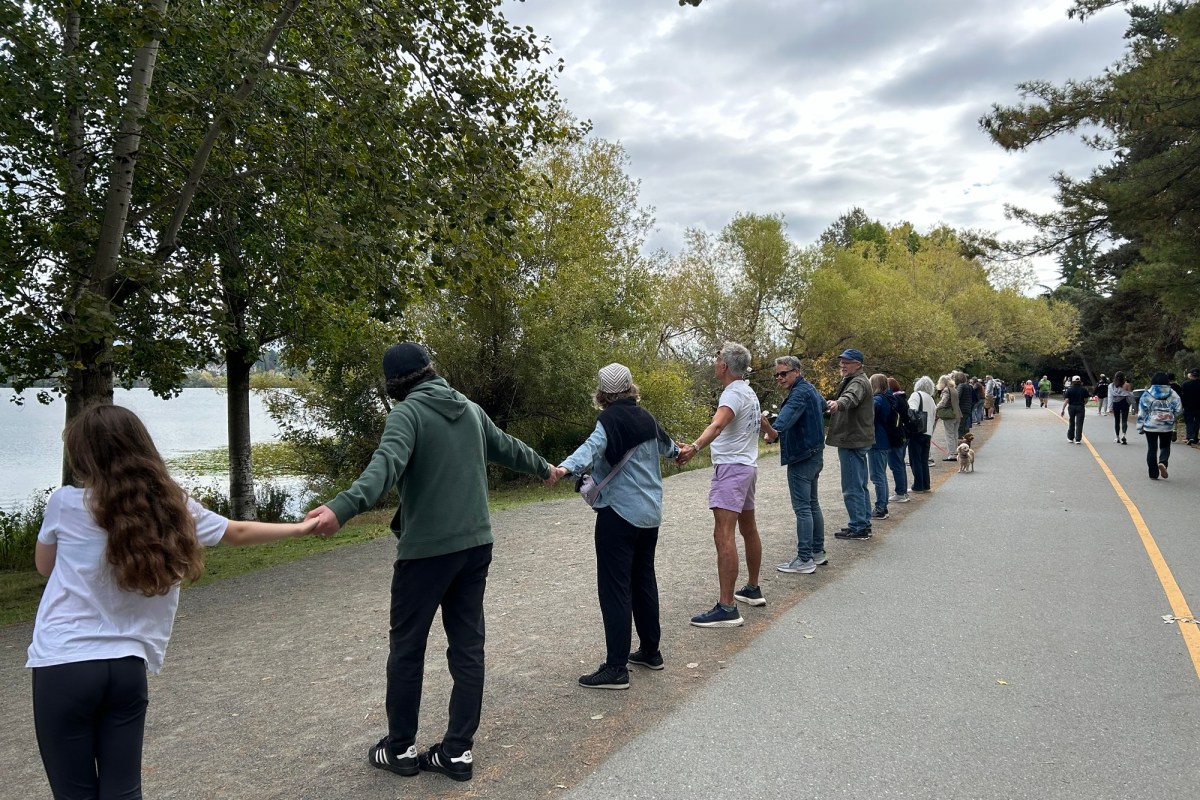
They both answered that their favorite part when we went down to the little lake that is a five minute walk from our house and participated in a Stand Up For Democracy event. The organizers were trying to gather enough people to create a continuous loop of people to encircle the lake which is three miles in circumference.

What surprised me about the answer was they liked that even more than watching the Mariners down at the pub with our friend, Eric. Or playing with their friends, skateboarding, or building imaginary spaceships.

My kids can’t yet spell out the details of what makes a democracy, monarchy, or autocracy. But they can tell the good feeling of standing up for what matters and the sense of community that comes from people trying to quietly show their commitment. It’s authentic, it’s strong, and it feels better than worry.

I think they’ve got that right.

(featured photo is mine)

You can find me on LinkedIn: https://www.linkedin.com/in/wynneleon/ and Instagram @wynneleon

I host the How to Share podcast, a podcast about collaboration – sharing leads to success.

I also co-host the Sharing the Heart of the Matter podcast, an author, creator and storytelling podcast with the amazing Vicki Atkinson.

Life Begins Now: The Parenting Trap

“It still amazes me that we insist on teaching algebra to all students when only about 20 percent will ever use it and fail to teach anything about parenting when the vast majority of our students will become parents.” – Nel Noddings

My dad used to tell this joke: Three religious leaders were asked the question, “When does life begin?”

The Catholic priest said, “At conception.

The Protestant pastor replied, “At birth.

The Rabbi answered, “When the last kid goes to college and the dog dies.

I’m laughing. Wow do I feel this. As a parent of young children, I do more things in a day that I wouldn’t choose to do than things I would choose. That alone can make me feel as if my life is not my own. Add in the noise and chaos and it’s hard to find peace. Taken all together, that can make this phase of life seem like one to rush through.

 But I know I can’t assume that I’ll be able to enjoy my kids when they are mature adults. I had my kids when I was aged 46 and then 50. When my youngest is 30, I’ll be 80-years-old. Hopefully an alive, healthy, and active 80 years old but nothing is a given. I know that’s true at any age.

So I try to flip the punchline and enjoy my kids, and life, now.

Cleaning up messes

Things in my house are spilled nearly every day. Sometimes by me. Often not very big deals like when a glass of milk with a top on spilled the other day. It just left a corona of milk dotting the carpet.

Here’s the thing I’ve realized. It’s a chance to convey to my dear children that I’ll love them when things are messy.

Bonus points: Longevity specialist Dr. Peter Attia includes getting up from the floor with max of one arm for support on his Centenarian Decathlon list. It includes the ten most important physical tasks you will want to be able to do for the rest of your life. Every time I’m down on the floor cleaning, I celebrate working out the strength and neuromuscular control that I need.

Helping with personal hygiene

It’s funny that kids don’t come with personal hygiene habits baked in. I’d prefer not to have to remind others to brush their teeth or wipe their tush. Add a dog, cat and a crested gecko in the mix and I can pretty much guarantee that most days will have some involvement in someone else’s hygiene.

I love this one because it’s foundational to my outlook. It’s forced me as a congenital optimist, to accept that every day is not going to be perfect, comfortable, or even pretty.

And long after I’m gone, I can trust my kids will have some idea of how to keep their bodies safe.

Bonus points: My personal hygiene has suffered as a parent. Kudos to me when I remember to take care of myself as well.

Feeding them

There are some days where I make food, clean up from making food, only to find that by that time, more food is already required.

But, whether real or metaphorical, I’d argue that giving others fuel to live by is what we are here for.

Bonus points: This is a reminder that cooking is all about exercising our creative muscles. How can I make something when I realize I’m missing an ingredient? How do I make something that’ll last with what I have?

Melt downs

Oh, those moments when big emotions take over and make us uncomfortable. And by us, I mean not only the person melting down but also everyone close at hand. It can be precarious, unpredictable, and draining. It’s also 100% real.

Recently, I took my kids rock climbing. My six-year-old son got stuck halfway up the rock face. He couldn’t find a way past – not moving right or left or shifting his weight. He started to cry. Since I was belaying him, there was nothing I could do except be there with him. And it was the perfect metaphor because I was connected to him by a rope.

From 40 feet away, I shouted up my empathy for his frustration, tried some suggestions, told him he could come down, emphasized that I knew he could do it – everything I could do to help from afar. Finally he shook it off. Then he managed the coolest move — palming the rock with his right hand and smearing the face with his left foot, he leveraged himself up high enough to the next good hold.

It was as rousing of a feat of personal triumph as I’ve ever witnessed.

Here’s where you get to pick your image: port in the storm, rope anchor on a mountain, sacred ground – you have the chance to be that for someone else. And to learn a little bit about what it kicks off in you as well. We don’t often get to see adults do that – the trying, melt down, return and overcoming is usually a longer (and more hidden) process for grown-up risks and triumphs. There is nothing as powerful as watching someone overcome some real adversity. With young kids we get to see that nearly every day.

And then we get to celebrate their success.

Bonus points: It’s hard to stay regulated when someone else is dysregulated. Whether it’s my verbal 10-year-old daughter talking grown-up sounding sass that covers for her childlike emotions underneath or a stranger at the store, I feel it all the way through. But all this practice is helping my central nervous system to be buff!

Distraction

When awake and nearby, my kids provide continual distraction. I could be inside sitting at my computer typing and instead I’m out in a creek skipping rocks. Or I could be sitting on the couch with my phone in hand texting and instead I’m having a dance party and moving my hips. I hunt for snails and hold my kids’ hands while they learn to hoverboard.

Oh, that’s right – I’ve never once regretted a dance party, a rock skipping contest, time in nature, or moving my body.

Bonus points. Psychologist Dr. Alison Gopnik says that kids have lantern brain. They see everything that is around. Adults have spotlight brain – we focus on what needs to be done. Switching into lantern brain can help us solve problems, be creative, and open us to new insights. The distractions can actually help us with solutions for our work when we return to it.

Invasion of personal space

Yesterday my six-year-old son stuffed something in the pocket of my jeans. Gah.  

I’m all for enforcing the boundaries necessary to maintain healthy relationships. But before I decide what those boundaries are, I consider that my kids embody what we look like as open creatures that assume other people will help you carry your stuff.

Bonus points: Ask someone else to help you carry your stuff.

Time

I’m the only one that cares about time in my house. Being on time, getting to bed, the school bell is about to ring, dinner time, time for annual physicals, or it’s about time. All of it.

Because I’m the one that understands time is limited.

Bonus points: Stop caring about the future and enjoy the now.

I’m not guaranteed to get to 80 years old. But I bet that if I do, parenting will have extended my healthspan so that I enjoy it more. And I know I’ll be glad that I didn’t wait until the kids went to college and the dog died to begin living.

(featured photo is mine)

You can find me on LinkedIn: https://www.linkedin.com/in/wynneleon/ and Instagram @wynneleon

I host the How to Share podcast, a podcast about collaboration – sharing leads to success.

I also co-host the Sharing the Heart of the Matter podcast, an author, creator and storytelling podcast with the amazing Vicki Atkinson.
When You Fall On Your Face

Our greatest glory is not in never falling, but in rising every time we fall.” – Confucius

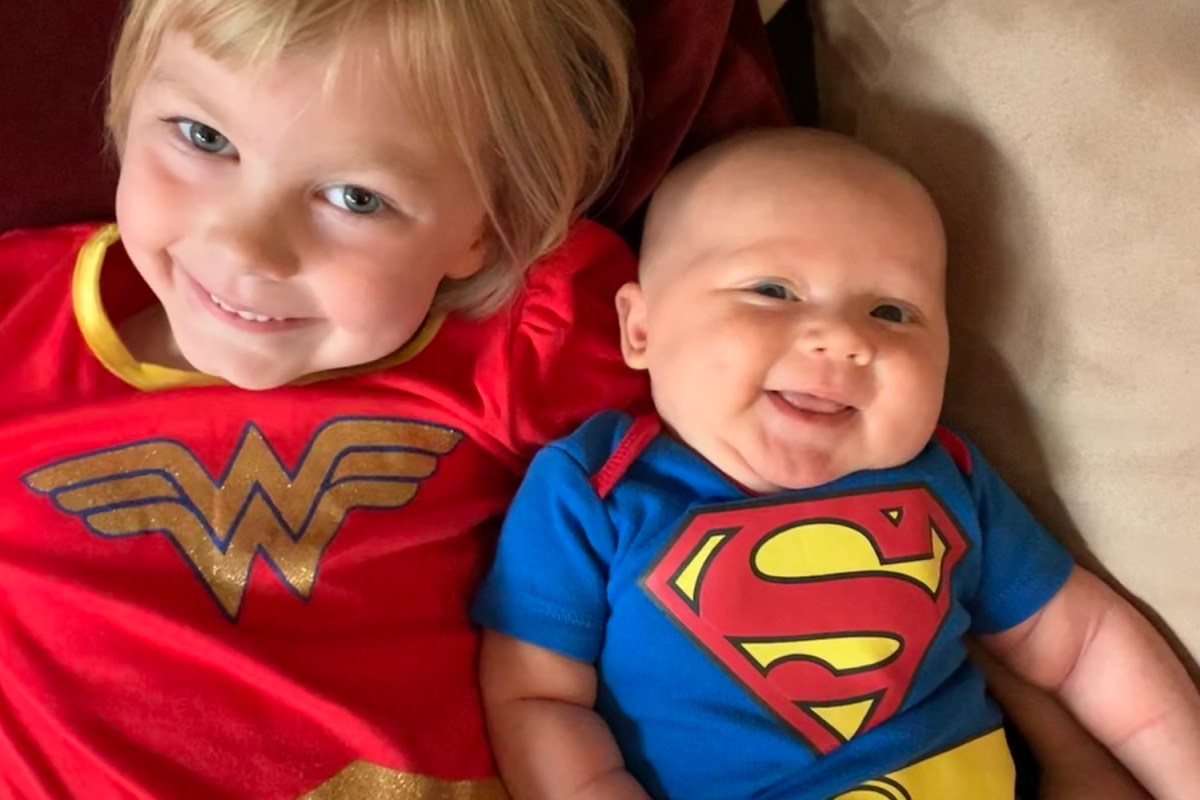
This isn’t a story about me falling on my face (although I have plenty of those stories) but a recent incident when my 6-year-old son, Mr. D, fell on his. Although I’m sure I echo the sentiments of many parents when I say I’d happily take my kids’ falls for them if I could.

It happened when we were playing Little League summer ball. Ten-year-old Miss O was able to play on the team too and it was an informal sandlot team that would divide into two teams and scrimmage with whoever showed up.

There was one difference between summer ball and the first season of baseball that Mr. D played – they played outs. If someone got the ball and forced an out or tagged an out, the player would go back to the dugout.

But in this hodgepodge of rules, the teams still batted everyone in their lineup each turn at bat. The last person at bat was the “homerun hitter” meaning they and anyone else who was on base would run home.

On the last inning of a scrimmage one night in July, Mr. D was the homerun hitter. He hit the ball squarely. But by the time he’d gotten to third base and was rounding to home, the other team had gotten the ball. All the players on the other team were chasing him down the third base line. It was only about five of them but it still felt like a terrifying and mad pursuit. That’s when he fell on his face.

He was furious! His sister tried to give him a hand up and he slapped it away. So she was furious because he’d refused her help. I tried to help too but he was inconsolable. Since he was the last hitter of the last inning of the game we managed to get to the car and leave but not before everyone was well aware of our upset.

On the way home, we talked about how sports makes us want to try and how it hurts when we don’t make the play. But the tradeoff is not trying at all. Actually, Miss O and I talked about that, Mr. D said very little.

At bedtime, Mr. D went to get his journal and wrote the very first thing he’s ever written in it. He asked me, “Mom, how do you spell ‘Slide like this?’

The next morning he told me he wouldn’t be able to go to camp because he was still thinking about the baseball thing. I responded that he’d probably think about the baseball thing all day and it would be more tolerable at camp when he was busy than at home when he was not. He finally agreed to go to camp.

When we picked up the boys we were carpooling to camp with, he said to them, “I have to tell you a baseball story. It’s not good.” I was astounded. He’s not nearly as verbose as his sister.

It was only when he told the story to them that I understood that he didn’t fall on his face – he was trying to slide. But he’d never tried it before and didn’t know that you can’t slide from halfway down the base line. Or maybe you can – but it takes a lot more practice.

So, he fell on his face. He wrote about it. He told others about it. And once he did, seemed to be over it.

Here’s my takeaway. Sometimes we try new things and it doesn’t go well. It hurts like hell but you recover more quickly when you share.

(featured photo from Pexels)

You can find me on LinkedIn: https://www.linkedin.com/in/wynneleon/ and Instagram @wynneleon

I host the How to Share podcast, a podcast about collaboration – in our families, friendships, at work and in the world.

I also co-host the Sharing the Heart of the Matter podcast, an author, creator and storytelling podcast with the amazing Vicki Atkinson.

How To Share Your Best Self

When we do the best that we can, we never know what miracle is wrought in our life, or the life of another.” – Helen Keller

My 86-year-old mother recently bought an Apple watch along with the latest generation phone. She doesn’t like upgrading her technology but problems with her old phone made it necessary.

My mom is very smart but her strengths are in music and languages. As with so many of the people that I train in my job as a technology consultant, she’d rather focus her energy on what she likes doing and not have to bother with the rest. However, she is extremely independent.

She doesn’t often ask for help from me because it seems her conscientiousness about getting things done outweighs her frustration with technology. At least that’s my guess because I’m fascinated by how our mental makeup determines how we operate.

So I love this episode of the How To Share podcast with psychologist, talent agent, educator and author Dr. Albert Bramante because he speaks with Vicki Atkinson and me about some of the factors that contribute to how we approach life. He’s written a book called Rise Above the Script to help actors and performers break free of self-limiting patterns.

 His book reads like a toolkit for self-evaluation: taking a look at self-esteem, self-efficacy, and the big five personality traits (agreeableness, conscientiousness, extraversion, neuroticism, and openness).

Albert points out the many ways we self-sabotage. As he says in the podcast clip below, once we see our patterns, it’s much easier to address them.

Albert says his book (and this episode) is for “anyone feeling the friction between their ambition and their achievement.” It is a fascinating dive into the ways we can bring our best selves to our work and to the world. We know you’ll love it.

Takeaways:

  • Collaboration is key in personal and professional growth.
  • Self-evaluation is essential for breaking self-limiting patterns.
  • Lifelong learning is crucial for personal development and confidence.
  • Self-care practices significantly impact mental health and overall well-being.
  • Understanding one’s relationship with money can improve financial stability.
  • Acknowledging achievements helps combat self-doubt and insecurity.
  • The importance of developing business acumen in creative fields.
  • Taking responsibility for one’s actions is the first step to overcoming challenges.

Here’s a clip of Albert describing the power of self-awareness:

Here are some ways you can listen and watch this fantastic episode:

Please listen, watch, provide feedback and subscribe.

How to Share Our Luck with Gil Gillenwater How To Share

In this enlightening conversation, Gil Gillenwater is with host Wynne Leon and shares his experiences and insights from over 35 years of philanthropic work along the US-Mexico border. He discusses his book, 'Hope on the Border,' which highlights the transformative power of education and community service. Gil emphasizes the importance of enlightened self-interest over traditional charity, advocating for a model that empowers individuals and fosters dignity. He explores the duality of poverty, the need for sustainable opportunities, and the joy found in serving others, ultimately presenting a vision for a more connected and compassionate world.TakeawaysEducation is the key to breaking the cycle of poverty.Enlightened self-interest can lead to personal and communal growth.Charity should not be viewed as a sacrifice but as a mutual benefit.Volunteering provides a sense of purpose and fulfillment.Welfare can disempower individuals and communities.Community service fosters connections and shared humanity.The disparity in wealth is a significant issue that needs addressing.Experiencing poverty firsthand can change perspectives.Creating opportunities in one's home country can reduce migration.The joy of service is a pathway to personal happiness.Links for this episode:How to Share homeHope on the Border at AmazonGil's organization: Rancho FelizGil Gillenwater on FacebookWynne’s book about her beloved father: Finding My Father’s Faith; Blog: https://wynneleon.com/; Substack: https://wynneleon930758.substack.com/
  1. How to Share Our Luck with Gil Gillenwater
  2. How to Share 1970's Chicago with Doug. E. Jones
  3. How to Share Feedback with Dr. Vicki Atkinson
  4. How to Share the Next Generation with Mari Sarkisian Wyatt
  5. How to Share Impactfully with Social Media Friends with Amy Weinland Daughters

Links for this episode:

⁠Albert Bramante⁠ website

⁠Rise Above the Script: Confronting Self-Doubt and Mastering Self Sabotage for Performing Artists ⁠on Amazon

How to Share Your Best Self transcript

From the hosts:

Vicki’s book about resilience and love: ⁠Surviving Sue⁠; Blog: ⁠https://victoriaponders.com/⁠

My book about my beloved father: ⁠Finding My Father’s Faith⁠

How To Share Optimism

“Light and shadow are opposite sides of the same coin. We can illuminate our paths or darken our way. It is a matter of choice.” – Maya Angelou

You know the skit about positivity? It goes something like this:

Johnny: “We have to drive three hours to have lunch with relatives I’ve never met? This is going to suck!”

Mom: “Johnny, you haven’t even met these people. You need to be more positive.”

Johnny: “I’m positive this is going to suck.”

I’m a congenital optimist. It’s taken me decades to understand my own filter and figure out how it effects others. As a parent, an entrepreneur and as a leader, I’ve come to see that optimism can be helpful when encouraging others, but it has to be tempered with genuinely acknowledging the ups and downs. In the end, I see optimism more as fuel to keep trying than an expectation about an outcome.

Which aligns with the How to Share podcast conversation I had with the incredible author and blogger Mark Petruska. He also is an inveterate optimist and together we explore the concept of optimism, discussing its definition, the importance of timing when sharing optimistic views, and the audience’s receptiveness to such messages.

We delve into the relationship between optimism and empathy, the balance between optimism and realism, and the idea that optimism can be cultivated as a skill. Our conversation emphasizes the significance of understanding individual circumstances and the stages of acceptance and grief when offering encouragement.

How To Share Optimism Takeaways

  • Optimism is defined as a favorable view of the future.
  • Timing is crucial when sharing optimism, especially during difficult times.
  • People may not be receptive to optimism until they reach acceptance
  • Empathy plays a significant role in how we share optimism.
  • Optimists may live longer due to lower stress levels.
  • Optimism can be cultivated and strengthened like a muscle.
  • It’s important to balance optimism with humility and realism.
  • Sharing personal experiences can enhance the impact of optimistic messages.
  • Understanding your audience is key to effectively sharing optimism.

This is a great episode that will get you thinking about the lens you look through – and how to share it with others. I’m optimistic that you’ll love it.

Here’s a sneak peek of the great conversation with the amazing Mark Petruska:

Here are some ways you can listen and watch to the full episode:

Please listen, watch, provide feedback and subscribe.

How to Share Our Luck with Gil Gillenwater How To Share

In this enlightening conversation, Gil Gillenwater is with host Wynne Leon and shares his experiences and insights from over 35 years of philanthropic work along the US-Mexico border. He discusses his book, 'Hope on the Border,' which highlights the transformative power of education and community service. Gil emphasizes the importance of enlightened self-interest over traditional charity, advocating for a model that empowers individuals and fosters dignity. He explores the duality of poverty, the need for sustainable opportunities, and the joy found in serving others, ultimately presenting a vision for a more connected and compassionate world.TakeawaysEducation is the key to breaking the cycle of poverty.Enlightened self-interest can lead to personal and communal growth.Charity should not be viewed as a sacrifice but as a mutual benefit.Volunteering provides a sense of purpose and fulfillment.Welfare can disempower individuals and communities.Community service fosters connections and shared humanity.The disparity in wealth is a significant issue that needs addressing.Experiencing poverty firsthand can change perspectives.Creating opportunities in one's home country can reduce migration.The joy of service is a pathway to personal happiness.Links for this episode:How to Share homeHope on the Border at AmazonGil's organization: Rancho FelizGil Gillenwater on FacebookWynne’s book about her beloved father: Finding My Father’s Faith; Blog: https://wynneleon.com/; Substack: https://wynneleon930758.substack.com/
  1. How to Share Our Luck with Gil Gillenwater
  2. How to Share 1970's Chicago with Doug. E. Jones
  3. How to Share Feedback with Dr. Vicki Atkinson
  4. How to Share the Next Generation with Mari Sarkisian Wyatt
  5. How to Share Impactfully with Social Media Friends with Amy Weinland Daughters

Links for How To Share Optimism podcast episode:

Storyteller and writer Mark Petruska

Is Optimism Something We’re Born With? | Psychology Today

Hope and Optimism as an Opportunity to Improve the “Positive Mental Health” Demand – PMC

The Difference Between Hopeful Optimism and Toxic Positivity | Psychology Today

(featured photo from Pexels)

The Difference Between Want and Need

Recognize what is simple. Keep what is essential.” – Lao Tzu

Yesterday morning, our first morning after returning from our road trip, I looked around the house and had a good laugh at the evidence of our settling in. I’d relished being home by sitting on my meditation cushion with all my meditation books around me. Five-year-old Mr. D played with all the sports equipment. And nine-year-old Miss O had gathered up all the materials and made slime.

It’s a defining act to travel. We pare down to essentials so that we can go on adventures. It forces us to know what’s vital to our health and sanity and pack accordingly. I’ve seen climbers who cut the pages out of a book because reading is important to them, but they don’t want to carry the whole weight.

Of course for our cushy road trip visiting friends who took great care of us, it’s not nearly as stark. But still, I couldn’t bring all my meditation books, D had to pare down to only some baseball gear, and Miss O could only bring a couple of stuffies.

But I love the way we better appreciate the luxury of all of our comfort when we come home. It feels as if part of traveling is helping us know what is essential for peace of mind wherever we go. We’ve come home a little wiser about the difference between what we want and what we need. Which is an important thing to know.

(featured photo from Pexels)

You can find me on LinkedIn: https://www.linkedin.com/in/wynneleon/ and Instagram @wynneleon

I host the How to Share podcast, a podcast about collaboration – in our families, friendships, at work and in the world.

I also co-host the Sharing the Heart of the Matter podcast, an author, creator and storytelling podcast with the amazing Vicki Atkinson.
Take One Day Away

Every person needs to take one day away.  A day in which one consciously separates the past from the future.  Jobs, family, employers, and friends can exist one day without any one of us, and if our egos permit us to confess, they could exist eternally in our absence.  Each person deserves a day away in which no problems are confronted, no solutions searched for.  Each of us needs to withdraw from the cares which will not withdraw from us.” – Maya Angelou

I’m typing this post on a Sunday morning while sitting on the floor of a hotel room as my kids sleep. This weekend, we didn’t have any events scheduled, the weather was unpredictable, and March doesn’t have any holidays so we made up a get away of our own. On Saturday afternoon we checked into a hotel for one night. It has a pool and is less than 1 mile from our house.

It sounds silly as I type this but I swear the psychological benefits are real. We walked away from all the regular stuff – homework, practice, pet care, cooking, and cleaning – to change it up for 21 hours. This small shift has reminded me that all that we carry isn’t as immoveable as it sometimes seems.

The kids have explored every feature of our 300 sq feet hotel room and spent quality time watching the freeway because the room is fun but not all that scenic. We’ve splashed and swam in the pool, and are about to head down to a FREE all-we-can-eat breakfast buffet.

I know it’s not really free but it still feels freeing. I wonder how many restorative breaks are waiting for us on the other side of silly?

(featured photo is mine)

You can find me on Instagram @wynneleon and LinkedIn: https://www.linkedin.com/in/wynneleon/

I co-host a storytelling podcast featuring authors and artists with the amazing Vicki Atkinson. To tune in, search for Sharing the Heart of the Matter on Spotify, Apple, Amazon Music or Pocketcasts (and subscribe) or click here. Or the YouTube channel features videos of our interviews. Please subscribe!
My other projects include work as a CEO (Chief Encouragement Officer), speaking about collaboration and AI through the Chicago Writer’s Association, and my book about my journey to find what fueled my dad’s indelible spark and twinkle can be found on Amazon: Finding My Father’s Faith.

Opening Questions

No act of kindness, no matter how small, is ever wasted.” – Aesop

Recently my daughter, nine-year-old Miss O, and I were at our neighborhood grocery store. When we went through the check out line, Miss O asked the clerk, “How’s your day going?”

The genuine question worked instantly. It was as if a light went on inside the young woman. She answered, “Busy, but in a good way so that the day goes fast.

Miss O responded, “I like your purple hair.

It reminded me of a wonderful podcast conversation that Vicki and I recently had with blogger, parent, and social justice advocate, Ab, about finding our people.

Ab tells us the great story of a chance encounter he had with a woman standing next to him and his family in an hour-long line. She led with a query and Ab answered with his trademark humor and openness.

Vicki and I delve into how these encounters can be very different from what we imagine when we genuinely lean into them.

Ab talks about the loneliness epidemic and how the antidote to negative feelings and isolation is connection. While finding your people isn’t always easy, it’s facilitated by having an open-heart.

We explore how sometimes we’re in the prison of our own thoughts and how human connection breaks us out of that loop and facilitates kindness.  

This is such a fascinating episode. I love the kinship we have with Ab. And he’s so good at illustrating how community is where kindness and empathy happens. It’s where we have the opportunity to support each other and create deep relationships.

I’m confident you’ll love the scenic and beautiful places we explore as we share the power of storytelling about finding our people.

We know you’ll love it!

Search (and subscribe!) for Sharing the Heart of the Matter on Apple, Amazon, Spotify or Pocket Casts OR Listen to it from your computer on Anchor: Episode 95: Finding Our People with Ab

HoTM Episode 95 transcript

AND subscribe to our YouTube channel to see a video clip of each story: @SharingtheHeartoftheMatter.

Links for this Episode:

Sharing the Heart of the Matter Episode 95 show notes

Ab’s Blog: My life with T

Ab’s post: Hiking Takakkaw Falls and Canoeing Emerald Lake at Yoho National Park

The U.S. Surgeon General’s Advisory on the Healing Effects of Social Connection and Community’s 2023 report “Our Epidemic of Loneliness and Isolation”  

The Human Library Movement

From the hosts:

Vicki’s book about resilience and love: Surviving Sue; Blog: https://victoriaponders.com/

My book about my beloved father: Finding My Father’s Faith;

(featured photo from Pexels)

Little Steps of Calm

These mountains that you are carrying, you were only supposed to climb.” – Najwa Zebian

Now that I’ve spent a dozen years practicing meditation and trying mindfulness, I find it interesting to take a look back at the time I spent mountain climbing. Because mountain climbing is kind of a mindless activity.

In a journey of 50,000 steps or so for a climb, you don’t necessarily want to remember each one. In fact, it might be a little painful if you did.

So while the endurance and grit is transferrable to life down low, perhaps the mindless moving forward is best left on the mountain. Speaking for myself that is. I don’t want to sleep walk through the days of my life.

This is just one of the many reasons that I love the warm and inviting conversation I had this week on the Sharing the Heart of the Matter podcast with my co-host, Vicki Atkinson.

I think it’s fair to say that we all have times where life feels frenzied. And it isn’t only because our to-do lists get too long. It’s also because of the pace of the world around us, and our exposure to the news, in whatever way we consume it.

Both Vicki and I start the day with sacred time. It’s non-negotiable for me so that I can at least start the day with a measure of faith and perspective.

But we know that doesn’t work for everyone. So we talk about our tricks to instill some calm. Vicki tells us about how she sets aside multi-tasking to focus on one thing at a time. And more than that, how to slow tasks to reap the full benefit.

For me, music can help to disrupt the stress swirl. Tuning in to songs from my youth delivers a noticeable energy lift as well. We touch on the research of Harvard psychology professor Dr. Ellen Langer about how our brains can impact our bodies.

It’s not hard to imagine that Vicki is an inveterate smile-r. She shares a story about how offering friendliness to others brings a side benefit of joy.

I’m confident you’ll love the scenic and beautiful places we explore as we share the power of storytelling.

We know you’ll love it!

Search (and subscribe!) for Sharing the Heart of the Matter on Apple, Amazon, Spotify or Pocket Casts OR Listen to it from your computer on Anchor: Episode 88: Meditative Moments with Wynne and Vicki

Episode 88 transcript

AND subscribe to our YouTube channel to see a video clip of each story: @SharingtheHeartoftheMatter.

Links for this Episode:

Episode 79: Sometimes You Have to Laugh with Author Pete Springer – The Heart of the Matter (sharingtheheartofthematter.com)

Remembering How to Bounce Back – Dr. Gerald Stein

Kindness all around us! – Brian Hannon

The Subtle Shaping of Our Brains – The Heart of the Matter (sharingtheheartofthematter.com)

Meditate on this! – The Heart of the Matter (sharingtheheartofthematter.com)

Write it Out – The Heart of the Matter (sharingtheheartofthematter.com)

From the hosts:

Vicki’s book: Surviving Sue

My book about my beloved father: Finding My Father’s Faith