The Great Connectors

The angel seeing us is watching through each other’s eyes.” – Rickie Lee Jones

Isn’t it interesting when others know us well enough that they have great recommendations of who we should meet? In this case, I’m thinking of author, blogger, and retired teacher, Pete Springer and his uncanny ability to suggest connections.

It’s like being a matchmaker of writers, thinkers, and talkers.

So, in this week’s episode of our podcast, Vicki and I talk with Melanie McGauran, someone Pete fixed us up with. Melanie is a former newspaper reporter and has a beautiful blog, Leavingthedooropen.com.

Melanie tells the story of her friend, doctor and educator, Lissa McKinley. As Lissa goes through her own journey of cancer, it informs her abilities as a doctor, teacher, and humanist.

Melanie tells us of her long friendship with Lissa, starting in all-girls preparatory school, and how she drew inspiration from Lissa both in life and in death.

We talk about how writing helps touch others long after we’re gone, especially when we go through similar experiences.

Melanie tells us about how Lissa’s joy and gratitude rippled out — even more so now that she has shared it with us.

We also get to hear about Melanie’s inspiration as a writer and newspaper reporter, starting with the legacy of her grandparents who were well-known artists.

This is a great episode with a fabulous writer about gratitude, empathy, and connecting with others. Through words, actions, and sometimes even tattoos.

[We had some technical difficulties so you don’t see Vicki in this YouTube clip but you will hear her in the full podcast episode.]

So I know you’ll enjoy the scenic and beautiful places we go when we share the power of story.

We know you’ll love it!

Search (and subscribe!) for Sharing the Heart of the Matter on Apple, Amazon, Spotify or Pocket Casts.

And subscribe to our YouTube channel to see a video clip of each story: @SharingtheHeartoftheMatter.

Links for this Episode:

Podcast Friday! Episode 74: Remembering Friends with Melanie McGauran

Melanie’s Blog: Leavingthedooropen.com – Real Storytelling

Saving Lissa – Leavingthedooropen.com by Melanie McGauran – the source post for this episode

A New Me – Leavingthedooropen.com  by Melanie McGauran – a post about getting her tattoo

Vicki’s personal blog: Victoria Ponders

Vicki’s recently released book: Surviving Sue

Wynne’s book about her beloved father: Finding My Father’s Faith

Leadership Lessons From Climbing

Great people are those who make others feel that they, too, can become great.” – Mark Twain

We went to Mt. Rainier this weekend and spent two nights at Paradise Inn, one of the historical National Park Lodges first opened in 1917. It’s has no Wi-Fi connectivity: instead it has this fantastic lobby area where guests can hang out by the fireplaces, listen to ranger talks in the evening, find a majestic wood table and play cards, or post a postcard in the “mail stump” – a huge stump next to the registration desk. The rooms are like tiny postage stamps in which you have to be creative about where to hang your wet clothes.

Paradise Inn is at 5,420 feet and is the entry point for most of the guided climbs. There are many routes up the mountain, but this is the route I took for the times I climbed on Mt. Rainier (summit is at 14,410 feet). That sounds like I did a lot, which is not the case – four climbs, two of which we summitted. But I did spend a lot of time doing training hikes on the paths out of Paradise.

Arriving at Paradise was like plugging myself into a higher voltage circuit. I don’t think I stopped grinning all weekend. So, buckle up for some climbing metaphors….

My friend Eric traveled with us this weekend. He did a fair amount of climbing back in the day as well so between the two of us, we have a fair number of climbing stories.

Leading my kids out for a couple of hikes this weekend reminded me of all the good and bad things about hiking with a group. The path up from Paradise starts out paved. But at this time of year, it was still covered with slushy snow.

Eric had a story about a guy he used to climb with named Dave. Dave was 6’3” with size 13 shoes. Apparently, everyone cheered when Dave was leading because he’d kick in the best steps. When the snow is fresh or icy, the person in the lead does the work to kick in solid steps. It’s like doing two or three stomps with each step. It’s exhausting. But for the rest of the team, if the steps kicked in are nicely spaced and solid, it’s a far easier experience, somewhat akin to climbing a set of stairs.

And that’s just one factor in which the person leading can affect the whole group. Going at a steady pace, not too fast and not too slow, and calling breaks at the right time all help everyone settle into a rhythm. Then there’s also the matter of encouragement.

I remember a practice climb on Mt. Rainier I did years ago when I felt totally spent halfway through. My friend encouraged me to take a break to eat and drink before deciding whether I could continue. He was absolutely right – I was totally fine to continue. Great guides are so good at making this call, knowing who needs to take a break and who needs to turn back. It’s not a one-size-fit-all encouragement train.

And climbers have great phrases to encapsulate the down sides, not that they own them by any stretch. There’s “Embrace the suck” to encourage leaning in when the going is tough. And there’s also the acknowledgement that someone has to carry the poop bucket – literally and metaphorically, our stuff goes with us.

Funny that my happy place is one where all those realities, including the suck, are parts of the experience.

Leading my own little team reminded me that life is better when we kick in steps for others, set a sustainable pace, and get a feel for when to encourage and when to walk alongside others when they need to go down to camp.

(featured photo is mine: Mt. Rainier taken from Paradise)

Related climbing metaphor posts:

Frozen Heart

Guides for Transformation

Finding a Rhythm

Climbing Out of My Gunk

Friendship Brownies

The Return Trip

Memoir Writing: Understanding the Why

Growing up as a kid, we don’t notice that our parents are growing up too.” – unknown

This post was originally published on 6/7/2023. Heads up – you may have already read this.


In the summer of 2015, I was pregnant with two projects. The most obvious was my daughter, but I was also about to give birth to a memoir about my father. My father had died in a bike accident the day after I finalized plans to become pregnant by invitro fertilization. His death kicked off an urgency to take the recordings I’d made of my conversations with him, and finish the effort I’d begun before he died to write about his life.

I spent the nine months of my pregnancy nurturing both projects, afraid that if I didn’t finish the book I might not be able to after my daughter was born. Then on a night in August 2015, at the end of the day on which I’d finished the very last line edits for the book, I went into labor with my daughter.

Essentially, I gave birth to both at the same time. And both events were joyous, scary, and full of “what now?”

I’ve also come to realize that there is another parallel between book projects and children – our understanding of them grows with time. This is the thing that surprises me the most – that with the benefit of hindsight, I continue to learn about what I myself have written. Who knew that was possible?

Here’s what I mean. I recently was reading Vicki Atkinson’s book Surviving Sue which is about Vicki’s journey with her mom, Sue, who suffered from anxiety, depression, alcoholism, Munchausen’s by Proxy, and Alzheimer’s. On the surface, I wouldn’t have drawn parallels between that and my memoir about my beloved father who didn’t suffer from any of those things.

But reading Vicki’s incredibly insightful, entertaining, and reflective words about her mom as she charted a trail through Sue’s life, I realized that we all navigate a path in our parents’ shadow. Whether we dig deep into what that was and write a memoir about it, or choose to go our own way and not think about it, the influence of a parent, present or absent, is powerful.

I think my beloved dad was an incredibly helpful influence on my life – and yet there are habits of his that I still carry, like aversion to conflict, that I need to heal. Maybe even more so because he didn’t do that work.

As I devoured Vicki’s well-written and insightful book about Sue, I found myself engrossed in the themes that Vicki wrote about, including:

  • Rethinking our parents as people
  • Understanding complicated family members and finding ways to love them anyway
  • Tending to unresolved childhood pain
  • Secrets and lies and how the weight of distortion impacts mental health
  • Dads and daughters and special bonds
  • Grace and patience

Whether the themes related to something in my life or not, reading a memoir from someone like Vicki who has done the work to understand the patterns in theirs is so inspirational. Whether our parents were hurtful or helpful, being able to tell their stories is an incredible gift to ourselves to uncover the a-ha of how their touch continues.

As we search for our “why’s” in life – the power behind what motivates us and defines us, figuring out our parent’s why’s is incredibly illuminating. Watching the way that Vicki uncovers that for her mom in Surviving Sue is like being at an archeology dig. Instructive to see the way she teases out the gems, suspenseful as we wade through the project, and thought-provoking for how we can apply it to our own lives. Then we can uncover, as Vicki does so masterfully, the objects and knowledge that give us the power and a chance for intergenerational healing.  

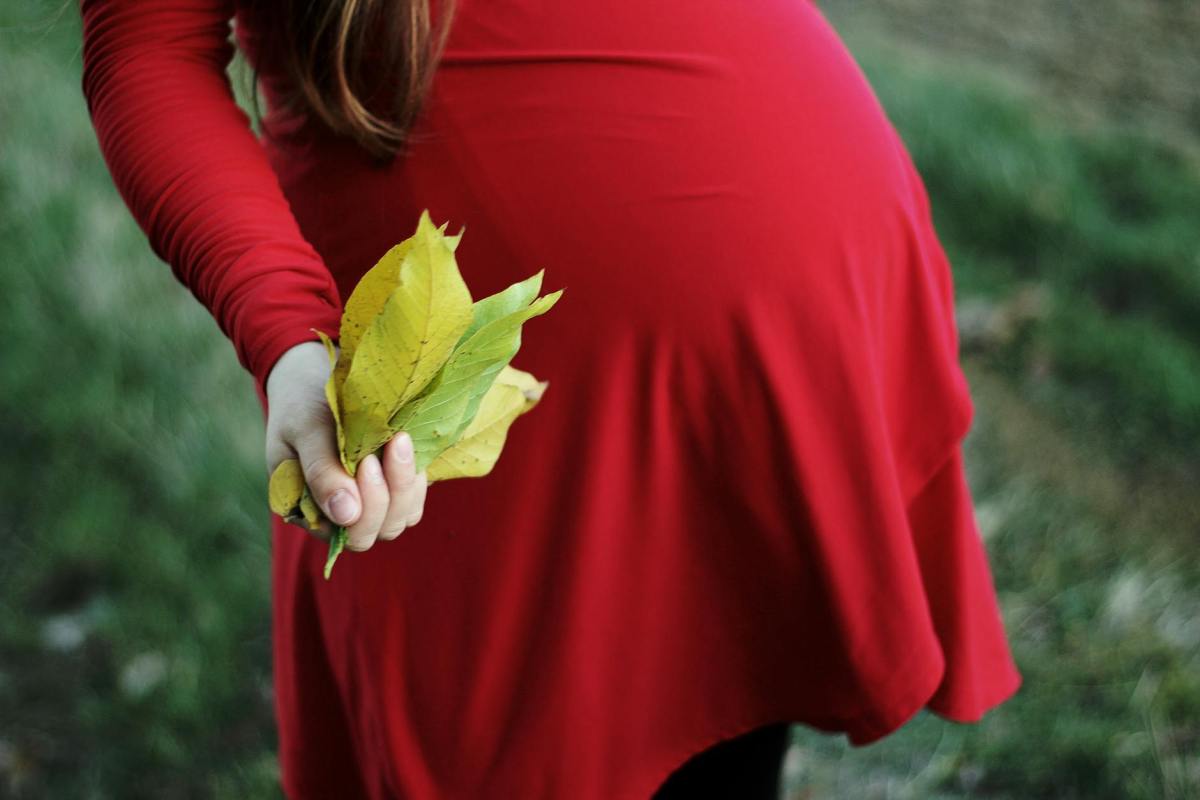
(featured photo from Pexels)

My book about my beloved father is available on Amazon: Finding My Father’s Faith

Vicki’s book: Surviving Sue print edition

Vicki’s book Surviving Sue Kindle edition

The Fullness of Time

“The years teach much which the days never know.” – Ralph Waldo Emerson

Miss O has been working on “time” problems in school. Like “It’s 12:40. Zach is supposed to meet his friend in 45 minutes. What time will it be when they meet?” She generally likes math but these problems are getting her goat at the moment.

So, we were settling into bed and she asked me, “Was time around when you were a kid?” Then she thought for a moment and continued, “Oh yeah, they’ve had it for a while.”

I couldn’t get out of the room fast enough to burst into laughter and write that one down. That she said this the night before my birthday wasn’t lost on me.

Hee, hee. Yes, they’ve had time long enough for me to count out 55 years. What else has the fullness of time given me?

Laughter

When we had a small party of family and friends to celebrate my birthday, as well as my mom’s and my friend Eric’s, the thing I enjoyed most was the laughter. Miss O and Mr. D put on a recital. There was great food and also presents, but the real gift was the just the lightness of being. Miss O asked why my eyes leak so frequently when I laugh. I don’t know exactly, but it has something to do with just being so happy to be here.

Perspective

Time has also given me the gift of perspective. It’s a bigger sea in which my hurts, my worries, and even my hopes feel less significant. They matter, but more as in a way that helps me set my sails instead of being the sea itself. I’m a far more patient person – but not because I’ve grown my patience but because the fullness of time helps me settle into the wait.

Heart

I have a favorite quote when it comes to the heart,

“God breaks the heart again and again and again until it stays open.”

-Hazrat Inayat Khan

When I first met that quote, it was like almost everything else that has become my teacher. I thought, “No, no, no.

But time has shown it is less about heart break and more about giving up control. There are people, things, dreams, and abilities that hurt so much when they go. But the heart has no hands to hang on to them. Leaning into that is like opening windows in my heart so that the breeze can flow through.

So, has anyone figured out the answer to the time problem at the top of the post? Clearly, it’s “Who knows because Zach is always running late? But we’ll hug him when we see him.” 🙂 Or at least that’s the answer that the fullness of time has given me.  

The Choices We Make: My Mom the Spy

Nothing has a stronger influence on their children than the unlived lives of their parents.” – Carl Jung

The post was originally published on 5/10/2023. Heads up – you may have already read this.


There’s a family joke that my mom is a CIA agent. Even now at 83-years- old, when we mention it, she just smiles and shrugs her shoulders, or says there is no point in denying it because we wouldn’t believe her.

As with most jokes, there is a kernel of truth in it. My very smart and capable mom graduated from college in the early 60’s with a degree in Far Eastern Studies and fluency in Russian. The CIA was actively recruiting from college campuses at the time and offered her a job. Her story is that she turned down the job because she met and married my father instead.

But over all the years since, she’s maintained her fluency in Russian, she went back to school when I was in college to get another degree in Russian language and literature, and she’s traveled there – when it was the Soviet Union in the 1970’s and later when it was Russia, many times. Would there be a more perfect cover for an agent than being a pastor’s wife?

It took me becoming a parent myself to understand how ridiculous this story, as fun as it is, really is. Not only because I finally understood that she didn’t have the time while raising three kids, of which I’m the youngest, but also because there is no way her heartstrings could have been in both places.

She made her choice. Instead of translating documents, she took on the work of translating the patter of baby talk into something intelligible. And then developing the sources into people who could talk the language properly.

She gave up a life of intrigue and instead instilled intriguing thoughts and ideas into her children’s lives.

Instead of secret meetings at night, she was called to hold our hair when we threw up and calm our fears when the bad dreams came.

She traded briefings about the state of affairs for parent-teacher conferences and traveling to sports events. And instead of establishing confidence in sources and colleagues, she choose to do the work of instilling confidence from the ground up in three young people.

Instead of fighting the bureaucracy at a government agency, she taught her kids that we had agency and were capable of fighting our own battles for what we believed in.

Instead of patiently nurturing a career that would challenge her brilliant mind and sense of adventure, she choose to nurture her patience with three young people who challenged her peace and equanimity.

Instead of running agents with their own backstories and motivations, she choose to help build a solid and stable backstory for us, fully present to launch our own motivations.

Instead of changing the world balance as a spy, she was the world for us.

My mom has never framed it as a sacrifice, but now that I see how much it takes to lose oneself to take care of others, I know that it was. I understand now that she had to make all these choices, from what might have been interesting and rewarding to her mind to hopefully what was interesting and rewarding to her heart.

She made her choices in life so that I could make the choices in mine.

Thank you, Mom.  

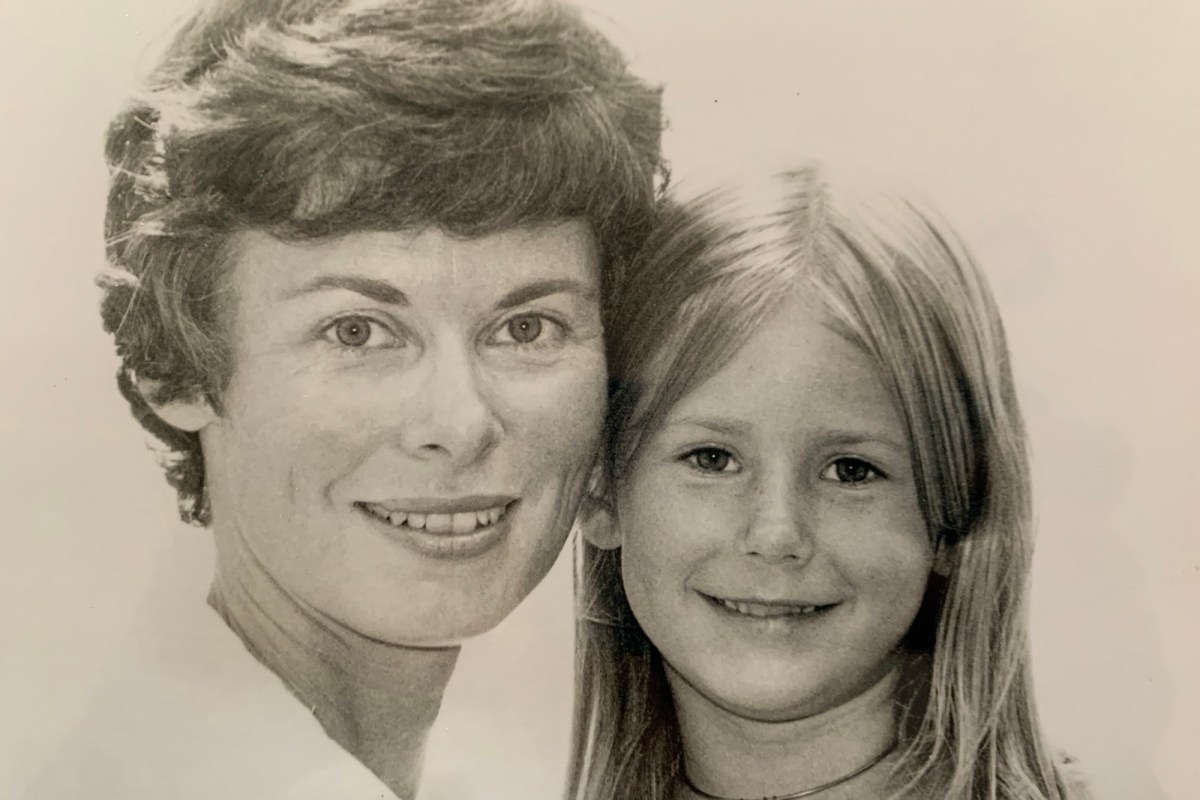
(featured photo is mind: Mom and me in 1974)

Related post: Looking In Through The Sliding Glass Door.

Three Things I Learned From My Dog About Getting Older

The little things are infinitely the most important.” – Sir Arthur Conan Doyle

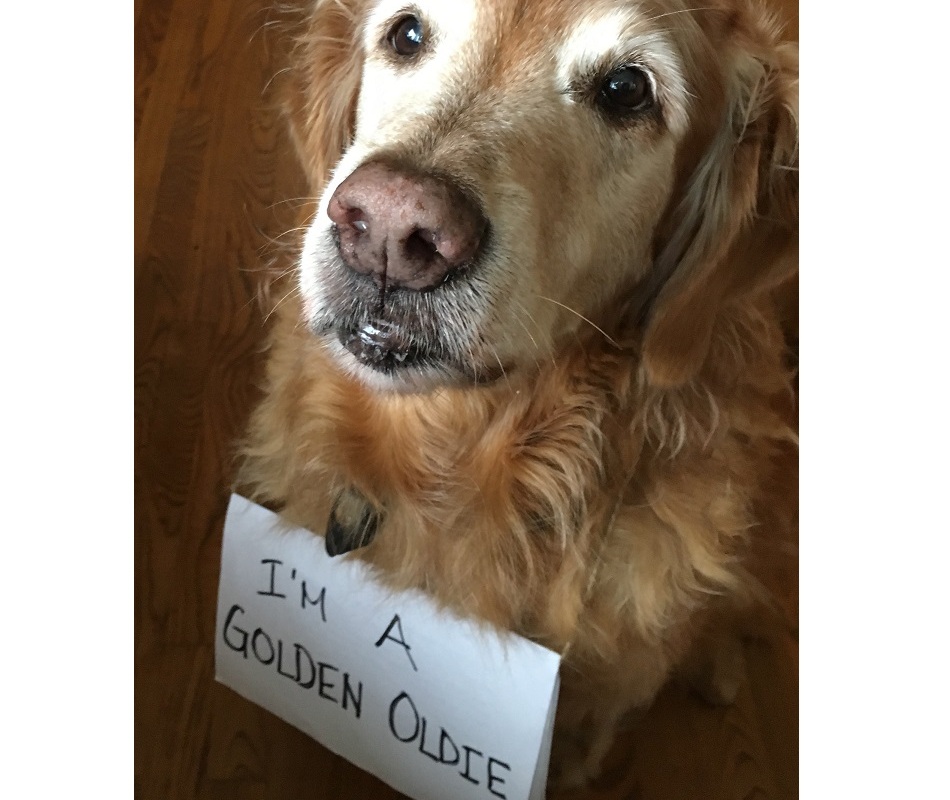
When I was a brand new mom almost nine years ago, my 12 year old golden retriever, Biscuit, was my constant companion. He was such a comforting presence, especially with his ability to track where everyone was.

Lesson One

But one of the things that irritated me, especially in the early-on sleep deprived days, was when we all walked together. Biscuit had to go back and forth and back and forth over an area to pick a place to poop.

So it surprises me when I walk with Cooper who is now almost a one-year-old dog and he just poops. We’ll be walking along and then BAM, he stops and does his business.

My conclusion is that one privilege that comes with age is willingness to be choosy.

Lesson Two

It was the same with lying down. Biscuit would get a dog blanket and move it around with his front paws.  Then circling and circling, he’d settle in and lay down.

Cooper, on the other hand, just collapses anywhere.

This leads me to the conclusion that another sign of aging is the increase of the number of things we have to do before sleep. And again as we rise.

Lesson Three

On the morning of the day that he died, Biscuit walked up the stairs to the second floor. It was something he didn’t do as often after arthritis had set in. Then he lay down on the threshold to Miss O’s room as I was getting her out of the crib and ready for the day. Miss O was about 18 months old.

Biscuit lay with his head on his paws and watched every move we made. It was like he was touching each moment with intention.

Then we went for a walk. He collapsed going up the hill. Five hours later, after we discovered he had tumors bleeding in his stomach, I had to say “goodbye” to my beloved dog. Something I think he knew all along.

Which leads me to the third lesson I learned from my beautiful dog. If we’re lucky, we gain the ability to appreciate how all the little things in life add up to one good life.

Writing From the Heart

There is a wisdom of the head, and…a wisdom of the heart.” – Charles Dickens

This post was originally published on 3/1/2023. Heads up – you may have already read this.


The other day I read a beautiful post that was a tribute to a dearly departed pet. It was so touching and zinged me right where there’s a sore spot from missing my beloved dog, Biscuit, that died six years ago. I had to walk away for about 30 minutes before I could write a comment.

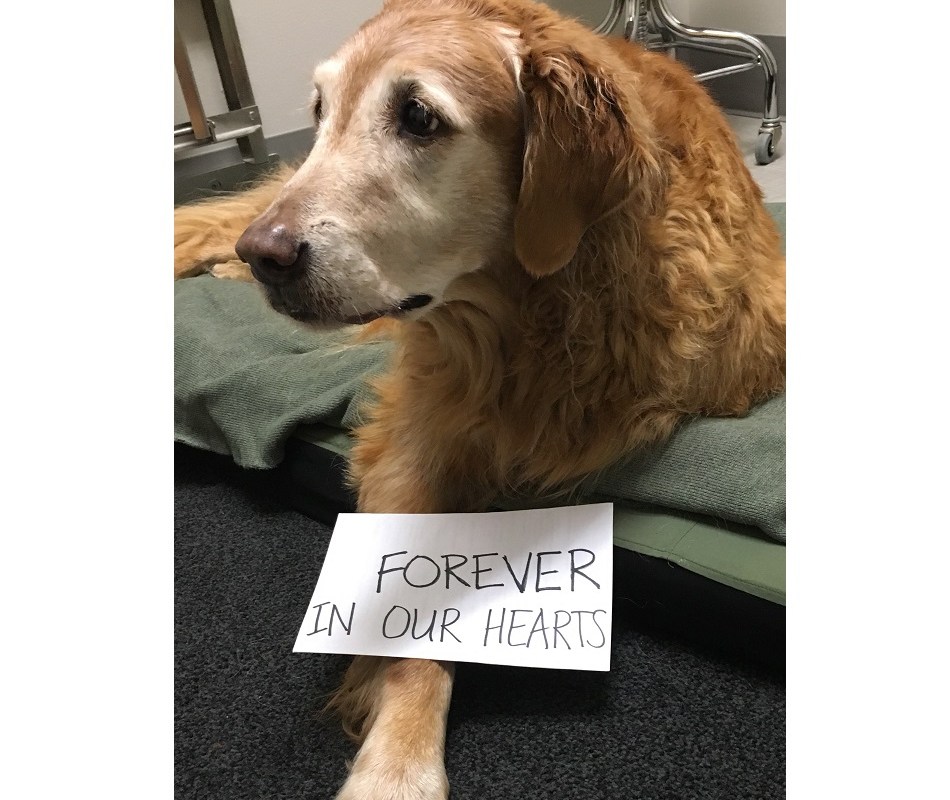
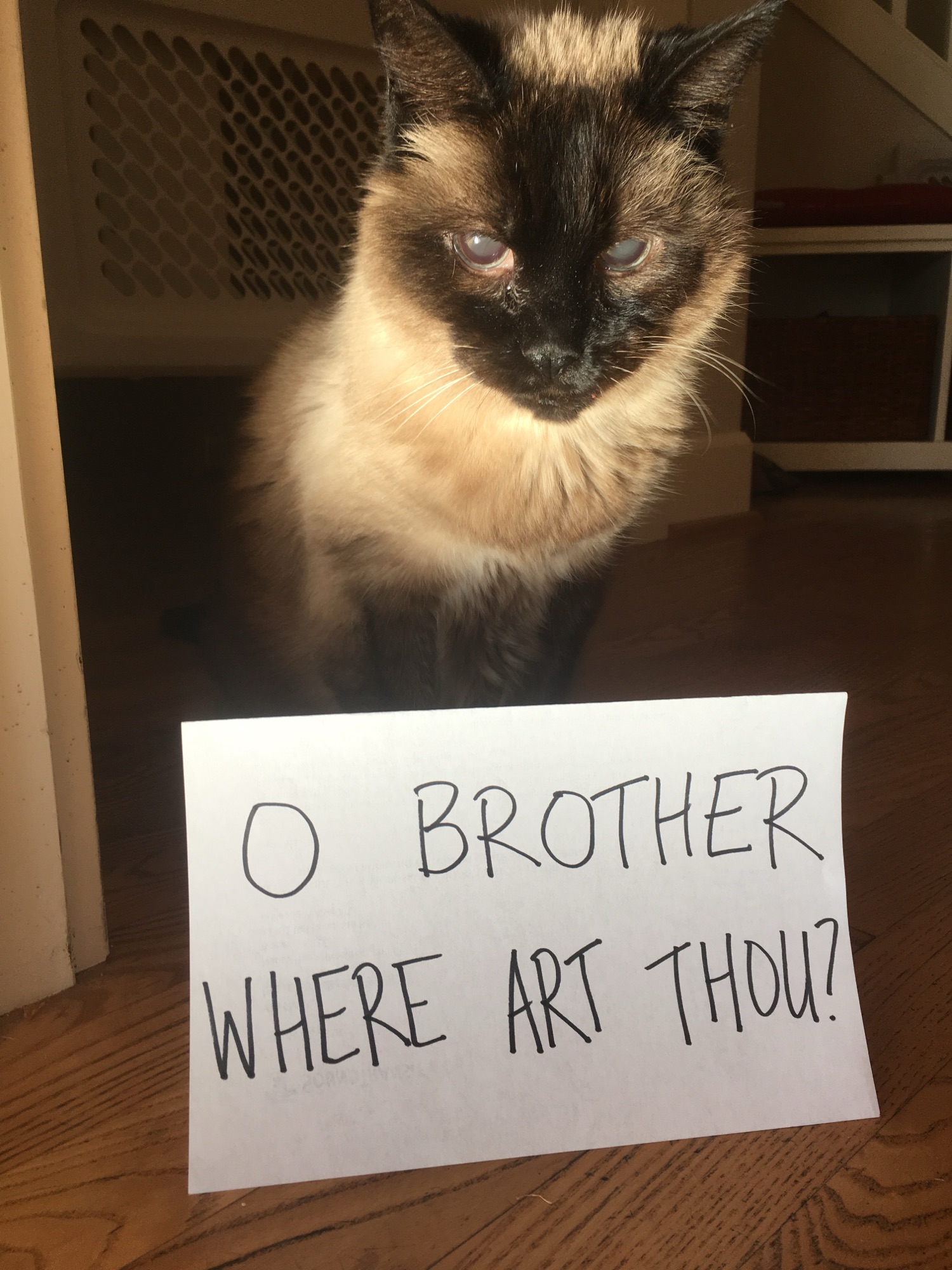
I find this so often be true – the topics that are the closest to my heart are hard to write about when the tears are still flowing. When I had to say good-bye to Biscuit, the next day the only words I could manage was to put a sign next to the cat who was also grieving the loss of his buddy:

Cat missing his newly departed dog

So this set me off wondering why it is so hard. Loss of perspective? Lack of clarity so I can’t yet make meaning? Inability to see the keyboard when the tears are flowing?

Thinking it could be a left-brain/right-brain kind of thing, I looked up the neuroscience of writing and found this New York Times article: This is Your Brain on Writing. Turns out that left-brain/right-brain isn’t much of a delineation that they make these days. Instead the article describes the results an fMRI study of the brain while writing including the detail that in expert writers, there is a part of the brain, the caudate nucelus, that lights up. The same part of the brain doesn’t light up for novice writers, a result that made sense to the scientists because the caudate nucleus is the part of the brain associated with expertise. Which was interesting but didn’t get me any closer to an answer.

Then I looked to our sacred texts and the spiritual world for wisdom on those moments when I can’t write. I was reacquainted with one of my dad’s favorite quotes from 17th century mathematician and philosopher Blaise Pascal: “The heart has its reasons, that reason does not know.” My dad often cited this quote in an argument about belief in God – that our heart knows even if there isn’t any proof for the head. Maybe those topics that zing me are too close to my heart so they haven’t made it to the head yet?

Next on my list of possible explanations was poly-vagal theory about the three states of our nervous system. When I wrote about it for a post, The Unified Theory of Breathing I summarized the three states as: ventral which is calm and regulated, sympathetic the fight or flight response, and dorsal which is when the nervous system has been so stimulated that it shuts down. Perhaps when I can’t write, I’m flooded, in a dorsal state and can’t write? While this alludes to an answer, I don’t feel like I’m dysregulated and can’t write, just that I can’t find the words.

Finally, I turned to the world of yoga and meditation and found an explanation that makes sense to me. Stillness. When my waters are muddied, I have a harder time seeing into my depths. In times of life when the waves are choppy, I am all churned up inside. It’s only when I reconnect with my inner stillness that I can see well enough to cross the space between me and you.

What I found to be as fascinating as the question itself were the lenses I looked through to find my answer. Brain science, theology, physiology, and meditation – my four go-tos and I usually find the answer sitting in meditation. Must be why I do it every day. A confirmation bias loop because it works for me.

Here’s my take-away from the journey: It’s hard to write when I’m too wet and stirred up in my heart. And it’s also hard when I’m too dry and too much in my head. I have to aim for somewhere in the middle where I’m soft, warm, and clear.

What about you?

In Our Element

As far as we can discern, the sole purpose of human existence is to kindle a light in the darkness of mere being.” – Carl Jung

We rented an AirBnB over the weekend that touted bunk beds in the laundry room. Clearly the charm of this place lay in its location on a beach on Whidbey Island. And that it accepted dogs.

Mr. D has been calmed by water since day one. The babies that don’t like their first bath? Nope, not Mr. D. What did we do for at least an hour on his first day of daycare? Play in water.

I watched him this weekend pouring water with a clam shell for thirty minutes from one hole to another and then back. An incredibly long time for a four-year-old to stay with one focus. If it weren’t for the tide coming in, it looked like he would have done it for hours.

I wonder if we all have an element we are born with that calls to us. For Miss O, it seems to be singing. First mine and my mom’s, and now her own.

If given the option between beaches and mountains, I’d say “mountains.” One step onto a hiking trail and my stress level drops by five notches. Every step gives me further improvement in my mental health, resilience, and sense of humor.

But I’ve spent more time on these rugged beaches of the Pacific NW than mountains since I’ve had kids. And I’ve found the beaches remind me to breathe out all the stale air I hold in. Whether it’s because Mr. D has water and Miss O can sing by the campfire, or because I can walk along the sea and the surf, I’m not sure. Whatever it is, it works magic.

Who cares if the bunk beds are in the laundry room if the location puts us in our element?

(featured photo is mine – Mr. D by the sea)

Hurry Scurry Worry

Enough is abundance to the wise.” – Euripides

Of the things I think about, time and love have to be the top two topics. Sometimes they are separate thoughts, but often time they are combined in the same thought. Struggling with how to love and appreciate the moment, and the dear ones I’m with, when I’m often in a hurry.

It doesn’t help that June comes with six birthdays of family, including Cooper the dog, and dear friends, including mine in mid-June. That’s always a reminder of time with a “capital T.”

On a recent Sunday morning, I was deep in the vortex of hurry worry. This year, my mom signed Miss O up for a youth choir in a neighborhood church.  Miss O has a lovely voice and it was a fantastic activity for her. My mom managed all the transportation, and even took Mr. D along for some of the practices. All good.

But on the Sundays the choir performed, it was a struggle to both watch Miss O sing and keep Mr. D entertained throughout the service. So, on the particular Sunday morning in question, I came up with the idea that Mr. D and I would walk to the church to expend a little of the morning energy while Miss O went ahead with my mom.

Mr. D and I left with enough time to walk the eight blocks, but not extra. As we were walking, I was feeling the time pressure to get there. Enough so that it prompted me to remember the meditation practice I’ve been working on to not hurry. I said a prayer.

When I told my mom about this later, she asked, “What did you pray for? That Mr. D wouldn’t find anything interesting along the way?”

No,” I answered. “I prayed that we’d have enough time. Then I enjoyed the walk without looking at the time and it all worked out.”

It’s funny. We can either pray/hope/wish/focus on everything to go right. Or pray/hope/wish/focus on being okay with how things work out. The latter has worked better for me.

For another way to stretch capital T time please listen to our Sharing the Heart of the Matter podcast: Episode 69: All You Have to Do Is Ask with Wynne and Vicki

Vicki Atkinson and I are big believers in the power of story – to connect us, to create intergenerational healing, and to make meaning out of the events of our lives. Each episode of our podcast will start with someone telling a story in each episode.

To listen to the podcast, Search (and subscribe!) for Sharing the Heart of the Matter on Apple, Amazon, Spotify or Pocket Casts. Or subscribe to our YouTube channel to see a video clip of each story: @SharingtheHeartoftheMatter.

Five Ways to Be a Happier Parent

Children are great imitators, so give them something great to imitate.” – unknown

A friend who is pregnant asked if I had any tips. There are so many parenting philosophies and opinions out there. I can’t imagine I have anything to add. Besides, each kid and each parent is so unique.

But I do know what has made me a happier parent.

  1. Finding a way to ground the central nervous system. I remember walking into a room where my kids had spent a happy day hanging out with my brother and his wife. Miss O was about five-years-old and Mr. D was about one-years-old. As soon as they saw me, they started crying and clamoring for my attention.
    It wasn’t that they were unhappy. It’s just that they had spent the longest time away from me so far. I was the lightning rod for the relief they felt after all the bravery and novelty they had experienced.
    Having a way to calm myself – meditation, breathing exercises, time spent in nature – has lessened the overwhelm I feel when my kids need that extra boost.
  2. Understanding that life is a science experiment. One morning when Miss O was about three-years-old, I was trying to get us ready to leave the house to meet my friend, Katie. I found Miss O at the art table where she’d made a huge mess cutting into a squishy into her scissors. I was incredulous, “Why would you do that?”
    When I saw Katie, whose kids are grown, she laughed and said, “Life is a science experiment.” Understanding that has made such a difference to my parenting attitude. We all try things to see what happens next. Sometimes the kids will do this and it messes with my sense of order. But it isn’t personal, just a part of learning.
  3. Following their lead. On a recent Saturday morning, Mr. D and I were out front as he drove a remote control car down the sidewalk. When we were in front of our favorite neighbors’ house, Mr. D said, “Let’s ask them to play.” I demurred, thinking we might bother them, but Mr. D said, “Follow my lead.” I did and my neighbors, a couple in their 70’s were delighted to see us and have a turn to drive the remote control car.
    Dr. Alison Gopnik, a research psychologist at UC Berkley says kids’ neural pathways look like the streets of Old Paris, many, windy paths where you don’t go very fast. They are wired to look for what can teach them the most. On the other hand, our adult brains have neural paths that look like boulevards. Not very many but you can go faster. We are wired for getting things done.
    When we follow kids’ leads, they get us out of our ruts and help us be creative.
  4. Being creative to connect. The early years of parenting can be so isolating. Spending time with other parents who are also overwhelmed, and conversations that are constantly interrupted by attention to little ones often isn’t satisfying. Working, blogging, pursuing one interest that puts you in the path of adults you can connect with has made such a difference.
  5. Accepting that a great and happy parent is perfectly imperfect. I remember walking my dog past a house where a kid was crying when I was pregnant with my first child and thinking, “I’ll never let my kids cry it out.” Hah!
    Giving up the idea that I would be a perfect parent – always calm, with a clean and orderly house, and full of ideas that would keep my kids entertained and screen free – is the best thing I’ve done for myself and them.
    Instead I have come to see that a perfect parent knows if they lose it and yell, they can also show kids how to own it and apologize. And laugh at themselves, and be okay with being flexible with any no screen, all organic, and any other high-minded ideals to do their best for that moment.  

Anything you would add to the list?

(featured photo from Pexels)

I pulled this list from other parenting story posts I’ve told: