But I Love Them Wholeheartedly

Every child comes with the message that God is not yet discouraged of man.” – Rabindranath Tagore

Kids! They bicker with each other
and leave their shoes around.
Tears flow too easily
usually because they’re low on fuel.

It takes so much work
To make a family work
Keeping their hearts and minds engaged
And bodies well.

But I love them wholeheartedly
And not just when they are sleeping
Curled up with an arm akimbo
And sideways on the bed.

Because there’s a fierceness
Of love and loyalty
When we know we belong together
And commit to making repair

The laughter and dance parties
Curiosity and attentiveness
Is so damn inspiring
That one cannot help but grow

I’m so profoundly proud
Of the effort my kids put in to every day
Really of all of us
Forging a path through all the busy-ness
To the heart of the way

Family has a myriad of definitions
Depending on our point of view
But I’ll keep mine – work and everything
Because there is so much love to do!

An Open-Hearted Meditation

Put your ear down close to your soul and listen hard.” – Anne Sexton

My heart absorbs a lot in a day. That is to say that as I traverse my days, bouncing between to-do’s and must have dones, I collect a lot of nuggets that I store away in my heart as if it is a four-chambered storage cabinet.

– The note of trepidation from my kids as they start a new activity.

– An observation about a colleague who appears to be wrestling with anxiety.

– The feeling I shoulder when coming alongside a friend’s worry.

At some point I have to empty my heart storage cabinet so I can carry on and pick up new things, about myself or others. I think that’s why I love this breathing/heart meditation that I originally picked up from Deepak Chopra almost twelve years ago. [With all due respect to Deepak Chopra, this may no longer resemble the meditation as he taught it so please forgive any blips in the flow.]

Sitting with your eyes closed, feel your heart. Notice how it is feeling. Is it heavy? It is happily skipping a beat? Is it calm and serene?

Now take a deep breath into the front of your heart. Feel your chest expand. Feel that front wall where your heart meets the world.

Next breathe into the back of your heart. Allow the solidity and strength of your back to make room for the heart.

Take a deep breath and direct it to the top of the heart. Does it feel like there is a lid on your heart that can crack ajar to give the heart a little room to expand?

Now send your next inhale to the bottom of your heart. Breathe through all that might have settled there and benefit from some air to get moving.

The next breath is for the sides of the heart. As you feel the sides of your heart lengthen with the inhale, sit a little taller to feel your whole ribcage expand.

And finally, breathe into the whole heart. Notice how it is feeling. Is it the same as when you started? Or have you uncovered something tucked away there?

(featured photo from Pexels)

Ring a Bell

There is within each one of us a potential for goodness beyond our imagining; for giving which seeks no reward; for listening without judgment; for loving unconditionally.” – Elisabeth Kübler-Ross

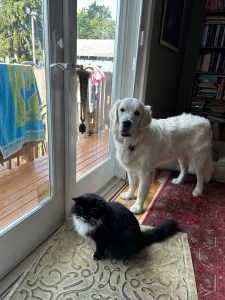
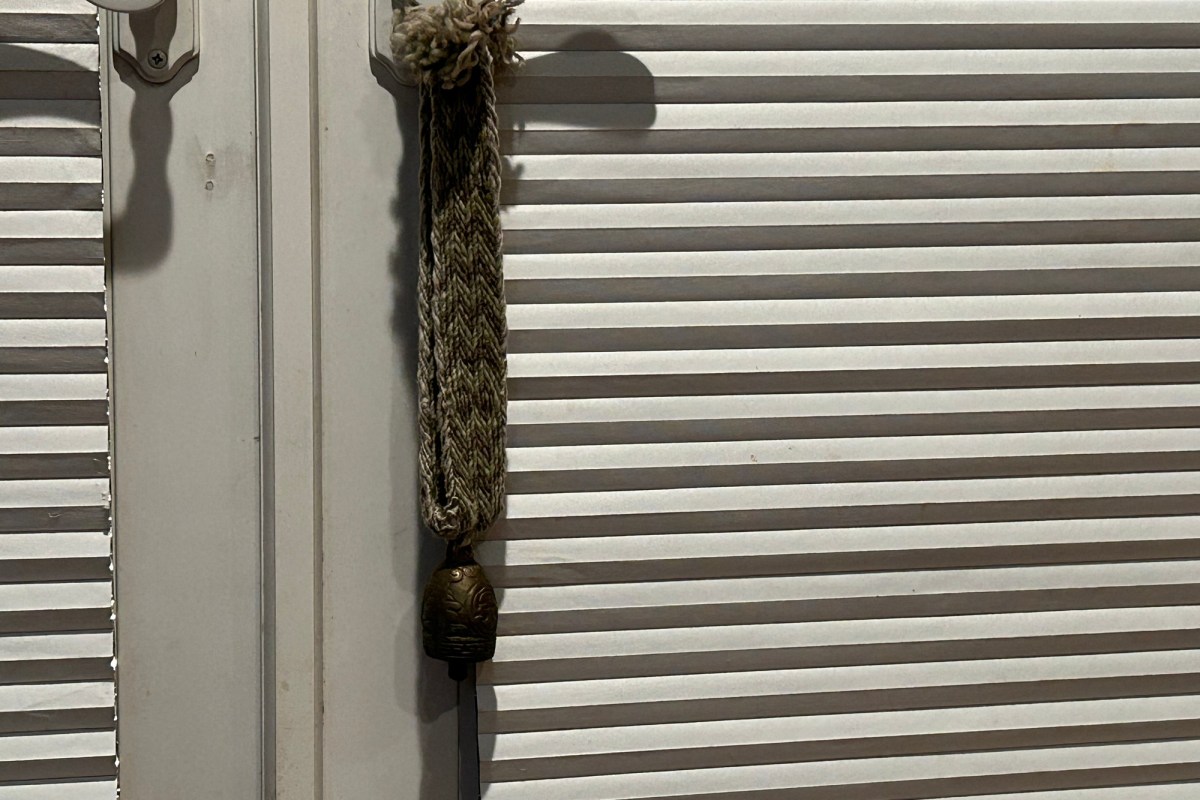
I’ve hung a yak bell on the inside handle of my back door for decades. I bought the bell in Nepal when I trekked to Everest base camp so I find it a pleasing sound for many reasons. It’s been useful so that my dogs can signal when they want to go out. Neither Cooper nor Biscuit before him were big barkers so it was pretty easy to train them to ring the bell when they want to go outside.

It’s a lot harder to train them to just do it when they NEED to go out instead of just want to go out. <Squirrel> But hey, I won’t complain about a system that works most of the time for canine to human communication.

Lately, I’ve been noticing that Cooper rings the bell for the cat. That is, if he sees her sitting outside the door wanting to come in, he’ll ring it. Or, if she’s sitting next to him and wants to go out, he’ll ring the bell. When I open the door, he sits back down and doesn’t go outside as if to say, “I’m just doing this for my friend, the cat. Who could do it for herself but doesn’t want to appear trainable.”

Who says chivalry is dead?

Being Difficult

There will never be an “us” if I play small.” – Sharon Preiss

Last Monday when Miss O, Mr. D, and I were getting ready for bike camp, nine-year-old Miss O was dragging her feet. She had a ton of “problems” that were blocking her: she couldn’t find shoes, Cooper the dog was in her way, her helmet was missing one unicorn ear, she didn’t remember the route we usually use to go down to the lake, yadda, yadda, yadda.

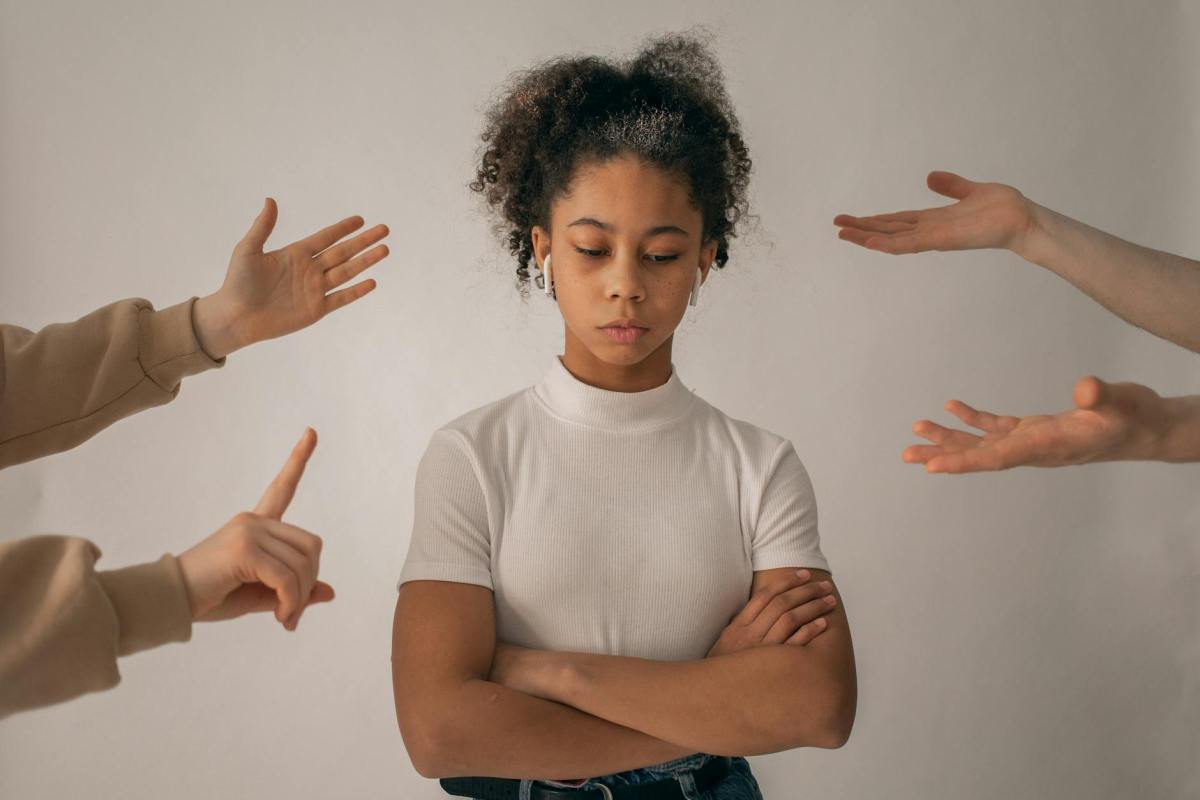
I turned to her and said, “You are being difficult.”

She replied, “I am.” And then added, “I wish I could tell you when you are being difficult too.”

To which I replied, “Please do. But I’d especially love to know when I’m being difficult when others are trying to be helpful and supportive or if it’s when you all are dragging your feet.”

I’ve been troubled by this conversation ever since. In fact, I’m finding it hard to write about. Here’s my best guess at why.

I think I’m starting to experience the generational BS that women in my family pass down. And it’s so ingrained and insidious, I’m not even doing it intentionally.

You are being difficult.” It’s like code for saying that I expect her to fall in line and be agreeable. To be flexible and accommodating like a young woman.

To be fair, she was being difficult. It’s just that the word hits a note of a gender stereotype that I’ve tried to avoid my whole life. I had no intention of passing it on. Then it slipped out of my mouth.

I’m naturally pretty agreeable. But inheriting the expectations of how a woman should behave has kept me from speaking up when I needed to – both in pursuing my own interests and also when something is wrong. And it kept me playing small. Trying not to stand up or stand out has kept me quiet about what I know or am capable of doing. It’s made me intentionally dim my light so I’m not too much.

It’s taken me decades in leadership positions to figure out that I can be genial AND forthright. And when needed, it’s acceptable to be hard-headedly, certainly, yet kindly, difficult.

So, I’m officially okay with Miss O being difficult. While I prefer she not do it when we are heading out the door, it’s fine if she does that too. Because sometimes that is when we learn to flip the script.

(featured photo from Pexels)

The horrible, terrible, no-good, very bad day

Things falling apart is a kind of testing and also a kind of healing. We think that the point is to pass the test or to overcome the problem, but the truth is that things don’t really get solved. They come together and they fall apart. Then they come together again and fall apart again. It’s just like that. The healing comes from letting there be room for all of this to happen: room for grief, for relief, for misery, for joy.” – Pema Chӧdrӧn

On this past Saturday, we had a horrible, terrible, no-good, very bad day.*

Cooper the dog, had some potty accidents that we discovered. A couple that I found and cleaned up first thing in the morning, and a couple that Miss O unceremoniously stumbled upon. Ewww. Apparently, Cooper had GI issues after his surgery to remove the grass from his ear on Thursday.

We found some bugs in our pancake mix.

Then nine-year-old Miss O saw that the vines in Rusty, the crested gecko’s enclosure had fallen down. On closer inspection, we’d been misting too much and the whole enclosure was a swamp. So, instead of our to-do list chores, we spent all morning rehabilitating Rusty’s setup.

[Side note: We called my niece to get some advice. She’s the one who gave us Rusty. Miss O told her that we’d gotten Rusty out of the enclosure by saying, “We executed Rusty.” We quickly clarified that we’d evacuated, not executed, Rusty.]

At a kid’s birthday party, five-year-old Mr. D got hit in the head by a water balloon thrown by an 11-year-old boy who had been spitting in the ballons before hurling them.

Our tap water turned brown.

It was literally one thing after another. Some things caused by us, like Rusty’s enclosure. Some things that were random like the water turning brown. Some things caused by other humans like the water balloon.

There is probably nothing that peeves me more than life messing with my efficiency. I was not in a great mood, but I’ve learned from experience that rough days call for leadership, even when I don’t feel like it.

At one point in the day, Miss O exasperatedly said, “This is awful. I don’t know what to do!

So, we talked about my dad’s approach to just find the next right thing to do. And we took comfort that what we did have to respond to “life” with was each other. We were doing pretty good job of sticking together.

Then as the kids were getting ready for bed, a huge lightning storm came in. Seattle very rarely gets thunderstorms so this was a rare and incredible show. After they brushed their teeth, we snuggled in my bed with all the curtains open and watched the storm.

It was fitting. On a day that seemed extra “life-y,” to let the storm and rain exhaust itself and pass on through. In that way, we weathered the storm.

(featured photo from Pexels)

*Title is a riff on the children’s book, Alexander and the Terrible, Horrible, No Good, Very Bad Day by Judy Viorst

It’ll Be Alright In the End

Everything will be alright in the end, and if it is not alright, it is not the end.” – The Best Exotic Marigold Hotel

Months ago, when I signed Mr. D up for his very first summer camp (rock climbing, in case it matters), I assumed that it would start at the same time as Miss O’s. For his age group 3-5, the camp ends at noon. Miss O’s older group goes until 3pm. But certainly they’d start all the groups at 9am, right?

When I took a closer look before the camp started this week, I discovered Mr. D’s doesn’t start until 9:30am. When I realized that detail, I started inwardly groaning about the inconvenience.

But just briefly. Because in the last dozen years, I adopted a shift that has made an immense difference to my happiness. I started assuming that “it” is for the best. That whatever is irritating me is just an opportunity opening that I can’t yet see. Or that I may never totally understand because it’s above my pay grade.

This has a Biblical basis (Romans 8:28), and a Buddhist basis, but I don’t think it requires a particular spiritual tradition. It’s just an act of staying open to the possibility that there’s a perspective that I can’t yet see.

For anyone that is thinking this sounds Pollyana-ish, I get it. But this change came from the darkest days of my life when I was stuck in all the feelings of failure after my divorce and clueless about what I was going to do next.

So many things came from that vulnerable time in the dark: my meditation practice and faith, the conversations with my father, my two beautiful children, my writing. And also this idea that I should stop doubling-down on irritation and instead stay present for whatever is unfolding.

It’s easier to do this for things like camp drop-offs. In this case, the payoff came almost instantly. Of course, it was beneficial to have Mr. D’s camp start a half hour later. He got to see his sister get dropped off, and then have some time warming up on his own.

 It gets harder when the kids are sick and I have to cancel my hair appointment. Or the babysitter cancels and I can’t go out with my friends.

So, I practice with the small irritations – believing that it’ll be alright in the end. And if it’s not alright, it’s not the end.

Riding the Rhythm Into the Comfort Zone

Each one must learn the highest wisdom. It cannot be taught in words.” – Smowhala Wanapum

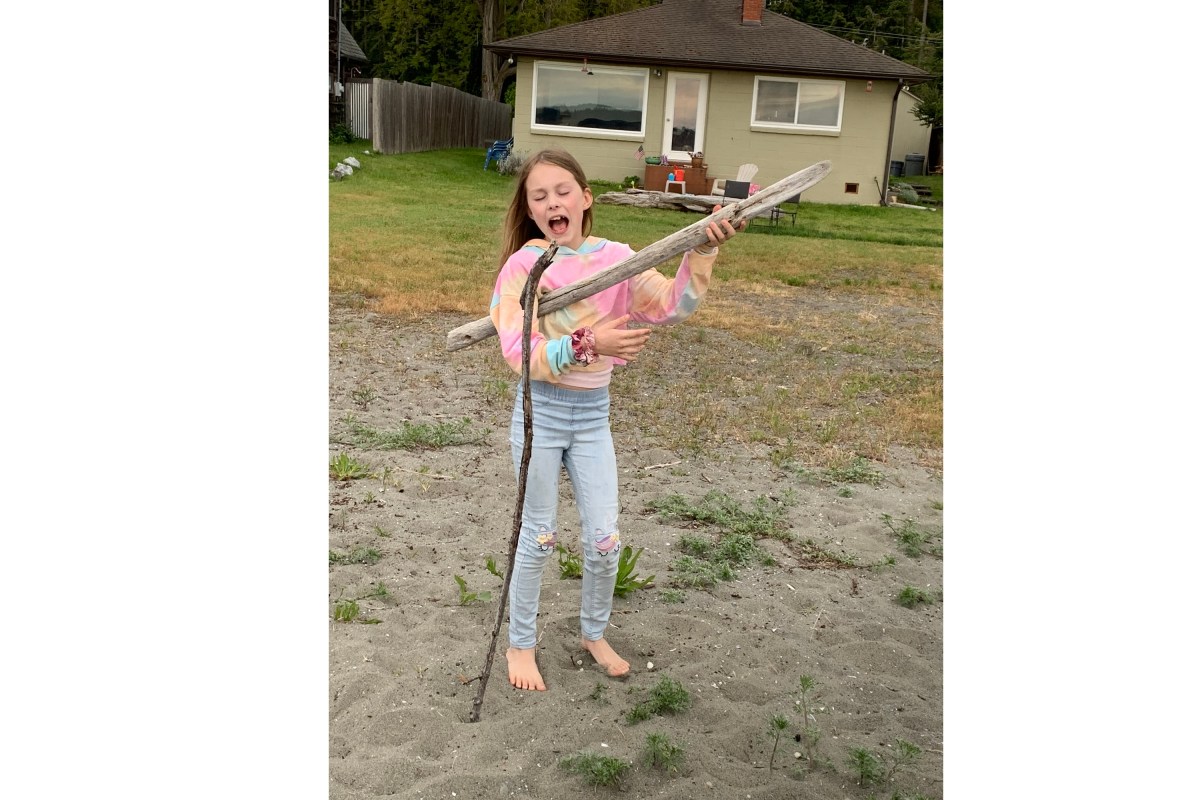
We’ve just returned from two week vacation on the beach. It was an incredible privilege to be able to take that time. It was born of a feeling that Mr. D needed a break between his 52-weeks-a-year preschool and starting Kindergarten. But it turned out to be something we all needed.

We had lots of friends join us. My friend, Eric, was with us a good deal of the two weeks. Also, my oldest friend, Katie, my meditation teacher, Deirdre, my mom, and one of Miss O’s friends came with her mom for part of the time.

But we also spent a number of days just the three of us. For anyone not in this phase of life with young children, it’s a tricky thing to present children with a whole lot of unstructured time. Ah, who am I kidding? It seems to be problematic for most every age.

For us, it started out with some rough moments. Mr. D lost it a few days in a row. The things that set it off were so innocuous. Like the time he didn’t want Miss O and her friend to go out in the dinghy after dinner even though he was invited and included. It had to be something else bugging him.

And then we found the rhythm. Activity, break, activity, food, activity, break, food, activity, bed. For example, wake up, walk on the beach, and then take a break; go swimming and then break for lunch; then pickleball; take a break; dinner and paddleboarding, then have some downtime watching shows and go to bed.

Here’s the lesson I derived for myself – when life feels new or unsettling, find the rhythm. Often the rhythm gets us through even when we are outside of our comfort zone.

It’s like every new hike or mountain I’ve undertaken. I feel the anxiety of not knowing where I’m going. And then I shoulder my pack and start walking. Soon enough, I will find or experience the answers. I just need to rely on the rhythm of my pace until I get there.

My Window Washing Friends

A friend accepts us as we are yet helps us to be what we should.” – anonymous

When we arrived at the place on the Whidbey Island beach that we are staying this week, the windows facing the water needed to be cleaned. Last year when we rented this place for vacation, I didn’t think to wash the windows until the end of the time we were there.

But in the spirit of live and learn, I remember this year on the second day we were here. Luckily, two of my dearest friends, Katie and Eric were with my kids and me on that day and we washed off the salt spray residue together.

I think window washing is one of my new favorite metaphors for friendship. Dear friends are the ones who you allow to see through the most transparent layer. They are the people who help wash your interior windows. Friends as the people who know when your outlook has gotten grimy and apply a good helping of elbow grease to clear it. And who you trust when they say, “Looks good!”

I could run this metaphor into the ground. But I’ll stop there and say how grateful I am for dear friends who make washing windows fun!

Because it’s a great segue to the podcast episode my dear friend, Vicki Atkinson and I did this week. Dr. Stein has become a great friend of the Sharing the Heart of the Matter podcast so it was so fitting that he came on to share revealing and delightful stories about friendship.

He tells of the three categories of friendship according to Aristotle. And we talk about the investment that it takes to build a platonic relationship with another.

Of course, with investments come payoffs. And Dr. Stein coaches us through how to think about that term when it comes to friendship.

In the course of any lasting relationship, apologies come into play. Dr. Stein tells us some wonderfully illustrative stories about apologies that help to get to the heart of apology.

I’m certain you’ll enjoy the scenic and beautiful places we go when we share the power of story.

We know you’ll love it!

Search (and subscribe!) for Sharing the Heart of the Matter on Apple, Amazon, Spotify or Pocket Casts OR Listen to it from your computer on Anchor: Episode 78: The Blessings and Responsibilities of Friendship with Dr. Gerald Stein

AND subscribe to our YouTube channel to see a video clip of each story: @SharingtheHeartoftheMatter.

(featured photo from Pexels)

Links for this episode:

About Friendship⁠ by Dr. Gerald Stein

⁠Becoming Close Friends: A Practical Guide ⁠⁠by Dr. Gerald Stein⁠

Episode 78 post by Vicki Atkinson on Sharing the Heart of the Matter

Dr. Gerald Stein’s Blog: ⁠Dr. Gerald Stein⁠

Other podcast episodes with Dr. Stein:

⁠Episode 60: The Perils of Prediction with Dr. Gerald Stein⁠

⁠Episode 46: Being Your Own Best Friend With Dr. Gerald Stein – Part I⁠

⁠Episode 47: Being Your Own Best Friend With Dr. Gerald Stein – Part II⁠

⁠Episode 37: The Waiting Game with Dr. Gerald Stein⁠

⁠Episode 29: Accidental Philanthropists with Dr. Gerald Stein⁠

⁠Episode 20: The Art of the Interview with Dr. Gerald Stein⁠

From the Hosts:

Vicki’s recently released book: ⁠Surviving Sue⁠

Wynne’s book about her beloved father: ⁠Finding My Father’s Faith⁠

Upward Spirals

Gratitude can transform common days into thanksgivings, turn routine jobs into joy, and change ordinary opportunities into blessings.” – William Arthur Ward

This was first published on 8/17/2022. I’ve been slowly moving some things I’ve published on other blogs to this one and it’s a great reflective practice for me to remember all the things that touched my heart two years ago – and still do now! Thank you for your patience as I consolidate things if you already read this.


As I was writing my post Good Mood of the Soul, I came across the research that joy and gratitude often result in an upward spiral. The more we focus on gratitude, the easier it is to perceive joy. And when in the midst of joy, we are more open to gratitude.

So here’s the list of things I’m grateful for this week:

For everyone that is willing to read why I am grateful for

That I can still hear the Click and Clack, the Car Talk brothers in the Cars movies.

The quiet way my three-year-old son says, “you are my best mom friend” to me so that I have to lean down to hear. In that position it goes directly from my ear to my heart.

That we have the ability to take pictures with our hearts.

The way it sounds when my daughter says, “I’m thankful for the tooth fairy.” while missing her two front teeth.

For out-of-the blue notes from individuals I admire telling me something I’ve done right.

That I’ve been able to learn, to some degree, how to fix the things that I’ve done wrong.

That broken eggs make food, literal and metaphorical.

For whoever invented yoga pants and made messy hair look sexy, at least on the West Coast. And if that was only in the 90’s and is no longer a thing, for anyone that continues to let me think that.

Speaking of inventions, whoever invented self-sealing water balloons that fill 20 at a time.

That life keeps giving me opportunities to learn that suffering just softens me up for the next great thing.

For every grown-up that showed me what vulnerability looked like when I was a kid.

For every grown-up that shows me what vulnerability is when I’m a grown-up.

For this necklace I bought on a whim and have worn for 20 years that says, “Strength is having a grateful life” and that I have grown into knowing what that means.

Cool sheets on a hot night.

That I have a bed to sleep in.

Green tea on dark mornings.

That connect-the-dots works in art and in life.

For the human traits of kindness, courage and generosity.

For the Divine traits of grace, faith, hope and love.

For the times I’ve been on my knees needing loyalty, courage, generosity, grace, faith, hope and love – and that what I’ve received in those moments has opened me up to knowing what those traits are in my bones.

I am grateful for upward spirals.

What are you grateful for this week? What have you learned about upward spirals?

(featured photo from Pexels)
Writing Worth Doing

Words have magical power. They can bring either the greatest happiness or deepest despair.” – Sigmund Freud

Last Friday was Mr. D’s last day at his pre-school/daycare. He’s been there for nearly four years. In three different classrooms with so many great teachers, this school has been such a wonderful influence.

When I went to write the amazing staff a thank you note, I did so through a veil of tears. When I was done, it felt like a piece of writing as worthy as anything else I’ve composed because:

  1. It was from my heart
  2. I provided others with a perspective on their impact that would be hard for them to know otherwise
  3. The feelings it elicited were worth rippling out in the world

Here’s the note:

This morning before [Mr. D] left for school, he took his plate to the sink, washed his hands after going to the bathroom, and used his words when he wanted to play with something his sister had. Those three skills are just some of the wonderful building blocks that he learned in his time at GLPCC.

I know it’s hard to measure the positive impact that you have on one child or one family’s life. Just as a stream doesn’t count the rocks it touches as it flows, the kindnesses and fundamentals you all bestow with your patience, creativity, and caring make such a difference.

I get choked up thinking about all the ways your consistency and hard work have made my life better during the years D has been at GLPCC. From the pandemic to surviving the hard drop off days, I have been able to navigate life and work because I was absolutely certain D was in good, kind and loving hands.

So I send you all immense gratitude for the amazing work that you do. And if there is any day that feels tough – think about what our world would look like if everyone took their dishes to the sink, washed their hands, and used their words when they wanted something. It would be amazing. You all are building a better world.


Have you written something simple that turned into a worthwhile project?

(featured photo from Pexels)