Going to the Next Level

I am convinced all of humanity is born with more gifts than we know. Most are born geniuses and just get de-geniused rapidly.” – R. Buckminster Fuller

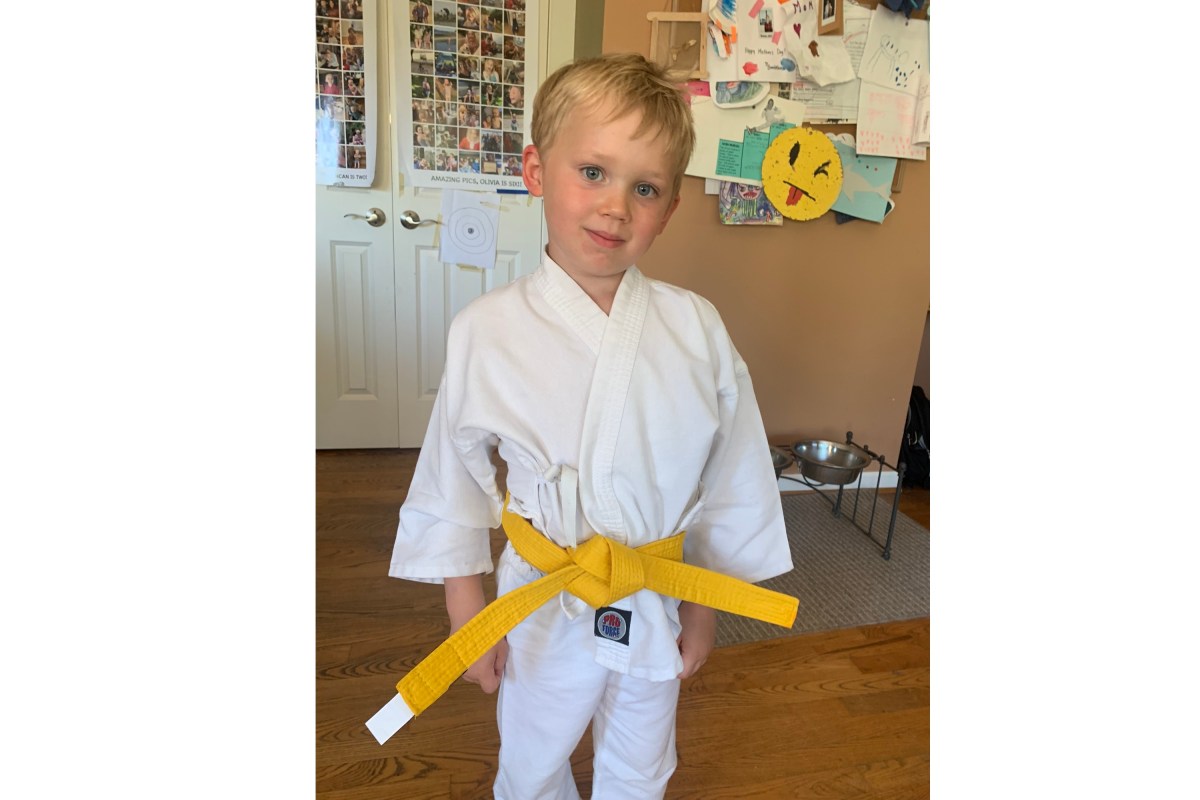
We are coming to the end of our school year. 28 more school days in third grade for Miss O. And 50 days until Mr. D graduates from his preschool program. Do you remember that feeling as a kid? Being not only ready for summer break but also ready to ascend to that next level?

It has me thinking of what milestones we have in our lives as grown-ups that celebrate our readiness to go on to the next level. There are some big ones like becoming an empty-nester or retirement. Or we have annual ones like birthdays, anniversaries, and New Years. But often, I find myself at those moments planning on what I’m going to do next instead of commemorating what I’ve learned.

Let me suggest that we take a moment to bring back that feeling of finishing a school year. To actually name something we’ve graduated from and celebrate it. I’ll start:

I’ve come to believe that I am enough. Or at least to understand that pretending to be someone else is ineffective. So if a situation or expectations make me feel otherwise, I try to slow enough to double-down on being me long enough to get through.

And by graduating, I don’t mean being done. It brings to mind another graphic from Miss O’s 3rd grade teacher:

It seems fitting on this last day of teacher appreciation week to honor our teachers by naming what we’ve learned. Are you with me? If you are stuck, maybe visit the list from Pick Three Affirmations to find a place to start.

(featured photo from Pexels)

For a story about the circle of life, please listen to our Sharing the Heart of the Matter podcast: Episode 66: The Power of Story with Wynne and Vicki.

We are changing our format starting with this episode. Vicki Atkinson and I are big believers in the power of story – to connect us, to create intergenerational healing, and to make meaning out of the events of our lives. To set the stage, we will be starting with someone telling a story in each episode.

To listen to the podcast, Search (and subscribe!) for Sharing the Heart of the Matter on Apple, Amazon, Spotify or Pocket Casts. Or subscribe to our YouTube channel to see a video clip of each story: @SharingtheHeartoftheMatter.

Writing In the Dark

Go into yourself and see how deep the place is from which your life flows.” – Rainier Maria Rilke

This post was originally published on 4/12/2023. Heads up – you may have already read this.


I wrote this post early Monday morning. Around 3:43am that is. I have all sorts of things I do in the middle of the night when I can’t sleep. Mostly worry. Then I review my to-do list. Then I go back to worrying some more. Usually after about a half an hour of tossing and turning, I remember to start meditating and praying. After a few minutes of meditating, I kinda just flow into writing.

It’s all in my head in the dark. I know that there’s a lot of sleep wisdom that says to keep a notebook beside the bed for writing things down. But this composing in my head works for me. It’s not that I remember everything I write, it’s just that it slips me into a different mode. Eventually I’ll write myself back to sleep. The best part is that I even retain some of it when I awaken.

I recently learned of some interesting research from a Ten Percent Happier podcast with Professor Lindsey Cameron. She studied whether meditation helps at work, specifically focused on customer facing jobs, and the results were fascinating. She found that traditional breath work meditations helped with centering the person in a bigger perspective so that the ups and downs weren’t as jarring. And she found that loving-kindness meditation increased the ability to place ourselves in other’s shoes.

There’s research that shows loving-kindness practice reduces activity in part of the brain that’s active when we are anxious. And a study that showed we don’t want to practice mindfulness when doing emotionally taxing work. The example I heard in that case was a flight attendant who is having to pleasantly telling people to buckle their seat belts over and over again does not benefit from being more mindful in those moments.

Back to the point about writing in the dark. It seems our brain research is catching up with what our spiritual traditions have taught us for millennia. There are practices that help to literally change our minds. They’ve given us a tool set that we can use to help put ourselves in the best frame of mind to create, to understand, to be less anxious, to change, to be more altruistic, and so on. It’s no wonder I start writing in the dark after I start meditating, because the practice helps to shut down worry, and then I open up to creativity.

And it matches what works for me during daylight hours. In my post When I Write, I looked at what time of day works for me and it’s always after I’ve done the work to be quiet, to meditate, and to get a little perspective on life.

It feels a little clinical to separate out the meditation and prayer practices from the spiritual traditions and beliefs that tie us to a Higher Power. But in the middle of the night as I’m settling into a rhythm of breathing and repeating “faith over fear,” it’s also kind of fun to know I’m setting up the conditions for calming my brain. And that I might even get a post out of it.

(featured photo from Pexels)

The Onset of Reality

I’d rather learn from one bird how to sing than teach ten thousand stars how not to dance.” – e.e. cummings

Recently my kids and I were at my dad’s former church for an Easter event. On the way out, Miss O asked to see my dad’s stone in the columbarium. It’s in a beautiful nook by a babbling little brook surrounded by trees.

Miss O and I like patterns. So we looked at all the stones and saw the ones, like my dad’s, that are offset because their spouse/partner will be added when they die. And then the ones where the name is in the middle because they are by themselves.

Miss O wanted to know about the dates on my dad’s stone. I pointed out his birth date and then she looked at the date of his death and said, “Because everyone comes to their death date.

Right!

[As aside, this reminds me of one of my dad’s jokes: “There’s always death and taxes; however, death doesn’t get worse every year.”]

She made that death date observation without any gravity or sadness. My kids can envision monsters and thieves but death doesn’t hold any weight for them.

At four-years-old and eight-years-old, they seem to attend to whatever is at hand with very little worry about the future. Somewhere between four and fifty-four, “reality” hits.

Which reminded me that a few weeks ago at bedtime, Miss O told me that she and her friend have been using recess to talk about “big topics.” I couldn’t wait to hear about these so I snuggled in next to her and asked, “Like what?

She replied, “Puberty and reality. Puberty was my friend’s topic and I brought up reality. I can’t believe it starts in three years.”

I asked “What starts in three years?

She replied, “Reality. You know. Middle school.”

I’m laughing, but perhaps that’s when it does start. The planning and preparing, setting the expectations for what life should be.

Thank goodness there’s death as an antidote. For me, being periodically reminded that “everyone comes to their death date” is helpful.  Not knowing when that will be prompts me to lay down my plans and to live.

(featured photo is mine)

Speaking of great reasons to write down our stories before we meet our death date, Vicki and I talk with author, publisher, podcaster, and former radio producer, Rick Kaempfer on our podcast, Episode 62: The Loop Files with Rick Kaempfer. He tells some incredible stories about the most outrageous radio station ever. And does an amazing job at poignantly describing one of the reasons we write.

Search (and subscribe!) for Sharing the Heart of the Matter on Apple, Amazon, Spotify or Pocket Casts. Or click through to the link above to see the video excerpts from that podcast, the link to listen in browser, plus all of Rick’s links.

Extending One’s Self For Love

“I define love thus: The will to extend one’s self for the purpose of nurturing one’s own or another’s spiritual growth.” – Dr. M. Scott Peck

I was telling my dear friend, Katie, the story of traveling home from New Orleans with my kids a few weeks ago. Miss O and I checked out bags. Then Miss O pointed out to Mr. D the really cool way our bags were traveling down the conveyer belt.

Mr. D wanted to check his bag then too. “No, “ I insisted. “That costs $30.” Which is a stupid argument to make to a four-year-old. So we sat down on the floor or the airport to have a family meeting. When nothing I was saying was working, I finally said, “Mr. D, I’ll give you $5 to NOT put your bag on the conveyer belt.”

Deal!

And then he gave me the $5 back about two minutes later.

Katie responded that I was a nice parent. Which made me think. I’m not sure if I approach it this way because I was raised in the era of “behave well – we don’t care what you feel” so I’m doing the opposite. Or out of necessity because most of the time I’m outnumbered. In this case, I simply didn’t have the strength or number of hands necessary to carry my backpack and a screaming kid through the airport.

But I’d also say that parenting has changed me. Now I’m really interested in helping little people through their emotions. In my negotiations, the answer never changes – my kids still have to go to school, not check their bags, and respect bedtimes. But I’m happy to work through how they feel about it.

Like when after three years of having no problems at pre-school drop-off, Mr. D started balking at the door. There have been lots of personnel changes and that seems to be the root of the reluctance.

I tried just leaving. I tried making deals. I tried going to Starbucks to talk about it. I tried using little plastic people to act out why.

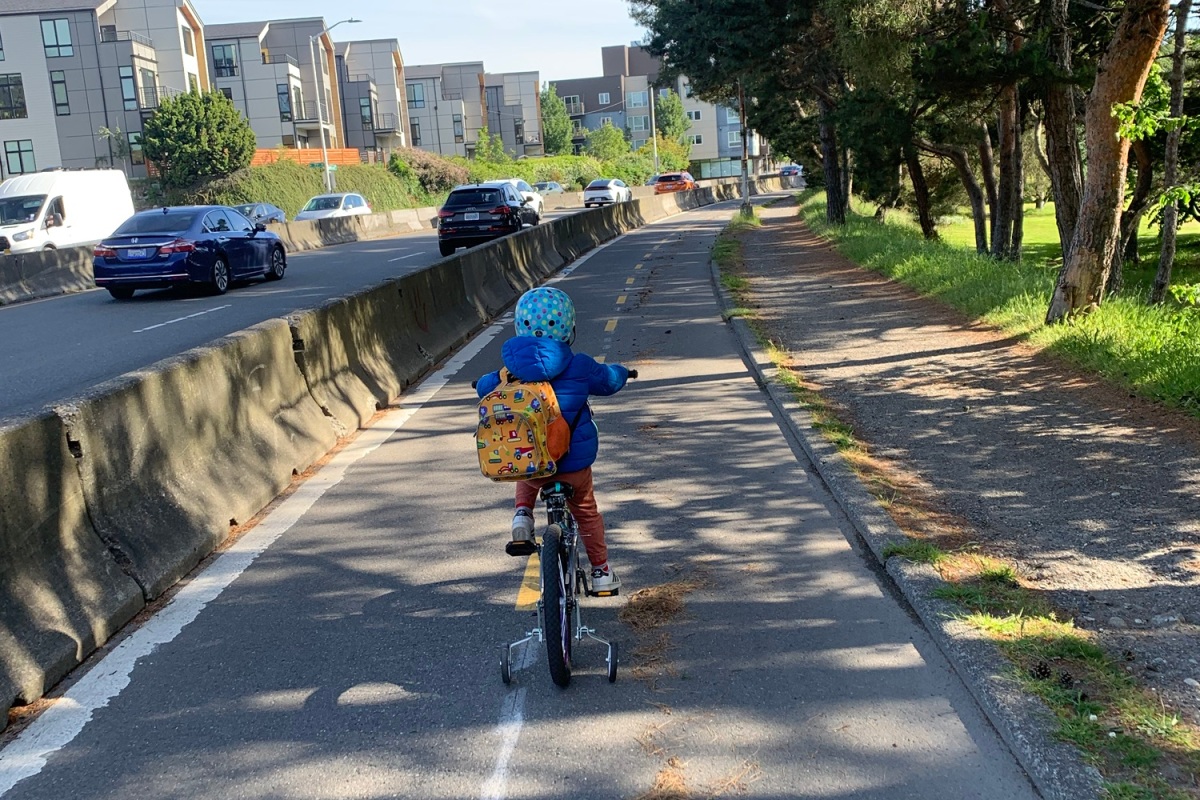
And then I landed on riding bikes to school. Miraculously, it worked. It made it so that he didn’t have any problem going to school and his entire day was better. Then I started playing with the how. Driving eight-year-old Miss O to school so she didn’t have to ride every day. Then running alongside Mr. D as he rode his training wheel bike.

I’ve adjusted the length and we’ve tried scootering instead of biking. Even a .4 mile scoot works.

Sure, I’m showing up at work sweaty and late from running alongside and then back to the car again. I needed more exercise anyway. And it works. It changes his whole day because we’ve figured out how to move the energy that was blocking him.

Dr. Peck’s definition of love at the top of this post resonates with me. There are so many ways that people extend themselves in love. Working through feelings happens to be mine for this phase of life, born out of necessity and time. It’s had extended benefits in the patience I have for other areas as well – work, friendship, and pet ownership.

Here’s to everyone doing the hard work of love in whatever way works for them.

The Lens We Look Through

Gotta move different when you want different.” – unknown

The other day on a weekend I was trying to get my children out the door to go to the zoo. I looked over and both my children were lying on the floor near the back door looking at a lady bug.

When was the last time you laid on the ground to look at something? My dad used to joke that he knew he was getting older because he’d bend over to tie his shoes and look around for anything else he needed to do when he was down there.

There’s a scientific reason that adults aren’t usually found on the floor looking at insects and children are. According to Dr. Alison Gopnik, a professor of psychology at UC Berkeley, young brains are wired to be attracted to the things that can teach them the most. Adult brains are wired to be attracted to things that reward them the most. And unless you are an entomologist, you probably aren’t rewarded for studying bugs.

But there are times when the adult brain gets stuck. In our grooved pathways that Dr. Gopnik likens to boulevards, adults can cruise back and forth much quicker than children but we don’t always rethink how we got there. Kids brains have neural pathways that look more like the streets of Old Paris. Windy, slow-going but able to approach something from many directions.

Getting stuck might be in a mindset or unable to solve a problem. We can be in a rut in a relationship or unable to see the other side of an argument. Or we can just be downright bored and completely unable to see what it could take to change it.

And that’s when we need to do something entirely different.  When we are stuck, the best advice is to do something else. We can go for a walk. Or we can learn to play. Or we can travel. We can even get down onto the floor with some kids. Doing something different will help us come back to what we are doing with newfound perspective and energy.

The other day, my first reaction to seeing my kids on the floor looking at the ladybug was frustration. I was stuck in my mindset of getting us to where we wanted to go efficiently. But after a moment I relented and got down on the floor and looked at the lady bug too. There was awe to be found in a tiny bug spreading her wings and twitching her antennae in a pool on sunlight.

There was also irony that I didn’t want to take time to look at a living creature because I was too busy trying to get us to the zoo. We ushered the lady bug out the door before leaving ourselves, still awash in the wonder of when you do something different.

(featured photo from Pexels)

Hurrying Never Helps

God did not create hurry.” – Finnish Proverb

We’ve been riding bikes to school this week. Primarily because it makes four-year-old Mr. D happier to do drop off at his school. Why that is, I’m not sure. Because we get the endorphins flowing? Because it makes him feel strong and successful? Perhaps. It seems that right now he’s realized the world is big and he is small. His inclination is to want to stay home in his safe space. But when we ride bikes to school, the threshold into his classroom doesn’t seem like that big of a deal and he has a great day.

Anyway, the hero of this story is eight-year-old Miss O. She’s been totally game to ride bikes if it helps her brother.

After the first day we did it, I told her it worked to help Mr. D have a great day. She said, “That’s great. But we have to find a different way.” But then she got up ready to ride again the next day.

Sometimes I don’t realize what things are big efforts for my little people, Miss O in particular. In this case, we drop her off first before Mr. D and I continue on to his school. But she rides her own bike while Mr. D rides attached to mine on a third wheel.

We have to get up earlier, it’s uphill for the first six blocks, and she wants to lead, so she’s taking on that responsibility too. It behooves me to remember the things that help me to do hard things: just start, remember to feed and water the body, and to take things one step at a time.

I tend to forget all that if we are running late.

On Wednesday morning we headed off later than usual and Miss O’s bike was rattling. I thought it was just the chain guard pressed against the chain and told her to keep riding. We got around the first corner and she said, “this is really freaking me out.

I did not want to stop. We were late! But I had her get off her bike and found a section of the chain guard that had bent and was clipping the chain at every turn.

We got back on the bikes. About six blocks later when we’d finished the uphill, Miss O said, “I need a break.

Oh holy cow, my inner voice demanded. You’ve got to be kidding me. But I remembered the things that help to do hard things and edited that voice before it came out. “Okay, Sweetie. How about a swig of water?”

The number one thing I need to do in order to help myself and my kids try hard things is to try not to hurry. If I don’t add time pressure to whatever else it is we’re trying to do, including the things I do solo in the day, it always goes better. I am more patient with others, I have less tendency to want to jump in and do it myself, and specific to my kids, we can enjoy more of their lantern brain where they see and observe everything around them. Like on this ride when Miss O heard a woodpecker in a tree somewhere around block four. Such a distinctive and interesting sound.

The number one thing I regularly screw up is not leaving early. Then I have to swallow my own anxiety about being late in order to help them have a positive experience with trying. Fortunately, I managed to do tamp down the time pressure on this ride and we got Miss O to school on time-ish.

Note to self: Hurrying makes life less enjoyable. Keep trying to leave earlier.

Upward Spirals

The morning whispers hope, the afternoon sings of possibilities, and the evening reminds us to cherish the moments. Embrace each part of the day with gratitude.” – unknown

This was originally published on 8/17/2022. Heads up – you may have already read this.


As I was writing my post last week, Good Mood of the Soul, I came across the research that joy and gratitude often result in an upward spiral. The more we focus on gratitude, the easier it is to perceive joy. And when in the midst of joy, we are more open to gratitude.

So here’s the list of things I’m grateful for this week:

For everyone that is willing to read what I am grateful for

That I can still hear the Click and Clack, the Car Talk brothers in the Cars movies.

The quiet way my three-year-old son says, “you are my best mom friend” to me so that I have to lean down to hear. In that position it goes directly from my ear to my heart.

That we have the ability to take pictures with our hearts.

The way it sounds when my seven-year-old daughter says, “I’m thankful for the tooth fairy.” while missing her two front teeth.

For out-of-the blue notes from individuals I admire telling me something I’ve done right.

That I’ve been able to learn, to some degree, how to fix the things that I’ve done wrong.

That broken eggs make food, literal and metaphorical.

For whoever invented yoga pants and made messy hair look sexy, at least on the West Coast. And if that was only in the 90’s and is no longer a thing, for anyone that continues to let me think that.

Speaking of inventions, whoever invented self-sealing water balloons that fill 20 at a time.

That life keeps giving me opportunities to learn that suffering just softens me up for the next great thing.

For every grown-up that showed me what vulnerability looked like when I was a kid.

For every grown-up that shows me what vulnerability is when I’m a grown-up.

For this necklace I bought on a whim and have worn for 20 years that says, “Strength is having a grateful life” and that I have grown into knowing what that means.

Cool sheets on a hot night.

That I have a bed to sleep in.

Green tea on dark mornings.

That connect-the-dots works in art and in life.

For the human traits of kindness, courage and generosity.

For the Divine traits of grace, faith, hope and love.

For the times I’ve been on my knees needing loyalty, courage, generosity, grace, faith, hope and love – and that what I’ve received in those moments has opened me up to knowing what those traits are in my bones.

I am grateful for upward spirals.

What are you grateful for this week? What have you learned about upward spirals?

Good Mood of the Soul

Find a place inside where there’s joy, and the joy will burn out the pain.” – Joseph Campbell

This post was originally published on 8/10/2022. Heads up – you may have already read this.


Recently, a friend sent me a printout of a sermon that my dad, who was a Presbyterian pastor, gave on parenting 36 years ago. She had a printed copy and kept it filed away. Now that her kids are long grown, she sent it to me.

In it, my dad gives a quick synopsis of his children’s personalities, “We look at our three children and see that their responses to life were distinctly different from day one. Our first child was laid back and relaxed … our second was wound up so tight she couldn’t keep her head still to nurse … our third was happy and charming. They had those marks when they were born … they still have them today.”

I’m the third one. That was written when I was 17 years old. But there’s something about family patterns that keep us trapped in roles from which we need to move on from. For me that was moving from happy to joyful.

In her recent book, Atlas of the Heart, researcher and author Brené Brown defines happiness as “Looking at the data we’ve collected, I would define the state of happiness as feeling pleasure often related to the immediate environment or current circumstances.

And that fits pretty well with the list I can name of the things that make me happy:

  • Dance parties with my kids
  • Finishing a shower without interruption from my kids
  • Hearing a song I loved from college in the grocery store
  • A vanilla milkshake on a hot summer day

When I discovered meditation and mindfulness during my travels through the less pleasant periods of my life, it taught me that joy is a different feeling altogether. Brené Brown says she thinks of joy as “‘the good mood of the soul.’” She defines it based on her research as, “An intense feeling of deep spiritual connection, pleasure and appreciation.”

For me joy comes when I let go of seeking and preference. As poet Mark Nepo said, “One key to knowing joy is being easily pleased.” It’s cultivating my awareness of what is already present and my delight at the magic in the air. It works when I stop narrowing my field of vision to my agenda and open to all there is. Not surprisingly, researchers have connected joy to gratitude and describe the two together as “an intriguing upward spiral.’ (from Atlas of the Heart). Gratitude increases our ability to feel joy, joy makes it easier to find gratitude and so on.

And here are the things that make me joyful:

  • Every time I get to wake up and witness a sunrise
  • Catching a glimpse of my kids in a circle with the other kids in the neighborhood leaning heads in to examine some fascinating part of life
  • Holding hands
  • Hearing the clink of glasses at a dinner with dear friends
  • Witnessing a whale surface to breathe
  • Listening to the Bach Cello Suites played by Yo-Yo Ma
  • The view from the top of a mountain no matter how breathless, exhausted and cold I am
  • Anything that comes out of a conversation that starts with “How can I be of help?”

The conditions of happiness are specific and fleeting. I’m frequently happy but it certainly isn’t a constant.

The conditions of joy are deep and enduring. They represent ties in my life, beauty of this world and things I’ve worked to make priorities. It is the current underneath my mood. It’s the reward for when I’m aligned with my values.

For the times of my life where I’ve felt like I’m stuck, wading through glue or too busy taking care of others to take care of myself – it’s joy that pulled me through, making it worthwhile all the way. I might have been born happy, but I’m grateful to live joyfully.

(featured photo from Pexels)

The March of Time

Patience is a bitter plant, but its fruit is sweet.” – Chinese Proverb

I’m not friends with March. As a month, it’s long and slow. It has no holidays, in the U.S. at least. It feels like a placeholder month to me. March is the month in which I’m more likely to be irritated that my eight-year-old daughter, Miss O, has used my Tupperware for slime, my four-year-old son, Mr. D, only brushes the outside of his teeth, and Cooper the dog thinks that keep away is a fun game.

March wreaks havoc with my already-prevalent tendency towards impatience. It feels like the month that the year is most pregnant. Something great is about to burst onto the scene but for now, it’s nothing we can see or hold.

So, yesterday, on my third day of my penance, also known as March, that I made waffles with jam inside. Miss O said, “We are so lucky. And it’s not just me that’s lucky, but our whole family.

Dang. I’m being an ingrate. But as she said that, I also realized that what I’m pregnant with at this moment is hope. Yes, the laundry hasn’t been done, the dishwasher needs to be emptied, I haven’t started my taxes, and the yard looks like a mud pit interspersed with construction toys.

But I’m hopeful that some of the projects we started will get done. That some of the lessons we’ve been learning will stick. And that I will learn to be patient while the Higher Power works hand in hand with sunshine to make it happen.

For all of my childhood, one of our biggest family celebrations was Easter. My mom would spend all of March making me a new Easter dress, measuring, sewing, trying it on, usually right up to the night before.

Maybe that’s one of the seeds of my impatience with March. Waiting for the resurrection. Whether or not that matches your theology, I think Spring brings the hope of better things to come. I just have to remember to be grateful. And also note that bird song, blooms, and better sunshine are worth waiting for.

(featured photo from Pexels)

A Legacy of Love

The one thing that we can never get enough of is love.
And the one thing that we can never give enough of is love.”
– Henry Miller

When I published my book about my dad eight years ago, there was a consistent kernel of comment that I got about it from his peers that read it. It was stated or implied that they hoped they were remembered as fondly.

I’ve sat with that nugget for a long time to try to unravel what that meant. I’ve come to believe it reveals a truth about what’s important.

Let me start off with a list of the things that my dad wasn’t good at. He worked too much. He left the hard work of parenting largely to my mom. He could be sloppy with details. He was conflict averse and would turn most anything into something funny and light so as not to have to deal with it. He didn’t show his struggles or any negative emotion in a way that would make him more relatable.

But he had one major thing he did right consistently – he loved people. He managed his own neuroses, opinions, and worries in a way that made him open to love others. He’d say that it was following the example of Jesus to love, accept, and welcome others that allowed him to do that. He believed that was Jesus was the way, the truth and the life, but he also believed that it wasn’t the only truth. He came to appreciate any practice or belief in something bigger than ourselves.

On his birthday about four months after he died, I posted a tribute to him on Facebook based on the Maya Angelou quote, “I’ve learned that people will forget what you said, people will forget what you did, but people will never forget how you made them feel.“. An acquaintance from high school with responded with a comment like, “Not everyone had a dad like that.”

Right. I was incredibly lucky to have a dad that was so effusively warm and whose face lit up every time he saw me. I think he had an advantage as a pastor in that it was part of his profession to practice meeting, accepting and loving people. His resume virtues and his eulogy virtues were aligned, to borrow a phrase from David Brooks.

But I think we all have the opportunity to prioritize supporting and encouraging others in a healthy and boundaried way, and love people the best we can. I suspect it might be the key to how fondly we are remembered. The ultimate paradox is that we give love in order to be loved.

My book about my journey to find what fueled my dad’s indelible spark and twinkle can be found on Amazon: Finding My Father’s Faith.