Endurance Versus Enjoyment

Believe you can and you’re halfway there.” – Theodore Roosevelt

This was originally published on 4/26/2023. Heads up – you may have already read this.


I was recently reminded of the time I did a long-distance bike trip on a bike with mountain biking tires. Here’s how that colossal misjudgment came to happen.

The first time I did a really intense workout to prepare for an upcoming mountain climb, my legs were shaking, I thought I’d pass out or throw up, possibly both, and instead I hung in there with the thought, “I can do anything for 20 minutes.”

And I could. So when it came to the next progression in the training, a fast, steep hike, I was equally as wobbly but thought, “I can do anything for a couple of hours.

By the time it came to actually climb the mountain, I arrived with a 50-pound pack and the mantra, “I can do anything for two days.” I didn’t summit the mountain on that particular attempt but I did prove that I could endure for two days.

So when a friend invited me to do a long-distance bike ride down the California coast and my work schedule meant I could only be on the trip for two days. I thought, “No problem, I can do anything for two days.” It seemed to me that biking is very similar to mountain climbing – takes a lot of leg strength and more importantly, the same endurance muscle.

But I didn’t think long-distance biking was going to be the mainstay of my hobbies so when it came to shipping my bike to the starting point, for reasons of time and money, plus a little ignorance, I just sent my bike that had mountain bike tires. Not super heavy duty, grip the trail mountain biking tires but grippy enough to have a high amount on friction on a paved surface.

By lunch on the first day of the bike trip, my legs were completely gassed. I don’t think I’d experienced that level of fatigue even on the toughest mountain climb I’d done. I made it to the end of the day and then had to immerse myself in an ice bath to have any hope of getting my muscles flushed and restored to ride the second day.

But hey, I can do anything for two days and I made it.

Which is to say, it was a good lesson in endurance. Now when I look at a particular phase with my children that is getting my goat, I think “I can do anything for two years.”

But, and this is a big one for me, I’ve learned that enduring and enjoying are two different things.

On a recent Sunday morning, I was at home with my kids who are now 7 and 3 years old, and they were happily engaged with each other on a project. It left me with 20 minutes of discretionary free time and I was thrilled. As I actually took my time with some self-care, I marveled at the feeling of freedom and enjoyment I was experiencing.

That’s when it hit me. I thought “I can do anything for 20 minutes.” But that’s “anything” said with a sense of wonder and good fortune of an unexpected gift. That’s “anything” that acknowledges the enjoyment that comes with a little lessening of the strictures I tighten around myself. That’s “anything” that remembers that life is to be enjoyed and not just endured.

I’m so good at putting my head down and grinding out the miles to the end of the planned route each day. But it’s completely different training to raise my nostrils to the wind and my eyes to the scenery and notice each mile as it goes by. It’s a practice that is a lot less of a dramatic story tell but instead makes for a story worth telling.

So on Sunday, with a nod to the authors of The Power of Awe, I intentionally savored having unexpected moments to myself and micro-dosed some mindfulness full of gratitude and enjoyment and that made the experience even more impactful.

So I’m entering a new phase of training, one where I’m allowing myself the freedom and unscripted time so “I can do anything for 20 minutes.” I’d like to work up to “I can do anything for 2 days” but I’m taking my workouts slowly.
A Full-Circle Story

Be kind to yourself and share it with the world.” – unknown

The other day I opened my door to an older gentleman who was going door-to-door on behalf of Greenpeace. Let’s call him John. He was warm and friendly and told me he’d grown up in this neighborhood and named the elementary school he attended.

As we were talking about plastic in the ocean, he mentioned that he’d just been talking to a neighbor. She wanted to subscribe for an annual payment. She knew she’d remember to do it because the day he came by was her birthday.

Clearly this neighbor had made an impact on his day. He went on to explain that she and her husband invited him in to sit down as they did the paperwork. It gave him some rest for his aching knees.

I hazarded a guess based on the story he’d told me, “Was it Donna and Bruce?”

Yes,” he laughingly confirmed even though they are two streets away. There are about 25 houses per block in this neighborhood so he must have knocked on about 50 doors between my house and theirs.

So, I told him the story about how I met Donna and Bruce one evening about four years ago. It was early on in the pandemic and my daughter was doing on-line Kindergarten. I was trying to optimize her desk situation. Someone up the street had put a great kids desk out on the curb to give away. I was trying to carry it home with my 5-year-old daughter, my 6-year-old neighbor, and my 1-year-old son in tow.

And then Donna, who I’d never met before, offered to step in and help. Her delightful spirit is just one of the reasons she’s one of my favorite people to run into in the neighborhood.

[The next time I saw Donna after my conversation with John, the Greenpeace guy, I told her that how John told me the story of how her warmth and kindness had made such a difference to him. It was so fun to see her reaction to one of the many touchpoints of positive impact she must deliver in a day.]

After John, the Greenpeace guy left, my kids and I went out for a walk. We came across him sitting on a garden wall on the next street over resting his aching knees. Because of the stories we’d shared, it felt like he was an old friend. We sat down for a moment and chatted with him before we all moved on, still connected by the thread of narrative.

For a story about an a-ha moment Vicki had as a child about the roots of her dad’s big heart, please listen to our Sharing the Heart of the Matter podcast: Episode 67: Love the Ones That are Different with Vicki and Wynne

Vicki Atkinson and I are big believers in the power of story – to connect us, to create intergenerational healing, and to make meaning out of the events of our lives. Each episode of our podcast will start with someone telling a story in each episode.

To listen to the podcast, Search (and subscribe!) for Sharing the Heart of the Matter on Apple, Amazon, Spotify or Pocket Casts. Or subscribe to our YouTube channel to see a video clip of each story: @SharingtheHeartoftheMatter.

The Glass is Refillable

Only the closed mind is certain.” – Dean Spanley

This was previously published on 9/28/2022. Heads up – you may have already read this.


I was traveling last week, something I haven’t done without my kids in 7 years. I’d perfectly engineered the school drop-off and transfer to the nanny, filled the fridge with food, done all the laundry, and even unloaded the dishwasher. I thought I had everything well in-hand.

But then I got to the airport and all my planning fell like a stack of cards. My flight was delayed. My transportation to the hotel when I arrived at the destination changed so I needed a last minute rental car. I took a wrong turn and had to back up in a strange car on a dark road. I didn’t know how to navigate New Jersey turnpike tolls and was guessing. I got to the hotel so late that they were no longer serving food so I ended up eating the cup-of-soup noodles you get by pouring hot water over and they are only marginally less chewy than styrofoam. Then as I gave up and just tried to sleep, I could hear a very faint security beep if I lay on my left side so I had to only lie on my right. Anytime I forgot and turned over, I woke up.

I was tired, pissy, disappointed and completely spent.

More than that – I was surprised. My congenital optimism as described in  Rose-Colored Glasses had predicted none of this. When a couple of days later I talked this over with my friend who is a self-proclaimed pessimist, I asked if optimists and pessimists suffer the same amount: optimists from disappointment and pessimists from catastrophizing.

My friend asked something like, “Why can’t you set your expectations differently?” Well, I’m pretty sure I wouldn’t get that right either. I could imagine how things would go wrong but I doubt I’d be any closer to reality.

“People who wonder if the glass is half empty or full miss the point. The glass is refillable.”

unknown

Refillable – yes! But first I have to empty it of all the bubbly stuff I put in there to begin with. What works for me is to get up every morning and meditate to make friends with uncertainty. That practice of mindfulness helps me to embrace that I have no idea how things are going to unfold, no matter how much I’ve planned…or maybe even more poignantly, how much I’ve dreamed.

Whether we come at it from a perspective that everything is going to be great or that nothing is going to work, the truth remains that we don’t know. Even the people that I’ve met who identify as realists don’t know how something will unfold. Being optimists, pessimists or realists might set the tone of how we feel about the day before us but the mystery of life remains that we can’t predict how life will turn before us.

This brings to me something I heard Franciscan Priest Father Richard Rohr say about certitude.

“The thing called certitude is a product of the enlightenment, and it did so many good things for us, science and medicine but it made us feel that we have a right to something that we really don’t. Our ancient ancestors grew up without expecting that. So they were much more easily able to hold on to mystery in general, God in particular. Whereas we worship workability, predictability, answers – we like answers.

We think we have a right to certitude.”

Father Richard Rohr

With the help of meditation, I come back to knowing that I don’t know and then I feel more able to improvise. When I touch uncertainty, I let go of my plans. When I empty my head and hands of the vision of me being in charge, I more readily accept the mystery unfolding before me.

The glass is refillable. Indeed it is. I concede that it might be my optimism that gets me up and ready to practice refilling it. But whatever it is, I have to work at it every day, meditating in order to make friends with uncertainty in a practice to embrace the mystery again and again.

Meditating on uncertainty on my recent trip helped me enjoy the experience: it wasn’t as I had expected but it had lots of twists and turns that fed me in significant way. That interpretation might sound optimistic but it’s much deeper than that – its meaningful. And isn’t that part of what we ultimately want from life?

(featured photo from Pexels)

The Most Important Work

Children are not a distraction from more important work. They are the most important work.” – C. S. Lewis

Sometimes I think Hallmark has it backwards. Take Mother’s Day for example. My kids didn’t do anything to choose me. I, on the other hand, took a very intentional path to become a mom.

From the realization that I wanted to have kids later in life because I cried whenever I saw Princess Kate pregnant with her oldest child nine years ago, to deciding to do it without a partner (for now), then through IVF three times (I had one miscarriage), I made very deliberate choices to parenthood. I couldn’t be more grateful that I’m a mom.

Here’s the top three reasons why:

I’m so much healthier

You didn’t know me before I had kids. I didn’t write in the period of life when I was numbing my feelings with wine every night. Meditation changed that pattern so that I had a different way to irrigate my irritations.

But having kids has given me so much more practice. That’s a funny sentence. I didn’t mean that they give me many more irritations to irrigate but on some days that’s true too.

Mostly I meant that these beautiful and honest beings have shown me what emotional honesty is. By helping them name their emotions, I’ve learned how to name and feel mine too.

Every day is an adventure

I’m a creature of habit. Without kids, I’d have likely continued my pattern – hike every Saturday, do a big trip every two years. Like my trips to Everest Base Camp, climbing the Via Ferrata routes in the Dolomites, or biking from Vermont to Canada to New York – great trips that totaled about two weeks out of every 104.

But with kids – every day is an adventure of curiosity and learning. We rescue bunnies, dig in the dirt, ride bikes, or sell lemonade. I’m learning to be flexible and adventurous on a daily basis instead of a bi-annual one.

Big messy love

Parenting is the messiest form of love I’ve known. Not just sticky hands and faces but so much laundry, picking up detritus, territorial incursions because of changing boundaries, and spilled over spats between siblings.

But it seems to me, that the messiness that makes it stick like Velcro instead of slide off like a glossy surface. It’s proof that nobody is perfect any we love each other anyway. The repetitiveness reminds me how many chances we have to get it right. Over and over we make a mess. And over and over we get to come together and make it right.

The news has all sorts of stories about what isn’t working in this world. But then a day like Mother’s Day comes around and I look at all the people who are trying their best to love wholeheartedly – with young kids, and old kids, and/or other people’s kids. For me it’s a celebration that love wins.

Going to the Next Level

I am convinced all of humanity is born with more gifts than we know. Most are born geniuses and just get de-geniused rapidly.” – R. Buckminster Fuller

We are coming to the end of our school year. 28 more school days in third grade for Miss O. And 50 days until Mr. D graduates from his preschool program. Do you remember that feeling as a kid? Being not only ready for summer break but also ready to ascend to that next level?

It has me thinking of what milestones we have in our lives as grown-ups that celebrate our readiness to go on to the next level. There are some big ones like becoming an empty-nester or retirement. Or we have annual ones like birthdays, anniversaries, and New Years. But often, I find myself at those moments planning on what I’m going to do next instead of commemorating what I’ve learned.

Let me suggest that we take a moment to bring back that feeling of finishing a school year. To actually name something we’ve graduated from and celebrate it. I’ll start:

I’ve come to believe that I am enough. Or at least to understand that pretending to be someone else is ineffective. So if a situation or expectations make me feel otherwise, I try to slow enough to double-down on being me long enough to get through.

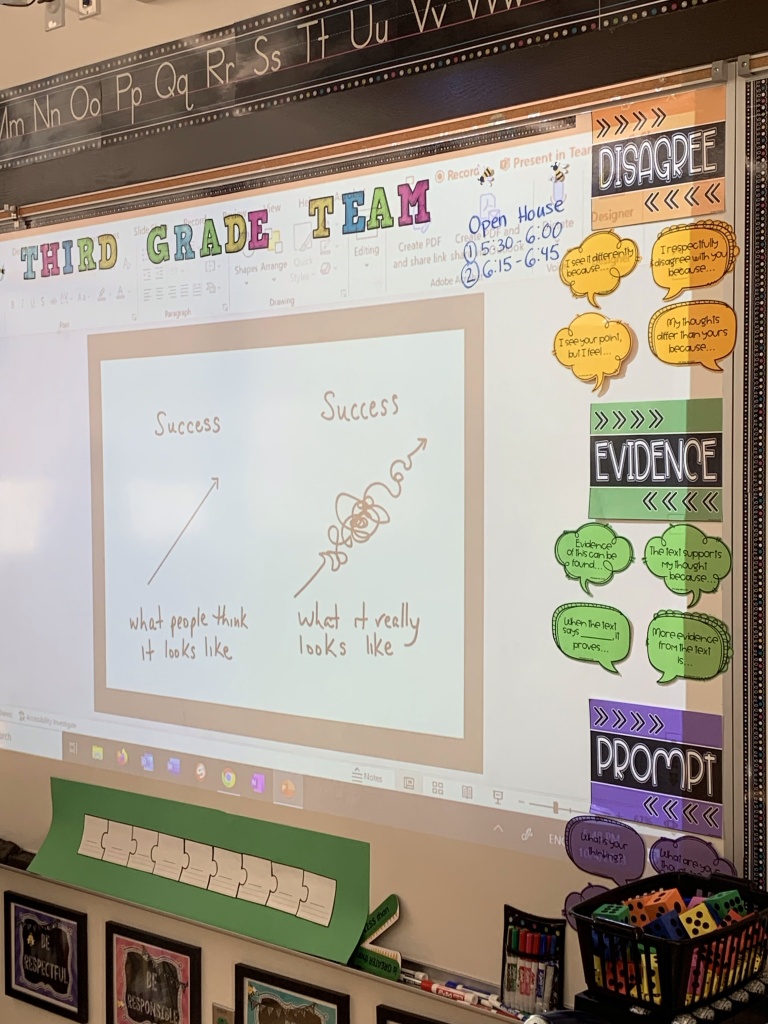
And by graduating, I don’t mean being done. It brings to mind another graphic from Miss O’s 3rd grade teacher:

It seems fitting on this last day of teacher appreciation week to honor our teachers by naming what we’ve learned. Are you with me? If you are stuck, maybe visit the list from Pick Three Affirmations to find a place to start.

(featured photo from Pexels)

For a story about the circle of life, please listen to our Sharing the Heart of the Matter podcast: Episode 66: The Power of Story with Wynne and Vicki.

We are changing our format starting with this episode. Vicki Atkinson and I are big believers in the power of story – to connect us, to create intergenerational healing, and to make meaning out of the events of our lives. To set the stage, we will be starting with someone telling a story in each episode.

To listen to the podcast, Search (and subscribe!) for Sharing the Heart of the Matter on Apple, Amazon, Spotify or Pocket Casts. Or subscribe to our YouTube channel to see a video clip of each story: @SharingtheHeartoftheMatter.

Writing In the Dark

Go into yourself and see how deep the place is from which your life flows.” – Rainier Maria Rilke

This post was originally published on 4/12/2023. Heads up – you may have already read this.


I wrote this post early Monday morning. Around 3:43am that is. I have all sorts of things I do in the middle of the night when I can’t sleep. Mostly worry. Then I review my to-do list. Then I go back to worrying some more. Usually after about a half an hour of tossing and turning, I remember to start meditating and praying. After a few minutes of meditating, I kinda just flow into writing.

It’s all in my head in the dark. I know that there’s a lot of sleep wisdom that says to keep a notebook beside the bed for writing things down. But this composing in my head works for me. It’s not that I remember everything I write, it’s just that it slips me into a different mode. Eventually I’ll write myself back to sleep. The best part is that I even retain some of it when I awaken.

I recently learned of some interesting research from a Ten Percent Happier podcast with Professor Lindsey Cameron. She studied whether meditation helps at work, specifically focused on customer facing jobs, and the results were fascinating. She found that traditional breath work meditations helped with centering the person in a bigger perspective so that the ups and downs weren’t as jarring. And she found that loving-kindness meditation increased the ability to place ourselves in other’s shoes.

There’s research that shows loving-kindness practice reduces activity in part of the brain that’s active when we are anxious. And a study that showed we don’t want to practice mindfulness when doing emotionally taxing work. The example I heard in that case was a flight attendant who is having to pleasantly telling people to buckle their seat belts over and over again does not benefit from being more mindful in those moments.

Back to the point about writing in the dark. It seems our brain research is catching up with what our spiritual traditions have taught us for millennia. There are practices that help to literally change our minds. They’ve given us a tool set that we can use to help put ourselves in the best frame of mind to create, to understand, to be less anxious, to change, to be more altruistic, and so on. It’s no wonder I start writing in the dark after I start meditating, because the practice helps to shut down worry, and then I open up to creativity.

And it matches what works for me during daylight hours. In my post When I Write, I looked at what time of day works for me and it’s always after I’ve done the work to be quiet, to meditate, and to get a little perspective on life.

It feels a little clinical to separate out the meditation and prayer practices from the spiritual traditions and beliefs that tie us to a Higher Power. But in the middle of the night as I’m settling into a rhythm of breathing and repeating “faith over fear,” it’s also kind of fun to know I’m setting up the conditions for calming my brain. And that I might even get a post out of it.

(featured photo from Pexels)

The Onset of Reality

I’d rather learn from one bird how to sing than teach ten thousand stars how not to dance.” – e.e. cummings

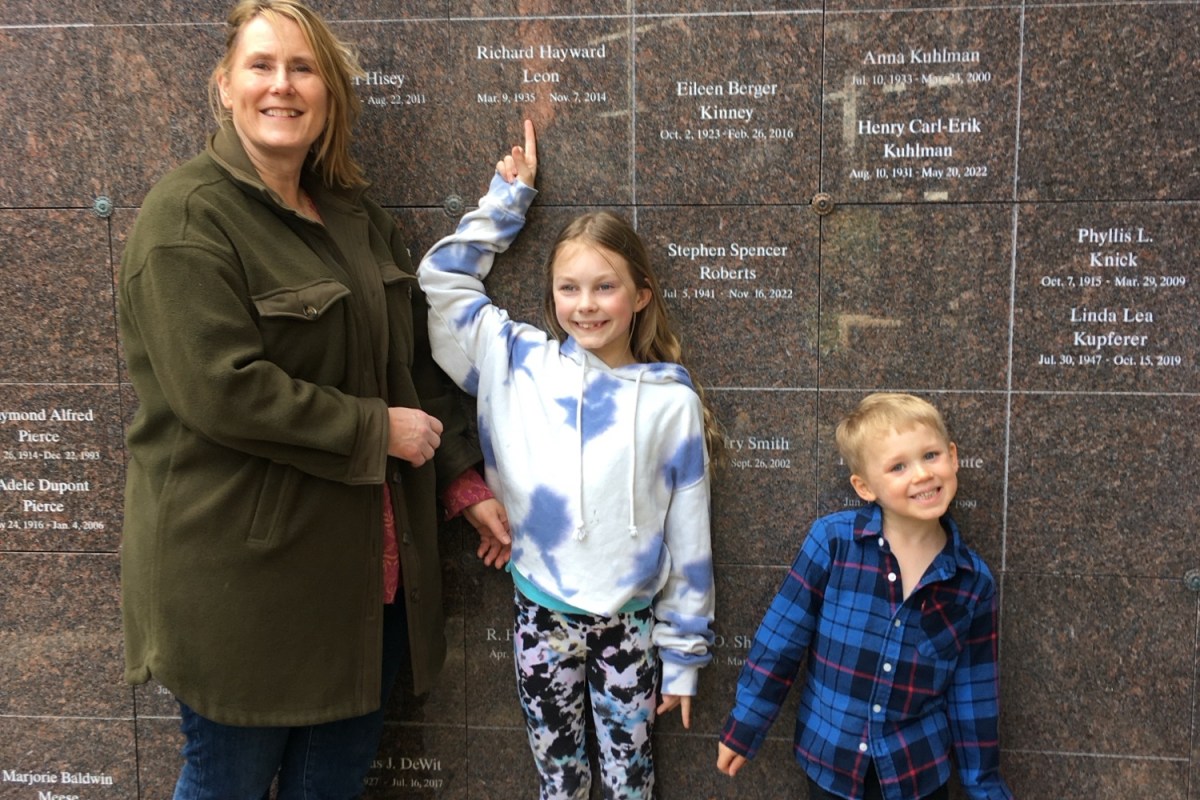
Recently my kids and I were at my dad’s former church for an Easter event. On the way out, Miss O asked to see my dad’s stone in the columbarium. It’s in a beautiful nook by a babbling little brook surrounded by trees.

Miss O and I like patterns. So we looked at all the stones and saw the ones, like my dad’s, that are offset because their spouse/partner will be added when they die. And then the ones where the name is in the middle because they are by themselves.

Miss O wanted to know about the dates on my dad’s stone. I pointed out his birth date and then she looked at the date of his death and said, “Because everyone comes to their death date.

Right!

[As aside, this reminds me of one of my dad’s jokes: “There’s always death and taxes; however, death doesn’t get worse every year.”]

She made that death date observation without any gravity or sadness. My kids can envision monsters and thieves but death doesn’t hold any weight for them.

At four-years-old and eight-years-old, they seem to attend to whatever is at hand with very little worry about the future. Somewhere between four and fifty-four, “reality” hits.

Which reminded me that a few weeks ago at bedtime, Miss O told me that she and her friend have been using recess to talk about “big topics.” I couldn’t wait to hear about these so I snuggled in next to her and asked, “Like what?

She replied, “Puberty and reality. Puberty was my friend’s topic and I brought up reality. I can’t believe it starts in three years.”

I asked “What starts in three years?

She replied, “Reality. You know. Middle school.”

I’m laughing, but perhaps that’s when it does start. The planning and preparing, setting the expectations for what life should be.

Thank goodness there’s death as an antidote. For me, being periodically reminded that “everyone comes to their death date” is helpful.  Not knowing when that will be prompts me to lay down my plans and to live.

(featured photo is mine)

Speaking of great reasons to write down our stories before we meet our death date, Vicki and I talk with author, publisher, podcaster, and former radio producer, Rick Kaempfer on our podcast, Episode 62: The Loop Files with Rick Kaempfer. He tells some incredible stories about the most outrageous radio station ever. And does an amazing job at poignantly describing one of the reasons we write.

Search (and subscribe!) for Sharing the Heart of the Matter on Apple, Amazon, Spotify or Pocket Casts. Or click through to the link above to see the video excerpts from that podcast, the link to listen in browser, plus all of Rick’s links.

Extending One’s Self For Love

“I define love thus: The will to extend one’s self for the purpose of nurturing one’s own or another’s spiritual growth.” – Dr. M. Scott Peck

I was telling my dear friend, Katie, the story of traveling home from New Orleans with my kids a few weeks ago. Miss O and I checked out bags. Then Miss O pointed out to Mr. D the really cool way our bags were traveling down the conveyer belt.

Mr. D wanted to check his bag then too. “No, “ I insisted. “That costs $30.” Which is a stupid argument to make to a four-year-old. So we sat down on the floor or the airport to have a family meeting. When nothing I was saying was working, I finally said, “Mr. D, I’ll give you $5 to NOT put your bag on the conveyer belt.”

Deal!

And then he gave me the $5 back about two minutes later.

Katie responded that I was a nice parent. Which made me think. I’m not sure if I approach it this way because I was raised in the era of “behave well – we don’t care what you feel” so I’m doing the opposite. Or out of necessity because most of the time I’m outnumbered. In this case, I simply didn’t have the strength or number of hands necessary to carry my backpack and a screaming kid through the airport.

But I’d also say that parenting has changed me. Now I’m really interested in helping little people through their emotions. In my negotiations, the answer never changes – my kids still have to go to school, not check their bags, and respect bedtimes. But I’m happy to work through how they feel about it.

Like when after three years of having no problems at pre-school drop-off, Mr. D started balking at the door. There have been lots of personnel changes and that seems to be the root of the reluctance.

I tried just leaving. I tried making deals. I tried going to Starbucks to talk about it. I tried using little plastic people to act out why.

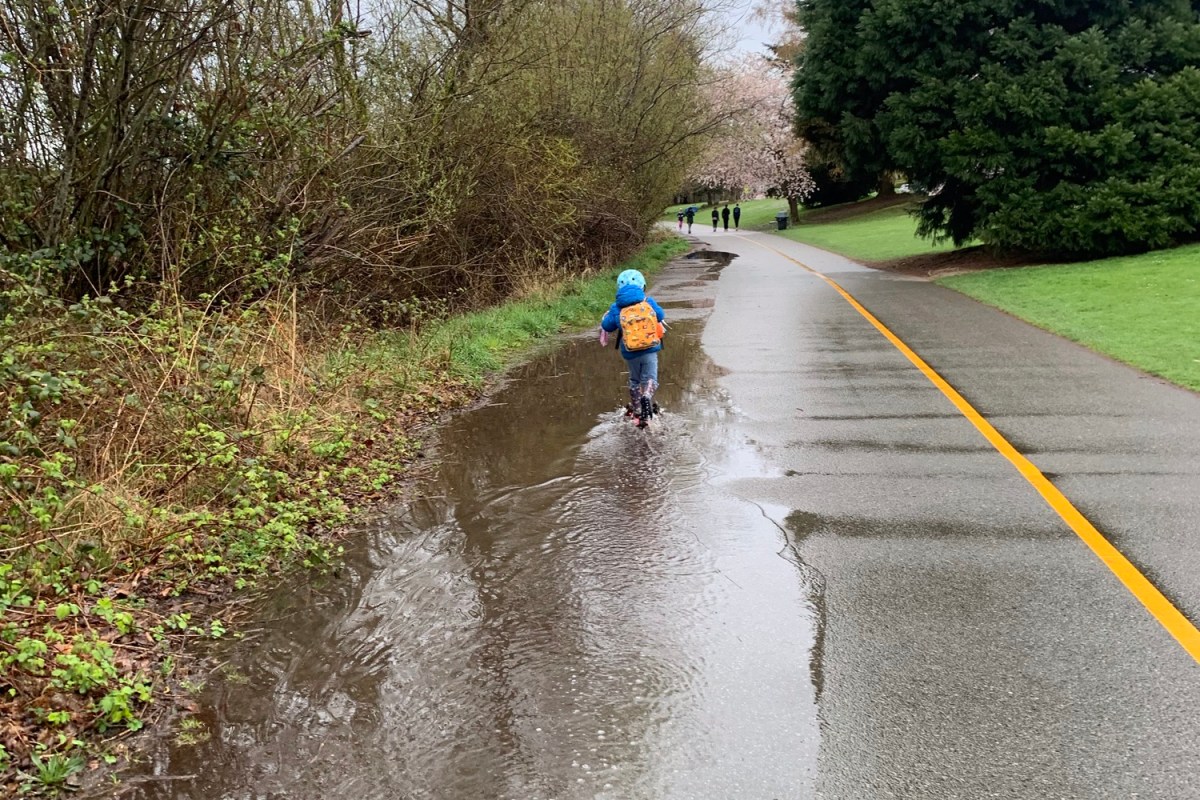
And then I landed on riding bikes to school. Miraculously, it worked. It made it so that he didn’t have any problem going to school and his entire day was better. Then I started playing with the how. Driving eight-year-old Miss O to school so she didn’t have to ride every day. Then running alongside Mr. D as he rode his training wheel bike.

I’ve adjusted the length and we’ve tried scootering instead of biking. Even a .4 mile scoot works.

Sure, I’m showing up at work sweaty and late from running alongside and then back to the car again. I needed more exercise anyway. And it works. It changes his whole day because we’ve figured out how to move the energy that was blocking him.

Dr. Peck’s definition of love at the top of this post resonates with me. There are so many ways that people extend themselves in love. Working through feelings happens to be mine for this phase of life, born out of necessity and time. It’s had extended benefits in the patience I have for other areas as well – work, friendship, and pet ownership.

Here’s to everyone doing the hard work of love in whatever way works for them.

The Lens We Look Through

Gotta move different when you want different.” – unknown

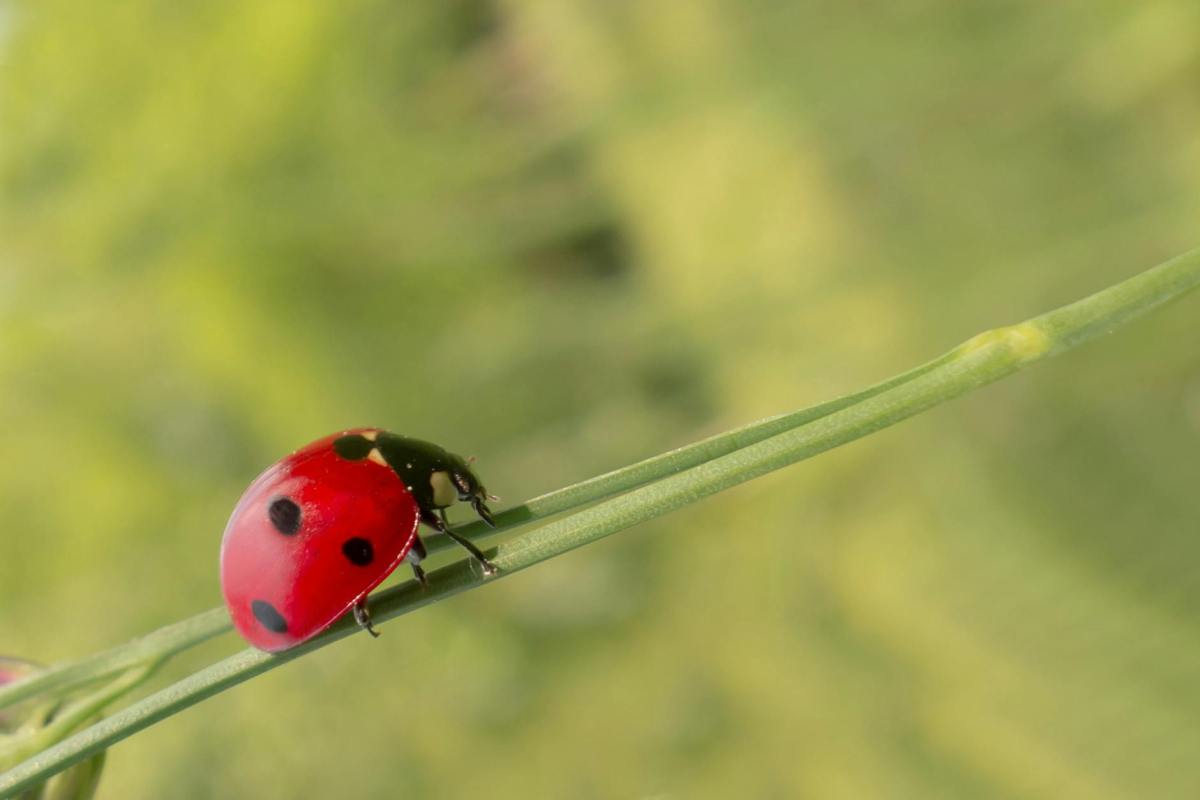
The other day on a weekend I was trying to get my children out the door to go to the zoo. I looked over and both my children were lying on the floor near the back door looking at a lady bug.

When was the last time you laid on the ground to look at something? My dad used to joke that he knew he was getting older because he’d bend over to tie his shoes and look around for anything else he needed to do when he was down there.

There’s a scientific reason that adults aren’t usually found on the floor looking at insects and children are. According to Dr. Alison Gopnik, a professor of psychology at UC Berkeley, young brains are wired to be attracted to the things that can teach them the most. Adult brains are wired to be attracted to things that reward them the most. And unless you are an entomologist, you probably aren’t rewarded for studying bugs.

But there are times when the adult brain gets stuck. In our grooved pathways that Dr. Gopnik likens to boulevards, adults can cruise back and forth much quicker than children but we don’t always rethink how we got there. Kids brains have neural pathways that look more like the streets of Old Paris. Windy, slow-going but able to approach something from many directions.

Getting stuck might be in a mindset or unable to solve a problem. We can be in a rut in a relationship or unable to see the other side of an argument. Or we can just be downright bored and completely unable to see what it could take to change it.

And that’s when we need to do something entirely different.  When we are stuck, the best advice is to do something else. We can go for a walk. Or we can learn to play. Or we can travel. We can even get down onto the floor with some kids. Doing something different will help us come back to what we are doing with newfound perspective and energy.

The other day, my first reaction to seeing my kids on the floor looking at the ladybug was frustration. I was stuck in my mindset of getting us to where we wanted to go efficiently. But after a moment I relented and got down on the floor and looked at the lady bug too. There was awe to be found in a tiny bug spreading her wings and twitching her antennae in a pool on sunlight.

There was also irony that I didn’t want to take time to look at a living creature because I was too busy trying to get us to the zoo. We ushered the lady bug out the door before leaving ourselves, still awash in the wonder of when you do something different.

(featured photo from Pexels)

Hurrying Never Helps

God did not create hurry.” – Finnish Proverb

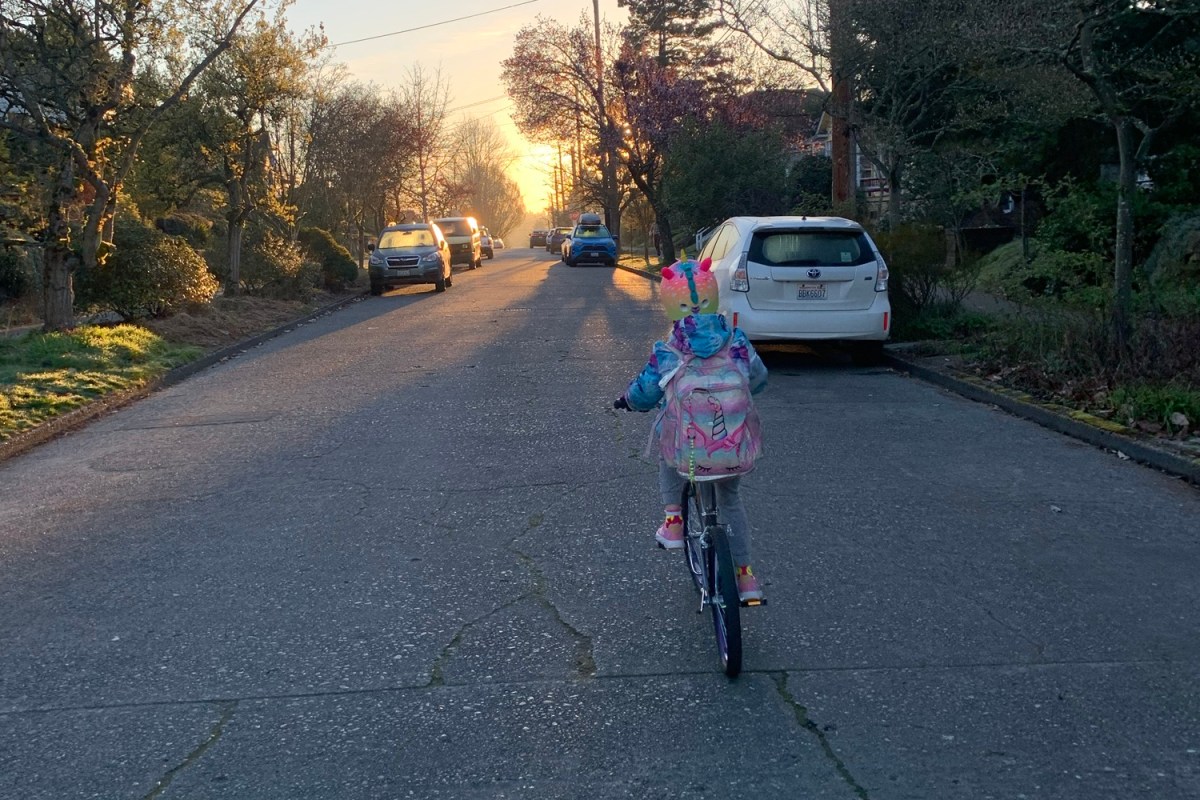
We’ve been riding bikes to school this week. Primarily because it makes four-year-old Mr. D happier to do drop off at his school. Why that is, I’m not sure. Because we get the endorphins flowing? Because it makes him feel strong and successful? Perhaps. It seems that right now he’s realized the world is big and he is small. His inclination is to want to stay home in his safe space. But when we ride bikes to school, the threshold into his classroom doesn’t seem like that big of a deal and he has a great day.

Anyway, the hero of this story is eight-year-old Miss O. She’s been totally game to ride bikes if it helps her brother.

After the first day we did it, I told her it worked to help Mr. D have a great day. She said, “That’s great. But we have to find a different way.” But then she got up ready to ride again the next day.

Sometimes I don’t realize what things are big efforts for my little people, Miss O in particular. In this case, we drop her off first before Mr. D and I continue on to his school. But she rides her own bike while Mr. D rides attached to mine on a third wheel.

We have to get up earlier, it’s uphill for the first six blocks, and she wants to lead, so she’s taking on that responsibility too. It behooves me to remember the things that help me to do hard things: just start, remember to feed and water the body, and to take things one step at a time.

I tend to forget all that if we are running late.

On Wednesday morning we headed off later than usual and Miss O’s bike was rattling. I thought it was just the chain guard pressed against the chain and told her to keep riding. We got around the first corner and she said, “this is really freaking me out.

I did not want to stop. We were late! But I had her get off her bike and found a section of the chain guard that had bent and was clipping the chain at every turn.

We got back on the bikes. About six blocks later when we’d finished the uphill, Miss O said, “I need a break.

Oh holy cow, my inner voice demanded. You’ve got to be kidding me. But I remembered the things that help to do hard things and edited that voice before it came out. “Okay, Sweetie. How about a swig of water?”

The number one thing I need to do in order to help myself and my kids try hard things is to try not to hurry. If I don’t add time pressure to whatever else it is we’re trying to do, including the things I do solo in the day, it always goes better. I am more patient with others, I have less tendency to want to jump in and do it myself, and specific to my kids, we can enjoy more of their lantern brain where they see and observe everything around them. Like on this ride when Miss O heard a woodpecker in a tree somewhere around block four. Such a distinctive and interesting sound.

The number one thing I regularly screw up is not leaving early. Then I have to swallow my own anxiety about being late in order to help them have a positive experience with trying. Fortunately, I managed to do tamp down the time pressure on this ride and we got Miss O to school on time-ish.

Note to self: Hurrying makes life less enjoyable. Keep trying to leave earlier.