How to Share Direction

A leader is anyone who holds him or herself accountable for finding potential in people or processes.” – Brené Brown

Years ago I was talking with a man who was a member of the last church my dad led. Were we talking about my dear father and the man quipped, “You can’t say ‘no’ to Dick Leon.

I had a good laugh about the truth of that statement. My dad asked a lot of people to do a lot of things – serve on committees, volunteer, contribute to a capital campaign. And if you said, “no,” it wasn’t that my dad would judge you, get mad, try the silent treatment, or blackball you. It was worse.

He’d get to know you.

When I talked with him about his leadership style, my dad told me:

“One of the problems that I see with a lot of young pastors is that they’ve been attracted to the ministry because they have seen someone up front doing a nice job preaching or teaching and they love the presentation side.

I keep saying to them, ministry is in the details. It’s getting systems that work in terms of management of the church, people who want to get involved, you want to make sure that they have a meaningful task and that they are rewarded, listened to, and that they feel befriended.

One of the things that I would often teach is when you have an elder that is going to give themselves to leadership for three years, the question you should ask yourself is, ‘At the end of the three years, do these people love the Lord, love the church and love their sense of ministry more than when you met them?’ It’s not ‘How do I put up with them for three years?’ but ‘How can I help them grow as people during their three years?’

It changes the whole sense from how do I get my things done to how do I serve these people? How do I befriend them? How can I help them? How do we nurture them? With a committee or an elder or a deacon or an officer of the church, you’ve got a window into their life that you’ll never have again so how do you use that? How are you doing? What is going on in your life? How can I be of help?”

Yeah…very few people said “no” to Dick Leon. But it’s a hard example to put into action, especially in different industries or scenarios. When heading a volunteer team full of big personalities or working within a competitive company where everyone is super smart, how do you bring that same attitude of empowerment and sharing?

To answer that question, I recorded a How To Share podcast conversation with my friend and climbing buddy, Doug Hauger. Doug had a very successful career as a technology executive and leads personal and professional projects with a similar style to my father’s.

In this episode, Doug and I talk about the intricacies of leadership, emphasizing the importance of sharing, vulnerability, and empowerment. We explore how confidence plays a role in leadership, the necessity of embracing uncertainty, and the dynamics of team interactions, especially when faced with challenging personalities. Doug shares insights from his extensive experience in tech leadership, highlighting the value of wisdom and the importance of creating an environment where team members feel empowered to share and learn from failures. The conversation culminates in the realization that true leadership involves being open, vulnerable, and willing to adapt, ultimately leading to a more liberated and effective leadership style.

We also tell quite a few climbing stories which are very good analogies for leadership success and direction.

Takeaways

  • Leadership requires confidence and the ability to embrace uncertainty.
  • Being open to feedback is crucial for effective leadership.
  • Vulnerability fosters trust and encourages team sharing.
  • Successful leaders create an environment of two-way communication.
  • Wisdom and experience are essential in guiding teams.
  • Empowering others leads to a more productive team dynamic.
  • Acknowledging failure is part of the learning process.
  • Humility allows leaders to learn from others.
  • Navigating team dynamics requires transparency and honesty.
  • Lack of transparency can add weight that hinders success and leadership effectiveness.

This is a great episode that delves into the heart of sharing power and the power of sharing. I know you’ll love it!

Here’s a short clip from our episode to give you a taste of the great conversation with the always amazing Doug Hauger:

Here are some ways you can listen and watch to the full episode:

Please listen, watch, provide feedback and subscribe.
How to Share Our Luck with Gil Gillenwater How To Share

In this enlightening conversation, Gil Gillenwater is with host Wynne Leon and shares his experiences and insights from over 35 years of philanthropic work along the US-Mexico border. He discusses his book, 'Hope on the Border,' which highlights the transformative power of education and community service. Gil emphasizes the importance of enlightened self-interest over traditional charity, advocating for a model that empowers individuals and fosters dignity. He explores the duality of poverty, the need for sustainable opportunities, and the joy found in serving others, ultimately presenting a vision for a more connected and compassionate world.TakeawaysEducation is the key to breaking the cycle of poverty.Enlightened self-interest can lead to personal and communal growth.Charity should not be viewed as a sacrifice but as a mutual benefit.Volunteering provides a sense of purpose and fulfillment.Welfare can disempower individuals and communities.Community service fosters connections and shared humanity.The disparity in wealth is a significant issue that needs addressing.Experiencing poverty firsthand can change perspectives.Creating opportunities in one's home country can reduce migration.The joy of service is a pathway to personal happiness.Links for this episode:How to Share homeHope on the Border at AmazonGil's organization: Rancho FelizGil Gillenwater on FacebookWynne’s book about her beloved father: Finding My Father’s Faith; Blog: https://wynneleon.com/; Substack: https://wynneleon930758.substack.com/
  1. How to Share Our Luck with Gil Gillenwater
  2. How to Share 1970's Chicago with Doug. E. Jones
  3. How to Share Feedback with Dr. Vicki Atkinson
  4. How to Share the Next Generation with Mari Sarkisian Wyatt
  5. How to Share Impactfully with Social Media Friends with Amy Weinland Daughters

Links for this episode:

Doug Hauger on LinkedIn

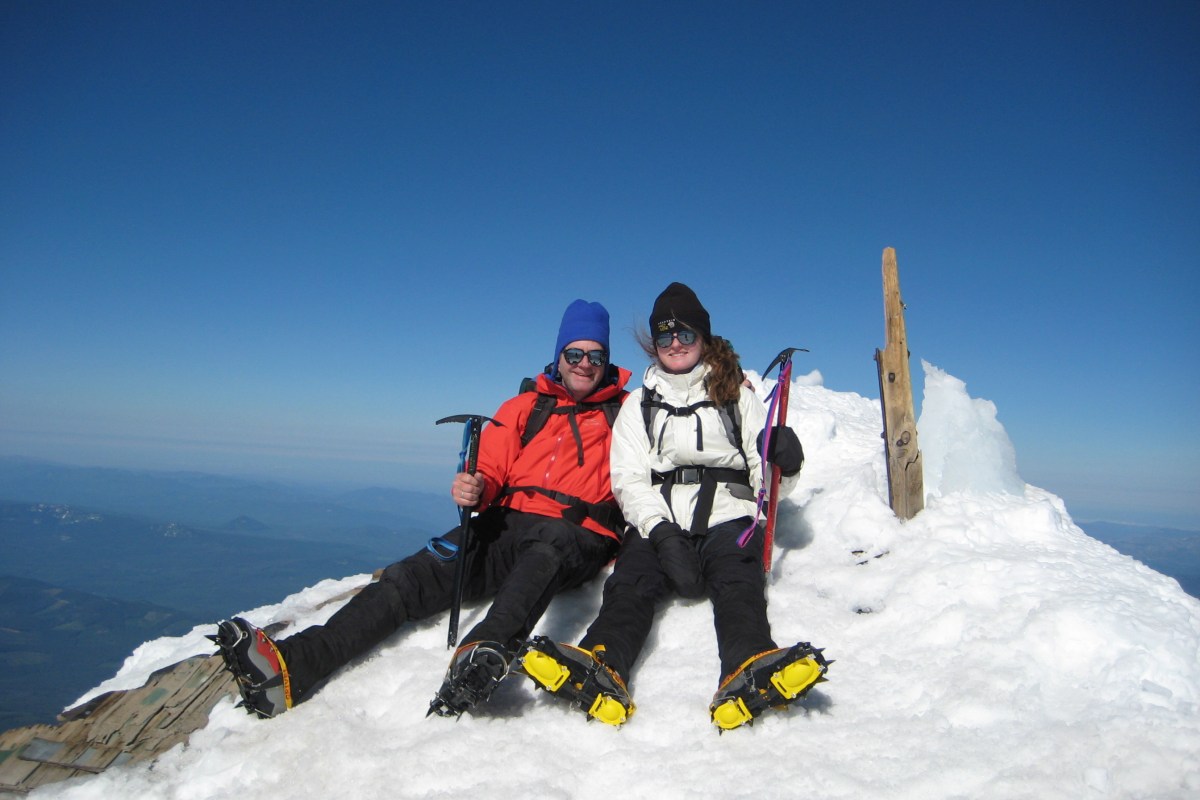
(featured photo is a picture of Doug and his daughter atop Mt. Adams – one of the climbs we talk about in this podcast)

How to Share Personal Stories

Vulnerability sounds like truth and feels like courage. Truth and courage aren’t always comfortable but they’re never weaknesses.” – Brené Brown

Growing up as a pastor’s kid, I was grateful that my dad had a protective sense of what family stories should be told in a sermon. If we did something funny, he might use it in a sermon. But if we did something wrong or outrageous, he wouldn’t.

I’m sure that informs a good deal of my judgment of what personal stories I share. And as bloggers we’re well steeped in the art of personal sharing. Right?

But until I started researching how to share personal stories for the How To Share podcast, I’d say I was mostly deciding what and when to share by gut feel. So it was helpful and interesting to find some expert guidance about some of the boundaries for personal stories.

Here are the questions I set out to answer:

  • What’s the difference between private and secret?
  • How does one know if they are being vulnerable or oversharing?
  • Should people share personal stories at work?

And here are some of the takeaways for the How to Share Personal Stories episode:

  • Sharing is essential for connection and understanding.
  • What is secret and what is private varies by person.
  • Vulnerability can foster deeper relationships.
  • Oversharing can lead to discomfort and misunderstanding.
  • Timing and context are crucial in sharing personal stories.
  • Discernment is key when feeling an urge to share.
  • Workplace friendships enhance job satisfaction and retention.
  • Personal stories can create strong bonds in professional settings.
  • Full circle moments highlight the impact of our stories.
  • Vulnerability is vital for mental health and connection.

I provide a couple of personal anecdotes to illustrate the expert insights and explore the nuances of sharing personal stories. I’d be honored if you’d listen, watch, provide feedback and subscribe.

Here are some ways you can listen and watch:

Stay tuned for next week’s episode when we get great guidance from corporate communications professional, Brian Hannon, on how to share professional communications. It’s such a helpful and informative episode to help illuminate the how, when, and way we reach out to broader groups!

How to Share Our Luck with Gil Gillenwater How To Share

In this enlightening conversation, Gil Gillenwater is with host Wynne Leon and shares his experiences and insights from over 35 years of philanthropic work along the US-Mexico border. He discusses his book, 'Hope on the Border,' which highlights the transformative power of education and community service. Gil emphasizes the importance of enlightened self-interest over traditional charity, advocating for a model that empowers individuals and fosters dignity. He explores the duality of poverty, the need for sustainable opportunities, and the joy found in serving others, ultimately presenting a vision for a more connected and compassionate world.TakeawaysEducation is the key to breaking the cycle of poverty.Enlightened self-interest can lead to personal and communal growth.Charity should not be viewed as a sacrifice but as a mutual benefit.Volunteering provides a sense of purpose and fulfillment.Welfare can disempower individuals and communities.Community service fosters connections and shared humanity.The disparity in wealth is a significant issue that needs addressing.Experiencing poverty firsthand can change perspectives.Creating opportunities in one's home country can reduce migration.The joy of service is a pathway to personal happiness.Links for this episode:How to Share homeHope on the Border at AmazonGil's organization: Rancho FelizGil Gillenwater on FacebookWynne’s book about her beloved father: Finding My Father’s Faith; Blog: https://wynneleon.com/; Substack: https://wynneleon930758.substack.com/
  1. How to Share Our Luck with Gil Gillenwater
  2. How to Share 1970's Chicago with Doug. E. Jones
  3. How to Share Feedback with Dr. Vicki Atkinson
  4. How to Share the Next Generation with Mari Sarkisian Wyatt
  5. How to Share Impactfully with Social Media Friends with Amy Weinland Daughters

Links for this episode:

 Is It a Secret or Just Private? | Psychology Today – Michael Slepian, Ph.D.

Platonic: How the Science of Attachment Can Help You Make – and Keep – Friends by Dr. Marisa Franco, professor of psychology at the University of Maryland who has written about vulnerability versus oversharing

 The Increasing Importance of a Best Friend at Work by Gallup

How To Share

Everyone has a talent. What’s rare is to follow it to the dark places where it leads.” – Erica Jong

Do you have a solid idea of what you know? Not what your jobs have been or what roles you have played but the overarching talent, wisdom, and perspective that is uniquely you?

I ask because I’ve spent the last five months trying to figure out what I know. Believe me, I understand that seems like a long time to try to answer what is a seemingly straightforward question. But I found it to be harder than I expected.

Here’s why. I’m bound by a non-compete so that I can’t fall back to the technical expertise that I’ve cultivated for my career, at least not for a few more months. But that has been an incredible opportunity for me to figure out the bigger picture. Instead of just treading the same path I’ve been walking with Microsoft SharePoint, Teams, OneDrive, and the other technologies, I’ve had to examine what mountain I’ve been climbing the whole time.

Here’s what I discovered. In the 25 years I’ve been helping people with their collaboration software, I’ve learned a whole lot about how to share.

Not just what buttons to push to share a file, a photo or a calendar, but what makes groups do it well – and also do it poorly.

One of the more stark examples was a team that was so good at sharing not only files but also ideas, contacts, and worries about what could go wrong, they seemed to be able to nimbly handle challenges.

And then the leadership changed to someone who criticized that they talked too much, wanted people to focus on their own tasks instead of helping others, and berated team members for anything shared before it was polished. The leader thought they were “whipping the team into shape” but one of the side effects was that they were squelching vulnerability and sharing.

A couple of months into the new leadership, the team lost a key client. In the debriefing, it became clear that team members had picked up some little warning signs. If they’d shared them, it would have helped put together the big picture that the client was at risk.

While this example is in a professional context, it happens again and again in writing groups, schools, between friends, and more.

We have to share and it’s vulnerable. So we are continually evaluating who the audience is, what are the right permissions and how to identify the right time. That applies to files as well as personal stories, social media, wisdom, and more.

This period of introspection about what I know has pushed me to launch a new podcast, How to Share. It draws not only from my interest and experience but also applicable research and wisdom. My incredible and insightful first season guests will lend their expertise on how to share things such as credit and feedback, passwords, corporate communications, as well as how to receive when others share.

Here’s a short clip from the first episode, Why We Share:


Based on recent technology changes, we learned that embedding the full YouTube video reduces listens and views. Here are some ways you can listen and watch:

I’d be honored if you’d listen, watch, provide feedback and subscribe.

On the Sharing the Heart of the Matter podcast, Vicki and I also had a fascinating podcast conversation with author Mark Wukas about his incredible debut novel The Kiss of The Night. Please check out this fantastic author and hear how he cultivated his dream to write a book and this plot for almost 40 years!

How to Share Our Luck with Gil Gillenwater How To Share

In this enlightening conversation, Gil Gillenwater is with host Wynne Leon and shares his experiences and insights from over 35 years of philanthropic work along the US-Mexico border. He discusses his book, 'Hope on the Border,' which highlights the transformative power of education and community service. Gil emphasizes the importance of enlightened self-interest over traditional charity, advocating for a model that empowers individuals and fosters dignity. He explores the duality of poverty, the need for sustainable opportunities, and the joy found in serving others, ultimately presenting a vision for a more connected and compassionate world.TakeawaysEducation is the key to breaking the cycle of poverty.Enlightened self-interest can lead to personal and communal growth.Charity should not be viewed as a sacrifice but as a mutual benefit.Volunteering provides a sense of purpose and fulfillment.Welfare can disempower individuals and communities.Community service fosters connections and shared humanity.The disparity in wealth is a significant issue that needs addressing.Experiencing poverty firsthand can change perspectives.Creating opportunities in one's home country can reduce migration.The joy of service is a pathway to personal happiness.Links for this episode:How to Share homeHope on the Border at AmazonGil's organization: Rancho FelizGil Gillenwater on FacebookWynne’s book about her beloved father: Finding My Father’s Faith; Blog: https://wynneleon.com/; Substack: https://wynneleon930758.substack.com/
  1. How to Share Our Luck with Gil Gillenwater
  2. How to Share 1970's Chicago with Doug. E. Jones
  3. How to Share Feedback with Dr. Vicki Atkinson
  4. How to Share the Next Generation with Mari Sarkisian Wyatt
  5. How to Share Impactfully with Social Media Friends with Amy Weinland Daughters

Those Pesky Bugs

The human race has one really effective weapon, and that is laughter.” – Mark Twain

Heads up: this post might bug you.

Oh boy, there are so many great puns about lice. I’ve been thinking about that because we got them last week. Lice, that is, not puns. Well, maybe both.

Funny thing about lice is that they come with an acute sense of shame. This has been going around the school – and seems to be worse after the classes rotated through the bike unit in PE. But even knowing that AND after finding out that four other families from our school were booked at the treatment clinic, I still felt it. It must be a powerful trigger of the fear of community ostracization.

I managed to get over it long enough to tell the school, the teachers, and the families we’d played with recently. Like I’ve found with my other vulnerabilities, it turns out that sharing came with a blessed sense of camaraderie. Most families with elementary school kids have gone through this and the parents had hilarious stories.

There was the family who had sent their three kids to a camp in France. The whole camp played a game where they passed a hat so that the hat wearer got a turn to speak, sing, or dance. Every single kid in the camp came home with lice.

And a mom told me the story of having to go to the clinic to be checked. As she was sitting in the chair getting her hair combed out, a former work colleague came in also to get checked. He launched in to a long conversation with her despite her best, “Can we talk another time?” face.

Someone shared a hilarious video with me that mapped the lifecycle of a mom’s feelings about lice: the shame, the fear, the disgust, the exhaustion, the acceptance.

It makes me scratch my head to wonder why I need to keep learning that being vulnerable results in benefits. I mean benefits in addition to immediately knowing the washing machine cycles answer in a recent NY Times Connections game because I’ve spent so much quality time with my washer in the last week.

These things that come with life aren’t easy. But when we put our heads together, [oops, don’t do that], they can be at least a little funny!

(featured photo from Pexels)

You can find me on Instagram @wynneleon and LinkedIn: https://www.linkedin.com/in/wynneleon/

I co-host a storytelling podcast featuring authors and artists with the amazing Vicki Atkinson. To tune in, search for Sharing the Heart of the Matter on Spotify, Apple, Amazon Music or Pocketcasts (and subscribe) or click here. Or the YouTube channel features videos of our interviews. Please subscribe!

My other projects include work as a CEO (Chief Encouragement Officer), speaking about creativity and AI through the Chicago Writer’s Association, and my book about my journey to find what fueled my dad’s indelible spark and twinkle can be found on Amazon: Finding My Father’s Faith.

Navigating Unwelcome Surprises

Living is the art of getting used to what we didn’t expect.” – Eleanor C. Wood

Last week, at an off-leash area for dogs, a dog latched on to my 18-month-old dog, Cooper’s, face. This dog, a pit bull mix, had been showing a lot of interest in Cooper. But Cooper doesn’t have, or hasn’t yet developed, any defensive postures – he doesn’t bark, raise his hackles, or growl. He’s bigger than many of the dogs and mostly runs away.

For whatever reason, this dog latched on to Cooper’s face between his eye and his ear. The dogs weren’t fighting – and neither dog was even growling. The owner was right there and was doing all that he could to get the dog to let go.

I can’t say how long it went on for – it felt like five minutes but could have been only one or two. As it went on, all the humans in the dog park circled around but no one seemed to be able to help the owner get the dog to let go.

And then finally the dog released. Cooper wimpered and scampered away. The owner said to me, “I’m so sorry. We’re never coming here again.” I’d like to report what I said but I have no idea. Maybe nothing.

I checked Cooper as we walked out of the park and he didn’t have any blood or wounds. The side of his face appeared to be a little puffier but undamaged.

These kinds of things always surprise me when they happen. It’s not that I’m unaware that they can. It’s that I’ve found carrying around the armor of anticipation to be too exhausting. It fends off bad and good things equally. It weighs me down too much in a way that keeps me from trying new things.

Instead I’ve come to figure out what works for me to process these things. I sit on my meditation cushion and breathe and pray. I write about it. I tell the story to others and it helps me to get a handle on it myself.

Somewhere during this process after we’d gotten home from the dog park, I started to settle down. The shaky feeling had lessened and after a time, I even stopped saying “I’m sorry that happened” to Cooper every time I looked at him.

Then as the kids settled into bed that night, Cooper featured high in our list of what we were grateful for. Five-year-old Mr. D was glad his buddy was okay. Nine-year-old Miss O pointed out that it was great that the other owner was helping and was apologetic. I was grateful that the kids weren’t there and it wasn’t any worse.

So in the end, we found bright spots in a story that started with “a dog latched on to Cooper’s face.” I’ve found that navigating unwelcome surprises often helps me to dig deep.

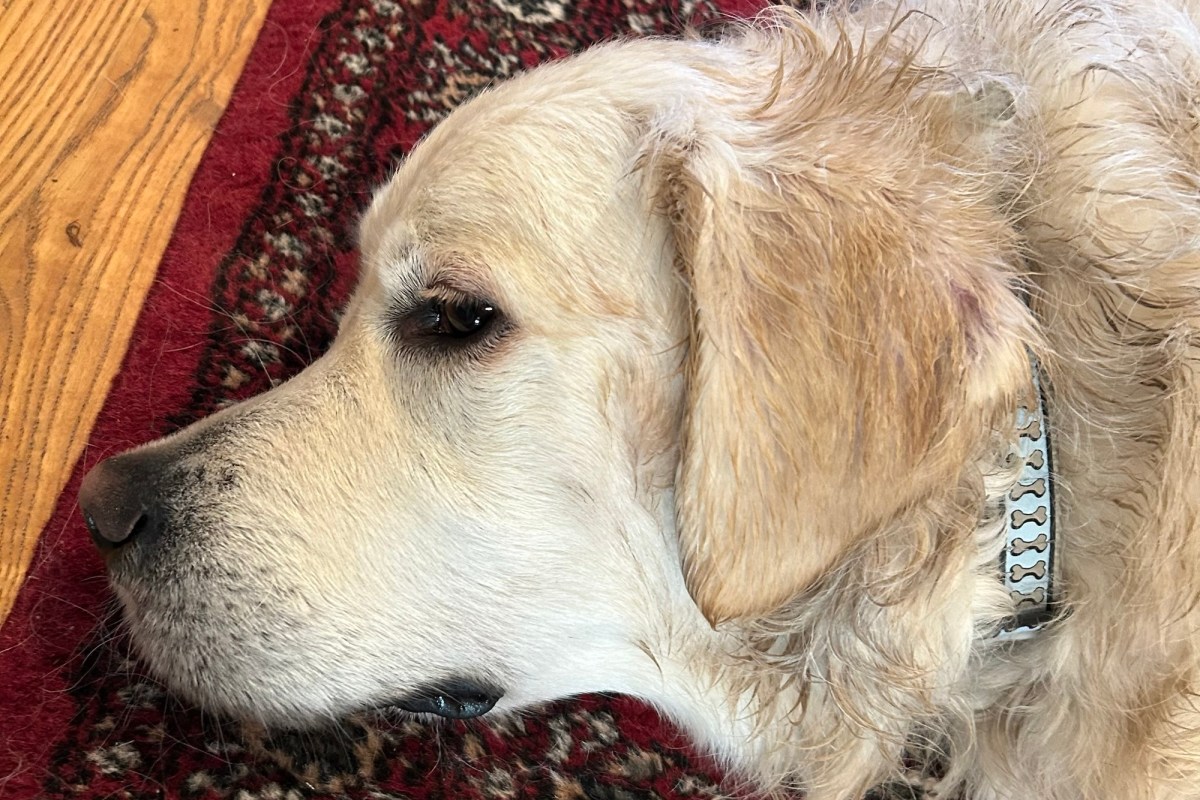
(featured photo is Cooper after the incident)

I co-host a storytelling podcast featuring authors and artists with the amazing Dr. Vicki Atkinson. To tune in, search for Sharing the Heart of the Matter on Spotify, Apple, Amazon Music or Pocketcasts (and subscribe) or click here. Or the YouTube channel features videos of our interviews. Please subscribe!

My other projects include work as a CEO (Chief Encouragement Officer), speaking about creativity and AI through the Chicago Writer’s Association, and my book about my journey to find what fueled my dad’s indelible spark and twinkle can be found on Amazon: Finding My Father’s Faith.

You can find me on Instagram and Twitter @wynneleon

Opening Questions

No act of kindness, no matter how small, is ever wasted.” – Aesop

Recently my daughter, nine-year-old Miss O, and I were at our neighborhood grocery store. When we went through the check out line, Miss O asked the clerk, “How’s your day going?”

The genuine question worked instantly. It was as if a light went on inside the young woman. She answered, “Busy, but in a good way so that the day goes fast.

Miss O responded, “I like your purple hair.

It reminded me of a wonderful podcast conversation that Vicki and I recently had with blogger, parent, and social justice advocate, Ab, about finding our people.

Ab tells us the great story of a chance encounter he had with a woman standing next to him and his family in an hour-long line. She led with a query and Ab answered with his trademark humor and openness.

Vicki and I delve into how these encounters can be very different from what we imagine when we genuinely lean into them.

Ab talks about the loneliness epidemic and how the antidote to negative feelings and isolation is connection. While finding your people isn’t always easy, it’s facilitated by having an open-heart.

We explore how sometimes we’re in the prison of our own thoughts and how human connection breaks us out of that loop and facilitates kindness.  

This is such a fascinating episode. I love the kinship we have with Ab. And he’s so good at illustrating how community is where kindness and empathy happens. It’s where we have the opportunity to support each other and create deep relationships.

I’m confident you’ll love the scenic and beautiful places we explore as we share the power of storytelling about finding our people.

We know you’ll love it!

Search (and subscribe!) for Sharing the Heart of the Matter on Apple, Amazon, Spotify or Pocket Casts OR Listen to it from your computer on Anchor: Episode 95: Finding Our People with Ab

HoTM Episode 95 transcript

AND subscribe to our YouTube channel to see a video clip of each story: @SharingtheHeartoftheMatter.

Links for this Episode:

Sharing the Heart of the Matter Episode 95 show notes

Ab’s Blog: My life with T

Ab’s post: Hiking Takakkaw Falls and Canoeing Emerald Lake at Yoho National Park

The U.S. Surgeon General’s Advisory on the Healing Effects of Social Connection and Community’s 2023 report “Our Epidemic of Loneliness and Isolation”  

The Human Library Movement

From the hosts:

Vicki’s book about resilience and love: Surviving Sue; Blog: https://victoriaponders.com/

My book about my beloved father: Finding My Father’s Faith;

(featured photo from Pexels)

Vulnerability at Any Age

I believe that you have to walk through vulnerability to get to courage.” – Brene Brown

Let me take your temperature on something. Do you think that middle-aged and older means that you don’t have to be vulnerable any longer? Emotionally vulnerable, that is.

After all, we don’t have to go door to door with our resumes looking for our first job. And many who have life partners have had them for quite some time. We know our hobbies and interests and don’t have to try a bunch of new things to see what fits. We’ve even developed our conversational patter so that anything that comes close to a sensitive spot can be deflected without much effort.

Here’s the discovery I’ve come to after many years of searching for the things that make me feel vital. Continued vulnerability is one of them.

When I believe that vulnerability is off the table, I’m unlikely to:

Move out of my established lane

Upset the status quo of “my success”

Market or promote my writing

Try to find love

Brainstorm wild ideas

Try new things

Make new friends

Learn new technologies/applications

Express my feelings in relationships that have gone on so long that it risks the status quo

State my opinion about politics or religion

Here’s what I’m afraid of. If we retire from life, we leave so much potential and wisdom gained from 50 years or more unsaid. The things we’ve learned through trial and error that we are passionate about? We fail to bring them up.

When I was in my mid forties and wanted to have children, I found it incredibly difficult to say out loud. In one respect, it makes sense because such a precious dream is fragile in its early stages. But when I managed to broach the subject with a few of my dear friends, the incredible support they offered helped to fuel the vision.

So for me, I think I want to keep pushing myself towards openness. But I’d love to know what you think about vulnerability at any age.

(featured photo from Pexels)

Do It Again: The Magic of Repetition

Next time you’re afraid to share your ideas, remember someone once said in a meeting let’s make a movie with a tornado full of sharks.” – unknown

This post was originally published on 8/9/2023. Heads up – you may have already read this.


I was recently lucky enough to be able to talk about the magic of theater in a podcast conversation with writer, playwright, and Wise & Shine colleague, Jack Canfora. As we talked about the powerful feeling of a night in the theater when it all comes together and just works, he told me a story about Laurence Olivier and young Maggie Smith.

After a night where the performance was particularly magical, Laurence Olivier angrily stormed into his dressing room. Maggie Smith inquired after him, asking him “What’s the matter, Larry? It was brilliant.” Laurence replied, “I know. And I have absolutely no idea how I did it, and it’ll be gone tomorrow.”

Wow, that story speaks to me! About how I want to capture magic, to define it, and put it into a bottle. Also about the repetitive nature of life. Preparing a meal, writing a post, or having a moment with friends – there are so many things that I do repeatedly and when it goes well, want to know why. Laurence Olivier’s reply gets to the desire to capture it in a formula so that we know exactly how to do it again.

The elusive nature of life seems to ensure that there is no perfect replica. Even for someone with the talent of a great actor cannot control all the factors that go into a delivery.  Yet we still strive for those wonderful moments when it all comes together.

If you’re anything like me, that striving actually takes away from the moment. Instead of savoring the now moment, when everything went wonderfully well, and being grateful, I start thinking of what I have to do next, or how things might go differently in the future.

Fortunately, I keep getting the chance to do it again. I’ve found that life requires us to repeat ourselves and then begs us to stay present for each show. I feel this most starkly when it comes to writing. Every time I sit down to write, it feels like breaking through my barrier of protectiveness and layers of my own BS to try to write something meaningful. Then I post something, for better or for worse, and then think, “I’ve got to do that again?”

Of course I do, because life isn’t static. I’ve found that writing rubs off that tarnish or moss that grows when I don’t do the work to show up authentically. For me, that’s where the magic happens. I can only imagine that something similar was at work for Laurence Olivier.

(featured photo from Pexels)

Observable Characters

Nothing is more painful to the human mind as a great and sudden change.” – Mary Shelley

What are you going to be when you grow up?” must be the most frequent question my young kids are asked. For adults that don’t really know them, it’s a good conversation starter. But I think it also indicates how attached our identities are to our work.

It’s what Vicki Atkinson and I talk about in this week’s episode of the Sharing the Heart of the Matter podcast. Identity at the unemployment office.

One of the fascinating positions that Vicki has held is as a career counselor at the unemployment office. She gives us a glimpse into how the jobs we do become our identity by telling us the stories of some of the people who she coached.

We talk about how being a helper or a boss manifests even when someone is no longer doing that job.

I love Vicki’s powers of observation and ability to draw thru lines – talents that show up when she writes, tells stories, and in the many professional roles she has played.

Here’s a snippet of the podcast where Vicki tells me about the people she met at the unemployment office (with captions so you don’t even have to have the sound on):

Vicki Atkinson and I are big believers in the power of story – to connect us, to create intergenerational healing, and to make meaning out of the events of our lives. Each episode of our podcast starts with someone telling a story in each episode.

Search (and subscribe!) for Sharing the Heart of the Matter on Apple, Amazon, Spotify or Pocket Casts OR Listen to it from your computer on Anchor Episode 72: Smiles from the Unemployment Office

Or subscribe to our YouTube channel to see a video clip of each story: @SharingtheHeartoftheMatter.

Links for this Episode:

Episode 72: Smiles from the Unemployment Office on Anchor

Vicki’s personal blog: Victoria Ponders

Vicki’s post: Different is Good

Vicki’s book: Surviving Sue

Wynne’s book about her beloved father: Finding My Father’s Faith

Related podcast episodes:

Episode 71:  Catching an Edge with Wynne and Vicki

Episode 70: “A” is For Ambivalence with Vicki and Wynne

Episode 69: All You Have To Do Is Ask with Wynne and Vicki