“You never fail until you stop trying.” – Albert Einstein
I suspect that my podcast guests rarely listen back to the episodes that they record with me. After all, they lived it once, why listen to it again? (Anyone that has podcasted with me or Vicki, feel free to jump in and contradict me on this!)
And, speaking for myself, there’s a smidge of fear when watching myself that I’ll discover something terribly wrong that I said or spinach in my teeth that I can’t undo.
But there’s a huge upside in listening back to what we’ve recorded in that it helps to see ourselves from another angle.
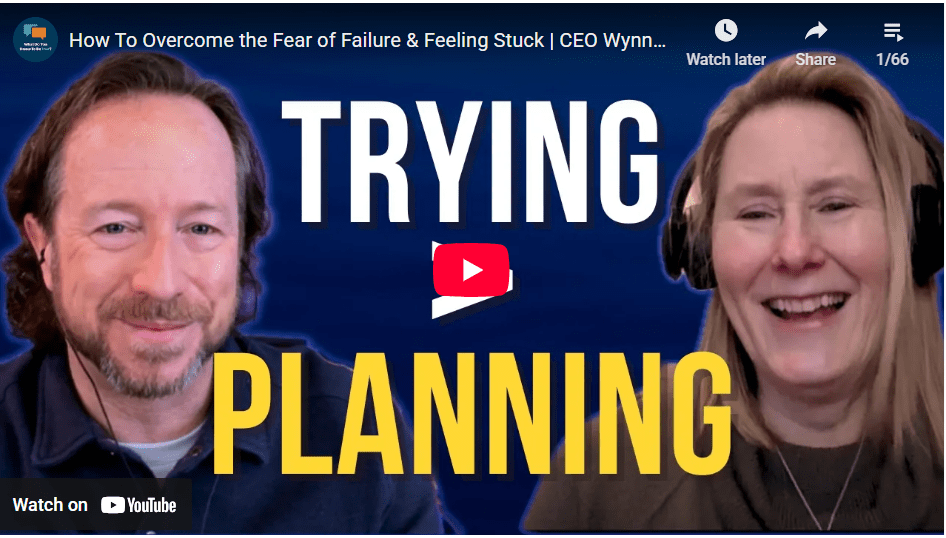
I recently was a guest on the What Do You Know To Be True? podcast with the incredible host, Roger Kastner. What Do You Know To Be True? features conversations at the intersection of leadership, neuroscience, belonging, and personal growth—inviting guests to explore the truths that shape how they lead and live.
Roger is a master at getting his guests to reveal their superpower. Watching back the episode I did with him, I was blown away by how skillful Roger is at digging into the heart of what I know to be true. [It also reminds me that I like to talk with my hands and tell a lot of climbing stories!]
In my case, my superpower is trying. In this conversation, Roger and I talk about:
How my electrical engineering background helped me develop my superpower
Why trying is different than persistence
How mountain climbing helped shape and shift my ability to try
What my system is for creating order when trying
How trying helps keep us from being stuck
How documenting what we’ve tried helps us to pass on the learning to others
Here’s the podcast episode on What Do You Know to Be True?
Other ways to watch this episode:
Apple podcasts and Spotify: How To Overcome the Fear of Failure & Feeling Stuck | Wynne Leon
YouTube: How to Overcome the Fear of Failure & Feeling Stuck | Wynne Leon on
Fair to say that Cooper the dog steals something in our house nearly every day. I think most of my photos of the week posts capture him with some contraband. It’s easy to do the math and figure out that he must be doing that a lot in order for me to have that many photographs.
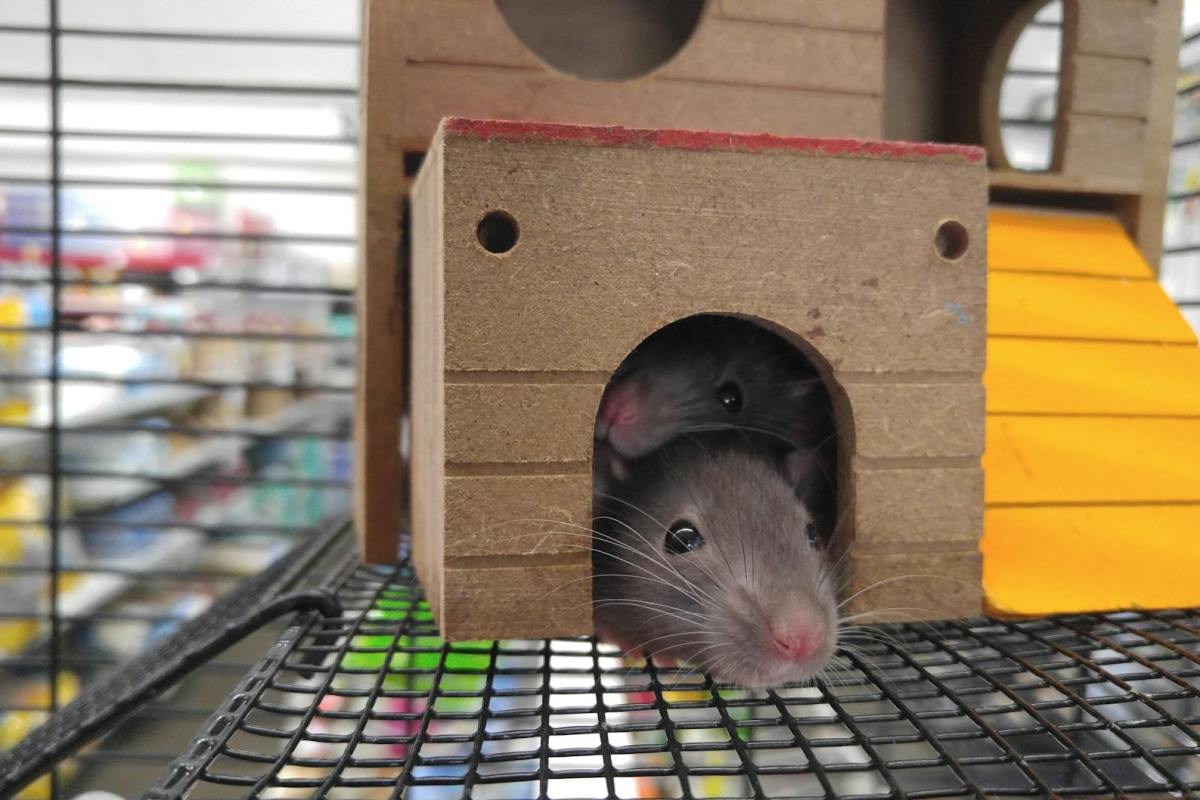
He described a research project in which rats were given a choice. The first choice was one reward system that gave them food every other time they pushed a button. The other choice was a reward system that didn’t have predictable cadence but gave them slightly more food when it did pay off (like an average of every 5th time).
The rats were choosing the second choice withe the unpredictable payoff which was surprising to the researchers. Usually they will choose what gets them the most food. The payoff of the first choice, the predictable every other time system was much higher.
The rats were living in small, plain cages. Then they changed the rats’ environment so they were living amongst plants in an environment that mimicked a natural habitat for rats. Once they changed the habitat, the rats switched to picking the every other time reward system.
The conclusion was that when we don’t have enough stimuli, we’ll make odd choices in order to spice things up. Like doomscrolling through social media, thinking we’re hungry when we aren’t, or in Cooper’s case, stealing the Christmas gnome.
And Michael Easter’s take away on that research and other studies about what one of the best ways to get more stimuli? Getting out of our climate controlled houses to spend time in nature.
It’s funny but when I took Cooper out for a hike last week, he didn’t steal anything after we got home. Not even a dirty, sweaty sock that smelled of the trail. And for that matter – neither did I.
“Our greatest glory is not in never falling, but in rising every time we fall.” – Confucius
This isn’t a story about me falling on my face (although I have plenty of those stories) but a recent incident when my 6-year-old son, Mr. D, fell on his. Although I’m sure I echo the sentiments of many parents when I say I’d happily take my kids’ falls for them if I could.
It happened when we were playing Little League summer ball. Ten-year-old Miss O was able to play on the team too and it was an informal sandlot team that would divide into two teams and scrimmage with whoever showed up.
There was one difference between summer ball and the first season of baseball that Mr. D played – they played outs. If someone got the ball and forced an out or tagged an out, the player would go back to the dugout.
But in this hodgepodge of rules, the teams still batted everyone in their lineup each turn at bat. The last person at bat was the “homerun hitter” meaning they and anyone else who was on base would run home.
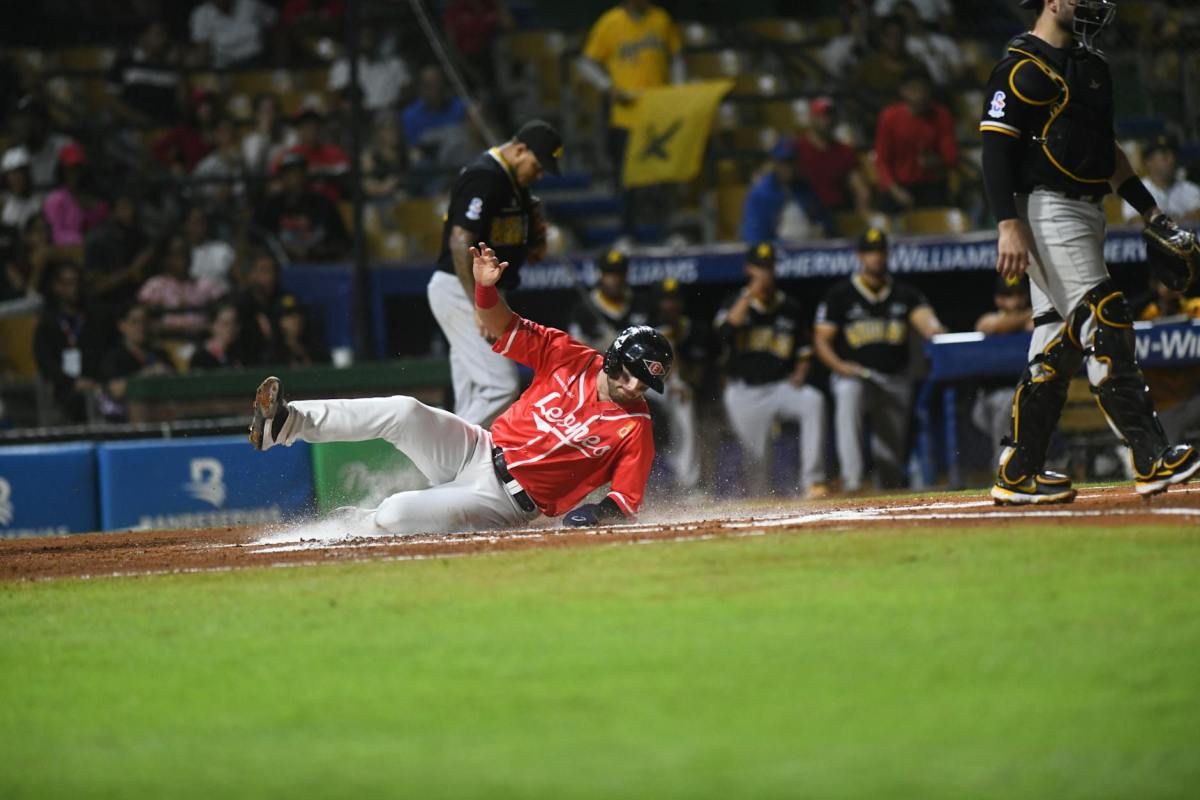
On the last inning of a scrimmage one night in July, Mr. D was the homerun hitter. He hit the ball squarely. But by the time he’d gotten to third base and was rounding to home, the other team had gotten the ball. All the players on the other team were chasing him down the third base line. It was only about five of them but it still felt like a terrifying and mad pursuit. That’s when he fell on his face.
He was furious! His sister tried to give him a hand up and he slapped it away. So she was furious because he’d refused her help. I tried to help too but he was inconsolable. Since he was the last hitter of the last inning of the game we managed to get to the car and leave but not before everyone was well aware of our upset.
On the way home, we talked about how sports makes us want to try and how it hurts when we don’t make the play. But the tradeoff is not trying at all. Actually, Miss O and I talked about that, Mr. D said very little.
At bedtime, Mr. D went to get his journal and wrote the very first thing he’s ever written in it. He asked me, “Mom, how do you spell ‘Slide like this?’”
The next morning he told me he wouldn’t be able to go to camp because he was still thinking about the baseball thing. I responded that he’d probably think about the baseball thing all day and it would be more tolerable at camp when he was busy than at home when he was not. He finally agreed to go to camp.
When we picked up the boys we were carpooling to camp with, he said to them, “I have to tell you a baseball story. It’s not good.” I was astounded. He’s not nearly as verbose as his sister.
It was only when he told the story to them that I understood that he didn’t fall on his face – he was trying to slide. But he’d never tried it before and didn’t know that you can’t slide from halfway down the base line. Or maybe you can – but it takes a lot more practice.
So, he fell on his face. He wrote about it. He told others about it. And once he did, seemed to be over it.
Here’s my takeaway. Sometimes we try new things and it doesn’t go well. It hurts like hell but you recover more quickly when you share.
“A leader is anyone who holds him or herself accountable for finding potential in people or processes.” – Brené Brown
Years ago I was talking with a man who was a member of the last church my dad led. Were we talking about my dear father and the man quipped, “You can’t say ‘no’ to Dick Leon.”
I had a good laugh about the truth of that statement. My dad asked a lot of people to do a lot of things – serve on committees, volunteer, contribute to a capital campaign. And if you said, “no,” it wasn’t that my dad would judge you, get mad, try the silent treatment, or blackball you. It was worse.
He’d get to know you.
When I talked with him about his leadership style, my dad told me:
“One of the problems that I see with a lot of young pastors is that they’ve been attracted to the ministry because they have seen someone up front doing a nice job preaching or teaching and they love the presentation side.
I keep saying to them, ministry is in the details. It’s getting systems that work in terms of management of the church, people who want to get involved, you want to make sure that they have a meaningful task and that they are rewarded, listened to, and that they feel befriended.
One of the things that I would often teach is when you have an elder that is going to give themselves to leadership for three years, the question you should ask yourself is, ‘At the end of the three years, do these people love the Lord, love the church and love their sense of ministry more than when you met them?’ It’s not ‘How do I put up with them for three years?’ but ‘How can I help them grow as people during their three years?’
It changes the whole sense from how do I get my things done to how do I serve these people? How do I befriend them? How can I help them? How do we nurture them? With a committee or an elder or a deacon or an officer of the church, you’ve got a window into their life that you’ll never have again so how do you use that? How are you doing? What is going on in your life? How can I be of help?”
Yeah…very few people said “no” to Dick Leon. But it’s a hard example to put into action, especially in different industries or scenarios. When heading a volunteer team full of big personalities or working within a competitive company where everyone is super smart, how do you bring that same attitude of empowerment and sharing?
To answer that question, I recorded a How To Share podcast conversation with my friend and climbing buddy, Doug Hauger. Doug had a very successful career as a technology executive and leads personal and professional projects with a similar style to my father’s.
In this episode, Doug and I talk about the intricacies of leadership, emphasizing the importance of sharing, vulnerability, and empowerment. We explore how confidence plays a role in leadership, the necessity of embracing uncertainty, and the dynamics of team interactions, especially when faced with challenging personalities. Doug shares insights from his extensive experience in tech leadership, highlighting the value of wisdom and the importance of creating an environment where team members feel empowered to share and learn from failures. The conversation culminates in the realization that true leadership involves being open, vulnerable, and willing to adapt, ultimately leading to a more liberated and effective leadership style.
We also tell quite a few climbing stories which are very good analogies for leadership success and direction.
Takeaways
Leadership requires confidence and the ability to embrace uncertainty.
Being open to feedback is crucial for effective leadership.
Vulnerability fosters trust and encourages team sharing.
Successful leaders create an environment of two-way communication.
Wisdom and experience are essential in guiding teams.
Empowering others leads to a more productive team dynamic.
Acknowledging failure is part of the learning process.
Humility allows leaders to learn from others.
Navigating team dynamics requires transparency and honesty.
Lack of transparency can add weight that hinders success and leadership effectiveness.
This is a great episode that delves into the heart of sharing power and the power of sharing. I know you’ll love it!
Here’s a short clip from our episode to give you a taste of the great conversation with the always amazing Doug Hauger:
Here are some ways you can listen and watch to the full episode:
What if “trying” doesn’t have to mean pushing harder?In this episode, host Wynne Leon talks with author and New York Insight Meditation Center co-founder Joseph Schmidt about The Torchbearer—a collection of short stories born from an unexpectedly effortless creative process. Together they explore the mindset shift from effort to openness:how letting go of the agenda can create space for insight, transformation, and a deeper, more alive way of meeting each moment.Try smarter, not harder: why forcing outcomes can block creativity—and what changes when you partner with the process instead.Mindset shift to “empty hands”: Joseph’s Zen chaplaincy training and the practice of entering a room (or a moment) without an agenda.Personal growth through discovery: how his characters—and we as readers—find the next move by noticing what’s already here.Feeling alive at the edge of the unknown: mindfulness as the place where consciousness meets what happens next.Belonging as a practice: building a bond of belonging by showing up with curiosity, care, and presence.If you’ve been working hard but feeling flat, this conversation is an invitation to loosen your grip, step back into the present, and discover a more natural flow—one where growth comes from attention, not strain. Listen in for a gentler (and often more powerful) way to create, connect, and keep beginning again.Perfect for you if:you’re craving a mindset reset, rebuilding your creative confidence, deepening a mindfulness practice, or simply want to feel more awake and engaged in your everyday life.The Life of Try is a personal growth and self‑help podcast about getting unstuck, navigating uncertainty, and choosing to try—even when it’s uncomfortable, inconvenient, or not your idea.Hosted by Wynne Leon, the show explores how realgrowth, reinvention, and discovery often begin not with confidence or clarity—but with a single attempt. Through thoughtful interviews, reflective conversations, and real‑world case studies, each episode examines what it lookslike to keep going when doubt shows up, plans fall apart, or life forces a change you didn’t ask for.This podcast is for anyone who:Feels stuck or uncertain about what's nextIs navigating change, burnout, or reinventionWants to live more intentionally without pretending that growth is easyBelieves (or wants to believe) progress starts by trying – again and againThe Life of Try isn’t about hustle or perfection.It’s about learning as you go, surfacing what matters, and sharing what you discover along the way.If you’re ready to surf the uncertainty, outlast the doubts, and step into your own try‑cycle, you’re in the right place.Links for this episode:Creating Without Elbow Grease transcriptThe Torchbearer: and other Stories of Borderline Redemption by Joseph Schmidt on AmazonJoseph Schmidt bio – New York Insight Meditation Center
“Jobs fill your pocket, adventures fill your soul.” – Jaime Lyn Beatty
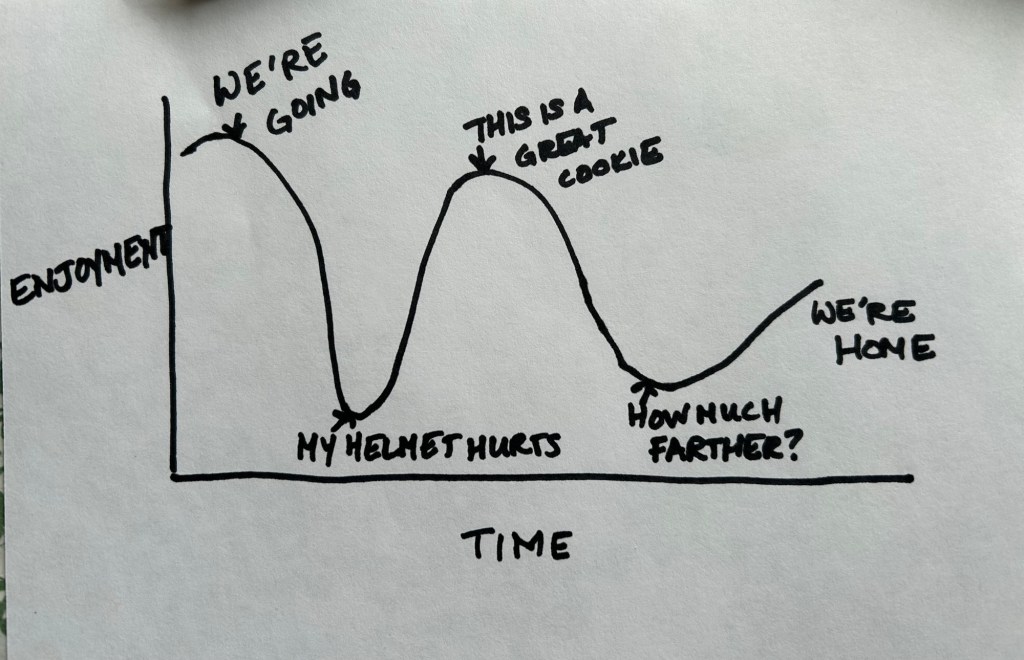
This past weekend I went on a bike ride with my kids. I think the below is a fairly accurate graph of the big emotions during the adventure. I didn’t chart the minor tremors as it’d look like we had been in an earthquake.
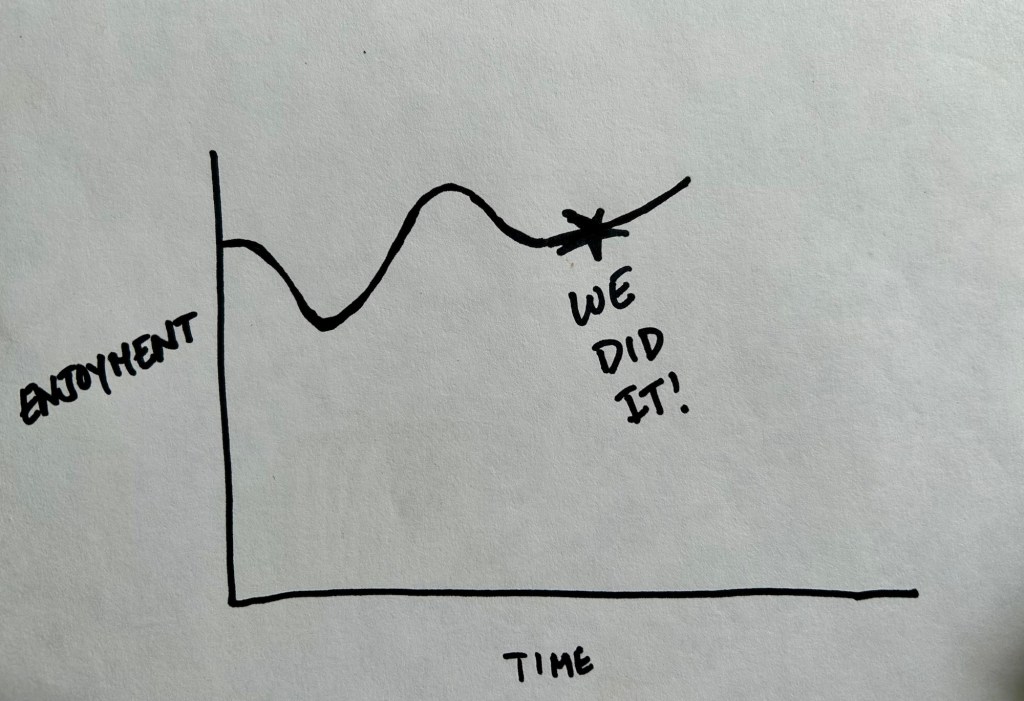
And this is how we remember it looking back four days later:
Now I’m just grateful that my kids keep my expedition muscles working. Because in the end, I think these adventures, big and small, teach us about life. We learn we can do it, survive the ups and downs, and in the process, do something worth remembering.
“We do not heal the past by dwelling there; we heal the past by living fully in the present.” – Marianne Williamson
Funny how life sometimes provides a do-over.
Last spring I was talking to a mom whose oldest child was a pandemic virtual Kindergartner with Miss O. At the time of the conversation, her second child was just finishing Kindergarten. The Mom said to me, “I had no idea how healing it would be to have a normal Kindergarten year.”
I nodded and noted it, knowing that I didn’t really get it.
But now that Mr. D has been in Kindergarten for almost two months, I’m finding she was spot on. The field trips, waffle parties, recess, and gym class. All sorts of things that Miss O’s class couldn’t do. And all the learning – the ABC chant, the letters and numbers – I get to hear about but without having to sit alongside.
I wouldn’t have said that I needed to heal. I was surprised to find this do-over feels like balm for my nervous system; an edit to a storyline I wasn’t even aware had been written.
It feels like I’ve put down the weight of having to be a teaching assistant on top of everything else. There’s delineation between weekdays and weekends. I’m watching things happen like the socialization of five-year-olds without my facilitation. I’m able to take a big step back and breathe out what I didn’t even know I was carrying.
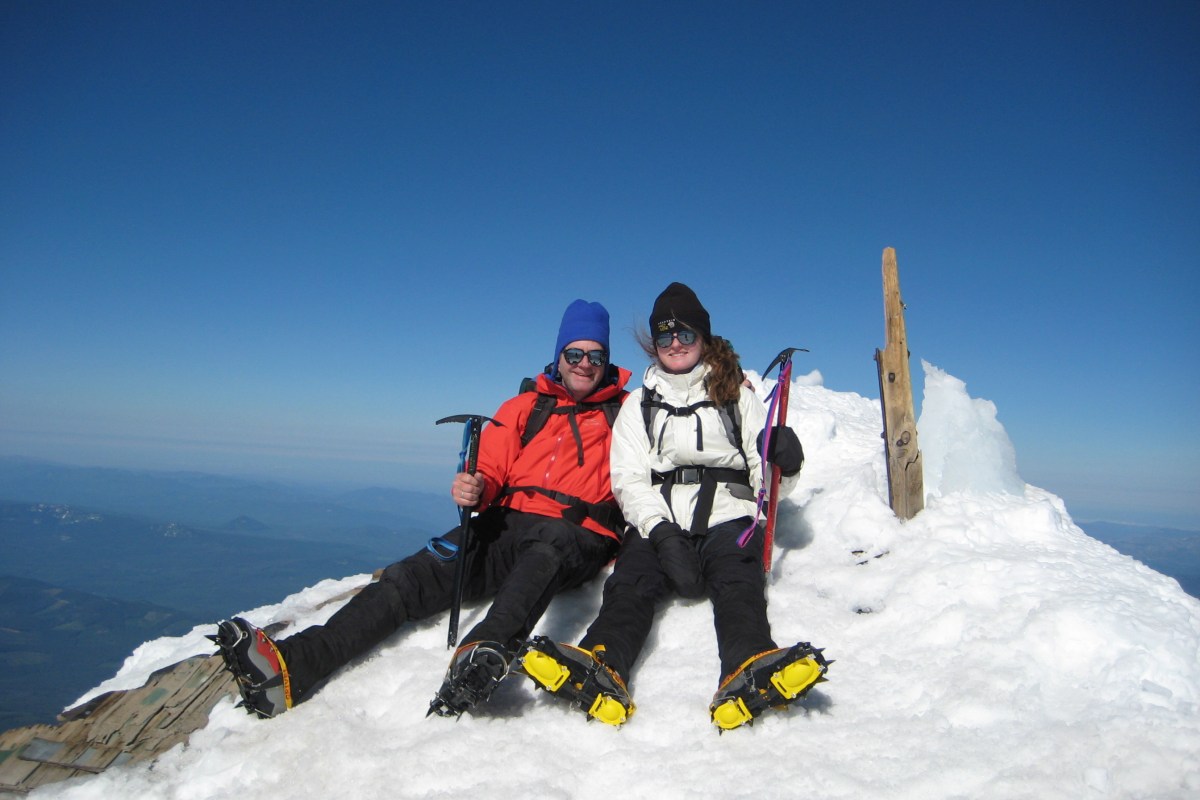
It makes me think of other do-overs that I’ve been able to do. My second attempt at climbing Mt. Rainier when I summitted after having to turn around on my first attempt. Falling in love again after a heart break. Re-doing a crochet project after unraveling a crooked line.
I also can think of do-overs that haven’t been so fun – colonoscopies come to mind. But my friend’s statement reminds me that each time, for better or for worse, is a chance to re-write the script. Seems like a good thing to remember, especially on a Monday.
“Life isn’t about getting and having, it’s about giving and being.” – Kevin Kruse
I was chatting with another parent at a party the other night. Let’s call her Casey, because, well, that’s her name. Casey was telling me about spending the night prior sleeping on the floor next to their new puppy’s crate. Since I was fresh off of sleeping on the couch for my puppy when he was getting adjusted, I was nodding along.
Then Casey said that a friend of hers told her she had made a mistake by getting a puppy. The opinion was logical: she laid out all the plans Casey had said she wanted to do like rebuilding her acupuncture practice in a new location and thought the puppy was not conducive to Casey’s goals.
Hmm, is love ever directly conducive to our goals?
Perhaps when it is the goal itself but from my experience, love is the big disruptor that often interrupts our progress on the things we can measure.
I’m thinking of this past weekend when my four-year-old son wanted to sit on my lap as I was writing a post so I switched to typing one-handed.
Or the time 20 years ago when I screwed up a work presentation because my new love wanted to spend time and so I forgot to practice.
And the swollen eyes I had for weeks after I had to say goodbye to my last dog, making it nearly impossible to concentrate or pull myself together.
And yet:
My four-year-old, Mr. D, has been bounding out of bed in the morning to say “hi” to the puppy. I find him with his arm around the dog or the cat as he tries to broker peace for his new best friend. And having a puppy has also made him more organized to keep track of his Bun Bun stuffy so that it stays out of the dog’s sharp teeth.
My eight-year-old daughter, Miss O, has a new way to make friends. We stood outside the school gate this afternoon letting kid after kid pet the puppy while she proudly showed them how she’s trained him to sit. And the puppy is also making her grow up because she’s having to find her inner discipline in order to deliver clear commands to him.
I feel the rumbling at my feet of puppy snores as I type this and feel less alone. I’m also feeling the exhaustion that comes with the extra discernment, communication, and enthusiasm I’m expending to train my kids to train the puppy.
We’re loving and learning. I’m not sure there is anything more conducive to my parenting goals than that. I’ve lost sleep for far less worthy reasons!
“Only those who attempt the absurd can achieve the impossible.” – Albert Einstein
When I trekked to Everest base camp in 2001, we flew a fixed wing aircraft from Kathmandu to a dusty hilltop in the Himalayas. Then a helicopter swooped in and flew us to Lukla at about 10,000 feet of elevation. And then we trekked about 30 miles to base camp from there.
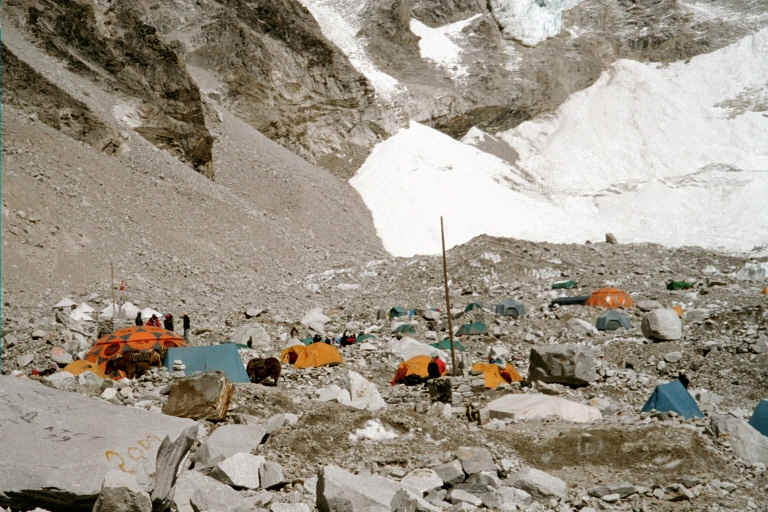
Base camp, which sits at an elevation of about 17,600 feet, was a small city with each team having a dozen or more tents around a central dining tent and communications tent.
A small section of base camp from my photos taken in 2001.
I recently watched two Everest films. The Man Who Skied Down Everest recommended by Dr. Gerald Stein. It’s a Canadian documentary filmed in 1970 and won the Academy Award for Best Documentary in 1975. Six sherpa were killed during the expedition in a collapse of the Khumbu icefall.
The second was Everest recommended by Vicki Atkinson. It was a Hollywood film production released in 2015 about the 1996 Everest blizzard that killed eight people.
In the 1975 film, it took a team of 800 people to support getting the supplies the expedition needed to the mountain. But there were very few other climbers on the mountain.
In the Everest film, they got to the mountain much like I did and there were so many more climbers. Teams tried to organize the summit attempts so that climbers weren’t slowed down and freezing while waiting for their turn at choke points like the Hillary Step. In that film, they attributed the change in the number of climbers to Rob Hall, the incredibly infusive and strong guide from New Zealand who died in the storm, being willing to guide amateur climbers up Everest.
In a lot of climbing circles, it’s believed the trend actually started when Dick Bass (who owned Alta ski resort in Utah) and Frank Wells (who was President of Disney) dreamed up the project to climb the tallest peak on each continent, The Seven Summits. Dick and Frank then they hired people like my friend, Phil, to guide them up the mountains.
Regardless, there is no doubt there are challenges climbing Everest today that come from overcrowding and general human behavior like selfishness, ego, and disregard for nature. It’s not hard to imagine the Everest challenges as a fitting allegory about our world overall.
Thankfully, there are also heroes in the story.
When Beck Weathers needed to be helped down the mountain, filmmaker David Breashears and climber Ed Viesturs tied him in between them and basically walked him down as far as they could. David and Ed were up there along filming an IMAX film with Jamling Norgay, the son of the Tenzing Norgay. Tenzing was the Sherpa that successfully achieved the first ascent of Everest with Edmund Hillary.
I am in awe of the filmmakers who capture this incredible climbing footage. In an interview, I heard David Breashears describe how he practiced loading the IMAX film in a special cold room. He had to do it without gloves on because a speck on that film would look enormous on an IMAX screen. Each roll of film only captured 90 seconds of footage.
Filmmakers like David Breashears and Jimmy Chin (Free Solo and Meru), do all the work to film it, manage the extra weight, and execute their creative artistry while they are also doing the hard work of climbing. When they do it well, they make it easy to forget that they are climbing too.
In 1996, when the blizzard hit, the IMAX team was at base camp. They’d seen the crowds and had decided to delay their summit bid. When they heard that people were in trouble and dying, David Breashears told rescuers they could take any of the IMAX team supplies like oxygen tanks, batteries, and food stashed on the upper mountain they needed.
After David and his team offered their supplies and helped evacuate injured climbers, they still managed to summit Everest a couple weeks later and complete their project, albeit with very heavy hearts. The resulting movie Everest (same title as the film above but released in 1998) is the highest-grossing IMAX film.
I was writing this post about the differences on Everest from these two movies when I learned that mountain-climber Lou Whittaker died at age 95. So I switched to writing the post, The Lingering Effects of One Good Person. In the process, I learned that David Breashears also died in March of natural causes. He was 68-years-old. In recent years, David Breashears started Glacier Works, a non-profit highlighting changes to Himalayan glaciers.
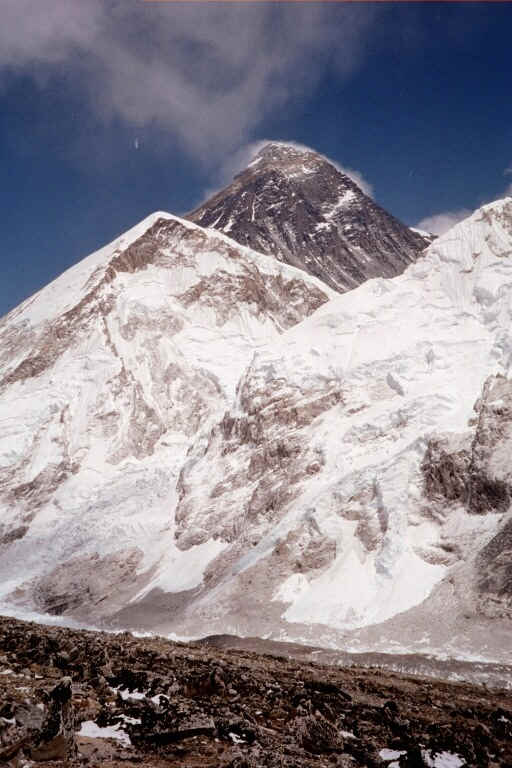
(featured photo is mine of Everest, the dark peak in the back)
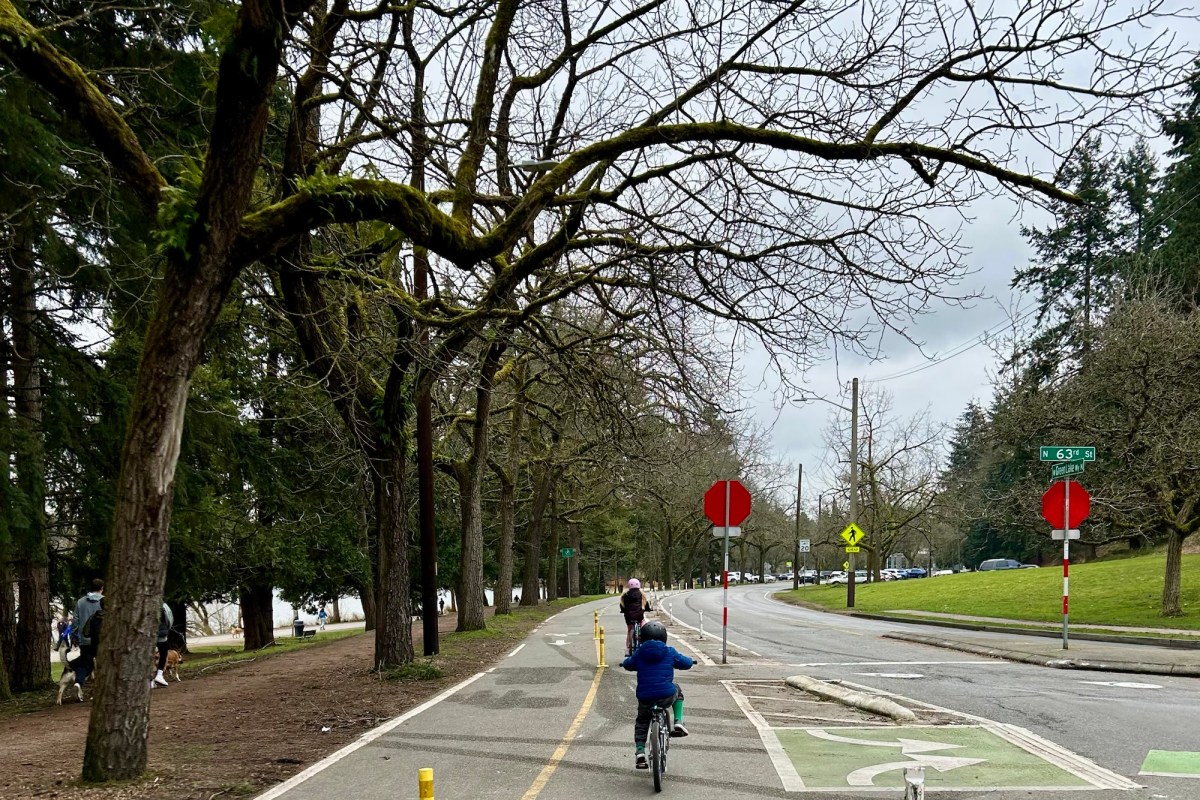
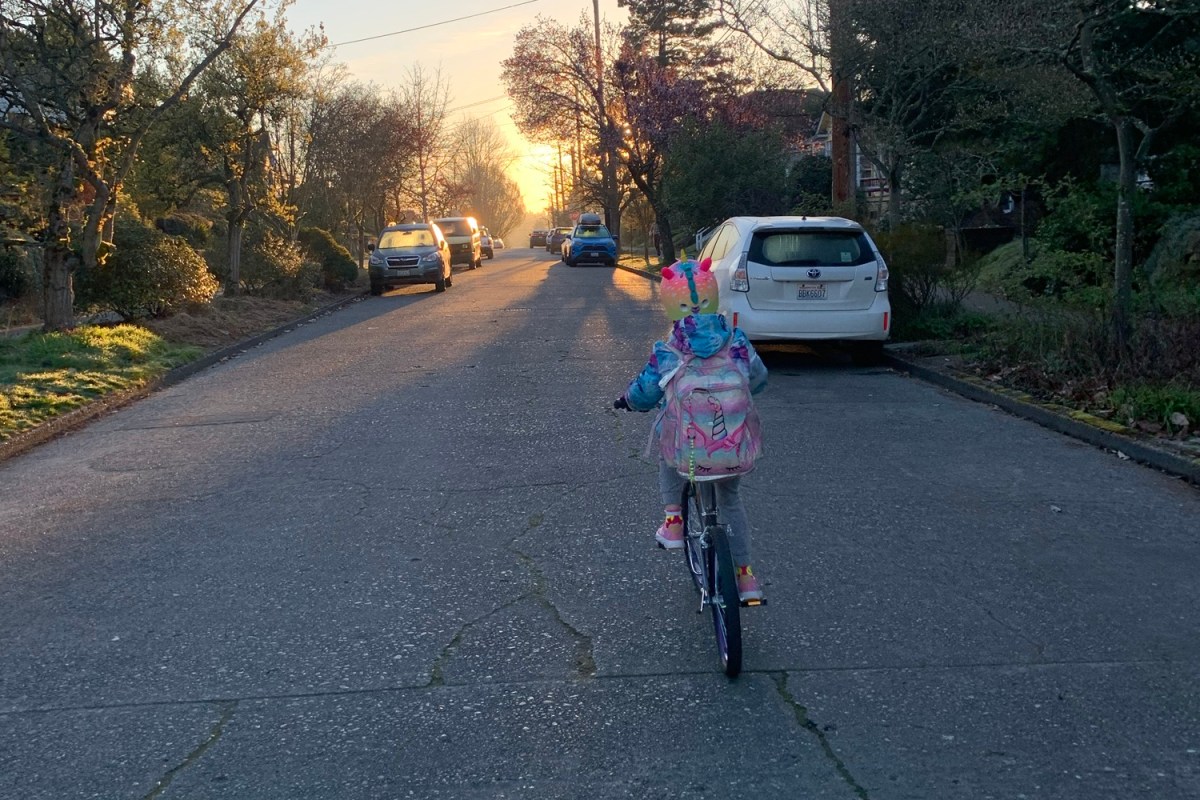
We’ve been riding bikes to school this week. Primarily because it makes four-year-old Mr. D happier to do drop off at his school. Why that is, I’m not sure. Because we get the endorphins flowing? Because it makes him feel strong and successful? Perhaps. It seems that right now he’s realized the world is big and he is small. His inclination is to want to stay home in his safe space. But when we ride bikes to school, the threshold into his classroom doesn’t seem like that big of a deal and he has a great day.
Anyway, the hero of this story is eight-year-old Miss O. She’s been totally game to ride bikes if it helps her brother.
After the first day we did it, I told her it worked to help Mr. D have a great day. She said, “That’s great. But we have to find a different way.” But then she got up ready to ride again the next day.
Sometimes I don’t realize what things are big efforts for my little people, Miss O in particular. In this case, we drop her off first before Mr. D and I continue on to his school. But she rides her own bike while Mr. D rides attached to mine on a third wheel.
We have to get up earlier, it’s uphill for the first six blocks, and she wants to lead, so she’s taking on that responsibility too. It behooves me to remember the things that help me to do hard things: just start, remember to feed and water the body, and to take things one step at a time.
I tend to forget all that if we are running late.
On Wednesday morning we headed off later than usual and Miss O’s bike was rattling. I thought it was just the chain guard pressed against the chain and told her to keep riding. We got around the first corner and she said, “this is really freaking me out.”
I did not want to stop. We were late! But I had her get off her bike and found a section of the chain guard that had bent and was clipping the chain at every turn.
We got back on the bikes. About six blocks later when we’d finished the uphill, Miss O said, “I need a break.”
Oh holy cow, my inner voice demanded. You’ve got to be kidding me. But I remembered the things that help to do hard things and edited that voice before it came out. “Okay, Sweetie. How about a swig of water?”
The number one thing I need to do in order to help myself and my kids try hard things is to try not to hurry. If I don’t add time pressure to whatever else it is we’re trying to do, including the things I do solo in the day, it always goes better. I am more patient with others, I have less tendency to want to jump in and do it myself, and specific to my kids, we can enjoy more of their lantern brain where they see and observe everything around them. Like on this ride when Miss O heard a woodpecker in a tree somewhere around block four. Such a distinctive and interesting sound.
The number one thing I regularly screw up is not leaving early. Then I have to swallow my own anxiety about being late in order to help them have a positive experience with trying. Fortunately, I managed to do tamp down the time pressure on this ride and we got Miss O to school on time-ish.
Note to self: Hurrying makes life less enjoyable. Keep trying to leave earlier.
“A child can teach an adult three things: To be happy for no reason, To always be busy with something, and To know how to demand with all his might that which he desires.” – Paulo Coehlo
This weekend I found myself in the questionable position of rooting against my four-year-old son, Mr. D.
Mr. D is very good at demanding with all his might that which he desires. When I put it that way, in the words of the quote for this post from Paulo Coehlo, it sounds a lot more romantic than some of the silly situations that we find ourselves in. Like yesterday when Mr. D insisted that we take pickleball racquets to church.
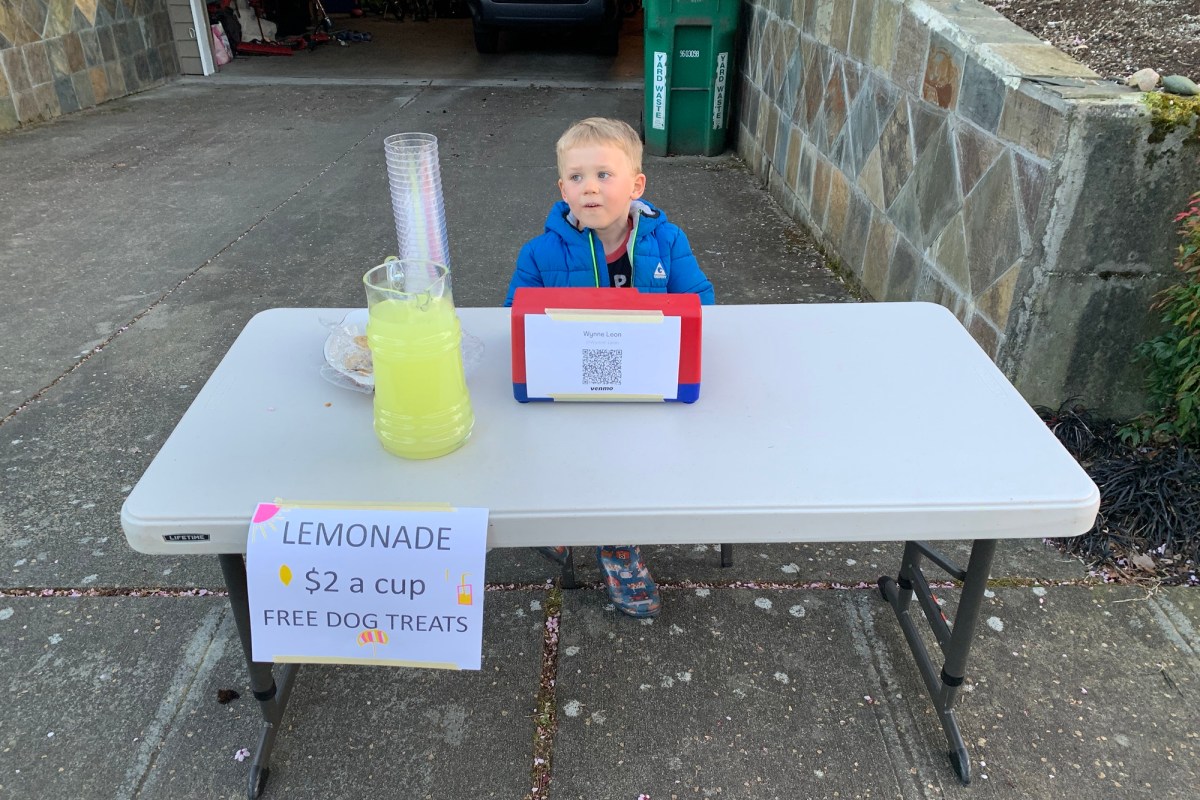
But on Friday night when he stubbornly insisted on having a lemonade stand, it wasn’t entirely out of the blue. He’d asked me earlier in the day and I said he could do it when eight-year-old Miss O came home from school.
When he asked Miss O, she said she’d do it after she had a little iPad time. So by the time everyone was ready to do it, it was 6pm and the March chill had settled in.
Miss O and I tried to convince Mr. D that Saturday, when it was forecasted to be 70 degrees was a better time to do it. He dug in and insisted we do it right then.
Miss O was mad, and I was irritated. But we hauled the table out to the sidewalk, balanced glasses and the toy cash register, and set it all up. Mr. D got into position behind the table and started calling, “Lemonade, get your lemonade” to no one in particular because there wasn’t traffic of any kind.
As I stood off to the side, I realized I was hoping no one would show. And that realization kicked me upside the head. Isn’t one of the big challenges of life and love to support and encourage others even when (or especially if) they choose to do things differently than we would? Maybe this was my opportunity to practice supporting my kids in their age-appropriate decisions, starting with a lemonade stand.
But it’s hard when I’m pretty certain I’m right. After about 20 minutes of no one coming by, I nodded to Mr. D and asked if he wanted to go watch shows. I didn’t start in with a lecture but just held his hand as we walked upstairs together. After all, entrepreneurial failure is disappointing all on its own without your family piling on.
And then Mr. D and Miss O did another lemonade stand on Saturday when it was warmer. If nothing else, I can support a willingness to keep trying. I didn’t agree with Mr. D’s decision to buy paint brushes with his half of the $13 of earnings. But I guess that was my continued opportunity to practice offering my opinion and then keep quiet. The hard work of love…
 Surprised By Joy