Backing Up My Assumptions

You can search throughout the entire universe for someone who is more deserving of your love and affection than you are yourself, and that person is not to be found anywhere. You yourself, as much as anybody in the entire universe, deserve your love and affection.” – Buddha

Last week I experienced the digital version of having to evacuate the house. My beloved laptop stopped being able to connect to AC power. It’s been touchy for a couple of years so I’d been putting the plug in a certain way and then jiggling it until the red light came on. And then it stopped being able to charge at all.

So I had to grab everything I needed in the span of the power remaining on the battery.

In theory, this should be no problem. I back everything up to the Cloud. In practice, I like to put things in places that aren’t backed up and think I’ll organize them later.

I closed my laptop (to save battery, of course) and thought about it. The first list of things I came up with were the things I needed in the short term. It felt like this was the equivalent of getting my family out of the house in the case of an emergency. Pretty obvious what to grab and the high-level “go bag” I’d prepared helped make me efficient.

But then the next list of things were the precious things in case I couldn’t get my laptop back. These were the digital version of grabbing the baby books and my dad’s lucky baseball mitt before running out the front door.

At this point I was pretty sure I could live with what I had and just needed to spend the time to rebuild my old laptop for what I needed to get done. This is the step where I learned the most because I started making mistakes. I flubbed a post, called someone by the wrong name, and didn’t have time to double-check details.

I ran smack-dab into my assumption that even in the case of disruption, I should be able to get operate like it’s business as usual. Sure, I can rebuild a laptop, stop by the repair shop and still get Miss O to the orthodontist, make all our classes and activities, and just do meetings in the car. <eye roll> Dang, my face still hurts from hitting that metaphorical wall.

The good news is that I got the laptop to the shop with enough battery power remaining that they could get the encryption key they needed in order to fix it. I’ll be back to full power in a couple of weeks. But more lastingly, I learned that in order to give other people grace, I need to learn to give myself some too.

(featured photo from Pexels)

You can find me on LinkedIn: https://www.linkedin.com/in/wynneleon/ and Instagram @wynneleon

I host the How to Share podcast, a podcast celebrates the art of teaching, learning, giving, and growing.

I also co-host the Sharing the Heart of the Matter podcast, an author, creator and storytelling podcast with the amazing Vicki Atkinson.
Standing Up for Democracy: Lessons from Kids

To understand where you stand in own your life, you cannot remain seated.” – Christine E. Szymanski

I can rely on my kids to have a nose for what’s authentic. At 6 and 10 years old, they might not be able to tell me exactly why, but they can tell the difference between people who are phoning it in and others who are genuinely present.

At the end of the day this past Saturday, I asked them what they liked most about the day and what they could have done better. It’s part of our nighttime routine. Unless we are so tired that we’ve flipped our lids. That happens sometimes too.

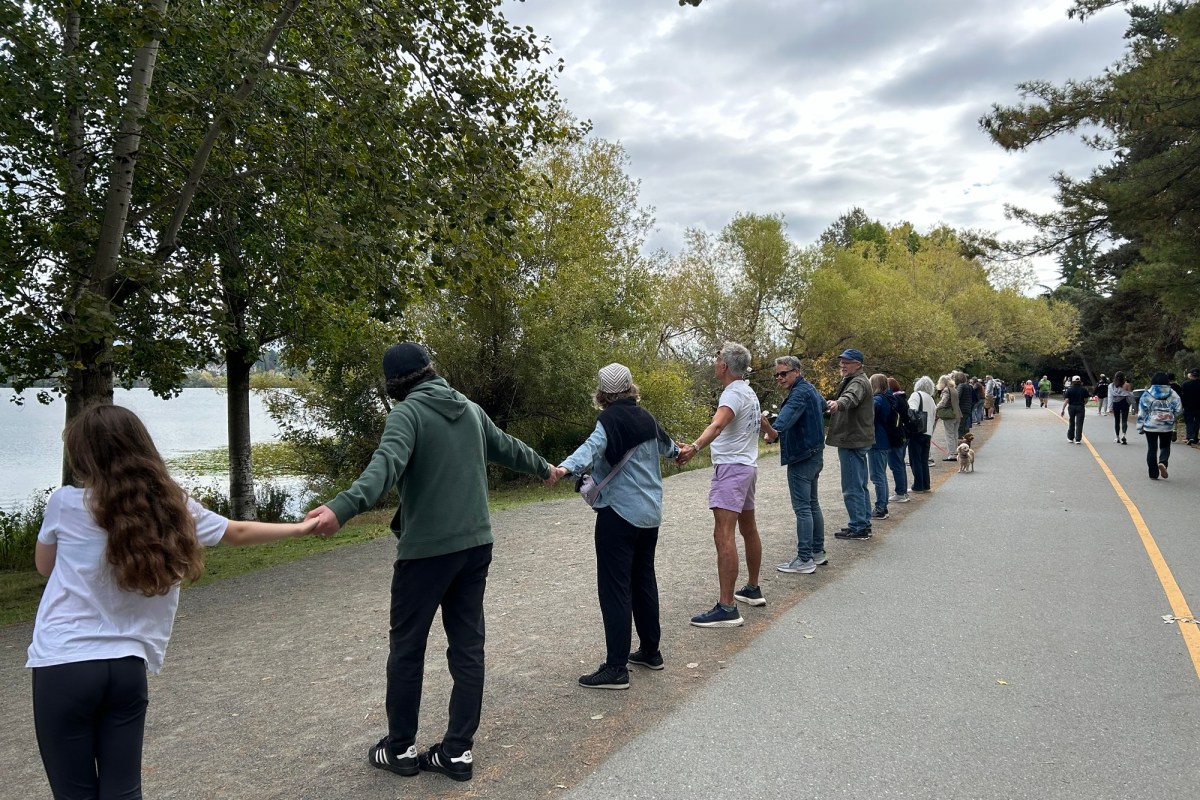
They both answered that their favorite part when we went down to the little lake that is a five minute walk from our house and participated in a Stand Up For Democracy event. The organizers were trying to gather enough people to create a continuous loop of people to encircle the lake which is three miles in circumference.

What surprised me about the answer was they liked that even more than watching the Mariners down at the pub with our friend, Eric. Or playing with their friends, skateboarding, or building imaginary spaceships.

My kids can’t yet spell out the details of what makes a democracy, monarchy, or autocracy. But they can tell the good feeling of standing up for what matters and the sense of community that comes from people trying to quietly show their commitment. It’s authentic, it’s strong, and it feels better than worry.

I think they’ve got that right.

(featured photo is mine)

You can find me on LinkedIn: https://www.linkedin.com/in/wynneleon/ and Instagram @wynneleon

I host the How to Share podcast, a podcast about collaboration – sharing leads to success.

I also co-host the Sharing the Heart of the Matter podcast, an author, creator and storytelling podcast with the amazing Vicki Atkinson.
The Mysterious Case of the Barking Dog

In school we learn that mistakes are bad, and we are punished for making them. Yet, if you look at the way humans are designed to learn, we learn by making mistakes. We learn to walk by falling down. If we never fell down, we would never walk.” – Robert Kiyosaki

On a recent afternoon I was going through the mail in the mailbox and found an unsigned, handwritten note on a plain piece of paper that read (including word error),
“Please do not leave you dog out barking. It is unpleasant for neighbors.”

My ten-year-old daughter, Miss O, saw the look on my face as I tried to discern the message. She came to read over my elbow. Sensing a family meeting, six-year-old Mr. D wandered over and asked what we were doing. We read the note through one more time.

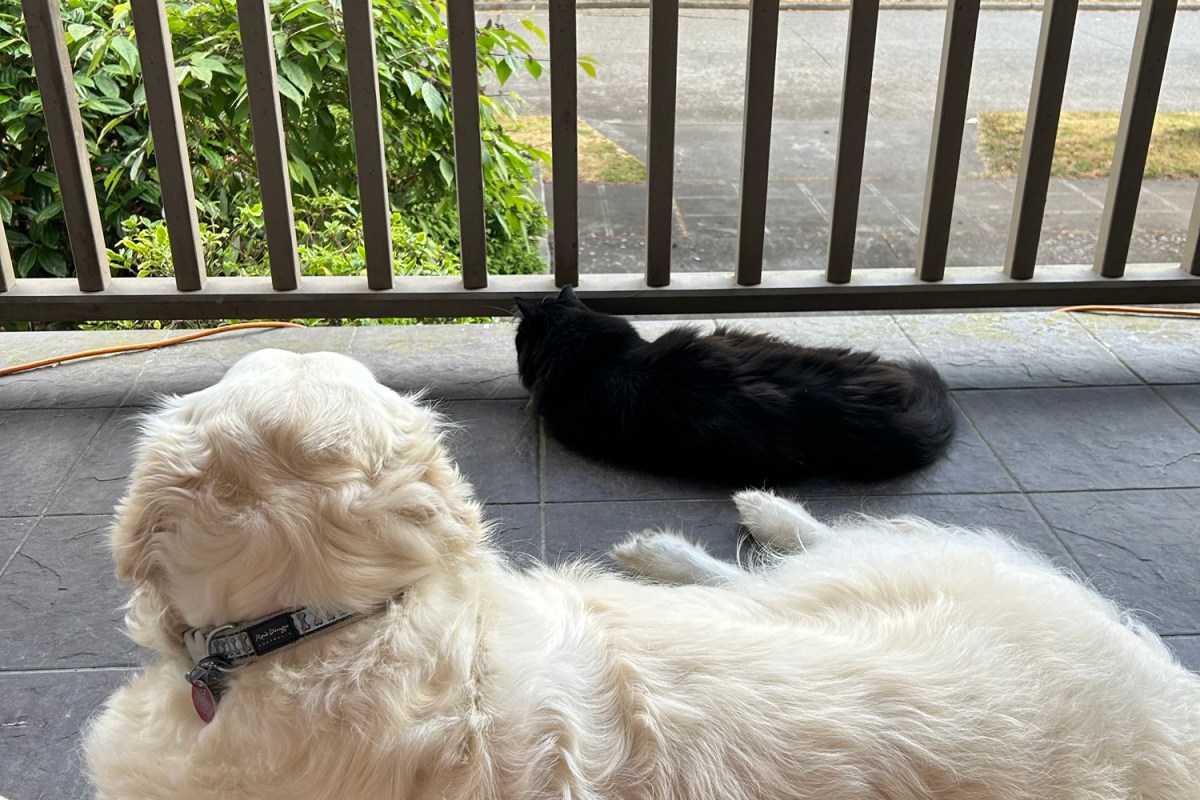
But Cooper doesn’t bark,” Mr. D said. And he’s right, Cooper isn’t a barker. He’ll steal your socks and your steak but he’s quiet about it.

And we don’t leave him outside,” Miss O added. Also true. Cooper is in the habit of lying on the front porch to watch the neighborhood but that’s when we’re home and the door is open.

Maybe they have us confused with someone else,” I mused.

We couldn’t figure out the note but we were united in our righteous indignation in defense of Cooper’s honor. Mr. D suggested he rip up the note and throw it as far as he could.

It wasn’t until the next morning in the shower that I connected the dots. One day the week before we were getting ready to leave the house so that I could drive the kids to camp. Cooper was out on the front porch. I called him in and locked the door.

But when I came home about 90 minutes later after dropping the kids and picking up supplies, Cooper was on the front porch and the door was unlocked. One of the kids must have opened the door to check the weather and Cooper snuck out. He wasn’t barking when I came home so I didn’t realize it right away. He must have barked when he realized he was trapped out there.

The funny thing was that I almost didn’t tell the kids once I figured it out. Our righteous indignation felt so comfortable that I kinda wanted to keep wearing it.

But I also know that it builds up over time. The vulnerability of confession doesn’t come naturally to me, but I’ve found owning my errors and frailty keeps my pipes clean. Everything flows better when I don’t let the grime build up. More than that, I feel everything more fully when I shake off the protective coat of righteous indignation or defensiveness.

And it creates space for learning. When I told the kids my solution to the mysterious case of the barking dog, they both nodded and went, “Ooohhh, right!” I bet we’ll remember that lesson.

(featured photo is mine)

You can find me on LinkedIn: https://www.linkedin.com/in/wynneleon/ and Instagram @wynneleon

I host the How to Share podcast, a podcast about collaboration – sharing leads to success.

I also co-host the Sharing the Heart of the Matter podcast, an author, creator and storytelling podcast with the amazing Vicki Atkinson.

How to Share Risks

Remember: Not all positive change feels positive in the beginning.” – S.C. Lourie

This is a friendly warning: It’s risky to comment on this blog. I’m joking, of course, but have a great example of no good comment goes unpunished. 🙂

A couple of weeks ago Brian Hannon commented that he approached finding positivity from another perspective on the How to Share Optimism podcast I did with Mark Petruska. To hear Brian describe it, it’s like peeling back an onion. The outer layers are the risks of a thing, whether it be an idea, invitation, initiative, or something else. Those layers need to be dealt with before reaching the savory goodness on the inside.

At which point, I invited Brian on the podcast to talk about his approach of sharing risks.

As a corporate communications professional, Brian Hannon has incredible wisdom about identifying risks and communicating effectively. In this episode of the How to Share podcast, Brian shares his unique perspective on optimism, emphasizing the importance of acknowledging risks and challenges before moving towards a positive outlook.

Brian discusses the role of authenticity in communication, the balance between optimism and realism, and how humor can help navigate difficult conversations. Our conversation also touches on parenting and the lessons learned from life’s challenges, ultimately highlighting the value of embracing discomfort for personal growth.

Takeaways

  • Brian sees risks and challenges first before finding positives.
  • Acknowledging failure is crucial for a realistic perspective.
  • Authenticity is essential in communication and leadership.
  • Humor helps in delivering downsides without negativity.
  • Writing helps clarify thoughts and learn from experiences.
  • Embracing discomfort can lead to long-term growth.
  • Balancing perspectives can enhance collaboration and understanding.
  • Life’s challenges often provide valuable lessons.
  • Parenting influences how we perceive risks and challenges.
  • Finding a middle ground between optimism and realism is key.

Here’s a preview of Brian’s grounded and resilient approach:

Here are some ways you can listen and watch this incredible episode:

Please listen, watch, provide feedback and subscribe.

How to Share Our Luck with Gil Gillenwater How To Share

In this enlightening conversation, Gil Gillenwater is with host Wynne Leon and shares his experiences and insights from over 35 years of philanthropic work along the US-Mexico border. He discusses his book, 'Hope on the Border,' which highlights the transformative power of education and community service. Gil emphasizes the importance of enlightened self-interest over traditional charity, advocating for a model that empowers individuals and fosters dignity. He explores the duality of poverty, the need for sustainable opportunities, and the joy found in serving others, ultimately presenting a vision for a more connected and compassionate world.TakeawaysEducation is the key to breaking the cycle of poverty.Enlightened self-interest can lead to personal and communal growth.Charity should not be viewed as a sacrifice but as a mutual benefit.Volunteering provides a sense of purpose and fulfillment.Welfare can disempower individuals and communities.Community service fosters connections and shared humanity.The disparity in wealth is a significant issue that needs addressing.Experiencing poverty firsthand can change perspectives.Creating opportunities in one's home country can reduce migration.The joy of service is a pathway to personal happiness.Links for this episode:How to Share homeHope on the Border at AmazonGil's organization: Rancho FelizGil Gillenwater on FacebookWynne’s book about her beloved father: Finding My Father’s Faith; Blog: https://wynneleon.com/; Substack: https://wynneleon930758.substack.com/
  1. How to Share Our Luck with Gil Gillenwater
  2. How to Share 1970's Chicago with Doug. E. Jones
  3. How to Share Feedback with Dr. Vicki Atkinson
  4. How to Share the Next Generation with Mari Sarkisian Wyatt
  5. How to Share Impactfully with Social Media Friends with Amy Weinland Daughters

Links for this episode:

⁠Brian’s blog: Writing from the Heart with Brian⁠

⁠Brian Hannon⁠ on LinkedIn

(featured photo from Pexels)

Source Code

Writing also makes you process memories in a different way. You have one idea and then remember another. It’s like each one is a cow in a field, and you have to round them all up.” – Michael J. Fox

The other day I mentioned to a friend that I was reading Bill Gates’ latest book Source Code. He responded with something along the lines of, “Oh, right, that book. He’s trying to reform his image.

Living in Seattle, it’s hard not to have an opinion about Bill Gates. So many of my close friends work for or have worked for Microsoft or the Gates Foundation. I spent many years working at Microsoft as a consultant. We feel like we know him because we’ve crossed paths with him in so many ways. We’ve lived in the same neighborhoods Bill grew up in, hiked the same trails, and/or went to the same schools.

From my perspective, Bill changed how engineers like me were compensated. He’s 14 years older than me. By the time I graduated from the University of Washington with my electrical engineering degree, I benefitted from the ripple effect of the Microsoft practice of giving stock options to everyone in the company. No longer were just senior management and sales people compensated for growth, but the technical people were as well. It raised the bar for paying everyone in the region.

He also led a company whose culture allowed for, and possibly grew, egotistical bullies as long as they were smart. Other business ventures he’s been involved with have pushed their weight around in less flattering ways too.  

So the ripple effects from Bill Gates are felt strongly here. Some positive and others less so.

Source Code only covers his first 20 years. Is he trying to polish up his image? Possibly. My writer and reader heart likes his book for the digging deep to understand where his story started. It seems like an honest effort.

(featured photo from Pexels)

You can find me on LinkedIn: https://www.linkedin.com/in/wynneleon/ and Instagram @wynneleon

I host the How to Share podcast, a podcast about how to share anything – to the appropriate audience, with the right permissions, at the most opportune time.

I also co-host the Sharing the Heart of the Matter podcast, an author, creator and storytelling podcast with the amazing Vicki Atkinson.

How to Share Professional Communications with Brian Hannon

Good communication is just as stimulating as black coffee, and just as hard to sleep after.” – Anne Morrow Lindbergh

Twenty-five years ago, long before there was MailChimp, one of my projects for Microsoft was to email out their program offers to their 60,000 partners on a quarterly basis. I remember it as one of the most nerve-racking tasks of my job at the time. Not because of the technology, which was no problem, but because if something was wrong with the message we sent out, it had such visibility.

It really is amazing to think about the potential impact that technology has given us. But it also puts a lot of stress on how we share to a wider audience. Whether it’s work-related, part of volunteering on a committee, or a personal appeal to friends to join a cause, we have the ability to reach a broad group. Like my email project, that puts a lot of pressure on how we do it.

That’s why I love this latest episode of the How To Share podcast with corporate communications professional, Brian Hannon.

Brian and I talk about the nuances of professional communication. We explore the importance of understanding the audience, the timing of messages, and the need for authenticity in sharing information. Brian shares insights from his 30 years in corporate communications and journalism, emphasizing the significance of clarity, repetition, and empathy in effective messaging. The conversation highlights the evolution of communication formats and the challenges of simplifying messages for better understanding.

Here are some key takeaways:

  • Understanding your audience is crucial for effective communication.
  • Timing can significantly impact how messages are received.
  • Repetition helps ensure that important messages are not lost.
  • Segmenting your audience allows for more targeted communication.
  • Authenticity builds trust in corporate messaging.
  • Clear and concise messaging is essential in today’s fast-paced environment.
  • Empathy plays a key role in understanding how messages are perceived.
  • Feedback loops enhance the effectiveness of communication.
  • The evolution of communication formats requires adaptation in messaging strategies.
  • Effective communication is about sharing ideas, not just delivering information.

And a short clip from the episode to whet your appetite:

I’d be honored if you’d listen, watch, provide feedback and subscribe. Here are some ways you can listen and watch to the full episode:

How to Share Our Luck with Gil Gillenwater How To Share

In this enlightening conversation, Gil Gillenwater is with host Wynne Leon and shares his experiences and insights from over 35 years of philanthropic work along the US-Mexico border. He discusses his book, 'Hope on the Border,' which highlights the transformative power of education and community service. Gil emphasizes the importance of enlightened self-interest over traditional charity, advocating for a model that empowers individuals and fosters dignity. He explores the duality of poverty, the need for sustainable opportunities, and the joy found in serving others, ultimately presenting a vision for a more connected and compassionate world.TakeawaysEducation is the key to breaking the cycle of poverty.Enlightened self-interest can lead to personal and communal growth.Charity should not be viewed as a sacrifice but as a mutual benefit.Volunteering provides a sense of purpose and fulfillment.Welfare can disempower individuals and communities.Community service fosters connections and shared humanity.The disparity in wealth is a significant issue that needs addressing.Experiencing poverty firsthand can change perspectives.Creating opportunities in one's home country can reduce migration.The joy of service is a pathway to personal happiness.Links for this episode:How to Share homeHope on the Border at AmazonGil's organization: Rancho FelizGil Gillenwater on FacebookWynne’s book about her beloved father: Finding My Father’s Faith; Blog: https://wynneleon.com/; Substack: https://wynneleon930758.substack.com/
  1. How to Share Our Luck with Gil Gillenwater
  2. How to Share 1970's Chicago with Doug. E. Jones
  3. How to Share Feedback with Dr. Vicki Atkinson
  4. How to Share the Next Generation with Mari Sarkisian Wyatt
  5. How to Share Impactfully with Social Media Friends with Amy Weinland Daughters

Links for this episode:

Brian’s blog: Writing from the heart with Brian

Brian Hannon on LinkedIn

Next up!

Stay tuned for next week’s episode when we get great guidance from Dr. Vicki Atkinson on how to receive when others share. A fantastic episode that comes with many great tips about how to deepen our ability to listen.

A Mini Blog Tour

Authenticity is a collection of choices that we have to make every day. It’s about the choice to show up and be real…to be honest…to let our true selves be seen.” – Brene Brown

A few years back I proposed/threatened/promised that I wanted to one day pack my kids and dog into an RV and go on a tour to meet blog buddies. The WordPress community really is so amazing for incredible stories, big hearts and willingness to interact.

While that tour is mostly a fantasy, I’ve been lucky enough to meet so many bloggers through Zoom when we’ve done podcasts. I’ve enjoyed these conversations with people that feel like they are already friends immensely.

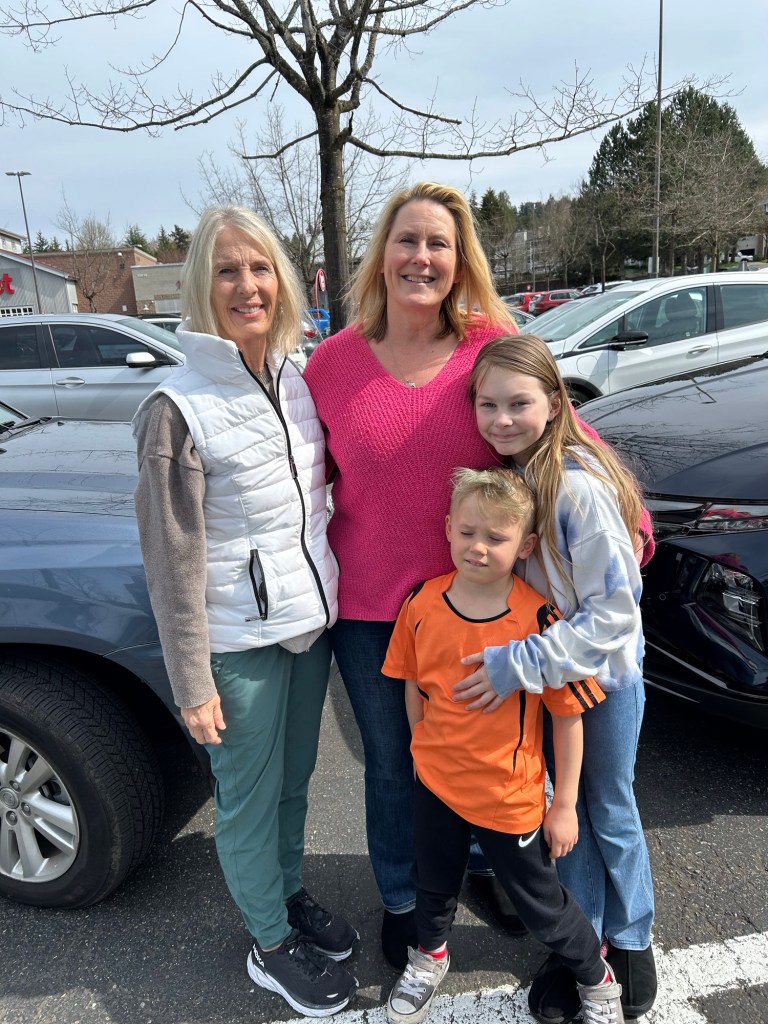
On top of that, I’ve been fortunate to meet a number of WordPress friends in person over the years. Playwright Jack Canfora, artist Libby Saylor, Deb (Closer to the Edge blog), and Betsy Kerekes (Writing and Martial Arts blog). Unfortunately, I’ve not yet met my podcast partner and dear friend, Vicki Atkinson (Victoria Ponders blog) in person. But I was lucky enough to meet Vicki’s brilliant and delightful daughter when she came to Seattle.

When the incredible and effervescent Cindy Georgakas (Uniquely Fit blog) said she was coming to the Seattle last weekend, I jumped at the opportunity to spend a few minutes with her as well. My kids, Cooper the dog, and I piled into the car to do a mini blog adventure to meet up with her near where she and her family were staying.

Cindy confessed that her family didn’t think her blogging friends were real. Not only was it fun to prove that notion wrong but it’s also pretty amazing to discover that our blogging friends are pretty much who you’d expect them to be based on their writing.

Jack is witty, Libby is passionate, Deb is whip-smart and charming, Betsy is clever and strong, and Cindy is authentic and inspiring. Seeing that depth in person makes me even more grateful for the realness of this lovely community!

(featured photo taken by Cindy Georgakas)

Those Pesky Bugs

The human race has one really effective weapon, and that is laughter.” – Mark Twain

Heads up: this post might bug you.

Oh boy, there are so many great puns about lice. I’ve been thinking about that because we got them last week. Lice, that is, not puns. Well, maybe both.

Funny thing about lice is that they come with an acute sense of shame. This has been going around the school – and seems to be worse after the classes rotated through the bike unit in PE. But even knowing that AND after finding out that four other families from our school were booked at the treatment clinic, I still felt it. It must be a powerful trigger of the fear of community ostracization.

I managed to get over it long enough to tell the school, the teachers, and the families we’d played with recently. Like I’ve found with my other vulnerabilities, it turns out that sharing came with a blessed sense of camaraderie. Most families with elementary school kids have gone through this and the parents had hilarious stories.

There was the family who had sent their three kids to a camp in France. The whole camp played a game where they passed a hat so that the hat wearer got a turn to speak, sing, or dance. Every single kid in the camp came home with lice.

And a mom told me the story of having to go to the clinic to be checked. As she was sitting in the chair getting her hair combed out, a former work colleague came in also to get checked. He launched in to a long conversation with her despite her best, “Can we talk another time?” face.

Someone shared a hilarious video with me that mapped the lifecycle of a mom’s feelings about lice: the shame, the fear, the disgust, the exhaustion, the acceptance.

It makes me scratch my head to wonder why I need to keep learning that being vulnerable results in benefits. I mean benefits in addition to immediately knowing the washing machine cycles answer in a recent NY Times Connections game because I’ve spent so much quality time with my washer in the last week.

These things that come with life aren’t easy. But when we put our heads together, [oops, don’t do that], they can be at least a little funny!

(featured photo from Pexels)

You can find me on Instagram @wynneleon and LinkedIn: https://www.linkedin.com/in/wynneleon/

I co-host a storytelling podcast featuring authors and artists with the amazing Vicki Atkinson. To tune in, search for Sharing the Heart of the Matter on Spotify, Apple, Amazon Music or Pocketcasts (and subscribe) or click here. Or the YouTube channel features videos of our interviews. Please subscribe!
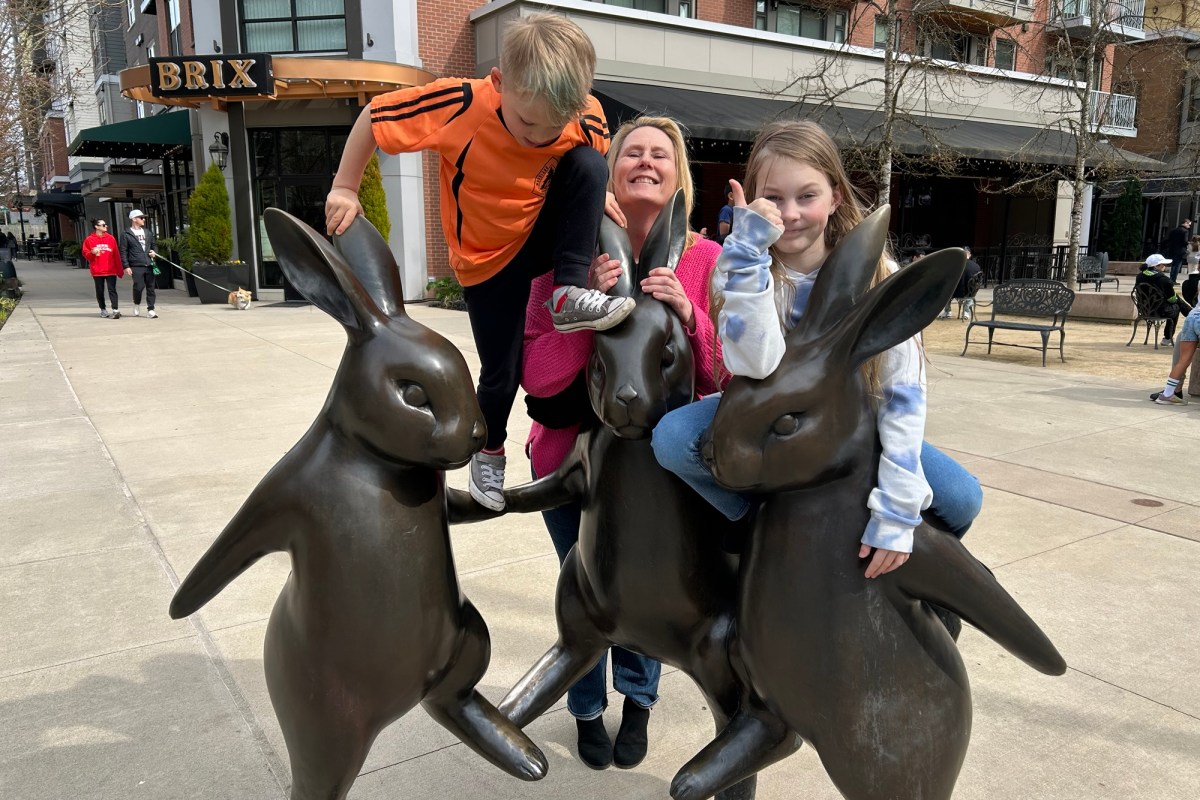
My other projects include work as a CEO (Chief Encouragement Officer), speaking about creativity and AI through the Chicago Writer’s Association, and my book about my journey to find what fueled my dad’s indelible spark and twinkle can be found on Amazon: Finding My Father’s Faith.

Envisioning The Future Without the Filter of the Past

We have more possibilities available in each moment than we realize.” – Thich Nhat Hanh

After almost two years of working for the company that I sold my company to, I’m back in the business of working for myself. I’ve spent two-thirds of my career as a self-employed computer consultant. The inclination to build my business exactly as I did before is so strong – kinda like muscle memory. But that doesn’t honor that all the ways I’ve learned and changed since I did this previously.

So I love the inspiration I find to build outside of the box. Here’s one from Mark Nepo:

“It was a curious thing. Robert had filled the bathtub and put the fish in the tub, so he could clean their tank. After he’d scrubbed the film from the small walls of their make-believe deep, he went to retrieve them.

He was astonished to find that, though they had the entire tub to swim in, they were huddled in a small area the size of their tank. There was nothing containing them, nothing holding them back. Why wouldn’t they dart about freely? What had life in the tank done to their natural ability to swim?”

The Book of Awakening by Mark Nepo

In addition, my meditation teacher, Deirdre recently gave me some powerful imagery. She said we need to envision the future without the filter of our past.

I’ve spent enough years hiking and climbing to know the wisdom of why we continue on the same path we’ve always used. It helps keep us from getting lost and if we have to backtrack, we know the way.

But for almost every trail system I’ve been on, there are certain intersections where you can easily traverse to another path. Because some paths don’t go to the place we are trying to reach.

I’m trying to keep that in mind as I navigate my next steps. I feel so lucky that I am at an intersection point that has made doing something different not only possible but also preferable. It’s like the Universe has left some bread crumbs to a different route. I just need to follow them. It’s easier to type than it is to do.

For anyone navigating a similar intersection, consider this as an encouragement to envision the future without the filter of the past. As Thich Nhat Hanh says, “We have more possibilities available in each moment than we realize.

(featured photo is my daughter, Miss O, when she was almost two years old confidently finding her path)

Navigating Unwelcome Surprises

Living is the art of getting used to what we didn’t expect.” – Eleanor C. Wood

Last week, at an off-leash area for dogs, a dog latched on to my 18-month-old dog, Cooper’s, face. This dog, a pit bull mix, had been showing a lot of interest in Cooper. But Cooper doesn’t have, or hasn’t yet developed, any defensive postures – he doesn’t bark, raise his hackles, or growl. He’s bigger than many of the dogs and mostly runs away.

For whatever reason, this dog latched on to Cooper’s face between his eye and his ear. The dogs weren’t fighting – and neither dog was even growling. The owner was right there and was doing all that he could to get the dog to let go.

I can’t say how long it went on for – it felt like five minutes but could have been only one or two. As it went on, all the humans in the dog park circled around but no one seemed to be able to help the owner get the dog to let go.

And then finally the dog released. Cooper wimpered and scampered away. The owner said to me, “I’m so sorry. We’re never coming here again.” I’d like to report what I said but I have no idea. Maybe nothing.

I checked Cooper as we walked out of the park and he didn’t have any blood or wounds. The side of his face appeared to be a little puffier but undamaged.

These kinds of things always surprise me when they happen. It’s not that I’m unaware that they can. It’s that I’ve found carrying around the armor of anticipation to be too exhausting. It fends off bad and good things equally. It weighs me down too much in a way that keeps me from trying new things.

Instead I’ve come to figure out what works for me to process these things. I sit on my meditation cushion and breathe and pray. I write about it. I tell the story to others and it helps me to get a handle on it myself.

Somewhere during this process after we’d gotten home from the dog park, I started to settle down. The shaky feeling had lessened and after a time, I even stopped saying “I’m sorry that happened” to Cooper every time I looked at him.

Then as the kids settled into bed that night, Cooper featured high in our list of what we were grateful for. Five-year-old Mr. D was glad his buddy was okay. Nine-year-old Miss O pointed out that it was great that the other owner was helping and was apologetic. I was grateful that the kids weren’t there and it wasn’t any worse.

So in the end, we found bright spots in a story that started with “a dog latched on to Cooper’s face.” I’ve found that navigating unwelcome surprises often helps me to dig deep.

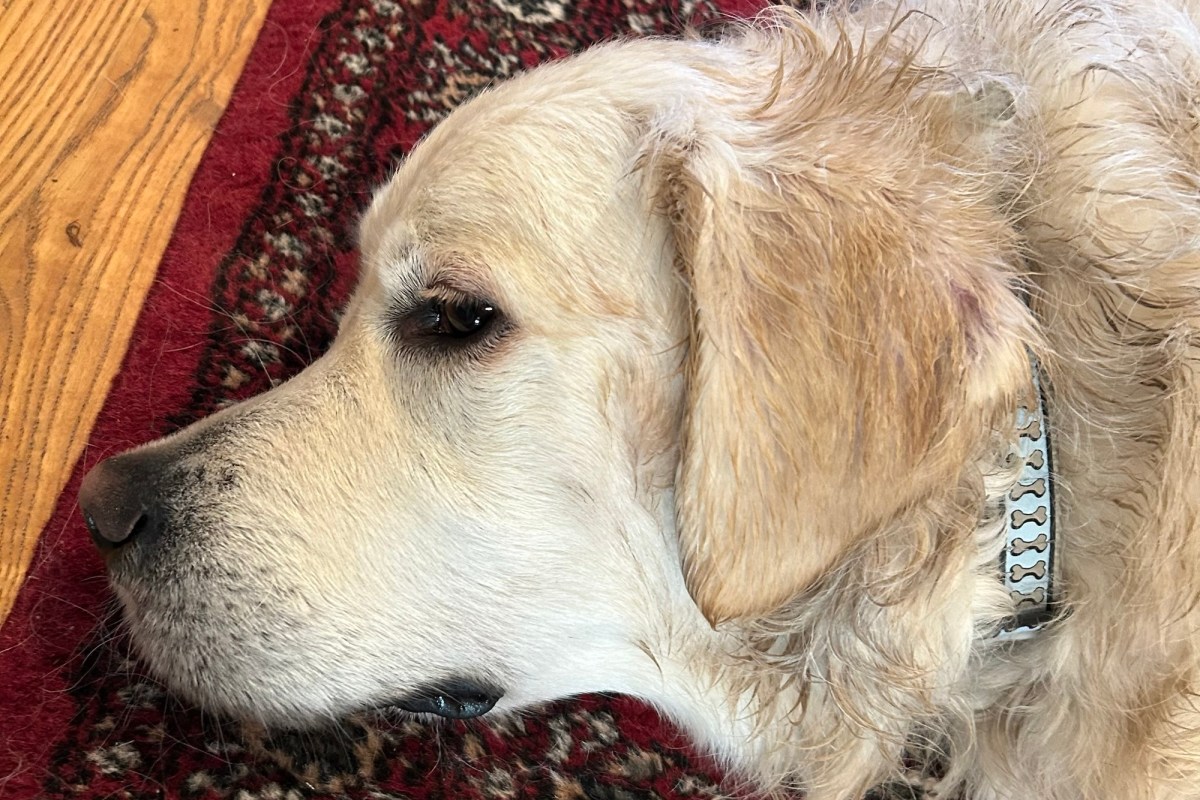
(featured photo is Cooper after the incident)

I co-host a storytelling podcast featuring authors and artists with the amazing Dr. Vicki Atkinson. To tune in, search for Sharing the Heart of the Matter on Spotify, Apple, Amazon Music or Pocketcasts (and subscribe) or click here. Or the YouTube channel features videos of our interviews. Please subscribe!

My other projects include work as a CEO (Chief Encouragement Officer), speaking about creativity and AI through the Chicago Writer’s Association, and my book about my journey to find what fueled my dad’s indelible spark and twinkle can be found on Amazon: Finding My Father’s Faith.

You can find me on Instagram and Twitter @wynneleon