Holiday PSA: Remember to Play

Sometimes it’s okay if the only thing you remembered to do today was breathe.” – unknown

There’s a difference between being tired and exhausted, isn’t there? If I wasn’t so exhausted, I’m sure I could tease it out. Somehow an avalanche of work obligations, the kids school and social commitments, and holiday preparation all landed at once in my life. I’ve been tackling as much as I can every day, sleeping hard every night, and then getting up to try to shovel out again.

Somewhere in there I’ve noticed three things that become a lot harder when I’m exhausted: being present, generating humor, and keeping the faith. As someone who typically has a lot of energy, or at least consumes enough sugar to fake it, I was surprised that those depend on having some gas in the tank. [case in point, I think I could have made that sugar joke a lot funnier if I wasn’t so tired!]

As usual, my kids save me. Usually because they provide so much distraction that I can’t take getting stuff done too seriously.

But in this specific case, because I had to take them to a delightful indoor play place for a birthday party this weekend. Painted all over the walls were some really good quotes that pointed out the benefits of play:

Think what a better world it would be if we all – the whole world – had cookies and milk about three o’clock every afternoon and then lay down with our blankies for a nap.” – Robert Fulghum

It’s a happy talent to know how to play” – Ralph Waldo Emerson

Those who play rarely become brittle in the face of stress or lose the healing capacity of humor.Stuart Brown

I can’t be the only one exhausted at this time of year so I thought I’d share these with you. Also, I think I write about this every year about this time so I’m hoping that writing about these will help future me skip the stress and remember to play. [Again, I think that had some potential to be funnier.]

Here’s to play – or at least cookies and milk and then a nap!

You can find me on LinkedIn: https://www.linkedin.com/in/wynneleon/ and Instagram @wynneleon

I host the How to Share podcast, a podcast celebrates the art of teaching, learning, giving, and growing.

I also co-host the Sharing the Heart of the Matter podcast with the amazing Vicki Atkinson.

Life Begins Now: The Parenting Trap

“It still amazes me that we insist on teaching algebra to all students when only about 20 percent will ever use it and fail to teach anything about parenting when the vast majority of our students will become parents.” – Nel Noddings

My dad used to tell this joke: Three religious leaders were asked the question, “When does life begin?”

The Catholic priest said, “At conception.

The Protestant pastor replied, “At birth.

The Rabbi answered, “When the last kid goes to college and the dog dies.

I’m laughing. Wow do I feel this. As a parent of young children, I do more things in a day that I wouldn’t choose to do than things I would choose. That alone can make me feel as if my life is not my own. Add in the noise and chaos and it’s hard to find peace. Taken all together, that can make this phase of life seem like one to rush through.

 But I know I can’t assume that I’ll be able to enjoy my kids when they are mature adults. I had my kids when I was aged 46 and then 50. When my youngest is 30, I’ll be 80-years-old. Hopefully an alive, healthy, and active 80 years old but nothing is a given. I know that’s true at any age.

So I try to flip the punchline and enjoy my kids, and life, now.

Cleaning up messes

Things in my house are spilled nearly every day. Sometimes by me. Often not very big deals like when a glass of milk with a top on spilled the other day. It just left a corona of milk dotting the carpet.

Here’s the thing I’ve realized. It’s a chance to convey to my dear children that I’ll love them when things are messy.

Bonus points: Longevity specialist Dr. Peter Attia includes getting up from the floor with max of one arm for support on his Centenarian Decathlon list. It includes the ten most important physical tasks you will want to be able to do for the rest of your life. Every time I’m down on the floor cleaning, I celebrate working out the strength and neuromuscular control that I need.

Helping with personal hygiene

It’s funny that kids don’t come with personal hygiene habits baked in. I’d prefer not to have to remind others to brush their teeth or wipe their tush. Add a dog, cat and a crested gecko in the mix and I can pretty much guarantee that most days will have some involvement in someone else’s hygiene.

I love this one because it’s foundational to my outlook. It’s forced me as a congenital optimist, to accept that every day is not going to be perfect, comfortable, or even pretty.

And long after I’m gone, I can trust my kids will have some idea of how to keep their bodies safe.

Bonus points: My personal hygiene has suffered as a parent. Kudos to me when I remember to take care of myself as well.

Feeding them

There are some days where I make food, clean up from making food, only to find that by that time, more food is already required.

But, whether real or metaphorical, I’d argue that giving others fuel to live by is what we are here for.

Bonus points: This is a reminder that cooking is all about exercising our creative muscles. How can I make something when I realize I’m missing an ingredient? How do I make something that’ll last with what I have?

Melt downs

Oh, those moments when big emotions take over and make us uncomfortable. And by us, I mean not only the person melting down but also everyone close at hand. It can be precarious, unpredictable, and draining. It’s also 100% real.

Recently, I took my kids rock climbing. My six-year-old son got stuck halfway up the rock face. He couldn’t find a way past – not moving right or left or shifting his weight. He started to cry. Since I was belaying him, there was nothing I could do except be there with him. And it was the perfect metaphor because I was connected to him by a rope.

From 40 feet away, I shouted up my empathy for his frustration, tried some suggestions, told him he could come down, emphasized that I knew he could do it – everything I could do to help from afar. Finally he shook it off. Then he managed the coolest move — palming the rock with his right hand and smearing the face with his left foot, he leveraged himself up high enough to the next good hold.

It was as rousing of a feat of personal triumph as I’ve ever witnessed.

Here’s where you get to pick your image: port in the storm, rope anchor on a mountain, sacred ground – you have the chance to be that for someone else. And to learn a little bit about what it kicks off in you as well. We don’t often get to see adults do that – the trying, melt down, return and overcoming is usually a longer (and more hidden) process for grown-up risks and triumphs. There is nothing as powerful as watching someone overcome some real adversity. With young kids we get to see that nearly every day.

And then we get to celebrate their success.

Bonus points: It’s hard to stay regulated when someone else is dysregulated. Whether it’s my verbal 10-year-old daughter talking grown-up sounding sass that covers for her childlike emotions underneath or a stranger at the store, I feel it all the way through. But all this practice is helping my central nervous system to be buff!

Distraction

When awake and nearby, my kids provide continual distraction. I could be inside sitting at my computer typing and instead I’m out in a creek skipping rocks. Or I could be sitting on the couch with my phone in hand texting and instead I’m having a dance party and moving my hips. I hunt for snails and hold my kids’ hands while they learn to hoverboard.

Oh, that’s right – I’ve never once regretted a dance party, a rock skipping contest, time in nature, or moving my body.

Bonus points. Psychologist Dr. Alison Gopnik says that kids have lantern brain. They see everything that is around. Adults have spotlight brain – we focus on what needs to be done. Switching into lantern brain can help us solve problems, be creative, and open us to new insights. The distractions can actually help us with solutions for our work when we return to it.

Invasion of personal space

Yesterday my six-year-old son stuffed something in the pocket of my jeans. Gah.  

I’m all for enforcing the boundaries necessary to maintain healthy relationships. But before I decide what those boundaries are, I consider that my kids embody what we look like as open creatures that assume other people will help you carry your stuff.

Bonus points: Ask someone else to help you carry your stuff.

Time

I’m the only one that cares about time in my house. Being on time, getting to bed, the school bell is about to ring, dinner time, time for annual physicals, or it’s about time. All of it.

Because I’m the one that understands time is limited.

Bonus points: Stop caring about the future and enjoy the now.

I’m not guaranteed to get to 80 years old. But I bet that if I do, parenting will have extended my healthspan so that I enjoy it more. And I know I’ll be glad that I didn’t wait until the kids went to college and the dog died to begin living.

(featured photo is mine)

You can find me on LinkedIn: https://www.linkedin.com/in/wynneleon/ and Instagram @wynneleon

I host the How to Share podcast, a podcast about collaboration – sharing leads to success.

I also co-host the Sharing the Heart of the Matter podcast, an author, creator and storytelling podcast with the amazing Vicki Atkinson.
Life is A Puzzle

Learn how to see, realize everything connects to everything else.” – Leonardo da Vinci

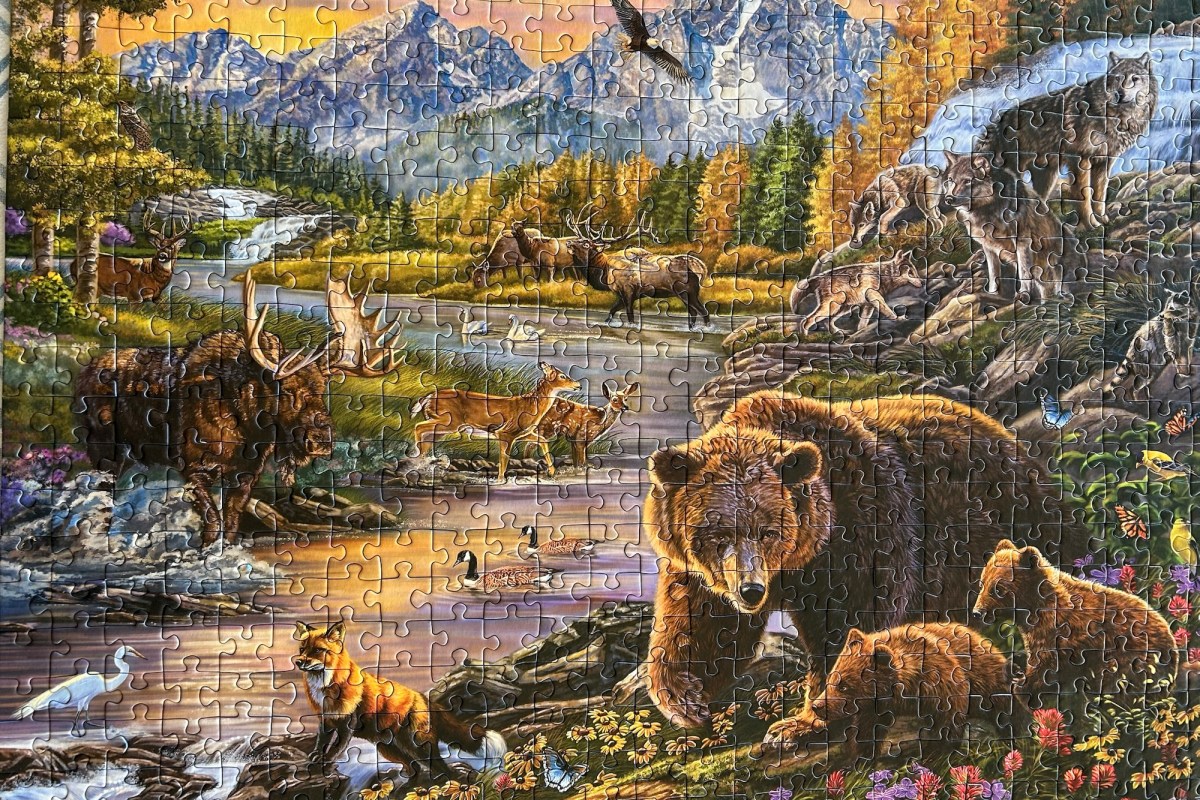
We did a few puzzles in the past couple of weeks while we were on vacation at the beach. Mostly Miss O and I chipped away at them with occasional assists from Mr. D and friends that came up to visit.

Five things I noticed about how doing a puzzle is like life. Or how life is like a puzzle.

  1. When you first sit down, all the pieces look the same and it feels impossible. The puzzle doesn’t start itself. Having an approach like turning all the pieces right side up and putting together the border pieces together makes it feel doable.
  2. You don’t find a piece unless you look. Sure, every once in a while you might get lucky and find something that fits as you walk by. But mostly, you have to be in the game if you want to make a match.
  3. There are many ways to find a piece – by color, by shape, by content. This reminds me of perspective and how we all see things differently.
  4. You can’t make something fit no matter how much you want it to. It goes easier when you honor the “no’s” in life.
  5. There’s nothing like the feeling of slotting in the last piece. But you can relish the satisfaction of connecting any two pieces if you aren’t too much in a hurry to get to the big picture. Enjoy the little moments.

I keep learning that playing IS life. It seems like we are just spending idle time but really we are gaining perspective on everything else. Because at least for me, those moments when you see the big picture help to inspire the awe in the everyday.

Just like the photo on the front of the puzzle box helps when putting it together. Right?

(featured photo is mine)

You can find me on LinkedIn: https://www.linkedin.com/in/wynneleon/ and Instagram @wynneleon

I host the How to Share podcast, a podcast about collaboration – in our families, friendships, at work and in the world.

I also co-host the Sharing the Heart of the Matter podcast, an author, creator and storytelling podcast with the amazing Vicki Atkinson.

How to Share Risks

Remember: Not all positive change feels positive in the beginning.” – S.C. Lourie

This is a friendly warning: It’s risky to comment on this blog. I’m joking, of course, but have a great example of no good comment goes unpunished. 🙂

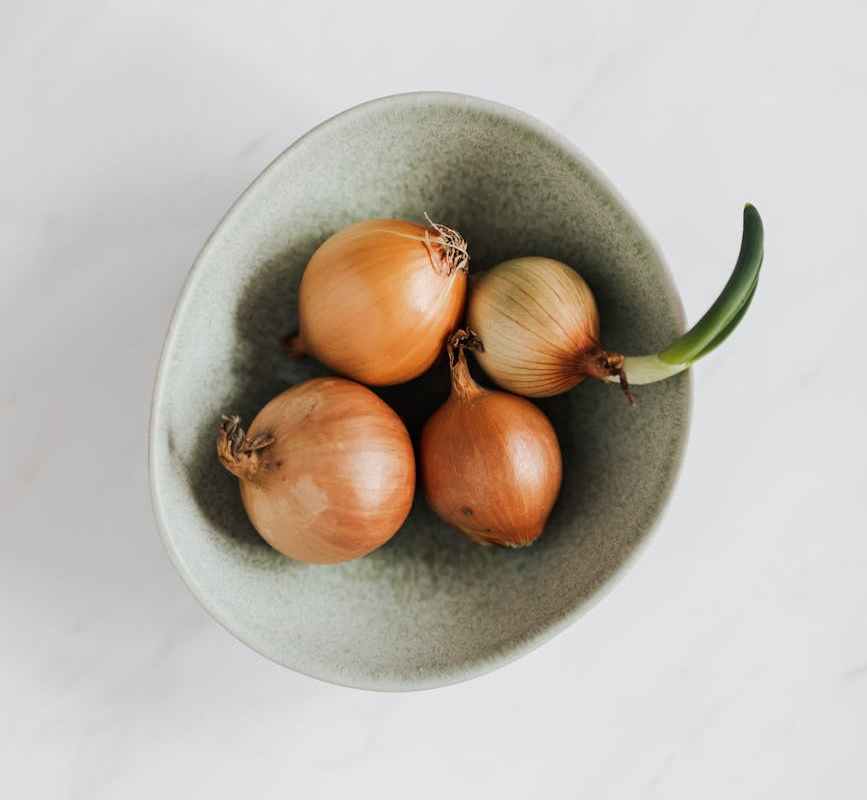
A couple of weeks ago Brian Hannon commented that he approached finding positivity from another perspective on the How to Share Optimism podcast I did with Mark Petruska. To hear Brian describe it, it’s like peeling back an onion. The outer layers are the risks of a thing, whether it be an idea, invitation, initiative, or something else. Those layers need to be dealt with before reaching the savory goodness on the inside.

At which point, I invited Brian on the podcast to talk about his approach of sharing risks.

As a corporate communications professional, Brian Hannon has incredible wisdom about identifying risks and communicating effectively. In this episode of the How to Share podcast, Brian shares his unique perspective on optimism, emphasizing the importance of acknowledging risks and challenges before moving towards a positive outlook.

Brian discusses the role of authenticity in communication, the balance between optimism and realism, and how humor can help navigate difficult conversations. Our conversation also touches on parenting and the lessons learned from life’s challenges, ultimately highlighting the value of embracing discomfort for personal growth.

Takeaways

  • Brian sees risks and challenges first before finding positives.
  • Acknowledging failure is crucial for a realistic perspective.
  • Authenticity is essential in communication and leadership.
  • Humor helps in delivering downsides without negativity.
  • Writing helps clarify thoughts and learn from experiences.
  • Embracing discomfort can lead to long-term growth.
  • Balancing perspectives can enhance collaboration and understanding.
  • Life’s challenges often provide valuable lessons.
  • Parenting influences how we perceive risks and challenges.
  • Finding a middle ground between optimism and realism is key.

Here’s a preview of Brian’s grounded and resilient approach:

Here are some ways you can listen and watch this incredible episode:

Please listen, watch, provide feedback and subscribe.

How to Share Our Luck with Gil Gillenwater How To Share

In this enlightening conversation, Gil Gillenwater is with host Wynne Leon and shares his experiences and insights from over 35 years of philanthropic work along the US-Mexico border. He discusses his book, 'Hope on the Border,' which highlights the transformative power of education and community service. Gil emphasizes the importance of enlightened self-interest over traditional charity, advocating for a model that empowers individuals and fosters dignity. He explores the duality of poverty, the need for sustainable opportunities, and the joy found in serving others, ultimately presenting a vision for a more connected and compassionate world.TakeawaysEducation is the key to breaking the cycle of poverty.Enlightened self-interest can lead to personal and communal growth.Charity should not be viewed as a sacrifice but as a mutual benefit.Volunteering provides a sense of purpose and fulfillment.Welfare can disempower individuals and communities.Community service fosters connections and shared humanity.The disparity in wealth is a significant issue that needs addressing.Experiencing poverty firsthand can change perspectives.Creating opportunities in one's home country can reduce migration.The joy of service is a pathway to personal happiness.Links for this episode:How to Share homeHope on the Border at AmazonGil's organization: Rancho FelizGil Gillenwater on FacebookWynne’s book about her beloved father: Finding My Father’s Faith; Blog: https://wynneleon.com/; Substack: https://wynneleon930758.substack.com/
  1. How to Share Our Luck with Gil Gillenwater
  2. How to Share 1970's Chicago with Doug. E. Jones
  3. How to Share Feedback with Dr. Vicki Atkinson
  4. How to Share the Next Generation with Mari Sarkisian Wyatt
  5. How to Share Impactfully with Social Media Friends with Amy Weinland Daughters

Links for this episode:

⁠Brian’s blog: Writing from the Heart with Brian⁠

⁠Brian Hannon⁠ on LinkedIn

(featured photo from Pexels)

Waiting Well

If you do follow your bliss you put yourself on a kind of track that has been there all the while, waiting for you, and the life that you ought to be living is the one you are living. Follow your bliss and don’t be afraid, and doors will open where you didn’t know they were going to be.” – Joseph Campbell

Waiting well. I admit that the title of this post is aspirational. But I’ve been working on it and have to say that I’ve made progress in the last few years.

Here’s the latest thing I’ve been waiting for. I’m buying a car from my neighbors who are moving back to England.  I need a car that has a third row of seats for when I carpool. And I’m such a terrible negotiator that if I went into car dealership to buy one, I’d probably introduce myself by saying, “how can I pay you more?”  Suffice it to say, buying my neighbors car is a great option for me.

But the timeline is pretty variable. I planted the seed and they liked the idea. Then I’ve had to let it ride as they worked out all their more important tasks: securing a new house in England, shipping all their stuff, moving the kids and getting them settled in their new schools, and selling their house here in Seattle.

Here’s what’s helped me getting better at waiting: I’ve realized I’m not in charge. And I think that no matter your spiritual beliefs, we can all agree Wynne Leon isn’t running the show.

I’ve come to see that intent is like throwing an inner tube into the stream of life and then riding it wherever it goes.

My metaphorical inner tube snagged on a tree last week when my car died with about a week to go before I can buy the new one. I’d loaded my kids and the dog into the car on a Saturday morning to go on an adventure and it wouldn’t start. Of all the places and times to not start, in the garage on a Saturday morning isn’t a bad one.

So I rented a car. When I got to the agency, they said they I had a choice between a Jeep and a VW. We choose the VW — and it was even the same model we are buying. Funny how this stream of life flows.

Soon we’ll close on buying our friend’s car and be on to waiting for the next thing or milestone. It seems that the trick is enjoying the float down the river.

(featured photo from Pexels)

You can find me on LinkedIn: https://www.linkedin.com/in/wynneleon/ and Instagram @wynneleon

I host the How to Share podcast, a podcast about how to share anything – to the appropriate audience, with the right permissions, at the most opportune time.

I also co-host the Sharing the Heart of the Matter podcast, an author, creator and storytelling podcast with the amazing Vicki Atkinson.
How To Share

Everyone has a talent. What’s rare is to follow it to the dark places where it leads.” – Erica Jong

Do you have a solid idea of what you know? Not what your jobs have been or what roles you have played but the overarching talent, wisdom, and perspective that is uniquely you?

I ask because I’ve spent the last five months trying to figure out what I know. Believe me, I understand that seems like a long time to try to answer what is a seemingly straightforward question. But I found it to be harder than I expected.

Here’s why. I’m bound by a non-compete so that I can’t fall back to the technical expertise that I’ve cultivated for my career, at least not for a few more months. But that has been an incredible opportunity for me to figure out the bigger picture. Instead of just treading the same path I’ve been walking with Microsoft SharePoint, Teams, OneDrive, and the other technologies, I’ve had to examine what mountain I’ve been climbing the whole time.

Here’s what I discovered. In the 25 years I’ve been helping people with their collaboration software, I’ve learned a whole lot about how to share.

Not just what buttons to push to share a file, a photo or a calendar, but what makes groups do it well – and also do it poorly.

One of the more stark examples was a team that was so good at sharing not only files but also ideas, contacts, and worries about what could go wrong, they seemed to be able to nimbly handle challenges.

And then the leadership changed to someone who criticized that they talked too much, wanted people to focus on their own tasks instead of helping others, and berated team members for anything shared before it was polished. The leader thought they were “whipping the team into shape” but one of the side effects was that they were squelching vulnerability and sharing.

A couple of months into the new leadership, the team lost a key client. In the debriefing, it became clear that team members had picked up some little warning signs. If they’d shared them, it would have helped put together the big picture that the client was at risk.

While this example is in a professional context, it happens again and again in writing groups, schools, between friends, and more.

We have to share and it’s vulnerable. So we are continually evaluating who the audience is, what are the right permissions and how to identify the right time. That applies to files as well as personal stories, social media, wisdom, and more.

This period of introspection about what I know has pushed me to launch a new podcast, How to Share. It draws not only from my interest and experience but also applicable research and wisdom. My incredible and insightful first season guests will lend their expertise on how to share things such as credit and feedback, passwords, corporate communications, as well as how to receive when others share.

Here’s a short clip from the first episode, Why We Share:


Based on recent technology changes, we learned that embedding the full YouTube video reduces listens and views. Here are some ways you can listen and watch:

I’d be honored if you’d listen, watch, provide feedback and subscribe.

On the Sharing the Heart of the Matter podcast, Vicki and I also had a fascinating podcast conversation with author Mark Wukas about his incredible debut novel The Kiss of The Night. Please check out this fantastic author and hear how he cultivated his dream to write a book and this plot for almost 40 years!

How to Share Our Luck with Gil Gillenwater How To Share

In this enlightening conversation, Gil Gillenwater is with host Wynne Leon and shares his experiences and insights from over 35 years of philanthropic work along the US-Mexico border. He discusses his book, 'Hope on the Border,' which highlights the transformative power of education and community service. Gil emphasizes the importance of enlightened self-interest over traditional charity, advocating for a model that empowers individuals and fosters dignity. He explores the duality of poverty, the need for sustainable opportunities, and the joy found in serving others, ultimately presenting a vision for a more connected and compassionate world.TakeawaysEducation is the key to breaking the cycle of poverty.Enlightened self-interest can lead to personal and communal growth.Charity should not be viewed as a sacrifice but as a mutual benefit.Volunteering provides a sense of purpose and fulfillment.Welfare can disempower individuals and communities.Community service fosters connections and shared humanity.The disparity in wealth is a significant issue that needs addressing.Experiencing poverty firsthand can change perspectives.Creating opportunities in one's home country can reduce migration.The joy of service is a pathway to personal happiness.Links for this episode:How to Share homeHope on the Border at AmazonGil's organization: Rancho FelizGil Gillenwater on FacebookWynne’s book about her beloved father: Finding My Father’s Faith; Blog: https://wynneleon.com/; Substack: https://wynneleon930758.substack.com/
  1. How to Share Our Luck with Gil Gillenwater
  2. How to Share 1970's Chicago with Doug. E. Jones
  3. How to Share Feedback with Dr. Vicki Atkinson
  4. How to Share the Next Generation with Mari Sarkisian Wyatt
  5. How to Share Impactfully with Social Media Friends with Amy Weinland Daughters

What Otters Think

Learn to sit back and observe, not everything needs a reaction.” – unknown

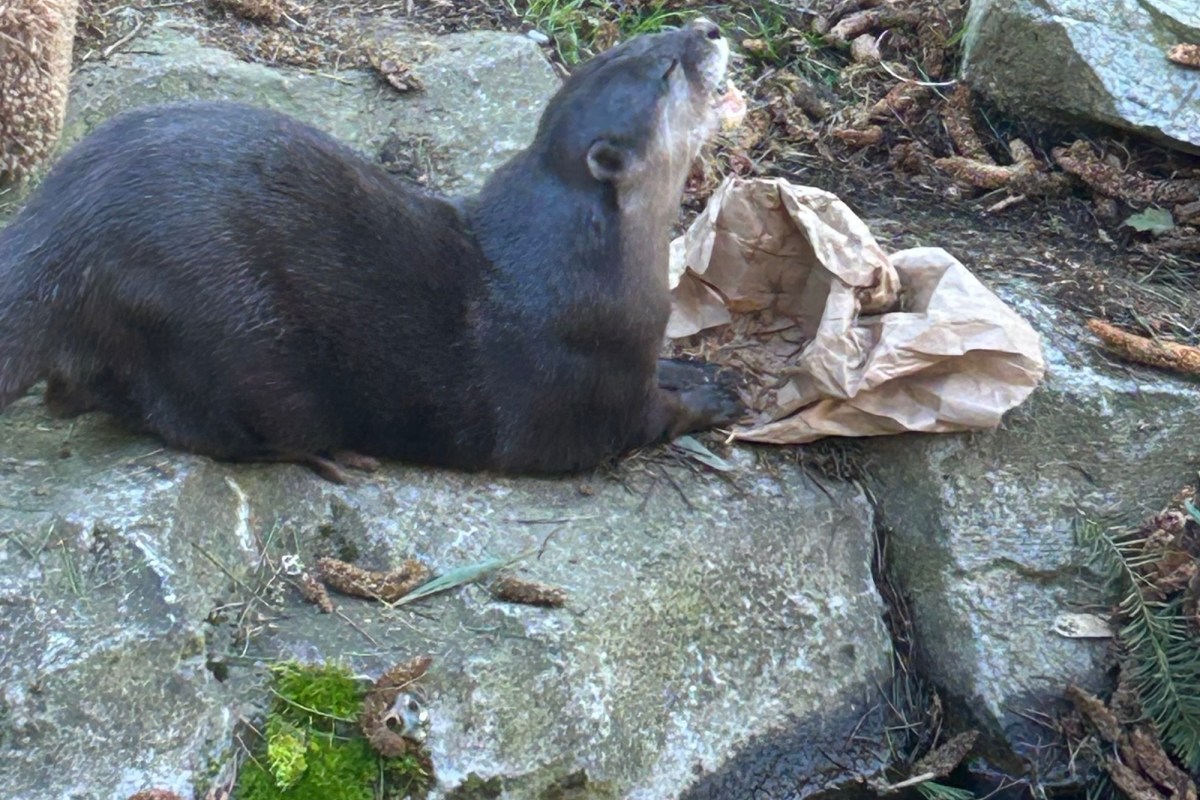
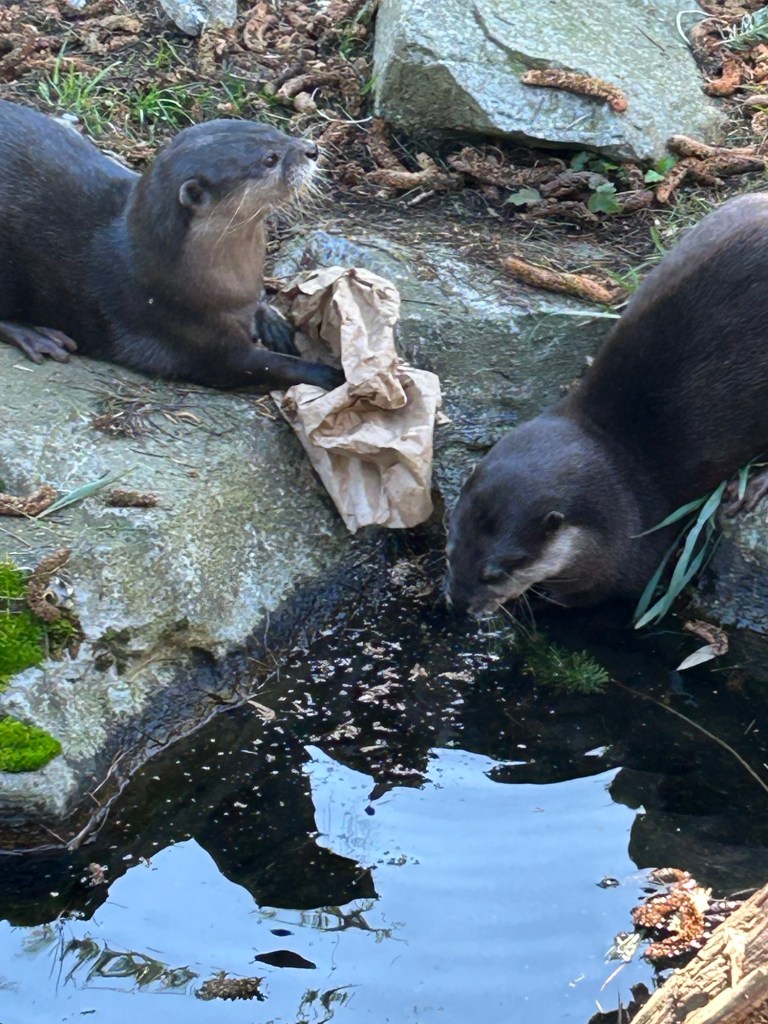
This past weekend we went to the zoo. Near the end of our time there, we were at the exhibit for the Asian Small-Clawed Otters. A keeper arrived with two small brown paper bags and threw one to each otter.

We were standing at the glass wall of the exhibit and there was a group of three adults next to us – two men and a woman in their thirties. Nine-year-old Miss O had commented on the group about five minutes earlier. She’d said, “Those people are either drunk or really happy.” Until she mentioned that I hadn’t been paying attention to them, even though their pace through this section matched ours. She was right that they were loud.

Our zoo does a pretty good job with creating natural exhibits and designing ways for the animals to have to find their food. As we stood to watch the otters try to open the bags, the group of three narrated the actions in a way that was intended to be funny.

Oh, this one hasn’t even gotten the bag open and that one has been munching for like five minutes.”

This one must be stupid. It can’t get into a paper bag.”

Oh no, don’t let it roll into the water!

Now the smart one is coming over to finish off the dumb one’s snack.”

Oops, it’s all pouring into the water now.”

I struggled to just watch the scene without paying attention to the people next to me. It was hard – they were loud and I was tired. We’d navigated almost four miles of walking through the zoo on a pretty busy day and the effort to keep the group together had made me peckish.

Even through my hungry haze, I wondered how much my other experiences are influenced by commentary. On one hand, it’s nice to hear what people more experienced on a subject think. On the other hand, not all commentary comes from reliable sources. I wrestle with taking in what’s going on and coloring in my own experience before being influenced by other’s perspectives.

Like in this case, I think that the slower one was taking its time to savor each treat.

Just like with the otters, may we all find the healthy things to chew on.

(photos are mine of Asian Small-clawed Otters at the Woodland Park Zoo)

You can find me on Instagram @wynneleon and LinkedIn: https://www.linkedin.com/in/wynneleon/

I co-host a storytelling podcast featuring authors and artists with the amazing Vicki Atkinson. To tune in, search for Sharing the Heart of the Matter on Spotify, Apple, Amazon Music or Pocketcasts (and subscribe) or click here. Or the YouTube channel features videos of our interviews. Please subscribe!
My other projects include work as a CEO (Chief Encouragement Officer), speaking about creativity and AI through the Chicago Writer’s Association, and my book about my journey to find what fueled my dad’s indelible spark and twinkle can be found on Amazon: Finding My Father’s Faith.

Awe Monsters

The clearest way into the Universe is through a forest wilderness.” – John Muir

I was backing out of the driveway the other night. Five-year-old Mr. D was in the back seat and we were on our way to pick up 9-year-old Miss O from a birthday party.

Mr. D exclaimed, “Mama, I saw the first star!

Sure enough, out the back window was one really bright star. Mr. D’s excitement brought to mind a podcast series I’ve been listening to with Berkley professor Dacher Keltner on the 10 Percent Happier podcast.

Keltner is known for his courses on happiness. But his most recent book is about awe. He describes awe as part of the self-transcendent states, the emotions that help widen our perspective from inward and worried to the bigger picture. He writes:

“Awe is the emotion we experience when we encounter vast mysteries that we don’t understand. Why would I recommend that you find happiness in an emotion that is so fleeting and evanescent? A feeling so elusive that it resists simple description? That requires the unexpected, and moves us toward mystery and the unknown rather than what is certain and easy?

Because we can find awe anywhere.”

– Dacher Keltner in Awe: The New Science of Everyday Wonder and How It Can Transform Your Life

I’m lucky to live with a couple of awe monsters. They experience it and share it on a regular basis.

But in case no awe monsters are handy, Dacher Keltner has many other suggestions. Here are some that draw from nature: look up at the sky, listen to bird song, be mindful of something that strikes you and take a picture of it.

(featured photo is Miss O (age 6) and Mr. D (age 2) looking at a sunrise)

The Preciousness of Life

Our life experiences will have resonances within our innermost being, so that we will feel the rapture of being alive.” – Joseph Campbell

The morning after a really rough night’s sleep, I was sipping tea and realized I didn’t like the mug. It was scratchy to my lip and it made my tea taste different. We were staying at a friend’s house on the Washington Peninsula so all the mugs were new to me.

Because I hadn’t slept well, I was more attuned to it. After a dozen sips, I forced myself to go the kitchen and change mugs. The smoothness of the new one made me realize how many sensations go into feeling soothing.

I hadn’t slept well because I realized in the middle of the night that I hadn’t refilled the water reservoir for Rusty the gecko before we’d left home for three nights. I sat up with a pit of dread knowing that without the water misting twice a day to keep his enclosure humid, he’d likely die. The questions swirling of when I last did it and how long he could survive sent me shooting out of bed.

It was our last night of this mini-getaway. It was 3am I was two hours and a ferry ride away from home. There was nothing I could do to help poor Rusty in that moment.

Instead I sat until I unraveled the knot of feelings in my gut. I felt the weight of all the responsibility I carry for keeping things alive. I sensed the thread of how tenuous life can be. I even worked my way to compassion for myself for making mistakes.

I finally went back to sleep feeling how dang precarious this thing called life is.

So when I awoke, I needed that soothing cup of tea. I wonder how often we forget that our time here is limited. Speaking for myself, when I lean in to the knowledge that life ends, it spurs me on to pay attention and drink out of the right cup. To take care of ourselves so that we can take care of others.

There’s a happy end to this story. I emailed my mom and she checked on Rusty. He was out of water – but she refilled it and misted him. He made it. So one other thing – thank goodness for moms!

An Open-Hearted Meditation

Put your ear down close to your soul and listen hard.” – Anne Sexton

My heart absorbs a lot in a day. That is to say that as I traverse my days, bouncing between to-do’s and must have dones, I collect a lot of nuggets that I store away in my heart as if it is a four-chambered storage cabinet.

– The note of trepidation from my kids as they start a new activity.

– An observation about a colleague who appears to be wrestling with anxiety.

– The feeling I shoulder when coming alongside a friend’s worry.

At some point I have to empty my heart storage cabinet so I can carry on and pick up new things, about myself or others. I think that’s why I love this breathing/heart meditation that I originally picked up from Deepak Chopra almost twelve years ago. [With all due respect to Deepak Chopra, this may no longer resemble the meditation as he taught it so please forgive any blips in the flow.]

Sitting with your eyes closed, feel your heart. Notice how it is feeling. Is it heavy? It is happily skipping a beat? Is it calm and serene?

Now take a deep breath into the front of your heart. Feel your chest expand. Feel that front wall where your heart meets the world.

Next breathe into the back of your heart. Allow the solidity and strength of your back to make room for the heart.

Take a deep breath and direct it to the top of the heart. Does it feel like there is a lid on your heart that can crack ajar to give the heart a little room to expand?

Now send your next inhale to the bottom of your heart. Breathe through all that might have settled there and benefit from some air to get moving.

The next breath is for the sides of the heart. As you feel the sides of your heart lengthen with the inhale, sit a little taller to feel your whole ribcage expand.

And finally, breathe into the whole heart. Notice how it is feeling. Is it the same as when you started? Or have you uncovered something tucked away there?

(featured photo from Pexels)