Showing Up

Please remember, it is what you are that heals, not what you know.” – Carl Jung

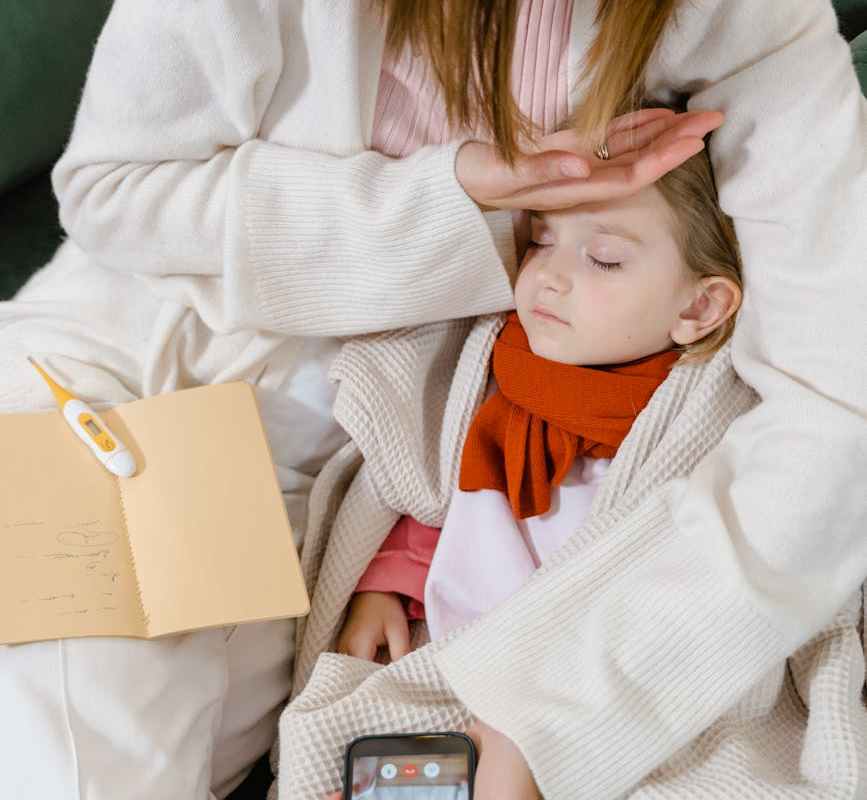
My ten-year-old daughter, Miss O, had a stomach bug this weekend. It hit hard on Friday night and then followed that typical 24 hour course where she felt miserable and threw up a half dozen times and then was mostly done.

When six-year-old Mr D realized that his sister wasn’t feeling well, he set out to make her his famous medium water. You know – not too hot and not too cold. In a lovely confluence where the one thing he knows how to make and the only thing she could keep down met, it was a beautiful gesture.

There was little else that Mr. D and I could do for her. She spent most of her day crying out in agony. Witnessing suffering like that makes me feel crummy. For me, helplessness usually turns into irritability. Fortunately, I was reminded of three things that I’ve heard/read lately:

From poet Mark Nepo, “… someone I love comes along in pain and I start dumping my pockets, looking for the one thing I know that will help them. But time and time again, the only thing they want is for me to open my heart like a sponge to them. They only want to be heard and held.” I swear my pockets are hanging out for how often I dig to try to find something to help only to learn this again and again.

When I talked with Sharon Eubank on the How to Share podcast she related some great lessons from her decades trying to help others as Global Director of Humanitarian Services for the LDS church. The one that really stuck with me was “My solution to your problem will always be wrong.” In this case, the foods that Miss O wanted to eat when she started to feel better wouldn’t have been my picks – but they worked for her.

And then in my most recent podcast conversation with author Amy Weinland Daughters she spoke of not knowing what to do for her friend, Dana, whose teenage son had cancer and then died. Amy started writing letters as a way to show up. She didn’t think it would make a difference but when Dana’s daughters asked Dana when she thought Amy would stop, Dana replied with something like, “I hope never.” We think what we are doing for someone who is suffering or grieving isn’t enough. But it does make a difference.

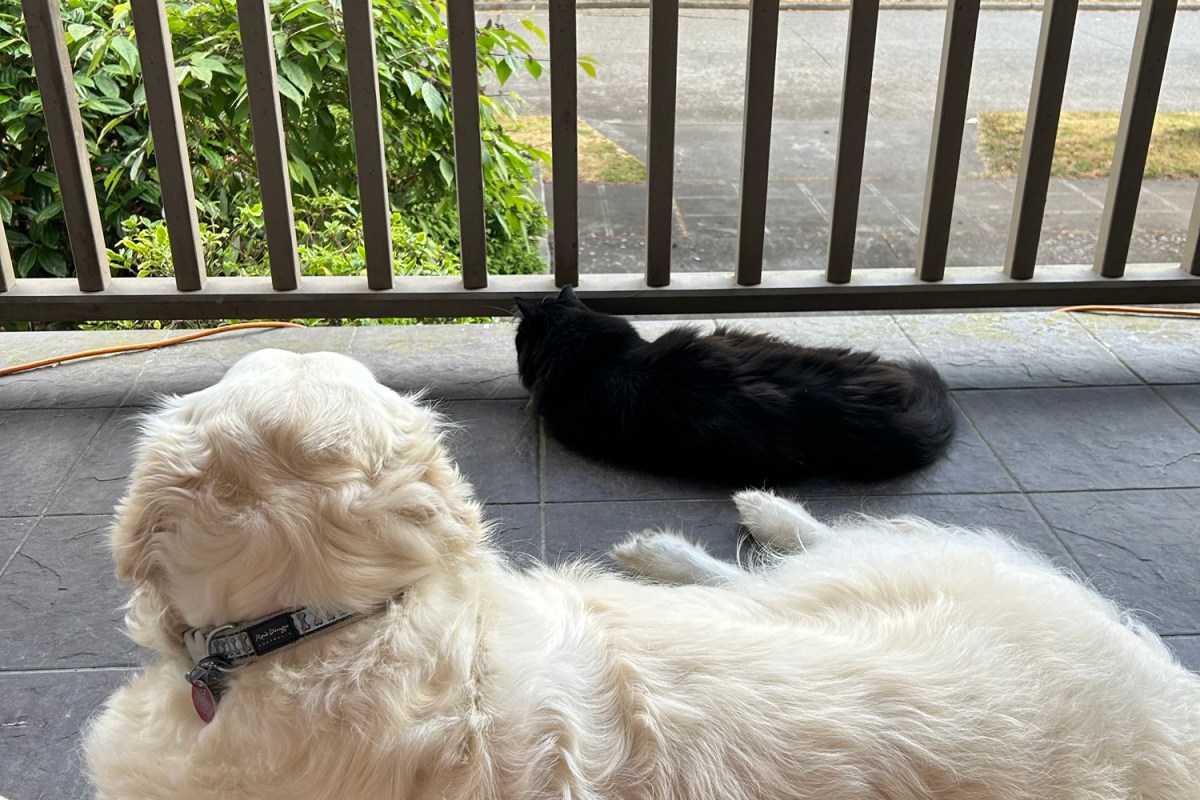
So I made an effort to pause my productivity efforts that made me feel like I was doing something by washing sheets and sanitizing bathrooms to just show up and stay present when Miss O cried out in pain and discomfort. I rubbed her back or her feet, told stories, and ordered more medium water from Mr. D. It really is what you are that heals. It’s all part of the magic of being there for someone.

(featured photo from Pexels)

You can find me on LinkedIn: https://www.linkedin.com/in/wynneleon/ and Instagram @wynneleon

I host the How to Share podcast, a podcast celebrates the art of teaching, learning, giving, and growing.

I also co-host the Sharing the Heart of the Matter podcast, an author, creator and storytelling podcast with the amazing Vicki Atkinson.
How to Share a Ghost Story

Share your knowledge. It’s a way to achieve immortality.” – Dalai Lama

Book collector Harry Elkins Widener was 27-years-old when he stood on the deck of the Titanic and urged his mom to get on a lifeboat. He said he needed to go back to get a rare and precious book. He was never seen again and no book was ever found.

Here’s what I love about how we share. That story has persisted in the 113 years since the Titanic went down because it was shared. It lives on because Harry Elkins Widener’s mom built a library for him at Harvard complete with Memorial Rooms that house his desk and shared his rare book collection. I know of the story because the talented novelist Alyson Richman heard the story, did an immense amount of research, and then shared it in the form of her delightful latest historical novel, The Missing Pages. We humans really are amazing at our ability to share knowledge, stories, and legacy in so many ways.

On the latest episode of the How to Share podcast, Vicki Atkinson and I had the great fortune to talk with Alyson Richman about her incredible book, The Missing Pages. She tells us how she heard the story of Harry Elkins Widener from her daughter and was inspired to write this book.

Alyson has the amazing ability to inhabit the time periods she writes about – and they are different for each of her 12 bestselling novels. She tells us about her research process and how her insatiable curiosity helps to drive her storytelling and writing.

We talk about the unexpected gifts in writing. In this case, the story her daughter, Charlotte, brought home from a Harvard Campus tour. Alyson reminds us that you have to be open to receive unexpected gifts and the goodness that flows from them.

Alyson has done that beautifully in this book, embodying both the mother and son’s viewpoint as well as the rich historical context in her gripping story. It’s a ghost story, mystery, bibliophile adventure, and love-story all wrapped up in one delicious book.

This is a wonderful conversation with an incredible author about a fantastic book. We know you’ll love it.

Takeaways

  • Alyson Richman’s novel ‘The Missing Pages’ is inspired by a true story.
  • The book intertwines the past and present through a ghost narrative.
  • Richman emphasizes the importance of being open to unexpected gifts.
  • Her research process involves extensive historical exploration.
  • The themes of grief and memory are central to her storytelling.
  • Richman’s characters are deeply developed and emotionally engaging.
  • Historical facts serve as building blocks for her narratives.
  • Richman is currently working on a new novel about Edith Wharton.

Here’s Alyson talking about her inspiration:

Here are some ways you can watch this great episode:

Links for this episode:

How to Share a Ghost Story with Alyson Richman transcript

The Missing Pages on Barnes & Noble and Amazon

Alyson Richman’s website

From the Hosts:

Vicki’s book about resilience and love: Surviving Sue; Blog: https://victoriaponders.com/

My book about my beloved father: Finding My Father’s Faith

Out of the Mouth of Babes: Three Lines That Open Us Up

Kindness in words creates confidence. Kindness in thinking creates profoundness. Kindness in giving creates love.” – Lao Tzu

One of my takeaways from social psychologist Jonathan Haidt’s recent book The Anxious Generation is that kids need to practice working out their relationships with each other. Negotiating what they want and also how to take care of each other is invaluable experience.

So I try to give my kids a lot of room to relate before stepping in. It feels like I have one ear open for how they talk to each other, especially when it’s at high volume. I hear plenty of statements like: “You can’t do that, it’s not fair.” and “Don’t do that ever again.”

But this week I heard three lines that immediately changed the tenor of the conversation. And the best thing about them? They were not specific to childhood.

Line #1

  • Six-year-old said, “I wish Miss O wanted to help.”

And she did. But prior to Mr. D saying that, she wasn’t clued in that he needed help.

Line #2

  • Ten-year-old Miss O said, “Okay, I’m listening.

The conversation was tense before Miss O said this. Once she said it, they worked out whatever it was they were trying to do.

Line #3

Mr. D said, “Imagine we could…

And then they were off building a better world.

(featured photo is mine)

You can find me on LinkedIn: https://www.linkedin.com/in/wynneleon/ and Instagram @wynneleon

I host the How to Share podcast, a podcast celebrates the art of teaching, learning, giving, and growing.

I also co-host the Sharing the Heart of the Matter podcast, an author, creator and storytelling podcast with the amazing Vicki Atkinson.

How To Share the Ball

It is in your hands to create a better world for all who live in it.” – Nelson Mandela

There was a moment on Monday night when I thought, “I hate baseball” as both of my kids were sitting on the couch crying.

The Mariners had just lost Game 7 of the ALCS to the Toronto Blue Jays (congrats to my Blue Jay friends). Six-year-old Mr. D cried, “I don’t think I can go to school tomorrow.” And 10-year-old Miss O plaintively added, “Maybe if I buttoned up my jersey they would have won.” I was thinking, “I can’t believe I let them watch the 9th inning right before bed!” And then we thought of how the Mariners must be feeling and it started a whole new round of tears.

As with many things that can reduce us to tears, baseball also has great power to lift us up. I have a fantastic example of this in the How to Share podcast this week with hydrogeologist and Mariner’s fan, Glenn Mutti-Driscoll.

Glenn caught a ball at a Mariner’s game in September. But it wasn’t just any ball, it was Cal Raleigh’s 60th homerun ball. A significant marker when Cal joined the ranks of Babe Ruth, Roger Maris and Aaron Judge to hit that milestone.

Glenn and I talked about what happened next – because Glenn gave that historic ball away to a 12-year-old boy near him in the stands.

I’m so grateful that Glenn agreed to podcast with me because he didn’t do this for the recognition. We talk about what inspired him to share the ball and the ripple effects of kindness. What’s so incredible about this example is that we can see the rewards of giving in this case to both the giver, receiver, and everyone around.

Glenn tells us about the serendipity of the moment and how the action was more automatic than deliberated. We also discuss that the long effect that this lesson will have to this next generation – especially Marcus, the boy that Glenn handed the ball to as well as Glenn’s own sons.

This is a fantastically inspiring example of how (and why) to share. I know you’ll love it.

Takeaways

  • Glenn’s act of kindness was spontaneous and automatic.
  • The decision to give the ball away was influenced by his role as a parent.
  • Kindness can have a ripple effect on the community.
  • The media response highlighted the importance of positive stories.
  • Glenn’s children learned valuable lessons about generosity.
  • The experience brought unexpected joy and recognition to Glenn’s family.
  • Acts of kindness can uplift people’s spirits in challenging times.
  • Sharing experiences can inspire others to act kindly.
  • The moment of catching the ball was filled with serendipity.
  • Glenn’s story serves as a reminder of the power of giving.

Here’s a clip of Glenn telling the story of the catch and release:

Here are some ways you can watch this heartwarming and inspiring episode:

How To Share: From International Lawyer to Thriller Writer How To Share

In this episode of 'How to Share', hosts Wynne Leon andVicki Atkinson engage with author Marc Ross about his latest geopolitical thriller, 'Attacking the Dragon'. The conversation delves into the book's plot, which revolves around China's Belt and Road Initiative, and how Ross's background as a lawyer influenced his writing. They explore the complexities ofChinese politics, character development, and the nuances of storytelling, as well as Ross's personal journey from law to fiction writing.Takeaways:Marc Ross's book 'Attacking the Dragon' explores China's geopolitical landscape.The Belt and Road Initiative is a significant yet under-discussed topic.Ross aims to portray China as a victim rather than an aggressor in his narrative.His legal background provides a unique perspective on the thriller genre.Character names in Chinese culture are complex but manageable for storytelling.Ross's writing journey reflects a long-held dream to become an author.He emphasizes the importance of creating unique protagonists in thrillers.The art of storytelling involves engaging readers through vivid descriptions.Ross enjoys the process of writing and values reader feedback. His experiences as a lawyer enrich his fictional narratives.Links for this Episode:How to Share homeA. Marc Ross's website: https://www.amarcross.com/index.htmlAttacking the Dragon on Barnes & Noble and AmazonFrom the hosts:Vicki’s book about resilience and love: Surviving Sue; Blog: https://victoriaponders.com/My book about my beloved father: Finding My Father’s Faith
  1. How To Share: From International Lawyer to Thriller Writer
  2. How to Share Our Luck with Gil Gillenwater
  3. How to Share 1970's Chicago with Doug. E. Jones
  4. How to Share Feedback with Dr. Vicki Atkinson
  5. How to Share the Next Generation with Mari Sarkisian Wyatt

How to Share the Ball transcript

Links for this episode:

Cal meets fan who gave HR No. 60 to kid — and comes bearing gifts

Mariners reward fan who gave valuable Cal Raleigh 60th home run ball to nearby child – The Athletic

From the host:

My book about my beloved father: ⁠Finding My Father’s Faith⁠;

(featured photo from Pexels)

Life Begins Now: The Parenting Trap

“It still amazes me that we insist on teaching algebra to all students when only about 20 percent will ever use it and fail to teach anything about parenting when the vast majority of our students will become parents.” – Nel Noddings

My dad used to tell this joke: Three religious leaders were asked the question, “When does life begin?”

The Catholic priest said, “At conception.

The Protestant pastor replied, “At birth.

The Rabbi answered, “When the last kid goes to college and the dog dies.

I’m laughing. Wow do I feel this. As a parent of young children, I do more things in a day that I wouldn’t choose to do than things I would choose. That alone can make me feel as if my life is not my own. Add in the noise and chaos and it’s hard to find peace. Taken all together, that can make this phase of life seem like one to rush through.

 But I know I can’t assume that I’ll be able to enjoy my kids when they are mature adults. I had my kids when I was aged 46 and then 50. When my youngest is 30, I’ll be 80-years-old. Hopefully an alive, healthy, and active 80 years old but nothing is a given. I know that’s true at any age.

So I try to flip the punchline and enjoy my kids, and life, now.

Cleaning up messes

Things in my house are spilled nearly every day. Sometimes by me. Often not very big deals like when a glass of milk with a top on spilled the other day. It just left a corona of milk dotting the carpet.

Here’s the thing I’ve realized. It’s a chance to convey to my dear children that I’ll love them when things are messy.

Bonus points: Longevity specialist Dr. Peter Attia includes getting up from the floor with max of one arm for support on his Centenarian Decathlon list. It includes the ten most important physical tasks you will want to be able to do for the rest of your life. Every time I’m down on the floor cleaning, I celebrate working out the strength and neuromuscular control that I need.

Helping with personal hygiene

It’s funny that kids don’t come with personal hygiene habits baked in. I’d prefer not to have to remind others to brush their teeth or wipe their tush. Add a dog, cat and a crested gecko in the mix and I can pretty much guarantee that most days will have some involvement in someone else’s hygiene.

I love this one because it’s foundational to my outlook. It’s forced me as a congenital optimist, to accept that every day is not going to be perfect, comfortable, or even pretty.

And long after I’m gone, I can trust my kids will have some idea of how to keep their bodies safe.

Bonus points: My personal hygiene has suffered as a parent. Kudos to me when I remember to take care of myself as well.

Feeding them

There are some days where I make food, clean up from making food, only to find that by that time, more food is already required.

But, whether real or metaphorical, I’d argue that giving others fuel to live by is what we are here for.

Bonus points: This is a reminder that cooking is all about exercising our creative muscles. How can I make something when I realize I’m missing an ingredient? How do I make something that’ll last with what I have?

Melt downs

Oh, those moments when big emotions take over and make us uncomfortable. And by us, I mean not only the person melting down but also everyone close at hand. It can be precarious, unpredictable, and draining. It’s also 100% real.

Recently, I took my kids rock climbing. My six-year-old son got stuck halfway up the rock face. He couldn’t find a way past – not moving right or left or shifting his weight. He started to cry. Since I was belaying him, there was nothing I could do except be there with him. And it was the perfect metaphor because I was connected to him by a rope.

From 40 feet away, I shouted up my empathy for his frustration, tried some suggestions, told him he could come down, emphasized that I knew he could do it – everything I could do to help from afar. Finally he shook it off. Then he managed the coolest move — palming the rock with his right hand and smearing the face with his left foot, he leveraged himself up high enough to the next good hold.

It was as rousing of a feat of personal triumph as I’ve ever witnessed.

Here’s where you get to pick your image: port in the storm, rope anchor on a mountain, sacred ground – you have the chance to be that for someone else. And to learn a little bit about what it kicks off in you as well. We don’t often get to see adults do that – the trying, melt down, return and overcoming is usually a longer (and more hidden) process for grown-up risks and triumphs. There is nothing as powerful as watching someone overcome some real adversity. With young kids we get to see that nearly every day.

And then we get to celebrate their success.

Bonus points: It’s hard to stay regulated when someone else is dysregulated. Whether it’s my verbal 10-year-old daughter talking grown-up sounding sass that covers for her childlike emotions underneath or a stranger at the store, I feel it all the way through. But all this practice is helping my central nervous system to be buff!

Distraction

When awake and nearby, my kids provide continual distraction. I could be inside sitting at my computer typing and instead I’m out in a creek skipping rocks. Or I could be sitting on the couch with my phone in hand texting and instead I’m having a dance party and moving my hips. I hunt for snails and hold my kids’ hands while they learn to hoverboard.

Oh, that’s right – I’ve never once regretted a dance party, a rock skipping contest, time in nature, or moving my body.

Bonus points. Psychologist Dr. Alison Gopnik says that kids have lantern brain. They see everything that is around. Adults have spotlight brain – we focus on what needs to be done. Switching into lantern brain can help us solve problems, be creative, and open us to new insights. The distractions can actually help us with solutions for our work when we return to it.

Invasion of personal space

Yesterday my six-year-old son stuffed something in the pocket of my jeans. Gah.  

I’m all for enforcing the boundaries necessary to maintain healthy relationships. But before I decide what those boundaries are, I consider that my kids embody what we look like as open creatures that assume other people will help you carry your stuff.

Bonus points: Ask someone else to help you carry your stuff.

Time

I’m the only one that cares about time in my house. Being on time, getting to bed, the school bell is about to ring, dinner time, time for annual physicals, or it’s about time. All of it.

Because I’m the one that understands time is limited.

Bonus points: Stop caring about the future and enjoy the now.

I’m not guaranteed to get to 80 years old. But I bet that if I do, parenting will have extended my healthspan so that I enjoy it more. And I know I’ll be glad that I didn’t wait until the kids went to college and the dog died to begin living.

(featured photo is mine)

You can find me on LinkedIn: https://www.linkedin.com/in/wynneleon/ and Instagram @wynneleon

I host the How to Share podcast, a podcast about collaboration – sharing leads to success.

I also co-host the Sharing the Heart of the Matter podcast, an author, creator and storytelling podcast with the amazing Vicki Atkinson.

The Mysterious Case of the Barking Dog

In school we learn that mistakes are bad, and we are punished for making them. Yet, if you look at the way humans are designed to learn, we learn by making mistakes. We learn to walk by falling down. If we never fell down, we would never walk.” – Robert Kiyosaki

On a recent afternoon I was going through the mail in the mailbox and found an unsigned, handwritten note on a plain piece of paper that read (including word error),
“Please do not leave you dog out barking. It is unpleasant for neighbors.”

My ten-year-old daughter, Miss O, saw the look on my face as I tried to discern the message. She came to read over my elbow. Sensing a family meeting, six-year-old Mr. D wandered over and asked what we were doing. We read the note through one more time.

But Cooper doesn’t bark,” Mr. D said. And he’s right, Cooper isn’t a barker. He’ll steal your socks and your steak but he’s quiet about it.

And we don’t leave him outside,” Miss O added. Also true. Cooper is in the habit of lying on the front porch to watch the neighborhood but that’s when we’re home and the door is open.

Maybe they have us confused with someone else,” I mused.

We couldn’t figure out the note but we were united in our righteous indignation in defense of Cooper’s honor. Mr. D suggested he rip up the note and throw it as far as he could.

It wasn’t until the next morning in the shower that I connected the dots. One day the week before we were getting ready to leave the house so that I could drive the kids to camp. Cooper was out on the front porch. I called him in and locked the door.

But when I came home about 90 minutes later after dropping the kids and picking up supplies, Cooper was on the front porch and the door was unlocked. One of the kids must have opened the door to check the weather and Cooper snuck out. He wasn’t barking when I came home so I didn’t realize it right away. He must have barked when he realized he was trapped out there.

The funny thing was that I almost didn’t tell the kids once I figured it out. Our righteous indignation felt so comfortable that I kinda wanted to keep wearing it.

But I also know that it builds up over time. The vulnerability of confession doesn’t come naturally to me, but I’ve found owning my errors and frailty keeps my pipes clean. Everything flows better when I don’t let the grime build up. More than that, I feel everything more fully when I shake off the protective coat of righteous indignation or defensiveness.

And it creates space for learning. When I told the kids my solution to the mysterious case of the barking dog, they both nodded and went, “Ooohhh, right!” I bet we’ll remember that lesson.

(featured photo is mine)

You can find me on LinkedIn: https://www.linkedin.com/in/wynneleon/ and Instagram @wynneleon

I host the How to Share podcast, a podcast about collaboration – sharing leads to success.

I also co-host the Sharing the Heart of the Matter podcast, an author, creator and storytelling podcast with the amazing Vicki Atkinson.
Life(cycle) of the Party

You knew it would be hard and it would be uncomfortable and it might be awkward and you did it anyway. That’s courage.” – Arnold Schwarzenegger

I did it. We did it, I should say. We threw a backyard birthday party for Mr. D’s sixth birthday and hosted 21 kids under the age of eight plus about a dozen parents. And the we? I hired Miss O and two of her 10-year-old friends to help. I also had the invaluable assistance of a young woman who was Mr. D’s pre-school teacher and has become a great family friend.

Here are ten things I seem to learn and re-learn about the life(cycle) of the party.

  1. Parties are a great forcing function. I’m guessing it would be easier to rent a party venue. But I love the opportunity to invest in my home. I try to do a home improvement project and a purge project before every party. I don’t think I sat down for three days leading up to the event. But I laid more pavers to expand my backyard seating area and filled eight bags of dishware, textiles, and toys to give away. That alone made the party a win before it even started!
  2. You have to sleep on it to learn. I walked 22,160 steps on the day of the party. At the end of the day, I was too exhausted to know or feel anything…other than tired. The lessons learned didn’t show up til the next morning.
  3. Even the happiest of events will exhaust you. Mr. D loved his party. It was a fair theme with Crocodile Cave water slide on one side of the yard, an inflatable hot tub on the other and in between a bottle-ring toss game, Skee ball setup, fishing game, and a flipping rings game. After lunch and birthday cake, we made shaved ice cones, cotton candy, applied tattoos and had a ballon art station.

    Mr. D almost fell asleep in his dinner.
  4. You plan, plan, plan… and then let it happen. Miss O had beautifully drawn out the time table for three party phases: WET,  DRYING, and DRY. We had roles assigned for each. We were about 15 minutes into the party when we made our first substitution.
  5. There is that guy at parties regardless of age. In one terrifying moment, I came eyeball-to-eyeball with a six-year-old that said, “I’m going to open the gecko’s cage.” I had to race the kid to the keys. I never thought twice about leaving the enclosure key in the door like we always do.

    The party shtick of that guy (not meant to be gender specific) starts early.
  6. The messy middle happens every time. There was a moment right before birthday cake where it all felt impossible. We took a deep breath and made it through.
  7. No one naturally markets their stuff. Each of the “fair activities” had its own arc. But when the lines at a particular stand ebbed, nobody wanted to be the carnival barker to attract an audience.
  8. Mixing up the ages benefits everyone. In this case it was letting older kids take care of younger kids. It made both ages feel special.
  9. Save time for the after part. My favorite part was after all the guests left. The workers, Miss O, and Mr. D got to really enjoy the fun.
  10. There are a few people that will go the extra mile to appreciate the effort. Keep them close. All the parents were lovely and grateful. A couple went out of the way to tell me afterwards what they appreciated. I suspect these are also the people I know, online and in real life, that take the time to leave good reviews. I want to be more like them.

Looking this over, I think it might be the lifecycle of all the hard things I’ve done. What do you think – is there a predictable arc of big to-dos? Did I miss any lessons learned?

(featured photo from Pexels)

You can find me on LinkedIn: https://www.linkedin.com/in/wynneleon/ and Instagram @wynneleon

I host the How to Share podcast, a podcast about collaboration – in our families, friendships, at work and in the world.

I also co-host the Sharing the Heart of the Matter podcast, an author, creator and storytelling podcast with the amazing Vicki Atkinson.
Touchstone

When it’s over, it’s the happy memories that hurt.” – unknown

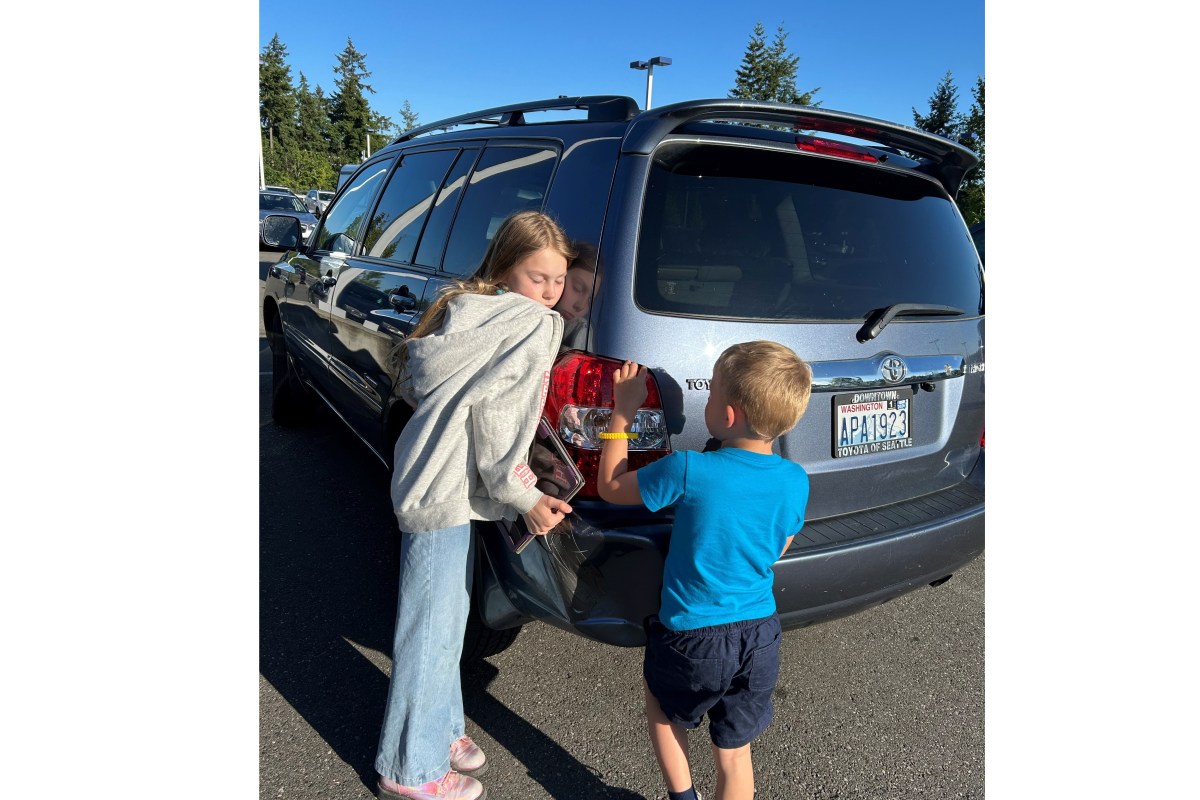
This car is packed with memories,” Miss O said as we pulled into the lot of the company we were selling it to.

I’d aimed to sell the car earlier in the day. But it was so old that the title was in my married name. Even with the proper documentation, it took longer than I’d anticipated so I had to return with my kids to finalize the deal.

Miss O was right – the car was packed with memories from the 18 years I owned it. And about a thousand goldfish crackers stuck in the cracks. We’d tried to get all the goldfish out but probably missed at least a dozen.

This was the car I’d trepidatiously drove Miss O home from the hospital in almost ten years ago. And made that same trip with Mr. D about six years ago filled with awe and a little bit of overwhelm. Speaking of family members, it was the car we picked up Cooper the dog in as a puppy two years ago. Miss O sat with him in a box on our lap in the back seat and explained the world, “This is a freeway. That is an airplane. And you are my new best friend.”

It’s carried us, our well-worn hiking shoes, and our stuffies to school, our favorite vacation spots, and the best hiking trails.

The car was the last car of mine that my dad rode in and helped fix. I can still see him taping plastic over the rear window on the driver’s side when it stopped working on a stormy November day.

Along with the goldfish crackers, the car probably has two pounds of dog hair even after we vacuumed and vacuumed. It was the car that carried me to say good-bye to my beloved dog, Biscuit when it was time for him to cross the rainbow bridge at nearly 14 years of age in 2017.

Like all touchstones, the car is just a gateway for all the tender, tense, and touching moments my family has stored in our hearts. Funny how touchstones make feelings so accessible. The car feeling was that life is adventurous, rich, and full of beloved characters we love.

The kids and I hugged the car and walked into the building a little teary-eyed. We sold the car but we are keeping the memories.

(featured photo is of our parking lot car hug)

You can find me on LinkedIn: https://www.linkedin.com/in/wynneleon/ and Instagram @wynneleon

I host the How to Share podcast, a podcast about collaboration – in our families, friendships, at work and in the world.

I also co-host the Sharing the Heart of the Matter podcast, an author, creator and storytelling podcast with the amazing Vicki Atkinson.
Best Mother’s Day Gift

You are imperfect, you are wired for struggle, but you are worthy of love and belonging.” – Brené Brown

As I type this, I can hear my kids 10 feet away slurping their hot chocolate. It’s the end of a busy weekend. We had our family over for Mother’s Day and now are winding down.

I’m trying to put my finger on the feeling. Over the course of the weekend, in addition to hosting a family party, my kids and I played a lot of baseball, done chores, cooked meals, watched movies and worked on a project outside to transform an area of our back yard. That last activity involved a lot of manual labor as we dug out a flat space and installed pavers to turn what used to be the base of the kids’ playhouse into a cozy place to sit in the garden.

In the last 48 hours, we’ve hurt our knuckles on the rough paving stones, cried some, especially when we lost our baseballs, and laughed a lot more than we cried. Along the way to finishing our project, we also bought this silly ball pitching machine that sends small 1.6 inch diameter foam balls zinging across the yard at 30 miles per hour. My body aches from moving heavy stones and gravel and chasing small yellow balls.

But my heart is so full. It’s the camaraderie with our extended family. Also this feeling that I’m right where I should be. I love my children whole-heartedly…and I like them too.

When I chose to start a family as a single parent ten years ago I had very little idea of how much work would be involved. I was listening to a God whisper about what came next for my life.

The Mother’s Day feeling I’m having right now? That I belong in this life. I suspect that might be one of the best gifts ever.

(featured photo is mine of our work in progress garden seating area)

You can find me on LinkedIn: https://www.linkedin.com/in/wynneleon/ and Instagram @wynneleon

I host the How to Share podcast, a podcast focused on the wisdom and research about how to share anything – to the appropriate audience, with the right permissions, at the most opportune time.

I also co-host the Sharing the Heart of the Matter podcast, an author, creator and storytelling podcast with the amazing Vicki Atkinson.

My other projects include work as a CEO (Chief Encouragement Officer), speaking about collaboration and AI through the Chicago Writer’s Association, and my book about my journey to find what fueled my dad’s indelible spark and twinkle can be found on Amazon: Finding My Father’s Faith.

What I Know, Not What I Think

The Heart has its reasons, that reason does not know.” – Blaise Pascal

I have a lot of opinions about all that’s going on in the world. Don’t worry – I’m not going to tell you them. I realized the other day that not only do I get a steady dose of news from my media intake, but I also am getting a whole lot of other people’s opinions about it from newsletters, expert commentary, inexpert commentary, memes, and more.

This a-ha made me realize that I needed to take a breath and find ground in what I know instead of just what I think. My dad was a great believer in the wisdom of the heart. The quote for this post was one of his favorites.

So here’s what I know:

No one knows the future, no matter what credentials they have.

People working together can accomplish great things.
Pitting people against each other can lead to temporary gains but comes at a cost.

There are real feelings in the pancake vs. waffle debate.

One suffering soul can hurt a lot of people

Healing is always possible but it takes hard work.
It’s my responsibility to do my work so that I can try not to add suffering to the world.

Believing is a way of life. If something requires me to check what I believe at the door, I should be doing everything I can to resist.

When I feel rushed, oppressed, and worried, the best thing to do is slow down, remember what I know, and find the next right thing to do. The rest is in God’s hands.
Believing that there is Higher Power helps me to work hard in the day and sleep at night.

There are an infinite number of things that can bug me – and the at least the same number that can delight me.
Whether I find one or the other, depends on me.
Developing the discernment between what is irritating and what needs to be fixed is a constant practice.

Love is all there is, to quote the Fab Four.
Being mindful of expansive love changes my experience: love of all the precious people around, the beauty of nature, the delight in the air I breathe, the gift of the day I’m in.
Uncertainty triggers fear and moves me out of love.

Navigating uncertainty takes energy.
Patience takes energy.
So sleeping and eating well can truly change the world.

When choosing between the standard and the ultra, always make the ultimate pancake recipe

The golden rule to treat others the way that I want to be treated works to reminds me to flip my perspective.
But I will never know what anyone else’s experience is like.

Sharing of authentic stories is transformative.
Opinions rarely brings us together. Swapping stories often does.

There is no one else I can be.
Conversely there is no one else others can be.
People change; but not how you want or when you want them to.

Slowing down how I roll helps me find more opportunities to be kind.

Effort brings outcome.
Exercise is worth it.
Setting goals that are bigger than I believe I can accomplish will take me somewhere.
There is nothing I can wear that will replace confidence.
It is possible to live through hard times and learn from them.

My dad once wrote, “The distance between our heart and our head is about 13 inches. When our hearts are right, our heads will follow along by believing.
And that leads to the last thing I know for this post: A hopeful heart is a powerful thing.

(featured photo is mine)

You can find me on Instagram @wynneleon and LinkedIn: https://www.linkedin.com/in/wynneleon/

I co-host a storytelling podcast featuring authors and artists with the amazing Vicki Atkinson. To tune in, search for Sharing the Heart of the Matter on Spotify, Apple, Amazon Music or Pocketcasts (and subscribe) or click here. Or the YouTube channel features videos of our interviews. Please subscribe!
My other projects include work as a CEO (Chief Encouragement Officer), speaking about collaboration and AI through the Chicago Writer’s Association, and my book about my journey to find what fueled my dad’s indelible spark and twinkle can be found on Amazon: Finding My Father’s Faith.