Sometimes The Dead Speak

See, broken things always have a story to tell, don’t they?” – Sara Pennypacker

Funny how much we want the voices of the dead to weigh in on some subjects. I published a post on Monday, The Set Up, that told the story of a family incident that happened 35 years ago. The code of secrecy between kids being what it is, it’s an incident that I never told my dad about. Especially as the youngest kid, it would have been a serious breach to tell my dad what happened so I don’t know what his response would be.

But I found a sermon that he wrote almost 38 years ago that gives me a pretty good idea of his approach. It’s long as a piece of writing. If you want to skip down to the family story, skim down to the paragraph near the end that starts with “Several years ago Carolyn and I.” Carolyn is my mom’s name.


Parenting

October 12, 1986

Dr. Richard H. Leon

This is the both the worst of themes and the best of themes to address. It is the worst because who can speak with clean hands about parenting? Surely not I. We all have so much to learn and so much we would like to forget that it is a bit ludicrous to stand up and speak about parenting as if we knew best!

But this is also the best of themes because it is the arena of our lives that consumes the most energy and that concerns us the most. Every small group experience I have had reminds me that when we talk about the rhythms of daily life they nearly always revolve around our family-life… relationships with our parents, our spouse, our children, their children…etc., etc., etc..

From the start I want to say tha the church has not always been the best place for honest parenting-talk. I don’t know your experience. But in my lifetime I have seen the church err more often than not in two ways: in an effort to uphold moral law we have come down hard in judging wrong behavior… and in an effort to celebrate successful family life we have made it hard for people to face their pain openly. Tolstoy said, “Happy families are all alike, but every unhappy family is unhappy in its own way.” And this morning I want to open the door to the Biblical perspective on the painful side and the grace-ful side of parenting.

Coping with guilt and grief

The first concern I have is the painful side of guilt over ways we fail our children as parents and the grief that comes when children do not live up to our dreams and ideals. Life tells me these feelings are almost universal in parents. Don’t we all feel like we have failed in one way or another in raising our children? And don’t we all feel the grief for lost dreams for our children? I can still recall the first time I felt this…it was when one of our children first defied Carolyn and me and refused to follow our direction and meet our expectations. And that was at age 3…not to mention the broken dreams during their teen-years!

How do we keep from concluding that their failures are all our fault? How can we learn to accept that each of our children are separate from us with a mind and will and personality of their own?

It is helpful to me to name the full sweetp of the realities that shape us. The point here is to note that although parents have a great influence over children … there are many other ingredients in the recipes for our children’s lives. Let me list at least seven of these ingredients.

Genes – from the first moment of birth, before parents can do anything to influence children, it is clear that every child is different. It is a simple matter of genetics. We look at our three children and see that their responses to life were distinctly different from day one. Our first child was laid back and relaxed…our second was wound up so tight she couldn’t keep her head still to nurse…our third child was happy and charming. They had those marks when they were born…they still have them!

Growth patterns – every day is a time of growth and development and the setting for each child is different so that given their different temperaments and these different circumstances they all follow different patterns of growth. A lot has been done lately with our birth-order. First children grow accustomed to take the lead (bossing others around, some say), middle children get caught between not being the oldest in the lead or the youngest who is always the “cute” one; and youngest children come into their world with experienced parents who are too tired to push like they did the first times around!

Parenting – make no mistake about it. How we raise our kids does make a difference. We bear a heavy weight here … but it is not the only force at work in our children’s lives.

Culture – I have lived in enough different countries to see both the common humanity that we share and the cultural differences that train us up with different beliefs and values and realities. The irony of this matter of culture is that those places the western world calls “backward” are the same places where children are raised to respect and obey their parents!

Peers – a graph would show that the degree of parental influence in a child’s life starts high and steadily declines, and the degree of peer-power starts at nothing and steadily increase until by the teen years these two lines cross and the end is near! The force of peers soon becomes the dominant force in life… until a time in early adulthood … sooner for some and much later for others… when self0rule takes over from peer-control.

Church – I may seem strange to include church as an influence in many of our children’s lives..but hopefully this is true. The place of Christian families and friends, teachers and church school and worship and young leaders … all this is potentially a great force for balance and health.

God – We are born by god’s grace, created in God’s image and we all one day return to face God. And the force of God in our lives is something we acknowledge by faith even though we know many cannot see it. Scripture teaches that God seeks us all out as a shepherd searches for his single lost sheep. If we simply give God a chance he will move mightily in our lives and the lives of our children. I must confess that this truth gives me more comfort, hope and confidence in the future than anything else I may say this morning. God loves our children even more than we do and he is not idle about his love!

So, there are at least seven forces at work in the lives of our children. Our places a parents is central and strong … but all that happens in our children’s lives is neither all our fault … nor all to our credit!

Coping with the tension between “law” and “grace”

Let me speak second about another prime issue in parenting … the constant tension between laying it on (the law) and laying off (grace).

One of the best passages in scripture to examine in this regard is the parable of the Prodigal Son … or better yet, the Loving Father. This may be the most astounding store in all literature. It touches every one of us on several levels and all at once.

The story builds on a father’s relationship with two sons. Both are raised in the same household with the same values. Notice how different the sons are in their views of life. Is it the parent’s fault that one is strong-willed and self-centered and the other is compliant enough to stay at home? (We also learn that the older son was jealous, harbored hurt and anger, was unforgiving and self-righteous … but that’s a different story!)

Look at the tension in the father’s life when his son asks for his inheritance and wants to leave home. We have to assume the son was old enough to leave. We have to assume that the father did not respond with this same generosity and grace when his son said that at 3 years old … or at 10 … or even 16. Can you picture what the father must have thought about at this request? Like:

  • “…What will my neighbors think?”
  • “…is this fair to my oldest son?”
  • “…will I look weak?”
  • “…if he squanders it will I be responsible?”
  • …”my father would never have let me do this!”
  • “…and I never would have thought that way!”
  • “…if I hit him hard enough will he change his views?”

The tension was between reading his son the law … or giving his son his freedom. And the amazing turn of the story is that contrary to his culture and his own family values the father in Jesus’ story lets his son go free. It is almost as if the father is saying … “the only way I can win my son’s heart is to let my son go.”

Lessons from the gospel to guide parents

I would like to see if we can extract some lessons from Jesus’ story of this loving father than can help us in the task of parenting. It should be noted from the start, however, that these lessons are not given in the passage just because it worked with this second son but because these lessons are consistent with a parent’s love. In other words, the justification is not one of success … do it because it always words … but one of love … do it because you love your child and this is how God loved you!

There really is only one lesson to note, it is the lesson of unconditional love. There is no other way to describe this father’s love for his son. He loves his son without asking him to conform to his standards, expectations, or dreams. He loves his son even though it brings great pain to himself … and as he might have guessed, even to his son. There are three choices the father made that mark unconditional love as a parent.

The first mark is in 15:12 “So he divided his property” and it is the choice between acceptance-release or rejection-restraint. For a father to release a son with his inheritance in that culture was to invite mockery. It meant taking the insult of one’s son who in effect is saying “I wish you were dead” and not fighting back. The temptation to reject his son must have been enormous.

And this may help us see that unconditional love is not an instinct, it is a decision. We do not love like this with our feelings … we love like this because we make a decision that it is most loving. And this truth applies to our relationships as husbands and wives as well as parents and children. When insulted you need to ask a question that short-circuits your feelings: “what is the loving response?” It may not always be acceptance and release. There are times for discipline and restraint. But it will only be acceptance and release if you decide it will be that!

A second issue is waiting and hoping or giving up on someone. Look at the 20th verse: “he saw him a long way off.” You only see someone a long way off if you are looking for him and waiting for him.

When he gave his son his portion and saw his son off to the far country it would have been very easy to conclude the son has chosen his own way and there was no way he would ever take him back.

The pain of separation must have been so intense that it is not hard for us to imagine a response of simply trying to forget that this son was still living. You and I see this often, don’t we? I recall one family that we were very close to in our pastorate. When one of their daughters got pregnant and had to get married it hurt the mother so much that she simply dismissed her from her life. Even though she lived only a few miles away in the same little township the mother chose to terminate the whole relationship.

But this father in Jesus’ story did not give up. He must have gone to a view-point that looked out on that road to the far country every day to watch for his son’s return. He prayed for his son and waited for his son to come home. He did not hurt less by doing this. But he hurt better. That is he did not let the pain of the separation destroy the hope of his love.

And thirdly, we see unconditional love as making the choice between forgiveness or punishment. Verse 22 goes like this: “But the father said to the servants, quick bring the best robe and put it on him. Put a ring on his finger and sandals on his feet. Bring the fattened calf and kill it. Let’s have a feast and celebrate. For this son of mine was lost and is found.

This is not cheap restoration, it is as costly to the father as letting him go because all the village would have expected the father to punish the son for his insult and foolishness. But love sees the beauty of the future relationship rather than holds the pains of the past rejection. His son has paid for his sin in his own way and it is now for the father to celebrate his return not punish for his wrong.

Several years ago Carolyn and I were going through a time of considerable pain and struggle with our middle child. At that same time I was studying this passage for my own sake and for helping others. We tried to shape our love with the encouragement of these lessons. It was not easy. Let me see if I can describe the situation without too many details that betray trust.

We had had one of those summers-at-home-after-a-first-year-of-college situations. We were trying to let her live on her own as she had at college while at the same time stay sane when that meant doing things at considerable variance with our wishes. The summer went well by avoiding conflict … not the best model to follow, by the way. When school started and we began writing to each other, the issues then surfaced again and it was just plain painful. By November it moved beyond pain to trauma for all of us. Then Carolyn and I received a letter that opened up a new dimension… in it she spilled out long-held feelings of being the “least-loved” of the kids and “most criticized” for what she did when the others were just as “bad!”

Well, this time it was my turn to reply and I found myself faced with several choices. How did I handle her anger? How did I respond to her judgment of our treatment of her? I could have lashed back and defended our side of the relationship. I could have tried to document the ways she deserved any anger or judgment we had shown her. I could have closed the door to the whole issue and pushed her further away. But largely because of the prodigal’s story and lessons I wrote back and said: “You’re right … we have not loved you in the way you needed. Please forgive us. We are really sorry for our part in your hurt.” It was not just a posture … it was genuine sadness and a genuine apology.

The response to that letter was like a shaft of light in a dark storm. She actually had a dream about it. In the dream, she was waiting with Carolyn for me to come to church … I was late … she asked Carolyn why and finally was told I was dead. She didn’t believe it, she went to see for herself, and found it was true. And then she came back to Carolyn and asked, “Is it too late?” Carolyn asked, “Too late for what?” And she answered: “Too late to tell Dad how much I love him.” She called the next night and told us about the dream and about her love. The dream was so strong that it turned our whole relationship around … and I believe it was God’s way of intervening in our relationship. We are closer now than ever before.

I am convinced that the letters that uncovered those deep feelings, the encouragement of scriptures that helped Carolyn and me respond through prayer and confession rather than through emotional reactions and self-defense, and God’s intervention through a dream (a familiar tool of God!) all brought about a miracle.

There are no guarantees when it comes to parenting … but the pattern of the prodigal’s father is God’s way with us. It is a pattern of swallowing pain and accepting the person … waiting, praying, hoping for that return from the far country … and forgiveness and restoration to the fullness of relationship. I do not believe this because it always works … I believe it because it is the way of health and truth and love. It is God’s way with us and in Christ it is God’s call to our love for one another.


I wish I could say that my dad’s relationship with my sister was all sunshine and rainbows from then on. It wasn’t. But by the time my dad died in a bicycle accident, they were probably as close as ever. A blessing for sure.

P.S. If you ever wonder if it’s worth writing down your stories and thoughts for future generations, here’s one example of how it absolutely does matter.

P.P.S. My book about my journey to find what fueled my dad’s indelible spark and twinkle can be found on Amazon: Finding My Father’s Faith.

The Onset of Reality

I’d rather learn from one bird how to sing than teach ten thousand stars how not to dance.” – e.e. cummings

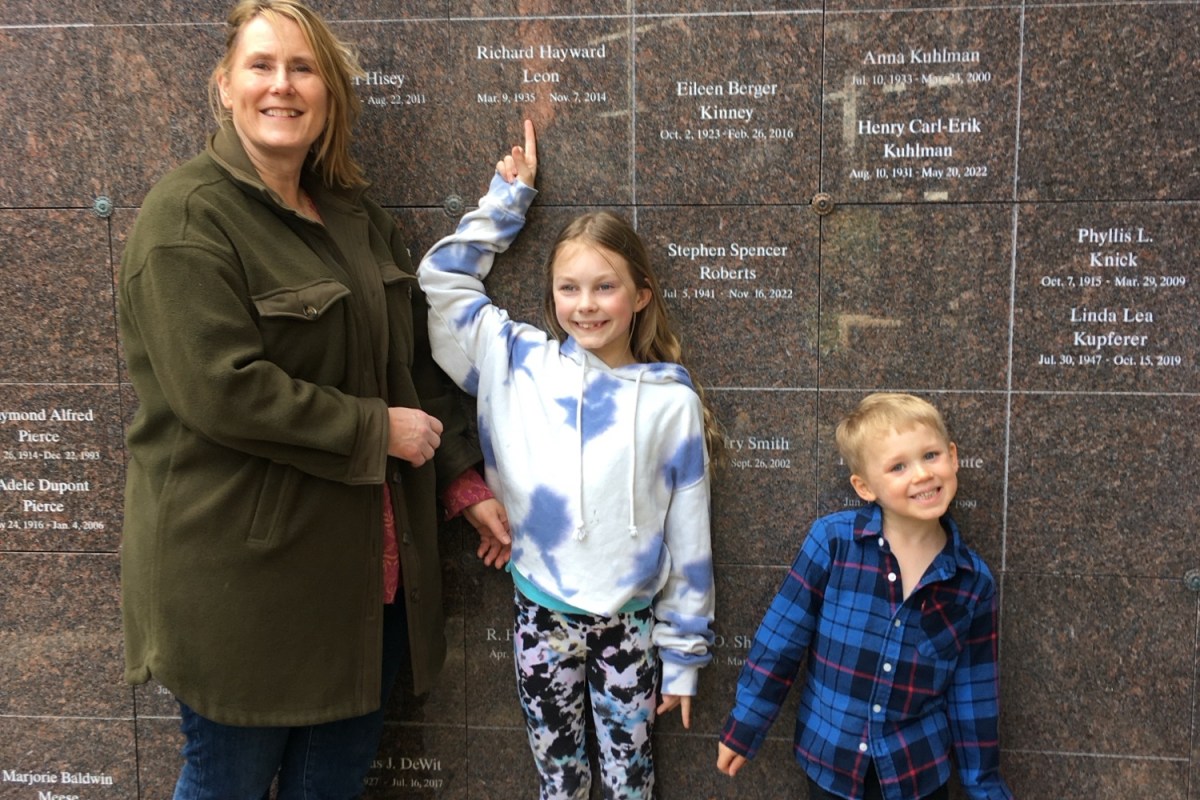
Recently my kids and I were at my dad’s former church for an Easter event. On the way out, Miss O asked to see my dad’s stone in the columbarium. It’s in a beautiful nook by a babbling little brook surrounded by trees.

Miss O and I like patterns. So we looked at all the stones and saw the ones, like my dad’s, that are offset because their spouse/partner will be added when they die. And then the ones where the name is in the middle because they are by themselves.

Miss O wanted to know about the dates on my dad’s stone. I pointed out his birth date and then she looked at the date of his death and said, “Because everyone comes to their death date.

Right!

[As aside, this reminds me of one of my dad’s jokes: “There’s always death and taxes; however, death doesn’t get worse every year.”]

She made that death date observation without any gravity or sadness. My kids can envision monsters and thieves but death doesn’t hold any weight for them.

At four-years-old and eight-years-old, they seem to attend to whatever is at hand with very little worry about the future. Somewhere between four and fifty-four, “reality” hits.

Which reminded me that a few weeks ago at bedtime, Miss O told me that she and her friend have been using recess to talk about “big topics.” I couldn’t wait to hear about these so I snuggled in next to her and asked, “Like what?

She replied, “Puberty and reality. Puberty was my friend’s topic and I brought up reality. I can’t believe it starts in three years.”

I asked “What starts in three years?

She replied, “Reality. You know. Middle school.”

I’m laughing, but perhaps that’s when it does start. The planning and preparing, setting the expectations for what life should be.

Thank goodness there’s death as an antidote. For me, being periodically reminded that “everyone comes to their death date” is helpful.  Not knowing when that will be prompts me to lay down my plans and to live.

(featured photo is mine)

Speaking of great reasons to write down our stories before we meet our death date, Vicki and I talk with author, publisher, podcaster, and former radio producer, Rick Kaempfer on our podcast, Episode 62: The Loop Files with Rick Kaempfer. He tells some incredible stories about the most outrageous radio station ever. And does an amazing job at poignantly describing one of the reasons we write.

Search (and subscribe!) for Sharing the Heart of the Matter on Apple, Amazon, Spotify or Pocket Casts. Or click through to the link above to see the video excerpts from that podcast, the link to listen in browser, plus all of Rick’s links.

The Art and Science of Making Friends

There’s not a word yet for old friends who’ve have just met.” – Jim Henson

This was originally published on 3/15/2023. Heads up – you may have already read this.


This past Saturday night I was over having dinner at my friends’ Rachel and Karl’s house. As our kids happily played together, we talked about technology, philosophy, and their recent vacation to Mexico and I marveled at how much I enjoy their friendship. It started because their daughter and mine were in a preschool co-op class and we often worked in the classroom on the same days.

When I had kids at age 46 and again at 50, I essentially started a new phase of life that was out of sync with my friends. None of my friends from before I had kids have kids as young as mine. So I needed to expand my circle of friends if I wanted to have friends that were experiencing the same things as I was.

I found establishing friendships with people that have young children to be hard. First off, everyone has just expanded their family and is all hands-on-deck with supporting new life. Secondly, having young children doesn’t mean we have anything else in common. And thirdly, research shows that we typically have the most friends at age 25 when we are establishing our identity and from there, our friend networks get smaller, often with a focus on fewer but more in-depth friends.

A recent study revealed that only 50% of people report establishing a new friend in the last year.

[I’m going to insert a big aside here. I think this might be a much different number in the blogging community where we are “introduced” to new people regularly and form some of what I think are great blogging friendships, or as my friend Betsy calls them, Blog Buddies. The research I mention here was focused on the broader population.]

Listening to a Ten Percent Happier podcast with psychologist and professor at the University of Maryland, Dr. Marisa G. Franco who has recently written a book called Platonic, made me think about the parenting friendships I’ve established in the seven years since I’ve had kids. It’s taken some time but I’d say that I’ve established a handful of close ones.

Here are some of the things I’ve found helpful in creating new friendships interspersed with some of the wisdom from Dr. Franco.

Openness

You have to be vulnerable. This is a hard one for me because my biggest fear is to be seen as a needy person who can’t do it herself. So I’ve worked hard to open up to people who have earned my trust.

Attachment Style

Dr. Franco has found we have attachment styles that affect our ability to make friendships. There is a lot of room for interpretation in our relationships (e.g. is that person just busy or ghosting me?) and our past relationships can factor in on how we do that interpretation.

  • Securely attached people tend to not to take things as personally and to think people like them.
  • Anxiously attached people tend to cling or lose themselves because they assume they’ll be rejected.
  • Avoidantly attached people don’t want to give others the chance to reject them or use their vulnerability against them.

Dr. Franco says being aware of our styles can be really helpful so that we understand the filter we are using when interpreting new friendships.

This brings to mind a recent situation with a parenting friend. I had made overtures to do things again and again. She always said, “yes” but never made the effort herself. I tend to be the securely attached style but I started to wonder if I was the only one who valued the relationship when she offered up the comment, “Thanks for thinking of this. I have social anxiety and often forget to reach out.” Ah – awareness matters.

Continuity

What often falls off my radar is my existing friends. I confess to being not very good at planning things with my pre-parenting friends. Life feels busy and that falls into “me” time that is hard to set aside. So I’m always incredibly grateful when they reach out and suggest get togethers. I do my best to tell them I appreciate it!

On the morning after that lovely dinner with my parenting friends, Rachel and Karl, my best friend from when we were seven-years-old, Katie, came over to hang out with me and my kids. Friends, from all phases of life – what a blessing and well worth the effort.

(featured photo from Pexels)

Extending One’s Self For Love

“I define love thus: The will to extend one’s self for the purpose of nurturing one’s own or another’s spiritual growth.” – Dr. M. Scott Peck

I was telling my dear friend, Katie, the story of traveling home from New Orleans with my kids a few weeks ago. Miss O and I checked out bags. Then Miss O pointed out to Mr. D the really cool way our bags were traveling down the conveyer belt.

Mr. D wanted to check his bag then too. “No, “ I insisted. “That costs $30.” Which is a stupid argument to make to a four-year-old. So we sat down on the floor or the airport to have a family meeting. When nothing I was saying was working, I finally said, “Mr. D, I’ll give you $5 to NOT put your bag on the conveyer belt.”

Deal!

And then he gave me the $5 back about two minutes later.

Katie responded that I was a nice parent. Which made me think. I’m not sure if I approach it this way because I was raised in the era of “behave well – we don’t care what you feel” so I’m doing the opposite. Or out of necessity because most of the time I’m outnumbered. In this case, I simply didn’t have the strength or number of hands necessary to carry my backpack and a screaming kid through the airport.

But I’d also say that parenting has changed me. Now I’m really interested in helping little people through their emotions. In my negotiations, the answer never changes – my kids still have to go to school, not check their bags, and respect bedtimes. But I’m happy to work through how they feel about it.

Like when after three years of having no problems at pre-school drop-off, Mr. D started balking at the door. There have been lots of personnel changes and that seems to be the root of the reluctance.

I tried just leaving. I tried making deals. I tried going to Starbucks to talk about it. I tried using little plastic people to act out why.

And then I landed on riding bikes to school. Miraculously, it worked. It made it so that he didn’t have any problem going to school and his entire day was better. Then I started playing with the how. Driving eight-year-old Miss O to school so she didn’t have to ride every day. Then running alongside Mr. D as he rode his training wheel bike.

I’ve adjusted the length and we’ve tried scootering instead of biking. Even a .4 mile scoot works.

Sure, I’m showing up at work sweaty and late from running alongside and then back to the car again. I needed more exercise anyway. And it works. It changes his whole day because we’ve figured out how to move the energy that was blocking him.

Dr. Peck’s definition of love at the top of this post resonates with me. There are so many ways that people extend themselves in love. Working through feelings happens to be mine for this phase of life, born out of necessity and time. It’s had extended benefits in the patience I have for other areas as well – work, friendship, and pet ownership.

Here’s to everyone doing the hard work of love in whatever way works for them.

Photos of the Week: April 6

Nothing can dim the light that shines from within.” – Maya Angelou

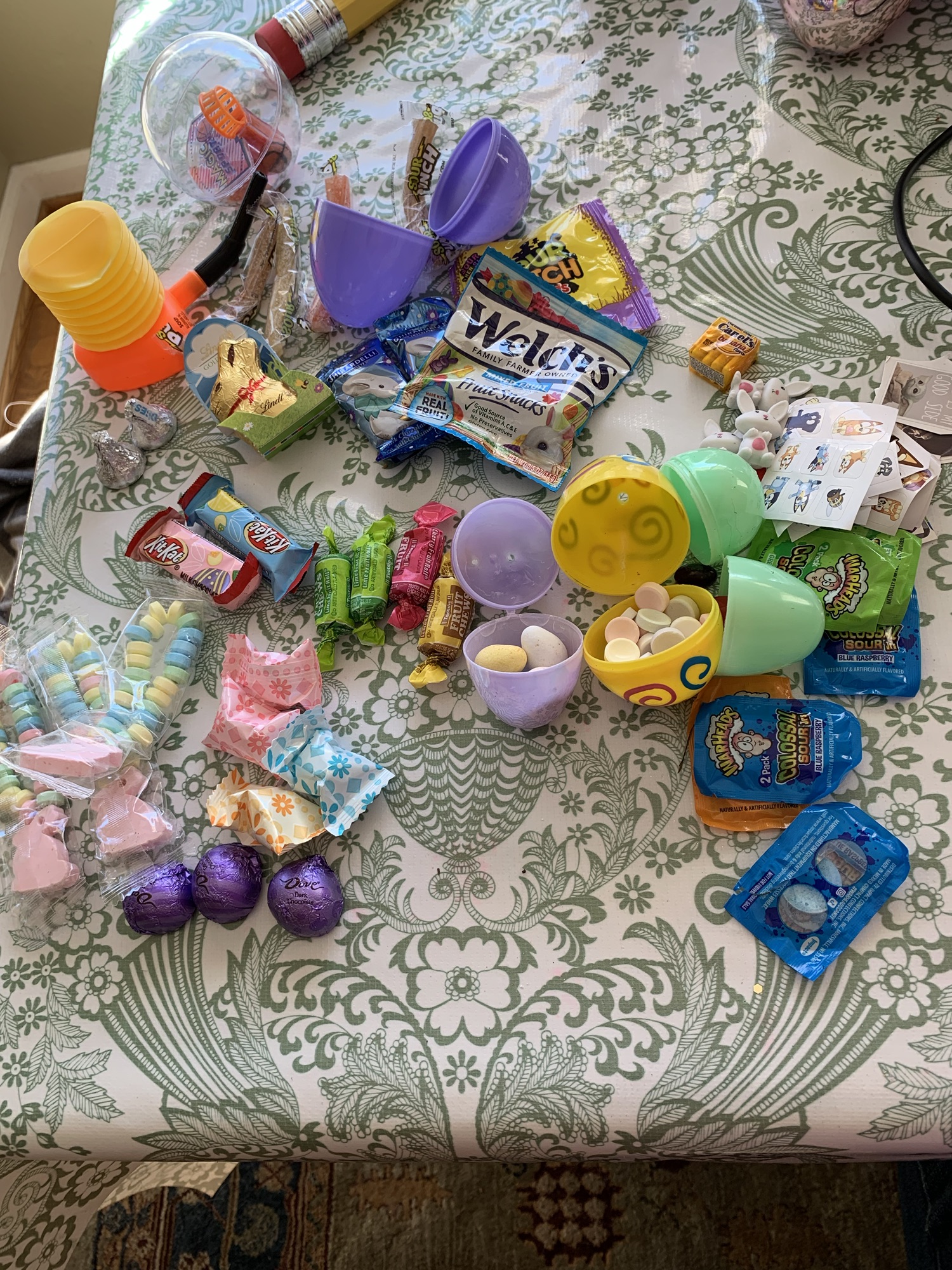
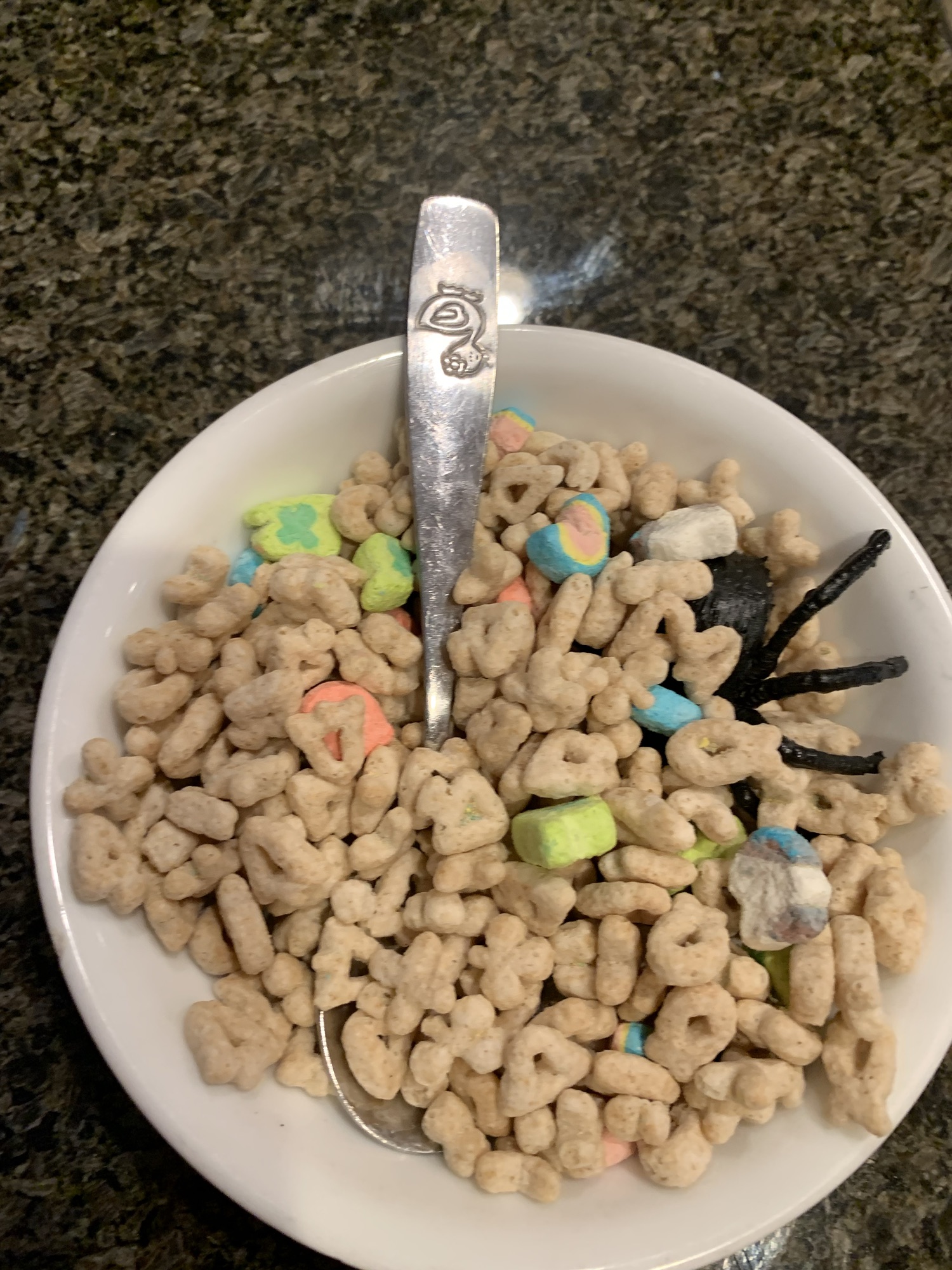
It’s a good thing that Halloween and Easter are about equidistant on the calendar because we just finished our Halloween candy. Now we have refilled our stores.

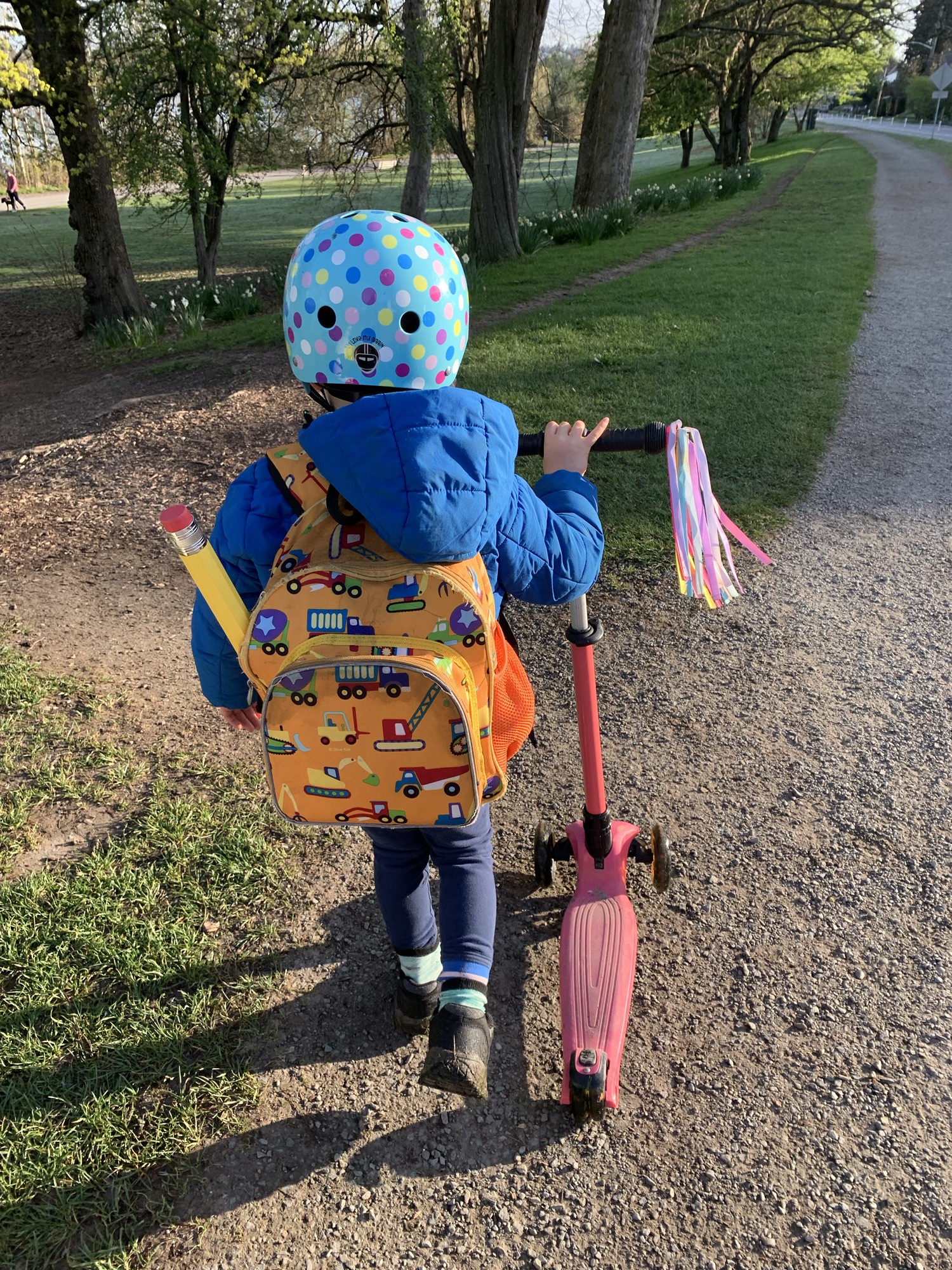
April Fools…the day when oversized spiders and pencils shine.

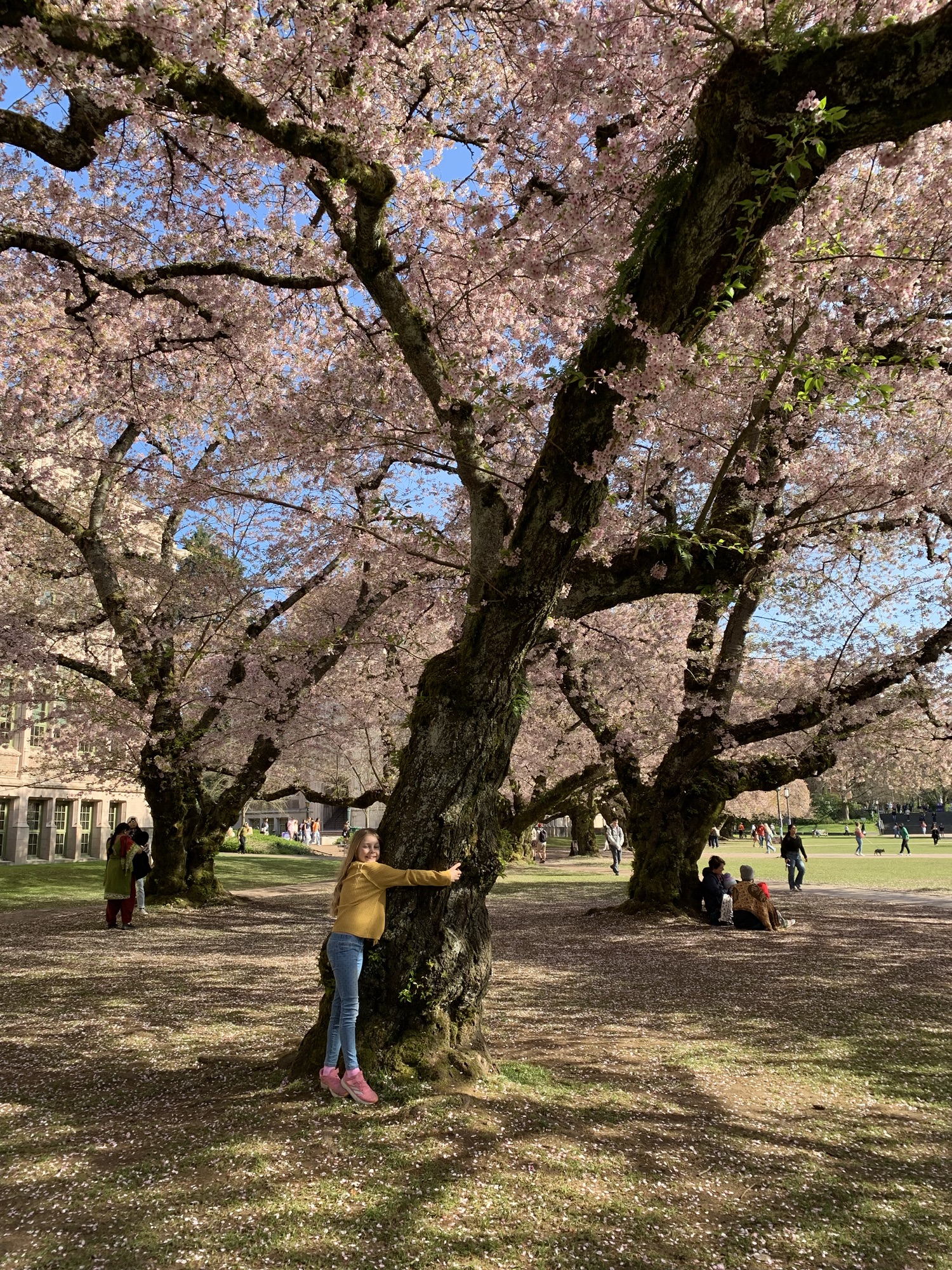
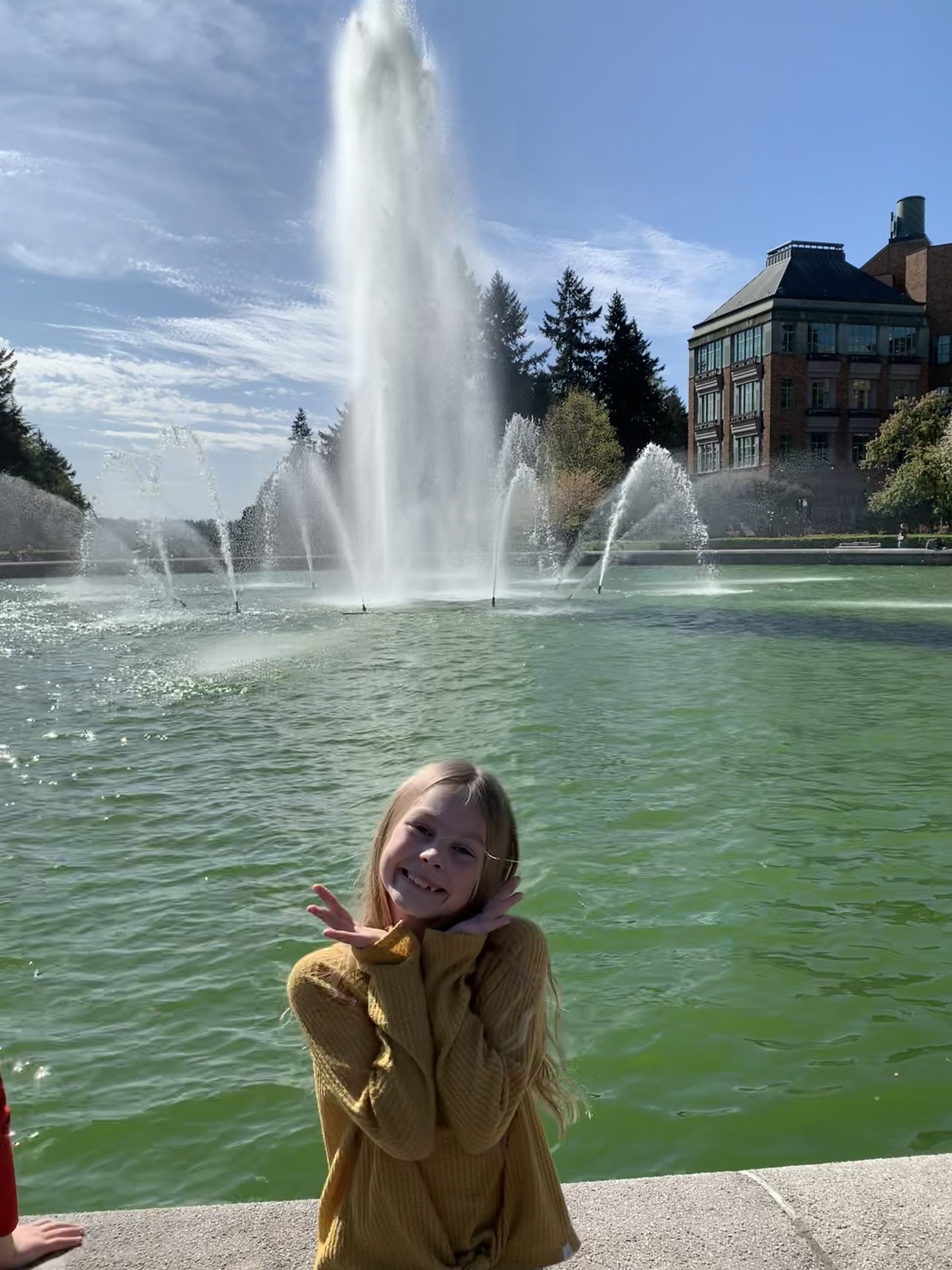
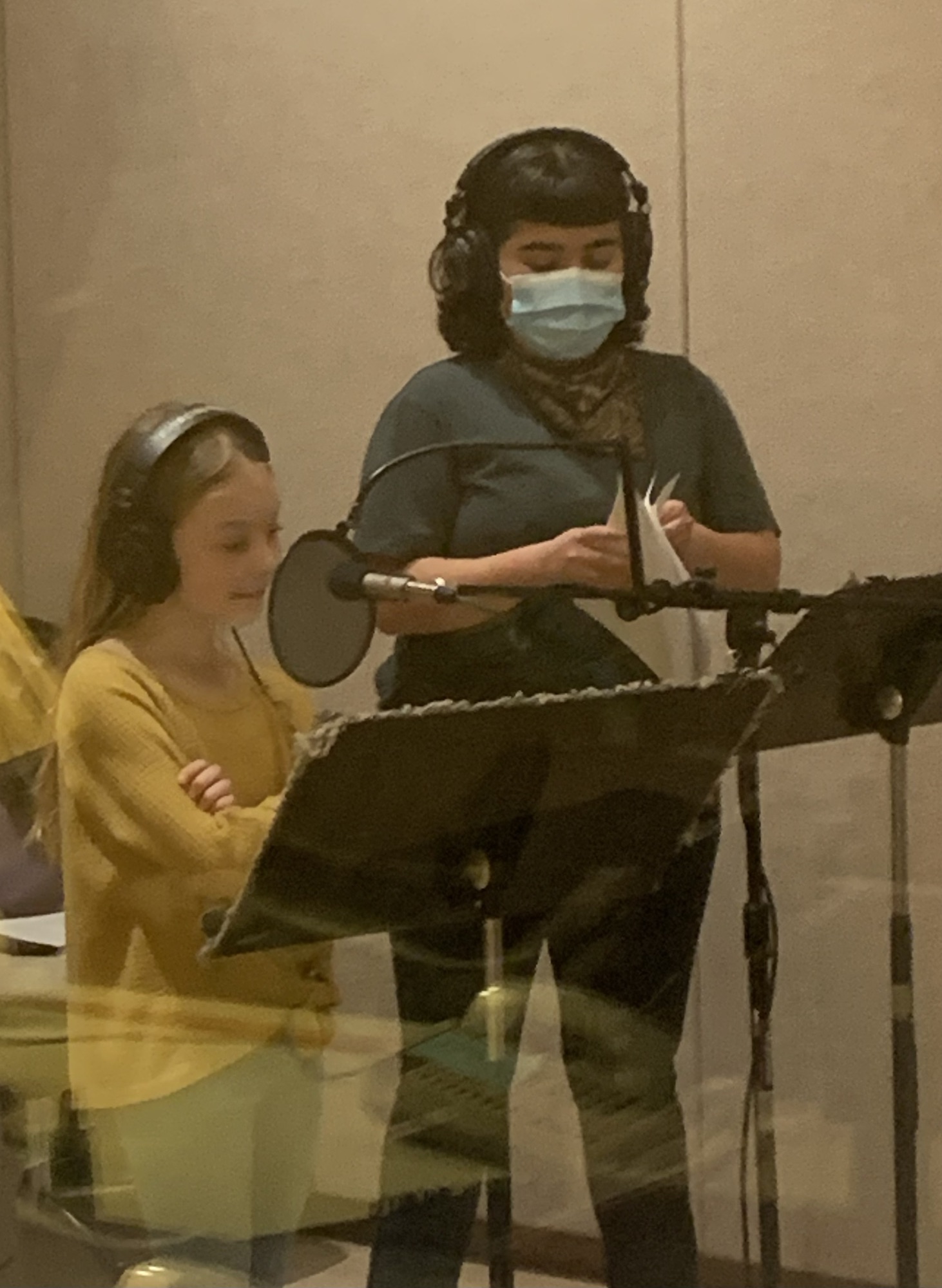
We spent some time this week on the University of Washington campus. Miss O’s teacher got a grant for the students to record pieces they’d written in a real recording studio.

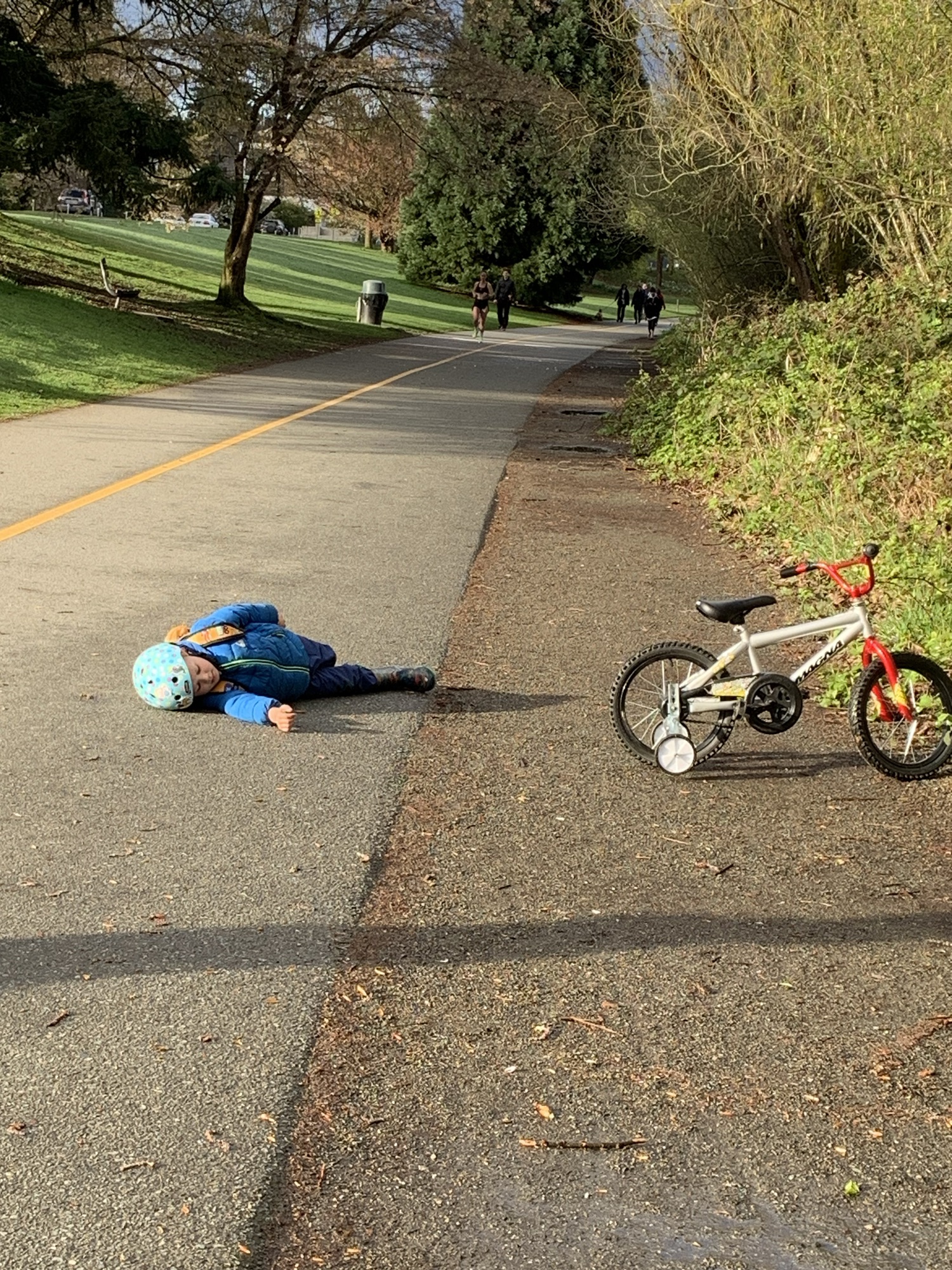
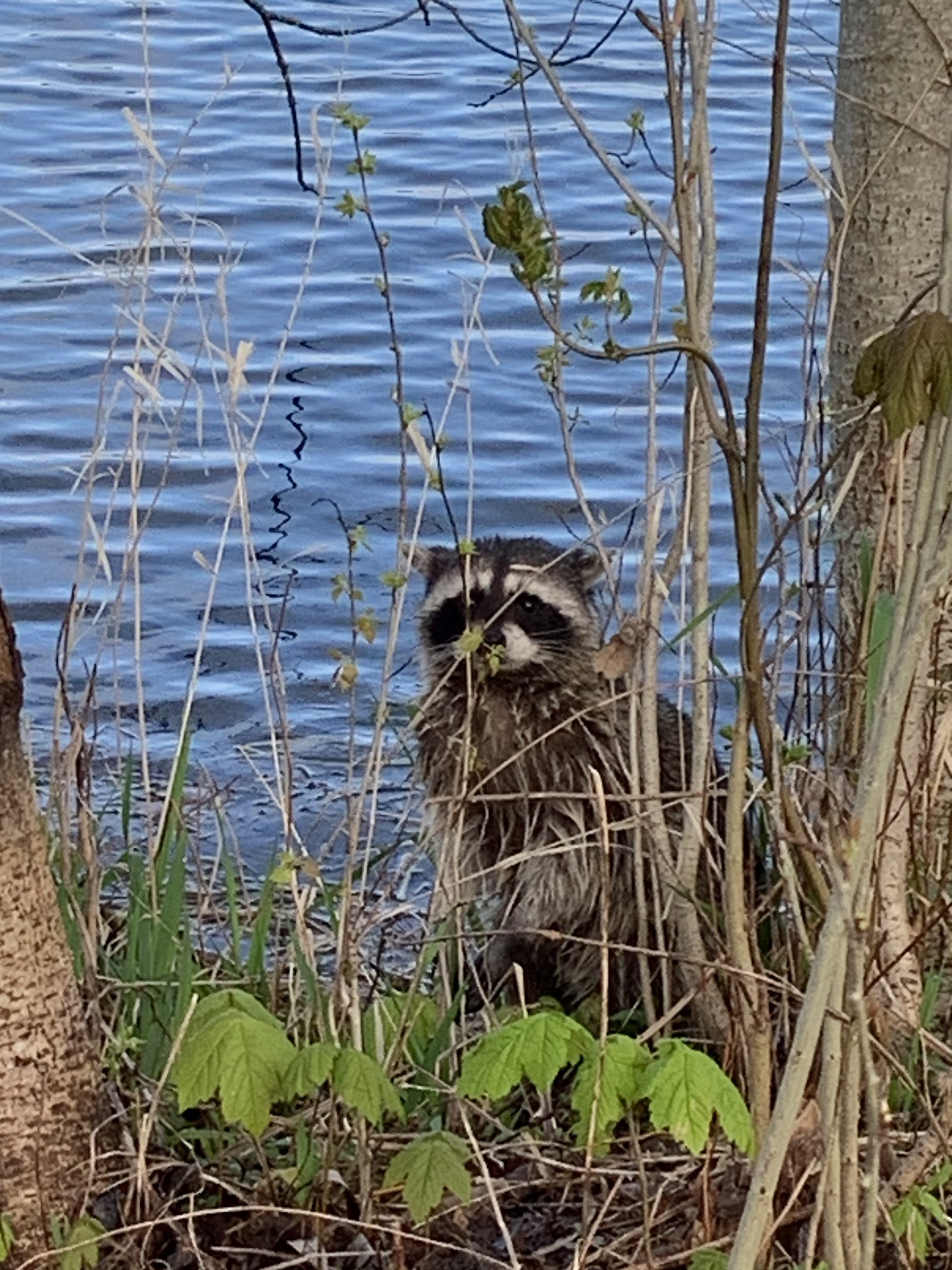
Unusual things seen on the way to school. Mr. D said he was just taking a break. Not sure the raccoon was up to but I’m guessing no good.

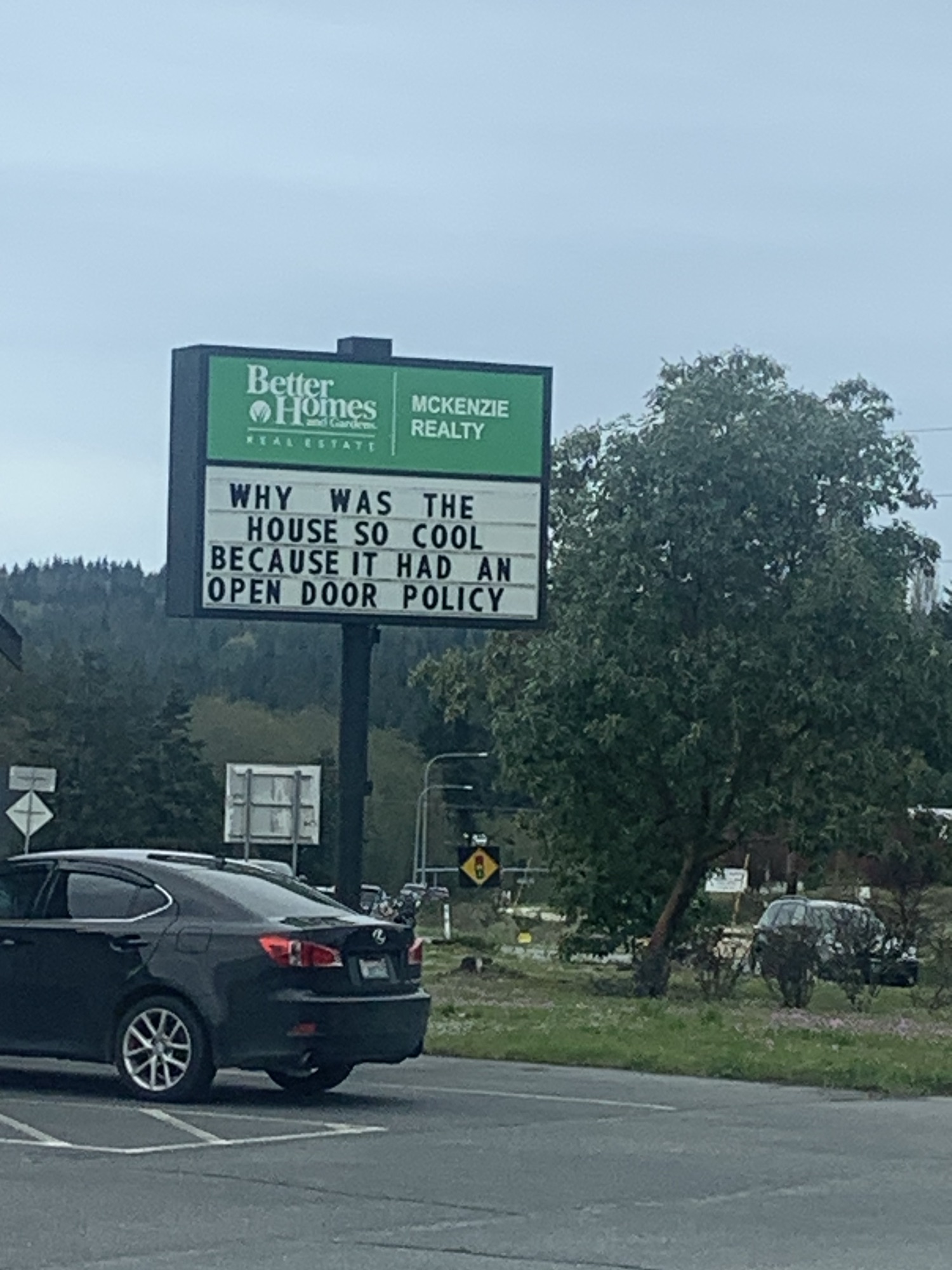
Easter skeletons and signs.

The Lens We Look Through

Gotta move different when you want different.” – unknown

The other day on a weekend I was trying to get my children out the door to go to the zoo. I looked over and both my children were lying on the floor near the back door looking at a lady bug.

When was the last time you laid on the ground to look at something? My dad used to joke that he knew he was getting older because he’d bend over to tie his shoes and look around for anything else he needed to do when he was down there.

There’s a scientific reason that adults aren’t usually found on the floor looking at insects and children are. According to Dr. Alison Gopnik, a professor of psychology at UC Berkeley, young brains are wired to be attracted to the things that can teach them the most. Adult brains are wired to be attracted to things that reward them the most. And unless you are an entomologist, you probably aren’t rewarded for studying bugs.

But there are times when the adult brain gets stuck. In our grooved pathways that Dr. Gopnik likens to boulevards, adults can cruise back and forth much quicker than children but we don’t always rethink how we got there. Kids brains have neural pathways that look more like the streets of Old Paris. Windy, slow-going but able to approach something from many directions.

Getting stuck might be in a mindset or unable to solve a problem. We can be in a rut in a relationship or unable to see the other side of an argument. Or we can just be downright bored and completely unable to see what it could take to change it.

And that’s when we need to do something entirely different.  When we are stuck, the best advice is to do something else. We can go for a walk. Or we can learn to play. Or we can travel. We can even get down onto the floor with some kids. Doing something different will help us come back to what we are doing with newfound perspective and energy.

The other day, my first reaction to seeing my kids on the floor looking at the ladybug was frustration. I was stuck in my mindset of getting us to where we wanted to go efficiently. But after a moment I relented and got down on the floor and looked at the lady bug too. There was awe to be found in a tiny bug spreading her wings and twitching her antennae in a pool on sunlight.

There was also irony that I didn’t want to take time to look at a living creature because I was too busy trying to get us to the zoo. We ushered the lady bug out the door before leaving ourselves, still awash in the wonder of when you do something different.

(featured photo from Pexels)

The Longer I Live, The Less I Know

One filled with joy preaches without preaching.” – Mother Teresa

A few weeks ago, an author replied to a comment I’d made on their blog post about meditation. It was something along the lines that I practice more than I preach. It was a genial comment totally appropriate for the conversation.

But it set me back on my heels. Do I come across as if I’m preaching? Heck no, that was my dear father who had the credentials, platform, and audience who asked for it.

It sparked some introspection. I feel some sensitivity in claiming to be an expert in anything. Even in my career that I’ve done for 30 years and have achieved some external accolades, I tend to play down my credentials.

When I think about what works for me, specifically meditation, I know how personal it is to me. My conversations with my beloved dad about his faith were all about how my expression of faith and his differed. Those conversations taught me much – including that I’m more comfortable with working out what works for me, and less comfortable assuming I know what works for others.

Writing has provided me the opportunity to mine a deep well of stories about my children. I consider my children as the experts at being unapologetically human and naturally close to the Source, especially in these younger years. I write to capture what they teach me and the ever-present challenge it is to love well and keep growing.

If I had to name what I’m good at, I’d say it’s having a willingness to try. In the last ten years, and I credit both meditation and my children, I’ve been able to cultivate an openness to others and to life that has helped me learn.

So I reached the ironic point in my introspection, because I think the more I practice, the less I preach. The more that meditation helps to create space between me and my ego, the less I need to control. The longer I do it, the less I know, but the more I believe.

When I screw it up, like a dozen times a day, I get to practice returning. But when I’m in that flow, it improves my ability to listen to the Divine. It’s solidified my goals to love bigger, show up more vulnerably, and help more.

Is that preachy? I hope not.

My book about the conversations and my journey to find what fueled my dad’s indelible spark and twinkle can be found on Amazon: Finding My Father’s Faith

(featured photo is of my dear dad at a speaking engagement)

When Life Gives You Lemons, Your Family Should Help You Squeeze

A child can teach an adult three things: To be happy for no reason, To always be busy with something, and To know how to demand with all his might that which he desires.” – Paulo Coehlo

This weekend I found myself in the questionable position of rooting against my four-year-old son, Mr. D.

Mr. D is very good at demanding with all his might that which he desires. When I put it that way, in the words of the quote for this post from Paulo Coehlo, it sounds a lot more romantic than some of the silly situations that we find ourselves in. Like yesterday when Mr. D insisted that we take pickleball racquets to church.

But on Friday night when he stubbornly insisted on having a lemonade stand, it wasn’t entirely out of the blue. He’d asked me earlier in the day and I said he could do it when eight-year-old Miss O came home from school.

When he asked Miss O, she said she’d do it after she had a little iPad time. So by the time everyone was ready to do it, it was 6pm and the March chill had settled in.

Miss O and I tried to convince Mr. D that Saturday, when it was forecasted to be 70 degrees was a better time to do it. He dug in and insisted we do it right then.

Miss O was mad, and I was irritated. But we hauled the table out to the sidewalk, balanced glasses and the toy cash register, and set it all up. Mr. D got into position behind the table and started calling, “Lemonade, get your lemonade” to no one in particular because there wasn’t traffic of any kind.

As I stood off to the side, I realized I was hoping no one would show. And that realization kicked me upside the head. Isn’t one of the big challenges of life and love to support and encourage others even when (or especially if) they choose to do things differently than we would? Maybe this was my opportunity to practice supporting my kids in their age-appropriate decisions, starting with a lemonade stand.

But it’s hard when I’m pretty certain I’m right. After about 20 minutes of no one coming by, I nodded to Mr. D and asked if he wanted to go watch shows. I didn’t start in with a lecture but just held his hand as we walked upstairs together. After all, entrepreneurial failure is disappointing all on its own without your family piling on.

And then Mr. D and Miss O did another lemonade stand on Saturday when it was warmer. If nothing else, I can support a willingness to keep trying. I didn’t agree with Mr. D’s decision to buy paint brushes with his half of the $13 of earnings. But I guess that was my continued opportunity to practice offering my opinion and then keep quiet. The hard work of love…

Photos of the Week: March 9

“In life, it’s not where you go, it’s who you travel with.” – Charles Schulz

We spent some time hanging around this week.

Hitting and catching things.

Before we headed out for an adventure.

Saw some cool things out the window (the first is the view from our hotel in New Orleans). The second is Mt. Rainier with Mt. Tahoma off to the left.

And saw some other beautiful flying things – from the Butterfly exhibit at the New Orleans Insectarium.

Which all adds up to the hug and sign of the week!

Complicated Compliments

Life doesn’t come with a manual. It comes with a mother.” – unknown

The other day, four-year-old Mr. D said to me, “Mama, you are the bestest in the whole entire moon.”

Sweet. And I don’t want to minimize that, but he said it to me after I gave him a cookie. I’m sure I can’t be the only person who has a complicated relationship with compliments, especially in families. Do they love us for who we are, the role we play, or what we do for them?

Do you feel that nugget of self-doubt in that last sentence? Me too. It reminds me of the few things I’ve been able to glean in the last fifty years about confidence and compliments.

They have to be right sized for the effort.

My kids keep teaching me this lesson. If I over-praise an effort, it feels insincere.

I have to be able to believe it

There isn’t a compliment in the world that can overcome my inner resistance. This one is fraught for me as a parent. My kids frequently compliment me for being the “bestest” or a “good mom.” But, of course, I’m just a mom and I can’t get everything right. My biggest growth area is mindful eating – not eating in front of devices. For a number of reasons this is complicated and I’m getting it wrong more than right.

So I find myself circling back to my driving principles. My priorities are to help them be kind (including to themselves), safe, and healthy (body, mind, and spirit). And to be present and to love them. If I can aim for most of that, then I try to give myself some grace about the rest.

Compliments are best when I would have done the same thing with or without it.

I would have given Mr. D the cookie whether or not he gave me the compliment. It wasn’t conditional on him saying anything.

So, yes, it feels safe to say that this time I can believe I’m the bestest on the whole moon. After all, it’s only me and a probe that’s tipped sideways in the running. Not that I’m on the moon…. but you know what I mean.

(Mary from Awakening Wonders reminded me of the quote for this post)

(featured photo is from Pexels)