Thank Goodness It’s Monday

If we want stability in our family, society, nation, and the world, we need to create stability in individual human beings.” – Sadhguru

This weekend I:

  • Walked a half marathon (27k steps over 2 ½ days)
  • Celebrated the achievements of this youngest generation of scientists and explorers (took my kids to a 5 year old birthday party and set up marble tracks, cheered for kids figuring out how to slide fast and slow, )
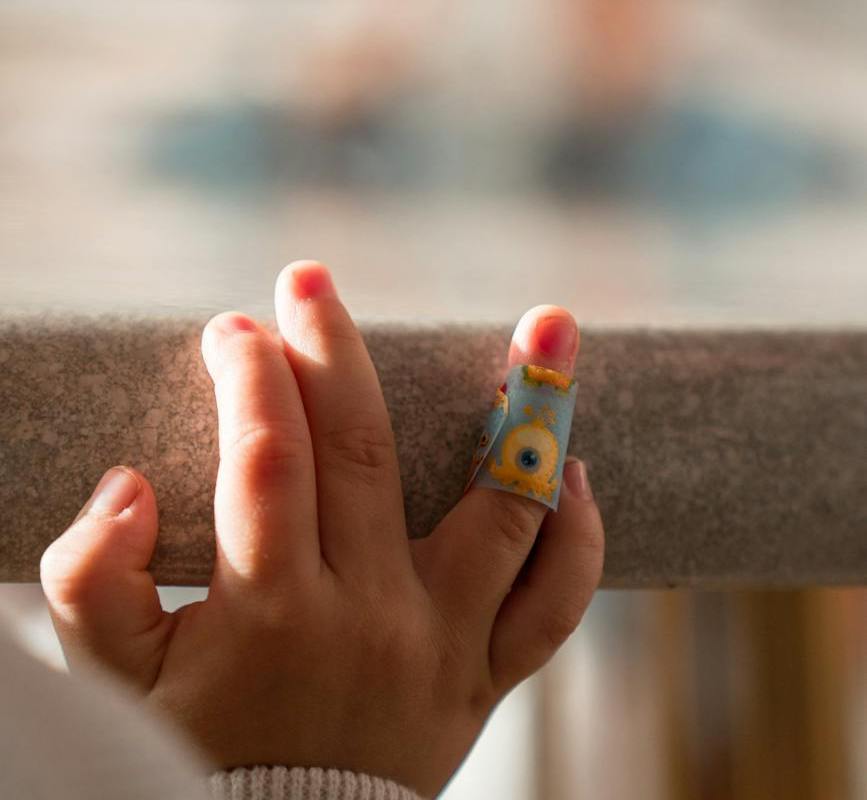
  • Practiced medicine (2 boo-boos, and tummy ache)
  • Work to help prevent disease and disorganization (did 5 loads of laundry, supervised young hands wiping down counters and sinks, changed the sheets, mowed the lawn, organized a utility closet, and did at least 1000 dishes)
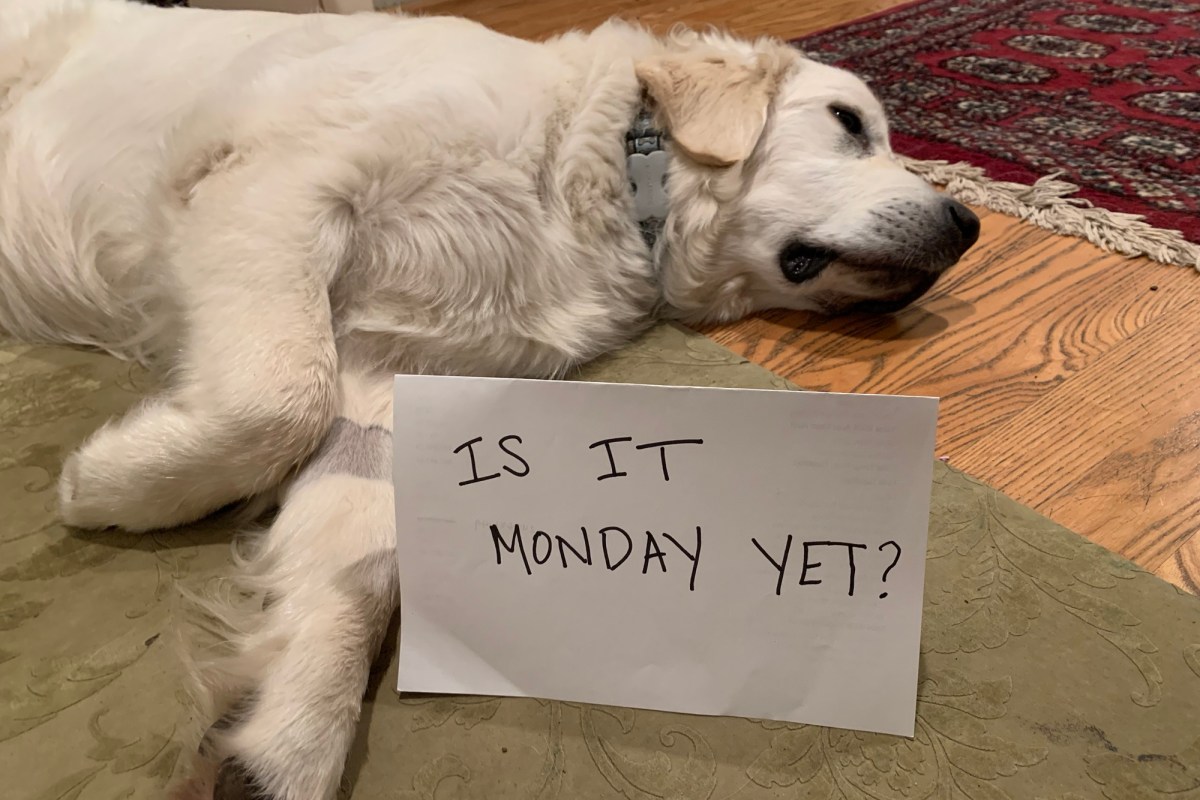
  • Exercised hearts and minds (played 2 games of family soccer, reenacted light saber scenes, played Chinese checkers, read a half a dozen books aloud, and told a dozen stories, played at least a dozen rounds of keep away with Cooper the dog)
  • Fed the hungry (prepared seven meals, a bazillion snacks, five meals for the dog, three meals for the cat)
  • Coached positive techniques for conflict resolution and expressing healthy boundaries (settled at least a half dozen power struggles and fits of big emotion)

No, I’m not aiming to do a victory lap here (for one thing I’m too tired 🙂 ). But my weekend reminds me that:

  1. We don’t give caretakers nearly enough credit for the amount of energy and skill it takes to keep other beings alive.
  2. I’m a much better parent because I work. The dozen things I need to get done at work on Monday seem like child’s play… compared to a weekend of playing with children.
  3.  Kids and pets reflect the care they get…and so do caregivers. None of it is possible unless caregivers fill up their tank.

Happy Monday, everyone!

Sometimes The Dead Speak

See, broken things always have a story to tell, don’t they?” – Sara Pennypacker

Funny how much we want the voices of the dead to weigh in on some subjects. I published a post on Monday, The Set Up, that told the story of a family incident that happened 35 years ago. The code of secrecy between kids being what it is, it’s an incident that I never told my dad about. Especially as the youngest kid, it would have been a serious breach to tell my dad what happened so I don’t know what his response would be.

But I found a sermon that he wrote almost 38 years ago that gives me a pretty good idea of his approach. It’s long as a piece of writing. If you want to skip down to the family story, skim down to the paragraph near the end that starts with “Several years ago Carolyn and I.” Carolyn is my mom’s name.


Parenting

October 12, 1986

Dr. Richard H. Leon

This is the both the worst of themes and the best of themes to address. It is the worst because who can speak with clean hands about parenting? Surely not I. We all have so much to learn and so much we would like to forget that it is a bit ludicrous to stand up and speak about parenting as if we knew best!

But this is also the best of themes because it is the arena of our lives that consumes the most energy and that concerns us the most. Every small group experience I have had reminds me that when we talk about the rhythms of daily life they nearly always revolve around our family-life… relationships with our parents, our spouse, our children, their children…etc., etc., etc..

From the start I want to say tha the church has not always been the best place for honest parenting-talk. I don’t know your experience. But in my lifetime I have seen the church err more often than not in two ways: in an effort to uphold moral law we have come down hard in judging wrong behavior… and in an effort to celebrate successful family life we have made it hard for people to face their pain openly. Tolstoy said, “Happy families are all alike, but every unhappy family is unhappy in its own way.” And this morning I want to open the door to the Biblical perspective on the painful side and the grace-ful side of parenting.

Coping with guilt and grief

The first concern I have is the painful side of guilt over ways we fail our children as parents and the grief that comes when children do not live up to our dreams and ideals. Life tells me these feelings are almost universal in parents. Don’t we all feel like we have failed in one way or another in raising our children? And don’t we all feel the grief for lost dreams for our children? I can still recall the first time I felt this…it was when one of our children first defied Carolyn and me and refused to follow our direction and meet our expectations. And that was at age 3…not to mention the broken dreams during their teen-years!

How do we keep from concluding that their failures are all our fault? How can we learn to accept that each of our children are separate from us with a mind and will and personality of their own?

It is helpful to me to name the full sweetp of the realities that shape us. The point here is to note that although parents have a great influence over children … there are many other ingredients in the recipes for our children’s lives. Let me list at least seven of these ingredients.

Genes – from the first moment of birth, before parents can do anything to influence children, it is clear that every child is different. It is a simple matter of genetics. We look at our three children and see that their responses to life were distinctly different from day one. Our first child was laid back and relaxed…our second was wound up so tight she couldn’t keep her head still to nurse…our third child was happy and charming. They had those marks when they were born…they still have them!

Growth patterns – every day is a time of growth and development and the setting for each child is different so that given their different temperaments and these different circumstances they all follow different patterns of growth. A lot has been done lately with our birth-order. First children grow accustomed to take the lead (bossing others around, some say), middle children get caught between not being the oldest in the lead or the youngest who is always the “cute” one; and youngest children come into their world with experienced parents who are too tired to push like they did the first times around!

Parenting – make no mistake about it. How we raise our kids does make a difference. We bear a heavy weight here … but it is not the only force at work in our children’s lives.

Culture – I have lived in enough different countries to see both the common humanity that we share and the cultural differences that train us up with different beliefs and values and realities. The irony of this matter of culture is that those places the western world calls “backward” are the same places where children are raised to respect and obey their parents!

Peers – a graph would show that the degree of parental influence in a child’s life starts high and steadily declines, and the degree of peer-power starts at nothing and steadily increase until by the teen years these two lines cross and the end is near! The force of peers soon becomes the dominant force in life… until a time in early adulthood … sooner for some and much later for others… when self0rule takes over from peer-control.

Church – I may seem strange to include church as an influence in many of our children’s lives..but hopefully this is true. The place of Christian families and friends, teachers and church school and worship and young leaders … all this is potentially a great force for balance and health.

God – We are born by god’s grace, created in God’s image and we all one day return to face God. And the force of God in our lives is something we acknowledge by faith even though we know many cannot see it. Scripture teaches that God seeks us all out as a shepherd searches for his single lost sheep. If we simply give God a chance he will move mightily in our lives and the lives of our children. I must confess that this truth gives me more comfort, hope and confidence in the future than anything else I may say this morning. God loves our children even more than we do and he is not idle about his love!

So, there are at least seven forces at work in the lives of our children. Our places a parents is central and strong … but all that happens in our children’s lives is neither all our fault … nor all to our credit!

Coping with the tension between “law” and “grace”

Let me speak second about another prime issue in parenting … the constant tension between laying it on (the law) and laying off (grace).

One of the best passages in scripture to examine in this regard is the parable of the Prodigal Son … or better yet, the Loving Father. This may be the most astounding store in all literature. It touches every one of us on several levels and all at once.

The story builds on a father’s relationship with two sons. Both are raised in the same household with the same values. Notice how different the sons are in their views of life. Is it the parent’s fault that one is strong-willed and self-centered and the other is compliant enough to stay at home? (We also learn that the older son was jealous, harbored hurt and anger, was unforgiving and self-righteous … but that’s a different story!)

Look at the tension in the father’s life when his son asks for his inheritance and wants to leave home. We have to assume the son was old enough to leave. We have to assume that the father did not respond with this same generosity and grace when his son said that at 3 years old … or at 10 … or even 16. Can you picture what the father must have thought about at this request? Like:

  • “…What will my neighbors think?”
  • “…is this fair to my oldest son?”
  • “…will I look weak?”
  • “…if he squanders it will I be responsible?”
  • …”my father would never have let me do this!”
  • “…and I never would have thought that way!”
  • “…if I hit him hard enough will he change his views?”

The tension was between reading his son the law … or giving his son his freedom. And the amazing turn of the story is that contrary to his culture and his own family values the father in Jesus’ story lets his son go free. It is almost as if the father is saying … “the only way I can win my son’s heart is to let my son go.”

Lessons from the gospel to guide parents

I would like to see if we can extract some lessons from Jesus’ story of this loving father than can help us in the task of parenting. It should be noted from the start, however, that these lessons are not given in the passage just because it worked with this second son but because these lessons are consistent with a parent’s love. In other words, the justification is not one of success … do it because it always words … but one of love … do it because you love your child and this is how God loved you!

There really is only one lesson to note, it is the lesson of unconditional love. There is no other way to describe this father’s love for his son. He loves his son without asking him to conform to his standards, expectations, or dreams. He loves his son even though it brings great pain to himself … and as he might have guessed, even to his son. There are three choices the father made that mark unconditional love as a parent.

The first mark is in 15:12 “So he divided his property” and it is the choice between acceptance-release or rejection-restraint. For a father to release a son with his inheritance in that culture was to invite mockery. It meant taking the insult of one’s son who in effect is saying “I wish you were dead” and not fighting back. The temptation to reject his son must have been enormous.

And this may help us see that unconditional love is not an instinct, it is a decision. We do not love like this with our feelings … we love like this because we make a decision that it is most loving. And this truth applies to our relationships as husbands and wives as well as parents and children. When insulted you need to ask a question that short-circuits your feelings: “what is the loving response?” It may not always be acceptance and release. There are times for discipline and restraint. But it will only be acceptance and release if you decide it will be that!

A second issue is waiting and hoping or giving up on someone. Look at the 20th verse: “he saw him a long way off.” You only see someone a long way off if you are looking for him and waiting for him.

When he gave his son his portion and saw his son off to the far country it would have been very easy to conclude the son has chosen his own way and there was no way he would ever take him back.

The pain of separation must have been so intense that it is not hard for us to imagine a response of simply trying to forget that this son was still living. You and I see this often, don’t we? I recall one family that we were very close to in our pastorate. When one of their daughters got pregnant and had to get married it hurt the mother so much that she simply dismissed her from her life. Even though she lived only a few miles away in the same little township the mother chose to terminate the whole relationship.

But this father in Jesus’ story did not give up. He must have gone to a view-point that looked out on that road to the far country every day to watch for his son’s return. He prayed for his son and waited for his son to come home. He did not hurt less by doing this. But he hurt better. That is he did not let the pain of the separation destroy the hope of his love.

And thirdly, we see unconditional love as making the choice between forgiveness or punishment. Verse 22 goes like this: “But the father said to the servants, quick bring the best robe and put it on him. Put a ring on his finger and sandals on his feet. Bring the fattened calf and kill it. Let’s have a feast and celebrate. For this son of mine was lost and is found.

This is not cheap restoration, it is as costly to the father as letting him go because all the village would have expected the father to punish the son for his insult and foolishness. But love sees the beauty of the future relationship rather than holds the pains of the past rejection. His son has paid for his sin in his own way and it is now for the father to celebrate his return not punish for his wrong.

Several years ago Carolyn and I were going through a time of considerable pain and struggle with our middle child. At that same time I was studying this passage for my own sake and for helping others. We tried to shape our love with the encouragement of these lessons. It was not easy. Let me see if I can describe the situation without too many details that betray trust.

We had had one of those summers-at-home-after-a-first-year-of-college situations. We were trying to let her live on her own as she had at college while at the same time stay sane when that meant doing things at considerable variance with our wishes. The summer went well by avoiding conflict … not the best model to follow, by the way. When school started and we began writing to each other, the issues then surfaced again and it was just plain painful. By November it moved beyond pain to trauma for all of us. Then Carolyn and I received a letter that opened up a new dimension… in it she spilled out long-held feelings of being the “least-loved” of the kids and “most criticized” for what she did when the others were just as “bad!”

Well, this time it was my turn to reply and I found myself faced with several choices. How did I handle her anger? How did I respond to her judgment of our treatment of her? I could have lashed back and defended our side of the relationship. I could have tried to document the ways she deserved any anger or judgment we had shown her. I could have closed the door to the whole issue and pushed her further away. But largely because of the prodigal’s story and lessons I wrote back and said: “You’re right … we have not loved you in the way you needed. Please forgive us. We are really sorry for our part in your hurt.” It was not just a posture … it was genuine sadness and a genuine apology.

The response to that letter was like a shaft of light in a dark storm. She actually had a dream about it. In the dream, she was waiting with Carolyn for me to come to church … I was late … she asked Carolyn why and finally was told I was dead. She didn’t believe it, she went to see for herself, and found it was true. And then she came back to Carolyn and asked, “Is it too late?” Carolyn asked, “Too late for what?” And she answered: “Too late to tell Dad how much I love him.” She called the next night and told us about the dream and about her love. The dream was so strong that it turned our whole relationship around … and I believe it was God’s way of intervening in our relationship. We are closer now than ever before.

I am convinced that the letters that uncovered those deep feelings, the encouragement of scriptures that helped Carolyn and me respond through prayer and confession rather than through emotional reactions and self-defense, and God’s intervention through a dream (a familiar tool of God!) all brought about a miracle.

There are no guarantees when it comes to parenting … but the pattern of the prodigal’s father is God’s way with us. It is a pattern of swallowing pain and accepting the person … waiting, praying, hoping for that return from the far country … and forgiveness and restoration to the fullness of relationship. I do not believe this because it always works … I believe it because it is the way of health and truth and love. It is God’s way with us and in Christ it is God’s call to our love for one another.


I wish I could say that my dad’s relationship with my sister was all sunshine and rainbows from then on. It wasn’t. But by the time my dad died in a bicycle accident, they were probably as close as ever. A blessing for sure.

P.S. If you ever wonder if it’s worth writing down your stories and thoughts for future generations, here’s one example of how it absolutely does matter.

P.P.S. My book about my journey to find what fueled my dad’s indelible spark and twinkle can be found on Amazon: Finding My Father’s Faith.
Extending One’s Self For Love

“I define love thus: The will to extend one’s self for the purpose of nurturing one’s own or another’s spiritual growth.” – Dr. M. Scott Peck

I was telling my dear friend, Katie, the story of traveling home from New Orleans with my kids a few weeks ago. Miss O and I checked out bags. Then Miss O pointed out to Mr. D the really cool way our bags were traveling down the conveyer belt.

Mr. D wanted to check his bag then too. “No, “ I insisted. “That costs $30.” Which is a stupid argument to make to a four-year-old. So we sat down on the floor or the airport to have a family meeting. When nothing I was saying was working, I finally said, “Mr. D, I’ll give you $5 to NOT put your bag on the conveyer belt.”

Deal!

And then he gave me the $5 back about two minutes later.

Katie responded that I was a nice parent. Which made me think. I’m not sure if I approach it this way because I was raised in the era of “behave well – we don’t care what you feel” so I’m doing the opposite. Or out of necessity because most of the time I’m outnumbered. In this case, I simply didn’t have the strength or number of hands necessary to carry my backpack and a screaming kid through the airport.

But I’d also say that parenting has changed me. Now I’m really interested in helping little people through their emotions. In my negotiations, the answer never changes – my kids still have to go to school, not check their bags, and respect bedtimes. But I’m happy to work through how they feel about it.

Like when after three years of having no problems at pre-school drop-off, Mr. D started balking at the door. There have been lots of personnel changes and that seems to be the root of the reluctance.

I tried just leaving. I tried making deals. I tried going to Starbucks to talk about it. I tried using little plastic people to act out why.

And then I landed on riding bikes to school. Miraculously, it worked. It made it so that he didn’t have any problem going to school and his entire day was better. Then I started playing with the how. Driving eight-year-old Miss O to school so she didn’t have to ride every day. Then running alongside Mr. D as he rode his training wheel bike.

I’ve adjusted the length and we’ve tried scootering instead of biking. Even a .4 mile scoot works.

Sure, I’m showing up at work sweaty and late from running alongside and then back to the car again. I needed more exercise anyway. And it works. It changes his whole day because we’ve figured out how to move the energy that was blocking him.

Dr. Peck’s definition of love at the top of this post resonates with me. There are so many ways that people extend themselves in love. Working through feelings happens to be mine for this phase of life, born out of necessity and time. It’s had extended benefits in the patience I have for other areas as well – work, friendship, and pet ownership.

Here’s to everyone doing the hard work of love in whatever way works for them.

When Life Gives You Lemons, Your Family Should Help You Squeeze

A child can teach an adult three things: To be happy for no reason, To always be busy with something, and To know how to demand with all his might that which he desires.” – Paulo Coehlo

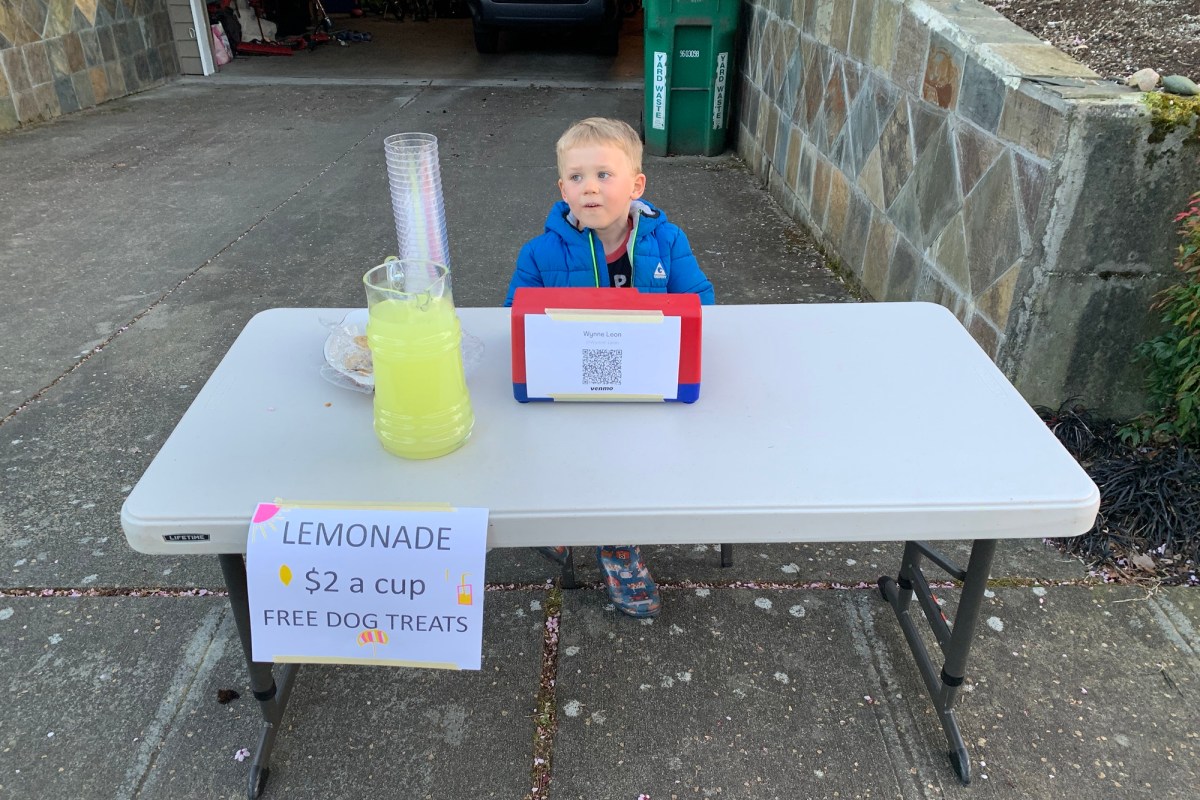
This weekend I found myself in the questionable position of rooting against my four-year-old son, Mr. D.

Mr. D is very good at demanding with all his might that which he desires. When I put it that way, in the words of the quote for this post from Paulo Coehlo, it sounds a lot more romantic than some of the silly situations that we find ourselves in. Like yesterday when Mr. D insisted that we take pickleball racquets to church.

But on Friday night when he stubbornly insisted on having a lemonade stand, it wasn’t entirely out of the blue. He’d asked me earlier in the day and I said he could do it when eight-year-old Miss O came home from school.

When he asked Miss O, she said she’d do it after she had a little iPad time. So by the time everyone was ready to do it, it was 6pm and the March chill had settled in.

Miss O and I tried to convince Mr. D that Saturday, when it was forecasted to be 70 degrees was a better time to do it. He dug in and insisted we do it right then.

Miss O was mad, and I was irritated. But we hauled the table out to the sidewalk, balanced glasses and the toy cash register, and set it all up. Mr. D got into position behind the table and started calling, “Lemonade, get your lemonade” to no one in particular because there wasn’t traffic of any kind.

As I stood off to the side, I realized I was hoping no one would show. And that realization kicked me upside the head. Isn’t one of the big challenges of life and love to support and encourage others even when (or especially if) they choose to do things differently than we would? Maybe this was my opportunity to practice supporting my kids in their age-appropriate decisions, starting with a lemonade stand.

But it’s hard when I’m pretty certain I’m right. After about 20 minutes of no one coming by, I nodded to Mr. D and asked if he wanted to go watch shows. I didn’t start in with a lecture but just held his hand as we walked upstairs together. After all, entrepreneurial failure is disappointing all on its own without your family piling on.

And then Mr. D and Miss O did another lemonade stand on Saturday when it was warmer. If nothing else, I can support a willingness to keep trying. I didn’t agree with Mr. D’s decision to buy paint brushes with his half of the $13 of earnings. But I guess that was my continued opportunity to practice offering my opinion and then keep quiet. The hard work of love…

A Legacy of Love

The one thing that we can never get enough of is love.
And the one thing that we can never give enough of is love.”
– Henry Miller

When I published my book about my dad eight years ago, there was a consistent kernel of comment that I got about it from his peers that read it. It was stated or implied that they hoped they were remembered as fondly.

I’ve sat with that nugget for a long time to try to unravel what that meant. I’ve come to believe it reveals a truth about what’s important.

Let me start off with a list of the things that my dad wasn’t good at. He worked too much. He left the hard work of parenting largely to my mom. He could be sloppy with details. He was conflict averse and would turn most anything into something funny and light so as not to have to deal with it. He didn’t show his struggles or any negative emotion in a way that would make him more relatable.

But he had one major thing he did right consistently – he loved people. He managed his own neuroses, opinions, and worries in a way that made him open to love others. He’d say that it was following the example of Jesus to love, accept, and welcome others that allowed him to do that. He believed that was Jesus was the way, the truth and the life, but he also believed that it wasn’t the only truth. He came to appreciate any practice or belief in something bigger than ourselves.

On his birthday about four months after he died, I posted a tribute to him on Facebook based on the Maya Angelou quote, “I’ve learned that people will forget what you said, people will forget what you did, but people will never forget how you made them feel.“. An acquaintance from high school with responded with a comment like, “Not everyone had a dad like that.”

Right. I was incredibly lucky to have a dad that was so effusively warm and whose face lit up every time he saw me. I think he had an advantage as a pastor in that it was part of his profession to practice meeting, accepting and loving people. His resume virtues and his eulogy virtues were aligned, to borrow a phrase from David Brooks.

But I think we all have the opportunity to prioritize supporting and encouraging others in a healthy and boundaried way, and love people the best we can. I suspect it might be the key to how fondly we are remembered. The ultimate paradox is that we give love in order to be loved.

My book about my journey to find what fueled my dad’s indelible spark and twinkle can be found on Amazon: Finding My Father’s Faith.
I’m Glad You’re Here

When you love someone the best thing you can offer is your presence. How can you love if you are not there?” – Thich Nhat Hanh

We were sitting in the family room of the small AirBnB cabin we’d rented for President’s Day weekend when I heard my four-year-old son, Mr. D quietly say to my friend, Eric, who had joined us. “I’m glad you’re here.”

It’s a sentiment that I’ve heard both of my children say on different occasions, locations, and to different friends. I’m glad you’re here. I’m glad we’re here.

It’s completely unprompted by me and I’ve never noticed them saying it at the moment of arrival. Usually it’s uttered calmly in genuine camaraderie for an adult that has shown up – physically and emotionally.

I find it to be one of the most remarkable compliments a kid can give. After all, at ages eight and four, they aren’t in charge of where we go or who comes along. But when they find the presence of another person to be comforting/fun/engaging/stimulating, they say so. Genuinely.

Upon reflection, it’s another thing my kids are teaching me. To know when I’m happy to be somewhere and in good company, and to express it.

So, dear blogging friends, I’m glad you are here. Thank you for reading.

ON A RELATED NOTE: Vicki Atkinson and I were lucky enough to talk with Edgerton award winning playwright, musician and author, Jack Canfora on the Sharing the Heart of the Matter podcast episode released today. Part of the conversation is about how our writing is one way we show up. It’s a delightfully fun and interesting episode, please listen! Episode 55: Master Class in Creativity with Jack Canfora Part I. Also, there’s a bonus video clip in that linked post.

Mama, Why Would We Want to Feel Their Pain?

Your ability to understand and empathize with others depends mightily on having a steady diet of positivity resonance, as do your potentials for wisdom, spirituality, and health.” – Barbara Frederickson

This was originally published on 4/5/2023. Heads up – you may have already read this.


My 7-year-old daughter, Miss O, bumped her 3-year-old brother with her backpack when they were getting into the car yesterday morning. As he started to cry, she offered an uncharacteristically flippant, “Sorry, Dude.

I gathered him in my arms to check on the little pinky finger that got jammed and added something like, “I’m sure your sister wants to offer some sympathy but can’t find the words right now.”

As we got underway, Miss O said, “I thought sympathy was a bad thing?” The curiosity about learning about emotions moved her away from her defensiveness and we talked about the continuum of responses in the face of pain: denying it, indifference, sympathy and empathy. Off the cuff, I said that empathy was something like leaning in to relate to someone else’s pain.

Miss O asked, “Why would we want to feel their pain?”

It seems I’ve spent the better part of my 53-years trying to understand the answer to that question. I suspect that it was becoming a parent that truly changed my willingness to really sit with the distress of others.

I’ve found that unacknowledged wounds weep the most. Jack Canfora’s post, There’s Nothing Wrong With Everything Being Wrong, spoke to me about the cleansing act of being honest. When we pretend everything is okay either with ourselves or others that are hurting, we add a layer of BS that hardens over time.

But when we talk about hard things and are able to lean in to the sorrow and pain of others, we are blessed by getting to know someone deeply. I imagine we are all a little like icebergs, carrying the pain of life as the big unseen part beneath the water. And when we empathize with each other, we get to see all of us, and even witness the growth that comes with healing after things fall apart.

Which isn’t to say that I’ve found it to be easy to embrace the discomfort of others. I find myself stumbling for words, unsure how to ask, or if to ask, and it becomes worse if I fear I’ve had a part in causing pain. But when I avoid it, it only becomes bigger, sometimes big enough to sink the Titanic.

I remember my dad, who was a Presbyterian pastor for 40 years, describing the first time he had to do a funeral and a wedding on the same day. He said the sheer emotion of going through those extreme emotions almost buckled him at the knees.

I’ve found that the times I have the most access to empathy are when I’ve done my own work to manage my emotions, to understand that I don’t have to carry other people’s loads, and to clean my own wounds. Then I have a much bigger capacity to sit in the dark with others. I can’t go deep when I’m swimming in the shallow end of my self-care and grace pool. For me, that work is in the form of meditation, writing, and creating but I know we all have different tool kits.

So I circled back to my daughter and said, “Sometimes we start trying to empathize because we think it’s the right thing to do or because our mom told us we should. But sooner or later we learn that pain is a lot like the dark – only scary because we don’t look. We lean in to feel other’s pain so that it goes away and it doesn’t become a monster in the closet, threatening to pop out when we least expect it.

We lean in because we all take turns hurting and healing and then have to do the work of repair.


I’ve also published today on the Wise & Shine blog: Just Start

(featured photo from Pexels)

Romancing the Stone

Love recognizes no barriers. It jumps hurdles, leaps fences, penetrates walls to arrive at its destination full of hope.” – Maya Angelou

This post was originally published on 9/8/2022. Heads up – you may have already read this.


More than 10 years after the fact, I can tell the story of my marriage/divorce without even the slightest wince of pain. I got married to my husband when I was 33-years-old. He had been married before and told me that he was divorced because wife #1 had a jealousy problem.

In the marriage, I came to think he just wanted a mindless side-kick to be with him for whatever HE wanted to do. He thought I was far to in-de-PEN-dent (pronounced slowly as if a four syllable curse word). A couple years into the marriage he announced that it was time to have kids. I said “no.”

Seven years into the marriage, his best friend came to me to tell me of my husband’s infidelities. All of a sudden I understood what had really happened with wife #1. <insert big a-ha laugh here> After some dithering and poor attempts to fix it, we divorced.

After a couple of years of patching myself up and finding meditation, I started dating. I had very good reasons why none of those worked out. Here are a few examples:

  • There was the guy that brought a gun to the date. No, I didn’t feel threatened at all but certainly was surprised when he pulled it out. He thought it was necessary because I lived in the big city and he’d come from a smaller suburb.
  • And there was the date who I went snow-shoeing with. When the outing lasted longer than expected, I knelt at the door of my home to greet my dog and say sorry for leaving him too long. The date had followed me up to the door and muttered behind me, “Never apologize to an animal.”
  • There was also the very dear friend with whom I was unable to have deep conversations.

After these forays into dating didn’t produce a life partner and I was age 45, I made what I thought was a pragmatic decision to have kids on my own. In the seven years since I’ve had kids I’ve had a few sparse and isolated dating attempts but have largely left love of that variety alone.

That’s my story – and a story I fully inhabit and believe. But recently I was talking with a dear friend going through heartbreak. As I sat and listened to my friend’s stories, I realized that it exposed a deep vein of cynicism about love that I wasn’t aware I held.

 The cynicism says – I’m not sure love is worth it. It also says that I have to do x, y, and z before I’ll be ready. And that it’s okay for other people to have partners but maybe not me.

Whoa. It’s like I’ve been hanging on to my story as if it’s a life raft and now I’m finding out it’s full of holes. Maybe, just maybe, I didn’t find my partner after I divorced because I didn’t want to. Somehow my joy for what I have and the optimism that I’ve been clinging to have covered over some walls I’ve constructed.

One of my close friends always says she found her second husband and love of her life because she believed she was worthy of love. For me, and for many of us that have experienced great loss in relationships, I think we might need to believe something similar:

I am worthy of love. And the love that I will find will be worth having.

One of my favorite quotes about healing comes from priest and author, Henri Nouwen. After experiencing a loss of a significant friendship, Nouwen sequestered himself for six months and wrote journal entries that became his book The Inner Voice of Love. Towards the end, he comes to realize:

“Your future depends on how you decide to remember your past.”

Henri Nouwen

That’s the problem with my story about my marriage and divorce. I am frequently grateful to my ex-husband for the events that put my on the path that I’m on. But it appears that I need to re-remember what else about love is worthwhile. That decision may change a lot about my future.

What do you think about love? Hopeful? Cynical?

(quote for this post from my wise friend, Brian: Writing From the Heart With Brian)

(featured photo from Pexels)

I’ve also published today on the Wise & Shine: You Get What You Pay For

The Detective’s Toolbox

“It takes courage to grow up and become who you really are.” – e.e. cummings

Mr. D hasn’t wanted to go to his pre-school lately. It’s been such a marked change that it’s evoked the inner detective in me trying to figure out why. Was it the week that the lead teacher went on vacation? Is there a shift in schedule or meals that is bugging him? Is there a particular classmate that he’s having trouble with?

At four-years-old, Mr. D doesn’t seem to have the answers to the questions. I say that like his age is the factor. I’m sure it is in part, but I think we all get stumped about what’s bugging us from time to time.

Yesterday, we’d just parked at the curb and were just sitting there collecting ourselves before we went in to school. Cooper, the dog, was in the front seat next to me. Mr. D from the back seat said, “Cooper is sad.” I asked why and he said, “Cooper is sad because he misses us.

Oooh, my first break in the case.

So I tried two more things. At the end of the day, I asked Mr. D to tell me a story about school. He told me a story about John waiting in line for the roller coaster on the playground. Another student, Molly, gave John a look and it made him sad. So Mr. D went to play with John and it made John happy.

The second thing was to have him show me something he’d learned that day. They are studying the human body this week. In their study of the stomach and intestines, they put bread into plastic bags with soda water died green to mimic stomach acid.

We repeated the experiment at home so that he could teach his older sister and me. Yes, it’s really gross, but I took one for science’s sake. And giving Mr. D a chance to showcase a bit of how he spent his day made him feel proud of his learning.

Here’s what I noticed. That when we don’t know what’s wrong, we project it on to others like Cooper the dog. We also can get to it by telling stories or acting things out. I haven’t cracked the case entirely yet but I’ve started figuring out the toolset. A similar set of tools probably works for all of us.

Speaking of telling stories, Vicki and I talk with David from the Pinwheel in a Hurricane and unwanted blogs on the Sharing the Heart of the Matter podcast this week. It is a fantastic episode where David talks about doing story work to find clarity, integration, and healing. Check it out: Episode 53: Practicing Creativity with David

Things About Parenting I Think I’ve Learned So Far

You’re an author, and the stories you write are penned across the hearts of your children. Therefore, be careful with the pen because you’re writing on some very precious paper.” – Craig D. Lounsbrough

I’m riffing the title of this post from Jack Canfora’s Things I Think I’ve Learned So Far because Jack’s post is one of my favorites and I’m too tired from parenting to think of one of my own. And that matches with my experience of parenting – you have to take small favors and lifts when you can.

Admittedly, I’m pretty early on into this parenting thing with only eight and a half years so far. Despite the best efforts of my more experienced friends to teach me everything I might need to know, I still understand I have a lot to learn. But in the interest of celebrating incremental progress, here’s the list of things I think I’ve learned so far in parenting.

Dance parties improve almost any mood.

When little people behave their worst, it’s when they need to be listened to and held the most.

Sometimes, on “those” days, you just have to declare it’s Milkshakes for Breakfast Day to shake everything up.

Try to say “yes” as often as possible, even if it’s just a qualified “yes.”

No matter how hungry you are, don’t eat that last bite off their plate until its cleared from the table.

There’s a time to push limits, and there’s a time to fold them in your arms. Knowing that balance is as mysterious as the original recipe for KFC or Coke. It’s sweet when you get it right, but you will still be guessing the next time.

Laughter is a beautiful elixir that will hold you together.

Socks are the bane of parenting. Little teeny tiny socks exploded off little teeny tiny feet are under the car seats, smooshed in the couch cushions, on the counter, behind the toy box, folded into books, and left everywhere and anywhere except the laundry basket.

My efforts to lobby Amazon to create a sock subscription service where new socks are delivered regularly have been ignored to date, mostly because I can’t ever finish an email without interruption.

A little bit of sugar works as an enticement. A great deal of sugar works like an unstable explosive.

You can use power over someone with little or no agency and it might work short-term. But, when you can, spending the time to develop power with a willing mind has a big long-term payoff.

You will screw it up. Look for the manual that came with the babies and remember there isn’t one. Be grateful for however many days you have before they figure that out too.

Insistence on anything that you previously thought you was indisputable fact before you had kids quickly becomes debatable in their eyes.
If you resist, the resistance becomes an object to focus on.
Better to use redirection.

Curiosity beats judgment any day and is one of the best tools in the box.

The line between crying and laughing is much closer than previously thought.

This is also true for irritation and awe.

On the Welch’s fruit snacks, the tear spot is between the h and the s. You’re welcome.

Every time you thoughtfully respond to a melt down you get to put a marble in the metaphorical trust jar.
Every time you lose it and yell, you take out ten marbles from the trust jar.
Every time you apologize for losing it, you get to add back your ten marbles, with bonus marbles for sincerity.

Naps aren’t just for the five and unders.

A well-rested kid can do most anything – this is true for well-rested parents too.

Save money on sorting games and instead teach them to match socks. This is a theoretical one but it would have been brilliant if I’d thought of it earlier.

You will screw it up. Apply grace liberally, get a good night’s sleep and try it again.

Your eyes should light up when your child enters the room.” – Maya Angelou
But there will be times they will enter the room covered in paint or dressed in all the contents of the laundry basket that you, for once, managed to fold. So shoot for lit up eyes MOST of the time.

It’s fun when you try to pay close enough attention to learn something about yourself and where you came from every day.

In the years before logic works, you have a wonderful opportunity to practice winning over hearts instead of minds.

Connection expands in proportion to your time sitting on the floor next to them.

Someone will cry when the milk spills. Try to make sure it’s not you.

It’s only possible to handle someone else’s big emotions when you’ve taken care of yourself.

Life is fragile; love helps us to overcome the abject fear of being responsible for it.

Relationship can handle a lot as long as you remain connected.

Whatever amount of vulnerability and patience you entered parenthood with will not be enough. Fortunately, kids come with many opportunities to exercise both.

Things will seem unbearable, and then they’ll change.

It will pain you greatly at times, but you have to big the bigger person.

Parenting is maddening; but a bigger part is gladdening.

You will screw it up. Treat yourself as gently as you can, laugh about it, apologize as necessary, and remember you are teaching them how to start again.

The big upsets are rarely about what it’s about. Take the socks, for example, which is really about the complete disruption of any order and ability to get things done you previously believed you had.

Or this list, which might not be just about parenting.