Steeping the Tea Leaves of Life

Above all, watch with glittering eyes the whole world around you because the greatest secrets are always hidden in the most unlikely places. Those who don’t believe in magic will never find it.” – Roald Dahl

The other day the paper on the end of my tea bag string had just two words, “Live consciously.” As I sat and sipped my tea, I thought, “say more.”

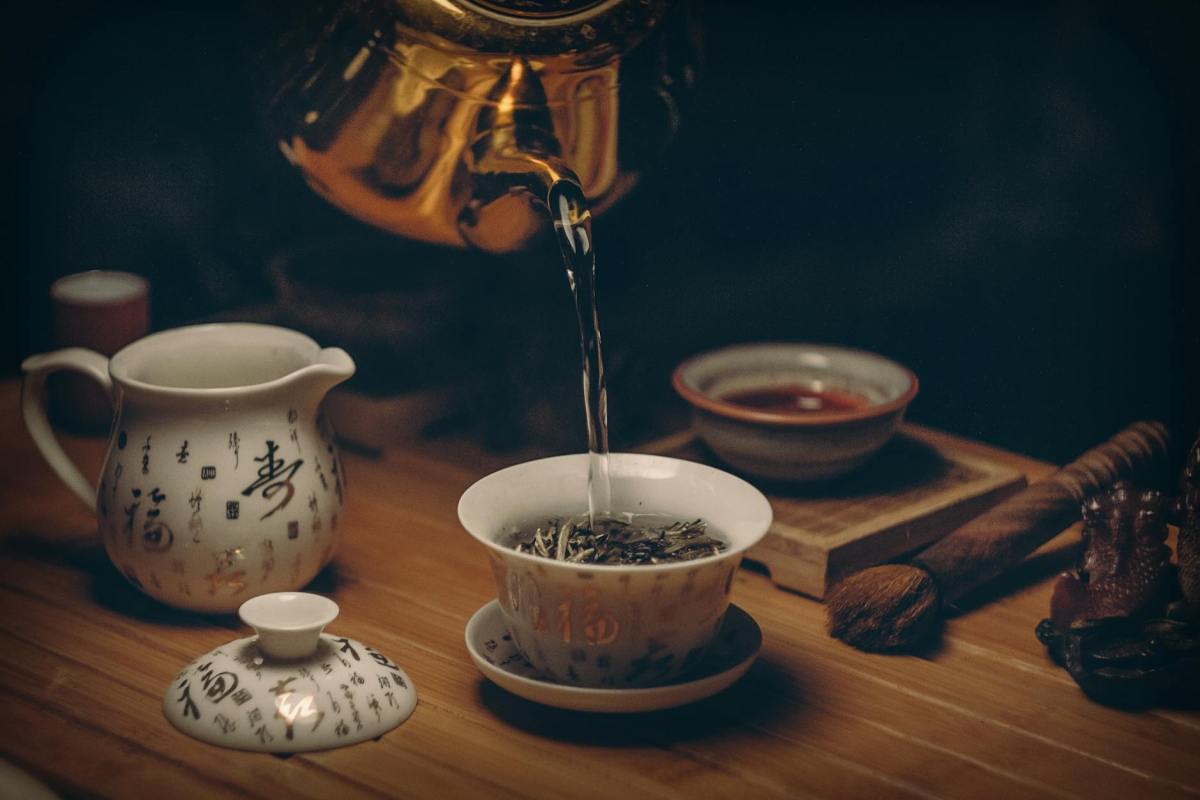
Years ago, I read a passage in Mark Nepo’s Book of Awakening that heightened my appreciation for tea.

“If we stop to truly consider it, making tea is a miraculous process. First, small leaves are gathered from plants that grow from unseen roots. Then boiling water is drained through the dried leaves. Finally, allowing the mixture to steep creates an elixir that, when digested, can be healing.

The whole process is a model for how to make inner use of our daily experience. For isn’t making tea the way we cipher through the events of our lives? Isn’t the work of sincerity to pour our deepest attention over the dried bits of our days? Isn’t patience the need to let the mixture of inner and outer brew until the lessons are fragrant and soothing on the throat? Isn’t it the heat of our sincerity that steams the lessons out of living? Isn’t it the heat of those lessons that makes us sip them slowly.”

Steeping my “live consciously” tea bag made me think of three miraculous events that happened in the last 4 weeks.

The first leaf

A few weeks ago, on the last morning we were staying at an AirBnB on Whidbey Island, I took Cooper, the dog, out to go potty. It was 5:30 in the morning and still dark enough to notice that the dome light on my car was turned on. Ugh, it must have been on for almost 24 hours since the kids and I went to the grocery store. I got the keys and tried to start the engine and it wouldn’t turn over. But the dashboard lights came on so I knew it wasn’t entirely dead.

I turned off the light, locked the doors, and went back in to meditate. I tried to dial down the worry about what I’d do if the car wouldn’t start while on vacation and away from the usual people I’d lean on. Check out wasn’t until 11am so I told myself not to fret about it until 10:30am. Instead, the kids and I packed up and went to the beach one last time.

When 10:30am came, I unlocked the doors, put the key into the ignition, prayed, and turned the key. The car started.

The second leaf

Miss O had been asking for weeks to go to the new Boba tea shop in our neighborhood. We tried once and it wasn’t open. Other times we had too much going on. Finally, on a Sunday in mid-April, we got there. Miss O carefully scanned the menu. Her taste palates are pretty selective. After much consideration, she ordered a strawberry chocolate Boba. She took one drink and didn’t like it. She wondered if we could get our money back and looked absolutely miserable. I reminded her that it’s okay to try new things and to not like them.

Mr. D had a raspberry lemon rooibos and was blissfully sucking his down without noticing his sister’s unhappiness. I was standing there pondering. I wanted her to be open to trying new things. But I also didn’t want to signal we could buy $7 teas until she liked one.

Then there was a moment when the shop cleared out, no one was waiting for a drink and there was an extra raspberry lemon rooibos on the bar. I asked the barista if we could pay for it. She said to just take it. Pure magical rescue from our misery!

The third leaf

Mr. D said a few times that he wanted to learn to become a ninja. He repeated this again on a Monday afternoon about three weeks ago when I picked him up from school. Miss O was also in the car. On a whim, we all were up for popping in to the Aikido dojo in our neighborhood to see if it would work.

We showed up right at the time of the class for kids, the sensei told us this class is for training to be a samurai, not a ninja and Mr. D was okay with that. She invited Mr. D and Miss O to join the class starting right at that moment, and they both loved it.

It was one of those moments where everything lined up like dominos. The least planning I’ve ever had to do for a great fit.

Here’s the tea I made from this

Living consciously for me means finding the magic in moments. The light touch that I can sense sometimes when I’m scared, confused, or need an easy win. It doesn’t mean that the dog doesn’t throw up, or I won’t break and spill the glass of water right before I’m supposed to lead a webinar. But it gives me a glimpse of a wider view in which I can find the current to flow with.

Writing Last Lines That Count

Vulnerability sounds like truth and feels like courage. Truth and courage aren’t always comfortable but they’re never weaknesses.” – Brene Brown

This post was originally published on 4/19/2023. Heads up that you may have already read this.


On the last morning I saw my beloved dad, he greeted me with a hearty “You look great.

His untimely death a short time later has permanently etched all the details of that breakfast into my treasure box of memories: the yellow walls of the Varsity Restaurant on NE 65th street, the booth in the open section, the jeans and sweater I was wearing, the cupcakes I gave my parents for their upcoming drive to Arizona, the eggs and waffles, but it is those words that are most precious.

Because both my dad and I both knew that he wasn’t talking about anything to do with my hair, make-up or clothes – he was talking about the light in my eyes. How did I know that it wasn’t just my dad being his effusive self? Let me explain.

Here’s the thing I’ve learned about last lines. As much as we’d like to prepare for them, many (most?) don’t happen how and when we think. Take my dad’s line – neither of us knew that in 6 days time, after arriving and unpacking for a winter in Tucson, that he’d get on a bike, hit a car, and die almost instantly.

That might be an extreme example, but even for the end of a friendship or relationship, the speeches we plan are not what end up expressed. Life, interplay, and random things happen to make things unexpected. So we have to instead do the work to speak honestly and communicate authentically whenever we can.

For me, that work began when three years before my dad’s death when I went on a whim to a meditation class. After 90 minutes of seemingly innocuous visualization and breathing exercises, I spent the rest of the day weeping. It turned out to be just what I needed to start opening all the compartmentalized boxes within and let life flow again. The grief, and shame that came from my recent divorce and that I wasn’t as successful at everything I believed I was supposed to be, came pouring out and I was given openness in return.

So that in the two years before my dad died I was able to choose to broach the subject of spiritual beliefs with him. To talk about what mattered the most to him as a Presbyterian pastor of 40 years. It was a risk because we didn’t talk about religion in my family once all of us kids were grown. Out of respect for keeping things amiable, we’d just stopped talking about our differences.

When we braved the waters of deep beliefs and possible differences to engage in conversation about why he believed what he did and vice versa with me, that meaningful dialogue changed the perception of difference between us and removed the barrier of what we thought were off-limits zones.

Peeling back that veneer of friendly and loving banter in which my dad and I always talked, to delve into deeper issues created a closeness that was precious. My dad knew I was interested in him, I’d spent hours recording our conversations, and I gained relief from my fear that I was doing life “wrong” in his eyes by focusing on meditation instead of theology.

And that is how I knew that my dad’s last line to me was not about the surface details of appearance but instead about a light that had dulled in the last years of my troubled marriage and then divorce. And then through meditation, openness, and vulnerability, that light had been stoked back to its full glow. Sharing that journey with my dad made it possible for him to comment on it.

His death affixed all the details of that breakfast in my mind. But my heart will always remember, “You look good.” It was a gift that started with changing our patterns long before the last line. It’s so hard to talk with our loved ones about the topics that seem most fraught. But in the grief of losing someone, knowing that kinship was there helps.

If we want to have great last lines, we have to risk the vulnerability to be seen.

You look good.” Which as last lines go, was pretty damn amazing.

My book about our conversations and my journey to find what fueled my dad’s indelible spark and twinkle can be found on Amazon: Finding My Father’s Faith.
Thank Goodness It’s Monday

If we want stability in our family, society, nation, and the world, we need to create stability in individual human beings.” – Sadhguru

This weekend I:

  • Walked a half marathon (27k steps over 2 ½ days)
  • Celebrated the achievements of this youngest generation of scientists and explorers (took my kids to a 5 year old birthday party and set up marble tracks, cheered for kids figuring out how to slide fast and slow, )
  • Practiced medicine (2 boo-boos, and tummy ache)
  • Work to help prevent disease and disorganization (did 5 loads of laundry, supervised young hands wiping down counters and sinks, changed the sheets, mowed the lawn, organized a utility closet, and did at least 1000 dishes)
  • Exercised hearts and minds (played 2 games of family soccer, reenacted light saber scenes, played Chinese checkers, read a half a dozen books aloud, and told a dozen stories, played at least a dozen rounds of keep away with Cooper the dog)
  • Fed the hungry (prepared seven meals, a bazillion snacks, five meals for the dog, three meals for the cat)
  • Coached positive techniques for conflict resolution and expressing healthy boundaries (settled at least a half dozen power struggles and fits of big emotion)

No, I’m not aiming to do a victory lap here (for one thing I’m too tired 🙂 ). But my weekend reminds me that:

  1. We don’t give caretakers nearly enough credit for the amount of energy and skill it takes to keep other beings alive.
  2. I’m a much better parent because I work. The dozen things I need to get done at work on Monday seem like child’s play… compared to a weekend of playing with children.
  3.  Kids and pets reflect the care they get…and so do caregivers. None of it is possible unless caregivers fill up their tank.

Happy Monday, everyone!

Sometimes The Dead Speak

See, broken things always have a story to tell, don’t they?” – Sara Pennypacker

Funny how much we want the voices of the dead to weigh in on some subjects. I published a post on Monday, The Set Up, that told the story of a family incident that happened 35 years ago. The code of secrecy between kids being what it is, it’s an incident that I never told my dad about. Especially as the youngest kid, it would have been a serious breach to tell my dad what happened so I don’t know what his response would be.

But I found a sermon that he wrote almost 38 years ago that gives me a pretty good idea of his approach. It’s long as a piece of writing. If you want to skip down to the family story, skim down to the paragraph near the end that starts with “Several years ago Carolyn and I.” Carolyn is my mom’s name.


Parenting

October 12, 1986

Dr. Richard H. Leon

This is the both the worst of themes and the best of themes to address. It is the worst because who can speak with clean hands about parenting? Surely not I. We all have so much to learn and so much we would like to forget that it is a bit ludicrous to stand up and speak about parenting as if we knew best!

But this is also the best of themes because it is the arena of our lives that consumes the most energy and that concerns us the most. Every small group experience I have had reminds me that when we talk about the rhythms of daily life they nearly always revolve around our family-life… relationships with our parents, our spouse, our children, their children…etc., etc., etc..

From the start I want to say tha the church has not always been the best place for honest parenting-talk. I don’t know your experience. But in my lifetime I have seen the church err more often than not in two ways: in an effort to uphold moral law we have come down hard in judging wrong behavior… and in an effort to celebrate successful family life we have made it hard for people to face their pain openly. Tolstoy said, “Happy families are all alike, but every unhappy family is unhappy in its own way.” And this morning I want to open the door to the Biblical perspective on the painful side and the grace-ful side of parenting.

Coping with guilt and grief

The first concern I have is the painful side of guilt over ways we fail our children as parents and the grief that comes when children do not live up to our dreams and ideals. Life tells me these feelings are almost universal in parents. Don’t we all feel like we have failed in one way or another in raising our children? And don’t we all feel the grief for lost dreams for our children? I can still recall the first time I felt this…it was when one of our children first defied Carolyn and me and refused to follow our direction and meet our expectations. And that was at age 3…not to mention the broken dreams during their teen-years!

How do we keep from concluding that their failures are all our fault? How can we learn to accept that each of our children are separate from us with a mind and will and personality of their own?

It is helpful to me to name the full sweetp of the realities that shape us. The point here is to note that although parents have a great influence over children … there are many other ingredients in the recipes for our children’s lives. Let me list at least seven of these ingredients.

Genes – from the first moment of birth, before parents can do anything to influence children, it is clear that every child is different. It is a simple matter of genetics. We look at our three children and see that their responses to life were distinctly different from day one. Our first child was laid back and relaxed…our second was wound up so tight she couldn’t keep her head still to nurse…our third child was happy and charming. They had those marks when they were born…they still have them!

Growth patterns – every day is a time of growth and development and the setting for each child is different so that given their different temperaments and these different circumstances they all follow different patterns of growth. A lot has been done lately with our birth-order. First children grow accustomed to take the lead (bossing others around, some say), middle children get caught between not being the oldest in the lead or the youngest who is always the “cute” one; and youngest children come into their world with experienced parents who are too tired to push like they did the first times around!

Parenting – make no mistake about it. How we raise our kids does make a difference. We bear a heavy weight here … but it is not the only force at work in our children’s lives.

Culture – I have lived in enough different countries to see both the common humanity that we share and the cultural differences that train us up with different beliefs and values and realities. The irony of this matter of culture is that those places the western world calls “backward” are the same places where children are raised to respect and obey their parents!

Peers – a graph would show that the degree of parental influence in a child’s life starts high and steadily declines, and the degree of peer-power starts at nothing and steadily increase until by the teen years these two lines cross and the end is near! The force of peers soon becomes the dominant force in life… until a time in early adulthood … sooner for some and much later for others… when self0rule takes over from peer-control.

Church – I may seem strange to include church as an influence in many of our children’s lives..but hopefully this is true. The place of Christian families and friends, teachers and church school and worship and young leaders … all this is potentially a great force for balance and health.

God – We are born by god’s grace, created in God’s image and we all one day return to face God. And the force of God in our lives is something we acknowledge by faith even though we know many cannot see it. Scripture teaches that God seeks us all out as a shepherd searches for his single lost sheep. If we simply give God a chance he will move mightily in our lives and the lives of our children. I must confess that this truth gives me more comfort, hope and confidence in the future than anything else I may say this morning. God loves our children even more than we do and he is not idle about his love!

So, there are at least seven forces at work in the lives of our children. Our places a parents is central and strong … but all that happens in our children’s lives is neither all our fault … nor all to our credit!

Coping with the tension between “law” and “grace”

Let me speak second about another prime issue in parenting … the constant tension between laying it on (the law) and laying off (grace).

One of the best passages in scripture to examine in this regard is the parable of the Prodigal Son … or better yet, the Loving Father. This may be the most astounding store in all literature. It touches every one of us on several levels and all at once.

The story builds on a father’s relationship with two sons. Both are raised in the same household with the same values. Notice how different the sons are in their views of life. Is it the parent’s fault that one is strong-willed and self-centered and the other is compliant enough to stay at home? (We also learn that the older son was jealous, harbored hurt and anger, was unforgiving and self-righteous … but that’s a different story!)

Look at the tension in the father’s life when his son asks for his inheritance and wants to leave home. We have to assume the son was old enough to leave. We have to assume that the father did not respond with this same generosity and grace when his son said that at 3 years old … or at 10 … or even 16. Can you picture what the father must have thought about at this request? Like:

  • “…What will my neighbors think?”
  • “…is this fair to my oldest son?”
  • “…will I look weak?”
  • “…if he squanders it will I be responsible?”
  • …”my father would never have let me do this!”
  • “…and I never would have thought that way!”
  • “…if I hit him hard enough will he change his views?”

The tension was between reading his son the law … or giving his son his freedom. And the amazing turn of the story is that contrary to his culture and his own family values the father in Jesus’ story lets his son go free. It is almost as if the father is saying … “the only way I can win my son’s heart is to let my son go.”

Lessons from the gospel to guide parents

I would like to see if we can extract some lessons from Jesus’ story of this loving father than can help us in the task of parenting. It should be noted from the start, however, that these lessons are not given in the passage just because it worked with this second son but because these lessons are consistent with a parent’s love. In other words, the justification is not one of success … do it because it always words … but one of love … do it because you love your child and this is how God loved you!

There really is only one lesson to note, it is the lesson of unconditional love. There is no other way to describe this father’s love for his son. He loves his son without asking him to conform to his standards, expectations, or dreams. He loves his son even though it brings great pain to himself … and as he might have guessed, even to his son. There are three choices the father made that mark unconditional love as a parent.

The first mark is in 15:12 “So he divided his property” and it is the choice between acceptance-release or rejection-restraint. For a father to release a son with his inheritance in that culture was to invite mockery. It meant taking the insult of one’s son who in effect is saying “I wish you were dead” and not fighting back. The temptation to reject his son must have been enormous.

And this may help us see that unconditional love is not an instinct, it is a decision. We do not love like this with our feelings … we love like this because we make a decision that it is most loving. And this truth applies to our relationships as husbands and wives as well as parents and children. When insulted you need to ask a question that short-circuits your feelings: “what is the loving response?” It may not always be acceptance and release. There are times for discipline and restraint. But it will only be acceptance and release if you decide it will be that!

A second issue is waiting and hoping or giving up on someone. Look at the 20th verse: “he saw him a long way off.” You only see someone a long way off if you are looking for him and waiting for him.

When he gave his son his portion and saw his son off to the far country it would have been very easy to conclude the son has chosen his own way and there was no way he would ever take him back.

The pain of separation must have been so intense that it is not hard for us to imagine a response of simply trying to forget that this son was still living. You and I see this often, don’t we? I recall one family that we were very close to in our pastorate. When one of their daughters got pregnant and had to get married it hurt the mother so much that she simply dismissed her from her life. Even though she lived only a few miles away in the same little township the mother chose to terminate the whole relationship.

But this father in Jesus’ story did not give up. He must have gone to a view-point that looked out on that road to the far country every day to watch for his son’s return. He prayed for his son and waited for his son to come home. He did not hurt less by doing this. But he hurt better. That is he did not let the pain of the separation destroy the hope of his love.

And thirdly, we see unconditional love as making the choice between forgiveness or punishment. Verse 22 goes like this: “But the father said to the servants, quick bring the best robe and put it on him. Put a ring on his finger and sandals on his feet. Bring the fattened calf and kill it. Let’s have a feast and celebrate. For this son of mine was lost and is found.

This is not cheap restoration, it is as costly to the father as letting him go because all the village would have expected the father to punish the son for his insult and foolishness. But love sees the beauty of the future relationship rather than holds the pains of the past rejection. His son has paid for his sin in his own way and it is now for the father to celebrate his return not punish for his wrong.

Several years ago Carolyn and I were going through a time of considerable pain and struggle with our middle child. At that same time I was studying this passage for my own sake and for helping others. We tried to shape our love with the encouragement of these lessons. It was not easy. Let me see if I can describe the situation without too many details that betray trust.

We had had one of those summers-at-home-after-a-first-year-of-college situations. We were trying to let her live on her own as she had at college while at the same time stay sane when that meant doing things at considerable variance with our wishes. The summer went well by avoiding conflict … not the best model to follow, by the way. When school started and we began writing to each other, the issues then surfaced again and it was just plain painful. By November it moved beyond pain to trauma for all of us. Then Carolyn and I received a letter that opened up a new dimension… in it she spilled out long-held feelings of being the “least-loved” of the kids and “most criticized” for what she did when the others were just as “bad!”

Well, this time it was my turn to reply and I found myself faced with several choices. How did I handle her anger? How did I respond to her judgment of our treatment of her? I could have lashed back and defended our side of the relationship. I could have tried to document the ways she deserved any anger or judgment we had shown her. I could have closed the door to the whole issue and pushed her further away. But largely because of the prodigal’s story and lessons I wrote back and said: “You’re right … we have not loved you in the way you needed. Please forgive us. We are really sorry for our part in your hurt.” It was not just a posture … it was genuine sadness and a genuine apology.

The response to that letter was like a shaft of light in a dark storm. She actually had a dream about it. In the dream, she was waiting with Carolyn for me to come to church … I was late … she asked Carolyn why and finally was told I was dead. She didn’t believe it, she went to see for herself, and found it was true. And then she came back to Carolyn and asked, “Is it too late?” Carolyn asked, “Too late for what?” And she answered: “Too late to tell Dad how much I love him.” She called the next night and told us about the dream and about her love. The dream was so strong that it turned our whole relationship around … and I believe it was God’s way of intervening in our relationship. We are closer now than ever before.

I am convinced that the letters that uncovered those deep feelings, the encouragement of scriptures that helped Carolyn and me respond through prayer and confession rather than through emotional reactions and self-defense, and God’s intervention through a dream (a familiar tool of God!) all brought about a miracle.

There are no guarantees when it comes to parenting … but the pattern of the prodigal’s father is God’s way with us. It is a pattern of swallowing pain and accepting the person … waiting, praying, hoping for that return from the far country … and forgiveness and restoration to the fullness of relationship. I do not believe this because it always works … I believe it because it is the way of health and truth and love. It is God’s way with us and in Christ it is God’s call to our love for one another.


I wish I could say that my dad’s relationship with my sister was all sunshine and rainbows from then on. It wasn’t. But by the time my dad died in a bicycle accident, they were probably as close as ever. A blessing for sure.

P.S. If you ever wonder if it’s worth writing down your stories and thoughts for future generations, here’s one example of how it absolutely does matter.

P.P.S. My book about my journey to find what fueled my dad’s indelible spark and twinkle can be found on Amazon: Finding My Father’s Faith.
Open Up, Buttercup

The opposite of faith isn’t doubt, it’s cynicism.” – Billy Bragg

I was telling my kids the other day that my mom used to say to me about my chores, “If you’re going to do a bad job, I might as well do it myself.”

My kids looked at me quizzically, an expression that I’m quite sure mirrored mine as a kid when my mom said it. As a parenting trope, that might be one of the worst.

Because I would immediately think, but not say (after all, this was parenting in the 1970’s), “Go ahead and do it yourself.”

Little did I know that a half century later, I’d come to see that it’s pattern I fight against. I tend to do things myself and not ask for help. It’s a tendency that isolates me – which I mean that I sometimes ignore the bridges others throw my direction.

I recognize that I have two different types of, “I’ll do it myself.” There’s the “It’s okay, I’m good – I’ve got this.” And there’s the “Argh, I’m disappointed with other humans. It’s enervating to just think about communicating my needs to someone else so I’m just going to hunker down and do it myself.”

It’s the second type, the one that’s a little cynical, that I need to watch for. I’m come to think of it as when I get a little heart-sore. It happens when I get tired, when someone is spinning out at work, have watched too much news, or when I’ve tried to say something that matters to someone dear to me and they miss the point.

I’ve come to recognize this state of cynicism because the dialogue in my head starts to run a roll call of my disappointments. When the litany starts to get long, involve old wounds, or last for more than a day, I know I’ve got more than a situation, I’m a little heart sore. It may be imperceptible from the outside but my willingness to be vulnerable goes down and my protective shield goes up.

It’s funny – just like with my mom’s phrase, the only person I hurt when I close in on myself is me. I work better in life when I’m open. It behooves me to recognize when I get cynical and do some movement (the modified side plank pose opens up that space so that I can breath elasticity into the heart space when it’s tight), have lunch with a friend, or write a post about it.

Ah, I feel better now…

Speaking of great conversations with friends, check out the Sharing the Heart of the Matter podcast this week. I talk with my dear friend and co-host, Vicki Atkinson about the Keys to Collaborative Success. Being open is just one of them.

Also, I’m so grateful to Edward Ortiz from the Thoughts about leadership, history, and more blog to writing a review of my book. I so appreciate his incredibly thoughtful and deep analysis about life in his writings. I couldn’t be more appreciative that he spent the time to read and review my book: Book Review: Finding My Father’s Faith

The Onset of Reality

I’d rather learn from one bird how to sing than teach ten thousand stars how not to dance.” – e.e. cummings

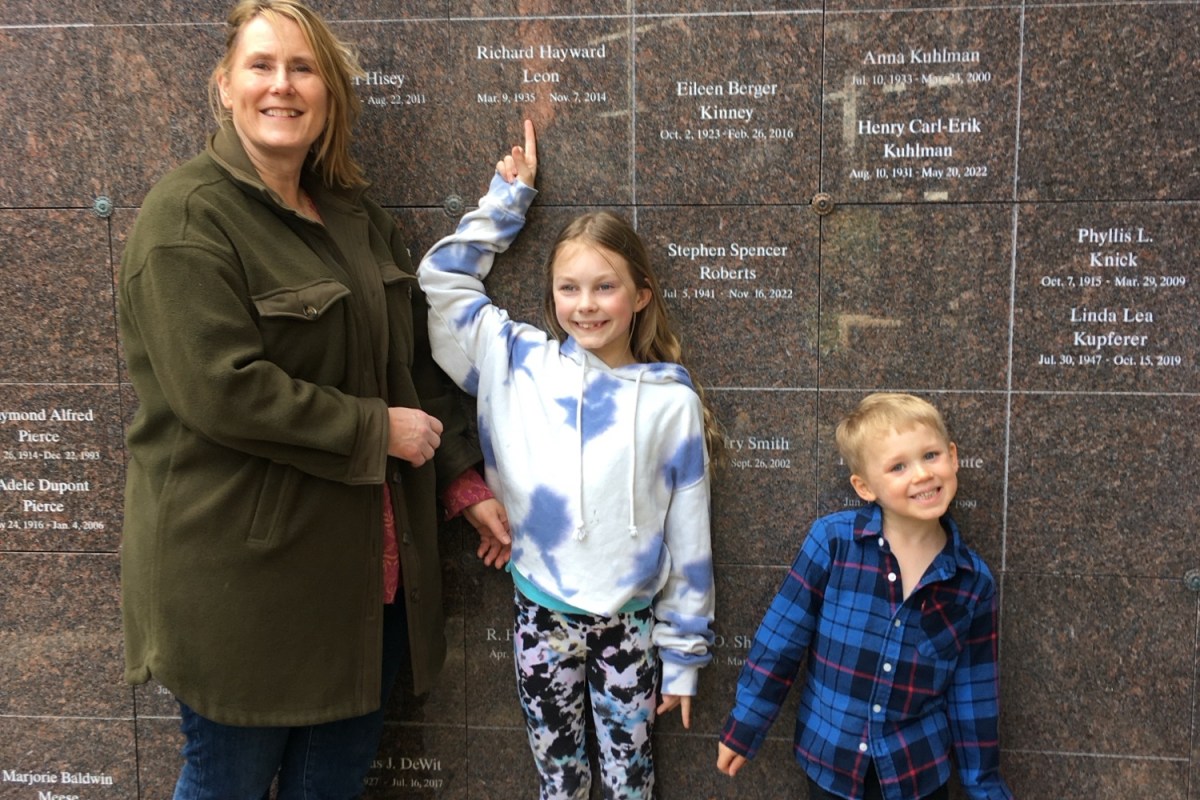
Recently my kids and I were at my dad’s former church for an Easter event. On the way out, Miss O asked to see my dad’s stone in the columbarium. It’s in a beautiful nook by a babbling little brook surrounded by trees.

Miss O and I like patterns. So we looked at all the stones and saw the ones, like my dad’s, that are offset because their spouse/partner will be added when they die. And then the ones where the name is in the middle because they are by themselves.

Miss O wanted to know about the dates on my dad’s stone. I pointed out his birth date and then she looked at the date of his death and said, “Because everyone comes to their death date.

Right!

[As aside, this reminds me of one of my dad’s jokes: “There’s always death and taxes; however, death doesn’t get worse every year.”]

She made that death date observation without any gravity or sadness. My kids can envision monsters and thieves but death doesn’t hold any weight for them.

At four-years-old and eight-years-old, they seem to attend to whatever is at hand with very little worry about the future. Somewhere between four and fifty-four, “reality” hits.

Which reminded me that a few weeks ago at bedtime, Miss O told me that she and her friend have been using recess to talk about “big topics.” I couldn’t wait to hear about these so I snuggled in next to her and asked, “Like what?

She replied, “Puberty and reality. Puberty was my friend’s topic and I brought up reality. I can’t believe it starts in three years.”

I asked “What starts in three years?

She replied, “Reality. You know. Middle school.”

I’m laughing, but perhaps that’s when it does start. The planning and preparing, setting the expectations for what life should be.

Thank goodness there’s death as an antidote. For me, being periodically reminded that “everyone comes to their death date” is helpful.  Not knowing when that will be prompts me to lay down my plans and to live.

(featured photo is mine)

Speaking of great reasons to write down our stories before we meet our death date, Vicki and I talk with author, publisher, podcaster, and former radio producer, Rick Kaempfer on our podcast, Episode 62: The Loop Files with Rick Kaempfer. He tells some incredible stories about the most outrageous radio station ever. And does an amazing job at poignantly describing one of the reasons we write.

Search (and subscribe!) for Sharing the Heart of the Matter on Apple, Amazon, Spotify or Pocket Casts. Or click through to the link above to see the video excerpts from that podcast, the link to listen in browser, plus all of Rick’s links.

The Art and Science of Making Friends

There’s not a word yet for old friends who’ve have just met.” – Jim Henson

This was originally published on 3/15/2023. Heads up – you may have already read this.


This past Saturday night I was over having dinner at my friends’ Rachel and Karl’s house. As our kids happily played together, we talked about technology, philosophy, and their recent vacation to Mexico and I marveled at how much I enjoy their friendship. It started because their daughter and mine were in a preschool co-op class and we often worked in the classroom on the same days.

When I had kids at age 46 and again at 50, I essentially started a new phase of life that was out of sync with my friends. None of my friends from before I had kids have kids as young as mine. So I needed to expand my circle of friends if I wanted to have friends that were experiencing the same things as I was.

I found establishing friendships with people that have young children to be hard. First off, everyone has just expanded their family and is all hands-on-deck with supporting new life. Secondly, having young children doesn’t mean we have anything else in common. And thirdly, research shows that we typically have the most friends at age 25 when we are establishing our identity and from there, our friend networks get smaller, often with a focus on fewer but more in-depth friends.

A recent study revealed that only 50% of people report establishing a new friend in the last year.

[I’m going to insert a big aside here. I think this might be a much different number in the blogging community where we are “introduced” to new people regularly and form some of what I think are great blogging friendships, or as my friend Betsy calls them, Blog Buddies. The research I mention here was focused on the broader population.]

Listening to a Ten Percent Happier podcast with psychologist and professor at the University of Maryland, Dr. Marisa G. Franco who has recently written a book called Platonic, made me think about the parenting friendships I’ve established in the seven years since I’ve had kids. It’s taken some time but I’d say that I’ve established a handful of close ones.

Here are some of the things I’ve found helpful in creating new friendships interspersed with some of the wisdom from Dr. Franco.

Openness

You have to be vulnerable. This is a hard one for me because my biggest fear is to be seen as a needy person who can’t do it herself. So I’ve worked hard to open up to people who have earned my trust.

Attachment Style

Dr. Franco has found we have attachment styles that affect our ability to make friendships. There is a lot of room for interpretation in our relationships (e.g. is that person just busy or ghosting me?) and our past relationships can factor in on how we do that interpretation.

  • Securely attached people tend to not to take things as personally and to think people like them.
  • Anxiously attached people tend to cling or lose themselves because they assume they’ll be rejected.
  • Avoidantly attached people don’t want to give others the chance to reject them or use their vulnerability against them.

Dr. Franco says being aware of our styles can be really helpful so that we understand the filter we are using when interpreting new friendships.

This brings to mind a recent situation with a parenting friend. I had made overtures to do things again and again. She always said, “yes” but never made the effort herself. I tend to be the securely attached style but I started to wonder if I was the only one who valued the relationship when she offered up the comment, “Thanks for thinking of this. I have social anxiety and often forget to reach out.” Ah – awareness matters.

Continuity

What often falls off my radar is my existing friends. I confess to being not very good at planning things with my pre-parenting friends. Life feels busy and that falls into “me” time that is hard to set aside. So I’m always incredibly grateful when they reach out and suggest get togethers. I do my best to tell them I appreciate it!

On the morning after that lovely dinner with my parenting friends, Rachel and Karl, my best friend from when we were seven-years-old, Katie, came over to hang out with me and my kids. Friends, from all phases of life – what a blessing and well worth the effort.

(featured photo from Pexels)

Extending One’s Self For Love

“I define love thus: The will to extend one’s self for the purpose of nurturing one’s own or another’s spiritual growth.” – Dr. M. Scott Peck

I was telling my dear friend, Katie, the story of traveling home from New Orleans with my kids a few weeks ago. Miss O and I checked out bags. Then Miss O pointed out to Mr. D the really cool way our bags were traveling down the conveyer belt.

Mr. D wanted to check his bag then too. “No, “ I insisted. “That costs $30.” Which is a stupid argument to make to a four-year-old. So we sat down on the floor or the airport to have a family meeting. When nothing I was saying was working, I finally said, “Mr. D, I’ll give you $5 to NOT put your bag on the conveyer belt.”

Deal!

And then he gave me the $5 back about two minutes later.

Katie responded that I was a nice parent. Which made me think. I’m not sure if I approach it this way because I was raised in the era of “behave well – we don’t care what you feel” so I’m doing the opposite. Or out of necessity because most of the time I’m outnumbered. In this case, I simply didn’t have the strength or number of hands necessary to carry my backpack and a screaming kid through the airport.

But I’d also say that parenting has changed me. Now I’m really interested in helping little people through their emotions. In my negotiations, the answer never changes – my kids still have to go to school, not check their bags, and respect bedtimes. But I’m happy to work through how they feel about it.

Like when after three years of having no problems at pre-school drop-off, Mr. D started balking at the door. There have been lots of personnel changes and that seems to be the root of the reluctance.

I tried just leaving. I tried making deals. I tried going to Starbucks to talk about it. I tried using little plastic people to act out why.

And then I landed on riding bikes to school. Miraculously, it worked. It made it so that he didn’t have any problem going to school and his entire day was better. Then I started playing with the how. Driving eight-year-old Miss O to school so she didn’t have to ride every day. Then running alongside Mr. D as he rode his training wheel bike.

I’ve adjusted the length and we’ve tried scootering instead of biking. Even a .4 mile scoot works.

Sure, I’m showing up at work sweaty and late from running alongside and then back to the car again. I needed more exercise anyway. And it works. It changes his whole day because we’ve figured out how to move the energy that was blocking him.

Dr. Peck’s definition of love at the top of this post resonates with me. There are so many ways that people extend themselves in love. Working through feelings happens to be mine for this phase of life, born out of necessity and time. It’s had extended benefits in the patience I have for other areas as well – work, friendship, and pet ownership.

Here’s to everyone doing the hard work of love in whatever way works for them.

Stories Matter

I began to realize how important it was to be an enthusiast in life. Embrace it with both arms, hug it, love it and above all become passionate about it. Lukewarm is no good. Hot is no good either. White hot and passionate is the only thing to be.” – Roald Dahl

This past Tuesday, eight-year-old, Miss O was working on a school project and announced “Volcanoes are boring.”

I harumphed thinking about all the beautiful, scenic, and climbable volcanoes in our vicinity. “I love volcanoes,” I said.

She shot back, “I bet you could make volcanoes interesting.

So at bedtime that night, I told her and four-year-old Mr. D. about when I was 11-years-old and living in Spokane, Washington. We were driving home from church on a Sunday afternoon in May, 1980. We stopped to talk with a neighbor who told us that Mt. St. Helens had erupted. Mt. St. Helens was on the opposite side of the state from us. The eruption blew the top 1,300 feet and the north side of the mountain off. We nodded with interest and went about our day as usual thinking it had no bearing on us.

As we drove home from a playdate four hours later, the sunny May sky turned gun metal gray and ash started falling. We carefully drove home with our windshield wipers pushing the dusty pile off our windshield.

In Spokane where it snows usually from October through March, school is never canceled because of weather. But after Mt. St. Helens blew, they told us to stay indoors, and school was canceled for a week. Everyone tried to figure out what to do with Mt. St. Helens ash. We collected it to polish silverware. Others used it to make ceramics. My friend, Jiffy and I used it to build sand (ash?) castles. When we drove across the state on vacation that summer, we stopped on several occasions to watch impressive ash dust devils form in fields across the state.

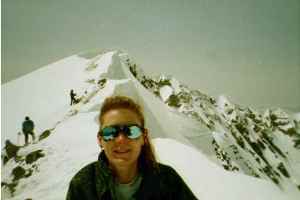
Then I told my kids about how, in the year 2000, twenty years after it erupted it, I climbed Mt. St. Helens for the first time. It’s hard to get permits to climb in the summer. The park service limits traffic to help the flora to grow back. [And here I may have embellished a little side story imagining how excited the scientists were when they discovered the first flow to grow back after the eruption. “Look, look, the first tiny flower has come back to St. Helens!!”]

In order to bypass the permit lottery process my friend, Jill, and I climbed in the late spring when the traffic is low so it’s easy to get a permit. We climbed up 6,000 feet on a sunny April Saturday to look over the rim. Even though it wasn’t very high (any more) was a long one-day climb.

The view over the rim of Mt. St. Helens to the little pot-belly lava dome in the top center.

And the rim? Well, it was fascinating to look over the edge into gaping hole below with a little pot-belly lava dome in the middle. And then to have a sense of surreal shock that nothing was below us.

The rim of Mt. St. Helens 20 years after the top and half the mountain blew off.

For as exhilarating as it is to stand on a mountain top, it’s a little dizzying to stand on only half of one.

This bedtime story session was on Tuesday night. By Wednesday afternoon, Miss O was telling me facts about volcanoes. “Mom, did you know there are three types of volcanoes?

I didn’t even try to hide my glee.

This theme shows up for me again and again. When we share our stories – it matters. Our authentic voice telling our experiences are more than just a bedtime story. It’s the passing on of energy, passion, and warmth.

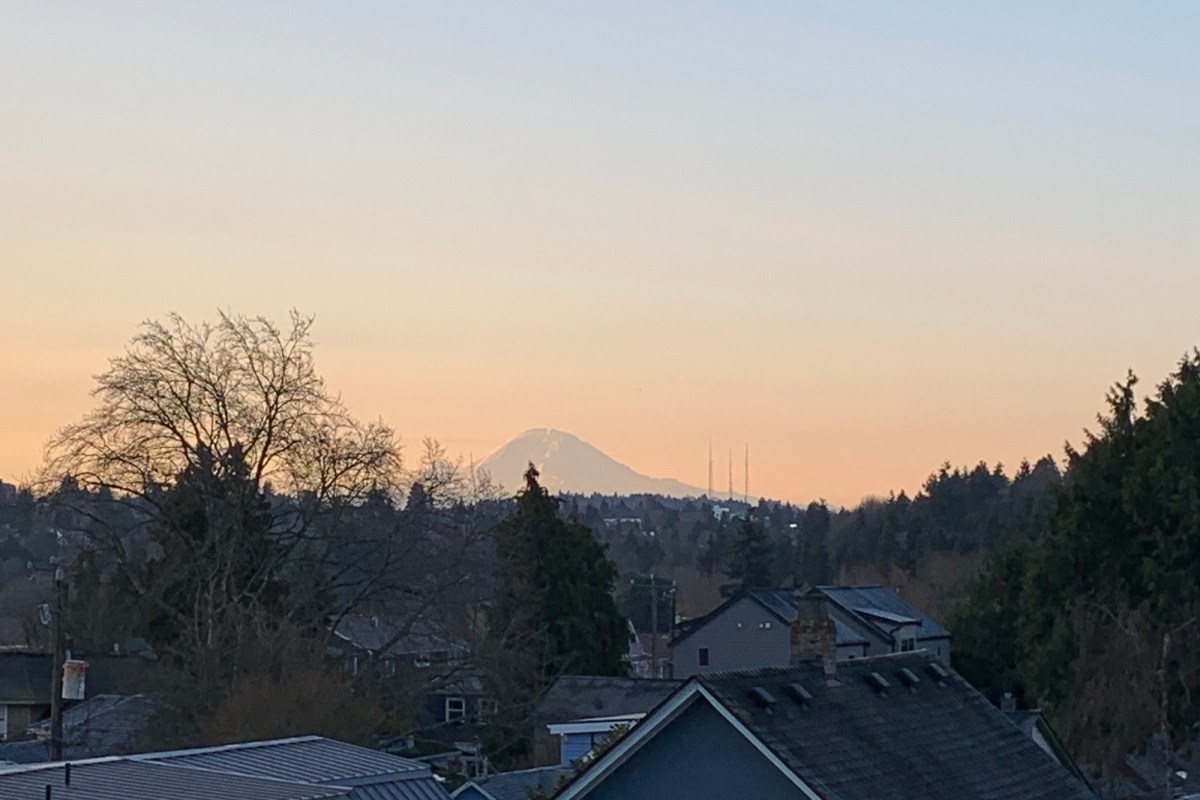
(photos in this post are mine – the featured photo is my favorite volcano, Mt. Rainier)

And speaking of authentic stories, Vicki and I talk with writer and blogger, Cheryl Oreglia on our podcast today about her experience at the San Francisco Writer’s conference. She sells us the idea that not only are we the only one to tell our stories – we might be obligated to. It’s such a great episode. Please tune in by searching for (and subscribing to) Sharing the Heart of the Matter on Apple, Amazon, Spotify or Pocketcasts

Or click through to the show notes Episode 61: The Writers Conference with Cheryl Oreglia for the link to listen on Anchor on whatever device you are using.

Faith in Foxholes

In faith, there is enough light for those who want to believe and enough shadows to blind those who don’t.” – Blaise Pascal

We have a family story that has always fascinated me. When I was in my 20’s, my dad’s mom, Nana, told me the story of my dad’s first two years and how she prayed for his life.

Following his birth, my dad contracted dysentery at the hospital and was sickly for two years, eventually resulting in rickets.  All 13 bottle-fed babies born the same week as my father contracted dysentery because the machine for sterilizing the bottles was contaminated. My dad was the only baby to survive.

Finally, at the end of his second year, Nana was exhausted and worried. One day out in the back yard in the weak Seattle sun, trying to get my dad to soak up some Vitamin D, she made a bargain with God that if He would save him, my dad would be HIS for a life time.

My dad got better. And amazingly, he did go on to become a Presbyterian pastor. But not because of any overt influence from his parents who were not church-goers or in today’s parlance, even particularly spiritual. In fact, my grandmother didn’t tell my dad about her prayer until he was almost done with seminary.

I only heard the story because my grandmother told it to me. Whenever I brought it up with my dad, he’d always chuckle about it but he never seemed to give it much credence. Finally my mom added to my clarity about what she thought of the story when she said, “It was faith in a foxhole.”

She meant that my Nana only prayed because her back was up against the wall, not because she had any great faith. And for people who were incredibly dedicated to their faith as my dad was and my mom still is, I think my grandmother’s one-off belief seemed silly.

Mahatma Gandhi said about prayer,Prayer is not asking. It is a longing of the soul. It is a daily admission of one’s weakness. It is better to have in prayer to have a heart without words than words without a heart.” And as someone who meditates daily, I agree that having a practice keeps the channel open and the sense of possibility alive.

But I also think that the Divine shows up whenever we bother to look. And the fact that some people look more often than others doesn’t make it less real or miraculous. God is in the foxholes and then it’s up to us to connect the dots when we get out. As the 12th century Jewish philosopher Maimonides said, “We are like someone in a very dark night over whom lightning flashes again and again.”

What about you – do you think faith in foxholes is real? Or is it only real if we consistently work at it?

(featured photo from Pexels)

My book about my journey to find what fueled my dad’s faith, spark and twinkle can be found on Amazon: Finding My Father’s Faith.