Going to the Next Level

I am convinced all of humanity is born with more gifts than we know. Most are born geniuses and just get de-geniused rapidly.” – R. Buckminster Fuller

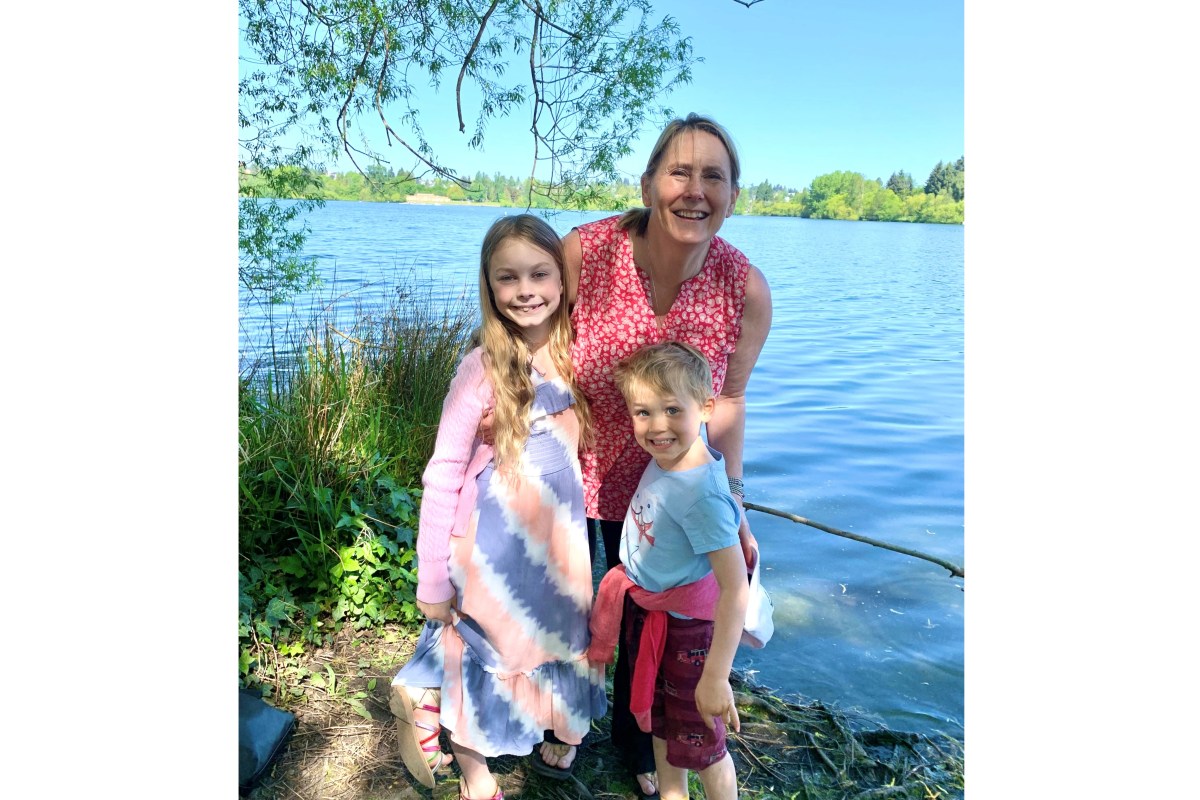
We are coming to the end of our school year. 28 more school days in third grade for Miss O. And 50 days until Mr. D graduates from his preschool program. Do you remember that feeling as a kid? Being not only ready for summer break but also ready to ascend to that next level?

It has me thinking of what milestones we have in our lives as grown-ups that celebrate our readiness to go on to the next level. There are some big ones like becoming an empty-nester or retirement. Or we have annual ones like birthdays, anniversaries, and New Years. But often, I find myself at those moments planning on what I’m going to do next instead of commemorating what I’ve learned.

Let me suggest that we take a moment to bring back that feeling of finishing a school year. To actually name something we’ve graduated from and celebrate it. I’ll start:

I’ve come to believe that I am enough. Or at least to understand that pretending to be someone else is ineffective. So if a situation or expectations make me feel otherwise, I try to slow enough to double-down on being me long enough to get through.

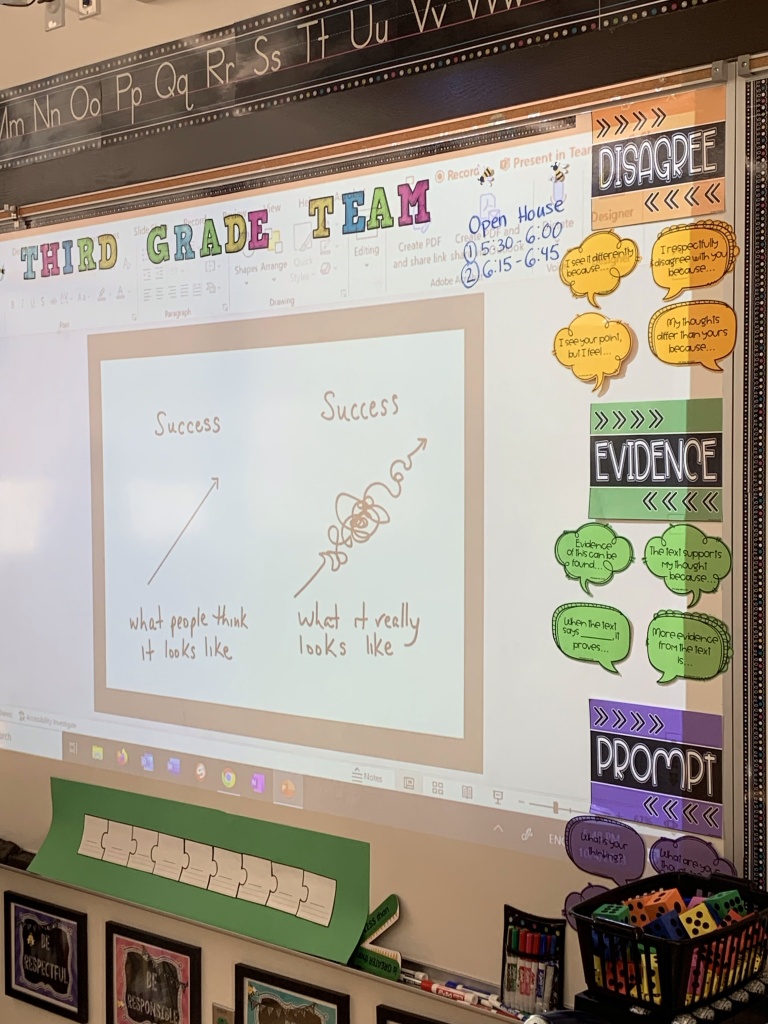
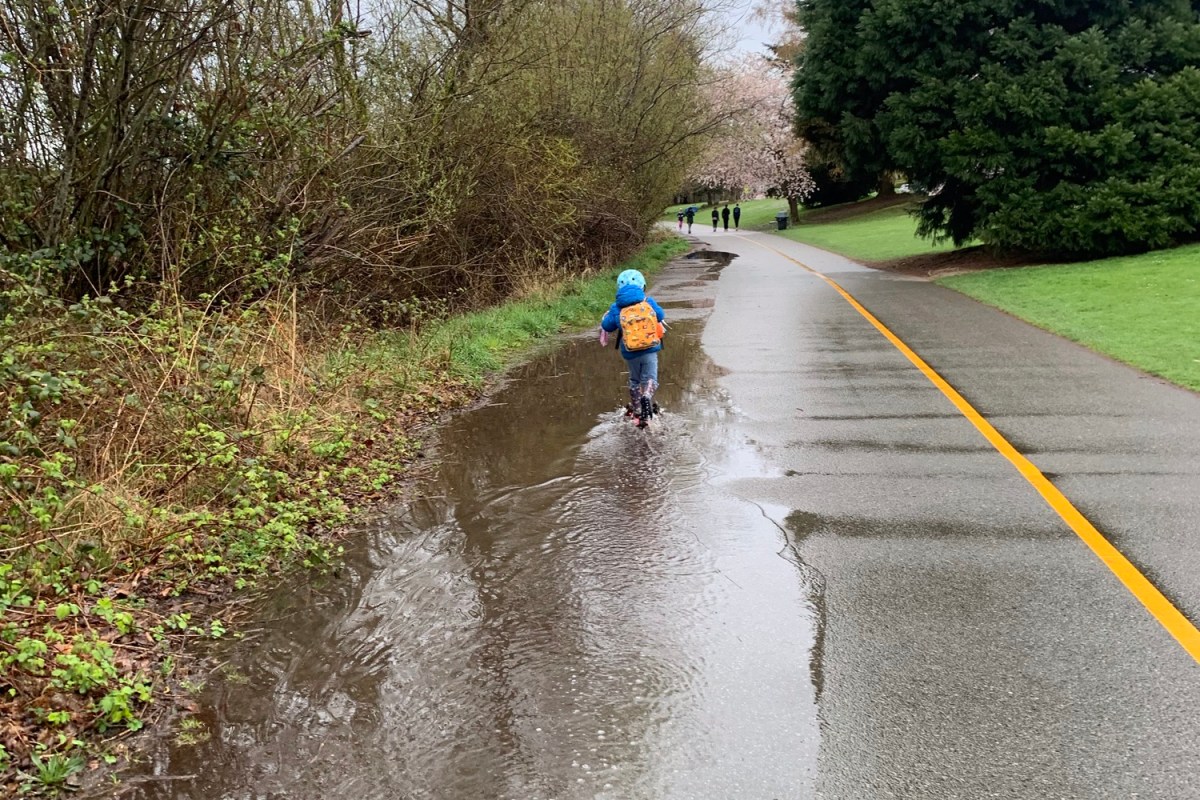
And by graduating, I don’t mean being done. It brings to mind another graphic from Miss O’s 3rd grade teacher:

It seems fitting on this last day of teacher appreciation week to honor our teachers by naming what we’ve learned. Are you with me? If you are stuck, maybe visit the list from Pick Three Affirmations to find a place to start.

(featured photo from Pexels)

For a story about the circle of life, please listen to our Sharing the Heart of the Matter podcast: Episode 66: The Power of Story with Wynne and Vicki.

We are changing our format starting with this episode. Vicki Atkinson and I are big believers in the power of story – to connect us, to create intergenerational healing, and to make meaning out of the events of our lives. To set the stage, we will be starting with someone telling a story in each episode.

To listen to the podcast, Search (and subscribe!) for Sharing the Heart of the Matter on Apple, Amazon, Spotify or Pocket Casts. Or subscribe to our YouTube channel to see a video clip of each story: @SharingtheHeartoftheMatter.

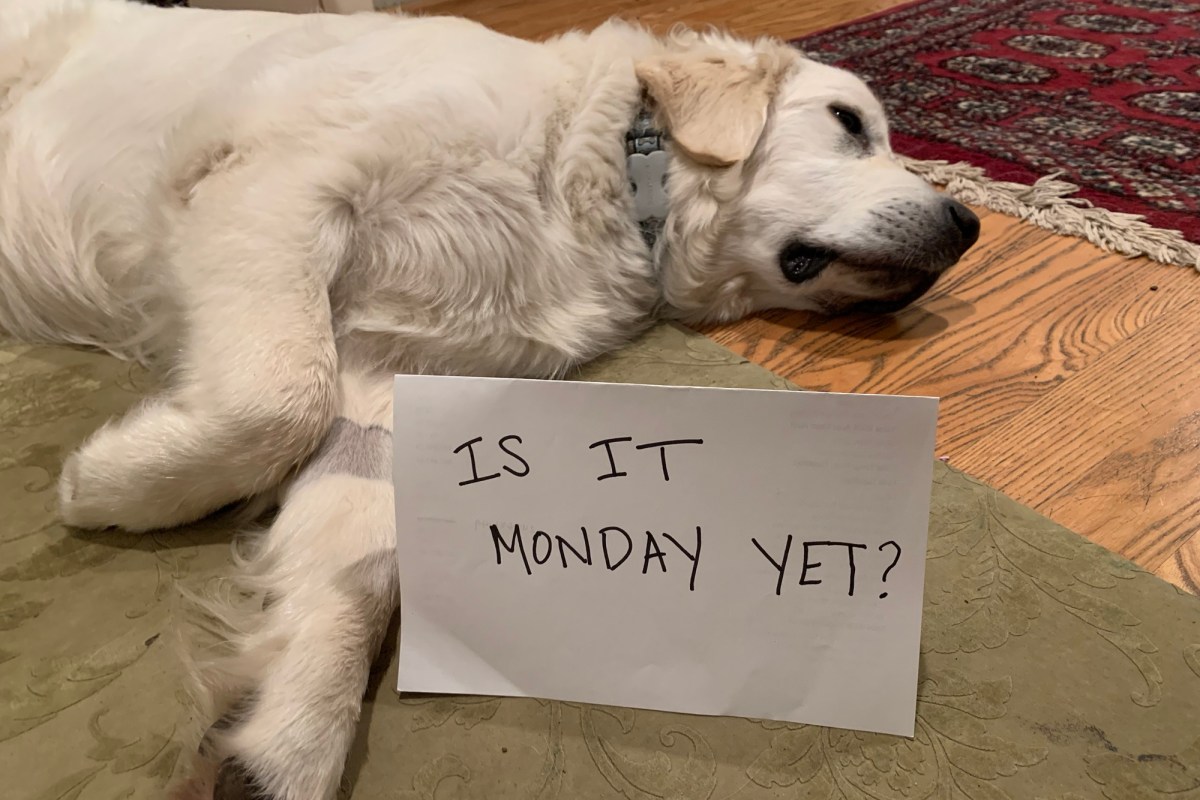
Thank Goodness It’s Monday

If we want stability in our family, society, nation, and the world, we need to create stability in individual human beings.” – Sadhguru

This weekend I:

  • Walked a half marathon (27k steps over 2 ½ days)
  • Celebrated the achievements of this youngest generation of scientists and explorers (took my kids to a 5 year old birthday party and set up marble tracks, cheered for kids figuring out how to slide fast and slow, )
  • Practiced medicine (2 boo-boos, and tummy ache)
  • Work to help prevent disease and disorganization (did 5 loads of laundry, supervised young hands wiping down counters and sinks, changed the sheets, mowed the lawn, organized a utility closet, and did at least 1000 dishes)
  • Exercised hearts and minds (played 2 games of family soccer, reenacted light saber scenes, played Chinese checkers, read a half a dozen books aloud, and told a dozen stories, played at least a dozen rounds of keep away with Cooper the dog)
  • Fed the hungry (prepared seven meals, a bazillion snacks, five meals for the dog, three meals for the cat)
  • Coached positive techniques for conflict resolution and expressing healthy boundaries (settled at least a half dozen power struggles and fits of big emotion)

No, I’m not aiming to do a victory lap here (for one thing I’m too tired 🙂 ). But my weekend reminds me that:

  1. We don’t give caretakers nearly enough credit for the amount of energy and skill it takes to keep other beings alive.
  2. I’m a much better parent because I work. The dozen things I need to get done at work on Monday seem like child’s play… compared to a weekend of playing with children.
  3.  Kids and pets reflect the care they get…and so do caregivers. None of it is possible unless caregivers fill up their tank.

Happy Monday, everyone!

Open Up, Buttercup

The opposite of faith isn’t doubt, it’s cynicism.” – Billy Bragg

I was telling my kids the other day that my mom used to say to me about my chores, “If you’re going to do a bad job, I might as well do it myself.”

My kids looked at me quizzically, an expression that I’m quite sure mirrored mine as a kid when my mom said it. As a parenting trope, that might be one of the worst.

Because I would immediately think, but not say (after all, this was parenting in the 1970’s), “Go ahead and do it yourself.”

Little did I know that a half century later, I’d come to see that it’s pattern I fight against. I tend to do things myself and not ask for help. It’s a tendency that isolates me – which I mean that I sometimes ignore the bridges others throw my direction.

I recognize that I have two different types of, “I’ll do it myself.” There’s the “It’s okay, I’m good – I’ve got this.” And there’s the “Argh, I’m disappointed with other humans. It’s enervating to just think about communicating my needs to someone else so I’m just going to hunker down and do it myself.”

It’s the second type, the one that’s a little cynical, that I need to watch for. I’m come to think of it as when I get a little heart-sore. It happens when I get tired, when someone is spinning out at work, have watched too much news, or when I’ve tried to say something that matters to someone dear to me and they miss the point.

I’ve come to recognize this state of cynicism because the dialogue in my head starts to run a roll call of my disappointments. When the litany starts to get long, involve old wounds, or last for more than a day, I know I’ve got more than a situation, I’m a little heart sore. It may be imperceptible from the outside but my willingness to be vulnerable goes down and my protective shield goes up.

It’s funny – just like with my mom’s phrase, the only person I hurt when I close in on myself is me. I work better in life when I’m open. It behooves me to recognize when I get cynical and do some movement (the modified side plank pose opens up that space so that I can breath elasticity into the heart space when it’s tight), have lunch with a friend, or write a post about it.

Ah, I feel better now…

Speaking of great conversations with friends, check out the Sharing the Heart of the Matter podcast this week. I talk with my dear friend and co-host, Vicki Atkinson about the Keys to Collaborative Success. Being open is just one of them.

Also, I’m so grateful to Edward Ortiz from the Thoughts about leadership, history, and more blog to writing a review of my book. I so appreciate his incredibly thoughtful and deep analysis about life in his writings. I couldn’t be more appreciative that he spent the time to read and review my book: Book Review: Finding My Father’s Faith

Extending One’s Self For Love

“I define love thus: The will to extend one’s self for the purpose of nurturing one’s own or another’s spiritual growth.” – Dr. M. Scott Peck

I was telling my dear friend, Katie, the story of traveling home from New Orleans with my kids a few weeks ago. Miss O and I checked out bags. Then Miss O pointed out to Mr. D the really cool way our bags were traveling down the conveyer belt.

Mr. D wanted to check his bag then too. “No, “ I insisted. “That costs $30.” Which is a stupid argument to make to a four-year-old. So we sat down on the floor or the airport to have a family meeting. When nothing I was saying was working, I finally said, “Mr. D, I’ll give you $5 to NOT put your bag on the conveyer belt.”

Deal!

And then he gave me the $5 back about two minutes later.

Katie responded that I was a nice parent. Which made me think. I’m not sure if I approach it this way because I was raised in the era of “behave well – we don’t care what you feel” so I’m doing the opposite. Or out of necessity because most of the time I’m outnumbered. In this case, I simply didn’t have the strength or number of hands necessary to carry my backpack and a screaming kid through the airport.

But I’d also say that parenting has changed me. Now I’m really interested in helping little people through their emotions. In my negotiations, the answer never changes – my kids still have to go to school, not check their bags, and respect bedtimes. But I’m happy to work through how they feel about it.

Like when after three years of having no problems at pre-school drop-off, Mr. D started balking at the door. There have been lots of personnel changes and that seems to be the root of the reluctance.

I tried just leaving. I tried making deals. I tried going to Starbucks to talk about it. I tried using little plastic people to act out why.

And then I landed on riding bikes to school. Miraculously, it worked. It made it so that he didn’t have any problem going to school and his entire day was better. Then I started playing with the how. Driving eight-year-old Miss O to school so she didn’t have to ride every day. Then running alongside Mr. D as he rode his training wheel bike.

I’ve adjusted the length and we’ve tried scootering instead of biking. Even a .4 mile scoot works.

Sure, I’m showing up at work sweaty and late from running alongside and then back to the car again. I needed more exercise anyway. And it works. It changes his whole day because we’ve figured out how to move the energy that was blocking him.

Dr. Peck’s definition of love at the top of this post resonates with me. There are so many ways that people extend themselves in love. Working through feelings happens to be mine for this phase of life, born out of necessity and time. It’s had extended benefits in the patience I have for other areas as well – work, friendship, and pet ownership.

Here’s to everyone doing the hard work of love in whatever way works for them.

Romancing the Stone

Love recognizes no barriers. It jumps hurdles, leaps fences, penetrates walls to arrive at its destination full of hope.” – Maya Angelou

This post was originally published on 9/8/2022. Heads up – you may have already read this.


More than 10 years after the fact, I can tell the story of my marriage/divorce without even the slightest wince of pain. I got married to my husband when I was 33-years-old. He had been married before and told me that he was divorced because wife #1 had a jealousy problem.

In the marriage, I came to think he just wanted a mindless side-kick to be with him for whatever HE wanted to do. He thought I was far to in-de-PEN-dent (pronounced slowly as if a four syllable curse word). A couple years into the marriage he announced that it was time to have kids. I said “no.”

Seven years into the marriage, his best friend came to me to tell me of my husband’s infidelities. All of a sudden I understood what had really happened with wife #1. <insert big a-ha laugh here> After some dithering and poor attempts to fix it, we divorced.

After a couple of years of patching myself up and finding meditation, I started dating. I had very good reasons why none of those worked out. Here are a few examples:

  • There was the guy that brought a gun to the date. No, I didn’t feel threatened at all but certainly was surprised when he pulled it out. He thought it was necessary because I lived in the big city and he’d come from a smaller suburb.
  • And there was the date who I went snow-shoeing with. When the outing lasted longer than expected, I knelt at the door of my home to greet my dog and say sorry for leaving him too long. The date had followed me up to the door and muttered behind me, “Never apologize to an animal.”
  • There was also the very dear friend with whom I was unable to have deep conversations.

After these forays into dating didn’t produce a life partner and I was age 45, I made what I thought was a pragmatic decision to have kids on my own. In the seven years since I’ve had kids I’ve had a few sparse and isolated dating attempts but have largely left love of that variety alone.

That’s my story – and a story I fully inhabit and believe. But recently I was talking with a dear friend going through heartbreak. As I sat and listened to my friend’s stories, I realized that it exposed a deep vein of cynicism about love that I wasn’t aware I held.

 The cynicism says – I’m not sure love is worth it. It also says that I have to do x, y, and z before I’ll be ready. And that it’s okay for other people to have partners but maybe not me.

Whoa. It’s like I’ve been hanging on to my story as if it’s a life raft and now I’m finding out it’s full of holes. Maybe, just maybe, I didn’t find my partner after I divorced because I didn’t want to. Somehow my joy for what I have and the optimism that I’ve been clinging to have covered over some walls I’ve constructed.

One of my close friends always says she found her second husband and love of her life because she believed she was worthy of love. For me, and for many of us that have experienced great loss in relationships, I think we might need to believe something similar:

I am worthy of love. And the love that I will find will be worth having.

One of my favorite quotes about healing comes from priest and author, Henri Nouwen. After experiencing a loss of a significant friendship, Nouwen sequestered himself for six months and wrote journal entries that became his book The Inner Voice of Love. Towards the end, he comes to realize:

“Your future depends on how you decide to remember your past.”

Henri Nouwen

That’s the problem with my story about my marriage and divorce. I am frequently grateful to my ex-husband for the events that put my on the path that I’m on. But it appears that I need to re-remember what else about love is worthwhile. That decision may change a lot about my future.

What do you think about love? Hopeful? Cynical?

(quote for this post from my wise friend, Brian: Writing From the Heart With Brian)

(featured photo from Pexels)

I’ve also published today on the Wise & Shine: You Get What You Pay For

The Detective’s Toolbox

“It takes courage to grow up and become who you really are.” – e.e. cummings

Mr. D hasn’t wanted to go to his pre-school lately. It’s been such a marked change that it’s evoked the inner detective in me trying to figure out why. Was it the week that the lead teacher went on vacation? Is there a shift in schedule or meals that is bugging him? Is there a particular classmate that he’s having trouble with?

At four-years-old, Mr. D doesn’t seem to have the answers to the questions. I say that like his age is the factor. I’m sure it is in part, but I think we all get stumped about what’s bugging us from time to time.

Yesterday, we’d just parked at the curb and were just sitting there collecting ourselves before we went in to school. Cooper, the dog, was in the front seat next to me. Mr. D from the back seat said, “Cooper is sad.” I asked why and he said, “Cooper is sad because he misses us.

Oooh, my first break in the case.

So I tried two more things. At the end of the day, I asked Mr. D to tell me a story about school. He told me a story about John waiting in line for the roller coaster on the playground. Another student, Molly, gave John a look and it made him sad. So Mr. D went to play with John and it made John happy.

The second thing was to have him show me something he’d learned that day. They are studying the human body this week. In their study of the stomach and intestines, they put bread into plastic bags with soda water died green to mimic stomach acid.

We repeated the experiment at home so that he could teach his older sister and me. Yes, it’s really gross, but I took one for science’s sake. And giving Mr. D a chance to showcase a bit of how he spent his day made him feel proud of his learning.

Here’s what I noticed. That when we don’t know what’s wrong, we project it on to others like Cooper the dog. We also can get to it by telling stories or acting things out. I haven’t cracked the case entirely yet but I’ve started figuring out the toolset. A similar set of tools probably works for all of us.

Speaking of telling stories, Vicki and I talk with David from the Pinwheel in a Hurricane and unwanted blogs on the Sharing the Heart of the Matter podcast this week. It is a fantastic episode where David talks about doing story work to find clarity, integration, and healing. Check it out: Episode 53: Practicing Creativity with David

5 Things I Wish For You Today

Peace is not something you wish for; It’s something you make, Something you do , Something you are, And something you give away.” – John Lennon

1. A moment where your heart touches the heart of another.

2. At least one belly laugh that, in the best case, makes it so you can’t breathe for a split second.

3. The calm feeling that you are okay right here and right now.

4. Something unexpected that creates a ripple of knowing that magic exists.

5. An experience where you notice the sun on your skin, the rain on your face, or the wind at your back.

I wrote this as a list of what I wished for my eight-year-old and four-year-old kids on Christmas day. Then I realized that it was what I wanted for myself on Christmas day. Finally, it dawned on me that this is a an everyone on every day kind of list.

(featured photo from Pexels)

Climbing Out of My Gunk

When one tugs at a single thing in nature, he finds it attached to the rest of the world.” – John Muir

This post was previously published on 12/14/2022. Heads up – you may have already read this!


The other day I felt like I was working at my desk when pressure tipped the scales and slid into anxiety. I had a client project that wasn’t going well, something that I tried to do for a friend didn’t turn out as I hoped, the holiday bills were adding up and I had strange red spots splotching the skin on my face. In response, I was eating all the Christmas candy I could find even though I knew the only way that candy would solve my problems was that it soon would be my biggest belly-ache. So I managed to put down the sugar and I went for a walk.

And into the forest I go, to lose my mind and find my soul.”

John Muir

For all the John Muir and Henry David Thoreau quotes that I love, the person that I often think of when I feel this way is Beck Weathers. I wrote a post about him – The Power of Stories. He is the Texas pathologist caught in the 1996 storm on Everest that Jon Krakauer wrote about in Into Thin Air.

Beck tells the story that he climbed to escape depression. He’d head out into the mountains because climbing helped alleviate the darkness he was feeling. But it became a cycle of its own – he had to climb bigger and bigger things in order to keep depression at bay. Which is how he ended up at 27,000 feet on Everest in one of the deadliest storms.

I relate to Beck’s story not because I’ve suffered from depression but because mountains have given me relief from my own psychology. I started climbing in my late 20’s because I was bored after breaking up with a boyfriend and yearning for something bigger. I literally turned the corner on a street one day, Mt. Rainier lorded over my view, as it does so often in Seattle, and I knew I had to climb it.

What is it about climbing that makes it such a relief? For me it’s that when I’m having to work so hard to keep my body safe, my mind finally takes a back seat. When I’ve reduced what I have to do to the simple task of putting one foot in front of another and find a rhythm that works, I relax because I have far fewer choices about what to do or say next. At the same time, the perspective puts my ego into check because I’m no longer the main player in the small stage of my life, I’m a microscopic speck on the enormous stage of nature.

The clearest way into the Universe is through a forest wilderness.”

John Muir

In many senses, climbing was the beginning of my meditation journey. It slows my mind down, it simplifies what I need to do and it puts my ego in its place. To a degree now even walking does that for me when the muscle memory kicks in.

My favorite meditation is one that makes me think back to my climbing experiences. It’s where I feel the weight of everything I’m carrying on my back – the way the shoulder straps dig into my shoulders and the hip belt cinches my gut, the pressure of it all pushing my feet heavily into the ground. And then I take off the metaphorical backpack and sit with it in front of me, emptying out everything I carry one by one onto the ground before me. As I watch myself unload my problems and worries, I get a sense of detachment from them, a space that opens ever so slightly because they have been separated from my back. And then, after a few minutes of unloading, contemplating and breathing, I reload my backpack with only what I need to carry.

I always walk away from that meditation feeling lighter. Like walking and climbing, it gives me a bit of perspective and distance. I still need to return and figure out my problems but I can do it from a more capacious sense.

That happened with Beck Weathers as well. When he returned from Everest, albeit without his toes, nose, most of one arm and the fingers from the other, he was able to deal with his depression more holistically. His story always gives me inspiration – that I can face what’s weighing me down, use the tools I’ve learned from my experience, and maybe even roll it into something hopeful for others.

“Climb the mountains and get their good tidings. Nature’s peace will flow into you as sunshine flows into trees. The winds will blow their own freshness into you, and the storms their energy, while cares will drop off like autumn leaves.”

John Muir

And so it went the other day with my anxiety – I took it out for a walk and it came back in a much more manageable size. One where I could sit with one thing at a time, hold it in perspective to life and the world and then deal with it in its own rhythm.

I only scarfed down just a little more candy along the way.


I’ve written a post about a different type of letting go on Wise & Shine: Am I Copying? Getting Over Writing Defensiveness

The Power of Story

Quiet the mind and the soul will speak.” – Ma Jaya Sati Bhagavati

This is a piece was published previously on 10/19/2022. Heads up, you may have already read this.


Among the many stories my ex-husband told me of his precarious childhood, there is one that sticks out. He was five or six years old, living in Florida and his mom was dating the Hat Man, a man who wove and sold palm frond hats to tourists by the side of the road.

One night after he went to bed, my ex-husband woke up and smelled smoke. He tried to get out of his bedroom but his mom had locked him in from the outside. Finally he escaped out of a window to discover that his mom and the Hat Man had fallen asleep while smoking and drinking too much and set the house on fire.

Now that I’m a parent, I often think of my ex-husband’s story even though we divorced years before I ever had kids. The story of the precocious and energetic young boy who was probably a little bit of a pain in the ass locked into a room so his mom could drink in peace and set the house on fire.

I think of it when I need more patience to coax cooperation instead of compel it. I think of the story when I need extra capacity to provide good care to little ones when I am needing care myself. I think of it when I’m digging deep to do my best when my kids seem to be bringing their worst. I think of the story when I’m grateful that my parents modeled kind and consistent care with me as I was growing up.

When we tell our stories, or when we as writers tell other people’s stories, we often can’t see the effect they have on those who read them. Our narratives have the power to inspire others and become fuel for good and bad decisions. When we do a good job of humanizing the trauma that comes with life, we pass on the comfort of being seen and open the source for healing. We can lay the ground for growth by telling the stories of when life wasn’t so good.

I thought of my ex-husband’s story again the other day when I heard a Ten Percent Happier podcast with therapist Dr. Jacob Ham. He was talking about relational trauma, the small moments of neglect, abuse and fear some children experience from a very early age.

Dr. Ham described this trauma, “What’s really screwed up is as a baby that the only way to deal with fear and terror is to run toward your caregivers. They are supposed to protect you. You scream out hoping that they’ll come to your rescue but if they are the ones hurting you, then it puts you in a terrifying loop where you want to run from them but at the same time your body tells you to go find them. And then you spend the rest of your days trying to figure out how to resolve that paradox.

I have seen it [the paradox] be worked through. The key term that and I haven’t found a good layman’s term for is reawakening the capacity for mentalization. And mindfulness is a very close overlap to mentalization but the term means knowing that other person has a mind and that I have a mind and being curious about what’s happening in your mind as well as being curious about what’s happening in my mind.”

Which I interpret as that Dr. Ham works with his patients uses mindfulness to notice the deep stories in their minds and unpack their reactions that are fueled by them. In other words, the power of the story runs through this all – to tell where we’ve been, to inspire and inform others and to discover our internal paradoxes when we face ourselves.

No wonder being a writer is such a rich pursuit. Rich in power to change that is, because rich in monetary reward doesn’t necessarily follow. But it should – because it’s important work.


I’ve also published a post today on the Wise & Shine blog today with my favorite quotes about writing: My Favorite Writer Quotes

(featured photo from Pexels)