How to Share Snapshots of the American Dream

Knowledge increases by sharing, not by saving.” – Kamari aka Lyrical

Somehow I ended up as the keeper of a friend’s family photo albums. From time to time I’ll walk by an album and flip it open to a random scene from the 1960’s – his family all posed for a vacation photograph or one of a Christmas morning. And I’ll wonder, did it feel the same way to be in his family as it did mine?

One of things I find fascinating about when we share our stories is how they land for other people. It’s that chance to find out that we’re not alone in our experience and also that every family has its own flavor of wacky.

In this episode of the How to Share podcast, my co-host Vicki Atkinson and I are with author and educator Gloria Golec talking about her family memories.

We talk about acclaimed author and educator Gloria’s heartwarming new memoir, South Side Memories. This captivating book invites you on a journey through vivid snapshots of family, Polish immigrant heritage, and the vibrant streets of Chicago. With every page, Gloria masterfully reveals how cherished memories shaped her life and inspired her path.

We uncover the power of storytelling as Gloria shares how writing helped her stay connected to her roots and loved ones. She generously reveals the secrets to starting—and finishing—a personal project that might seem daunting at first, making it accessible for anyone ready to share their own story.

South Side Memories isn’t just a memoir; it’s a celebration of identity and resilience. Through Gloria’s uplifting narrative, you’ll learn how sharing your story can touch hearts and inspire others. This is a must-listen for anyone who values heritage, family, and the transformative magic of storytelling. Don’t miss your chance to be inspired—fall in love with South Side Memories today.

Takeaways

  • The book is a reflection of the American dream and immigrant experiences.
  • Storytelling helps maintain connections to roots and loved ones.
  • Writing can be a therapeutic process for personal growth.
  • Family dynamics, especially gender roles, play a significant role in shaping identity.
  • Cherished memories can provide clarity and understanding of past relationships.
  • Cultural heritage is often intertwined with food traditions and family gatherings.
  • Teaching experiences can influence one’s writing and storytelling approach.
  • Writing a memoir can be an emotional journey that brings past relationships closer.
  • Encouragement to start writing by focusing on one story at a time.
  • Sharing stories can inspire others and create a sense of community.

Here’s Gloria describing her captivating book, South Side Memories:

Here are some ways you can watch this compelling and inspiring episode:

Please listen, watch, provide feedback and subscribe.

Links for this episode:

How To Share Snapshots of the American Dream transcript

Gloria Golec’s profile on Eckhartz Press

South Side Memories on Eckhartz Press

From the hosts:

Vicki’s book about resilience and love: Surviving Sue; Blog: https://victoriaponders.com/

My book about my beloved father: Finding My Father’s Faith

(featured photo from Pexels)

Preparing to Have Fun

It’s not the will to win that matters – everyone has that. It’s the will to prepare to win that matters.” – Paul “Bear” Bryant

I wasn’t a particularly athletic or outdoorsy kid. It wasn’t until my late 20’s that the climbing bug bit me. I was driving my car to work. I came around a corner, saw Mt. Rainier dominating the skyline and thought, “I should climb that.” From there climbing became not only one of my passions but also in many ways my metaphor for tackling the challenges of life.

Summits, blisters, carrying a pack, one step at a time, working as a rope team, objective versus subjective dangers – all of it gave me such great perspective on life.

Give me a pebble in my shoe and I’ll turn it into an essay about self-care. I’ve failed to take the time to stop to get rid of something little before it gets big enough times to have a lot to say about that lesson.

All of this to say that I came to hiking and climbing mountains as an adult. So when I proposed to my kids in mid-December that we climb Tiger Mountain on New Years Day and they enthusiastically said they wanted to, I had to think carefully about how to make it a good experience for them.

Go ahead and groan now because here comes the point cloaked in a climbing story. The first time that I tried to climb Mt. Rainier, it hurt like hell. We made it to our base camp at 10,000 feet and then a storm came in. We couldn’t leave for our summit bid at midnight as planned because it was still snowing so at 6am, the lead guide came in and said, “Whoever wants to try for the top can go ahead and gear up. But we’ll have to go twice as fast as our normal pace to get this done in half the time.

My friends and I made it 11,000 feet before dropping out. Only 3 out of the 24 climbers made it to the top that day.

And I learned that the better shape you are in, the more fun you’ll have climbing. There are two levels of readiness – the first is to get yourself up (and down) a mountain. The second is to train enough to climb the mountain AND have some more in the tank in case you need to do a little more. It’s more likely to be fun if you’ve trained to the second level.

This applies to other things as well. Like getting ready for a presentation. The first level accounts for doing the preparation of putting together the slide deck. The second is doing that, practicing the presentation out loud, preparing the Q&A, and doing it well enough in advance to have a cup of tea to calm the nerves before starting. I’ve done that both ways as well and the second one is way more fun.

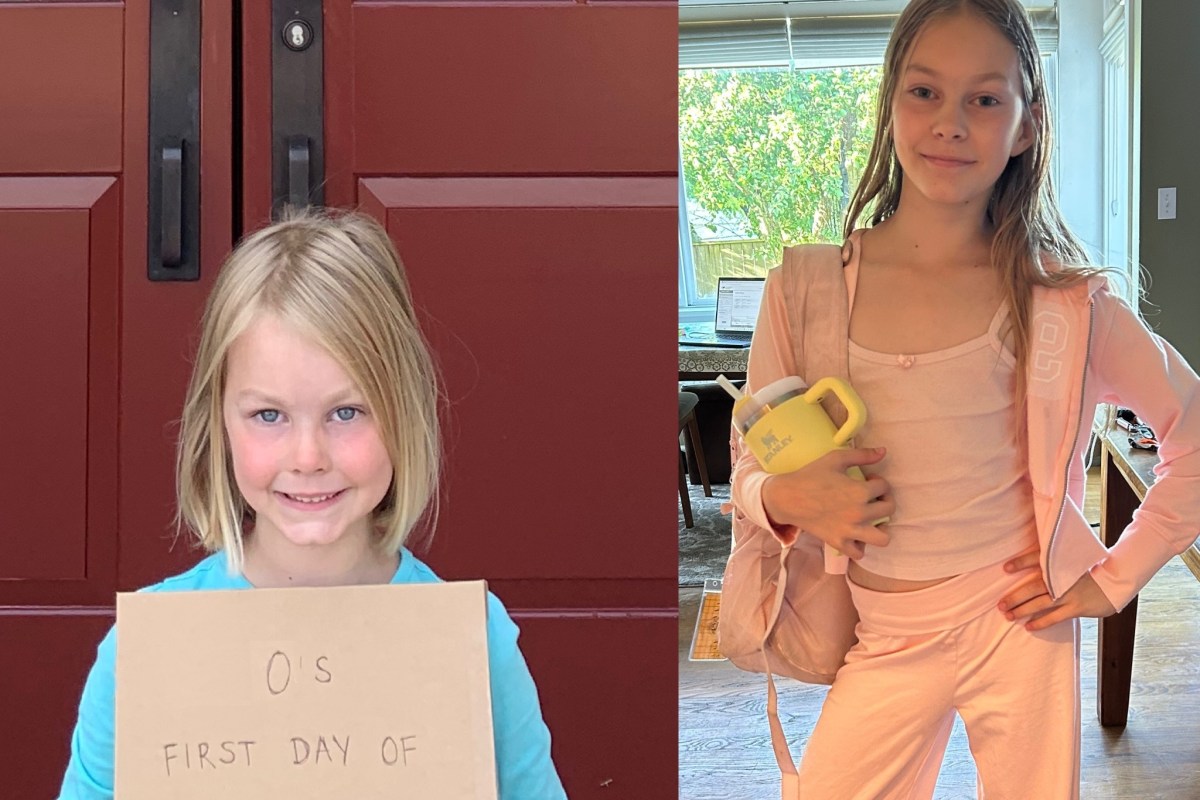
Circling back to inviting my kids along for a hike up Tiger Mountain, I wanted them not only to be able to do it but also to have fun. That meant that we all had to do the work to train to that second level. Working out on the stairs in our home, going to the Capital Hill stairs to train, walking the trail at Discovery Park, doing a pre-NY day hike up Little Mt. Si – I tried to vary it and make it fun. We had some bad moments along with the good but ten-year-old Miss O and six-year-old Mr. D were pretty good sports about it all.

I told my friend, Bill, that we’d done the hike and he sent me the Bear Bryant quote for this post. It matches what I’ve experienced. There are a lot of things we can white knuckle and get through. Having fun doing it requires some preparation.

(featured photo is the kids and I on a training hike)

You can find me on LinkedIn: https://www.linkedin.com/in/wynneleon/ and Instagram @wynneleon

Please check out the How to Share podcast, a podcast celebrates the art of teaching, learning, giving, and growing!

The Feeling of a Fresh New Year

Be humble. Be teachable. The world is bigger than your view of the world. There’s always room for a new idea, a new step…a new beginning.” – marcandangel

There’s a noticeable expansiveness in the January 1st  entry in meditation books. Setting the tone. Regardless of the theology or philosophy, there seems to be a commonality in the approach to start with the most fresh, audacious, “let’s jump in” message that the author can summon.

I’m not a resolution person but I do like celebrating beginnings. Aren’t fresh starts great? They make me think of the feeling at the bottom of the mountain that encapsulates all the potential energy. Or the intentions at the start of the project, or new job, about how it’ll turn out. And the appeal of a new relationship when the shared history remains to be written. Also the appreciation for babies and children because of their innocence and freshness.

The beginning is before we’ve had to make decisions to change the scope, mitigate the pain, or slip into automatic responses in order to save energy. Before we’ve accepted that most endeavors come with their share of pain, healing, and learning. And that we sometimes fail to deliver even when we intend to do our best.

I have a bad habit of believing I know how things will play out. Especially when new people I meet elicit a reminder of someone else and it feels like I can see a preview of the relationship to come. That habit cuts me off from potential. So I love the fresh energy of messages like January 1st meditation essays that open me back up to uncertainty and a wider perspective.

It’s like new shoes. We don’t know where they’ll take us but we have to get them dirty to find out.

The beginning is important. For me it’s a reminder to stretch – to set our sights on the most expansive goals and being the best human/parent/partner/athlete we can. And to allow space for uncertainty.  Then when the messy middle comes, we have some room for scaling back while still getting somewhere worth going.

So here’s to a great 2026! Happy New Year!

(featured photo from Pexels)

You can find me on LinkedIn: https://www.linkedin.com/in/wynneleon/ and Instagram @wynneleon

Please check out the How to Share podcast, a podcast celebrates the art of teaching, learning, giving, and growing!

How To Share Our Luck

Service to others is the rent you pay for your room here on Earth.” – Muhammad Ali

I’m fascinated by the origin stories of how people start big things. I love hearing how people have done fantastic things just by following a thread that often starts in such an incidental or accidental way.

My guest on this week’s How to Share podcast, Gil Gillenwater, has a great origin story. In 1987, he and his brother, Troy, went on a Thanksgiving-inspired road trip to deliver food to a town in Mexico. They took a wrong turn and ended up in Agua Prieta, a town right on the US-Mexican border and were stunned by the living conditions and abandoned children.

Gil started a non-profit called Rancho Feliz that has served the Agua Prieta and surrounding communities in these ways:

  • Awarded 3,700 scholarships
  • Issued 6,854 graduation certificates for adults
  • Built 1,220 houses
  • Distributed 64,000 bags of food
  • Donated tons of medical supplies
  • Constructed orphanages, education centers, childcare centers, and volunteer centers

And more than that, Gil and his mission have also enriched the lives of the people who have come to volunteer. Rancho Felix has coordinated 27,462 volunteer visits. Gil documents these accomplishments and shares his experiences and insights from over 35 years of philanthropic work along the US-Mexico border in his beautiful book, Hope on the Border.

Gil tells us why me-first culture isn’t working and how enlightened self-interest provides a path out of spiritual poverty. He shares why he doesn’t like the word “charity” for either giver or receiver. Instead Gil hails the 28,000 volunteers that work with Racho Feliz as guardian warriors.

We talk about education as the ultimate tool in the border crisis and how providing that can change lives. And we talk about how the ability to see ourselves in others proves to be a life changing gift.

This is an incredible conversation with an amazing guardian warrior that shows us enthusiasm and purpose that transcends borders. I know you’ll love it.

Takeaways

  • When’s the last time you heard good news about the US-Mexico border?
  • The disparity in wealth is a significant issue that needs addressing.
  • Education is the key to breaking the cycle of poverty.
  • Creating opportunities in one’s home country can reduce migration.
  • Enlightened self-interest can lead to personal and communal growth.
  • Volunteering provides a sense of purpose and fulfillment.
  • Community service fosters connections and shared humanity.
  • Experiencing poverty firsthand can change perspectives.
  • The joy of service is a pathway to personal happiness.

Here’s a short clip of Gil describing enlightened self-interest as an antidote to our me first, greed is good culture:

Here are some ways you can watch this compelling and inspiring episode:

Please listen, watch, provide feedback and subscribe.

This is the last podcast of 2025! Thank you to all you amazing listeners/watchers/readers who have been so interested in and supportive of all these amazing guests sharing their interesting stories about learning, writing, and growing in this one wild and precious life! Stay tuned for more great episodes in 2026! I appreciate you!

49: Personal Growth Pivot Points: Pause, Quit or Keep Going? The Life of Try: Personal growth, one try at a time.

How do you know when to stop trying—especially when you’re someone who prides yourself on perseverance? In this episode of The Life of Try, Wynne Leon explores the moments when quitting isn’t failure, but wisdom: when our efforts are overly controlled, when something deep inside says “it’s time,” or when passion turns obsessive and starts costing more than it gives. Along the way, she draws lessons from Marion Jones, Olympic figure skater Alysa Liu, Oprah Winfrey, and Andre Agassi, plus insights on harmoniousvs. obsessive passion.If you’re wrestling with whether to push through or letgo, this conversation offers language, perspective, and permission to choose what’s healthy—and what’s next.The Life of Try podcast: Personal growth, one try at a time.What happens when trying becomes more important thangetting it right?The Life of Try is a personal growth and self‑help podcast about getting unstuck, navigating uncertainty, and choosing to try—even when it’s uncomfortable, inconvenient, or not your idea.Hosted by Wynne Leon, the show explores how real growth, reinvention, and discovery often begin not with confidence or clarity—but with a single attempt. Through thoughtful interviews, reflective conversations, and real‑world case studies, each episode examines what it looks like to keep going when doubt shows up, plans fall apart, or life forces a change you didn’t ask for.This podcast is for anyone who:Feels stuck or uncertain about what’s nextIs navigating change, burnout, or reinventionWants to live intentionally without pretending growth is easyBelieves progress starts by trying – again and againThe Life of Try isn’t about hustle or perfection. It’s about learning as you go, surfacing what matters, and sharing what you discover along the way.If you’re ready to surf the uncertainty, outlast the doubts, and step into your own try‑cycle, you’re in the right place.Links for this episode:The Fun Habit: How the Pursuit of Joy and Wonder Can Change Your Life: Mike Rucker, PhDOpen: An Autobiography by Andre AgassiMarion Jones Reflects on Her Kids Living with 'Reality' of Her Doping ScandalFrom Oakland to Olympic gold: Alysa Liu takes figure skating crownAlysa Liu's Olympic figure skating comeback is golden, true to herselfHow Alysa Liu Found Her Love for Figure Skating AgainWinfrey Announces Show's End in 2011 – CBS News
  1. 49: Personal Growth Pivot Points: Pause, Quit or Keep Going?
  2. 48-How to Get Unstuck: Michael Yang on Saying Yes, Resilience, and Coming Alive
  3. 47-From Stuck to Momentum: Thomas Edison’s Method for Progress (Try, Learn, Improve, Repeat)
  4. 46: The Quiet Transformation That Changes Everything
  5. 45: The Life of Try: Alex Honnold Case Study

Links for this episode:

Hope on the Border on Amazon

Gil’s organization: Rancho Feliz

Gil Gillenwater on Facebook

My book about my beloved father: ⁠Finding My Father’s Faith⁠

(featured photo from Pexels)

(feature quote from Enlightened Mind 622 – The Rent You Pay)

The Scarcity Loop

Enough is abundance to the wise.” – Euripides

Fair to say that Cooper the dog steals something in our house nearly every day. I think most of my photos of the week posts capture him with some contraband. It’s easy to do the math and figure out that he must be doing that a lot in order for me to have that many photographs.

I learned of some research this week that was a huge a-ha for me. It shed light not only on Cooper’s habits but also some of my own. On the Ten Percent Happier podcast, journalist and author Michael Easter (his most recent book is Scarcity Brain) was talking about how our ancient brain mechanisms loop us in to always wanting more.

He described a research project in which rats were given a choice. The first choice was one reward system that gave them food every other time they pushed a button. The other choice was a reward system that didn’t have predictable cadence but gave them slightly more food when it did pay off (like an average of every 5th time).

The rats were choosing the second choice withe the unpredictable payoff which was surprising to the researchers. Usually they will choose what gets them the most food. The payoff of the first choice, the predictable every other time system was much higher.

The rats were living in small, plain cages. Then they changed the rats’ environment so they were living amongst plants in an environment that mimicked a natural habitat for rats. Once they changed the habitat, the rats switched to picking the every other time reward system.

The conclusion was that when we don’t have enough stimuli, we’ll make odd choices in order to spice things up. Like doomscrolling through social media, thinking we’re hungry when we aren’t, or in Cooper’s case, stealing the Christmas gnome.  

And Michael Easter’s take away on that research and other studies about what one of the best ways to get more stimuli? Getting out of our climate controlled houses to spend time in nature.

It’s funny but when I took Cooper out for a hike last week, he didn’t steal anything after we got home. Not even a dirty, sweaty sock that smelled of the trail. And for that matter – neither did I.

(featured photo from Pexels)

You can find me on LinkedIn: https://www.linkedin.com/in/wynneleon/ and Instagram @wynneleon

I host the How to Share podcast, a podcast celebrates the art of teaching, learning, giving, and growing.

I also co-host the Sharing the Heart of the Matter podcast with the amazing Vicki Atkinson.

How to Share Feedback

Some of the best advice I’ve been given: ‘Don’t take criticism from people you would never go to for advice.‘” – Morgan Freeman

My dad used the Oreo method when he delivered feedback. It was fitting because he loved Oreos. Perhaps that’s what made him so good at layering in the salty truth between delicious goodness.

He’d start with what was working, add in feedback about what could be better, and then finish it off with a compelling overall vision or motivation. It sounds straightforward when laid out as a formula but as anyone who’s eaten fake Oreos knows, it has to be authentic to work. And the recipient needs to at least be a little hungry for it.

Feedback is tricky, isn’t it? It’s often necessary for us to fuel personal and creative growth, especially with writing, and we sometimes don’t want to hear it. That’s why I love this How to Share podcast episode with Dr. Vicki Atkinson because she is such a pro at both giving and receiving feedback.

Vicki tells us about her project in the works, a novel that builds on her fascinating and intriguing family history. She has done the hard work to not only to write but also to seek out and incorporate feedback. She tells us what she learned from her doctoral dissertation about separating the ego from the work and how that is an essential part of being able to really take in someone else’s input.

We talk about asking the right questions when someone solicits our feedback and also being specific when we want input. And Vicki shows us what having a growth mindset looks like when it comes to incorporating comments.

Vicki walks us through the discernment necessary to pick out what is helpful when it comes to feedback and gives us permission to disregard what doesn’t fit.

This is a great conversation about this tricky subject and Vicki’s wisdom shines brightly through. I know you’ll love it.

Takeaways

  • Feedback is a tricky subject that requires discernment.
  • Separating ego from work is essential for growth.
  • Asking the right questions can lead to more useful feedback.
  • Timing and context matter when giving feedback.
  • Not all feedback is created equal; choose your sources wisely.
  • It’s important to let your work develop before seeking feedback.
  • You can choose which feedback to integrate into your work.

Here’s a great clip of how Vicki practices the art of letting go of the ego:

Here are some ways you can watch this inspiring and helpful episode:

Please listen, watch, provide feedback and subscribe.

49: Personal Growth Pivot Points: Pause, Quit or Keep Going? The Life of Try: Personal growth, one try at a time.

How do you know when to stop trying—especially when you’re someone who prides yourself on perseverance? In this episode of The Life of Try, Wynne Leon explores the moments when quitting isn’t failure, but wisdom: when our efforts are overly controlled, when something deep inside says “it’s time,” or when passion turns obsessive and starts costing more than it gives. Along the way, she draws lessons from Marion Jones, Olympic figure skater Alysa Liu, Oprah Winfrey, and Andre Agassi, plus insights on harmoniousvs. obsessive passion.If you’re wrestling with whether to push through or letgo, this conversation offers language, perspective, and permission to choose what’s healthy—and what’s next.The Life of Try podcast: Personal growth, one try at a time.What happens when trying becomes more important thangetting it right?The Life of Try is a personal growth and self‑help podcast about getting unstuck, navigating uncertainty, and choosing to try—even when it’s uncomfortable, inconvenient, or not your idea.Hosted by Wynne Leon, the show explores how real growth, reinvention, and discovery often begin not with confidence or clarity—but with a single attempt. Through thoughtful interviews, reflective conversations, and real‑world case studies, each episode examines what it looks like to keep going when doubt shows up, plans fall apart, or life forces a change you didn’t ask for.This podcast is for anyone who:Feels stuck or uncertain about what’s nextIs navigating change, burnout, or reinventionWants to live intentionally without pretending growth is easyBelieves progress starts by trying – again and againThe Life of Try isn’t about hustle or perfection. It’s about learning as you go, surfacing what matters, and sharing what you discover along the way.If you’re ready to surf the uncertainty, outlast the doubts, and step into your own try‑cycle, you’re in the right place.Links for this episode:The Fun Habit: How the Pursuit of Joy and Wonder Can Change Your Life: Mike Rucker, PhDOpen: An Autobiography by Andre AgassiMarion Jones Reflects on Her Kids Living with 'Reality' of Her Doping ScandalFrom Oakland to Olympic gold: Alysa Liu takes figure skating crownAlysa Liu's Olympic figure skating comeback is golden, true to herselfHow Alysa Liu Found Her Love for Figure Skating AgainWinfrey Announces Show's End in 2011 – CBS News
  1. 49: Personal Growth Pivot Points: Pause, Quit or Keep Going?
  2. 48-How to Get Unstuck: Michael Yang on Saying Yes, Resilience, and Coming Alive
  3. 47-From Stuck to Momentum: Thomas Edison’s Method for Progress (Try, Learn, Improve, Repeat)
  4. 46: The Quiet Transformation That Changes Everything
  5. 45: The Life of Try: Alex Honnold Case Study

Links for this episode:

How to Share Feedback transcript

Vicki’s book about resilience and love: Surviving Sue; Blog: https://victoriaponders.com/

My book about my beloved father: Finding My Father’s Faith

(featured photo from Pexels)

Making a List and Checking It Twice

Make sure to include yourself in the list of things you need to take care of this week.” – unknown

During this last week when the kids had a week off from school, six-year-old Mr. D repeatedly asked at bedtime what we were doing the next day. I discovered that he felt much more grounded when we made a list. It worked even better when he wrote it himself.

I’m a list person so I totally relate to D’s love of lists.

  • Lists help me prioritize what I need to do first.
  • There’s nothing like a list to keep me going when my motivation flags.
  • Writing a list reminds me of James Clear’s adage, “You don’t rise to the level of your goals. You fall to the level of your systems.”
  • I get a great deal of satisfaction when I cross an item off my list.
  • When I don’t get something do, it prompts me to consider whether it’s simply that I don’t have the time or I have simple underlying resistance that I need to address.

Nothing like a list to bring things into focus. Mr. D included “Chillax” on his list. It’s a good reminder to prioritize downtime even on days when the list is long.

(featured photo from Pexels and quote from Enlightened Mind 622 – Make Sure to Include Yourself)

You can find me on LinkedIn: https://www.linkedin.com/in/wynneleon/ and Instagram @wynneleon

I host the How to Share podcast, a podcast celebrates the art of teaching, learning, giving, and growing.

I also co-host the Sharing the Heart of the Matter podcast, an author, creator and storytelling podcast with the amazing Vicki Atkinson.

How to Share Impactfully with Social Media Friends

A little consideration, a little thought to others, makes all the difference.” – Eeyore

About three weeks ago, I opened my laptop to start working and clicked on a Facebook message. A friend that I’d known from Miss O’s pre-school days had died. I burst into tears. It couldn’t be. She’s ten years younger than I am, her youngest child is only 11 years old. She loved being a mom more than anything and I couldn’t believe that she wouldn’t be there to see her beloved kids grow up.

And moreover, because I’d seen the posts where she’d had a car accident about nine months previous and then complications had kept coming up, I was bereft because I hadn’t done anything but post a couple of comments. She wasn’t someone I was particularly close to, but I had so much respect and adoration for her.

It hit me especially hard because I was also in the middle of reading Amy Weinland Daughter’s book, Dear Dana. Dear Dana, is a beautiful chronicle of a letter writing campaign – and a thoughtful reflection of how social media does and does not work for us when it comes to real relationships.

On the latest episode of the How to Share podcast, I was lucky enough to be able to talk with Amy about Dear Dana and the incredible insights she gleaned. Amy tells us how her project got started when she saw on Facebook that her friend from summer camp 30 years before had a son who was sick and needed prayers. Amy starting writing them letters.

She explains how this effort blossomed into a project to write each one of her 580 Facebook friends a letter. We talk about the level of effort involved in writing that many letters and how it was transformative for her.

Amy shares some of the research around the benefits of writing and we talk about the insights of what she learned about the benefits and limitations of social media in the process of her project. One of my favorite a-has is that we can use social as a jumping off points for real relationships because we lose the richness if there is no investment in relationships.

We talk about God-whispers and how listening to them can help us participate in making this world a better place. Amy’s perspective is so real and inspirational that I know it’ll leave you feeling motivated.

This is an incredible episode with a powerful story and loads of magic. I know you’ll love it.

Takeaways

  • The most changed participant in the writing process is often the writer themselves.
  • Writing doesn’t require formal skills or extensive practice.
  • A simple act of writing can have a significant emotional impact.
  • All you need is a postage stamp and a human heart to express yourself.
  • The power of writing has always been within us, waiting to be discovered.
  • Engaging in writing can lead to personal growth and transformation.
  • You don’t need to write hundreds of letters to make a difference.
  • The act of writing can break down barriers to communication.
  • Everyone has the potential to express themselves meaningfully.

Here’s an incredible clip from Amy reminding us that it’s never too late to care:

Here are some ways you can watch this amazing and inspiring episode:

Please listen, watch, provide feedback and subscribe.

49: Personal Growth Pivot Points: Pause, Quit or Keep Going? The Life of Try: Personal growth, one try at a time.

How do you know when to stop trying—especially when you’re someone who prides yourself on perseverance? In this episode of The Life of Try, Wynne Leon explores the moments when quitting isn’t failure, but wisdom: when our efforts are overly controlled, when something deep inside says “it’s time,” or when passion turns obsessive and starts costing more than it gives. Along the way, she draws lessons from Marion Jones, Olympic figure skater Alysa Liu, Oprah Winfrey, and Andre Agassi, plus insights on harmoniousvs. obsessive passion.If you’re wrestling with whether to push through or letgo, this conversation offers language, perspective, and permission to choose what’s healthy—and what’s next.The Life of Try podcast: Personal growth, one try at a time.What happens when trying becomes more important thangetting it right?The Life of Try is a personal growth and self‑help podcast about getting unstuck, navigating uncertainty, and choosing to try—even when it’s uncomfortable, inconvenient, or not your idea.Hosted by Wynne Leon, the show explores how real growth, reinvention, and discovery often begin not with confidence or clarity—but with a single attempt. Through thoughtful interviews, reflective conversations, and real‑world case studies, each episode examines what it looks like to keep going when doubt shows up, plans fall apart, or life forces a change you didn’t ask for.This podcast is for anyone who:Feels stuck or uncertain about what’s nextIs navigating change, burnout, or reinventionWants to live intentionally without pretending growth is easyBelieves progress starts by trying – again and againThe Life of Try isn’t about hustle or perfection. It’s about learning as you go, surfacing what matters, and sharing what you discover along the way.If you’re ready to surf the uncertainty, outlast the doubts, and step into your own try‑cycle, you’re in the right place.Links for this episode:The Fun Habit: How the Pursuit of Joy and Wonder Can Change Your Life: Mike Rucker, PhDOpen: An Autobiography by Andre AgassiMarion Jones Reflects on Her Kids Living with 'Reality' of Her Doping ScandalFrom Oakland to Olympic gold: Alysa Liu takes figure skating crownAlysa Liu's Olympic figure skating comeback is golden, true to herselfHow Alysa Liu Found Her Love for Figure Skating AgainWinfrey Announces Show's End in 2011 – CBS News
  1. 49: Personal Growth Pivot Points: Pause, Quit or Keep Going?
  2. 48-How to Get Unstuck: Michael Yang on Saying Yes, Resilience, and Coming Alive
  3. 47-From Stuck to Momentum: Thomas Edison’s Method for Progress (Try, Learn, Improve, Repeat)
  4. 46: The Quiet Transformation That Changes Everything
  5. 45: The Life of Try: Alex Honnold Case Study

Links for this post:

How to Share Impactfully with Social Media Friends transcript

Dear Dana on Barnes & Noble and Amazon

Amy’s website

(featured photo from Pexels)

Ropes are Relational

A friend may well be reckoned the masterpiece of nature.” – Ralph Waldo Emerson

I awoke Friday morning to the sound of a drip in my bathroom. Amazing how a drop of water in another room landing on a bath mat that’s designed to absorb water can penetrate the unconscious. It felt like I came abruptly awake and then sat straight up listening. It reminds me of something I heard from acoustic ecologist Gordon Hempton that our ears never sleep, even when our brain does.

The vent on the fan was the source of the leak. So this weekend I got out one of my climbing ropes so that I could do some repair work on the roof. Afterwords, as I was coiling the rope, I was struck by how ropes are like friendship. It takes me a long time to coil a 60 meter rope so perhaps I was just delirious but I don’t think it’s too much of a stretch.

Ropes help us cross dangerous terrain: In the mountains when conditions are icy, steep, or pitted with crevasses, being roped to a team helps ensure safety if someone falls. We know from research, like the longitudinal study that Dr. Robert Wallinger talks about in his TED talk, that friendship has a similar effect. Good relationships keep us happy and healthy.

It’s easier to unkink a rope when it’s not frozen: Ropes, like friendships, get knotted and kinked sometimes. Ropes, like friendships, are easier to unkink when they aren’t frozen. When guides come back into camp after a summit or training exercise, they take care of the ropes right away. Even when the conditions are rough and people are tired and sore, it’s worth the effort to straighten and coil it before it freezes. In my experience, this is true for friendships as well.

Ropes are heavy: Carrying a climbing rope adds around 10 pounds to your pack, more if the rope is wet. When my friends and I climbed together, we’d divvy up the group gear to spread the load. But often when a climber isn’t feeling well, a team member will carry the rope for them. In my experience of good friendships, the same thing happens with carrying the weight of the relationship. Often, it isn’t a completely equitable split of time and effort that makes a friendship work but the willingness of both parties to switch off carrying the load when things get rough or busy.

Here’s the other thing that I love about ropes – they require me to find someone to hold the other end. I tend towards the stubbornly independent so this slows me down enough to get help. As I coiled the rope back up, I also appreciated how reassuring it was to have my mom and sister-in-law there when I roped up to repair the seal around the fan vent. I never slipped or needed the rope to catch me but I knew it was there and it made me feel safer. Just like my friendships.

(featured photo is mine of a rope coiling at the climbing gym)

You can find me on LinkedIn: https://www.linkedin.com/in/wynneleon/ and Instagram @wynneleon

I host the How to Share podcast, a podcast celebrates the art of teaching, learning, giving, and growing.

I also co-host the Sharing the Heart of the Matter podcast, an author, creator and storytelling podcast with the amazing Vicki Atkinson.

Backing Up My Assumptions

You can search throughout the entire universe for someone who is more deserving of your love and affection than you are yourself, and that person is not to be found anywhere. You yourself, as much as anybody in the entire universe, deserve your love and affection.” – Buddha

Last week I experienced the digital version of having to evacuate the house. My beloved laptop stopped being able to connect to AC power. It’s been touchy for a couple of years so I’d been putting the plug in a certain way and then jiggling it until the red light came on. And then it stopped being able to charge at all.

So I had to grab everything I needed in the span of the power remaining on the battery.

In theory, this should be no problem. I back everything up to the Cloud. In practice, I like to put things in places that aren’t backed up and think I’ll organize them later.

I closed my laptop (to save battery, of course) and thought about it. The first list of things I came up with were the things I needed in the short term. It felt like this was the equivalent of getting my family out of the house in the case of an emergency. Pretty obvious what to grab and the high-level “go bag” I’d prepared helped make me efficient.

But then the next list of things were the precious things in case I couldn’t get my laptop back. These were the digital version of grabbing the baby books and my dad’s lucky baseball mitt before running out the front door.

At this point I was pretty sure I could live with what I had and just needed to spend the time to rebuild my old laptop for what I needed to get done. This is the step where I learned the most because I started making mistakes. I flubbed a post, called someone by the wrong name, and didn’t have time to double-check details.

I ran smack-dab into my assumption that even in the case of disruption, I should be able to get operate like it’s business as usual. Sure, I can rebuild a laptop, stop by the repair shop and still get Miss O to the orthodontist, make all our classes and activities, and just do meetings in the car. <eye roll> Dang, my face still hurts from hitting that metaphorical wall.

The good news is that I got the laptop to the shop with enough battery power remaining that they could get the encryption key they needed in order to fix it. I’ll be back to full power in a couple of weeks. But more lastingly, I learned that in order to give other people grace, I need to learn to give myself some too.

(featured photo from Pexels)

You can find me on LinkedIn: https://www.linkedin.com/in/wynneleon/ and Instagram @wynneleon

I host the How to Share podcast, a podcast celebrates the art of teaching, learning, giving, and growing.

I also co-host the Sharing the Heart of the Matter podcast, an author, creator and storytelling podcast with the amazing Vicki Atkinson.