Recycling and Enlightenment

Do the best you can until you know better. Then, when you know better, do better.” – Maya Angelou

Seattle has great recycling. I know that’s probably not on the list of things that makes you want to come visit but I think it’s pretty cool. We don’t have to sort things into separate bins for aluminum, plastic and cardboard anymore and it’s free.

Also in 2015, Seattle declared that food waste was no longer okay to put in the garbage. They improved the composting capabilities so that food waste can be put in our yard waste bins for weekly curbside pickup service. The estimate was that a third of food in America is thrown away. When put in garbage, it rots and produces methane but if composted, it can become rich material to facilitate growth.

Here’s the complication – it makes it awkward when we travel. We’ve been on Whidbey Island for a week. One of my favorite places in the world. But they don’t have composting and they don’t pick up recycling.

To be fair, there are big garbage dumpsters at the place we are staying so there’s plenty of space to just throw everything in to go out with the garbage service. Except that I can’t do it – and none of my Seattle friends can either. We make our little piles of recyclables and create schemes to haul them away.

I find this incredibly hopeful. Just like the Maya Angelou quote for this post. Because as we up our game, whether it be in how we dispose of things, or our relationships to others and the world, it becomes very hard to go back.

Isn’t it interesting that when you stumble on enlightenment, that you can’t unsee it? Perhaps this is a stretch but I’m recycling the analogy – it’s kinda like self-awareness. Once I notice that I see something through a lens of fear, greed, or selfishness, it’s harder to maintain that lens.

It means that when we know better, we do better. Also, that progress can be sticky and have an impact. We just need to keep upping the game.

(featured photo from Pexels)

You can find me on LinkedIn: https://www.linkedin.com/in/wynneleon/ and Instagram @wynneleon

I host the How to Share podcast, a podcast about collaboration – in our families, friendships, at work and in the world.

I also co-host the Sharing the Heart of the Matter podcast, an author, creator and storytelling podcast with the amazing Vicki Atkinson.
All You Have to Do Is Ask

Our problem is not that we aim too high and miss, but that we aim too low and hit.” – Aristotle

Last week, nine-year-old Miss O came home from school disappointed that she’d missed the opportunity to sign up for her school Glee Club. Apparently we’d missed the memo.

So I suggested that we contact the music teacher to see if we could join now. “No,” she moaned, “we’re too late.

I doubled-down with the parenting trope “It never hurts to ask” but apparently Miss O was sure that it would.

I remember being about Miss O’s age when my mom told me to call the store I wanted to shop at to ask when they would close. I was completely intimidated. It took a lot of drama and role-playing practice. When I finally did it, I discovered that it was a pretty straightforward query.

So I’m completely clear on the many reasons we have not to ask for what we want. I still feel twinges to this day. Asking might reveal that we weren’t on the ball or should have already known. What if we are being disrespectful or disruptive? Perhaps it’ll bring unwanted attention on ourselves. And what if they say ‘no’? What if they say something I don’t know how to respond to?

But despite all this, I remembered late that night to send an email to the music teacher. She responded the next day that she’d be delighted to have Miss O join. In fact, she’d already let Miss O know when she’d seen her that morning.

When I picked Miss O up from school that day, I gleefully said, “Wuhoo, you got in to Glee club! See, you just have to ask.

She laughed and said, “Yep.” And then she added, “What do you do in Glee club anyway?”

Oh dear – that’s next week lesson: know what you are signing up for before you do so. It’s a lesson I’m still regularly learning…

(featured photo from pexels)

You can find me on Instagram @wynneleon and LinkedIn: https://www.linkedin.com/in/wynneleon/

I co-host a storytelling podcast featuring authors and artists with the amazing Vicki Atkinson. To tune in, search for Sharing the Heart of the Matter on Spotify, Apple, Amazon Music or Pocketcasts (and subscribe) or click here. Or the YouTube channel features videos of our interviews. Please subscribe!
My other projects include work as a CEO (Chief Encouragement Officer), speaking about creativity and AI through the Chicago Writer’s Association, and my book about my journey to find what fueled my dad’s indelible spark and twinkle can be found on Amazon: Finding My Father’s Faith.

Envisioning The Future Without the Filter of the Past

We have more possibilities available in each moment than we realize.” – Thich Nhat Hanh

After almost two years of working for the company that I sold my company to, I’m back in the business of working for myself. I’ve spent two-thirds of my career as a self-employed computer consultant. The inclination to build my business exactly as I did before is so strong – kinda like muscle memory. But that doesn’t honor that all the ways I’ve learned and changed since I did this previously.

So I love the inspiration I find to build outside of the box. Here’s one from Mark Nepo:

“It was a curious thing. Robert had filled the bathtub and put the fish in the tub, so he could clean their tank. After he’d scrubbed the film from the small walls of their make-believe deep, he went to retrieve them.

He was astonished to find that, though they had the entire tub to swim in, they were huddled in a small area the size of their tank. There was nothing containing them, nothing holding them back. Why wouldn’t they dart about freely? What had life in the tank done to their natural ability to swim?”

The Book of Awakening by Mark Nepo

In addition, my meditation teacher, Deirdre recently gave me some powerful imagery. She said we need to envision the future without the filter of our past.

I’ve spent enough years hiking and climbing to know the wisdom of why we continue on the same path we’ve always used. It helps keep us from getting lost and if we have to backtrack, we know the way.

But for almost every trail system I’ve been on, there are certain intersections where you can easily traverse to another path. Because some paths don’t go to the place we are trying to reach.

I’m trying to keep that in mind as I navigate my next steps. I feel so lucky that I am at an intersection point that has made doing something different not only possible but also preferable. It’s like the Universe has left some bread crumbs to a different route. I just need to follow them. It’s easier to type than it is to do.

For anyone navigating a similar intersection, consider this as an encouragement to envision the future without the filter of the past. As Thich Nhat Hanh says, “We have more possibilities available in each moment than we realize.

(featured photo is my daughter, Miss O, when she was almost two years old confidently finding her path)

The Case for Non-Competition

A head full of fears has no space for dreams.” – unknown

I can’t get Miss O to put down the guitar. I know that’s a funny thought – why would I want to?

Here’s the situation. My nine-year-old daughter, Miss O, has a gift for music. She has nearly perfect pitch so that if she hears something, she can play it. And she’s learned piano from my mom, ukelele from YouTube videos, started clarinet in the school band, and also sings in a choir.

She’s practiced these things, and my mom has been a fantastic teacher, but mostly she has enough natural ability that she makes it look easy.

All good – until Mr. D wanted to learn to play the guitar. We have a little one that we picked up at a garage sale that was missing three strings. I ordered some replacement strings and voila, Mr. D had an instrument that he could carry around and try.

He’s not really wanting to formally learn anything quite yet. He’s five years old. But he likes putting the strap around his neck and strumming. I found a chord on YouTube and went to show it to him – he didn’t want to do it. But Miss O was standing right there and said, “Can I do it?

Of course, she picked it up easily. So I asked her not to play the guitar. To give her younger brother some space so he can have a thing that is his own. She nodded her agreement – and then by 30 minutes later had circled back to try to play it.

So I gave her a longer explanation about why that can be discouraging to her brother. She gave it a rest for about a half a day.

When I found her with it at the end of the next day, I started again tiredly. She yelled, “So I can never pick it up and strum it?” And because nuance didn’t seem to be working, I said emphatically, “Yes!” and she angrily stomped off.

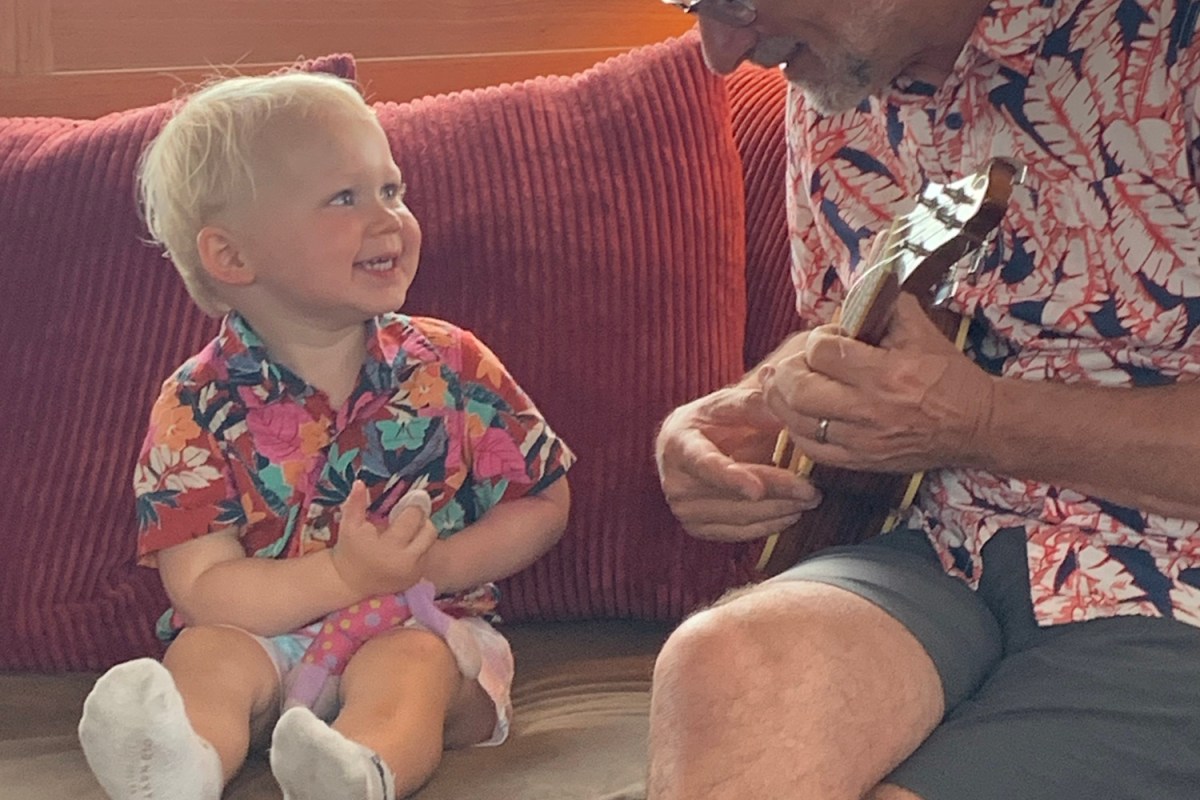
At bedtime, I told the kids the story about when Mr. D was 2-years-old and had the cutest little Hawaiian shirt. I dressed him in it every time we went to a party and everyone oohed and aahed, “What a cute baby!”

So Miss O said to me, “I hate it when he wears that shirt. He gets so much attention.” I explained that what I did to help wasn’t to get her the same shirt – or buy them both a new outfit that matched each other. I helped her find a new dress and shoes so she could feel good about what she was wearing – on the inside –even if she didn’t get all the compliments the baby did.

I summed it up that sometimes we just need to give each other space. That competing or comparing, especially over time, can often undercut someone’s confidence.

I must have flubbed the ending. Because at the end of the story, Mr. D wanted that shirt and Miss O said, “I knew I wasn’t going to like that story.

I left the bedroom with two grumpy kids still pouting. I was frustrated because I couldn’t fix it. It struck me that we were all too close on this one – perhaps telling the story when we were all together wasn’t the right timing. Or that we just needed some time. Or that bedtime wasn’t a good time to tackle this. All of the above, I suspect.

And that is why my guitar gently weeps. From under the couch where I hid it.

Being Difficult

There will never be an “us” if I play small.” – Sharon Preiss

Last Monday when Miss O, Mr. D, and I were getting ready for bike camp, nine-year-old Miss O was dragging her feet. She had a ton of “problems” that were blocking her: she couldn’t find shoes, Cooper the dog was in her way, her helmet was missing one unicorn ear, she didn’t remember the route we usually use to go down to the lake, yadda, yadda, yadda.

I turned to her and said, “You are being difficult.”

She replied, “I am.” And then added, “I wish I could tell you when you are being difficult too.”

To which I replied, “Please do. But I’d especially love to know when I’m being difficult when others are trying to be helpful and supportive or if it’s when you all are dragging your feet.”

I’ve been troubled by this conversation ever since. In fact, I’m finding it hard to write about. Here’s my best guess at why.

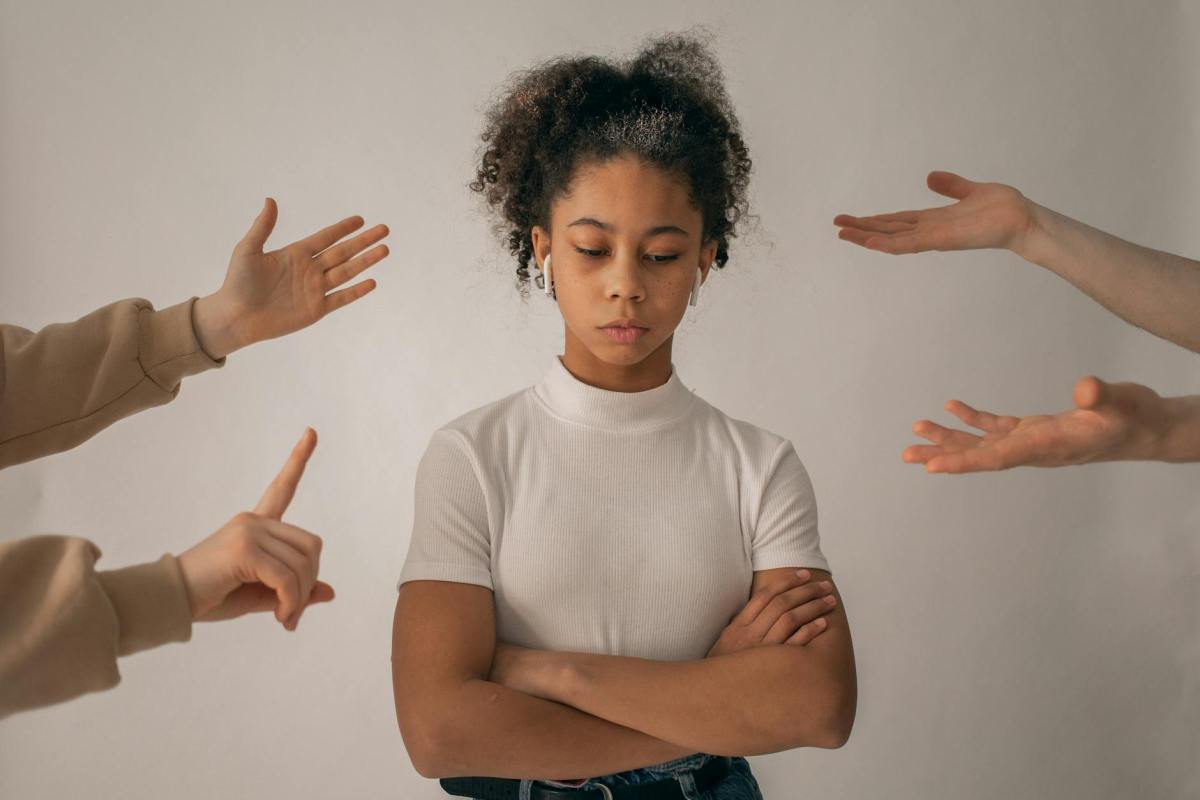
I think I’m starting to experience the generational BS that women in my family pass down. And it’s so ingrained and insidious, I’m not even doing it intentionally.

You are being difficult.” It’s like code for saying that I expect her to fall in line and be agreeable. To be flexible and accommodating like a young woman.

To be fair, she was being difficult. It’s just that the word hits a note of a gender stereotype that I’ve tried to avoid my whole life. I had no intention of passing it on. Then it slipped out of my mouth.

I’m naturally pretty agreeable. But inheriting the expectations of how a woman should behave has kept me from speaking up when I needed to – both in pursuing my own interests and also when something is wrong. And it kept me playing small. Trying not to stand up or stand out has kept me quiet about what I know or am capable of doing. It’s made me intentionally dim my light so I’m not too much.

It’s taken me decades in leadership positions to figure out that I can be genial AND forthright. And when needed, it’s acceptable to be hard-headedly, certainly, yet kindly, difficult.

So, I’m officially okay with Miss O being difficult. While I prefer she not do it when we are heading out the door, it’s fine if she does that too. Because sometimes that is when we learn to flip the script.

(featured photo from Pexels)

It Makes Me a Learner

Courage doesn’t always roar. Sometimes courage is the quiet voice at the end of the day, saying, ‘I will try again tomorrow.’” – Mary Anne Radmacher

A couple of days before Miss O had her field day at school, I mentioned it to her. Much to my surprise she groaned.

Why that response?” I asked, thinking of past years where she loved all the silly games like the Mustache Dash where you run with a piece of licorice between your lip and nose, and the water balloon toss.

My almost nine-year-old daughter replied, “I don’t like it when I try my best and don’t win. It makes me feel like I’m a loser.”

Oh. All I could think to say in the moment was, “Well, the only way you have a chance of winning is to try.”

But I couldn’t stop thinking about how early we learn that it hurts not to win and the feeling of competition.

I think the trait that has served me the best is my willingness to try. So I find it fascinating to consider all the things that teach us not to try.

To be fair, parenting has also given me insight into the many things I’m not interested in trying. Weird foods, holding insects, and playing with slime come to mind. Even trying comes with some limits. Or wisdom. Whichever way you want to look at it.

Fortunately, the topic of field day came up the next day so I had another shot at handling it. Miss O brought up the topic of practicing. And I concurred that we don’t practice things like potato sack races on a regular enough basis to have any predictable chance that we’ll win.

But then I was magically gifted the next thing to say, “When I don’t win, I don’t think it makes me a loser. It makes me a LEARNER. There isn’t a thing I can think of that I’ve lost that hasn’t taught me something.

Funny how hard it is to continue to stay open to being a try-er!

(featured photo is Miss O trying a game at field day)

It’s Just Like Riding a Bike

I have great respect for the past. If you don’t know where you’ve come from, you don’t know where you’re going.” – Maya Angelou

Riding bikes with my kids has given me a new appreciation for the learning process. That is to say, I’ve come to see “two steps forward, one step back,” in a more growth-minded way.

I bought eight-year-old Miss O a bigger bike (24 inch wheel) with gears. She hopped on and owned it. It was like she aged five years in that one move because it was bigger and sat her up higher.

As a result, four-your old Mr. D got her old bike, a medium sized bike (18 inch wheel). I moved the training wheels over from his small bike. But even with training wheels, he got a huge boost in confidence and speed from having a bigger sprocket.

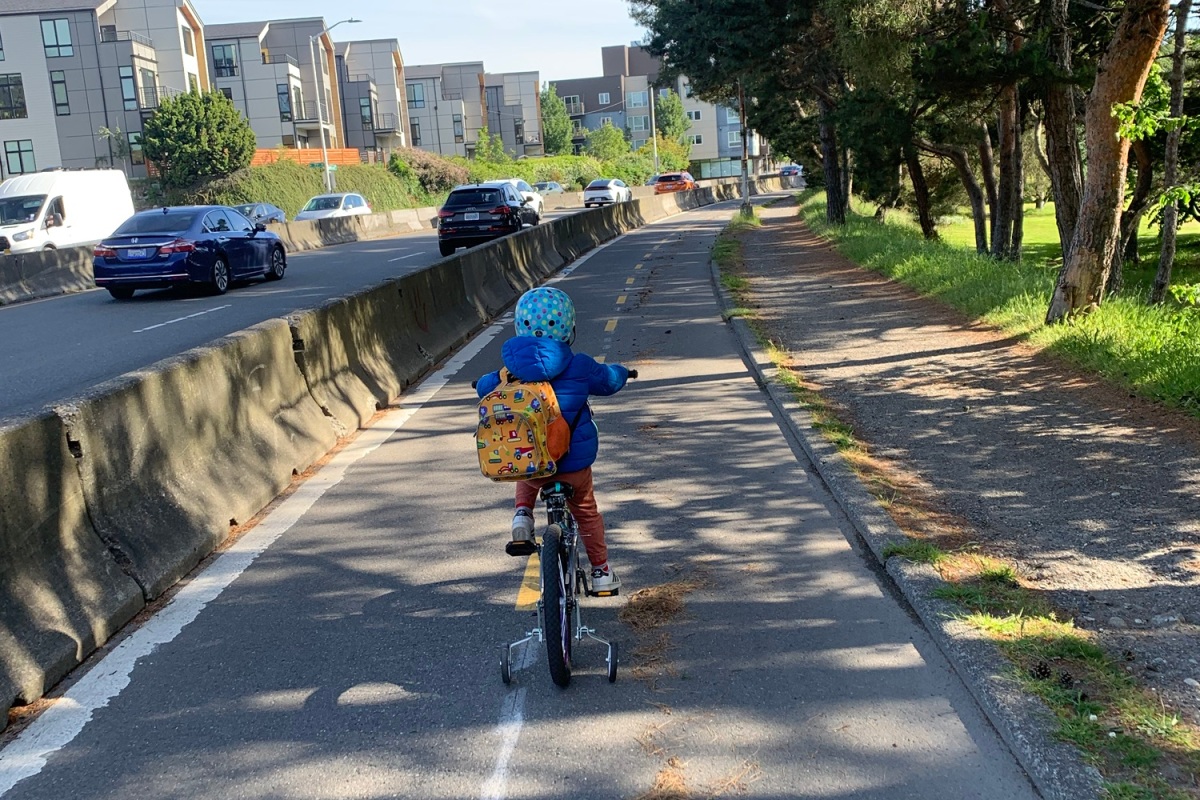
We’ve spent the week riding everywhere and in all sorts of conditions. We’ve gone round the block so many times we must have worn a groove. Then one night we rode around our local little lake to get pizza. The next night we went up the hill to get pie. All the while, I’m riding behind Mr. D watching him wobble back and forth before he gains his balance, my fingers crossed that the training wheels will hold.

Then, we got the small bike out of the garage to pass on to another kid in the neighborhood. Mr. D hopped on his old bike, now without training wheels.

I held the back of the small bike for a moment. Before any of us could really think about it, Mr. D took off – riding the bike without training wheels. So, Miss O and I took turns running up and down the block a dozen times holding the seat for the start until Mr. D mastered that too.

All this has made me think of the rhythm of growth. Sometimes you have to go back a step to see how far you’ve gone.

It makes me think of the feeling I get when I go back to the town where I went to high school. With the swirl of old memories all around, it’s easier to see where I’ve grown.

Or when I dust off an old favorite recipe and discover how I’m better at trusting the timing.

Or when I hike a familiar trail and feel the burn of my muscles within the certainty that I can make the summit.

Or when I re-read something I wrote years ago and I can discern how it’s gotten easier to put my authentic self on the page.

Sometimes we have to go back to figure out how much we’ve learned.

Hurrying Never Helps

God did not create hurry.” – Finnish Proverb

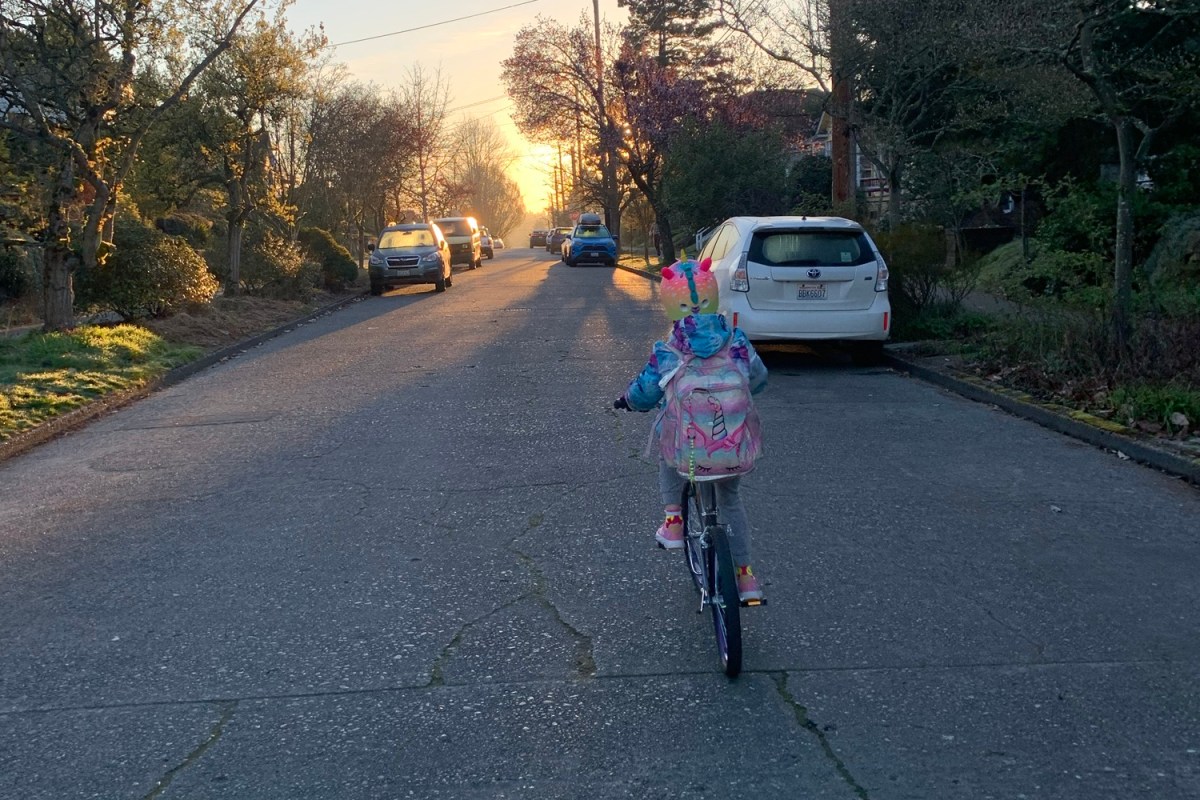
We’ve been riding bikes to school this week. Primarily because it makes four-year-old Mr. D happier to do drop off at his school. Why that is, I’m not sure. Because we get the endorphins flowing? Because it makes him feel strong and successful? Perhaps. It seems that right now he’s realized the world is big and he is small. His inclination is to want to stay home in his safe space. But when we ride bikes to school, the threshold into his classroom doesn’t seem like that big of a deal and he has a great day.

Anyway, the hero of this story is eight-year-old Miss O. She’s been totally game to ride bikes if it helps her brother.

After the first day we did it, I told her it worked to help Mr. D have a great day. She said, “That’s great. But we have to find a different way.” But then she got up ready to ride again the next day.

Sometimes I don’t realize what things are big efforts for my little people, Miss O in particular. In this case, we drop her off first before Mr. D and I continue on to his school. But she rides her own bike while Mr. D rides attached to mine on a third wheel.

We have to get up earlier, it’s uphill for the first six blocks, and she wants to lead, so she’s taking on that responsibility too. It behooves me to remember the things that help me to do hard things: just start, remember to feed and water the body, and to take things one step at a time.

I tend to forget all that if we are running late.

On Wednesday morning we headed off later than usual and Miss O’s bike was rattling. I thought it was just the chain guard pressed against the chain and told her to keep riding. We got around the first corner and she said, “this is really freaking me out.

I did not want to stop. We were late! But I had her get off her bike and found a section of the chain guard that had bent and was clipping the chain at every turn.

We got back on the bikes. About six blocks later when we’d finished the uphill, Miss O said, “I need a break.

Oh holy cow, my inner voice demanded. You’ve got to be kidding me. But I remembered the things that help to do hard things and edited that voice before it came out. “Okay, Sweetie. How about a swig of water?”

The number one thing I need to do in order to help myself and my kids try hard things is to try not to hurry. If I don’t add time pressure to whatever else it is we’re trying to do, including the things I do solo in the day, it always goes better. I am more patient with others, I have less tendency to want to jump in and do it myself, and specific to my kids, we can enjoy more of their lantern brain where they see and observe everything around them. Like on this ride when Miss O heard a woodpecker in a tree somewhere around block four. Such a distinctive and interesting sound.

The number one thing I regularly screw up is not leaving early. Then I have to swallow my own anxiety about being late in order to help them have a positive experience with trying. Fortunately, I managed to do tamp down the time pressure on this ride and we got Miss O to school on time-ish.

Note to self: Hurrying makes life less enjoyable. Keep trying to leave earlier.

Complicated Compliments

Life doesn’t come with a manual. It comes with a mother.” – unknown

The other day, four-year-old Mr. D said to me, “Mama, you are the bestest in the whole entire moon.”

Sweet. And I don’t want to minimize that, but he said it to me after I gave him a cookie. I’m sure I can’t be the only person who has a complicated relationship with compliments, especially in families. Do they love us for who we are, the role we play, or what we do for them?

Do you feel that nugget of self-doubt in that last sentence? Me too. It reminds me of the few things I’ve been able to glean in the last fifty years about confidence and compliments.

They have to be right sized for the effort.

My kids keep teaching me this lesson. If I over-praise an effort, it feels insincere.

I have to be able to believe it

There isn’t a compliment in the world that can overcome my inner resistance. This one is fraught for me as a parent. My kids frequently compliment me for being the “bestest” or a “good mom.” But, of course, I’m just a mom and I can’t get everything right. My biggest growth area is mindful eating – not eating in front of devices. For a number of reasons this is complicated and I’m getting it wrong more than right.

So I find myself circling back to my driving principles. My priorities are to help them be kind (including to themselves), safe, and healthy (body, mind, and spirit). And to be present and to love them. If I can aim for most of that, then I try to give myself some grace about the rest.

Compliments are best when I would have done the same thing with or without it.

I would have given Mr. D the cookie whether or not he gave me the compliment. It wasn’t conditional on him saying anything.

So, yes, it feels safe to say that this time I can believe I’m the bestest on the whole moon. After all, it’s only me and a probe that’s tipped sideways in the running. Not that I’m on the moon…. but you know what I mean.

(Mary from Awakening Wonders reminded me of the quote for this post)

(featured photo is from Pexels)

Failing Well

Take chances, make mistakes. That’s how you grow. Pain nourishes your courage. You have to fail in order to practice being brave.” – Mary Tyler Moore

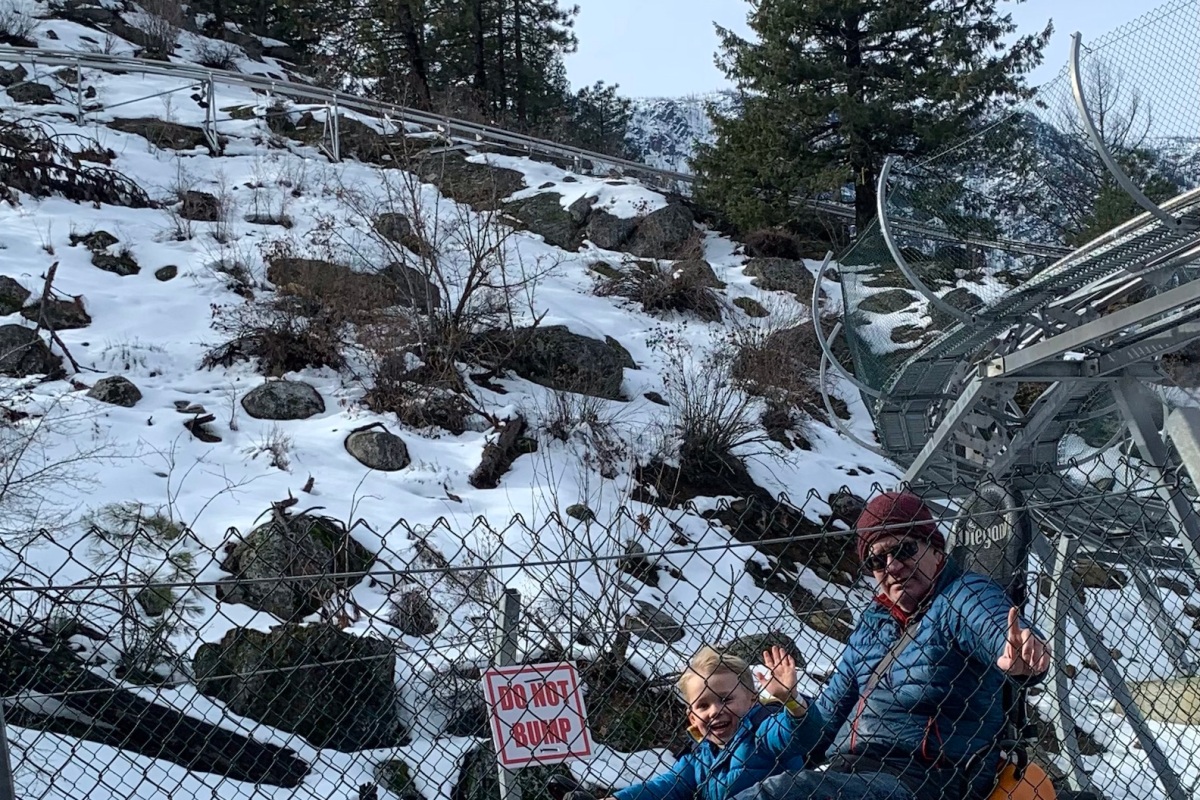
Last weekend when we were in Leavenworth, WA, we went to an adventure park to ride a roller coaster. Or maybe I should say a roller-coaster-ish kind of ride because the cars were individual and the driver could apply the brakes as much as they wanted. Another clarification: by “we” I meant my kids rode with my dear friend, Doug, because I’m an endurance person, not a speed person.

Now that I have all those caveats in place, on with the story.

Eight-year-old Miss O had no hesitation and climbed right in to ride with Doug. Talking with four-year-old Mr. D about it, he was clearly torn. He didn’t want to do it. And then he did. He flip flopped a couple of times. Since I was pretty sure he’d like it, I was trying to figure out how to nudge him in the direction of trying it.

But even though Miss O didn’t hesitate on this challenge, she and I had just been having a conversation about failing when it came to learning to ride her hoverboard. She asserted that life was easier for me because I never failed. I told her I fail all the time which is why is doesn’t faze me much any more. In fact, I rarely think of it as failing but just as a step towards the next thing I need to do.

On the drive to Leavenworth, I’d been listening to the Ten Percent Happier podcast, The Science of Failing Well where Dan Harris was talking with Amy Edmonson, a professor of leadership and management at the Harvard Business School. She had three points that stuck with me about taking risks:

  • Make the risk as small as possible: This point reminded me of gambling – make a bet but don’t put all your chips in.
  • Have a hypothesis: Know what you are trying to test or prove
  • Learn from the attempt: Use the experience and hypothesis to extract information for the next thing you might try.

I think a lot about what creates confidence. What my parents did to create kids who are willing to try hard things because for all the differences between my siblings and me, we are all game to take on new challenges. So I’ve tried to figure out how I can do the same for my kids. While there’s much that remains a mystery to me, what I’ve identified is that my willingness to try and fail might be the single most defining characteristic in the arc of my life.

So, I told Mr. D he didn’t have to do it. But if he did, he only had to try one ride, Doug could go as slow as he wanted, and that I thought he’d like riding in a car on a track. When it came to his turn, Mr. D was a little nervous but resolutely game. Until I greeted him at the exit ramp, that is. He rolled back in with a huge grin on his face!

He had so much fun that he learned he wanted to do it again. And the second time he went up with his hands in the air.

Life is a roller coaster and I’m glad that I continue to ride. The metaphorical kind at least.

(featured photo is mine)

(quote is from Real Life of MSW blog: Being Brave)