The Superhero In Us All

No act of kindness, no matter how small, is ever wasted.” – Aesop

This was originally published on 6/1/2022. Heads up – you may have already read this.


My kids have been watching a lot of Superman at my house. I’m talking about the 1978 movie with Christopher Reeve, Magot Kidder and Gene Hackman. I love it because it brings me back to when I was nine-years-old and saw it the first time. Back when they did all the credits at the beginning – remember that?

Gene Hackman plays the bad guy Lex Luthor. And as insensitive as he is to the loss of human life and calculating in his plans to get what he wants, he seems perfectly rational in his selfish pursuit of wealth and notoriety as the greatest criminal mind of the time. He even seems quite erudite as he reads newspapers, has a library full of books and even responds using the German “Jawohl” to respond with an enthusiastic yes to a statement.

This is the model of a bad guy that I grew up with. Someone with nefarious intentions but logical methods. Life has taught me that there is another type of bad guy – one who seems to reacts out of pain and hatred in a way that seems so pointless. And when I use the term “bad guy,” I intend it in a universal way that is not gender specific. Faye Dunaway plays a good female “bad guy” in the Supergirl movie from 1984.

Given my career and lifestyle, I will probably never meet a Lex Luthor. But the other type of bad guy is someone who lives in and among our communities. Someone who has interactions with others that influences whether or not they feel seen, heard or loved. Someone who, maybe from a very young age, can benefit from others taking a step to make them feel included or respected.

The poet Mark Nepo has a beautiful description of our world as a great wheel. We share a common center, our lives create all the different spokes and the integrity of the wheel overall depends on the health of those spokes. When we open ourselves up to whatever inspires each of us to beauty, transcendence and inclusion, we have the opportunity to shine the light for others because we are all connected.

Thinking back to how to ground myself in this work, I think of this quote from Elie Wiesel:

But where was I to start? The world is so vast, I shall start with the country I know best, my own. But my country is so very large. I had better start with my town. But my town too, is large. I had best start with my street. No: my home. No: my family. Never mind, I shall start with myself.

Elie Wiesel

The little things we do – a pause to let someone cut in traffic, or a smile passing someone on the street or a silent prayer of blessing for someone who is struggling, these are kindnesses that start in our hearts and touch all those around. The smallest nod to acknowledge that the person in front of us exists has impact.

Be nice to the 38 year old in your Freshman lecture and be nice to people at the gym. Those people are putting themselves in extreme anxiety-inducing situations in attempt to try to better themselves. Just a smile or a quick conversation can mean so much.

unknown

We might need Superman to fight the Lex Luthors of the world. But we all have a chance to touch others who may or may not become bad guys based on the path they walk among us. And we all have a chance to touch others who may or may not become great guys based on the peace and support passed to them. It starts small: be kind to yourself and be kind to others.

What are the small acts that have inspired or passed peace to you?


I’ve published a related piece on Wise & Shine: What Is It You Plan To Do With Your One Wild and Precious Post?

(featured photo from Pexels)
Waiting for a Break

We learn how to be resilient and handle difficult things by PRACTICING dealing with difficult things.” – Tina Payne Bryson

We went to our favorite beach on Whidbey Island this weekend. We rented an AirBnB that allowed dogs so it was our puppy, Cooper’s, first vacation.

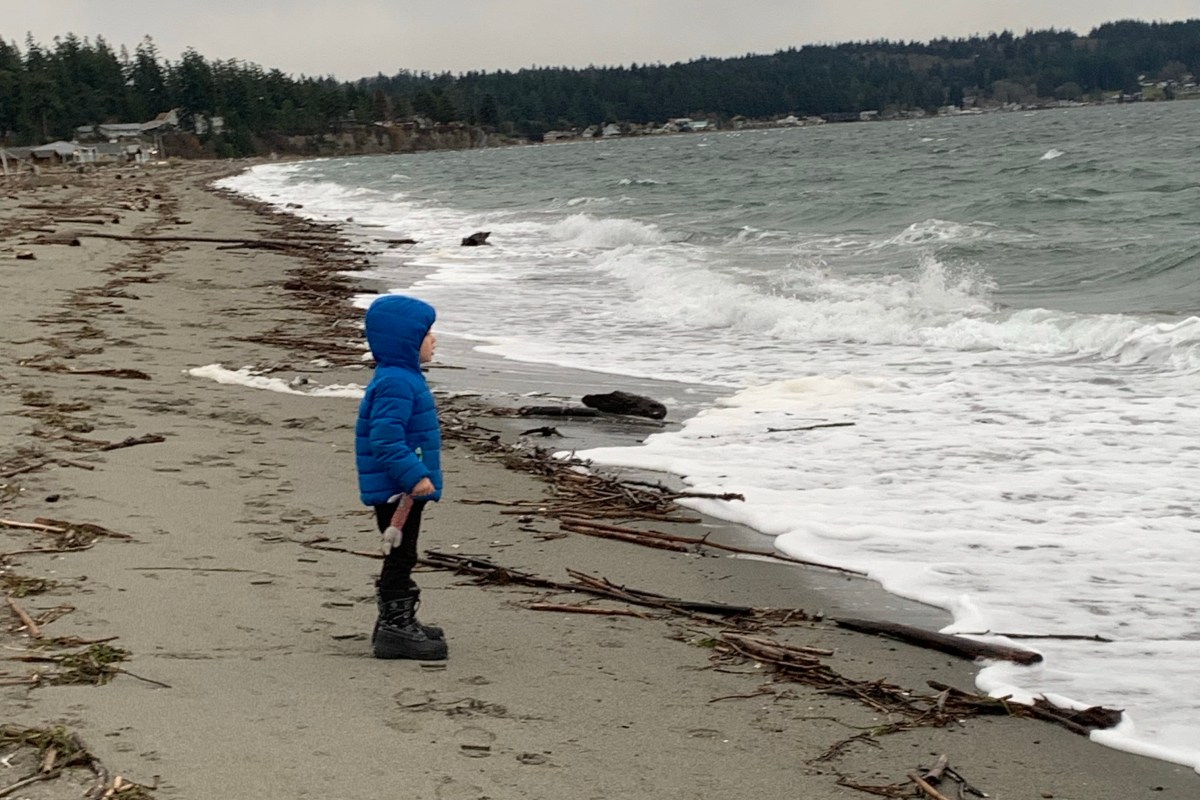
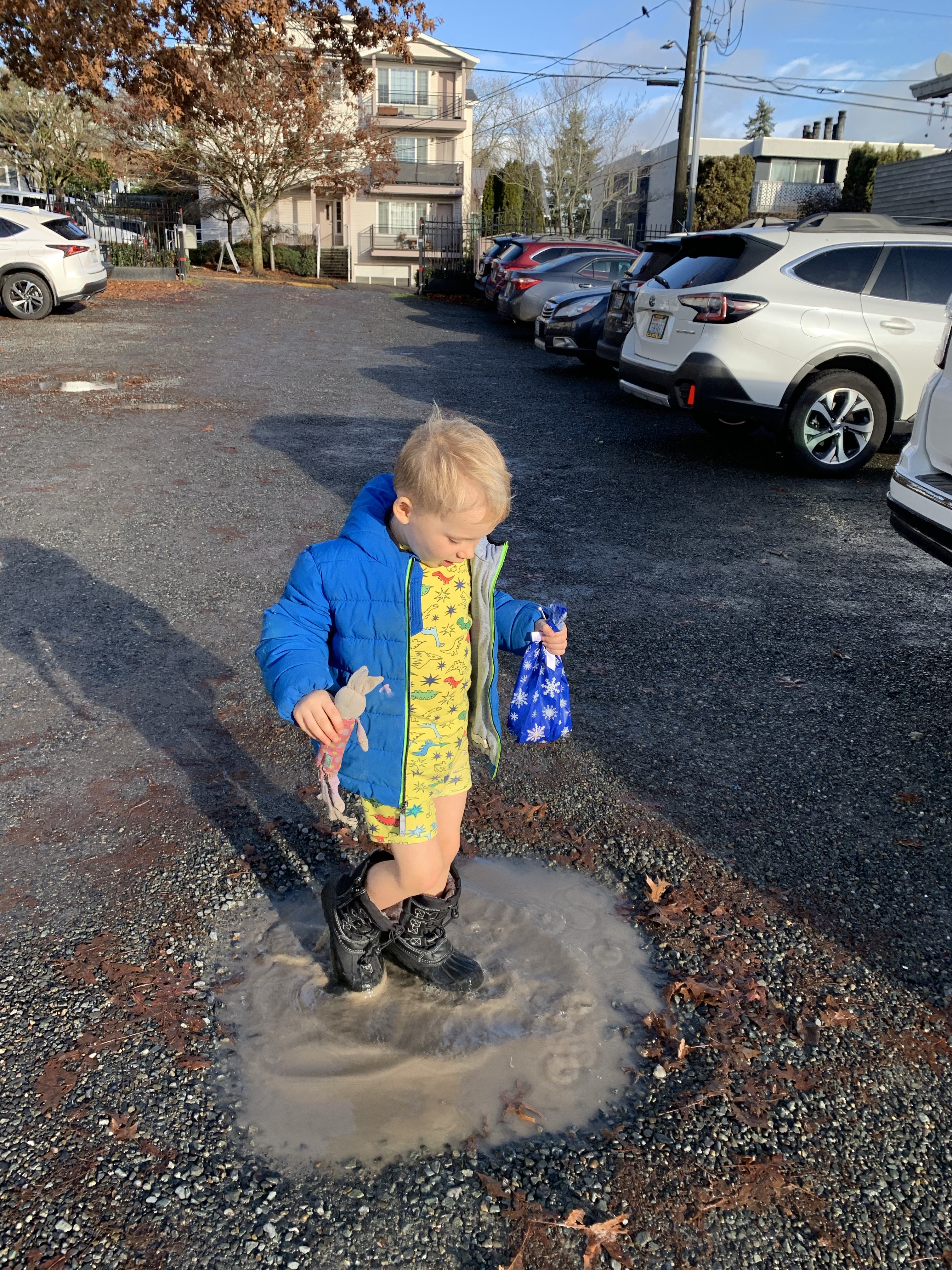
The weather was really blustery. After a particularly stormy week in the Seatle area, there was driftwood all over the beach. When my son, four-year-old Mr. D and my friend, Eric, went down to the beach, Mr D busied himself throwing huge pieces of wood into the water. And by huge, I mean almost as big as he is.

When Eric remarked on this, Mr. D turned to him and said, “I can do hard things.

Here’s the thing about that. Every day for the ten days preceding the vacation, I’d sent Mr. D to school with a note. In the note, it counted down how many sleeps until vacation, explained that we had to go to school/work in order to be able to go on vacation, and ended with the sentence, “We can do hard things.”

Normally Mr. D doesn’t need coaxing to go to school. But coming off of some crud he caught at Thanksgiving, and the dark and stormy days of the last couple of weeks, it felt like he was tired. You know that deep, soul-level tired where even after good night’s sleep it feels like you are exhausted.

Of course, Mr. D cannot yet read but he carried the note with him anyway. He didn’t say much about it. But I knew he was paying attention because the note started ripping in places because it’d been opened and refolded so many times.

Sometimes we have to push through to earn a break. And I’m incredibly heartened to know that when we do, it builds the confidence that “We can do hard things.

Fatherly Wisdom

“I cannot do all the good that the world needs, but the world needs all the good that I can do.” – Jana Stanfield

I met a friend when I was in my 20’s who summed up his dad’s advice to him:

  1. Always buy the best tires you can afford
  2. Never buy a cheap garden hose
  3. Buy tools with a lifetime guarantee

I marveled upon hearing that about how straightforward that fatherly advice was. Because my dad’s advice was a lot more ephemeral – not surprising given his profession as a Presbyterian pastor.

Jane Fritz of the Robby Robin’s blog recently asked what my dad would say about answering the big questions and challenges of our time: war, climate change, inequality. If you haven’t read her incredible post, Profound questions, seeking our attention and deserving action that builds on Rose’s wonderful and thought-provoking post Meaningful Intelligent Conversations, please do.

Our exchange reminded me of three pieces of advice from my dad, Dick Leon:

  1. Do the next right thing: This is a continual instruction, not a one time thing. Do the right things to make this planet a better place to live in whatever way that you can and according to your passions. Stand up for those that have been treated unfairly. Be kind. Take action on the social issues that are meaningful. Do all that you can to work, support, and encourage a better planet.

    The Dick Leon approach was not to play it safe either. Over the years he worked for Civil Rights, on behalf of Russian citizens during the Cold War, and at the end of his life he was working on land rights for peaceful Palestinian Christians in the West Bank. Most of those issues got him in trouble with some factions of his congregations and his life.
  2. Be cheerful about it: My dad often said that doing the right thing often means doing the hard thing. He recognized that it wasn’t/isn’t easy. So his instruction to be cheerful was two-fold. First, do what you can, and be happy about it. Because if you’re gritting your teeth every step of the way, it’s not sustainable. 

    The second part is that when you are in the groove of doing what you can cheerfully, you attract other people to the cause. Even if they don’t agree, others are more likely to engage in conversation with someone who appears not to already be irritated. Hence how my dad managed controversial topics within a church congregation of varying viewpoints.

    Cheerfulness is not synonymous with toxic positivity. Some of the issues my dad advocated didn’t work out. Others took a long time. My dad’s definition of cheerfulness was what one can do with a happy heart.
  3. When you’ve done all that you can, give up the rest to God: Or a higher power or whatever thing bigger than yourself that you believe in. This was my dad’s way of not worrying about the stuff that was outside of his control. Less energy spent on anxiety equals more energy for doing the next right thing.

I envied my friend from my 20’s for the simplicity of a list of dad advice. But now that I’m middle-aged, appreciate my father’s wisdom more. I believe his list is the reason that I’m still paraphrasing him almost a decade after he died. I’m not sure my dad had any awareness of his impact beyond his lifetime. But I think his advice guaranteed that he did have impact because it was the way he created legacy with his actions every day.

It’s harder to check off things from my dad’s list. But when I follow it, I find great comfort. And cheerfulness, of course!

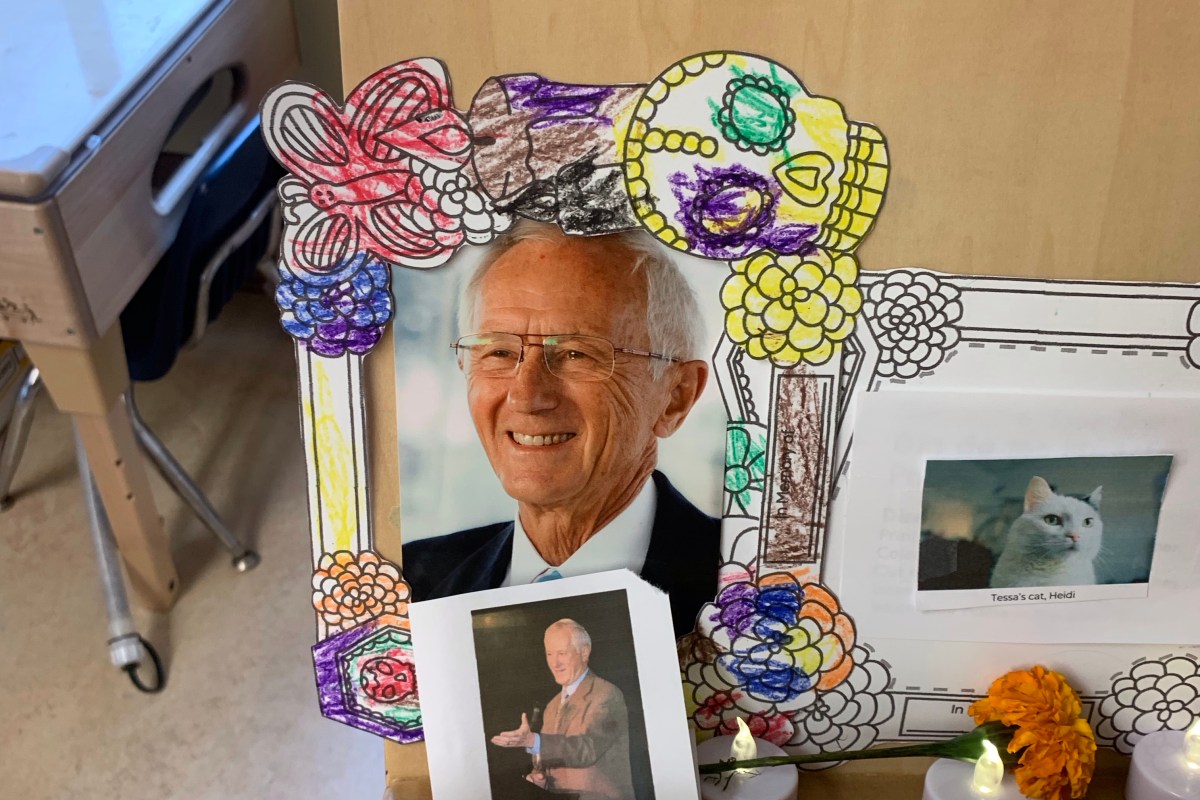
(featured photo is mine: Dick Leon, on a Dia de los Muertos ofrenda)

For another great list, please listen to Dr. Gerald Stein on the Sharing the Heart of the Matter podcast talk about Being Your Own Best Friend. Dr. Stein comes through with such wisdom and warmth as he provides some great tips for living our best lives.

Speaking of Meditation…A Note of Self-Awareness

To meditate means to go home to yourself. Then you know how to take care of things that are happening inside of you, and you know how to take care of the things that happen around you.” – Thich Nhat Hanh

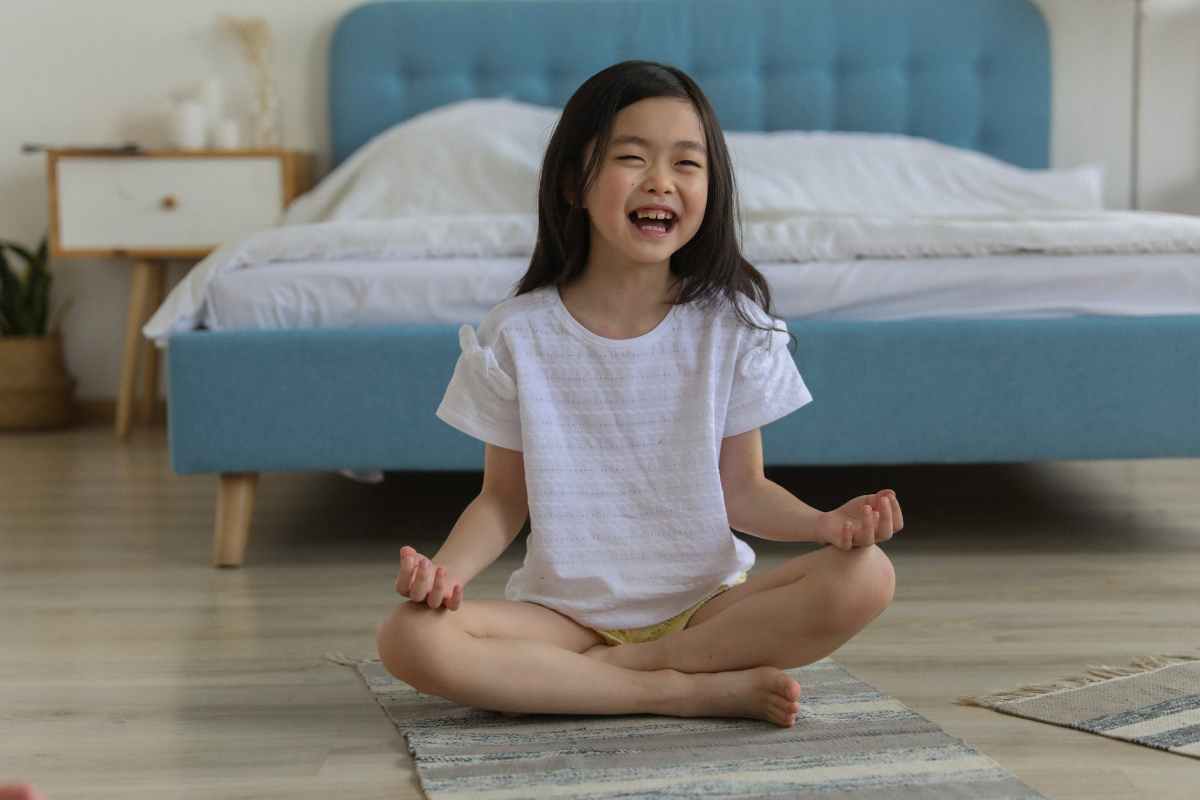
Recently eight-year-old Miss O has chosen to do some meditation in the bedroom while I’m reading to four-year-old Mr. D. Since the bedtime routine could use any injection of calm possible, I’m all for it.

The first night she tried it, she’d sat for about 90 seconds. Then she popped up and said as she walked by me, “Do things you’ve forgotten to do pop into your mind when you meditate?

Hello, have you met the inside of my brain?” I wanted to quip.

On the second night she tried, she sat for about five minutes before joining Mr. D and me in our little reading nook. When Mr. D started a little shoving, she calmly said something like, “Oh, I’m so glad I meditated because otherwise I’d be all [switch to impatient and angry voice] ‘Mr. D, cut it out. You are being so awful.’ “

I had to look away to hide my grin. Congratulations to Miss O for managing in one sentence to be smug about her practice, self-aware of what she shouldn’t say, and say it anyway. Goodness knows I’ve been guilty of all three so my chuckle was both knowing and self-deprecating.

[Note to self: spiritual practices usually work better when they come with keeping the heart open and the mouth shut.]

(featured photo from Pexels)
Comparing Our Differences

Confidence isn’t thinking you’re better than anyone else, it’s realizing that you have no reason to compare yourself to anyone else.” – Maryam Hasnaa

This was originally published on 6/15/2022. Heads up – you may have already read this.


My 6-year-old daughter came home from school the other day and said she had a bad day. She explained saying that a kid on the playground was comparing her. Not understanding, I asked her to say more. She relayed that he was saying, “I can do the monkey bars faster. I can go longer. I can skip more bars.

Oh, I get it – comparing.

We are all different – so why do we compare? To get some perspective, I turned to research professor Brené Brown’s book Atlas of the Heart. She defines comparison as “Comparison is the crush of conformity from one side and competition from the other – it’s trying to simultaneously fit in and stand out.”

And apparently, we all do comparison: “Researchers Jerry Suls, René Martin, and Ladd Wheeler explain that ‘comparing the self with others, either intentionally or unintentionally, is a pervasive social phenomenon.’”

So we all do comparison but what we have control over is how we let it affect us. I was struck by a comment I heard on a 10 Percent Happier podcast with TV commentator and author Alicia Menendez. She talked about management assessment she once did that measured the difference between who one naturally is with the way one self-presents in the work environment to show how much one is self-correcting. The evaluator said to her “So, you are a very introverted person who is overcompensating to be very extroverted in the environment you are in. You are really tired at the end of the day, aren’t you?

Changing from who we are is exhausting. Maybe we do it because we compare or maybe we do it because we are self-conscious. When I decided to have kids as a single-person at age 46, I was self-conscious of being different. Not that there aren’t other older, single mothers in the world but because there weren’t any in my direct experience.

Comparison to what I thought was the norm made me feel ashamed. It was only after I knew I didn’t want to pass that on to my children that I started owning my differences. That has freed me to do many other things like the post I wrote last week about how I choose to use the time that I otherwise might spend being in a relationship to listen to podcasts and read great books. We are all different, might as well enjoy it. Reading the research that Brené Brown includes in her book reminds me that I don’t have to teach my children not to compare. I only have to teach them to understand how it affects them.

As Brené says about comparing herself to the swimmer in the lane next to hers, “My new strategy is to look at the person in the lane next to me, and say to myself, as if I’m talking to them, Have a great swim. That way I acknowledge the inevitable and make a conscious decision to wish them well and return to my swim.


I also written today about how creativity might be one of our biggest assets for our resumes: Creativity as a Job Skill

(featured photo from Pexels)

Life Is An Echo

Life is an echo. What you send out — comes back.” – unknown

A couple of weeks ago, my son, four-year-old Mr D, got a new boxing toy, a small punching bag anchored on a vertical stick. We were home alone together when we assembled it and then went a couple of rounds with it.

We took a break in the yard to cool off and play with our dog, Cooper. As we were throwing the ball, I was coaching Mr. D on what he’d say when his eight-year-old sister came home and asked to play with his toy.

What are you going to say when Miss O asks to box with your toy?” I started.

Well, ummm, uhhh.” Mr. D stalled

Say, ‘yes.’” I whispered.

And we went a couple of rounds practicing that which was every bit as hard as actually boxing.

Then Mr. D asked where his shovel was. As I looked in one hidey-hole and then another, he asked, “Want to go find some worms with me?”

Uhhh,” I stalled.

Say, ‘yes.’” he whispered.

And I did.

If we ever need a reminder that what we put out in the world comes back to us, just spend time with children.

(featured photo is Mr. D with his boxing toy)

Talk, Talk, Talk

We spend the first year of a child’s life teaching it to walk and talk and the rest of its life to shut up and sit down. There’s something wrong here.” – Neil deGrasse Tyson

My daughter, Miss O, learned the power of words early on. She started talking at 10 months and it’s been off to the races ever since. Now she’s eight-years-old, and I’ve learned to get worried when she isn’t talking.

One Sunday when it was just the two of us and Miss O was about three-years-old, I was feeling overwhelmed by the constant talking, singing, and narrating. We were sitting and drawing at the dining room table as the last rays of fall afternoon sunshine filtered into the room. I said to Miss O, “Do you think we could just be quiet for 10 minutes?”

Miss O paused for a moment and then said, “Why?”

About a year later, a friend was at our house trying to troubleshoot a problem with his van. Four-year-old Miss O asked him what was happening and he started, “When hot air meets a cold surface and water forms…” She interrupted him and asked, “You mean condensation?

I confess, I don’t always listen to her every word. But I recently had the honor of editing a podcast that Miss O did with Vicki and me. As I tuned in with ears to make sure the conversation flowed, I was stunned with the perspective of this delightful young person talking with the incredibly interesting and supportive Vicki Atkinson.

Am I biased? No doubt! But most of all what I noticed is that Miss O has learned to use her words well. And she’s found her voice – to express herself, to give voice to her feelings, to convey her delightful enthusiasm, and at the end, to share her delightful glow with everyone around.

Ha – I just realized this post could have been reduced to one sentence. Miss O is on the Sharing the Heart of the Matter podcast with the always amazing Dr. Vicki Atkinson and me – please listen. Perhaps wordiness runs in the family….

Creating Eyes that See

Above all, watch with glittering eyes the whole world around you because the greatest secrets are always hidden in the most unlikely places. Those who don’t believe in magic will never find it.” – Roald Dahl

This was originally published on 6/29/2022. Heads up – you may have already read this.


The other day, my 6-year-old daughter and her best friend asked me what an optical illusion is. I didn’t have the Merriam-Webster definition, “something that deceives the eye by appearing to be other than it is” at the tip of my tongue so we talked about examples of when you think you see something but your brain knows it can’t be real or vice versa. I showed them the classic example of the picture that is either the young lady with a necklace or an old lady with a prominent chin.

They were fascinated. But of course this is more than a trick for amusement, it’s one of the pillars of our life. As Albert Einstein said, “There are two ways to live your life. One is as though nothing is a miracle. The other is as if everything is a miracle.

It reminds me of a person I knew who believed she had to check on everything that someone did for her otherwise she would be cheated. In one memorable instance, she had left her dog with someone who was staying at her house and became convinced the dog sitter wasn’t walking the dog as far as she claimed. So she devised a series of questions to trip up the dog sitter when she picked her up from the airport. What time does the sun rise this time of year? What is the favorite route that you walk with my dog? How many times does my dog poop on her morning walk?

She was convinced that these questions would help her find the TRUTH which was predetermined in her head as a story that the dog sitter didn’t get up as early and walk as far as she thought.

In the meantime, she completely missed that the dog was safe, happy and healthy and that the dog sitter was willing to drive her to/from the airport, that the dog sitter loved to watch movies and also worked from home so that the dog had almost constant companionship while she was gone.

Because none of that mattered if the dog sitter LIED about the morning walk. No gentle reminders from me or anyone else could change the perspective.

This person might be an anomaly in that she didn’t believe anyone, more or less, in her life. She believed that the only reliable person was herself and everything that she got, had, earned was only because of her personal efforts. There was no idea of grace, coincidence, faith, or even luck.

The rest of us are probably not as extreme but I think what Albert Einstein implies is that it’s a way of seeing. We can’t consistently believe that life is completely up to us in one area of our life (work, relationships, money) without it affecting all the others.

We have to believe in miracles to see them. Whatever we have faith in – be it God, the Universe, optimism, magic – will deliver goodness if we develop our ability to discern it. When we open ourselves up to the possibility that miracles happen in our life, it’s amazing to find how many we see.

As an example, my daughter was sad because her best friend, the one that was with her when asking about optical illusions, is moving at the end of the summer. Then as we worked through that reality, she discovered that a family with three kids that she already knows and likes from school happened to move in one block from us. They’d been up the street for 7 months and we hadn’t even realized until one day we saw them on the street. What a gift! The miracle didn’t save us from having to say good-bye to one friend, but instead it was the gift of new friends.

How do you interpret Albert Einstein’s quote? What miracles have you seen lately?


I’ve published a related post on Wise & Shine – Creatively Seeing

(featured photo from Pexels)

Friendship Though the Ages and Stages

Well, you can’t make old friends.” – Zadie Smith

Have you thought back to how you survived middle school? I mean, I think it’s safe to assume anyone that is reading this is past the age of 13. I remember that age as being the start of understanding that there was a whole wide world outside of my family and it involved crushes, hopes and dreams, and weird things happening to my body that I didn’t want to talk about with my mom.

Katie. That’s how I made it through middle school. My dearest friend that I’ve known since age seven. She was over at my house yesterday spending time with me, Miss O, Mr. D and Cooper. I list us all out because we all needed time with her.

She reminds me of a line I got from Mark Nepo in the Book of Awakening. In German, the root of the word friendship means place of high-safety. With old friends, I think that might be especially so because they knew us from before we were anything. We had dreams of what we might become, but now that we’ve hit middle life, we’ve cycled through a lot of different ages and stages, and old friends, like Katie have seen it all.

Because to be friends for this long, I don’t think there’s any way to maintain any artifice. We’ve survived the ups and downs of life as well as testing out the waters of how we meet the world. We’ve had to work out whether we are friendly, trustworthy, and kind – and apologize and make amends when we’ve fallen short.

Watching Katie with my family, I realize that there’s an associative property of friendship. That my little ones trust her as much as I do. Probably because they can sense that ease that comes with old friends. Well, that and because Katie is simply amazing – present, smart, funny, kind, and encouraging.

I think back to my naivety and hopefulness in middle school. It was confusing and emotional as we worked out what came next in life. I’m less naïve now as I know that middle life also brings challenges with family, friends, aging, and loss. But I’m still quite hopeful – probably because I’ve been lucky enough to have a Katie, then and now.

(featured photo is me (left) and Katie (right) – maybe in middle school?)