When Life Gives You Lemons, Your Family Should Help You Squeeze

“A child can teach an adult three things: To be happy for no reason, To always be busy with something, and To know how to demand with all his might that which he desires.” – Paulo Coehlo

This weekend I found myself in the questionable position of rooting against my four-year-old son, Mr. D.

Mr. D is very good at demanding with all his might that which he desires. When I put it that way, in the words of the quote for this post from Paulo Coehlo, it sounds a lot more romantic than some of the silly situations that we find ourselves in. Like yesterday when Mr. D insisted that we take pickleball racquets to church.

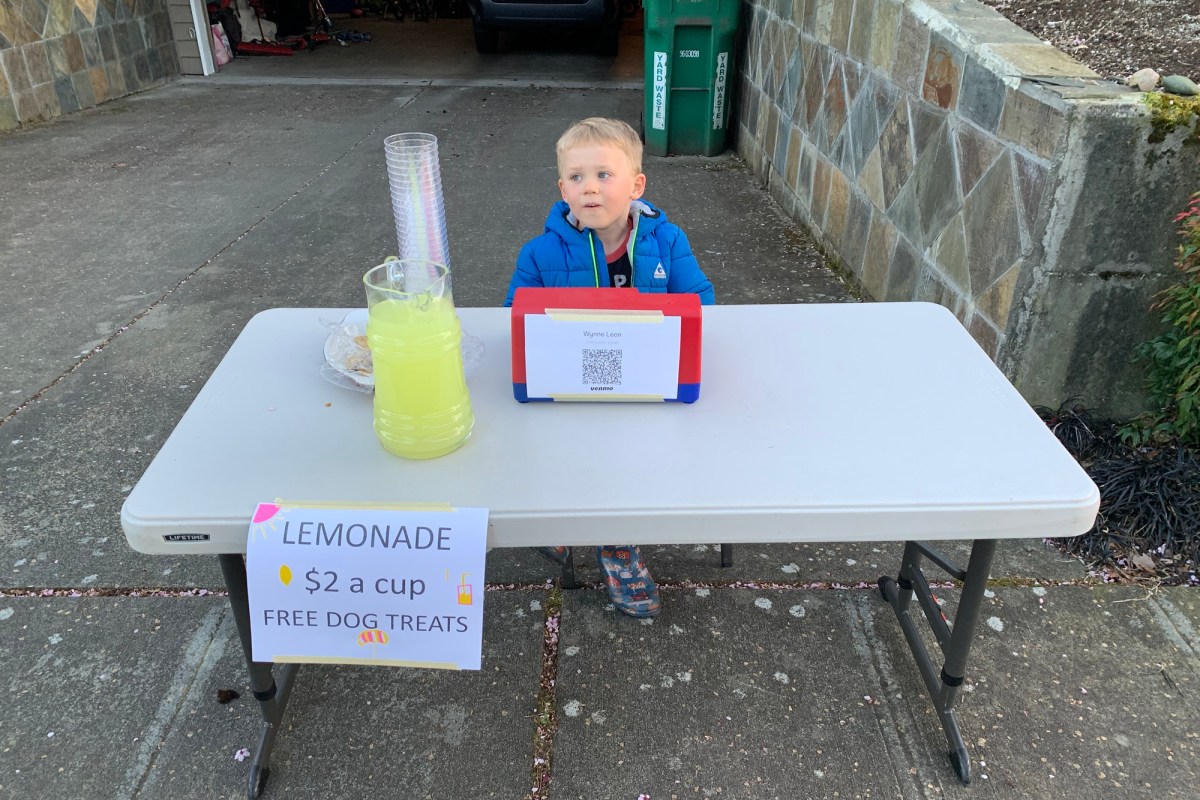
But on Friday night when he stubbornly insisted on having a lemonade stand, it wasn’t entirely out of the blue. He’d asked me earlier in the day and I said he could do it when eight-year-old Miss O came home from school.

When he asked Miss O, she said she’d do it after she had a little iPad time. So by the time everyone was ready to do it, it was 6pm and the March chill had settled in.

Miss O and I tried to convince Mr. D that Saturday, when it was forecasted to be 70 degrees was a better time to do it. He dug in and insisted we do it right then.

Miss O was mad, and I was irritated. But we hauled the table out to the sidewalk, balanced glasses and the toy cash register, and set it all up. Mr. D got into position behind the table and started calling, “Lemonade, get your lemonade” to no one in particular because there wasn’t traffic of any kind.

As I stood off to the side, I realized I was hoping no one would show. And that realization kicked me upside the head. Isn’t one of the big challenges of life and love to support and encourage others even when (or especially if) they choose to do things differently than we would? Maybe this was my opportunity to practice supporting my kids in their age-appropriate decisions, starting with a lemonade stand.

But it’s hard when I’m pretty certain I’m right. After about 20 minutes of no one coming by, I nodded to Mr. D and asked if he wanted to go watch shows. I didn’t start in with a lecture but just held his hand as we walked upstairs together. After all, entrepreneurial failure is disappointing all on its own without your family piling on.

And then Mr. D and Miss O did another lemonade stand on Saturday when it was warmer. If nothing else, I can support a willingness to keep trying. I didn’t agree with Mr. D’s decision to buy paint brushes with his half of the $13 of earnings. But I guess that was my continued opportunity to practice offering my opinion and then keep quiet. The hard work of love…
Wide Angle Moments

‘We are like someone in a very dark night over whom lightning flashes again and again.” Maimonides

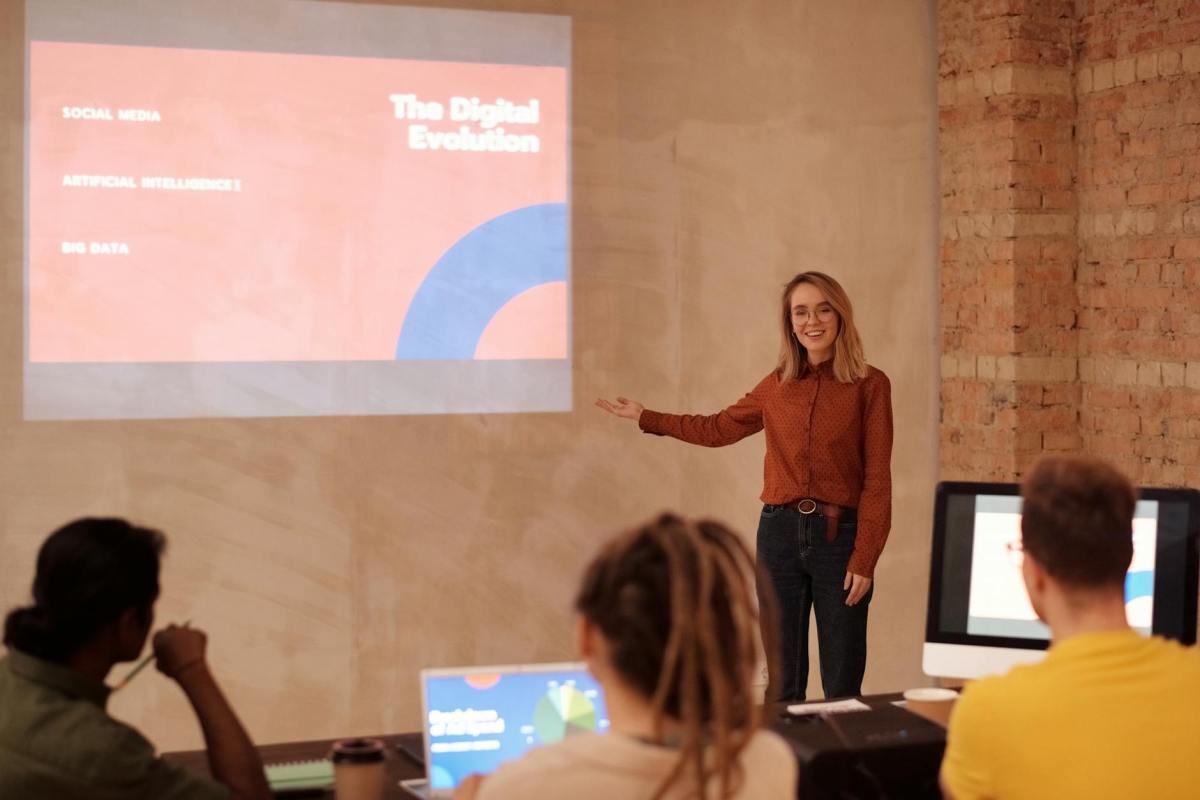
Last weekend, I had a moment of clarity-induced panic. Unfortunately, it happened to come while I was giving a short presentation at a company meeting to about 200+ people.

The company I work for has bi-annual events where families are invited. I’d flown with my kids to this event in New Orleans. The event planners did a great job of getting us all set up at the hotel, arranging group meals, and scheduling some fun outings. It was a nice opportunity to see people face-to-face that we only get to work with remotely.

Then came the company meeting for just the employees. I rushed Mr. D and Miss O through breakfast, got them settled down in our hotel room, and left them with three instructions:

  1. Don’t leave the room
  2. If you need anything, I’m on the 10th floor
  3. Stay together no matter what

When it came time for my five-minute presentation, I walked up to the podium and glanced at my notes. I started with a joke. Then looking at the audience, I had that moment of clarity-induced panic.

  1. I was the only woman leading a business unit and the only woman presenting at the meeting
  2. No one else with small children had traveled by themselves
  3. What the heck was I thinking?

I’ve come to think of these “what the heck” moments as wide-angle views of my life. The ones where I get a glimpse of a little bit more than just the task at hand. I’ve had them in mountain and rock climbing, my marriage, and parenting.

Often they come with panic of wondering, “Am I on the right path?” Sometimes, and I’m thinking of my marriage, the answer is “no,” but they always flash a wider view of purpose and trajectory. Whether I go forward or back, they’ve always required me to muster up some courage in order to proceed.

In the case of my presentation, it was a sense of wondering whether I’d bitten off more than I could chew and if I belonged. I felt my voice waver and looked down at my slides. I knew the material cold, I’d practiced aloud in my room, so I took a deep breath, and let my muscle memory carry me through.

(featured photo from Pexels)

Complicated Compliments

“Life doesn’t come with a manual. It comes with a mother.” – unknown

The other day, four-year-old Mr. D said to me, “Mama, you are the bestest in the whole entire moon.”

Sweet. And I don’t want to minimize that, but he said it to me after I gave him a cookie. I’m sure I can’t be the only person who has a complicated relationship with compliments, especially in families. Do they love us for who we are, the role we play, or what we do for them?

Do you feel that nugget of self-doubt in that last sentence? Me too. It reminds me of the few things I’ve been able to glean in the last fifty years about confidence and compliments.

They have to be right sized for the effort.

My kids keep teaching me this lesson. If I over-praise an effort, it feels insincere.

I have to be able to believe it

There isn’t a compliment in the world that can overcome my inner resistance. This one is fraught for me as a parent. My kids frequently compliment me for being the “bestest” or a “good mom.” But, of course, I’m just a mom and I can’t get everything right. My biggest growth area is mindful eating – not eating in front of devices. For a number of reasons this is complicated and I’m getting it wrong more than right.

So I find myself circling back to my driving principles. My priorities are to help them be kind (including to themselves), safe, and healthy (body, mind, and spirit). And to be present and to love them. If I can aim for most of that, then I try to give myself some grace about the rest.

Compliments are best when I would have done the same thing with or without it.

I would have given Mr. D the cookie whether or not he gave me the compliment. It wasn’t conditional on him saying anything.

So, yes, it feels safe to say that this time I can believe I’m the bestest on the whole moon. After all, it’s only me and a probe that’s tipped sideways in the running. Not that I’m on the moon…. but you know what I mean.

(Mary from Awakening Wonders reminded me of the quote for this post)

(featured photo is from Pexels)

Good Mood of the Soul

”Find a place inside where there’s joy, and the joy will burn out the pain.” – Joseph Campbell

This post was originally published on 8/10/2022. Heads up – you may have already read this.


Recently, a friend sent me a printout of a sermon that my dad, who was a Presbyterian pastor, gave on parenting 36 years ago. She had a printed copy and kept it filed away. Now that her kids are long grown, she sent it to me.

In it, my dad gives a quick synopsis of his children’s personalities, “We look at our three children and see that their responses to life were distinctly different from day one. Our first child was laid back and relaxed … our second was wound up so tight she couldn’t keep her head still to nurse … our third was happy and charming. They had those marks when they were born … they still have them today.”

I’m the third one. That was written when I was 17 years old. But there’s something about family patterns that keep us trapped in roles from which we need to move on from. For me that was moving from happy to joyful.

In her recent book, Atlas of the Heart, researcher and author Brené Brown defines happiness as “Looking at the data we’ve collected, I would define the state of happiness as feeling pleasure often related to the immediate environment or current circumstances.”

And that fits pretty well with the list I can name of the things that make me happy:

  • Dance parties with my kids
  • Finishing a shower without interruption from my kids
  • Hearing a song I loved from college in the grocery store
  • A vanilla milkshake on a hot summer day

When I discovered meditation and mindfulness during my travels through the less pleasant periods of my life, it taught me that joy is a different feeling altogether. Brené Brown says she thinks of joy as “‘the good mood of the soul.’” She defines it based on her research as, “An intense feeling of deep spiritual connection, pleasure and appreciation.”

For me joy comes when I let go of seeking and preference. As poet Mark Nepo said, “One key to knowing joy is being easily pleased.” It’s cultivating my awareness of what is already present and my delight at the magic in the air. It works when I stop narrowing my field of vision to my agenda and open to all there is. Not surprisingly, researchers have connected joy to gratitude and describe the two together as “an ‘intriguing upward spiral.’ (from Atlas of the Heart). Gratitude increases our ability to feel joy, joy makes it easier to find gratitude and so on.

And here are the things that make me joyful:

  • Every time I get to wake up and witness a sunrise
  • Catching a glimpse of my kids in a circle with the other kids in the neighborhood leaning heads in to examine some fascinating part of life
  • Holding hands
  • Hearing the clink of glasses at a dinner with dear friends
  • Witnessing a whale surface to breathe
  • Listening to the Bach Cello Suites played by Yo-Yo Ma
  • The view from the top of a mountain no matter how breathless, exhausted and cold I am
  • Anything that comes out of a conversation that starts with “How can I be of help?”

The conditions of happiness are specific and fleeting. I’m frequently happy but it certainly isn’t a constant.

The conditions of joy are deep and enduring. They represent ties in my life, beauty of this world and things I’ve worked to make priorities. It is the current underneath my mood. It’s the reward for when I’m aligned with my values.

For the times of my life where I’ve felt like I’m stuck, wading through glue or too busy taking care of others to take care of myself – it’s joy that pulled me through, making it worthwhile all the way. I might have been born happy, but I’m grateful to live joyfully.

(featured photo from Pexels)

The March of Time

“Patience is a bitter plant, but its fruit is sweet.” – Chinese Proverb

I’m not friends with March. As a month, it’s long and slow. It has no holidays, in the U.S. at least. It feels like a placeholder month to me. March is the month in which I’m more likely to be irritated that my eight-year-old daughter, Miss O, has used my Tupperware for slime, my four-year-old son, Mr. D, only brushes the outside of his teeth, and Cooper the dog thinks that keep away is a fun game.

March wreaks havoc with my already-prevalent tendency towards impatience. It feels like the month that the year is most pregnant. Something great is about to burst onto the scene but for now, it’s nothing we can see or hold.

So, yesterday, on my third day of my penance, also known as March, that I made waffles with jam inside. Miss O said, “We are so lucky. And it’s not just me that’s lucky, but our whole family.”

Dang. I’m being an ingrate. But as she said that, I also realized that what I’m pregnant with at this moment is hope. Yes, the laundry hasn’t been done, the dishwasher needs to be emptied, I haven’t started my taxes, and the yard looks like a mud pit interspersed with construction toys.

But I’m hopeful that some of the projects we started will get done. That some of the lessons we’ve been learning will stick. And that I will learn to be patient while the Higher Power works hand in hand with sunshine to make it happen.

For all of my childhood, one of our biggest family celebrations was Easter. My mom would spend all of March making me a new Easter dress, measuring, sewing, trying it on, usually right up to the night before.

Maybe that’s one of the seeds of my impatience with March. Waiting for the resurrection. Whether or not that matches your theology, I think Spring brings the hope of better things to come. I just have to remember to be grateful. And also note that bird song, blooms, and better sunshine are worth waiting for.

(featured photo from Pexels)

The Feeling of Community

“The deep irony, in order to be social, we first have to be individual.” – Nicholas Christakis

This was originally published on 2/16/2022. Heads up – you may have already read this.


When I was climbing mountains, I’d regularly sign up for a guided climbing trips, sometimes with a friend and sometimes by myself. It was a great way to travel and also get to climb a mountain or two. Typically we’d all converge in a meeting place and do the initial meet and greet and then go from there.

The groups of people that would come together were always interesting. I’m thinking about a particular climb of two volcanoes in Mexico. We all flew to Mexico City where we met our guides and fellow climbers before riding in a van to the base of Mt. Ixtacchuatl for our first climb.

The group was mostly Americans but otherwise there wasn’t an easily defined demographic, not gender, education level, personality type other than love of mountains.  On this particular trip, there were very outgoing people like my friend, Jill, and man named Trent who loved to talk and help anyone with anything. Most of the group was like Paul from Greenfield, NY who was really nice to talk to but more reserved about initiating conversations. There was our guide, Phil, who like to just spit out wisdom or quips in one line but not talk endlessly (e.g. “Watch out Jill, that guy has more moves than an earthquake.”)

As we went around doing introductions, one man named John stated very clearly, “I don’t like people. I’m just here to climb the mountains.”  Which was fine because that’s what we were there to do.

We summitted the first mountain, Mt Ixtacchuatl (17,338 feet) on October 31 and then headed down to celebrate the Day of the Dead in Puebla. After a day of rest, we started up our second mountain, Mt. Orizaba (18,491 feet).

After being dropped by trucks on the mountain, we spent the evening in a hut. At this point, we’d been together as a group for about 5 days and we were having a great time and working together pretty well as a team. The guy that didn’t like people was a very good climber and mostly stayed to himself, grabbing his share of dinner and finding a quiet place to eat it.

Around midnight, we got up from the few hours of rest we’d gotten and started preparing for our summit attempt in the dark using the light of our headlamps. We climbed steadily in the dark for about 6 hours until we reached an exposed couloir. We paused as the guides tried to get some ice screws deep enough into the fractious ice to secure our trip across the steep gully. Eventually we realized that the conditions wouldn’t allow us to cross safely over that part of the mountain and our summit bid had ended.

As we sat on the mountain watching the sun come up in no hurry to get anywhere, John, the climber who didn’t like people, pulled off his boot and found a Payday bar. He’d put the candy bar in his boot while preparing in the dark and then forgotten to take out. After being climbed on for 6 hours, it was shaped like an orthodic. He pulled it out, showed it around and we all had a good laugh alongside him as we imagined the journey of that candy bar. Even John enjoyed for that moment being part of a group that understood the crazy things that happen on a climb.

That particular event created an idea of community for me. One where we don’t have to all be best friends or come out of our comfort zones but can still enjoy the camaraderie of a shared experience focused on a common interest.

(featured photo is mine of the group leaving the top of Mt. Ixtacchuatl)

A Legacy of Love

“The one thing that we can never get enough of is love.
And the one thing that we can never give enough of is love.”
– Henry Miller

When I published my book about my dad eight years ago, there was a consistent kernel of comment that I got about it from his peers that read it. It was stated or implied that they hoped they were remembered as fondly.

I’ve sat with that nugget for a long time to try to unravel what that meant. I’ve come to believe it reveals a truth about what’s important.

Let me start off with a list of the things that my dad wasn’t good at. He worked too much. He left the hard work of parenting largely to my mom. He could be sloppy with details. He was conflict averse and would turn most anything into something funny and light so as not to have to deal with it. He didn’t show his struggles or any negative emotion in a way that would make him more relatable.

But he had one major thing he did right consistently – he loved people. He managed his own neuroses, opinions, and worries in a way that made him open to love others. He’d say that it was following the example of Jesus to love, accept, and welcome others that allowed him to do that. He believed that was Jesus was the way, the truth and the life, but he also believed that it wasn’t the only truth. He came to appreciate any practice or belief in something bigger than ourselves.

On his birthday about four months after he died, I posted a tribute to him on Facebook based on the Maya Angelou quote, “I’ve learned that people will forget what you said, people will forget what you did, but people will never forget how you made them feel.“. An acquaintance from high school with responded with a comment like, “Not everyone had a dad like that.”

Right. I was incredibly lucky to have a dad that was so effusively warm and whose face lit up every time he saw me. I think he had an advantage as a pastor in that it was part of his profession to practice meeting, accepting and loving people. His resume virtues and his eulogy virtues were aligned, to borrow a phrase from David Brooks.

But I think we all have the opportunity to prioritize supporting and encouraging others in a healthy and boundaried way, and love people the best we can. I suspect it might be the key to how fondly we are remembered. The ultimate paradox is that we give love in order to be loved.

My book about my journey to find what fueled my dad’s indelible spark and twinkle can be found on Amazon: Finding My Father’s Faith.

Mama, Why Would We Want to Feel Their Pain?

“Your ability to understand and empathize with others depends mightily on having a steady diet of positivity resonance, as do your potentials for wisdom, spirituality, and health.” – Barbara Frederickson

This was originally published on 4/5/2023. Heads up – you may have already read this.


My 7-year-old daughter, Miss O, bumped her 3-year-old brother with her backpack when they were getting into the car yesterday morning. As he started to cry, she offered an uncharacteristically flippant, “Sorry, Dude.”

I gathered him in my arms to check on the little pinky finger that got jammed and added something like, “I’m sure your sister wants to offer some sympathy but can’t find the words right now.”

As we got underway, Miss O said, “I thought sympathy was a bad thing?” The curiosity about learning about emotions moved her away from her defensiveness and we talked about the continuum of responses in the face of pain: denying it, indifference, sympathy and empathy. Off the cuff, I said that empathy was something like leaning in to relate to someone else’s pain.

Miss O asked, “Why would we want to feel their pain?”

It seems I’ve spent the better part of my 53-years trying to understand the answer to that question. I suspect that it was becoming a parent that truly changed my willingness to really sit with the distress of others.

I’ve found that unacknowledged wounds weep the most. Jack Canfora’s post, There’s Nothing Wrong With Everything Being Wrong, spoke to me about the cleansing act of being honest. When we pretend everything is okay either with ourselves or others that are hurting, we add a layer of BS that hardens over time.

But when we talk about hard things and are able to lean in to the sorrow and pain of others, we are blessed by getting to know someone deeply. I imagine we are all a little like icebergs, carrying the pain of life as the big unseen part beneath the water. And when we empathize with each other, we get to see all of us, and even witness the growth that comes with healing after things fall apart.

Which isn’t to say that I’ve found it to be easy to embrace the discomfort of others. I find myself stumbling for words, unsure how to ask, or if to ask, and it becomes worse if I fear I’ve had a part in causing pain. But when I avoid it, it only becomes bigger, sometimes big enough to sink the Titanic.

I remember my dad, who was a Presbyterian pastor for 40 years, describing the first time he had to do a funeral and a wedding on the same day. He said the sheer emotion of going through those extreme emotions almost buckled him at the knees.

I’ve found that the times I have the most access to empathy are when I’ve done my own work to manage my emotions, to understand that I don’t have to carry other people’s loads, and to clean my own wounds. Then I have a much bigger capacity to sit in the dark with others. I can’t go deep when I’m swimming in the shallow end of my self-care and grace pool. For me, that work is in the form of meditation, writing, and creating but I know we all have different tool kits.

So I circled back to my daughter and said, “Sometimes we start trying to empathize because we think it’s the right thing to do or because our mom told us we should. But sooner or later we learn that pain is a lot like the dark – only scary because we don’t look. We lean in to feel other’s pain so that it goes away and it doesn’t become a monster in the closet, threatening to pop out when we least expect it.

We lean in because we all take turns hurting and healing and then have to do the work of repair.”


I’ve also published today on the Wise & Shine blog: Just Start

(featured photo from Pexels)

Doing Nearly Nothing

“Recognize what is simple. Keep what is essential.” – Lao Tzu

I spent some time this past weekend sitting on the porch of an AirBnB cabin on Whidbey Island doing nothing. Well, I was drinking tea so not technically nothing. I was going to say maybe more accurately, I was just doing that one thing so I wasn’t multi-tasking. But I was eating popcorn along with the tea so perhaps that is multi-tasking.

Okay, maybe we can agree I was doing nearly nothing. I was sitting on the porch with my tea and popcorn not doing anything else. I didn’t have my laptop open or my phone within reach. My kids were off at a playground with a friend, so it was just me and Cooper the dog, looking at the bay.

I knew the next thing I needed to do to get ready for dinner but I hadn’t moved yet. I was trying to extend the moment of doing nearly nothing for as long as possible. I found this to be extremely difficult – to drop the should and the oughts and just sit.

It reminded me of the question of whether finding inner peace will ruin our ability to get things done. I have both heard and thought myself, if I wasn’t so ________________, I wouldn’t be nearly as productive. Fill in the blank with ambitious, anxious, efficient, motivated, OCD or whatever else suits you. Sometimes it seems to me, with Buddhism especially, if I let it all go, what’s going to be left?

I live by a lot of rules that help me get stuff done. Rules like:

  • No tv after the kids go to bed.
  • If you notice something needs to be done, do it now. And really, with two kids, a dog, a cat, a job and a house – how hard is it to notice something that needs to be done?
  • If you pick something up, put it away properly so you only handle it once. This includes emails and work tasks.
  • Go to bed by 10:30 so you can get up by 5:30 to get sacred time and do it all again.

My structures help me but also limit me. They keep my head down so that I don’t notice other things.  When I let them go, even for just a short while, I’m happier because my head’s up.

In the few moments when I’ve been able to experience something akin to inner peace, here’s what I’ve noticed: that I’m able to float peacefully along with the stream instead of trying to constantly generate my own power. That the biggest effort is quieting the should and oughts in my head and then everything else flows rather nicely.

I’m so grateful I was able to practice doing nearly nothing this weekend. I need to do it more.

Let’s Play

“When one teaches, two learn.” – Robert Half

Last Saturday morning, four-year-old Mr. D wanted to drive his remote control car down the sidewalk. Since we were still in our pajamas, I tried to lobby for a back yard activity. But the sun was shining, the birds were singing, and Mr. D wanted to go out front, so I covered up with a coat and followed.

Funny thing – it’s hard to drive those remote control cars straight. We spent a fair amount of time just getting to two doors down, the side walk in front of my favorite neighbors. They are a retired couple in their 70’s. They’ve lived here for almost fifty years, I lived here for twenty and so we’ve got some history under our belt.

My neighbors are interesting, generous, and kind. We’ve shoveled five yards of delivered bark from the street to the yard together. I’ve gotten to know their kids and grandkids. My kids tell them all that’s top of mind every time they see them. They often rake my strip of grass between the sidewalk and curb in the fall. I bought them toilet paper at Costco during the pandemic.

When we got in front of their house, Mr. D said, “Let’s go ask them to play.” Some polite part of me thought we’d be pests asking them to do that on a Saturday morning. I said we shouldn’t. But Mr. D put his hand on his hip and said, “Follow my lead.”

When we got up to the front door and they answered, Mr. D handed the remote control to them and said, “want to drive?” We had a lovely time standing on the porch and talking while Mr. D chased down the car any time it went astray. It was so enjoyable to chat with my neighbors that I don’t see nearly enough this time of year with short days and cozy couches inside.

My kids keep teaching me how important play is. For myself. And to keep inviting others to play. It connects us and relaxes us. And it’s fun. It isn’t an interruption – it’s what we need more of.