The Detective’s Toolbox

“It takes courage to grow up and become who you really are.” – e.e. cummings

Mr. D hasn’t wanted to go to his pre-school lately. It’s been such a marked change that it’s evoked the inner detective in me trying to figure out why. Was it the week that the lead teacher went on vacation? Is there a shift in schedule or meals that is bugging him? Is there a particular classmate that he’s having trouble with?

At four-years-old, Mr. D doesn’t seem to have the answers to the questions. I say that like his age is the factor. I’m sure it is in part, but I think we all get stumped about what’s bugging us from time to time.

Yesterday, we’d just parked at the curb and were just sitting there collecting ourselves before we went in to school. Cooper, the dog, was in the front seat next to me. Mr. D from the back seat said, “Cooper is sad.” I asked why and he said, “Cooper is sad because he misses us.

Oooh, my first break in the case.

So I tried two more things. At the end of the day, I asked Mr. D to tell me a story about school. He told me a story about John waiting in line for the roller coaster on the playground. Another student, Molly, gave John a look and it made him sad. So Mr. D went to play with John and it made John happy.

The second thing was to have him show me something he’d learned that day. They are studying the human body this week. In their study of the stomach and intestines, they put bread into plastic bags with soda water died green to mimic stomach acid.

We repeated the experiment at home so that he could teach his older sister and me. Yes, it’s really gross, but I took one for science’s sake. And giving Mr. D a chance to showcase a bit of how he spent his day made him feel proud of his learning.

Here’s what I noticed. That when we don’t know what’s wrong, we project it on to others like Cooper the dog. We also can get to it by telling stories or acting things out. I haven’t cracked the case entirely yet but I’ve started figuring out the toolset. A similar set of tools probably works for all of us.

Speaking of telling stories, Vicki and I talk with David from the Pinwheel in a Hurricane and unwanted blogs on the Sharing the Heart of the Matter podcast this week. It is a fantastic episode where David talks about doing story work to find clarity, integration, and healing. Check it out: Episode 53: Practicing Creativity with David

Editing That Six-Word Story

The other day we were holding a family meeting where eight-year-old Miss O and I where hotly debating the next thing to do and I asked four-year-old Mr. D if he had an opinion.

“No, I’m not a good talker,” he replied.

Whoa, there’s a six-word story!

I’m sure with his very verbal older sister and his mom that is fascinated by words, it feels like he can’t get a word in edgewise. Funny thing is that he is interested in following along. I notice that the more we talk, the more still he gets. And then when we least expect it, he pops off with a perfectly positioned sentence like on January 1st when he said, “I told you last year not to step on lava.”

It feels like helping these young people write and change their stories as they grow is one of my biggest responsibilities and honors. In this case, I’m hoping to convince Mr. D that his six-word story is better said as, “I’m not a good talker…yet.”

And for more about six-word stories, please tune in to my podcast with Dr. Victoria Atkinson. We know and love her as our blogging, writing, and podcasting friend. But in this case, she brings all her experience as a therapist, professor, college dean, and author to bear to teach us how potent these little stories can be.

Search for Sharing the Heart of the Matter on Apple podcasts, Amazon Music, Spotify, and Pocket casts. And please subscribe! Or click here for the show notes and link to listen to the podcast on Anchor.

(featured photo is mine. I offer these six words as a caption: Despite our care, another worm died)

Talk, Talk, Talk

We spend the first year of a child’s life teaching it to walk and talk and the rest of its life to shut up and sit down. There’s something wrong here.” – Neil deGrasse Tyson

My daughter, Miss O, learned the power of words early on. She started talking at 10 months and it’s been off to the races ever since. Now she’s eight-years-old, and I’ve learned to get worried when she isn’t talking.

One Sunday when it was just the two of us and Miss O was about three-years-old, I was feeling overwhelmed by the constant talking, singing, and narrating. We were sitting and drawing at the dining room table as the last rays of fall afternoon sunshine filtered into the room. I said to Miss O, “Do you think we could just be quiet for 10 minutes?”

Miss O paused for a moment and then said, “Why?”

About a year later, a friend was at our house trying to troubleshoot a problem with his van. Four-year-old Miss O asked him what was happening and he started, “When hot air meets a cold surface and water forms…” She interrupted him and asked, “You mean condensation?

I confess, I don’t always listen to her every word. But I recently had the honor of editing a podcast that Miss O did with Vicki and me. As I tuned in with ears to make sure the conversation flowed, I was stunned with the perspective of this delightful young person talking with the incredibly interesting and supportive Vicki Atkinson.

Am I biased? No doubt! But most of all what I noticed is that Miss O has learned to use her words well. And she’s found her voice – to express herself, to give voice to her feelings, to convey her delightful enthusiasm, and at the end, to share her delightful glow with everyone around.

Ha – I just realized this post could have been reduced to one sentence. Miss O is on the Sharing the Heart of the Matter podcast with the always amazing Dr. Vicki Atkinson and me – please listen. Perhaps wordiness runs in the family….

In-Person Meetings and AI

We live in a world where there is more and more information, and less and less meaning.” – Jean Baudrillard

For this week, I’ve actually had to leave the house to go to work. It’s made me realize how much technology has changed our lives. I’ve worked remotely for years so somehow it was lost on me how different it is to have to walk out the door every morning, until I experienced a stab of anxiety at the beginning of this week.

Especially with two kids and a dog, the number of things I had to plan for was enormous. Knowing that I can dial-in to a meeting even if any one of the three is sick is an amazing benefit. I’ve been spoiled not having to plan transportation and care outside of their schools for my three when I work from home.

But this week I’ve been attending a Microsoft conference that is here in Seattle. No surprise – but the most predominant topic is Artificial Intelligence (AI). [Is it somewhat ironic that as I started to type Art…that Word suggested Artificial Intelligence to fill in?]

Microsoft has made something like a $20 billion investment in AI. The conference was awash with examples of all the things we can do with AI. I will never claim to be a prognosticator, but as someone that’s been in the computer consulting field for 30 years, it’s interesting to puzzle through the application of this technology. All of the below is just my opinion so take it for what it’s worth.

Fine line between helpful and creepy

The most recognizable use of AI is in natural language search. We can type in or say search terms and Bing (Microsoft’s search product) will return results that are (hopefully) right on target for what you want. I question whether it’s helpful to have that abstraction from where the data comes from which makes it harder to verify the veracity of the source of the research.

And then there’s a line between helpful and creepy. The other day a search result popped up about whether to store your open cheese block in a Ziploc bag. It was something I’d recently pondered but hadn’t done any research on. It must have been just a coincidence? Either way, I refused to click on the result – it was too creepy.

Fine line between cool and useful

I was talking about AI with a Microsoft program manager that was in the booth next to me. As we talked through some of the examples, he offered “that’s there’s also a fine line between cool and useful.” All the prototypes and fun demos that have been shown, there’s a cool factor – that still leaves most people scratching their heads over the utility. No doubt humans will figure out how to leverage it but for now, it’s still an idea that is not very real-world.

We’re not getting replaced

This brings me full-circle to the start of the post and why I’ve been leaving the house every day. Because there’s no substitute for in-person relationships. Meeting others, reading body language, having collaborative conversations – there’s no short-cut for that. Even online there’s a palpable difference between a real conversation and a bot supported one.

As I’ve been away from my computer this week, there’s no AI I can set to read my favorite blogs and leave meaningful comments. Not to mention that I wouldn’t get the benefit of reading them. [Yes, this is a roundabout apology for being behind on my blog reading.] So for many reasons, I’m looking forward to staying home, sitting on my couch, and catching up.

In a timely but also ironic way, we’ve started using Otter AI to provide transcripts of our Sharing the Heart of the Matter podcast. See how it does by visiting our latest podcast: Episode 44: Hot Tips for Writing about Family With Brian Hannon

(featured photo from Pexels)

All The Secrets

Take chances, make mistakes. That’s how you grow. Pain nourishes your courage. You have to fail in order to practice being brave.” – Mary Tyler Moore

The other day my kids and I were out walking in the neighborhood and ran into two brothers, 11-years-old and 9-years-old, from the English family that has moved in up the street. The older brother did a card trick for Miss O. I wasn’t paying attention to all of it, but there was audience involvement, and even some spelling and counting going on.

When the older brother finished and revealed the chosen card – the right one – the younger brother exclaimed quite proudly in his delightful British accent, “It works nearly every time.”

Which made me laugh. The way he said it so charmingly uncovered that a lot of practice has gone into this particular trick.

And it reminded me that often family members know our secrets and weak points. Hopefully, especially when they are working well, within the context of great love and acceptance.

Speaking of family, I spoke with Vicki on this week’s Sharing the Heart of the Matter podcast about how I started my family as a single person. We talk about invitro fertilization, the fears I needed to overcome, the lessons I apply from my dad, and the seven quotes that have helped me change my script from fear to love. Please listen and subscribe on Amazon Music, Apple, Spotify or Pocketcasts to Sharing the Heart of the Matter podcast or find it here on WordPress: Episode 40: The Power of Choice with Wynne Leon

(quote comes from the MSW Blog: Being Brave)

Master Negotiators

When we were children, we used to think that when we were grownup we would no longer be vulnerable. But to grow up is to accept vulnerability. To be alive is to be vulnerable.” – Madeleine L’Engle

I’ve found that daycare drop-off is an incredible place to observe negotiation skills. These young people who are still very comfortable asking for what they need are masters. Speaking for myself, I think I often give away the power in the negotiation because I’m more concerned about Mr. D’s needs than my own.

At 4-years-old, he’s pretty comfortable going to school so we don’t have really tough drop-offs, but lately he’s been negotiating for upside-down hugs. No, I don’t have to go upside down, thankfully. I pick him up and flip him upside down. It’s a good arm and core workout.

Yesterday morning after I’d done the three we’d agreed upon, Mr. D negotiated for more. He started to hold up four fingers but saw that he was going to get push back and lowered it to two. And then asked for one more after and then one final one, managing to get the four he wanted after all.

I’m thinking about this because in my job we’re negotiating a new contract with an existing client. Here are the ways I think we could learn from the five and under set:

  • Grown-ups, myself included, seem to fear the negotiation process. The idea that someone might use it as an opportunity to walk away is terrifying.
  • It seems like we do a lot of guessing what the other side will do before even making an opening bid. And what they do, is rarely what we’ve guessed. Sure, it’s strategically sound to think through pros and cons, but it stops being fruitful when it freezes us in place.
  • When we lean in to the process, it feels like connection. We seem to have forgotten what many little people know intuitively, that we can just ask for what we need.

Negotiation is vulnerable. Maybe all scenarios where we’re scared we won’t get what we want or need are. But watching these pre-schoolers reminds me that we won’t get anything unless we ask.

For more about negotiating, specifically the role of silence in negotiation, Vicki and I had another great podcast conversation with Dr. Gerald Stein – this time about the waiting game. See Episode 37: The Waiting Game with Dr. Gerald Stein to listen.

(featured photo from Pexels)

Being Different

People take different roads seeking fulfillment and happiness. Just because they’re not on your road doesn’t mean they’ve gotten lost.” – Dalai Lama

I’ve only met one other person who intentionally choose to have kids as a single parent. Of course, I’ve heard of plenty, and known a lot of wonderful people who have become single parents because of circumstance, including my dear blog friends. I also know others that think they’d be better off as parents without their partners. Clearly, there are so many ways to do this parenting thing and no matter how we do it, it comes with plenty of challenges.

But back to the story about the woman I met who intentionally became a single parent. I was with my kids at the local wading pool last summer when I started talking to a woman who was there with her five-year-old twin girls. We hadn’t talked long when she revealed that she had chosen to become a single parent at 50-years-old and was just in town for a couple of weeks to visit her mom because she and the twins lived on the East Coast. She also had a 16-year-old son from a previous marriage.

Does it matter to meet people who have made similar life choices? It took me a long time trying everything else that I thought would work to have a family before I moved forward to become a single parent. It felt so vulnerable to have to intentionally walk down this path. As if everyone would know that I was the one that wanted to have kids and I couldn’t hide behind a “shared decision.” I’m laughing as I type this because now I don’t care at all if people know that. Hello? Obvious, please meet irrelevant.

And I thought it would signal that I wasn’t capable of a relationship. Well, that may or may not be true but again, who cares? After all, I created two people that I now have a relationship with so that worry seems beside the point.

But the instinctive social programming to not be different is strong, isn’t it? And I know you all are nodding because I believe there’s something each of us have done differently that caused angst – maybe being a vegetarian in a family of meat eaters, moving away from a family home, being an introvert, being an extrovert, going to college, not going to college, coming out, getting divorced, the list goes on and on.

In the case of meeting this woman who also chose to become a single parent, I’m glad that I didn’t meet her before I choose to have kids because she might have made me more neurotic about walking this path. She kept asking me over and over again, “People in your life didn’t tell you not to do this?” And I answered repeatedly, “Nope.” She was distracted, overwhelmed by her young daughters, and not at peace, like she was in the midst of some battle with naysayers.

I gave her the benefit of the doubt that life was more stressful because she was traveling. I know that without the regular supports of routine and familiarity, being alone with two kids, no matter how you got there, is harder.

But it reminded me we all represent something to someone – whether it be a choice, a lifestyle, a belief, an attitude, or anything else remarkable. Would I recommend choosing single parenthood to everyone? No, for a lot of reasons, including the fact that I adored my dad and I think it would be great if everyone had at least one awesome dad in their life.

But do I want people that I meet to know that parenting, even when, or especially if, you choose it later in life, is full of joy, inspiration, and wonder? Absolutely!

Do I want anyone that I meet to feel a little energy and inspiration for whatever notion inside them tells them to do something in a non-traditional way? For sure!

Do I want to represent the message that there is goodness when we stop caring what other people think and pursue our dreams? Most definitely.

I think about that sometimes when I’m out with my delightful little ones. Who knows who we are going to meet and how we’ll rub off on them. Let’s hope it’s for good.

Speaking of people who inspire for the good, this week Vicki and I got to talk with writer, and blogger, E.A. Wickham on the Sharing the Heart of the Matter podcast. Elizabeth reveals so much inspiration and wisdom about leading a creative life: Episode 21: A Creative Life with Elizabeth Wickham.

It’s a great episode, please give it a listen and subscribe! Search for Sharing the Heart of the Matter on Apple Podcasts, Amazon Music, Spotify, or PocketCasts or click on the link above.

A Post, A Podcast, and A Survey

One ought, every day at least, to hear a little song, read a good poem, see a fine picture, and, if it were possible, to speak a few reasonable words.” – Johann Wolfgang von Goethe

Out of the 1,063 posts I’ve published on this site, the one that generated the most discussion was the one I did where I talked about podcasting and why people do and do not podcast. Which I find interesting on several levels.

First, because I think we all have opinions about how reading versus listening works for us. If I could summarize, some of the comments from that post, it is that they are two different experiences, and sometimes to switch between one and the other is more than we want to do.

Second, because there are so many choices of content that speak to us – words versus photos, prose versus poetry, story-telling versus informative and on and on. We come in to a platform like WordPress, or the blogosphere in general, and then have to sift our way towards it.

When I talk with my friend, Eric, about the podcasts I listen to, he usually rolls his eyes and says they are too much work. I like podcasts about finding meaning, and digging deeper into what parts of our brain and body are running the show, about meditation and mystery. He likes things that are more at the entertainment level. Fair enough – because we meet somewhere in the middle and have really good conversations.

All of this is a prelude to two things. One, Vicki (of the Victoria Ponders blog), Brian ( of the WritingfromtheheartwithBrian blog) and I talk about blogging on the latest episode of the Sharing the Heart of the Matter podcast. Episode 17: Building a Base with Brian Hannon if you want to listen on Anchor or search (and subscribe!) for Sharing the Heart of the Matter on Apple, Amazon, Spotify or Pocket Casts.

We explore the questions about whether numbers matter, how we can’t predict what will land with our audience, how Brian’s experience as a newspaper reporter early in his career applies to blogging, and what is meaningful about the blogging experience. If you are a blogger that likes podcasts, you’ll love this fun and interesting episode.

And number two, we’ve put together a short anonymous survey about podcasting to gather feedback about what you like. So, if you want to weigh in on what topics land for you and what you’d like to see more of – please spend 2 minutes to answer these 4 questions on the Sharing the Heart of the Matter Podcast Survey. Or put your thoughts in the comments below.

That’s a lot – a blog post, a podcast (Episode 17: Building a Base with Brian Hannon) and a survey (Sharing the Heart of the Matter Podcast Survey). Yeah, I know. But if you have a few minutes, I’d really appreciate it.

Changing Someone’s Ride – Small Acts of Kindness

Some stranger somewhere, still remembers you because you were kind to them when no one else was.” – unknown

Miss O was 3-years-old when I got a bike seat for the back of my bike and took her for our first ride around the neighborhood. She loved being in that seat, even though she could primarily only see my back. As we rode around in the September sunshine, she would exclaim. “This is fantastic!” and also yell “hi” to everyone.

Her delight and enthusiasm were so infectious. It reminded me of my favorite lines from Salman Rushdie’s Midnight Children,

It seems that in the late summer of that year my grandfather, Doctor Aadam Aziz, contracted a highly dangerous form of optimism. Bicycling around Agra, he whistled piercingly, badly, but very happily. He was by no means alone, because, despite strenuous efforts by the authorities to stamp it out, this virulent disease had been breaking out all over India that year, and drastic steps were to be taken before it was brought under control.”

Midnight’s Children by Salman Rushdie

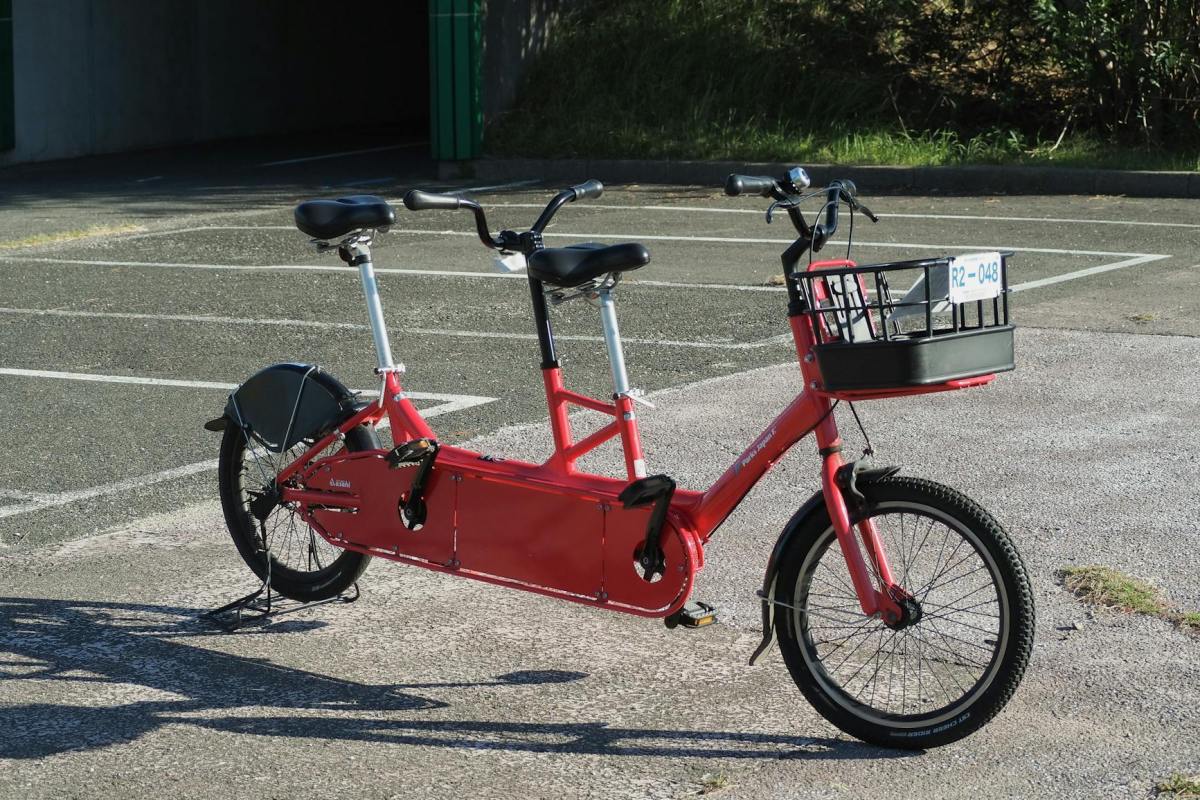
It also reminded me of the summer I did a lot of tandem bike riding with my friend, Eric. I was in the back seat so I had no responsibility for steering and braking. All I had to do was stay on the bike and pedal. That left a lot of time for looking around and waving to people as we passed them.

I must have been going about this quietly because Eric didn’t have any idea I was waving madly from the back of the bike. Until one day when we passed a group of tough looking teenage boys and he was surprised that they smiled and did kinda of a cool, low-down wave at him. The next time we passed someone, Eric watched the shadow of the bike and saw me waving. He stopped, laughed, and then asked, “Have you been doing that all summer?”

Well, sure I had. And listen, I came by it honestly because my dad when we’d go hiking would greet every group we passed. “How much farther to the Starbucks?” or “You’re doing great. Almost there!”

What did I learn from riding with Miss O, my dad, and tandem biking? It doesn’t take much to change the experience of those around us.

This is also the topic of the HoTM podcast today, Episode 16: Nuggets of Kindness with Stuart Perkins Vicki and I talk with Stuart about one of my favorite posts of his — and how his powerful writing touches on parenting, kindness, inspiration, people paying attention to how they can help others.

It’s such a fun podcast – you may even find yourself shouting, like Miss O, “This is fantastic!” 🙂 I hope you enjoy listening!

Links for Episode 16:

Listen on Anchor: Episode 16: Nuggets of Kindness with Stuart Perkins or search for Sharing the Heart of the Matter on Apple, Amazon Music, Spotify and Pocket Casts

Stuart’s blog: https://storyshucker.wordpress.com

Stuart’s post: A Nugget of Kindness

(featured photo from Pexels)

Flipping the Script So We’re Not Parked In Our Small Spaces

The more spacious and larger our fundamental nature, the more bearable the pains in living.” – Wayne Muller

The headlines from the news this week included a 6-year-old and her parents getting shot after a ball rolled into someone else’s yard, a cheerleader shot after realizing she had gone to the wrong car in a parking lot and trying to apologize, a teenager shot after pulling into the wrong driveway, another teenager (thankfully) healing after being shot when he went to the wrong address to pick up his siblings, a passenger on an airplane losing his cool over a crying baby.

Holy smokes – it just sounds like everyone is sitting a state of pain and fear just waiting to be lit up like a powder keg! That list makes me think of what happens when we get “parked in our small space” as my meditation teacher, Deirdre, describes. The state of being when everything and anything triggers us because we are already highly activated.

It goes without saying that most of us don’t react in any of the ways listed in the stories above. But I’ll speak personally to say that even when I keep my mouth shut and don’t show a surface reaction, being parked in my small space feels awful as I mutter obscenities in my head.

As opposed to when I’m feeling expansive and not only can I absorb the indignities of living but also I can even sometimes sit with others in their pain to help regulate their load. The small space/expansive state reminds me of a great story from the Book of Awakening by Mark Nepo:

“An aging Hindu master grew tired of his apprentice complaining, and so, one morning, sent him for some salt. When the apprentice returned, the master instructed the unhappy young man to put a handful of salt in a glass of water and then to drink it.

‘How does it taste?’ the master asked.

‘Bitter,’ spit the apprentice.

The master chuckled and then asked the young man to take the handful of salt and put it in the lake. The two walked in silence to the nearby lake, and once the apprentice swirled his handful of salt in the water, the old man said, ‘Now drink from the lake.’

As the water dripped down the young man’s chin, the master asked, ‘How does it taste?’

‘Fresh,’ remarked the apprentice.

‘Do you taste the salt?’ asked the master.

‘No,’ said the young man.

At this the master sat beside this serious young man who so reminded him of himself and took his hands, offering, ‘The pain of life is pure salt; no more, no less. The amount of pain in life remains the same, exactly the same. But the amount of bitterness we taste depends on the container we put the pain in. So when you are in pain, the only thing you can do is to enlarge your sense of things…Stop being a glass. Become a lake.'”

The Book of Awakening by Mark Nepo

When we flip our script and access our big space, everything seems less bitter. And we might even be able to help others flip their scripts as well. Or at the very least, not make it worse.

In the latest episode of Sharing the Heart of the Matter podcast, I talk with my meditation teacher, Deirdre, about how to flip the script on small spaces so that we can thrive in the big spaces of empowerment. We also dig into holding space – how to sit with others in their pain and discomfort. We talk about breathing – inspired by Patti’s comment on the last podcast and her suggestion of the song “Breathe” by Anna Nalik.

If you need an antidote from the news, or just even want the calm balm of Deirdre’s voice and wisdom, I know you’ll love this episode.

Search (and subscribe!) for Sharing the Heart of the Matter on Apple, Amazon, Spotify or Pocket Casts or click here to listen to the podcast on Anchor: Episode 14: Holding Space with Deirdre Wilcox

And here are the show notes on the Heart of the Matter site: Episode 14 show notes