How to Share Inner Peace

Peace is not something you wish for; It’s something you make, Something you do , Something you are, And something you give away.” – John Lennon

There is a benediction that my dad used to say at the end of church services that has stuck with me for all these years.

“May the peace of God, which passes all understanding, be with you now and forever more.”

I can see him in my mind’s eye standing in front of the church with his arms raised over the audience in blessing. He says that line and then he drops his hands, bows his head and walks out of the service. It gives me great peace to recall.

Meditation has been my go-to for practicing finding that peace. When I have it, I write better, parent more thoughtfully, lead with a fuller heart, and find myself swimming in the deeper end of the grace pool for myself and others.

So in this week’s episode of the How To Share podcast, I share a guided meditation by my meditation teacher, Deirdre Wilcox. Here is a short clip of the preamble highlighting some of my favorite quotes about inner peace:

The episode features a backpack guided meditation that resonates with me as a hiker and climber but I think we’ve all carried heavy loads enough to appreciate it.

Takeaways

  • Meditation can help cultivate internal quiet and peace.
  • Spiritual pathways include meditation, community, and acts of service.
  • Inner peace is a valuable endpoint for personal growth.
  • Nature can provide a sense of awe and tranquility.
  • Creativity is a form of spiritual expression.
  • It’s important to identify and release emotional burdens.
  • Guided meditation can facilitate emotional unpacking.
  • Self-love is crucial for personal development.
  • Acknowledging what to let go of can lighten one’s load.
  • Regularly checking in with oneself can promote emotional wellness.

I understand meditation is not for everyone. But if it is your jam, or you just like talking about packing, please give it a listen. Here are some ways you can listen and watch to the full episode:

Please listen, watch, provide feedback and subscribe.

How to Share Our Luck with Gil Gillenwater How To Share

In this enlightening conversation, Gil Gillenwater is with host Wynne Leon and shares his experiences and insights from over 35 years of philanthropic work along the US-Mexico border. He discusses his book, 'Hope on the Border,' which highlights the transformative power of education and community service. Gil emphasizes the importance of enlightened self-interest over traditional charity, advocating for a model that empowers individuals and fosters dignity. He explores the duality of poverty, the need for sustainable opportunities, and the joy found in serving others, ultimately presenting a vision for a more connected and compassionate world.TakeawaysEducation is the key to breaking the cycle of poverty.Enlightened self-interest can lead to personal and communal growth.Charity should not be viewed as a sacrifice but as a mutual benefit.Volunteering provides a sense of purpose and fulfillment.Welfare can disempower individuals and communities.Community service fosters connections and shared humanity.The disparity in wealth is a significant issue that needs addressing.Experiencing poverty firsthand can change perspectives.Creating opportunities in one's home country can reduce migration.The joy of service is a pathway to personal happiness.Links for this episode:How to Share homeHope on the Border at AmazonGil's organization: Rancho FelizGil Gillenwater on FacebookWynne’s book about her beloved father: Finding My Father’s Faith; Blog: https://wynneleon.com/; Substack: https://wynneleon930758.substack.com/
  1. How to Share Our Luck with Gil Gillenwater
  2. How to Share 1970's Chicago with Doug. E. Jones
  3. How to Share Feedback with Dr. Vicki Atkinson
  4. How to Share the Next Generation with Mari Sarkisian Wyatt
  5. How to Share Impactfully with Social Media Friends with Amy Weinland Daughters

Links for the Episode

Deirdre Wilcox’s website

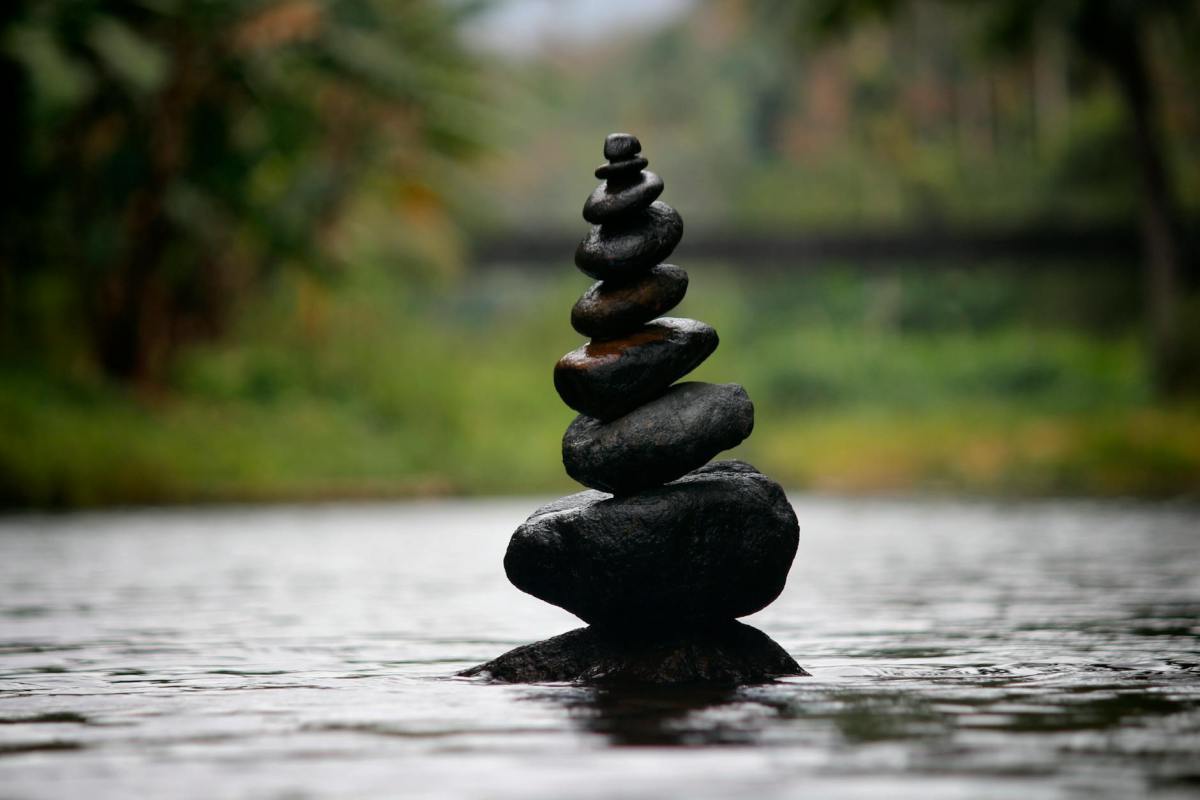
(featured photo from Pexels)

Stop Hurrying and Worrying

I didn’t see one tree hurrying or worrying.” – Melody Beattie

I came to a full stop when I read the quote for this post. It was in a meditation book I’ve been reading in the mornings. Journey to the Heart: Daily Reflections by Melody Beattie. She was talking about visiting the redwoods in Northern California. Trees that have stood for hundreds of years growing steadily and weathering whatever came. “I didn’t see one tree hurrying or worrying.”

First, the beauty of one person being able to write something so powerful that it touches another. Isn’t that incredible we can do that?

Second, because I’ve felt unmoored in the last few weeks. The end of the school year came with so many opportunities to volunteer, amazing teachers to recognize, and fun to plan. Then we traveled to San Francisco for a family party. Upon our return, I landed in a week where the kids had vast amounts of free time and I struggled to get much done.

Too much fun, really. But I still felt like a boat without its keel in, being blown about by this and that without much ability to set my own direction.

And all that fun brought me to the third thing. I once heard an interview with Dr. Scott Peck  – I think it was with Oprah. He said something like, “People ask how I get so much done. I reply that I’m able to because I spend two hours a day doing nothing. I used to call it my thinking time but then people felt free to interrupt. So I changed to call it my praying time and it made all the difference.

Nature knows that we don’t need to hurry, scurry, and worry. Thanks to that one line written by a wise observer, I remember now too.

Have you read or written one line that has brought you to a full stop lately?

(featured photo from Pexels)

You can find me on LinkedIn: https://www.linkedin.com/in/wynneleon/ and Instagram @wynneleon

I host the How to Share podcast, a podcast about working better together – in our families, friendships, at work and in the world.

I also co-host the Sharing the Heart of the Matter podcast, an author, creator and storytelling podcast with the amazing Vicki Atkinson.

Navigating Unwelcome Surprises

Living is the art of getting used to what we didn’t expect.” – Eleanor C. Wood

Last week, at an off-leash area for dogs, a dog latched on to my 18-month-old dog, Cooper’s, face. This dog, a pit bull mix, had been showing a lot of interest in Cooper. But Cooper doesn’t have, or hasn’t yet developed, any defensive postures – he doesn’t bark, raise his hackles, or growl. He’s bigger than many of the dogs and mostly runs away.

For whatever reason, this dog latched on to Cooper’s face between his eye and his ear. The dogs weren’t fighting – and neither dog was even growling. The owner was right there and was doing all that he could to get the dog to let go.

I can’t say how long it went on for – it felt like five minutes but could have been only one or two. As it went on, all the humans in the dog park circled around but no one seemed to be able to help the owner get the dog to let go.

And then finally the dog released. Cooper wimpered and scampered away. The owner said to me, “I’m so sorry. We’re never coming here again.” I’d like to report what I said but I have no idea. Maybe nothing.

I checked Cooper as we walked out of the park and he didn’t have any blood or wounds. The side of his face appeared to be a little puffier but undamaged.

These kinds of things always surprise me when they happen. It’s not that I’m unaware that they can. It’s that I’ve found carrying around the armor of anticipation to be too exhausting. It fends off bad and good things equally. It weighs me down too much in a way that keeps me from trying new things.

Instead I’ve come to figure out what works for me to process these things. I sit on my meditation cushion and breathe and pray. I write about it. I tell the story to others and it helps me to get a handle on it myself.

Somewhere during this process after we’d gotten home from the dog park, I started to settle down. The shaky feeling had lessened and after a time, I even stopped saying “I’m sorry that happened” to Cooper every time I looked at him.

Then as the kids settled into bed that night, Cooper featured high in our list of what we were grateful for. Five-year-old Mr. D was glad his buddy was okay. Nine-year-old Miss O pointed out that it was great that the other owner was helping and was apologetic. I was grateful that the kids weren’t there and it wasn’t any worse.

So in the end, we found bright spots in a story that started with “a dog latched on to Cooper’s face.” I’ve found that navigating unwelcome surprises often helps me to dig deep.

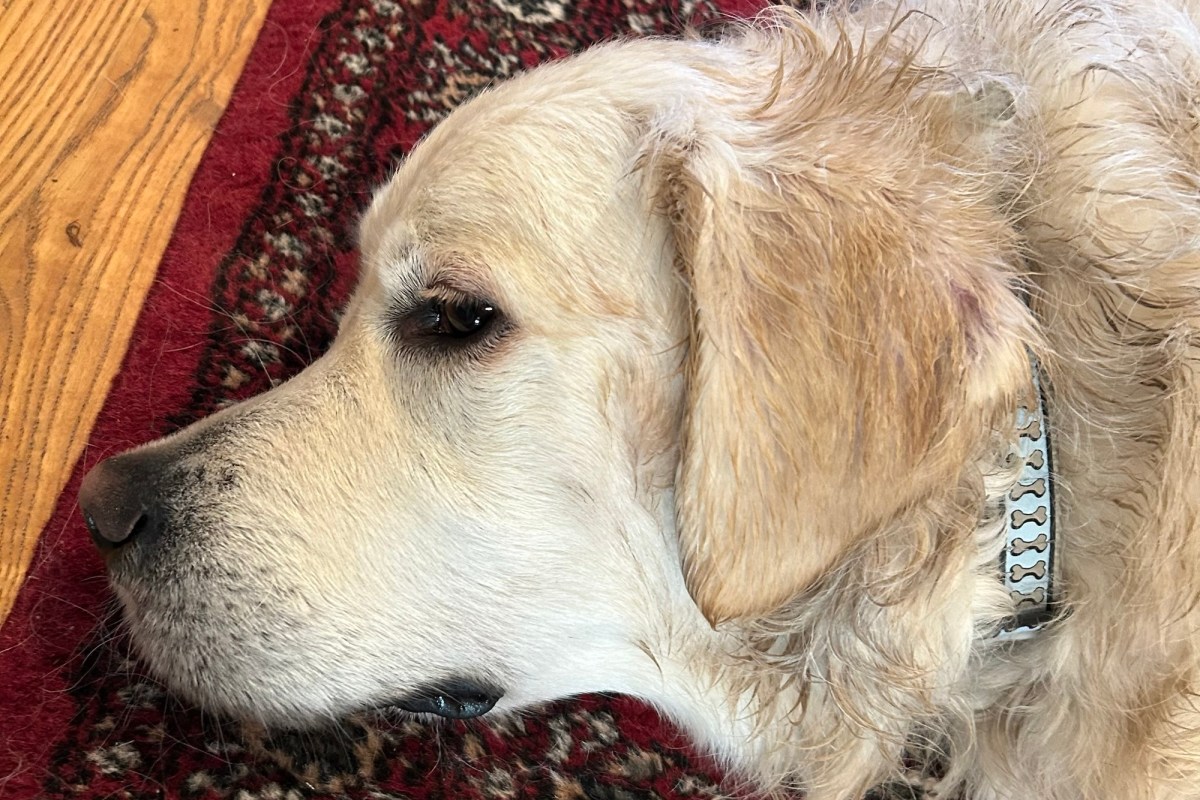
(featured photo is Cooper after the incident)

I co-host a storytelling podcast featuring authors and artists with the amazing Dr. Vicki Atkinson. To tune in, search for Sharing the Heart of the Matter on Spotify, Apple, Amazon Music or Pocketcasts (and subscribe) or click here. Or the YouTube channel features videos of our interviews. Please subscribe!

My other projects include work as a CEO (Chief Encouragement Officer), speaking about creativity and AI through the Chicago Writer’s Association, and my book about my journey to find what fueled my dad’s indelible spark and twinkle can be found on Amazon: Finding My Father’s Faith.

You can find me on Instagram and Twitter @wynneleon

The Do-Overs

We do not heal the past by dwelling there; we heal the past by living fully in the present.” – Marianne Williamson

Funny how life sometimes provides a do-over.

Last spring I was talking to a mom whose oldest child was a pandemic virtual Kindergartner with Miss O. At the time of the conversation, her second child was just finishing Kindergarten. The Mom said to me, “I had no idea how healing it would be to have a normal Kindergarten year.”

I nodded and noted it, knowing that I didn’t really get it.

But now that Mr. D has been in Kindergarten for almost two months, I’m finding she was spot on. The field trips, waffle parties, recess, and gym class. All sorts of things that Miss O’s class couldn’t do. And all the learning – the ABC chant, the letters and numbers – I get to hear about but without having to sit alongside.

I wouldn’t have said that I needed to heal. I was surprised to find this do-over feels like balm for my nervous system; an edit to a storyline I wasn’t even aware had been written.

It feels like I’ve put down the weight of having to be a teaching assistant on top of everything else. There’s delineation between weekdays and weekends. I’m watching things happen like the socialization of five-year-olds without my facilitation. I’m able to take a big step back and breathe out what I didn’t even know I was carrying.

It makes me think of other do-overs that I’ve been able to do. My second attempt at climbing Mt. Rainier when I summitted after having to turn around on my first attempt. Falling in love again after a heart break. Re-doing a crochet project after unraveling a crooked line.

I also can think of do-overs that haven’t been so fun – colonoscopies come to mind. But my friend’s statement reminds me that each time, for better or for worse, is a chance to re-write the script. Seems like a good thing to remember, especially on a Monday.

(featured photo from Pexels)

Little Steps of Calm

These mountains that you are carrying, you were only supposed to climb.” – Najwa Zebian

Now that I’ve spent a dozen years practicing meditation and trying mindfulness, I find it interesting to take a look back at the time I spent mountain climbing. Because mountain climbing is kind of a mindless activity.

In a journey of 50,000 steps or so for a climb, you don’t necessarily want to remember each one. In fact, it might be a little painful if you did.

So while the endurance and grit is transferrable to life down low, perhaps the mindless moving forward is best left on the mountain. Speaking for myself that is. I don’t want to sleep walk through the days of my life.

This is just one of the many reasons that I love the warm and inviting conversation I had this week on the Sharing the Heart of the Matter podcast with my co-host, Vicki Atkinson.

I think it’s fair to say that we all have times where life feels frenzied. And it isn’t only because our to-do lists get too long. It’s also because of the pace of the world around us, and our exposure to the news, in whatever way we consume it.

Both Vicki and I start the day with sacred time. It’s non-negotiable for me so that I can at least start the day with a measure of faith and perspective.

But we know that doesn’t work for everyone. So we talk about our tricks to instill some calm. Vicki tells us about how she sets aside multi-tasking to focus on one thing at a time. And more than that, how to slow tasks to reap the full benefit.

For me, music can help to disrupt the stress swirl. Tuning in to songs from my youth delivers a noticeable energy lift as well. We touch on the research of Harvard psychology professor Dr. Ellen Langer about how our brains can impact our bodies.

It’s not hard to imagine that Vicki is an inveterate smile-r. She shares a story about how offering friendliness to others brings a side benefit of joy.

I’m confident you’ll love the scenic and beautiful places we explore as we share the power of storytelling.

We know you’ll love it!

Search (and subscribe!) for Sharing the Heart of the Matter on Apple, Amazon, Spotify or Pocket Casts OR Listen to it from your computer on Anchor: Episode 88: Meditative Moments with Wynne and Vicki

Episode 88 transcript

AND subscribe to our YouTube channel to see a video clip of each story: @SharingtheHeartoftheMatter.

Links for this Episode:

Episode 79: Sometimes You Have to Laugh with Author Pete Springer – The Heart of the Matter (sharingtheheartofthematter.com)

Remembering How to Bounce Back – Dr. Gerald Stein

Kindness all around us! – Brian Hannon

The Subtle Shaping of Our Brains – The Heart of the Matter (sharingtheheartofthematter.com)

Meditate on this! – The Heart of the Matter (sharingtheheartofthematter.com)

Write it Out – The Heart of the Matter (sharingtheheartofthematter.com)

From the hosts:

Vicki’s book: Surviving Sue

My book about my beloved father: Finding My Father’s Faith

An Open-Hearted Meditation

Put your ear down close to your soul and listen hard.” – Anne Sexton

My heart absorbs a lot in a day. That is to say that as I traverse my days, bouncing between to-do’s and must have dones, I collect a lot of nuggets that I store away in my heart as if it is a four-chambered storage cabinet.

– The note of trepidation from my kids as they start a new activity.

– An observation about a colleague who appears to be wrestling with anxiety.

– The feeling I shoulder when coming alongside a friend’s worry.

At some point I have to empty my heart storage cabinet so I can carry on and pick up new things, about myself or others. I think that’s why I love this breathing/heart meditation that I originally picked up from Deepak Chopra almost twelve years ago. [With all due respect to Deepak Chopra, this may no longer resemble the meditation as he taught it so please forgive any blips in the flow.]

Sitting with your eyes closed, feel your heart. Notice how it is feeling. Is it heavy? It is happily skipping a beat? Is it calm and serene?

Now take a deep breath into the front of your heart. Feel your chest expand. Feel that front wall where your heart meets the world.

Next breathe into the back of your heart. Allow the solidity and strength of your back to make room for the heart.

Take a deep breath and direct it to the top of the heart. Does it feel like there is a lid on your heart that can crack ajar to give the heart a little room to expand?

Now send your next inhale to the bottom of your heart. Breathe through all that might have settled there and benefit from some air to get moving.

The next breath is for the sides of the heart. As you feel the sides of your heart lengthen with the inhale, sit a little taller to feel your whole ribcage expand.

And finally, breathe into the whole heart. Notice how it is feeling. Is it the same as when you started? Or have you uncovered something tucked away there?

(featured photo from Pexels)

The Gift of a Pause

Sometimes it takes an overwhelming breakdown to have an undeniable breakthrough.” – unknown

I hit a wall this week – a metaphorical one, of course.

It was after getting Miss O back to school for 4th grade and Mr. D in his jump start program for Kindergarten last week, then flying with the kids to Northern California on Friday for my niece’s baby shower, flying back on Sunday, getting Mr. D ready for his first full day of school on Monday, then teaching a webinar on Tuesday.

After all that, I don’t blame my body for needing a break. If only I was smart enough to give it a break without catching a head cold. Well, always something to learn.

Fortunately, one of the last things I did before coming down with this cold was record a podcast with Vicki and my meditation teacher, yoga teacher, massage therapist, and friend, Deirdre Wilcox. I say fortunately, because Deirdre is so incredibly good at putting everything in perspective – even yucky colds. It’s no wonder she’s such a well-regarded wellness educator.

As my teacher and friend for nearly 30 years, Deirdre has shared so much grounded wisdom with me. Of her many gifts, one that I love that is highlighted in this conversation, is her ability to help frame what we are experiencing in biological terms.

So she walks us through the shift from summer to fall in terms of the cues our bodies are receiving. And this leads to a huge a-ha for me about the persistent question I get at the end of summer, “Have we done enough?”

Deirdre suggests some practices that reduce the overwhelm as we move from the freedom and spontaneity of summer to the structure of autumn. One of the things I like most about her approach is that she understands that the things that have a chance to stick are the small ones.

So she suggests some small changes for us to incorporate as we move towards falls. Ways that we can incorporate rituals to thoughtfully move from one season to the next.

And one of my absolute favorites, an invitation to take it all in and notice what we did with our summer before we move on.

I’m confident you’ll love the scenic and beautiful places we explore as we share the power of storytelling.

We know you’ll love it!

Search (and subscribe!) for Sharing the Heart of the Matter on Apple, Amazon, Spotify or Pocket Casts OR Listen to it from your computer on Anchor:  Episode 84: Autumnal Shift with Deirdre Wilcox

AND subscribe to our YouTube channel to see a video clip of each story: @SharingtheHeartoftheMatter.

Transcript for this episode: Episode 84 transcript

Links for this Episode:

For more about Deirdre and the incredible work she does: Deirdre Therapeutics (deirdrewilcox.com)

Other episodes featuring Deirdre Wilcox

Episode 27: The Power of the Pause with Deirdre Wilcox

Episode 14: Holding Space with Deirdre Wilcox

Episode 10: The Power of Intuition with Deirdre Wilcox

From the Hosts:

Vicki’s recently released book: Surviving Sue

My book about my beloved father: Finding My Father’s Faith

(featured photo from Pexels)

It’ll Be Alright In the End

Everything will be alright in the end, and if it is not alright, it is not the end.” – The Best Exotic Marigold Hotel

Months ago, when I signed Mr. D up for his very first summer camp (rock climbing, in case it matters), I assumed that it would start at the same time as Miss O’s. For his age group 3-5, the camp ends at noon. Miss O’s older group goes until 3pm. But certainly they’d start all the groups at 9am, right?

When I took a closer look before the camp started this week, I discovered Mr. D’s doesn’t start until 9:30am. When I realized that detail, I started inwardly groaning about the inconvenience.

But just briefly. Because in the last dozen years, I adopted a shift that has made an immense difference to my happiness. I started assuming that “it” is for the best. That whatever is irritating me is just an opportunity opening that I can’t yet see. Or that I may never totally understand because it’s above my pay grade.

This has a Biblical basis (Romans 8:28), and a Buddhist basis, but I don’t think it requires a particular spiritual tradition. It’s just an act of staying open to the possibility that there’s a perspective that I can’t yet see.

For anyone that is thinking this sounds Pollyana-ish, I get it. But this change came from the darkest days of my life when I was stuck in all the feelings of failure after my divorce and clueless about what I was going to do next.

So many things came from that vulnerable time in the dark: my meditation practice and faith, the conversations with my father, my two beautiful children, my writing. And also this idea that I should stop doubling-down on irritation and instead stay present for whatever is unfolding.

It’s easier to do this for things like camp drop-offs. In this case, the payoff came almost instantly. Of course, it was beneficial to have Mr. D’s camp start a half hour later. He got to see his sister get dropped off, and then have some time warming up on his own.

 It gets harder when the kids are sick and I have to cancel my hair appointment. Or the babysitter cancels and I can’t go out with my friends.

So, I practice with the small irritations – believing that it’ll be alright in the end. And if it’s not alright, it’s not the end.

Love ‘Em Anyway

I’ve often kidded folks that when you start working with people, the first rule that you live with is, ‘People are weird.’ We are ALL weird, we are all funny combinations of funny stuff. So, what’s that mean for us? How do you love people that are different in a weird sort of way? Well, you just try to help them, wherever they are.” – Dr. Richard H. Leon

Not long ago I was helping someone from my dad’s former church install some technology so that she could do some volunteering. It was the first time that I met this person but she let me know that she knew both my parents. Then she ran down the list of all that she did for the church.

As I nodded while trying to keep focus on the technology at hand, she proceeded to make fun of the people that she would help as a volunteer, in a “I know more and am more way.”

This is something I saw a fair amount of as a pastor’s kid. The desire of a few people to use scripture and participation to prove they were better. Usually, my dad was the intended recipient of these claims, but in a pinch, the pastor’s family would do. To be clear, there were many incredibly lovely people in the churches my dad led that didn’t have anything to prove. More it was that the small minority who wanted to use righteousness as a measure of their worth were often very vocal.

I don’t believe this is limited to Presbyterians specifically, or religion in general, because I’ve seen this across belief systems and in other healing therapies. The subtle yet important shift between using a teaching as a shield and measuring stick versus actually learning from it.

To me, it’s the difference between me claiming that I don’t have any problems because I meditate versus saying I meditate to better handle my problems and faults.

In the end, this has made me reluctant to state that I’ve achieved any level of enlightenment. First, because I think life is going to remind me that I always have more to learn. Second, because I’m wary that hubris blocks growth.

And lastly, because as my dad said in the quote I used for this post, we are all weird. I’m including me and my beloved dad in that “all.” The trick is to try to love everyone, including ourselves, anyway.

(featured photo is my dear dad)

My book about the conversations and my journey to find what fueled my dad’s indelible spark and twinkle can be found on Amazon: Finding My Father’s Faith

Related posts:

The Longer I Live, The Less I Know

Holding Out for a Hero

Deep Knowing

Writing From the Heart

There is a wisdom of the head, and…a wisdom of the heart.” – Charles Dickens

This post was originally published on 3/1/2023. Heads up – you may have already read this.


The other day I read a beautiful post that was a tribute to a dearly departed pet. It was so touching and zinged me right where there’s a sore spot from missing my beloved dog, Biscuit, that died six years ago. I had to walk away for about 30 minutes before I could write a comment.

I find this so often be true – the topics that are the closest to my heart are hard to write about when the tears are still flowing. When I had to say good-bye to Biscuit, the next day the only words I could manage was to put a sign next to the cat who was also grieving the loss of his buddy:

Cat missing his newly departed dog

So this set me off wondering why it is so hard. Loss of perspective? Lack of clarity so I can’t yet make meaning? Inability to see the keyboard when the tears are flowing?

Thinking it could be a left-brain/right-brain kind of thing, I looked up the neuroscience of writing and found this New York Times article: This is Your Brain on Writing. Turns out that left-brain/right-brain isn’t much of a delineation that they make these days. Instead the article describes the results an fMRI study of the brain while writing including the detail that in expert writers, there is a part of the brain, the caudate nucelus, that lights up. The same part of the brain doesn’t light up for novice writers, a result that made sense to the scientists because the caudate nucleus is the part of the brain associated with expertise. Which was interesting but didn’t get me any closer to an answer.

Then I looked to our sacred texts and the spiritual world for wisdom on those moments when I can’t write. I was reacquainted with one of my dad’s favorite quotes from 17th century mathematician and philosopher Blaise Pascal: “The heart has its reasons, that reason does not know.” My dad often cited this quote in an argument about belief in God – that our heart knows even if there isn’t any proof for the head. Maybe those topics that zing me are too close to my heart so they haven’t made it to the head yet?

Next on my list of possible explanations was poly-vagal theory about the three states of our nervous system. When I wrote about it for a post, The Unified Theory of Breathing I summarized the three states as: ventral which is calm and regulated, sympathetic the fight or flight response, and dorsal which is when the nervous system has been so stimulated that it shuts down. Perhaps when I can’t write, I’m flooded, in a dorsal state and can’t write? While this alludes to an answer, I don’t feel like I’m dysregulated and can’t write, just that I can’t find the words.

Finally, I turned to the world of yoga and meditation and found an explanation that makes sense to me. Stillness. When my waters are muddied, I have a harder time seeing into my depths. In times of life when the waves are choppy, I am all churned up inside. It’s only when I reconnect with my inner stillness that I can see well enough to cross the space between me and you.

What I found to be as fascinating as the question itself were the lenses I looked through to find my answer. Brain science, theology, physiology, and meditation – my four go-tos and I usually find the answer sitting in meditation. Must be why I do it every day. A confirmation bias loop because it works for me.

Here’s my take-away from the journey: It’s hard to write when I’m too wet and stirred up in my heart. And it’s also hard when I’m too dry and too much in my head. I have to aim for somewhere in the middle where I’m soft, warm, and clear.

What about you?