Showing Up and Telling Stories

I do not understand the mystery of grace — only that it meets us where we are and does not leave us where it found us.” – Anne Lamott

One of the books I read in my morning meditation time is Listening to Your Life by author and pastor Frederick Buechner. My mom and I were talking about it a little while back. She mentioned that some find his writing to not be doctrinal enough. Funny because I read him and find at times that I think he’s too doctrinal.  

When I was trying to understand how my view of faith differed from that of my dad (and mom) as I was writing my book Finding My Father’s Faith, I read Dr. M. Scott Peck’s book Further Along the Road Less Traveled. In it he describes four stages of faith.

The first stage, chaotic/antisocial, he reserves for people with anti-social tendencies; his second stage is formal/institutional in which faith is governed by an outside body, typically the church.

Dr. Peck calls stage three people “skeptic/individual.” Often stage three people are children of stage two people who have been raised with the values of the church but fall away from the formality and governance of it.

He then describes these stage-three people as usually scientific, truth-seeking people who often begin to see patterns in the big picture that tie them back to the beliefs of their parents and when they do, they transition to stage four, mystical/communal, “people who have seen a kind of cohesion beneath the surface of things.”

Those stages rang true to me and I found comfort in the classification of it all. Regardless of the theory behind it, I suspect that whatever our ideologies are, it’s a narrow band trying to find others who are align exactly or even fairly closely.

But I think we transcend that when we tell our stories. For me, authentic storytelling skips the doctrinal distinctions in the head and goes right to the heart. Here’s one that recently struck me, Buechner tells the story of a friend showing up when Buechner’s daughter was sick. He’d come from 800 miles away without any advance notice and then spent a couple of nights hanging out.

Buechner said they didn’t do anything particularly religious – went for walks, smoked some pipes, took a drive. “I believe that for a little time we both of us touched the hem of Christ’s garment, were both of us, for a little time anyway, healed.

For me, it hits me right in what I believe is sacred: showing up, being present, holding space for one another to tell our stories.

Going to the Next Level

I am convinced all of humanity is born with more gifts than we know. Most are born geniuses and just get de-geniused rapidly.” – R. Buckminster Fuller

We are coming to the end of our school year. 28 more school days in third grade for Miss O. And 50 days until Mr. D graduates from his preschool program. Do you remember that feeling as a kid? Being not only ready for summer break but also ready to ascend to that next level?

It has me thinking of what milestones we have in our lives as grown-ups that celebrate our readiness to go on to the next level. There are some big ones like becoming an empty-nester or retirement. Or we have annual ones like birthdays, anniversaries, and New Years. But often, I find myself at those moments planning on what I’m going to do next instead of commemorating what I’ve learned.

Let me suggest that we take a moment to bring back that feeling of finishing a school year. To actually name something we’ve graduated from and celebrate it. I’ll start:

I’ve come to believe that I am enough. Or at least to understand that pretending to be someone else is ineffective. So if a situation or expectations make me feel otherwise, I try to slow enough to double-down on being me long enough to get through.

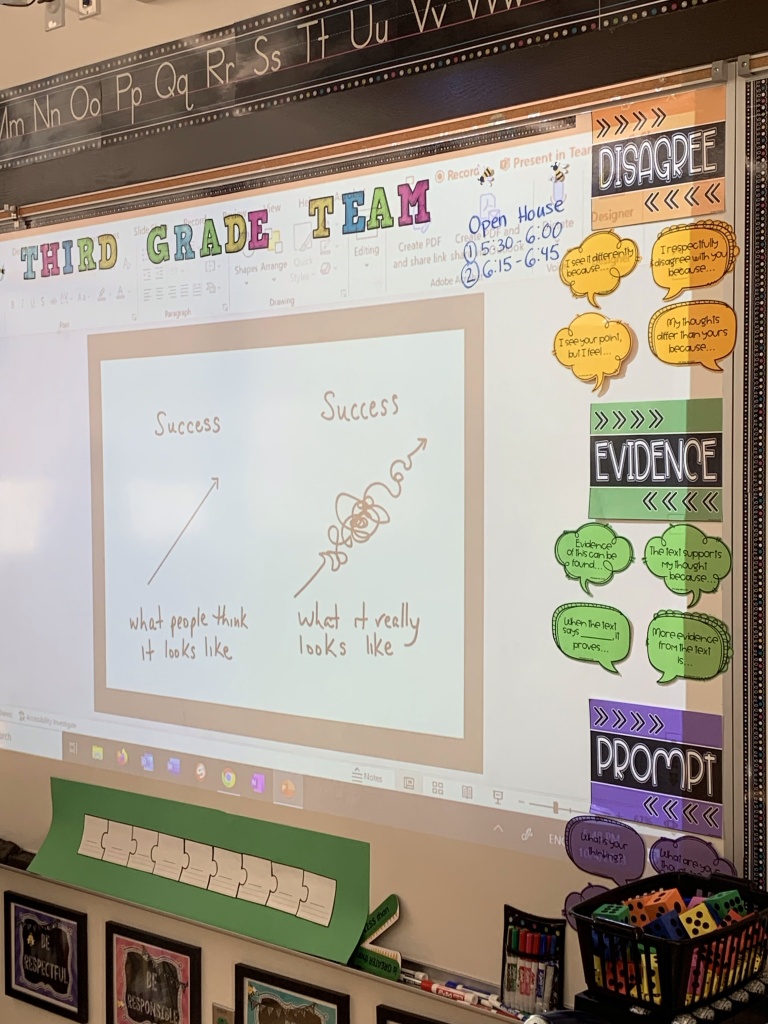
And by graduating, I don’t mean being done. It brings to mind another graphic from Miss O’s 3rd grade teacher:

It seems fitting on this last day of teacher appreciation week to honor our teachers by naming what we’ve learned. Are you with me? If you are stuck, maybe visit the list from Pick Three Affirmations to find a place to start.

(featured photo from Pexels)

For a story about the circle of life, please listen to our Sharing the Heart of the Matter podcast: Episode 66: The Power of Story with Wynne and Vicki.

We are changing our format starting with this episode. Vicki Atkinson and I are big believers in the power of story – to connect us, to create intergenerational healing, and to make meaning out of the events of our lives. To set the stage, we will be starting with someone telling a story in each episode.

To listen to the podcast, Search (and subscribe!) for Sharing the Heart of the Matter on Apple, Amazon, Spotify or Pocket Casts. Or subscribe to our YouTube channel to see a video clip of each story: @SharingtheHeartoftheMatter.

Stories Matter

I began to realize how important it was to be an enthusiast in life. Embrace it with both arms, hug it, love it and above all become passionate about it. Lukewarm is no good. Hot is no good either. White hot and passionate is the only thing to be.” – Roald Dahl

This past Tuesday, eight-year-old, Miss O was working on a school project and announced “Volcanoes are boring.”

I harumphed thinking about all the beautiful, scenic, and climbable volcanoes in our vicinity. “I love volcanoes,” I said.

She shot back, “I bet you could make volcanoes interesting.

So at bedtime that night, I told her and four-year-old Mr. D. about when I was 11-years-old and living in Spokane, Washington. We were driving home from church on a Sunday afternoon in May, 1980. We stopped to talk with a neighbor who told us that Mt. St. Helens had erupted. Mt. St. Helens was on the opposite side of the state from us. The eruption blew the top 1,300 feet and the north side of the mountain off. We nodded with interest and went about our day as usual thinking it had no bearing on us.

As we drove home from a playdate four hours later, the sunny May sky turned gun metal gray and ash started falling. We carefully drove home with our windshield wipers pushing the dusty pile off our windshield.

In Spokane where it snows usually from October through March, school is never canceled because of weather. But after Mt. St. Helens blew, they told us to stay indoors, and school was canceled for a week. Everyone tried to figure out what to do with Mt. St. Helens ash. We collected it to polish silverware. Others used it to make ceramics. My friend, Jiffy and I used it to build sand (ash?) castles. When we drove across the state on vacation that summer, we stopped on several occasions to watch impressive ash dust devils form in fields across the state.

Then I told my kids about how, in the year 2000, twenty years after it erupted it, I climbed Mt. St. Helens for the first time. It’s hard to get permits to climb in the summer. The park service limits traffic to help the flora to grow back. [And here I may have embellished a little side story imagining how excited the scientists were when they discovered the first flow to grow back after the eruption. “Look, look, the first tiny flower has come back to St. Helens!!”]

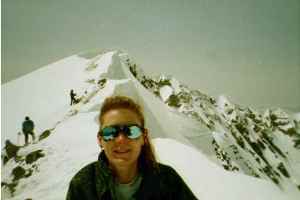
In order to bypass the permit lottery process my friend, Jill, and I climbed in the late spring when the traffic is low so it’s easy to get a permit. We climbed up 6,000 feet on a sunny April Saturday to look over the rim. Even though it wasn’t very high (any more) was a long one-day climb.

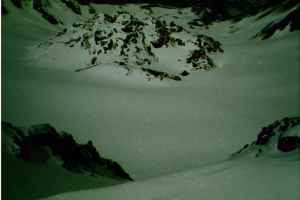
The view over the rim of Mt. St. Helens to the little pot-belly lava dome in the top center.

And the rim? Well, it was fascinating to look over the edge into gaping hole below with a little pot-belly lava dome in the middle. And then to have a sense of surreal shock that nothing was below us.

The rim of Mt. St. Helens 20 years after the top and half the mountain blew off.

For as exhilarating as it is to stand on a mountain top, it’s a little dizzying to stand on only half of one.

This bedtime story session was on Tuesday night. By Wednesday afternoon, Miss O was telling me facts about volcanoes. “Mom, did you know there are three types of volcanoes?

I didn’t even try to hide my glee.

This theme shows up for me again and again. When we share our stories – it matters. Our authentic voice telling our experiences are more than just a bedtime story. It’s the passing on of energy, passion, and warmth.

(photos in this post are mine – the featured photo is my favorite volcano, Mt. Rainier)

And speaking of authentic stories, Vicki and I talk with writer and blogger, Cheryl Oreglia on our podcast today about her experience at the San Francisco Writer’s conference. She sells us the idea that not only are we the only one to tell our stories – we might be obligated to. It’s such a great episode. Please tune in by searching for (and subscribing to) Sharing the Heart of the Matter on Apple, Amazon, Spotify or Pocketcasts

Or click through to the show notes Episode 61: The Writers Conference with Cheryl Oreglia for the link to listen on Anchor on whatever device you are using.

The Detective’s Toolbox

“It takes courage to grow up and become who you really are.” – e.e. cummings

Mr. D hasn’t wanted to go to his pre-school lately. It’s been such a marked change that it’s evoked the inner detective in me trying to figure out why. Was it the week that the lead teacher went on vacation? Is there a shift in schedule or meals that is bugging him? Is there a particular classmate that he’s having trouble with?

At four-years-old, Mr. D doesn’t seem to have the answers to the questions. I say that like his age is the factor. I’m sure it is in part, but I think we all get stumped about what’s bugging us from time to time.

Yesterday, we’d just parked at the curb and were just sitting there collecting ourselves before we went in to school. Cooper, the dog, was in the front seat next to me. Mr. D from the back seat said, “Cooper is sad.” I asked why and he said, “Cooper is sad because he misses us.

Oooh, my first break in the case.

So I tried two more things. At the end of the day, I asked Mr. D to tell me a story about school. He told me a story about John waiting in line for the roller coaster on the playground. Another student, Molly, gave John a look and it made him sad. So Mr. D went to play with John and it made John happy.

The second thing was to have him show me something he’d learned that day. They are studying the human body this week. In their study of the stomach and intestines, they put bread into plastic bags with soda water died green to mimic stomach acid.

We repeated the experiment at home so that he could teach his older sister and me. Yes, it’s really gross, but I took one for science’s sake. And giving Mr. D a chance to showcase a bit of how he spent his day made him feel proud of his learning.

Here’s what I noticed. That when we don’t know what’s wrong, we project it on to others like Cooper the dog. We also can get to it by telling stories or acting things out. I haven’t cracked the case entirely yet but I’ve started figuring out the toolset. A similar set of tools probably works for all of us.

Speaking of telling stories, Vicki and I talk with David from the Pinwheel in a Hurricane and unwanted blogs on the Sharing the Heart of the Matter podcast this week. It is a fantastic episode where David talks about doing story work to find clarity, integration, and healing. Check it out: Episode 53: Practicing Creativity with David

About Me

The two most important days in your life are the day you are born and the day you find out why.” – Mark Twain

The other day I clicked through to the blog of someone that had commented and read their latest post. It was interesting and well-written but I wasn’t sure how to take it. Was it intended to be a little humorous or totally serious? It reminded me of the importance of the about me section of blogs and how we can maybe do better job of filling them out so that readers can more easily sense of who we are.

Here’s what I usually include as a bio. “Wynne Leon is an optimist, an enthusiast of endurance sports and a woman intent in charting her own path. Which is a combination that has led to an unconventional life. When she was younger a life of adventure meant climbing mountains, traveling the world and being an entrepreneur. More recently, it’s been starting a family as a single parent at age 46, having another child at age 50 and adopting a highly-strung kitten, even though she really is a dog person. Her writing projects include technical computer manuals, articles about meditation and parenting, and Finding My Father’s Faith, a memoir about spirituality, solace and her relationship with her beloved father.

I am a member of the Chicago Writer’s Association. For speaking engagements on creativity and AI through the CWA Speaker’s Bureau, please see the 2025 Program Menu.

I wrote it and then a friend of mine in marketing edited it. It’s more cutesy after that (the bit about the cat while I’m really a dog person) and less factual (who needed to know I have a degree in electrical engineering). It’s okay for when I need a short bio.

But I think we can do a better job of grounding people in our work. So for whoever wants the long version, here it is.

About Me

If I was a dog, I’d be a golden retriever: exuberantly joyful, family-friendly and always up for a walk. But I’ve done a lot of training so I don’t bowl people over with my enthusiasm and optimism. Especially myself. And that’s the key part of my story – that through meditation I’ve learned not to believe everything I think and I return to that every morning when I get up and meditate and then I do it all again.

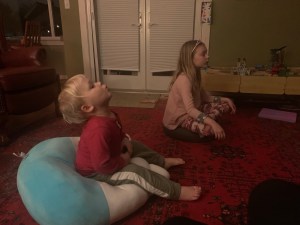
kids meditating

I write about my kids a lot because I choose to become a single-parent and age 46 and again at 50, but I’m not a writer about parenting. Instead I’m aiming to capture the depth and meaning of life that I get to experience because my kids show me what it is like to be so Close the Source and unapologetically human. I write about what I learn when I look closely and see how they develop as people, as siblings, as my children and as a family. Wrapped in all of that is a core of pure love that I want to enjoy more deeply by sharing.

Spending the last seven years raising kids without a significant other has taught me self-compassion in a way that no relationship or practice ever has. It has also made me so appreciative of the blogging community because this exchange of creativity and companionship is so rich. Especially through the isolation of Covid, I am so grateful for the deep and abiding relationships that I’ve been able to make on this journey of self-discovery.

I’ve listened to my inner God voice for three significant decisions. First to start climbing mountains when I was in my late 20’s. Second to interview and record my dad’s stories which eventually became a book I wrote after he died suddenly in a bike accident and to figure out what made him such a joyful person. And third to have kids as a single person in my mid-forties instead of rushing into a relationship that wasn’t right. In all three, that deep conviction that I was doing what I was meant to do has carried me through the tough moments.

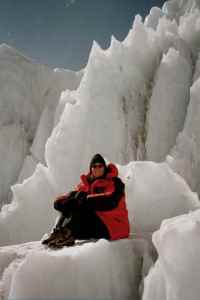
ice at Everest base camp

I am an endurance person. I can dig deep to take small steps with heavy loads on a regular basis. I’ve accepted that I’m not a high-speed athlete. But I have learned that I don’t always have to carry everything with me but instead lean in to what is weighing me down to unpack it and lighten the load.

The Back Story

I’m the youngest of three kids in a family with a dad who was a Presbyterian pastor and a mom who was incredibly smart and might be a CIA spy (now retired). Would there be a better cover for a spy than a pastor’s wife?

My brother is oldest. I adored him growing up and still do. My older sister hated me growing up –resented might be a better word. The lessons I learned from that adverse relationship are so powerful, especially as I parent my children to care for each other. In many ways, my sister was my first teacher about how instructive our wounds can be when we do the work to heal from them.  When my dad suddenly died in a bike accident in 2014, it felt like all her complaints over all the years growing up, bubbled out. We’ve never managed to put it back together.

I’ve been divorced longer (10 years) than I was married (8 years) so it doesn’t feel like much of my story any longer except for two things for which I am so thankful:

  1. Going through divorce, or maybe more specifically the unhappy years of my marriage, drove me to meditation
  2. When I decided that I wanted to have kids post-divorce and I was in my mid-40’s, I didn’t want to rush into a relationship in order to have them. So I choose to have them as a single person instead. I still enthusiastically believe in love and that I’ll one day find the perfectly imperfect man when the time is right.
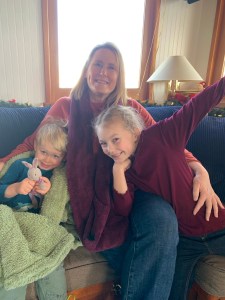
me with my kids

But because I don’t think often about my marriage, divorce and coming to choose single parenthood, I’ve gathered from some common questions that I get from people I’ve met later in life that I fail to give some proper background. So here are the answers to the questions I get:

  • I got divorced when my husband’s best friend told me about his infidelities. In the aftermath, all my husband wanted to talk about was how his friend betrayed him. And I couldn’t sustain enough outrage to insist we talk about how my husband betrayed me because he could always outdo any dramatic fervor.
  • That was the story I believed until I started meditating. Then in emptying the pockets of grief I realized that I needed to own how badly I wanted out of that marriage that both starved and suffocated me. Starved because my husband needed all the attention and suffocated because he needed all my attention. But in meditation, I discovered how freeing it was to own my part in the end of the marriage – and also a way to practice focusing my mind on the right stories and questions.
  • I had my kids at age 46 and again at age 50 through invitro fertilization. I choose the sperm donor from a bank that provided more complete information that I’ve ever had for anyone that I have dated. Maybe even more than I know for my lifelong friends.

You can find me on Instagram and Twitter: @wynneleon

They Go Together Like Ra Ma La Ma Ka Dinga Kiding a Dong

You are not a drop in the ocean. You are the entire ocean in a drop.” – Rumi

To whoever thought of building a kid’s hair salon in the neighborhood toy store – wow, you are brilliant.

The other day, Mr. D needed to get his hair cut. So Miss O and I accompanied him to the back of the toy store so he could climb in to the fire engine shaped seat to hang out with “his best friend,” also known as Jenny, the stylist.

I sat on the couch in the toy store positioned just outside the salon while Miss O, and Mr D, when the haircut was done, roamed around to look at everything on the shelves. I was reading my book, but really was mostly reading the people.

I’ll start with my kids. Eight-year-old Miss O knew within minutes that she wanted slime and was willing to spend her own money on a second slime because it was worth it to her to have two fancy slimes, even though it was over the budget I had given her. She had a full story of why each one was important and how the characters portrayed for the slimes related to things she’d learned at school. In other words, she had an endless monologue for her shopping experience.

Four-year-old Mr. D roamed the store for an hour looking at everything, playing with display items, enjoying the experience but eventually rejecting each toy as not the right thing. Mr. D wasn’t aware of budget and so it wasn’t price that was informing his decisions. He either had something similar at home or it didn’t sing to him.

But he did pair up with Mikey who was about his same age. Mikey had $10 to spend which at a toy store in this day and age, doesn’t buy much. He was interested in a police car, and the small ones they had didn’t match his idea. But he didn’t complain about that, he just enlisted Mr. D in his help to find more options.

And then there was Teddy. I’d guess Teddy was halfway between Miss O and Mr D age-wise, probably 6-ish. He was playing with my kids at the train table by the couch I was sitting on. He was declaring all the demo trains were his, and might have taken a thing or two directly from the other kids. Miss O was facilitating play and just shrugged her shoulders and accommodated him, somehow sensing it was more important to him than to anyone else.

His mom was sitting next to me tried to get Teddy to modify his behavior. Seeing it was okay with the kids, she sighed, and said to me that Teddy was emotionally fragile at that moment. It was his dad’s birthday and he was having trouble sharing the spotlight. He’d had quite a few hard “no’s” to things he’d wanted that morning.

Holy cow! Great people watching. Each of the characters mapped to people I’ve known in my life and their approaches. Disappointment, idealism, pragmatism, story-telling, alliances. Yes, bravo to whoever thought of a salon (and couches) in a toy store.

(featured photo from Pexels)

The Power of Stories

See, broken things always have a story to tell, don’t they?” – Sara Pennypacker

Shortly after I returned from Everest Base Camp in 2001, I went with my dad to hear Beck Weathers speak. Anyone that has read Jon Krakauer’s book Into Thin Air or any of the other books about the 1996 disaster on Everest, is probably familiar with his story. Here’s my abridged version:

Beck was a pathologist from Texas that was climbing in New Zealand guide Rob Hall’s group during the 1996 Everest climbing season. He was high up on the mountain nearing the top when he went snow blind. So, Rob dug out a spot for him to sit and wait until Rob summitted with the other clients and returned for him.

Rob never returned for him because Rob died trying to help another climber and didn’t adhere to his turn-around time, the time when they needed to go back down no matter whether they’d summitted or not. But one of the other guides from Beck’s group came by and now that the storm was descending, Beck went down with them to Camp 4. They got within 150 yards of the camp but couldn’t find it in the blizzard conditions. As they circled in the storm, Beck just fell over and they left him lying in the snow. He laid there for 15 hours at 26,000 feet during a storm with his face and hand exposed.

And then he miraculously “woke up” and managed to make his way to camp. The other climbers were in complete disarray after the storm and were shocked to see him. They helped him into a tent – and then left him there, expecting that he’d die during the night. As Beck screamed because he couldn’t eat, drink or even keep himself covered with sleeping bags, they couldn’t hear him over the howling winds.

Beck didn’t die that night so the next morning the other climbers rallied to find a way to help him down the mountain as he was suffering frostbite to his hands, arm and face. He was short-roped (pretty much tied right to) a dream team of amazing climbers, Ed Viesturs and David Breashears. Ed and David weren’t from Beck’s group but were up there filming a Imax film about Everest and had aborted their climb to help others.

The Dream Team got Beck down to 20,000 feet where a helicopter that was rallied by Beck’s wife in Texas attempted to land. The air is so thin that the helicopter rotor blades could barely keep the machine aloft and to even try to do this once, the pilot off-loaded every bit of weight that he could. He was on the knife-edge of not making it when he came over the ridge to find the landing pad the Dream Team had marked with red Kool-aid.

And just as Beck is about to get on the helicopter, a climber who has more severe injuries from the Taiwanese team arrived. The helicopter could only take one person and Beck gave up his seat to the more injured climber. Beck assumed he’d just signed his death warrant because he couldn’t make it through the Khumbu icefall with his injuries, not even with the Dream team’s help because they’d have to cross huge blocks of ice on ladders. As he’s contemplating this, the helicopter rose one more time over the ridge – the pilot came back for Beck.

Beck lost his arm from his elbow down plus all the fingers on his other hand and parts of his feet. He had a prosthetic nose that they grew for 6 months on his forehead. He could never work as a pathologist again. He wrote a book called Left for Dead that recounts with detail those four times he was left for dead on Everest and began a second career as an inspirational speaker.

Sitting in the front row, I was transfixed watching Beck tell his story. Great story-tellers have a way of raising questions in us that have nothing to do with Mt. Everest. As author Brandon Mull said, “Sharp people learn from their mistakes. But the real sharp ones learn from the mistakes of others.”

Have you ever pursued a goal so obsessively you gave up everything else? Would you be able to keep going after being left for dead? Would you give up your seat to someone else that’s more injured or give up your IMAX filming to help someone else? Have you been able to find your way to a new career?

(featured photo from Pexels)

The Power of Story

Quiet the mind and the soul will speak.” – Ma Jaya Sati Bhagavati

This is a piece was published previously on 10/19/2022. Heads up, you may have already read this.


Among the many stories my ex-husband told me of his precarious childhood, there is one that sticks out. He was five or six years old, living in Florida and his mom was dating the Hat Man, a man who wove and sold palm frond hats to tourists by the side of the road.

One night after he went to bed, my ex-husband woke up and smelled smoke. He tried to get out of his bedroom but his mom had locked him in from the outside. Finally he escaped out of a window to discover that his mom and the Hat Man had fallen asleep while smoking and drinking too much and set the house on fire.

Now that I’m a parent, I often think of my ex-husband’s story even though we divorced years before I ever had kids. The story of the precocious and energetic young boy who was probably a little bit of a pain in the ass locked into a room so his mom could drink in peace and set the house on fire.

I think of it when I need more patience to coax cooperation instead of compel it. I think of the story when I need extra capacity to provide good care to little ones when I am needing care myself. I think of it when I’m digging deep to do my best when my kids seem to be bringing their worst. I think of the story when I’m grateful that my parents modeled kind and consistent care with me as I was growing up.

When we tell our stories, or when we as writers tell other people’s stories, we often can’t see the effect they have on those who read them. Our narratives have the power to inspire others and become fuel for good and bad decisions. When we do a good job of humanizing the trauma that comes with life, we pass on the comfort of being seen and open the source for healing. We can lay the ground for growth by telling the stories of when life wasn’t so good.

I thought of my ex-husband’s story again the other day when I heard a Ten Percent Happier podcast with therapist Dr. Jacob Ham. He was talking about relational trauma, the small moments of neglect, abuse and fear some children experience from a very early age.

Dr. Ham described this trauma, “What’s really screwed up is as a baby that the only way to deal with fear and terror is to run toward your caregivers. They are supposed to protect you. You scream out hoping that they’ll come to your rescue but if they are the ones hurting you, then it puts you in a terrifying loop where you want to run from them but at the same time your body tells you to go find them. And then you spend the rest of your days trying to figure out how to resolve that paradox.

I have seen it [the paradox] be worked through. The key term that and I haven’t found a good layman’s term for is reawakening the capacity for mentalization. And mindfulness is a very close overlap to mentalization but the term means knowing that other person has a mind and that I have a mind and being curious about what’s happening in your mind as well as being curious about what’s happening in my mind.”

Which I interpret as that Dr. Ham works with his patients uses mindfulness to notice the deep stories in their minds and unpack their reactions that are fueled by them. In other words, the power of the story runs through this all – to tell where we’ve been, to inspire and inform others and to discover our internal paradoxes when we face ourselves.

No wonder being a writer is such a rich pursuit. Rich in power to change that is, because rich in monetary reward doesn’t necessarily follow. But it should – because it’s important work.


I’ve also published a post today on the Wise & Shine blog today with my favorite quotes about writing: My Favorite Writer Quotes

(featured photo from Pexels)

Telling a Good Story

Just because they are a story doesn’t mean they’re not real.” – H.M. Bouwman

This is a repost of writing I posted on 7/13/22. Heads up – you may have already read this.


The other day my friend, Eric was over and started telling a story that had us all rapt, including my almost 7-year-old daughter and her friend who usually dismiss grown-up talk as boring. The story was about a summer job when he was in high school as a tennis instructor at a little neighborhood beach and tennis club.

One week they were short of lifeguards and asked him to fill in. He was neither certified nor a very good swimmer but this being the mid-1980’s, that was no problem because they just made him the shallow end specialist.

There was a group of 7-8 year old kids that showed up at the club in the mornings, had lunches their parents had packed and stayed all day. One sunny Seattle morning one of those kids, a 7-year-old boy announced he was going to catch a duck. Eric, as shallow end specialist of the week, said “No way, you are not going to catch a duck.” The boy proceeded to wade in to Lake Washington up to his neck and stand completely still for an hour.

Sure enough, the ducks got used to the boy and started swimming closer and closer until BAM, the boy caught one by the neck. Now Eric had both a boy and a duck, squawking in the shallow end and he was yelling, “Let go of the duck! Let go of the duck!” But the boy was conflicted because he’d spent an hour trying to catch the duck and now he didn’t know what to do.

At this point in the story, Eric had my daughter and her friend’s full attention and they were clamoring to know what the boy did with the duck. He let him go of course. But I was fascinated about what makes a good story.

According to journalist and author, Will Storr, there is a science to story-telling. As writers have worked to understand what captures an audience, psychologists have studied how our brains make sense of the world and both found the same elements. Stories have:

  • Change – good stories involve change because our brains are wired to identify change
  • Cause and effect – the wiring that makes the events understandable
  • Moral outrage – the motivation to act as seen in struggle between heroes and villains, the selfless versus the selfish
  • Effectance – humans like to be the causal effect on objects and the environment
  • Eudaemonic element – the happiness we get from pursuing goals that are meaningful to us but difficult
  • The God moment – how does the hero control the world?

These elements makes so much sense to me. We are all faced with change and we struggle mightily to define who we are in relation to it, what actions we take and how to be happy and ultimately control the world, or at least our perception of it. Stories are one of the tools we use to process our experience and follow the advice Maya Angelou gives, “If you don’t like something, change it. If you can’t change it, change your attitude.

I love watching how my kids have become pretty good listeners when a grown-up tells a story. I think it helps them try to understand the factors that go in to how the world works. They listen because they want a happy ending where they can control their world. Chances are, if among other things, they learn to tell themselves a good story filled with their responsibility and agency, they’ll probably have it. Chances are, that’s true for us grown-ups too.

My kids have been clamoring for me to tell them all the stories about real life that I can think of. I find it endearing and a little bit of an honor that they are interested, even at just 7-years-old and 3-years-old. This spate of stories brought up a memory of a friend who claimed to be clairvoyant and a cat lover. The combo didn’t work out so well for the cats. It’s the topic of my Wise & Shine post today: The Cat Conundrum

(featured photo from Pexels)

Connecting Through Stories

Some cause happiness wherever they go; others whenever they go.” – Oscar Wilde

At night after we’re done reading, I’ve been telling my kids stories from my life. It feels like a lot of work sometimes after a long day, but it also has this strange power of connecting past to present.

Some of their favorite stories are about Simon the bad cat. He was a cat that a neighbor left with me when she moved to Hawaii. Before he was my cat, he’d wait outside my house in the morning for me to take my 150 pound mastiff for a walk, jump out of the bushes, playfully smack my dog on the rump and then walk with us for 12 blocks.

Suffice it to say, he was a character perfectly made for bedtime stories. He got into all sorts of trouble – he’d break into other people’s houses, get stuck, and he fought with other cats. One time he must have ended up with a tooth or a claw stuck in the area between his shoulder blades because it abscessed and the vet had to do surgery to drain it. Simon died on the operating table and they had to do kitty CPR on him. It worked and he sprang back to his adventurous life.

There was one neighbor, Steve, who particularly hated Simon. One day when Steve was showing the new tenants of the duplex he lived in the shared basement laundry room space, he was telling them something like, “Whatever you do, close the door because there’s this terrible cat that comes in here if you don’t.” The new tenants asked what the cat looked like and as Steve described Simon, they pointed to the shelf behind Steve’s shoulder, “Oh, you mean that cat right there?” Simon had snuck in to listen to Steve’s whole speech.

When Steve worked on bicycles in his front yard, Simon would memorize where everything was laid out. And if Steve moved something or added a part, Simon would pee on it. It drove Steve crazy – but also fascinated him that the cat was that smart…and that bad.

Surprisingly, given all his dangerous antics, Simon lived to a ripe old age of 19 year old and died right after Miss O turned 3 years old. When we got the new cat, we just added an “e” to Simon so that Simone could share his Xmas stocking (always filled with coal of course). The quote for this post is a little tongue-in-cheek but I admit I felt a little relief when Simon went to Cat Heaven that I wouldn’t have to be apologizing for his antics any more.

Steve, the neighbor that hated Simon, has also moved on. He no longer lives on our block but must be in the area because I see him from time to time.

After several nights of these Simon the bad cat stories, one morning last week the kids and I were stopped at a stop sign on our drive to school when a man rode by the front of our car on a bike. It was Steve from the Simon stories! I yelled, “That’s Steve.”

We laughed all the way to school.

If you have a moment, I have another fun story from my past, a climbing story on the Heart of the Matter blog this morning, On The Way To the Top

(featured photo is mine)