The Ritual of Tea

Good habits automate us, helping us get things done. Rituals animate us, enhancing and enchanting our lives with something more. The intrinsically emotional nature of rituals gives them their animating power.” – Michael Norton

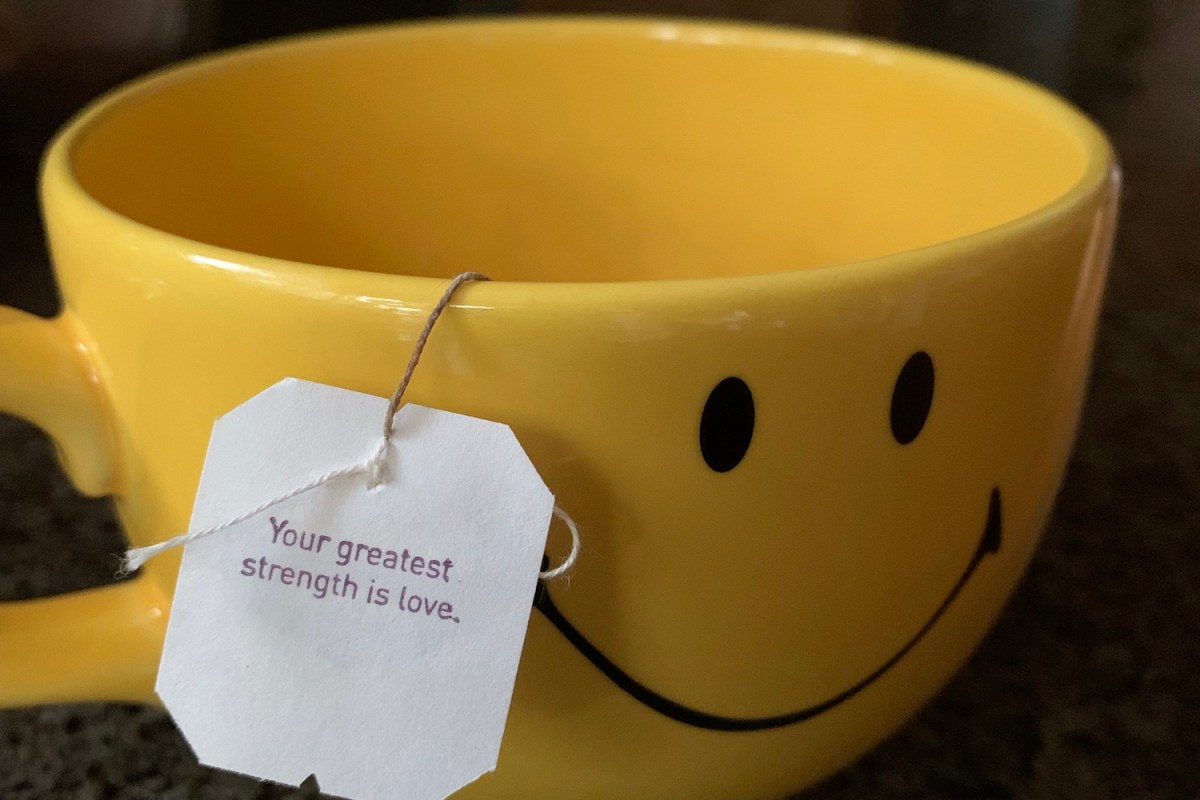
Before the pandemic, my “office” was at a favorite local coffee shop. My kids were little and at home so I needed a place to escape to. I’d walk in the door of the coffee shop, throw my backpack onto my favorite comfy chair by the window if it was available, get my cup of green tea, and then settle in to work.

For me, wrapping my hands around a hot cup of tea is like an automatic reset button. It helps me notice the moment before I move to the next. Part of the fun was just being around all the other regulars and hearing conversations. There is something so delicious about the conviviality of coffee shop comradery.

So I loved the conversation I had with Vicki Atkinson this week on the Sharing the Heart of the Matter podcast: Tea Time with Wynne and Vicki

We bring in one of my favorite quotes about tea from Mark Nepo. He likens tea to the way we make sense of our lives. From gathering the leaves, to pouring water over it, to drinking it slowly, we cultivate the aromatic blend that helps us and heals us.

Both Vicki and I like the ritual because it slows us down. Having a cup of tea is like an invitation to bring forward what we already know.

I share my secret for how long I let it steep. And Vicki shows some treasured sets from her family that hold so much more than tea.

Vicki shares a delightful book about making tea that has been a gift and a reminder to let the swirls of tea help settle our thoughts down.

I’m confident you’ll love the scenic and beautiful places we explore as we share the power of storytelling over a cup of tea.

We know you’ll love it!

Search (and subscribe!) for Sharing the Heart of the Matter on Apple, Amazon, Spotify or Pocket Casts OR Listen to it from your computer on Anchor: Episode 89: Tea Time with Wynne and Vicki

HoTM Episode 89 transcript

AND subscribe to our YouTube channel to see a video clip of each story: @SharingtheHeartoftheMatter.

Links for this Episode:

Steeping the Tea Leaves of Life by Wynne Leon

My Kind of Swirl by Vicki Atkinson

Vicki’s book about resilience and love: Surviving Sue

My book about my beloved father: Finding My Father’s Faith
Loving and Learning

Life isn’t about getting and having, it’s about giving and being.” – Kevin Kruse

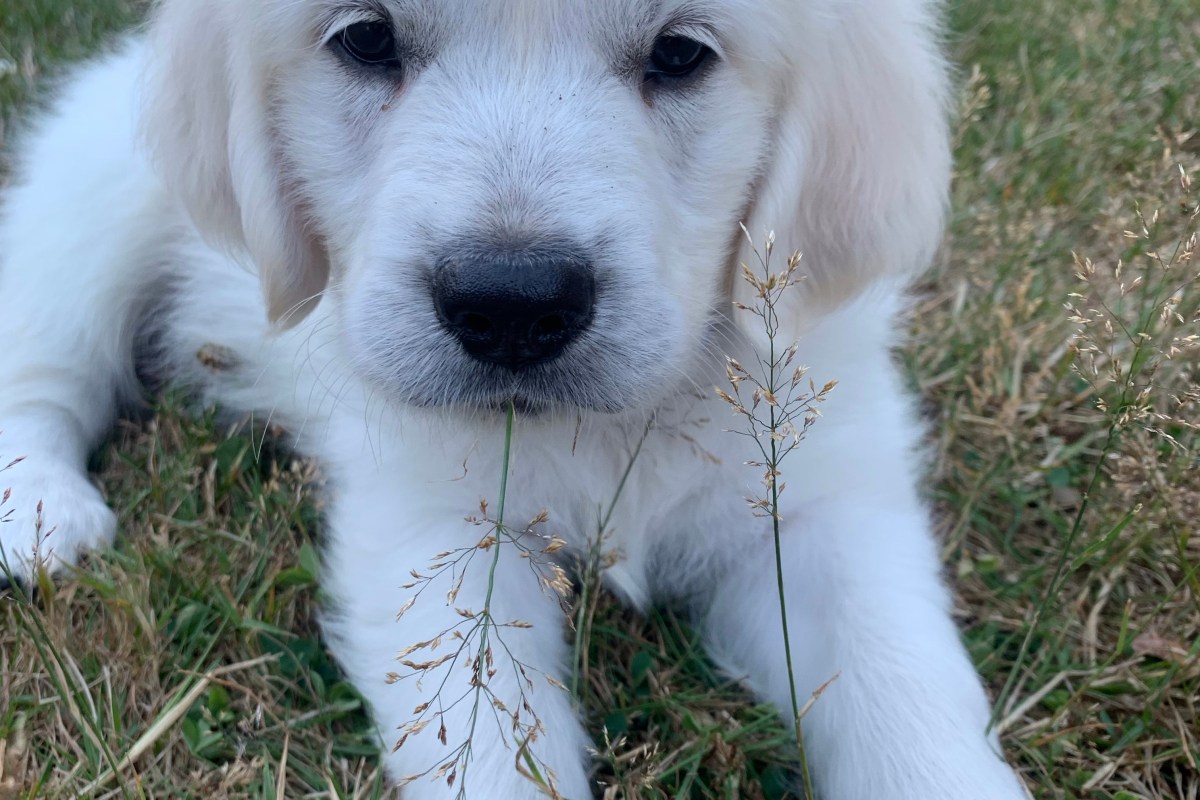
I was chatting with another parent at a party the other night. Let’s call her Casey, because, well, that’s her name. Casey was telling me about spending the night prior sleeping on the floor next to their new puppy’s crate. Since I was fresh off of sleeping on the couch for my puppy when he was getting adjusted, I was nodding along.

Then Casey said that a friend of hers told her she had made a mistake by getting a puppy. The opinion was logical: she laid out all the plans Casey had said she wanted to do like rebuilding her acupuncture practice in a new location and thought the puppy was not conducive to Casey’s goals.

Hmm, is love ever directly conducive to our goals?

Perhaps when it is the goal itself but from my experience, love is the big disruptor that often interrupts our progress on the things we can measure.

I’m thinking of this past weekend when my four-year-old son wanted to sit on my lap as I was writing a post so I switched to typing one-handed.

Or the time 20 years ago when I screwed up a work presentation because my new love wanted to spend time and so I forgot to practice.

And the swollen eyes I had for weeks after I had to say goodbye to my last dog, making it nearly impossible to concentrate or pull myself together.

And yet:

My four-year-old, Mr. D, has been bounding out of bed in the morning to say “hi” to the puppy. I find him with his arm around the dog or the cat as he tries to broker peace for his new best friend. And having a puppy has also made him more organized to keep track of his Bun Bun stuffy so that it stays out of the dog’s sharp teeth.

My eight-year-old daughter, Miss O, has a new way to make friends. We stood outside the school gate this afternoon letting kid after kid pet the puppy while she proudly showed them how she’s trained him to sit. And the puppy is also making her grow up because she’s having to find her inner discipline in order to deliver clear commands to him.

I feel the rumbling at my feet of puppy snores as I type this and feel less alone. I’m also feeling the exhaustion that comes with the extra discernment, communication, and enthusiasm I’m expending to train my kids to train the puppy.

We’re loving and learning. I’m not sure there is anything more conducive to my parenting goals than that. I’ve lost sleep for far less worthy reasons!

What do you think is worth losing sleep for?

The Risk Factor

Take risks: if you win, you will be happy; if you lose, you will be wise.” – unknown

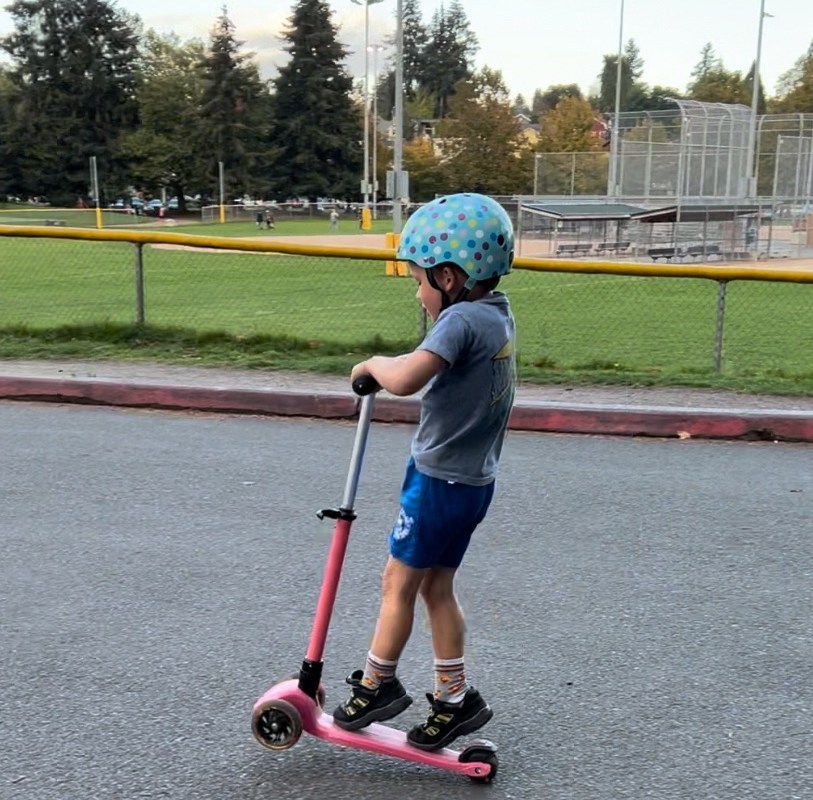
A couple of weeks ago, on the third time I took five-year-old Mr. D to the skate park, we ran into a fifth grader at school who is the boy that Mr. D admires the most. And this boy is a terrific scooter rider. Is that the right way to put it? I’m unsure of my skate park lingo.

This boy rides a scooter and can drop in to the steepest of the bowls, propel himself out, kick the base of the scooter around so it does a 360 and then land it, bringing all the energy to an elegant stop. It is truly impressive.

I watched Mr. D observing this boy and wondered if it would make him reckless. Mr. D stood quietly for a while just taking it all in and then he started scootering back and forth on the flat concrete practicing popping a wheelie.

On the next visit, he found the most gradual of the slopes and started practicing going down one side and back up the other. This sport is not in my wheelhouse so I’m of no help to him. But he figured out how to bend his knees at the bottom of the slope.

He keeps making incremental risks and discoveries with each visit. I remarked on this to my friend, Eric, and he quipped, “Even five-year-olds have a built in risk meter.

To which I’d add – “that works.A certain amount of risk is necessary in order to learn. We have to be willing to look foolish, expose ourselves as newbies, and try something in order to quit it. I mention that last one because it’s often my barrier – I hate quitting things so I often won’t start something so that I can prevent having to quit.

So, I’ll speak for myself when I say that one way that life becomes rutted for me is when my risk meter breaks. Everything new will peg too high on the meter so then I try nothing. I’ll claim my past risks as badges that insulate me from ever having to try anything new again. And then I stop learning.

The funny thing about risk is that it’s a little contagious as well. The next time we went to the skate park my nine-year-old daughter, Miss O, came along. Seeing her brother try the gradual slopes encouraged her to do the same.

So here’s to being open to taking the right risks in life.

Staying in My Own Lane

Always be a first rate version of yourself and not a second rate version of someone else.” – Judy Garland

My brother and I like to talk about Wordle strategies. It seems to be our easy, go-to conversation. To be fair, my brother has all the strategies and I’m just a decent guesser.

His goal is to have more successes getting the word in three guesses than in four. I hadn’t thought of that particular challenge. So when I changed computers a while back, I had to relog in to the NY Times and it started my stats all over again. I thought this was a great chance to give his approach a try.

For a while my 3’s and 4’s were neck in neck. But then I realized, taking the time to be strategic about getting it in three was irritating me. I’d rather go faster and get it in four.

Taking the time to play Wordle is pleasureful, but taking time to think through all the possible combinations to land on the most likely was just unrealistic.

I was chagrined to realize that life had just given me another opportunity to learn to stay in my own lane. The only way I’ve figured out how to be happy playing the game of life is to find my own goals – not try to live up to others.

(featured photo from Pexels)

But I Love Them Wholeheartedly

Every child comes with the message that God is not yet discouraged of man.” – Rabindranath Tagore

Kids! They bicker with each other
and leave their shoes around.
Tears flow too easily
usually because they’re low on fuel.

It takes so much work
To make a family work
Keeping their hearts and minds engaged
And bodies well.

But I love them wholeheartedly
And not just when they are sleeping
Curled up with an arm akimbo
And sideways on the bed.

Because there’s a fierceness
Of love and loyalty
When we know we belong together
And commit to making repair

The laughter and dance parties
Curiosity and attentiveness
Is so damn inspiring
That one cannot help but grow

I’m so profoundly proud
Of the effort my kids put in to every day
Really of all of us
Forging a path through all the busy-ness
To the heart of the way

Family has a myriad of definitions
Depending on our point of view
But I’ll keep mine – work and everything
Because there is so much love to do!

Speed Reading

No two readers can or will ever read the same book, because the reader builds the book in collaboration with the author.” – Neil Gaiman

This was originally published on 10/11/2023. Heads up – you may have already read this!


I’ve been speed reading blogs lately. My apologies to anyone with whom I haven’t done a good job of keeping in touch. Somehow, I got behind (I say it somehow like I don’t know how, but we all know how life piles up sometimes). Then with notifications that I had 200+ blogs to read, just from the blogs that I follow, I endeavored to speed read my way through.

Interesting thing though. When I did that, I got a glimpse of the bigger picture of our collective writing. Something like flipping through a book with a drawing in the corner to get the feel of animation. I picked up Word Press like a magazine to thumb through and get a sense of what kind of publication it was.

We all have a story to tell

It’s magical when we are treated to another person’s story. We get a little moment of being able to inhabit someone else’s shoes. In the posts I sped through, I found so much vitality created by writers opening up a vein, to steal from Ernest Hemingway, and leaving a bit of themselves on the page.

The narratives range from trauma to kindness, optimistic to pessimistic, factual to fiction which makes it hard to figure out what this collection has in common. But my speed read led to an a-ha. What binds it together is a rich tradition of story-telling.

We are trying mightily to understand what it all means

To borrow another writing quote, Anne Lamott said “Books help us understand who we are and how we are to behave.  They show us what community and friendship mean; they show us how to live and die.” There is something in the practice of putting words on a page that defines the outline of what we are trying to live. And as we draft new versions, we keep reshaping what that looks like. We are writing things into life.

It seems this was even more palpable during the beginning of the Covid pandemic when we were faced with something most of us had never seen in our lifetimes. Collectively we were trying to understand the landscape of socialization and security as conditions changed. We faced fear and grief by writing about it.

Now that those concerns have receded, or at least become a familiar backdrop, I see us wrestling with love, parenting, the state of our planet, success, family, aging. Sometimes with humor, and other times with tears, but we show up on the page as real people writing it out.

There is a beautiful persistent vibe of trying to get better

That leads to the final gem that I gleaned from the pile of posts I sped through. There was a consistent spirit of trying to share knowledge. The collective is telling their stories, processing life through writing, and when we learn a lesson, we memorialize it in words.

This might be the highest hurdles of our collective writing. How to offer up the individual lessons so that others can heal and learn. What I noticed is that we are learning through teaching. Often humbly, and with a dose of personal perspective, but as Yale sociologist Nicholas Christoff says, one of the incredible things we do as humans is cooperate with genetically unrelated individuals, “We teach each other things. People take this for granted, but it’s actually unbelievable.

iWe are publishing a magazine every day. A lifestyle magazine. An inspirational writing journal. A guide to healing. I’m sorry I’ve missed your individual posts but I’m glad for the opportunity to thumb through this magazine. Well done!

(featured photo from Pexels)

Courage is Contagious

Courage doesn’t always roar. Sometimes courage is the quiet voice at the end of the day, saying, “I will try again tomorrow.” – Mary Anne Radmacher

I was listening to my neighbor talk about the anxiety she felt this past weekend when her husband took their oldest, a 12-year-old boy, up to Camp Muir on Mt. Rainier.

In her delightful British accent, she said, “It’s not that I don’t trust my husband’s skills, it’s just that if you take the three tallest peaks in the UK, Ben Nevis (Scotland), Scafell Peak (England), and Snowdon (Wales) on top of each other, then you have Mt. Rainier. It’s an American, super-sized mountain.

Fortunately, the weather held and they had a great time hiking up to and camping at base camp on our super-sized mountain.

It struck me as I listened, that there are many different types of courage in these adventures. To lead an expedition, to join as a team member, and also to stand on the sidelines and cheer for an adventure. All take a unique kind of fortitude.

It also made me think of the adventure that Vicki Atkinson and I got to hear about from author, blogger and great story-teller, Cheryl Oreglia on this week’s Sharing the Heart of the Matter podcast, Episode 86: Tandem Riding with Cheryl Oreglia.

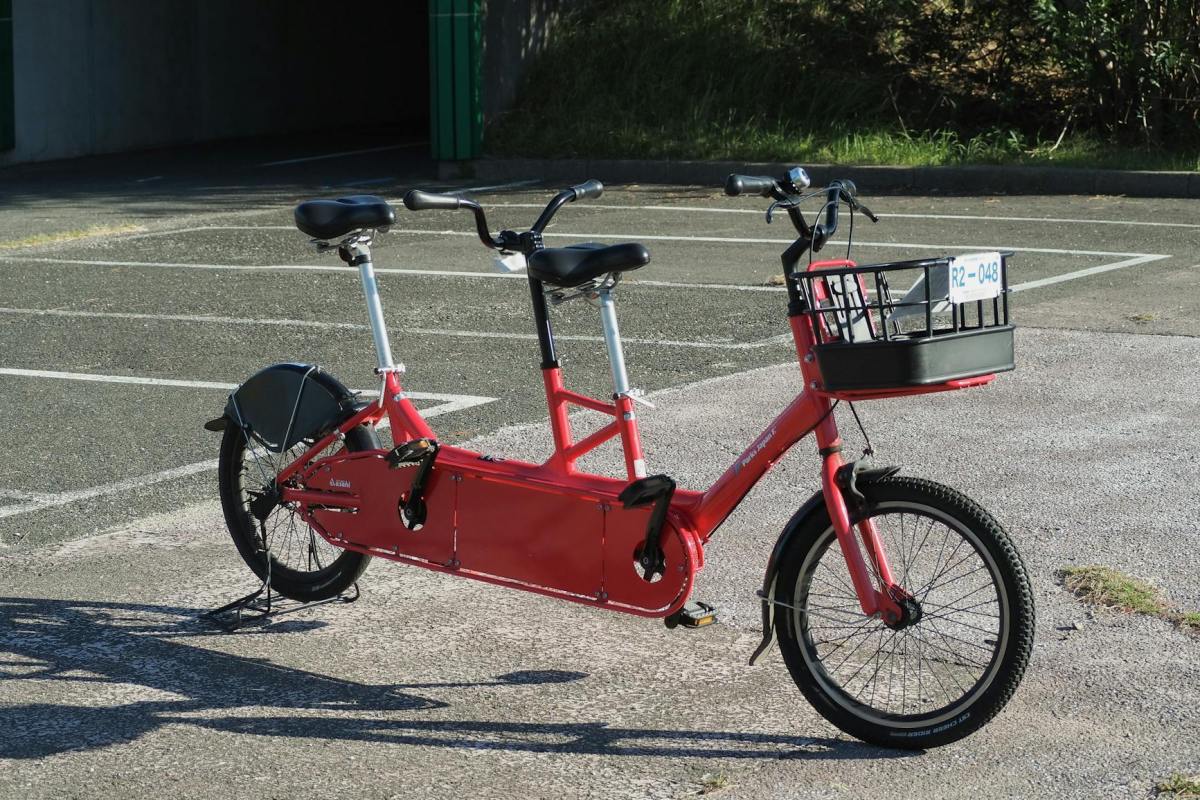
Cheryl recounted her experience on the Register’s Annual Great Bike Ride Across Iowa which is familiarly known as RAGBRAI. Seven hot days of riding, camping, and communing with 20,000 other riders.

Sounds fun, right? But what Cheryl does so consistently is bring the magic. She rides in tandem – both on the bike with her husband, Larry, and also in her writing. She is so good at synchronizing her inner landscape with all that she sees around.

She takes us on this journey from the Missouri River to the Mississippi River. And she leaves Vicki and me in tears about what it all means.

Cheryl is a beautiful writer and inspirational story-teller. She reminds us all what is out there when we face our fears and try hard things.

Pork chops, sunrise, kindness, and courage to name just a few.

I’m confident you’ll love the scenic and beautiful places we explore as we share the power of storytelling.

We know you’ll love it!

Search (and subscribe!) for Sharing the Heart of the Matter on Apple, Amazon, Spotify or Pocket Casts OR Listen to it from your computer on Anchor: Episode 86: Tandem Riding with Cheryl Oreglia

AND subscribe to our YouTube channel to see a video clip of each story: @SharingtheHeartoftheMatter.

Links for this Episode:

Cheryl’s blog: Living in the Gap

RAGBRAI 2024 – Living in the Gap (cheryloreglia.blog)

Other episodes with Cheryl:

Episode 61: The Writers Conference with Cheryl Oreglia by Sharing the Heart of the Matter (spotify.com)

Episode 30: True Grit with Cheryl Oreglia by Sharing the Heart of the Matter (spotify.com)

Episode 7: Grow Damn It! by Sharing the Heart of the Matter (spotify.com)

(featured photo from Pexels)

Inculcating Sustainability

“We have not inherited the earth from our parents; we have borrowed it from our children.” – Wendell Berry

A while ago we were driving and saw litter by the side of the freeway. Mr. D said, “It’s not healthy for the moon to eat.” It started a rousing discussion of not only what planet we live on but also Earth sustainability.

A lot of the climate change messaging these days doesn’t seem to resonate with kids. First, it’s rife with fear and disgust – like humans strangling the planet because they are short-sighted and selfish. I’m not sure that resonates with grown-ups but I know for certain kids can’t grok the cynicism.

Second, they have a sense that grown-ups don’t know what to do about it so it feels too big for kids to take on.

Third, they are just developing their altruism muscles so giving up things when other people are not lands as unfair.

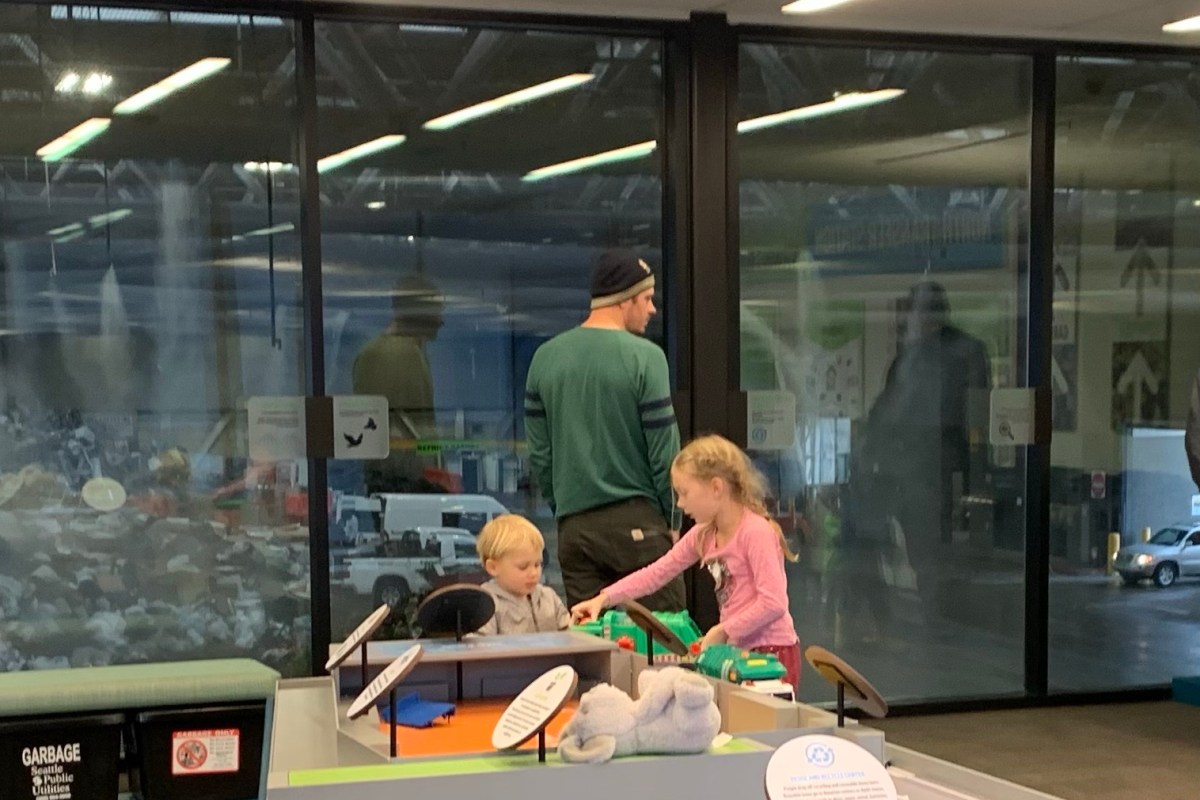
Fortunately, Seattle has a great recycling and composting program. In the winter, we’ve spent a lot of time at the dump (the transfer station) watching how it works and playing with the educational models (see pictures here). Inculcating some sustainability habits to go hand-in-hand, seemed to me like a good next step.

After trial and error, some climate change for kids books, and thinking, here are some of the things I’ve come up with to teach my kids:

One in, one out: We participate in hand-me down chains for toys, books, and clothes. We try to give away at least one thing for everything we get. I can’t claim we do this every time – but we try.

Involve them: I reuse a lot of containers – like hand soap. They love participating in refilling our containers.

Full life cycle: We grow strawberries, try to grow peas and pumpkins, visit pumpkin farms, and give away our plum crop to people who are food insecure. Even though we live in a city and are disconnected from where our food comes from, I try to connect them to the bounty of the Earth when possible.

Teach them skills: Things break and need maintenance and there are a lot of skills to repair and reuse things instead of just discarding them. I’m not much of a seamstress but I do know my way around drills, saws, caulk, and glue. Seeing that we can not only fix things but also make them better.

Selling our stuff and buying second hand: We have a great second hand kids shop in our neighborhood that makes it possible to sell what we don’t give away – and buy at the same store.

Don’t get me wrong, I’m not trying to oversell what we are doing. They are small efforts and I’m far from consistent and perfect on these things. But these things are doable and sustainable for us. They counterbalance the messages of judgment and fear that leave us feeling helpless. If nothing else, it convinces my kids that they can do something to help. And believing that might just make a difference.

Lit From Within

If you light a lamp for somebody, it will also brighten your path.” – Buddha

I think the people in life who I’ve learned some of the most memorable lessons from are the ones who are lit from within. Like Robin Williams in the movie Dead Poets Society, there’s an infectious spirit that makes me feel like I’m not only learning but also catching a spark.

I mention this because of a recent podcast conversation Vicki Atkinson and I had with blogger, parent, FASD advocate and amazing human, Ab from the My Life with T blog. Ab is definitely lit from within.

Ab tells us of the moment both his advocacy and blogging started. When a program supporting kids like his young son was canceled, it lit both fires.

The writing practice is part of Ab’s self-care. It helps him process the events that need to be noted, held onto, learned from, and cherished. It’s a great tool in his wonderful resource kit for parenting well.

And then his writing helps to raise awareness about people living with FASD. Ab shares the definition of Fetal Alcohol Spectrum Disorder and we discuss how building awareness and understanding is so important.

Ab makes such great connections about different blogs and the way our writing unites us.

It was so much fun to be able to talk with Ab. It feels as if we are old friends after interacting nearly every day for 4 years on one blog or another. He is so passionate, funny and articulate and we could have talked for hours. Vicki and I are so lucky to have the great fun of being able to talk with people who are dear blog friends.

This in an incredible conversation about how moments of disappointment and frustration can blossom into something fruitful when you follow the threads as Ab did.

I’m confident you’ll love the scenic and beautiful places we explore as we share the power of storytelling.

We know you’ll love it!

Search (and subscribe!) for Sharing the Heart of the Matter on Apple, Amazon, Spotify or Pocket Casts OR Listen to it from your computer on Anchor: Episode 85: Writing and Advocacy with Ab

AND subscribe to our YouTube channel to see a video clip of each story: @SharingtheHeartoftheMatter.

Links for this Episode:

My Life with T blog by Ab

In Canada: What is FASD? – CanFASD

In the United States: FASD United

A great resource for caregivers trying to understand and support a loved one with FASD:

Trying Differently Rather Than Harder: Fetal Alcohol Spectrum Disorders – Third Edition: 9780972953207: Books – Amazon.ca

A book by recognized FASD educator Nate Sheets:

Essential FASD Supports: Understanding and Supporting People with Fetal Alcohol Spectrum Disorders: Sheets, Nate: 9781977245083: Books – Amazon.ca

From the Hosts:

Vicki’s recently released book: Surviving Sue

Wynne’s book about her beloved father: Finding My Father’s Faith
An Open-Hearted Meditation

Put your ear down close to your soul and listen hard.” – Anne Sexton

My heart absorbs a lot in a day. That is to say that as I traverse my days, bouncing between to-do’s and must have dones, I collect a lot of nuggets that I store away in my heart as if it is a four-chambered storage cabinet.

– The note of trepidation from my kids as they start a new activity.

– An observation about a colleague who appears to be wrestling with anxiety.

– The feeling I shoulder when coming alongside a friend’s worry.

At some point I have to empty my heart storage cabinet so I can carry on and pick up new things, about myself or others. I think that’s why I love this breathing/heart meditation that I originally picked up from Deepak Chopra almost twelve years ago. [With all due respect to Deepak Chopra, this may no longer resemble the meditation as he taught it so please forgive any blips in the flow.]

Sitting with your eyes closed, feel your heart. Notice how it is feeling. Is it heavy? It is happily skipping a beat? Is it calm and serene?

Now take a deep breath into the front of your heart. Feel your chest expand. Feel that front wall where your heart meets the world.

Next breathe into the back of your heart. Allow the solidity and strength of your back to make room for the heart.

Take a deep breath and direct it to the top of the heart. Does it feel like there is a lid on your heart that can crack ajar to give the heart a little room to expand?

Now send your next inhale to the bottom of your heart. Breathe through all that might have settled there and benefit from some air to get moving.

The next breath is for the sides of the heart. As you feel the sides of your heart lengthen with the inhale, sit a little taller to feel your whole ribcage expand.

And finally, breathe into the whole heart. Notice how it is feeling. Is it the same as when you started? Or have you uncovered something tucked away there?

(featured photo from Pexels)