How to Share Feedback

Some of the best advice I’ve been given: ‘Don’t take criticism from people you would never go to for advice.‘” – Morgan Freeman

My dad used the Oreo method when he delivered feedback. It was fitting because he loved Oreos. Perhaps that’s what made him so good at layering in the salty truth between delicious goodness.

He’d start with what was working, add in feedback about what could be better, and then finish it off with a compelling overall vision or motivation. It sounds straightforward when laid out as a formula but as anyone who’s eaten fake Oreos knows, it has to be authentic to work. And the recipient needs to at least be a little hungry for it.

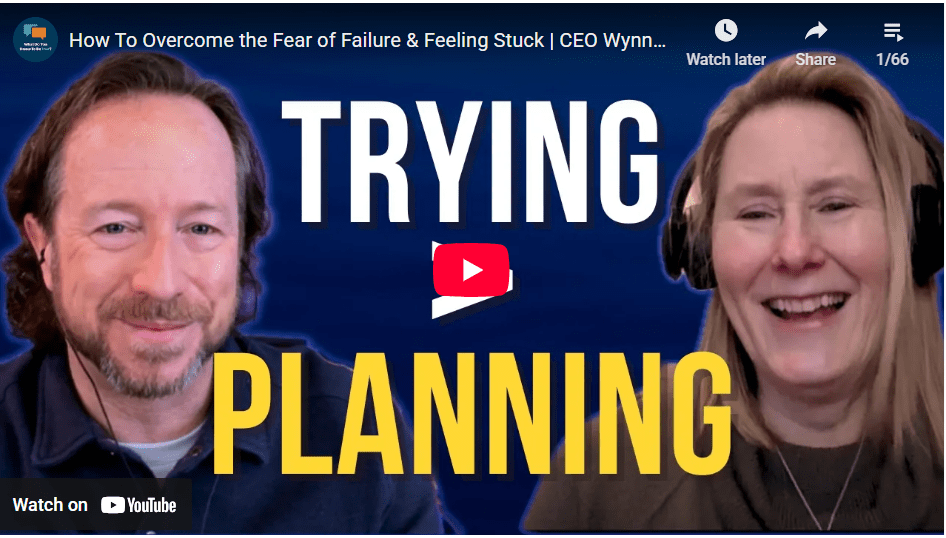
Feedback is tricky, isn’t it? It’s often necessary for us to fuel personal and creative growth, especially with writing, and we sometimes don’t want to hear it. That’s why I love this How to Share podcast episode with Dr. Vicki Atkinson because she is such a pro at both giving and receiving feedback.

Vicki tells us about her project in the works, a novel that builds on her fascinating and intriguing family history. She has done the hard work to not only to write but also to seek out and incorporate feedback. She tells us what she learned from her doctoral dissertation about separating the ego from the work and how that is an essential part of being able to really take in someone else’s input.

We talk about asking the right questions when someone solicits our feedback and also being specific when we want input. And Vicki shows us what having a growth mindset looks like when it comes to incorporating comments.

Vicki walks us through the discernment necessary to pick out what is helpful when it comes to feedback and gives us permission to disregard what doesn’t fit.

This is a great conversation about this tricky subject and Vicki’s wisdom shines brightly through. I know you’ll love it.

Takeaways

  • Feedback is a tricky subject that requires discernment.
  • Separating ego from work is essential for growth.
  • Asking the right questions can lead to more useful feedback.
  • Timing and context matter when giving feedback.
  • Not all feedback is created equal; choose your sources wisely.
  • It’s important to let your work develop before seeking feedback.
  • You can choose which feedback to integrate into your work.

Here’s a great clip of how Vicki practices the art of letting go of the ego:

Here are some ways you can watch this inspiring and helpful episode:

Please listen, watch, provide feedback and subscribe.

How to Share Our Luck with Gil Gillenwater How To Share

In this enlightening conversation, Gil Gillenwater is with host Wynne Leon and shares his experiences and insights from over 35 years of philanthropic work along the US-Mexico border. He discusses his book, 'Hope on the Border,' which highlights the transformative power of education and community service. Gil emphasizes the importance of enlightened self-interest over traditional charity, advocating for a model that empowers individuals and fosters dignity. He explores the duality of poverty, the need for sustainable opportunities, and the joy found in serving others, ultimately presenting a vision for a more connected and compassionate world.TakeawaysEducation is the key to breaking the cycle of poverty.Enlightened self-interest can lead to personal and communal growth.Charity should not be viewed as a sacrifice but as a mutual benefit.Volunteering provides a sense of purpose and fulfillment.Welfare can disempower individuals and communities.Community service fosters connections and shared humanity.The disparity in wealth is a significant issue that needs addressing.Experiencing poverty firsthand can change perspectives.Creating opportunities in one's home country can reduce migration.The joy of service is a pathway to personal happiness.Links for this episode:How to Share homeHope on the Border at AmazonGil's organization: Rancho FelizGil Gillenwater on FacebookWynne’s book about her beloved father: Finding My Father’s Faith; Blog: https://wynneleon.com/; Substack: https://wynneleon930758.substack.com/
  1. How to Share Our Luck with Gil Gillenwater
  2. How to Share 1970's Chicago with Doug. E. Jones
  3. How to Share Feedback with Dr. Vicki Atkinson
  4. How to Share the Next Generation with Mari Sarkisian Wyatt
  5. How to Share Impactfully with Social Media Friends with Amy Weinland Daughters

Links for this episode:

How to Share Feedback transcript

Vicki’s book about resilience and love: Surviving Sue; Blog: https://victoriaponders.com/

My book about my beloved father: Finding My Father’s Faith

(featured photo from Pexels)

The Choices We Have

Life is the sum of all your choices.” – Camus

I was talking with my friend, Betsy of the ParentingisFunny blog (possibly going to be renamed the Chex and Balances blog) but a delightful and fun blog about life, Jui Jitsu and the Universe at any name. We were discussing the idea of choices that behavioral economist Dan Ariely discusses in his book Predictably Irrational. He gives so many great examples of how our brain works to make choices based on the options presented. Like if we are looking to be a house and are comparing two ranch style homes, one that needs work and another that doesn’t, and a colonial, our brain will make the choice based on the price/work of the two ranch homes because they are similar. And even if it isn’t a totally rational choice if you really figured in the third option (the colonial), it’s repeatable because of way the brains anchors the choice by comparison.

Betsy said something lovely about admiring my ability to read and listen to interesting stuff. I replied that being single gives me more free time in which I fill with listening to content. And maybe it even fulfills a need for this intellectual stimulation since I’m not getting that from a partner at this point in life.

Which isn’t to say that I’m recommending being single, it just is a little amazing how much time being in a partnership can take. Choosing to do fun stuff, watch tv or even make dinner together – wonderful things to enjoy in a relationship but it fills time in a way that is hopefully fulfilling but might not leave time for reading behavioral economists. Or it could be deemed rude to put a podcast in at night when folding laundry or working out.

So I have the great pleasure of having time to listen and read great content. And then I have so much life in my house and little ones that I get great joy in processing the ideas and trying them out on them. Like with choices, if I think my little one should wear sneakers instead of rain boots, it works marvelously well to give him the choice of two pairs of sneakers and the rain boots. Just like the houses, it works!

Then Betsy generously added, “Your brain is being so enriched. And then you share your newfound knowledge with others. What a service! Especially when you share the highlights to those of us who don’t have time to learn things ourselves.” Which was a delightful thing to hear but also explained by behavioral economics.

In Predictably Irrational, Dan Ariely describes an experiment they did at a college campus. They had pictures of two attractive people – Student A and Student B. They created a triptych of pictures with student A, Student B and a third picture where they altered student A to be less symmetrical and therefore less attractive.

When students were given the choice of who they found to be most attractive, the majority picked Student A. The third picture, the altered student A gave them something to compare against that steered them towards student A. They did this with several pictures to make sure it wasn’t specific to Student A.

Applying that to life, the choices are

  1. Being single with a rich blogging/writing life
  2. Being in a partnership with a great intellectual conversation
  3. Being single but feeling isolated because I’m not discussing the ideas that have inspired me.

Since option B isn’t really viable right now, it’s a no brainer that I happily choose to listen, write and share since it enriches the option that I have.

(featured photo from Pexels)