Life is Like Legos

Learn the rules like a pro so you can break them like an artist.” – Pablo Picasso

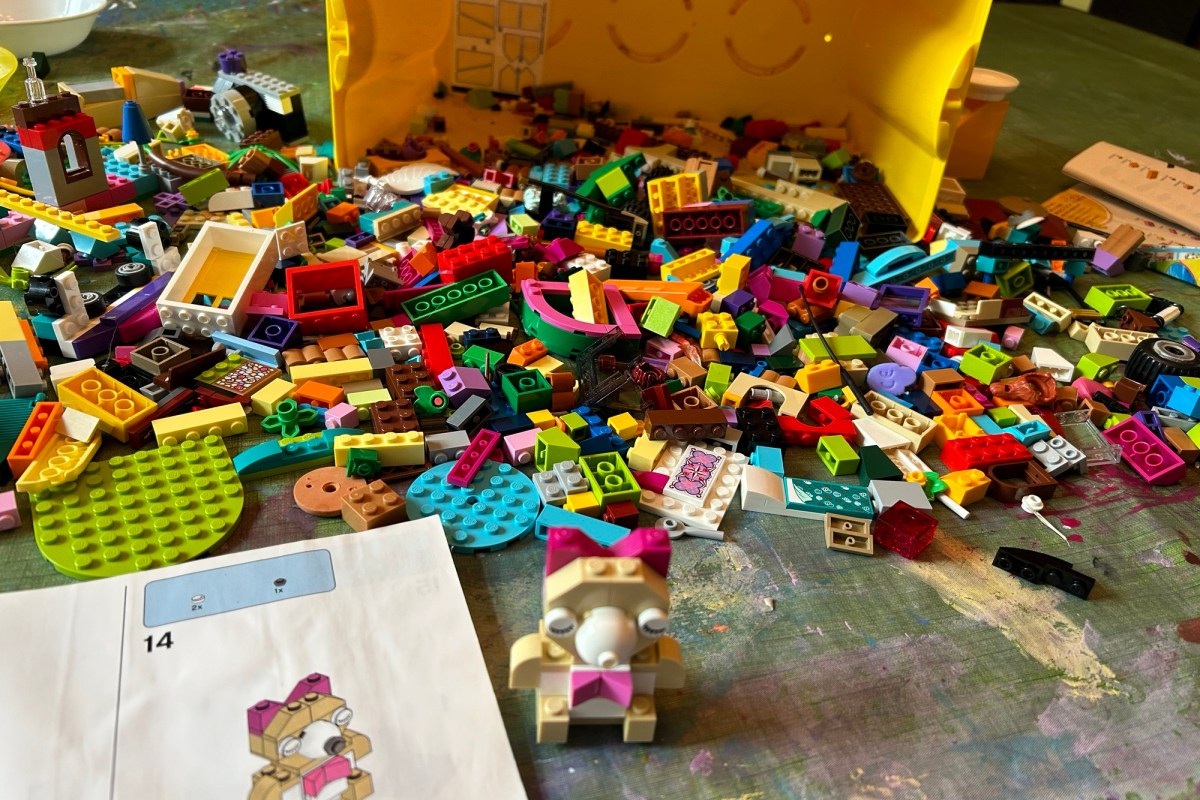
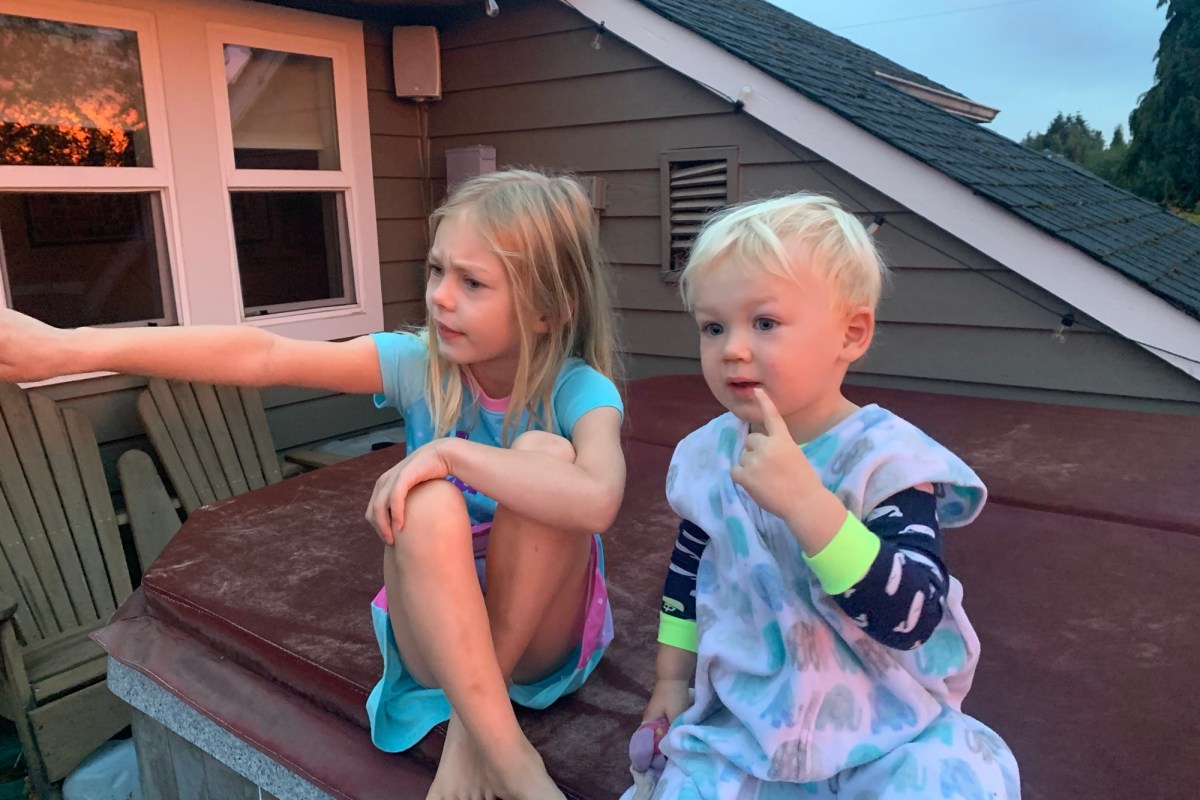
This weekend I played a lot of Legos with my kids. Mr. D was building a house, finding any square or rectangular pieces and putting them together.

I was following an instruction booklet to build a teddy bear. I spent most of my time looking through the 800 pieces for pieces the size of my pinky fingernail that were the right size, shape and color to match the instructions.

It struck me that life in general, and creativity specifically, is a lot like building Legos. We start out life creating off the cuff – listening to our gut, stacking and combining from what’s available. It’s intuitive and faster but it’s not long before we are told there are norms and expectations we are supposed to be adhering to.

Then we discover the instruction booklet and shift into making the prescribed things. In this mode, we make things that cutely and appropriately match other people’s expectations and instructions. But it takes a lot longer to find exactly the right pieces and we have to guard the pieces we find really carefully lest someone else takes the only one that will fit the specifications.

Once I was done building my teddy bear, I discovered a third way. I started building a structure with some of the remnants of our past creations. It built on both the structured and unstructured components. I went back to working like Mr. D and listening to my gut.

Seems like this is a great place to get to in creation and in life – where we can still be mindful of others, incorporating what has already been built, but leave the instructions behind.

Too Mad To Listen

Anger is an acid that can do more harm to the vessel in which it is stored than to anything on which it is poured.” – Mark Twain

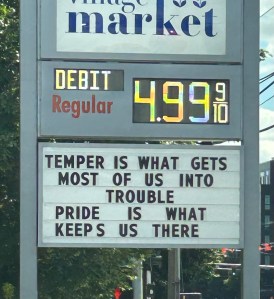
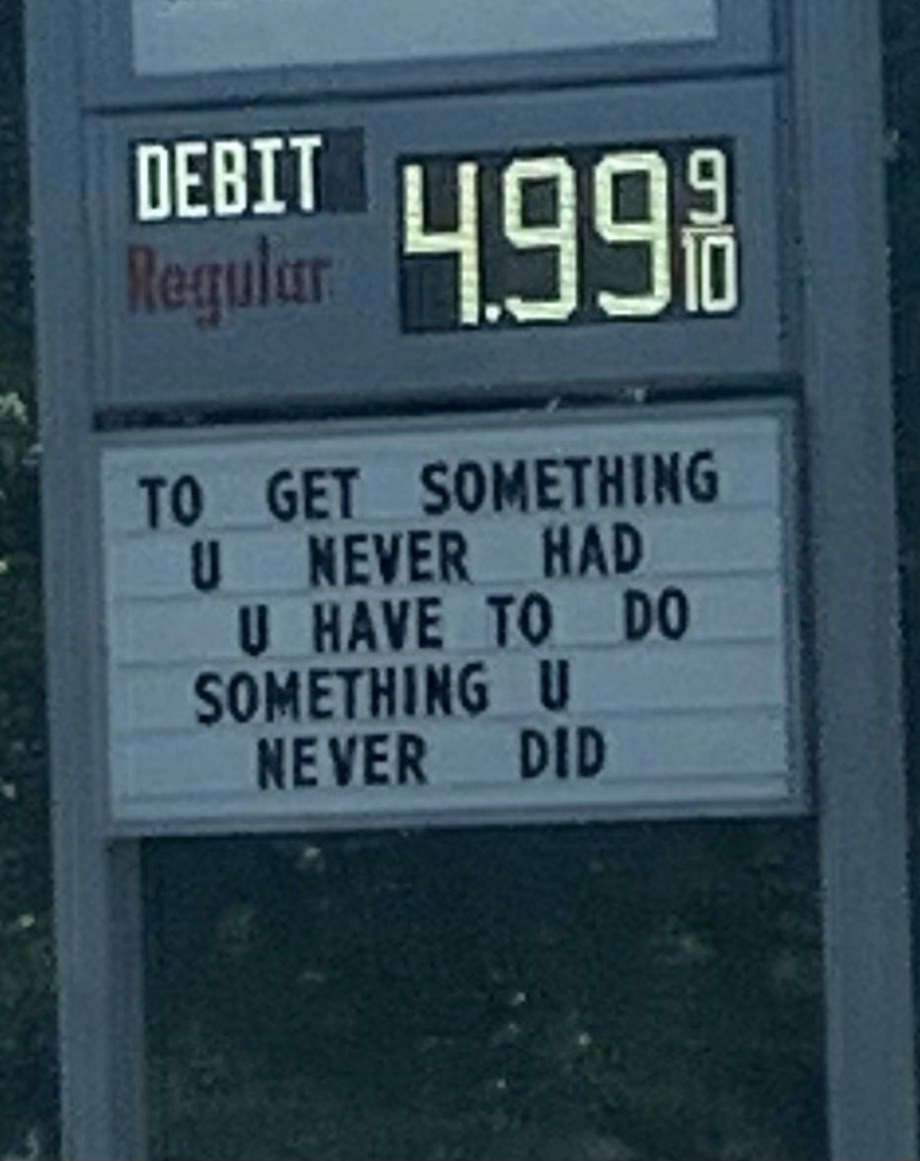
I saw this gas station sign and it reminded me of a story from many years ago.

The house next door to mine used to be a duplex. On the main floor lived a 40-something year old opera singer and music teacher who had lived there for nearly twenty years. She gardened and was friendly with all the neighbors so it was easy to get to know her.

One summer, a new renter moved into the top floor. She was younger than the opera singer – maybe in her early 30’s. I frequently saw her roller skating around the little lake we live near wearing bright red lipstick. She was noticeable but harder to get to know beyond a wave here and there.

The roller skater frequently walked loudly in high heels when she was home and slammed her kitchen cupboards late at night. This was keeping the opera singer in the apartment below her awake past her bedtime. She tried to ask her to stop. The roller skater didn’t want to talk about it. So, the opera singer tried sending her an email. The roller skater’s dad who lived in Florida called her to tell her to stop bothering his daughter.

Then one night the roller skater came home, parked her car in the driveway and left her car lights on. The opera singer noticed and tried to call out to her but the roller skater slammed the door. The opera singer tried to call her on the phone but the roller skater hung up on her. So the opera singer sent her an email.

The next morning, the roller skater’s car battery was dead. The opera singer watched as she slammed the door crying, eventually getting AAA to come help. The roller skater moved out shortly after.

I heard this story from the opera singer so I only have that perspective. I think the roller skater was a sensitive soul that felt every comment deeply. But even so, it’s always reminded me that not listening to others can come at a cost.

I searched my memory banks for a story of when I was too mad to listen. Funny thing is that I came up empty. I take that as a sign that someone out there is right now telling a story about me not listening. I’m just not sure if it’s a blessing or a curse that we often are oblivious to the help never taken.

What do you think?

(featured photo from Pexels)

Photos of the Week: July 27

It’s pointless to believe what you see if you only see what you believe.” – Marie Lu

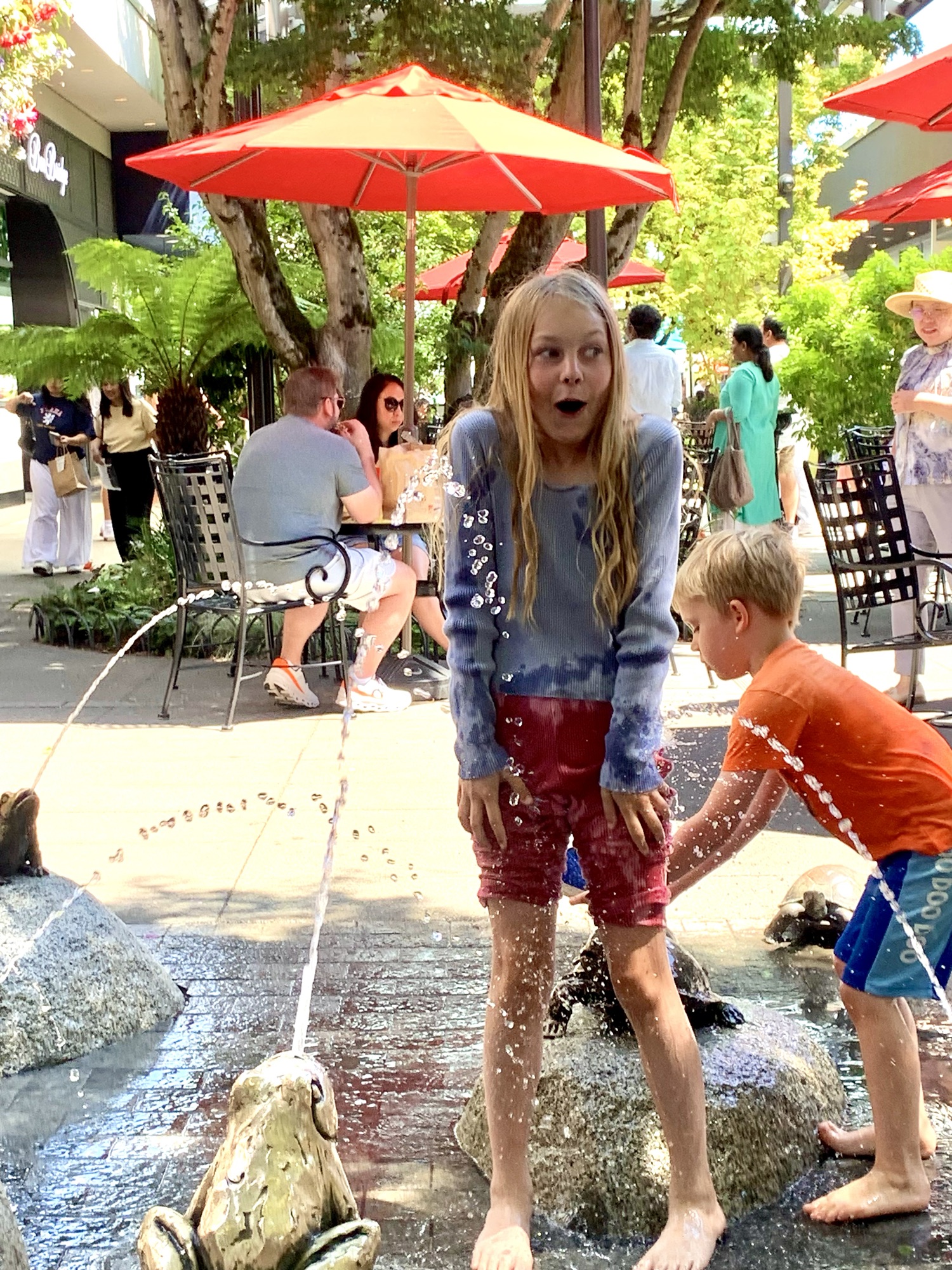
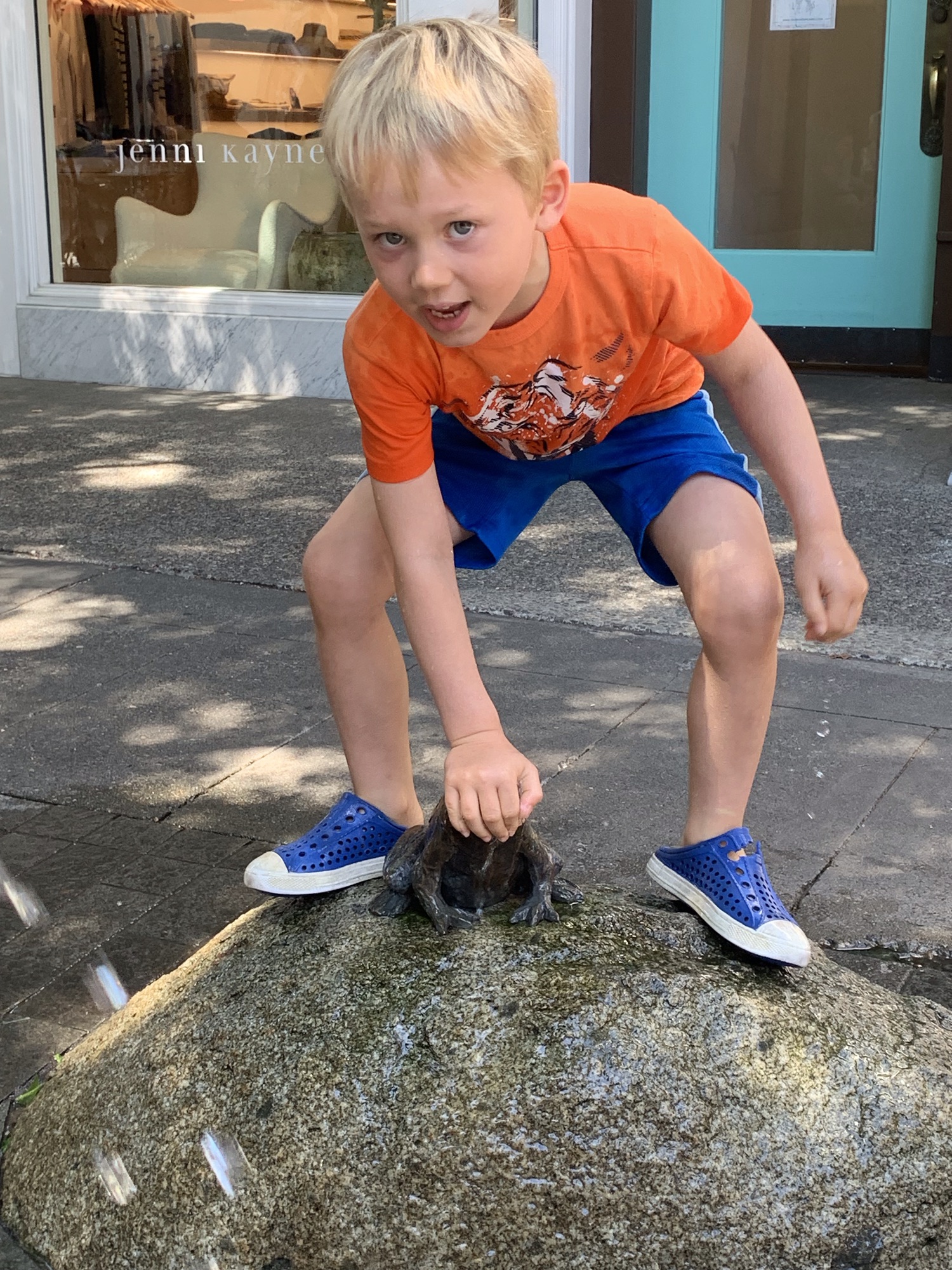
We spent some time with our favorite spitting frogs. They’ve delighted us ever since Miss O was a baby and still are loads of fun!

I take all of my photos with my camera phone. This week I upgraded my phone – not to the latest version but still four versions newer. Everything is looking a little bit brighter now.

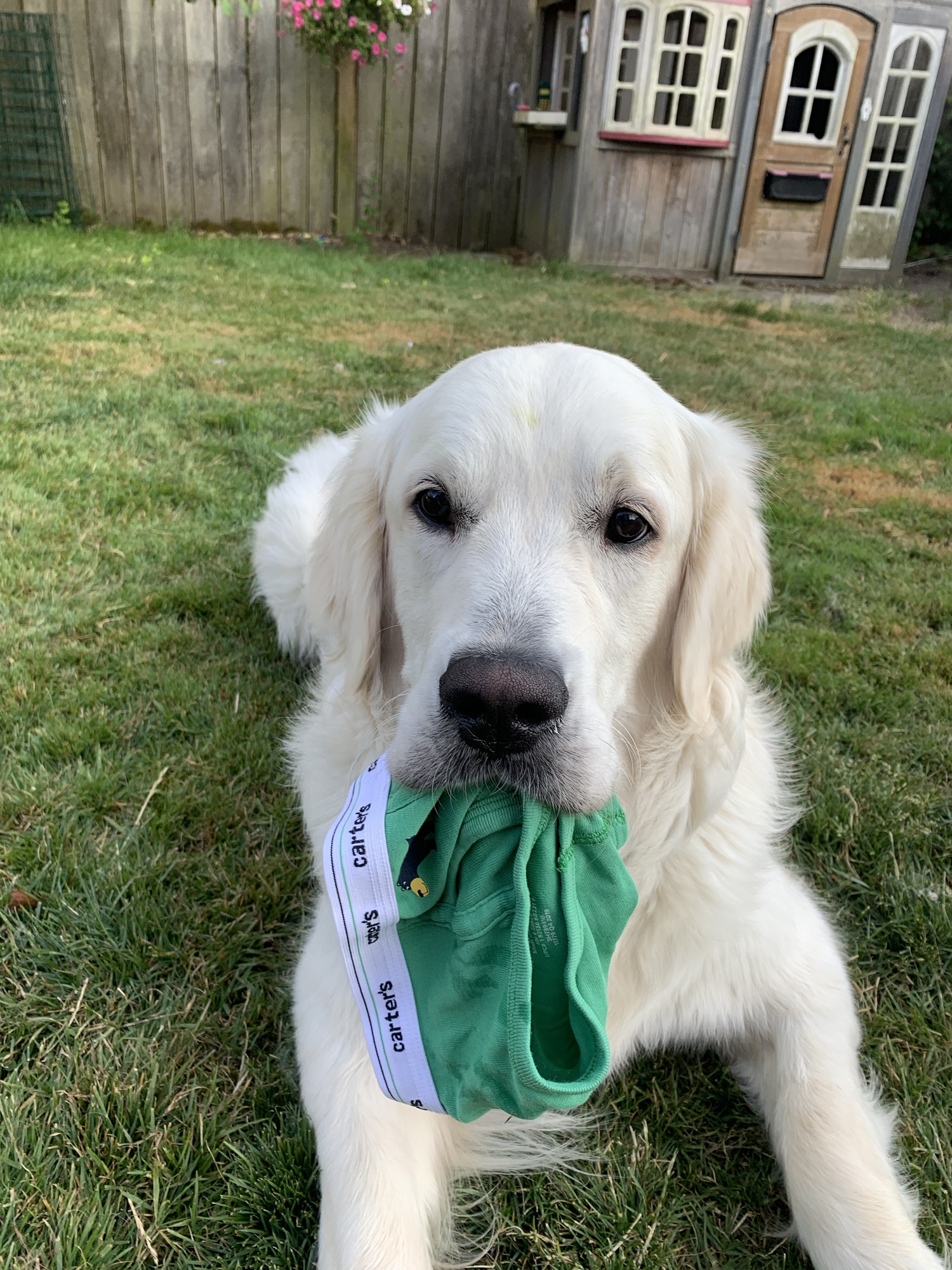
Mr. D spent some time appreciating a puppy that wouldn’t steal his undies.

The cat letting it all hang out. And Rusty trying to get out.

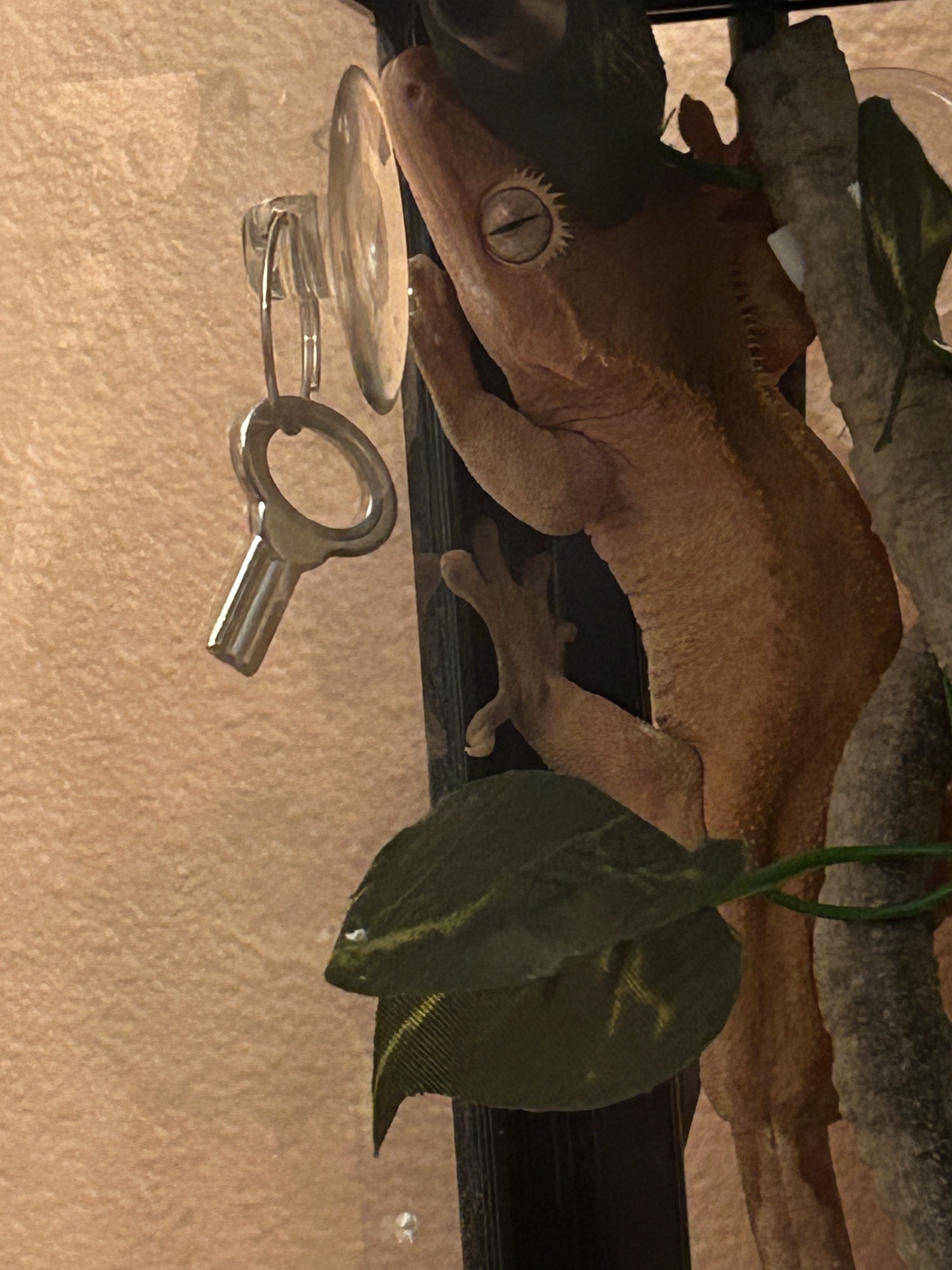
The hard thing about living in a glass enclosure must be that the key seems SOOO close.

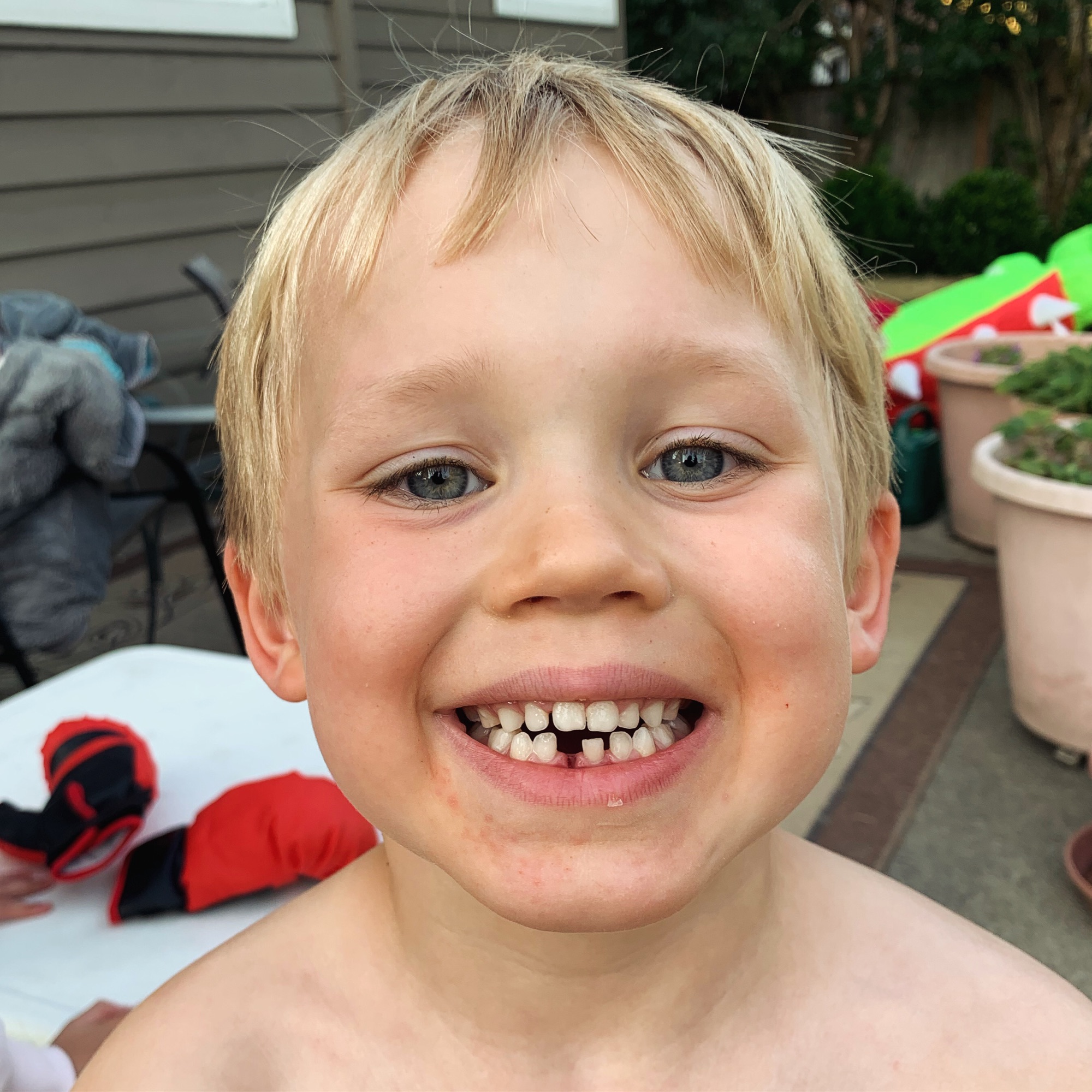
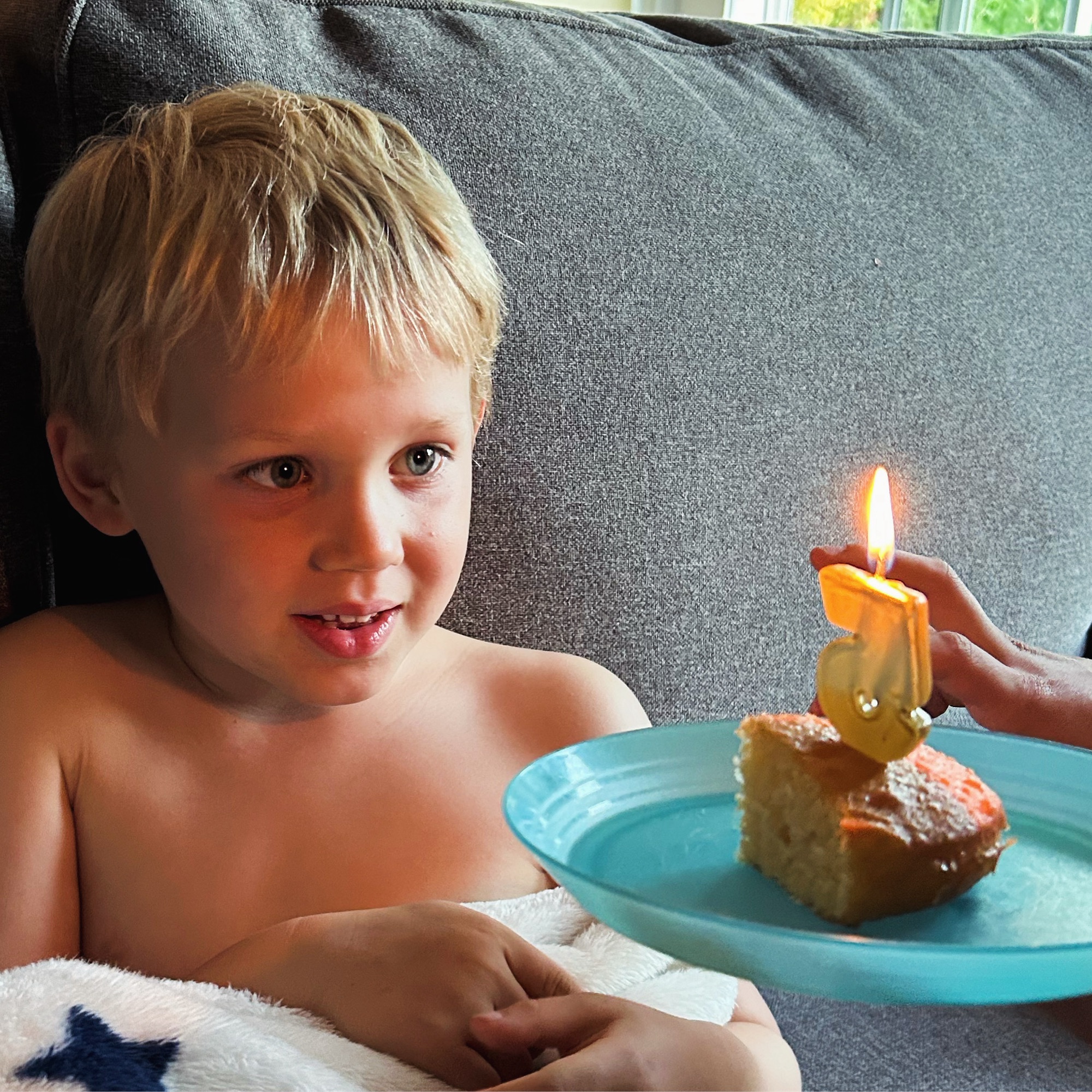
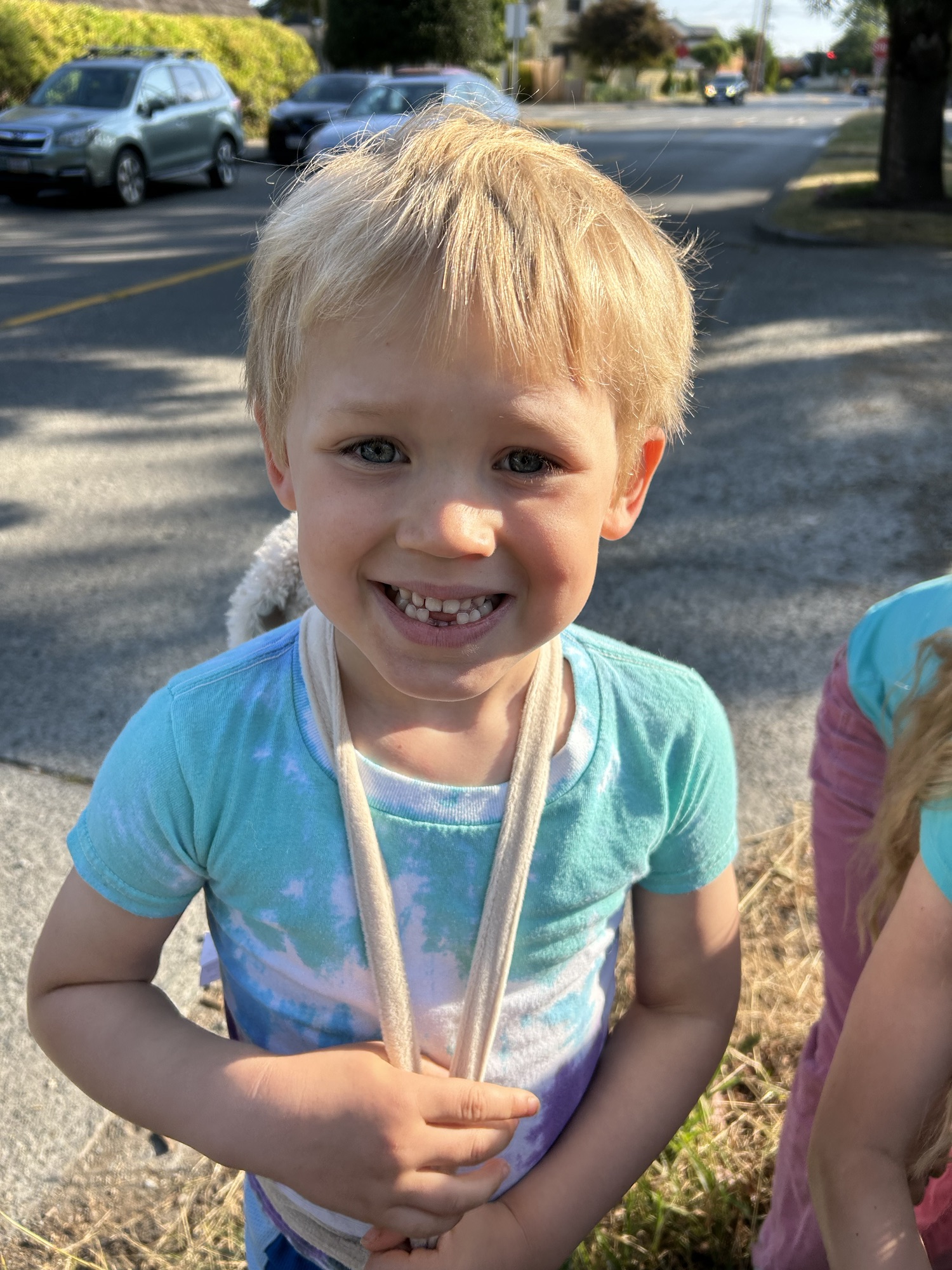
Mr. D lost a tooth, turned five, and lost another tooth – all in ONE week! By the second tooth, which happened to come out on his birthday, the tooth fairy was so tired that she almost forgot to write back. Thank goodness for the whisper of paper during a good night kiss to remind the tooth fairy of her duty.

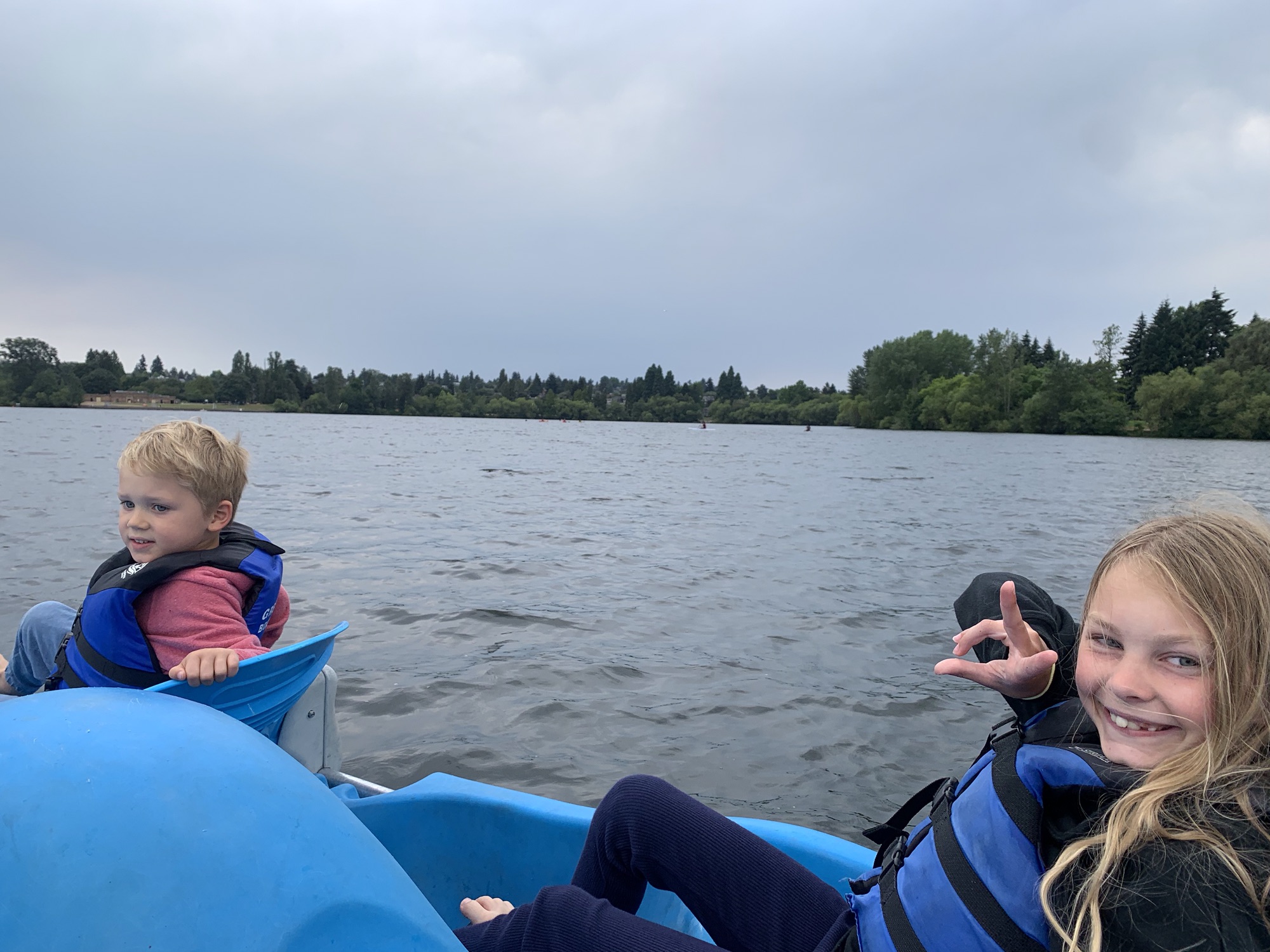
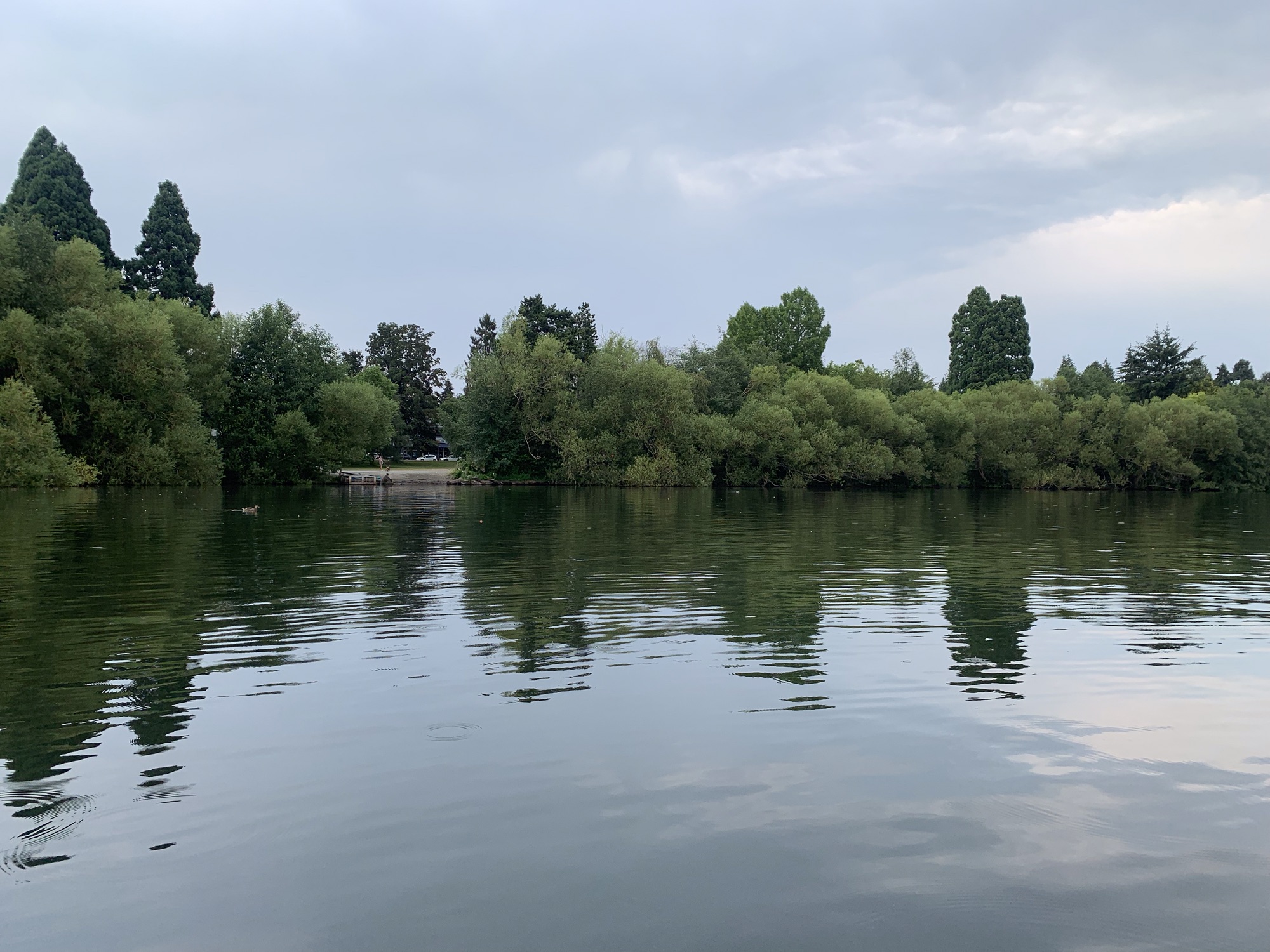
We spent some time pedal boating around the lake we always bike, drive, and walk around. It was so much fun to experience it from another perspective.

This last photo and the sign of the week also challenge our perspective!

Emanating Joy

Sometimes your joy is the source of your smile, but sometimes your smile can be the source of your joy.” – Thich Nhat Hanh

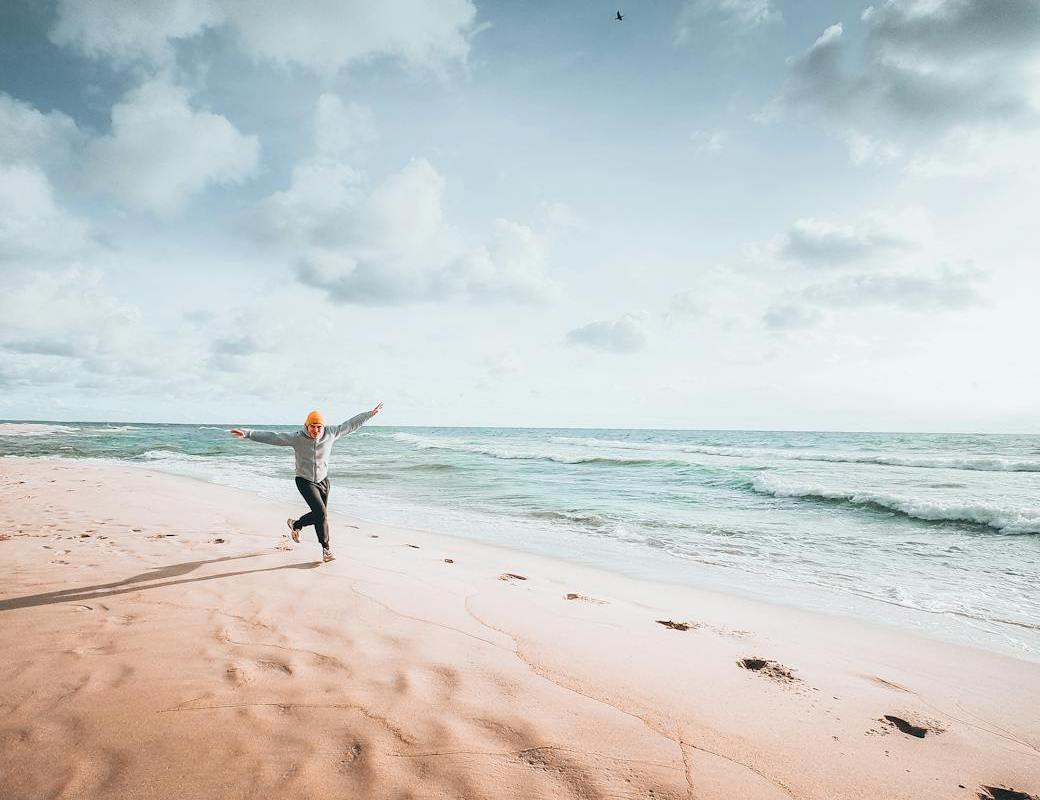
About a month ago when Miss O’s elementary school held Field Day, there was the traditional staff versus fifth grader tug-of-war. When the teachers won, Mr. Bean, a very tall staff member, spread his arms wide like an airplane and took a victory lap.

It was so joyful, that four-year-old Mr. D is still talking about Mr. Bean four weeks later. I think people who emanate joy, especially grown-up people, just stick with us.

Which is a good segue to the podcast that Vicki and I recently did with the recently retired pre-K teacher and blogger, Beth Kennedy. (Another great connection made by Pete Springer, by the way.)

Beth tells us the story of an instant perspective moment. In a chance encounter with an extremely friendly man, she is both buoyed and leveled.

It’s a funny and thoughtful story that is so true to Beth’s writing. In her beautifully concise presentation, she allows the sparkle of the realizations to shine bright.

So we talk about how we can get lost in our own worlds until something or someone breaks through and reminds us of the big picture. Naturally, our encounters with others ripple out.

This is a great conversation and story with a fantastic writer and keen observer of life that will stick with you long after it’s over.

So I know you’ll enjoy the scenic and beautiful places we go when we share the power of story.

We know you’ll love it!

Check out the full podcast at: Episode 75: “Cast Aside” with Beth Kennedy

(featured photo from Pexels)

Links for this episode:

Episode 75: “Cast Aside” with Beth Kennedy on Anchor

I didn’t have my glasses on…. | A trip through life with fingers crossed and eternal optimism. (ididnthavemyglasseson.com)

cast aside. | I didn’t have my glasses on…. (ididnthavemyglasseson.com)

Vicki’s personal blog: Victoria Ponders

Wynne’s personal blog: Surprised by Joy

Vicki’s recently released book: Surviving Sue

Wynne’s book about her beloved father: Finding My Father’s Faith

The Fullness of Time

“The years teach much which the days never know.” – Ralph Waldo Emerson

Miss O has been working on “time” problems in school. Like “It’s 12:40. Zach is supposed to meet his friend in 45 minutes. What time will it be when they meet?” She generally likes math but these problems are getting her goat at the moment.

So, we were settling into bed and she asked me, “Was time around when you were a kid?” Then she thought for a moment and continued, “Oh yeah, they’ve had it for a while.”

I couldn’t get out of the room fast enough to burst into laughter and write that one down. That she said this the night before my birthday wasn’t lost on me.

Hee, hee. Yes, they’ve had time long enough for me to count out 55 years. What else has the fullness of time given me?

Laughter

When we had a small party of family and friends to celebrate my birthday, as well as my mom’s and my friend Eric’s, the thing I enjoyed most was the laughter. Miss O and Mr. D put on a recital. There was great food and also presents, but the real gift was the just the lightness of being. Miss O asked why my eyes leak so frequently when I laugh. I don’t know exactly, but it has something to do with just being so happy to be here.

Perspective

Time has also given me the gift of perspective. It’s a bigger sea in which my hurts, my worries, and even my hopes feel less significant. They matter, but more as in a way that helps me set my sails instead of being the sea itself. I’m a far more patient person – but not because I’ve grown my patience but because the fullness of time helps me settle into the wait.

Heart

I have a favorite quote when it comes to the heart,

“God breaks the heart again and again and again until it stays open.”

-Hazrat Inayat Khan

When I first met that quote, it was like almost everything else that has become my teacher. I thought, “No, no, no.

But time has shown it is less about heart break and more about giving up control. There are people, things, dreams, and abilities that hurt so much when they go. But the heart has no hands to hang on to them. Leaning into that is like opening windows in my heart so that the breeze can flow through.

So, has anyone figured out the answer to the time problem at the top of the post? Clearly, it’s “Who knows because Zach is always running late? But we’ll hug him when we see him.” 🙂 Or at least that’s the answer that the fullness of time has given me.  

Writing From the Heart

There is a wisdom of the head, and…a wisdom of the heart.” – Charles Dickens

This post was originally published on 3/1/2023. Heads up – you may have already read this.


The other day I read a beautiful post that was a tribute to a dearly departed pet. It was so touching and zinged me right where there’s a sore spot from missing my beloved dog, Biscuit, that died six years ago. I had to walk away for about 30 minutes before I could write a comment.

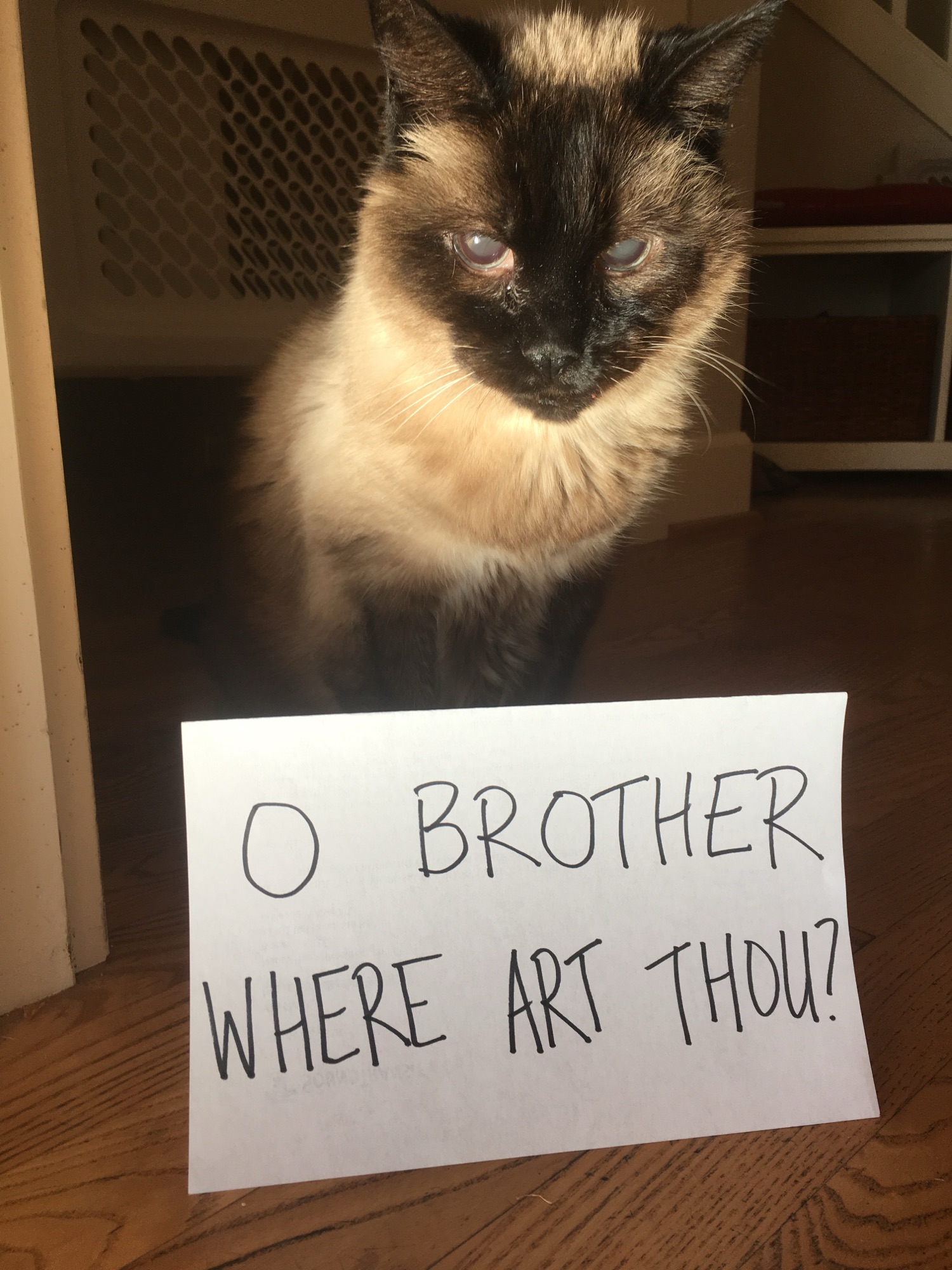
I find this so often be true – the topics that are the closest to my heart are hard to write about when the tears are still flowing. When I had to say good-bye to Biscuit, the next day the only words I could manage was to put a sign next to the cat who was also grieving the loss of his buddy:

Cat missing his newly departed dog

So this set me off wondering why it is so hard. Loss of perspective? Lack of clarity so I can’t yet make meaning? Inability to see the keyboard when the tears are flowing?

Thinking it could be a left-brain/right-brain kind of thing, I looked up the neuroscience of writing and found this New York Times article: This is Your Brain on Writing. Turns out that left-brain/right-brain isn’t much of a delineation that they make these days. Instead the article describes the results an fMRI study of the brain while writing including the detail that in expert writers, there is a part of the brain, the caudate nucelus, that lights up. The same part of the brain doesn’t light up for novice writers, a result that made sense to the scientists because the caudate nucleus is the part of the brain associated with expertise. Which was interesting but didn’t get me any closer to an answer.

Then I looked to our sacred texts and the spiritual world for wisdom on those moments when I can’t write. I was reacquainted with one of my dad’s favorite quotes from 17th century mathematician and philosopher Blaise Pascal: “The heart has its reasons, that reason does not know.” My dad often cited this quote in an argument about belief in God – that our heart knows even if there isn’t any proof for the head. Maybe those topics that zing me are too close to my heart so they haven’t made it to the head yet?

Next on my list of possible explanations was poly-vagal theory about the three states of our nervous system. When I wrote about it for a post, The Unified Theory of Breathing I summarized the three states as: ventral which is calm and regulated, sympathetic the fight or flight response, and dorsal which is when the nervous system has been so stimulated that it shuts down. Perhaps when I can’t write, I’m flooded, in a dorsal state and can’t write? While this alludes to an answer, I don’t feel like I’m dysregulated and can’t write, just that I can’t find the words.

Finally, I turned to the world of yoga and meditation and found an explanation that makes sense to me. Stillness. When my waters are muddied, I have a harder time seeing into my depths. In times of life when the waves are choppy, I am all churned up inside. It’s only when I reconnect with my inner stillness that I can see well enough to cross the space between me and you.

What I found to be as fascinating as the question itself were the lenses I looked through to find my answer. Brain science, theology, physiology, and meditation – my four go-tos and I usually find the answer sitting in meditation. Must be why I do it every day. A confirmation bias loop because it works for me.

Here’s my take-away from the journey: It’s hard to write when I’m too wet and stirred up in my heart. And it’s also hard when I’m too dry and too much in my head. I have to aim for somewhere in the middle where I’m soft, warm, and clear.

What about you?

The Onset of Reality

I’d rather learn from one bird how to sing than teach ten thousand stars how not to dance.” – e.e. cummings

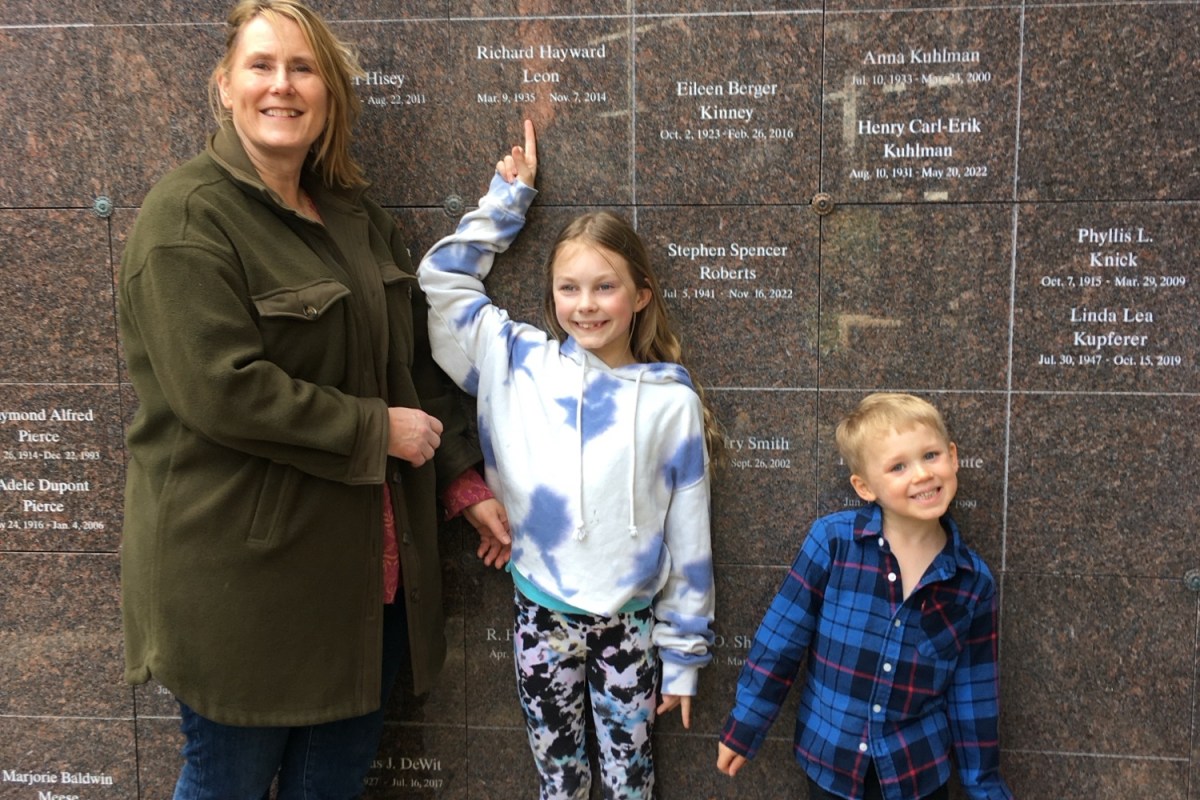
Recently my kids and I were at my dad’s former church for an Easter event. On the way out, Miss O asked to see my dad’s stone in the columbarium. It’s in a beautiful nook by a babbling little brook surrounded by trees.

Miss O and I like patterns. So we looked at all the stones and saw the ones, like my dad’s, that are offset because their spouse/partner will be added when they die. And then the ones where the name is in the middle because they are by themselves.

Miss O wanted to know about the dates on my dad’s stone. I pointed out his birth date and then she looked at the date of his death and said, “Because everyone comes to their death date.

Right!

[As aside, this reminds me of one of my dad’s jokes: “There’s always death and taxes; however, death doesn’t get worse every year.”]

She made that death date observation without any gravity or sadness. My kids can envision monsters and thieves but death doesn’t hold any weight for them.

At four-years-old and eight-years-old, they seem to attend to whatever is at hand with very little worry about the future. Somewhere between four and fifty-four, “reality” hits.

Which reminded me that a few weeks ago at bedtime, Miss O told me that she and her friend have been using recess to talk about “big topics.” I couldn’t wait to hear about these so I snuggled in next to her and asked, “Like what?

She replied, “Puberty and reality. Puberty was my friend’s topic and I brought up reality. I can’t believe it starts in three years.”

I asked “What starts in three years?

She replied, “Reality. You know. Middle school.”

I’m laughing, but perhaps that’s when it does start. The planning and preparing, setting the expectations for what life should be.

Thank goodness there’s death as an antidote. For me, being periodically reminded that “everyone comes to their death date” is helpful.  Not knowing when that will be prompts me to lay down my plans and to live.

(featured photo is mine)

Speaking of great reasons to write down our stories before we meet our death date, Vicki and I talk with author, publisher, podcaster, and former radio producer, Rick Kaempfer on our podcast, Episode 62: The Loop Files with Rick Kaempfer. He tells some incredible stories about the most outrageous radio station ever. And does an amazing job at poignantly describing one of the reasons we write.

Search (and subscribe!) for Sharing the Heart of the Matter on Apple, Amazon, Spotify or Pocket Casts. Or click through to the link above to see the video excerpts from that podcast, the link to listen in browser, plus all of Rick’s links.

The Feeling of Community

The deep irony, in order to be social, we first have to be individual.” – Nicholas Christakis

This was originally published on 2/16/2022. Heads up – you may have already read this.


When I was climbing mountains, I’d regularly sign up for a guided climbing trips, sometimes with a friend and sometimes by myself. It was a great way to travel and also get to climb a mountain or two. Typically we’d all converge in a meeting place and do the initial meet and greet and then go from there.

The groups of people that would come together were always interesting. I’m thinking about a particular climb of two volcanoes in Mexico. We all flew to Mexico City where we met our guides and fellow climbers before riding in a van to the base of Mt. Ixtacchuatl for our first climb.

The group was mostly Americans but otherwise there wasn’t an easily defined demographic, not gender, education level, personality type other than love of mountains.  On this particular trip, there were very outgoing people like my friend, Jill, and man named Trent who loved to talk and help anyone with anything. Most of the group was like Paul from Greenfield, NY who was really nice to talk to but more reserved about initiating conversations. There was our guide, Phil, who like to just spit out wisdom or quips in one line but not talk endlessly (e.g. “Watch out Jill, that guy has more moves than an earthquake.”)

As we went around doing introductions, one man named John stated very clearly, “I don’t like people. I’m just here to climb the mountains.”  Which was fine because that’s what we were there to do.

We summitted the first mountain, Mt Ixtacchuatl (17,338 feet) on October 31 and then headed down to celebrate the Day of the Dead in Puebla. After a day of rest, we started up our second mountain, Mt. Orizaba (18,491 feet).

After being dropped by trucks on the mountain, we spent the evening in a hut. At this point, we’d been together as a group for about 5 days and we were having a great time and working together pretty well as a team. The guy that didn’t like people was a very good climber and mostly stayed to himself, grabbing his share of dinner and finding a quiet place to eat it.

Around midnight, we got up from the few hours of rest we’d gotten and started preparing for our summit attempt in the dark using the light of our headlamps. We climbed steadily in the dark for about 6 hours until we reached an exposed couloir. We paused as the guides tried to get some ice screws deep enough into the fractious ice to secure our trip across the steep gully. Eventually we realized that the conditions wouldn’t allow us to cross safely over that part of the mountain and our summit bid had ended.

As we sat on the mountain watching the sun come up in no hurry to get anywhere, John, the climber who didn’t like people, pulled off his boot and found a Payday bar. He’d put the candy bar in his boot while preparing in the dark and then forgotten to take out. After being climbed on for 6 hours, it was shaped like an orthodic. He pulled it out, showed it around and we all had a good laugh alongside him as we imagined the journey of that candy bar. Even John enjoyed for that moment being part of a group that understood the crazy things that happen on a climb.

That particular event created an idea of community for me. One where we don’t have to all be best friends or come out of our comfort zones but can still enjoy the camaraderie of a shared experience focused on a common interest.

(featured photo is mine of the group leaving the top of Mt. Ixtacchuatl)

Climbing Out of My Gunk

When one tugs at a single thing in nature, he finds it attached to the rest of the world.” – John Muir

This post was previously published on 12/14/2022. Heads up – you may have already read this!


The other day I felt like I was working at my desk when pressure tipped the scales and slid into anxiety. I had a client project that wasn’t going well, something that I tried to do for a friend didn’t turn out as I hoped, the holiday bills were adding up and I had strange red spots splotching the skin on my face. In response, I was eating all the Christmas candy I could find even though I knew the only way that candy would solve my problems was that it soon would be my biggest belly-ache. So I managed to put down the sugar and I went for a walk.

And into the forest I go, to lose my mind and find my soul.”

John Muir

For all the John Muir and Henry David Thoreau quotes that I love, the person that I often think of when I feel this way is Beck Weathers. I wrote a post about him – The Power of Stories. He is the Texas pathologist caught in the 1996 storm on Everest that Jon Krakauer wrote about in Into Thin Air.

Beck tells the story that he climbed to escape depression. He’d head out into the mountains because climbing helped alleviate the darkness he was feeling. But it became a cycle of its own – he had to climb bigger and bigger things in order to keep depression at bay. Which is how he ended up at 27,000 feet on Everest in one of the deadliest storms.

I relate to Beck’s story not because I’ve suffered from depression but because mountains have given me relief from my own psychology. I started climbing in my late 20’s because I was bored after breaking up with a boyfriend and yearning for something bigger. I literally turned the corner on a street one day, Mt. Rainier lorded over my view, as it does so often in Seattle, and I knew I had to climb it.

What is it about climbing that makes it such a relief? For me it’s that when I’m having to work so hard to keep my body safe, my mind finally takes a back seat. When I’ve reduced what I have to do to the simple task of putting one foot in front of another and find a rhythm that works, I relax because I have far fewer choices about what to do or say next. At the same time, the perspective puts my ego into check because I’m no longer the main player in the small stage of my life, I’m a microscopic speck on the enormous stage of nature.

The clearest way into the Universe is through a forest wilderness.”

John Muir

In many senses, climbing was the beginning of my meditation journey. It slows my mind down, it simplifies what I need to do and it puts my ego in its place. To a degree now even walking does that for me when the muscle memory kicks in.

My favorite meditation is one that makes me think back to my climbing experiences. It’s where I feel the weight of everything I’m carrying on my back – the way the shoulder straps dig into my shoulders and the hip belt cinches my gut, the pressure of it all pushing my feet heavily into the ground. And then I take off the metaphorical backpack and sit with it in front of me, emptying out everything I carry one by one onto the ground before me. As I watch myself unload my problems and worries, I get a sense of detachment from them, a space that opens ever so slightly because they have been separated from my back. And then, after a few minutes of unloading, contemplating and breathing, I reload my backpack with only what I need to carry.

I always walk away from that meditation feeling lighter. Like walking and climbing, it gives me a bit of perspective and distance. I still need to return and figure out my problems but I can do it from a more capacious sense.

That happened with Beck Weathers as well. When he returned from Everest, albeit without his toes, nose, most of one arm and the fingers from the other, he was able to deal with his depression more holistically. His story always gives me inspiration – that I can face what’s weighing me down, use the tools I’ve learned from my experience, and maybe even roll it into something hopeful for others.

“Climb the mountains and get their good tidings. Nature’s peace will flow into you as sunshine flows into trees. The winds will blow their own freshness into you, and the storms their energy, while cares will drop off like autumn leaves.”

John Muir

And so it went the other day with my anxiety – I took it out for a walk and it came back in a much more manageable size. One where I could sit with one thing at a time, hold it in perspective to life and the world and then deal with it in its own rhythm.

I only scarfed down just a little more candy along the way.


I’ve written a post about a different type of letting go on Wise & Shine: Am I Copying? Getting Over Writing Defensiveness

Creating Eyes that See

Above all, watch with glittering eyes the whole world around you because the greatest secrets are always hidden in the most unlikely places. Those who don’t believe in magic will never find it.” – Roald Dahl

This was originally published on 6/29/2022. Heads up – you may have already read this.


The other day, my 6-year-old daughter and her best friend asked me what an optical illusion is. I didn’t have the Merriam-Webster definition, “something that deceives the eye by appearing to be other than it is” at the tip of my tongue so we talked about examples of when you think you see something but your brain knows it can’t be real or vice versa. I showed them the classic example of the picture that is either the young lady with a necklace or an old lady with a prominent chin.

They were fascinated. But of course this is more than a trick for amusement, it’s one of the pillars of our life. As Albert Einstein said, “There are two ways to live your life. One is as though nothing is a miracle. The other is as if everything is a miracle.

It reminds me of a person I knew who believed she had to check on everything that someone did for her otherwise she would be cheated. In one memorable instance, she had left her dog with someone who was staying at her house and became convinced the dog sitter wasn’t walking the dog as far as she claimed. So she devised a series of questions to trip up the dog sitter when she picked her up from the airport. What time does the sun rise this time of year? What is the favorite route that you walk with my dog? How many times does my dog poop on her morning walk?

She was convinced that these questions would help her find the TRUTH which was predetermined in her head as a story that the dog sitter didn’t get up as early and walk as far as she thought.

In the meantime, she completely missed that the dog was safe, happy and healthy and that the dog sitter was willing to drive her to/from the airport, that the dog sitter loved to watch movies and also worked from home so that the dog had almost constant companionship while she was gone.

Because none of that mattered if the dog sitter LIED about the morning walk. No gentle reminders from me or anyone else could change the perspective.

This person might be an anomaly in that she didn’t believe anyone, more or less, in her life. She believed that the only reliable person was herself and everything that she got, had, earned was only because of her personal efforts. There was no idea of grace, coincidence, faith, or even luck.

The rest of us are probably not as extreme but I think what Albert Einstein implies is that it’s a way of seeing. We can’t consistently believe that life is completely up to us in one area of our life (work, relationships, money) without it affecting all the others.

We have to believe in miracles to see them. Whatever we have faith in – be it God, the Universe, optimism, magic – will deliver goodness if we develop our ability to discern it. When we open ourselves up to the possibility that miracles happen in our life, it’s amazing to find how many we see.

As an example, my daughter was sad because her best friend, the one that was with her when asking about optical illusions, is moving at the end of the summer. Then as we worked through that reality, she discovered that a family with three kids that she already knows and likes from school happened to move in one block from us. They’d been up the street for 7 months and we hadn’t even realized until one day we saw them on the street. What a gift! The miracle didn’t save us from having to say good-bye to one friend, but instead it was the gift of new friends.

How do you interpret Albert Einstein’s quote? What miracles have you seen lately?


I’ve published a related post on Wise & Shine – Creatively Seeing

(featured photo from Pexels)