The Dog Ate My Homework

Your beliefs become your thoughts. Your thoughts become your words. Your words become your actions. Your actions become your habits. Your habits become your values. Your values become your destiny.” – Mahatma Gandhi

The other night our puppy ate Miss O’s homework. Such a cliché but truly, it happened. It was something she’d brought home finished, so it wasn’t like she had to turn it in. But when she saw the remnants of the paper in Cooper’s dog bed, this homework became the best thing she’d ever done.

Miss O was so angry. I’m not sure I’ve ever seen my generally happy kid this angry. She wanted to hit and kick the dog. Someone had to pay for ruining her beautiful work product.

Had it been the beginning of the day, I’m not sure she would have lost it to the degree that she did. But it was the end of the day, and tolerance was down across the family.

So, I stopped her from beating the dog and felt a huge surge of anger in myself as well. Something along the lines of, “How dare you want to hit the dog for ruining things without understanding how many things of mine YOU have destroyed! And do I hit you for that? NO!!!

Three things strike me about this.

  1. How transferrable anger is
  2. That life is defined by these moments, not just the ones where we are all happy
  3. How much energy it takes to transmute anger into something expressed but not acted upon

Scenes like this make me think about psychologist and author, Jonathan Haidt’s, metaphor of the elephant and the rider. We think our minds are in control but as the rider atop the elephant of our feelings, it’s just an illusion. Or, in this case, it takes a lot of effort for the rider to turn the elephant away from rampaging down a path.

I’ve wondered why we are designed like this but as I see this play out close up with my family, I’m struck by the possibility that how we traverse the gulf between emotion and action is in part driven by our values. We start the groove the reactions and they become at least slightly easier.

That is to say, as we train the dog, we train ourselves.

When we’d all calmed down, I told Miss O that beating a dog doesn’t make it so that it won’t eat your homework, it just makes it a mean or fearful creature. And I suspect that it makes us a little meaner or more fearful when we do the same. So, we lost a piece of homework but learned a little bit of a lesson. Probably a fair trade.

There’s no doubt that I got my values from my parents. For more on my discovery about my dad’s source of the always present glint in his eye, I’ve written a book, Finding My Father’s Faith. For a bit about the courage I learned from my dad, please see my post on Heart of the Matter: The Courage to Not Be Divisive

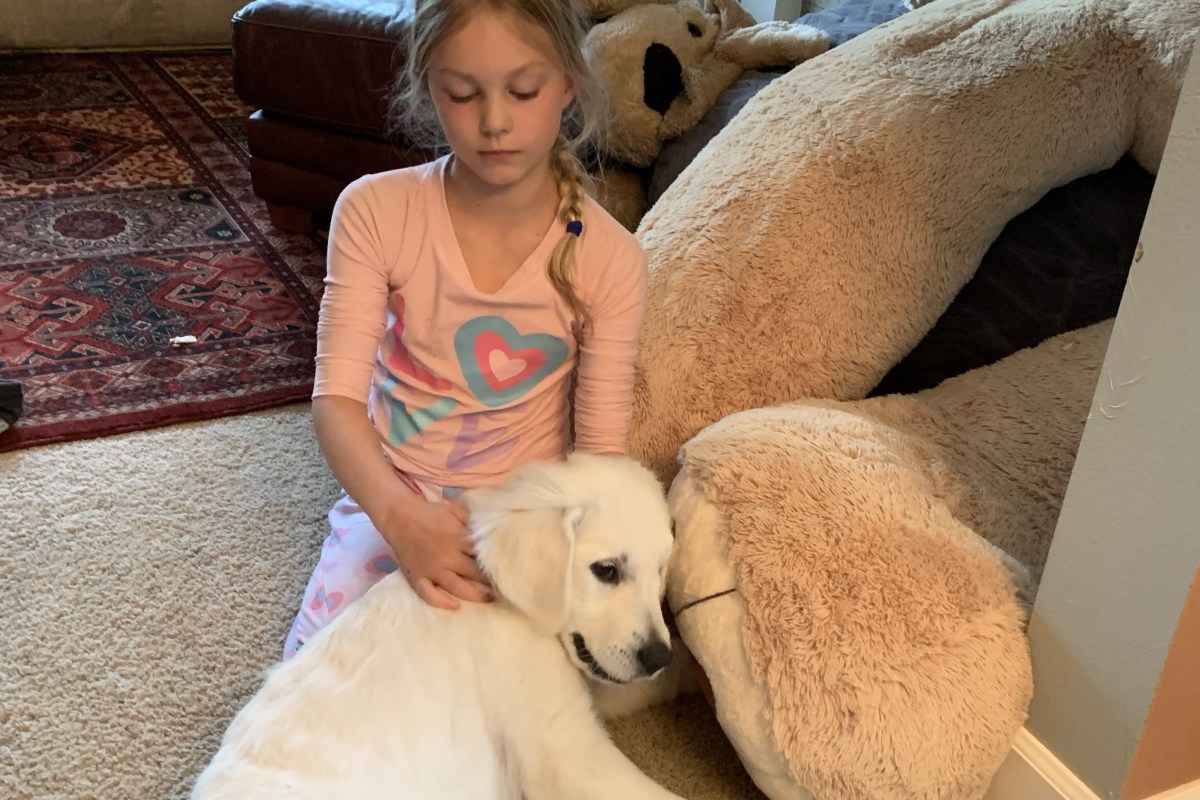
(featured photo is a photo of Miss O and Cooper in a calmer moment)
Master Negotiators

When we were children, we used to think that when we were grownup we would no longer be vulnerable. But to grow up is to accept vulnerability. To be alive is to be vulnerable.” – Madeleine L’Engle

I’ve found that daycare drop-off is an incredible place to observe negotiation skills. These young people who are still very comfortable asking for what they need are masters. Speaking for myself, I think I often give away the power in the negotiation because I’m more concerned about Mr. D’s needs than my own.

At 4-years-old, he’s pretty comfortable going to school so we don’t have really tough drop-offs, but lately he’s been negotiating for upside-down hugs. No, I don’t have to go upside down, thankfully. I pick him up and flip him upside down. It’s a good arm and core workout.

Yesterday morning after I’d done the three we’d agreed upon, Mr. D negotiated for more. He started to hold up four fingers but saw that he was going to get push back and lowered it to two. And then asked for one more after and then one final one, managing to get the four he wanted after all.

I’m thinking about this because in my job we’re negotiating a new contract with an existing client. Here are the ways I think we could learn from the five and under set:

  • Grown-ups, myself included, seem to fear the negotiation process. The idea that someone might use it as an opportunity to walk away is terrifying.
  • It seems like we do a lot of guessing what the other side will do before even making an opening bid. And what they do, is rarely what we’ve guessed. Sure, it’s strategically sound to think through pros and cons, but it stops being fruitful when it freezes us in place.
  • When we lean in to the process, it feels like connection. We seem to have forgotten what many little people know intuitively, that we can just ask for what we need.

Negotiation is vulnerable. Maybe all scenarios where we’re scared we won’t get what we want or need are. But watching these pre-schoolers reminds me that we won’t get anything unless we ask.

For more about negotiating, specifically the role of silence in negotiation, Vicki and I had another great podcast conversation with Dr. Gerald Stein – this time about the waiting game. See Episode 37: The Waiting Game with Dr. Gerald Stein to listen.

(featured photo from Pexels)

The Power of Stories

See, broken things always have a story to tell, don’t they?” – Sara Pennypacker

Shortly after I returned from Everest Base Camp in 2001, I went with my dad to hear Beck Weathers speak. Anyone that has read Jon Krakauer’s book Into Thin Air or any of the other books about the 1996 disaster on Everest, is probably familiar with his story. Here’s my abridged version:

Beck was a pathologist from Texas that was climbing in New Zealand guide Rob Hall’s group during the 1996 Everest climbing season. He was high up on the mountain nearing the top when he went snow blind. So, Rob dug out a spot for him to sit and wait until Rob summitted with the other clients and returned for him.

Rob never returned for him because Rob died trying to help another climber and didn’t adhere to his turn-around time, the time when they needed to go back down no matter whether they’d summitted or not. But one of the other guides from Beck’s group came by and now that the storm was descending, Beck went down with them to Camp 4. They got within 150 yards of the camp but couldn’t find it in the blizzard conditions. As they circled in the storm, Beck just fell over and they left him lying in the snow. He laid there for 15 hours at 26,000 feet during a storm with his face and hand exposed.

And then he miraculously “woke up” and managed to make his way to camp. The other climbers were in complete disarray after the storm and were shocked to see him. They helped him into a tent – and then left him there, expecting that he’d die during the night. As Beck screamed because he couldn’t eat, drink or even keep himself covered with sleeping bags, they couldn’t hear him over the howling winds.

Beck didn’t die that night so the next morning the other climbers rallied to find a way to help him down the mountain as he was suffering frostbite to his hands, arm and face. He was short-roped (pretty much tied right to) a dream team of amazing climbers, Ed Viesturs and David Breashears. Ed and David weren’t from Beck’s group but were up there filming a Imax film about Everest and had aborted their climb to help others.

The Dream Team got Beck down to 20,000 feet where a helicopter that was rallied by Beck’s wife in Texas attempted to land. The air is so thin that the helicopter rotor blades could barely keep the machine aloft and to even try to do this once, the pilot off-loaded every bit of weight that he could. He was on the knife-edge of not making it when he came over the ridge to find the landing pad the Dream Team had marked with red Kool-aid.

And just as Beck is about to get on the helicopter, a climber who has more severe injuries from the Taiwanese team arrived. The helicopter could only take one person and Beck gave up his seat to the more injured climber. Beck assumed he’d just signed his death warrant because he couldn’t make it through the Khumbu icefall with his injuries, not even with the Dream team’s help because they’d have to cross huge blocks of ice on ladders. As he’s contemplating this, the helicopter rose one more time over the ridge – the pilot came back for Beck.

Beck lost his arm from his elbow down plus all the fingers on his other hand and parts of his feet. He had a prosthetic nose that they grew for 6 months on his forehead. He could never work as a pathologist again. He wrote a book called Left for Dead that recounts with detail those four times he was left for dead on Everest and began a second career as an inspirational speaker.

Sitting in the front row, I was transfixed watching Beck tell his story. Great story-tellers have a way of raising questions in us that have nothing to do with Mt. Everest. As author Brandon Mull said, “Sharp people learn from their mistakes. But the real sharp ones learn from the mistakes of others.”

Have you ever pursued a goal so obsessively you gave up everything else? Would you be able to keep going after being left for dead? Would you give up your seat to someone else that’s more injured or give up your IMAX filming to help someone else? Have you been able to find your way to a new career?

(featured photo from Pexels)

Sweet Tooth

It’s not the mountain we conquer, but ourselves.” – Edmund Hillary

My math brain likes to discern patterns. If you call me out of the blue at 4pm on Monday and then do it more than once, I’ll jump to wondering what you are doing Mondays at 3pm that makes you think of me.

The patterns that interest me most are the ones that take me a long time to pick up on. Here’s one.

I have a sweet tooth. Like a big sweet tooth. More than one – actually, a whole mouthful. I’ve frequently argued with it, sometimes ignored it, but very rarely analyzed it.

My dad had a big sweet tooth as well. Are these kinds of things inherited?

But recently I was describing my sweet tooth to someone as something that starts with Halloween, carries through the holidays, and best case, abates sometime around Memorial Day.

When I started stashing those mini candy bars in my pantry again, I chalked it up to the pre-Halloween availability of those bite size snacks. Besides, I’m especially busy, so it’s just part of keeping up the quick energy to get everything done, right?

And then my recent description of my sweet tooth jiggled something loose. The memory that last year my reason was that it was because I was traveling for work. And the year before that? I don’t know – probably post-pandemic back to in-person school or something.

The point being – I have a new reason every year. If I look at the pattern, it starts with fall. I start feeling like sleeping more with the earlier sunsets and crisper evenings. And it’s a little harder to get up at 5am in these cold, dark mornings. I’m looking for the natural summer productivity that I get here in Seattle with the 16 hours days, to be all year round. When my body tries to pick up the seasonal cues to slow down, I jack it up on sugar.

You know what? I bet my dad did that to a degree too. He also had a problem slowing down, being anything less than on-the-go. So is it inherited? Well, maybe it is. The go-go pattern not the sweet tooth. Not that I’m ruling that out either.

Now that I see it, I wonder if this is a pattern I want to pass on. Isn’t that a funny thing about families? Sometimes it’s hardest to see the patterns closest to us.

For a related post about change in energy, please see my Heart of the Matter post Department of Low Energy.

Smells Like Vacation

Only a child sees things with perfect clarity, because it hasn’t developed all those filters which prevent us from seeing things that we don’t expect to see.” – unknown

I love words. Use them all the time. But every once in a while, something happens to remind me that perhaps I’m using too many.

The other day my kids and I were driving an hour to get to the Washington State Fair. It wasn’t a vacation, or bay-cation as Mr. D says, but it was a special day. And my kids are great in the car – they generally get along and are happy to be there.

So, there we were, sunnily driving down the road. Mr. D, who Vicki (from the Victoria Ponders blog and my partner on the HoTM blog and podcast) refers to as a poet, pipes up from the back seat,

I can smell bay-cation. It smells like orange mixed with rainbow.

What do your vacations smell like?

If you are going on a road trip or just want some great listening around the house, check out the Sharing the Heart of the Matter podcast with author and blogger Pete Springer on our latest episode: Episode 36: They Call Me Mom with Pete Springer

The Next 100,000 Miles

There’s a sunrise and a sunset every single day, and they’re absolutely free. Don’t miss so many of them.” – Joe Walton

This is a post I originally published on 2/8/2023. Heads up – you have have already read this.


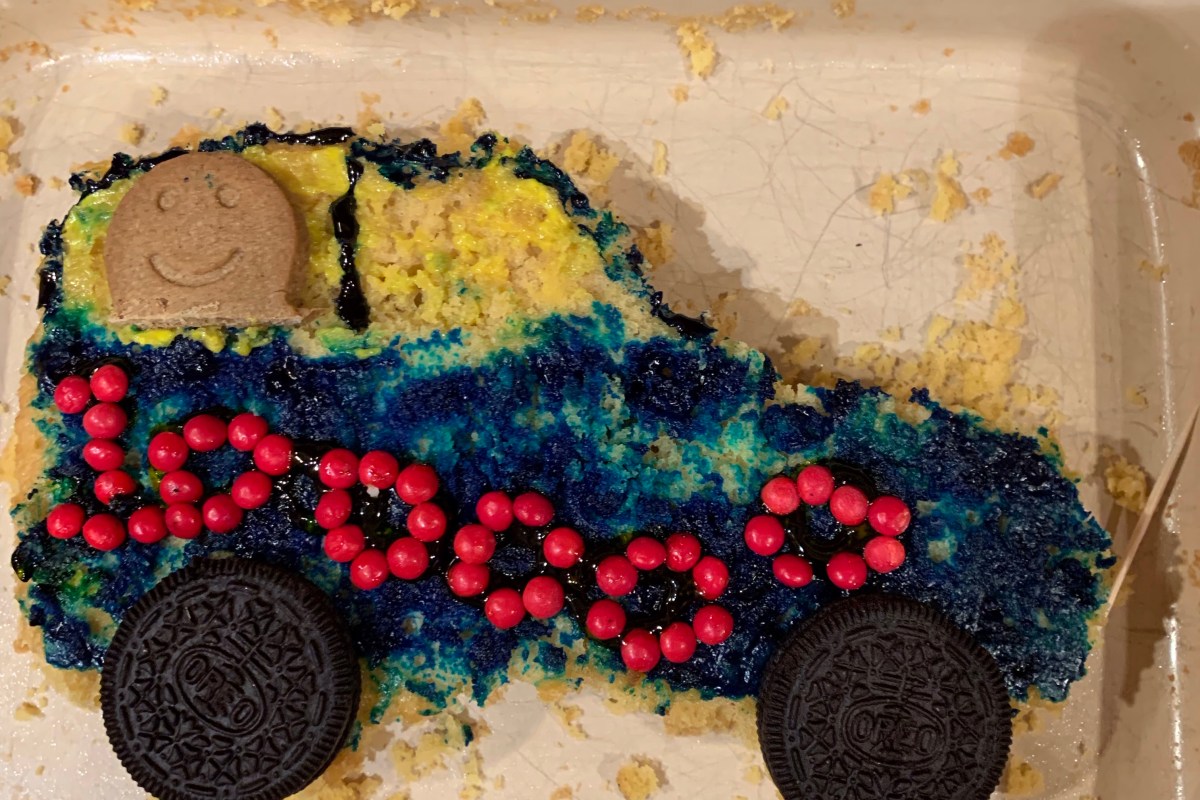
When we celebrated our car turning 100,000 miles in December, we made the car a cake. After blowing out the candles, my seven-year-old daughter turned to ask me, “Are you going to be alive when this happens to me?”

I stalled for time by asking if she was talking about getting her own car to 100k. When she nodded “yes,” I replied “I hope so.”

My engineering brain wanted to calculate how many miles we drive a day while factoring in variables based on the future of transportation. But my existential brain kicked in and reminded me that I don’t know how many miles I have left in me. I just know what kind of miles I want to put in.

The Destinations

Get togethers with friends, adventures to find new ones, crossing bridges to help anyone who needs it are all on my priority list of destinations.

I want to use a good portion of the miles I have left to drive to trailheads and view points. And speaking of miles, I’ve put a lot of them on my knees and hips so the amount of hiking and climbing, if I ever get back to it, might be limited. But if we are driving to be among trees and mountains, I hope I can be happy no matter the activity.

Gathering supplies for silly things like car cakes that help us celebrate any and every milestone together, or just even a good day, seems worth doing. But overall, I want to spend my miles going on vacation together and fewer miles to IKEA to get more stuff.

When I can opt out of driving these miles in a car and instead travel them in an ecofriendly manner that gives our environment and world a healthier and longer life, I’m happy to change vehicles.

The Route

I want to set my internal GPS towards spontaneous miles finding love and purpose and away from those routine destinations ticking the box for obligation. And I want to heed that directional voice as it gives me help me find places that unlock the sense of adventure and possibility, instead of spinning wheels in the muck and mire. If given the option, I’d eliminate miles to to-do list meetings, corporate bullshit, and fruitless gatherings with ineffective leadership or heart.

If learning and laughter is part of where we are going, I’ll be happy to detour from any well-traveled road. I want to drive proactive miles to the things that keep us healthy and NO miles to the emergency room.

The Atmosphere

I want to put in connected miles, ones where we talk, laugh, or sit in companionable silence and gaze at the same scenery. I don’t want to put in disconnected miles where we zone out on attached devices. I understand that this will soon be out of my control, and that I’m part of the problem already when I encourage them to do it on mornings we have trouble getting into the car. But even when they choose their devices, I want my kids to know that I’d prefer to talk and listen to them.

Traveler’s Log

I know that regardless of the intentions I’ve put into the list, I get to control very few of these things except to choose to lean in when I take a “wrong” turn. Also, when lost, reconnecting to a desire to make meaning out of the detours.

I’d like to spend my remaining miles trying not to be locked in conflict or with my heart hardened towards people that have pissed me off. I want to stop avoiding my anger, sadness, or suffering but instead moving to approach all of the emotions of this amazing journey with empathy, awe & curiosity.

I hope to take fewer trips to regret. I’d like to be more readily willing to reroute to repair, apology, and appreciation of the unexpected path of life.

While I recognize I need to spend less time in overdrive and more time in idle, I also want to pass these miles not metaphorically (or actually) asleep at the wheel wondering how I got here but instead marveling at the scenery with gratitude.

When we reach our destination, I hope to remember, more often than not, to say a prayer of gratitude for safe travel.

I don’t know if I’ll be here when my daughter gets a car to 100,000 miles. If it takes til she’s my age (53), I’d be 99-years-old and the odds are slim. But if we are driving an open road between our hearts for any good portion of those miles, I’ll call it good.


I written a related post on the Wise & Shine blog about a road trip and making meaning from our experiences: The Universal You.

Room for More Learning

That is what learning is. You suddenly understand something you’ve understood all your life, but in a new way.” – Doris Lessing

The other day I went to help four-year-old Mr. D with his shoes, and he said, “I can do it. I’m an es-pert!

It reminded me of a story I had just re-read in Mark Nepo’s Book of Awakening. He credits it to Leroy Little Bear:

“Two scientists traveled halfway round the world to ask a Hindu sage what he thought about their theories. When they arrived, he kindly brought them into his garden and poured them tea. Though the two small cups were full, the sage kept pouring.

Tea kept overflowing and the scientists politely but awkwardly said, ‘Your holiness, the cups can hold no more.’

The sage stopped pouring and said, ‘Your minds are like the cups. You know too much. Empty your minds and come back. Then we’ll talk.’”

Leroy Little Bear

This is my invitation when I think I know something, to stop, empty my mind, and fill my heart.

I went to the memorial service of the father of one of my childhood friends this weekend. He was a psychologist by vocation and long before I knew what that was, I understood that he had a healing presence.

One of the phrases that stuck out to me in the eulogies was one from his grandson. He said that this man “led by listening.” Ah yes, that’s it exactly.

Which brings me back to my four-year-old es-pert at shoes. I am so grateful for his help with the routine by getting his own shoes on. But anytime I’m feeling expert at anything, I remember that most of the time Mr. D, the es-pert, wears his shoes on the wrong feet. There’s always room for more listening and more learning.

For more about lifelong learning, please see my Heart of the Matter Post: Learning the Easy Way or the Hard Way

(featured photo from Pexels)

(quote from Reflections on Learning on the Real Life of an MSW blog)

Comic Relief

The human race has one really effective weapon, and that is laughter.” – Mark Twain

By the time I got my kids hustled to the car on the first day of school, everyone was a little frayed by nervous energy. Getting the tags off the new clothes, squeezing into new shoes, packaging up the gift for the teacher, and taking the first day picture, all added to the excitement and anticipation of the moment.

The night before I’d told Miss O and Mr. D about my big first day feelings that usually showed up as nerves for the first attendance call. When the teacher would call out, “Mary?” I would blush deep scarlet and have to correct them because my full name is Mary Wynne and I have always gone by my middle name.

In preparation for the moment, I’d sit and think who else had to speak up on the first day. My friend, Katie, had to say something when they called her “Katherine” and my friend, Jiffy, had to interject when “Jennifer” was called out. But in the myopia of childhood, I was sure mine was the hardest.

Back to this week, Mr. D had his first day of school one day before his sister and since he’s in the same pre-school classroom, it wasn’t as momentous. But he was still picking up on Miss O’s first day of third grade vibes. So the car was pretty subdued as we pulled out of the driveway and as we turned left onto the busy road that would take us to school, I heard something very rare when in the car with my two kids – silence.

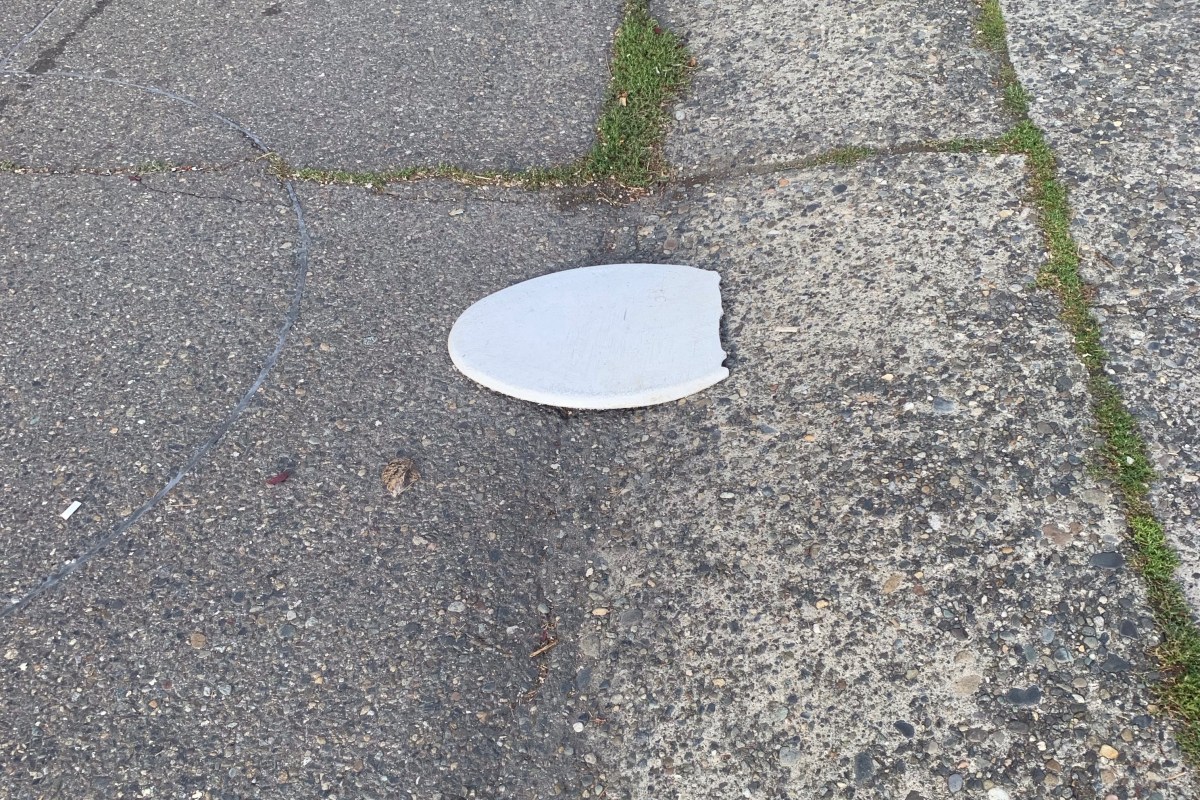
Then something caught my eye out the window on Mr. D’s side – a toilet seat lying on the sidewalk next to a business. Not the ring part but the lid part. I started to say, “Is that a..” when Mr. D chimed in “a toilet seat?” Miss O craned her neck to see out the other window more easily. And then we laughed the rest of the way to school.

Thank goodness for some comic relief reminding us not to take this sh!t too seriously.

P.S. For anyone wondering which teacher Miss O, got after her careful analysis of the options, and my work to stay out of it, as described in The Gift of Hard Things. She got the one she was neutral about – and loves her.

P.P.S. Interjecting humor at just the right time reminds me of my beloved dad. Check out this podcast where we let Brian (writingfromtheheartwithbrian.com) interview us about how we came to writing family memoirs even though our jobs are not as professional writers. Episode 34: How To: Writing Personal Narratives

Let’s Not Be Grabby

Be kind whenever possible. It is always possible.” – Dalai Lama

The other evening, I was out walking with my little family. We’d managed to get our puppy Cooper to walk a whole block in a semi-efficient fashion before we ran into some friends and it became a puppy love fest. Then more friends pulled up in their car and the whole family piled out after a three week road trip, with that day being a seven-hour stretch. Their three kids got into the puppy/kid mix and it was an excited muddle of energy.

Amidst all the noise and excitement, I heard Miss O trying to help the 6-year-old neighbor girl get the juggling balls from the girl’s older brother.  Miss O advised the girl, “If you ask nicely, maybe he’ll just give them to you.”

This thing is something we’ve worked on again and again in my family – the practice to ask for something from someone else instead of just trying to grab it or take it because you fear they are going to say “no.”

Watching my kids has made me connect with how strong an impulse it is to just take something. The way I experience it, it’s an incredibly powerful fear that if you ask that you’ll just get turned down so it’ll be better to craft another way by force or trickery to get what you want. Is it the beginning of vulnerability?

When I was telling Miss O and Mr. D stories at bedtime the other night, I told them the story of when I was in preschool and found some brand-new erasers in a box. They were absolutely beautiful – never used and had the alphabet on them. I wanted them so badly, so I filled my pockets with them. And then to create a back story, I dropped the erasers on the way home from school and pretended to find them. Yep, my mom didn’t buy it, and I had to give them back.

 But I feel it even now when I’m working with others. I’m inclined to forge a path that doesn’t involve having to ask someone else, mostly because of impatience. When I’m working with Vicki Atkinson, on the Heart of the Matter blog, I find myself having to consciously slow my roll to run something by her before making a decision or sending out an invitation to someone we want to podcast with. Thank goodness she is so incredibly smart and fast in responding because both reinforce the wonderful benefits of collaborating.

Given my own inclinations, I’ve worked and worked with my kids to ask before they take something from each other – even if it’s just goldfish crackers. And then our rule is that we have to abide by that answer, even if we have the strength and power just to take it. I’ve noticed that if they just ask straight off, the answer is often “yes.” If they ask after they’ve already been tussling about it, the answer is frequently “no.”

It is so hard to fight against the fear we won’t get something that we want. But hearing Miss O advise our young neighbor to ask made me think we’re making some progress. And guess what? The girl asked nicely and her older brother happily handed her the balls she wanted.

Now if I could just get Cooper not to nip when he wants attention.

The Gift of Hard Things

Experience is the hardest kind of teacher; it gives you the test first and the lesson afterward.” – Oscar Wilde

Summer is winding down in the Northern Hemisphere. I can feel all the tell-tale signs, the nights that are chilly before we go to bed, and have that cool calm when I get up at 5:30am. The relenting brightness of the sun starts to give away to the softer light of fall. And, we are getting ready for the start back to school.

Last week, my eight-year-old daughter was giving me the breakdown of the third grade teachers that she might get for this next year in school. One yells a lot, one is neutral, and one is nice. As she was talking about who she hopes to get for this year to come, I felt an upwelling of tension surge through my spine. Putting my finger to it, I’d say it’s because of that protective desire for her to get the nice teacher.

But that’s at odds with what I know about life. My lived experience tells me that everything doesn’t always work out the way we want, that sometimes we have to wade through the year(s) of muck to get to the side of clarity, and that sometimes we get the crusty teacher.

For all the resilience I’ve learned about life, I find that my children challenge my worldview. That is to say, my desire to give them a life that was better than my own sets up a tension with the reality of how life unfolds. There is about zero chance that I can root for my daughter to get the mean teacher even though she may learn a lot more about uncovering the gem in the rough if she does.

It reminds me of a letter my dad, who was a Presbyterian pastor, gave me when I was going through my divorce about 12 years ago. It was tucked in the page of a book he was giving me: Know Doubt by John Ortberg. The letter said in part.

I have seen so many people in my ministry going through times of deep change in their lives and it seems that those are also times of deep thought and reflection that have been creative and good for them. You are in the middle of a lot of change these days. There must be some serious disappointment that your marriage has not worked out as you had dreamed and intended. Your life has been the story of one big success after another and you don’t have many things in your life that don’t work out well and so this time must be unsettling. So just maybe this time of change is also a time when you are questioning and thinking about big stuff like faith and doubt and your life-view. If so, I really think this little book might be a good read for you.

Dick Leon

He acknowledges the unsettling nature of life – but that unsettling times of life also lead to creativity and good. Did my dad wish for me to have hard times? Absolutely not. But did he think that goodness was going to come out of it? Definitely.

I wonder if my tension about not wanting my kids, or any of my loved ones, to go through hard times comes across. Maybe as anxiety? It’s way harder to watch others face uncertainty than to go through it myself.

In another sign that summer is coming to an end, my daughter just celebrated her birthday. At the end of the day, she pulled me in tight and whispered in my ear that she didn’t want the day and her birthday to end.  I thought “Ah yes, my dear, but finding the magic in all the other days of the year when we aren’t front and center creates the sweet spot of life.” The lessons are harder to find on the days we get everything we want.

I find I can reduce my anxiety about the hard days my kids will have by remembering, as my dad did, that creativity and deep understanding comes on those days, not on birthdays.

Check out my Heart of the Matter post today for a lesson I’m learning about taking a new job in my 50’s: Going with My Gut

(featured photo from Pexels)