How To Share Our Luck

Service to others is the rent you pay for your room here on Earth.” – Muhammad Ali

I’m fascinated by the origin stories of how people start big things. I love hearing how people have done fantastic things just by following a thread that often starts in such an incidental or accidental way.

My guest on this week’s How to Share podcast, Gil Gillenwater, has a great origin story. In 1987, he and his brother, Troy, went on a Thanksgiving-inspired road trip to deliver food to a town in Mexico. They took a wrong turn and ended up in Agua Prieta, a town right on the US-Mexican border and were stunned by the living conditions and abandoned children.

Gil started a non-profit called Rancho Feliz that has served the Agua Prieta and surrounding communities in these ways:

  • Awarded 3,700 scholarships
  • Issued 6,854 graduation certificates for adults
  • Built 1,220 houses
  • Distributed 64,000 bags of food
  • Donated tons of medical supplies
  • Constructed orphanages, education centers, childcare centers, and volunteer centers

And more than that, Gil and his mission have also enriched the lives of the people who have come to volunteer. Rancho Felix has coordinated 27,462 volunteer visits. Gil documents these accomplishments and shares his experiences and insights from over 35 years of philanthropic work along the US-Mexico border in his beautiful book, Hope on the Border.

Gil tells us why me-first culture isn’t working and how enlightened self-interest provides a path out of spiritual poverty. He shares why he doesn’t like the word “charity” for either giver or receiver. Instead Gil hails the 28,000 volunteers that work with Racho Feliz as guardian warriors.

We talk about education as the ultimate tool in the border crisis and how providing that can change lives. And we talk about how the ability to see ourselves in others proves to be a life changing gift.

This is an incredible conversation with an amazing guardian warrior that shows us enthusiasm and purpose that transcends borders. I know you’ll love it.

Takeaways

  • When’s the last time you heard good news about the US-Mexico border?
  • The disparity in wealth is a significant issue that needs addressing.
  • Education is the key to breaking the cycle of poverty.
  • Creating opportunities in one’s home country can reduce migration.
  • Enlightened self-interest can lead to personal and communal growth.
  • Volunteering provides a sense of purpose and fulfillment.
  • Community service fosters connections and shared humanity.
  • Experiencing poverty firsthand can change perspectives.
  • The joy of service is a pathway to personal happiness.

Here’s a short clip of Gil describing enlightened self-interest as an antidote to our me first, greed is good culture:

Here are some ways you can watch this compelling and inspiring episode:

Please listen, watch, provide feedback and subscribe.

This is the last podcast of 2025! Thank you to all you amazing listeners/watchers/readers who have been so interested in and supportive of all these amazing guests sharing their interesting stories about learning, writing, and growing in this one wild and precious life! Stay tuned for more great episodes in 2026! I appreciate you!
How to Share Our Luck with Gil Gillenwater How To Share

In this enlightening conversation, Gil Gillenwater is with host Wynne Leon and shares his experiences and insights from over 35 years of philanthropic work along the US-Mexico border. He discusses his book, 'Hope on the Border,' which highlights the transformative power of education and community service. Gil emphasizes the importance of enlightened self-interest over traditional charity, advocating for a model that empowers individuals and fosters dignity. He explores the duality of poverty, the need for sustainable opportunities, and the joy found in serving others, ultimately presenting a vision for a more connected and compassionate world.TakeawaysEducation is the key to breaking the cycle of poverty.Enlightened self-interest can lead to personal and communal growth.Charity should not be viewed as a sacrifice but as a mutual benefit.Volunteering provides a sense of purpose and fulfillment.Welfare can disempower individuals and communities.Community service fosters connections and shared humanity.The disparity in wealth is a significant issue that needs addressing.Experiencing poverty firsthand can change perspectives.Creating opportunities in one's home country can reduce migration.The joy of service is a pathway to personal happiness.Links for this episode:How to Share homeHope on the Border at AmazonGil's organization: Rancho FelizGil Gillenwater on FacebookWynne’s book about her beloved father: Finding My Father’s Faith; Blog: https://wynneleon.com/; Substack: https://wynneleon930758.substack.com/
  1. How to Share Our Luck with Gil Gillenwater
  2. How to Share 1970's Chicago with Doug. E. Jones
  3. How to Share Feedback with Dr. Vicki Atkinson
  4. How to Share the Next Generation with Mari Sarkisian Wyatt
  5. How to Share Impactfully with Social Media Friends with Amy Weinland Daughters

Links for this episode:

Hope on the Border on Amazon

Gil’s organization: Rancho Feliz

Gil Gillenwater on Facebook

My book about my beloved father: ⁠Finding My Father’s Faith⁠

(featured photo from Pexels)

(feature quote from Enlightened Mind 622 – The Rent You Pay)
It’ll Be Alright In the End

Everything will be alright in the end, and if it is not alright, it is not the end.” – The Best Exotic Marigold Hotel

Months ago, when I signed Mr. D up for his very first summer camp (rock climbing, in case it matters), I assumed that it would start at the same time as Miss O’s. For his age group 3-5, the camp ends at noon. Miss O’s older group goes until 3pm. But certainly they’d start all the groups at 9am, right?

When I took a closer look before the camp started this week, I discovered Mr. D’s doesn’t start until 9:30am. When I realized that detail, I started inwardly groaning about the inconvenience.

But just briefly. Because in the last dozen years, I adopted a shift that has made an immense difference to my happiness. I started assuming that “it” is for the best. That whatever is irritating me is just an opportunity opening that I can’t yet see. Or that I may never totally understand because it’s above my pay grade.

This has a Biblical basis (Romans 8:28), and a Buddhist basis, but I don’t think it requires a particular spiritual tradition. It’s just an act of staying open to the possibility that there’s a perspective that I can’t yet see.

For anyone that is thinking this sounds Pollyana-ish, I get it. But this change came from the darkest days of my life when I was stuck in all the feelings of failure after my divorce and clueless about what I was going to do next.

So many things came from that vulnerable time in the dark: my meditation practice and faith, the conversations with my father, my two beautiful children, my writing. And also this idea that I should stop doubling-down on irritation and instead stay present for whatever is unfolding.

It’s easier to do this for things like camp drop-offs. In this case, the payoff came almost instantly. Of course, it was beneficial to have Mr. D’s camp start a half hour later. He got to see his sister get dropped off, and then have some time warming up on his own.

 It gets harder when the kids are sick and I have to cancel my hair appointment. Or the babysitter cancels and I can’t go out with my friends.

So, I practice with the small irritations – believing that it’ll be alright in the end. And if it’s not alright, it’s not the end.

In Our Element

As far as we can discern, the sole purpose of human existence is to kindle a light in the darkness of mere being.” – Carl Jung

We rented an AirBnB over the weekend that touted bunk beds in the laundry room. Clearly the charm of this place lay in its location on a beach on Whidbey Island. And that it accepted dogs.

Mr. D has been calmed by water since day one. The babies that don’t like their first bath? Nope, not Mr. D. What did we do for at least an hour on his first day of daycare? Play in water.

I watched him this weekend pouring water with a clam shell for thirty minutes from one hole to another and then back. An incredibly long time for a four-year-old to stay with one focus. If it weren’t for the tide coming in, it looked like he would have done it for hours.

I wonder if we all have an element we are born with that calls to us. For Miss O, it seems to be singing. First mine and my mom’s, and now her own.

If given the option between beaches and mountains, I’d say “mountains.” One step onto a hiking trail and my stress level drops by five notches. Every step gives me further improvement in my mental health, resilience, and sense of humor.

But I’ve spent more time on these rugged beaches of the Pacific NW than mountains since I’ve had kids. And I’ve found the beaches remind me to breathe out all the stale air I hold in. Whether it’s because Mr. D has water and Miss O can sing by the campfire, or because I can walk along the sea and the surf, I’m not sure. Whatever it is, it works magic.

Who cares if the bunk beds are in the laundry room if the location puts us in our element?

(featured photo is mine – Mr. D by the sea)

Good Mood of the Soul

Find a place inside where there’s joy, and the joy will burn out the pain.” – Joseph Campbell

This post was originally published on 8/10/2022. Heads up – you may have already read this.


Recently, a friend sent me a printout of a sermon that my dad, who was a Presbyterian pastor, gave on parenting 36 years ago. She had a printed copy and kept it filed away. Now that her kids are long grown, she sent it to me.

In it, my dad gives a quick synopsis of his children’s personalities, “We look at our three children and see that their responses to life were distinctly different from day one. Our first child was laid back and relaxed … our second was wound up so tight she couldn’t keep her head still to nurse … our third was happy and charming. They had those marks when they were born … they still have them today.”

I’m the third one. That was written when I was 17 years old. But there’s something about family patterns that keep us trapped in roles from which we need to move on from. For me that was moving from happy to joyful.

In her recent book, Atlas of the Heart, researcher and author Brené Brown defines happiness as “Looking at the data we’ve collected, I would define the state of happiness as feeling pleasure often related to the immediate environment or current circumstances.

And that fits pretty well with the list I can name of the things that make me happy:

  • Dance parties with my kids
  • Finishing a shower without interruption from my kids
  • Hearing a song I loved from college in the grocery store
  • A vanilla milkshake on a hot summer day

When I discovered meditation and mindfulness during my travels through the less pleasant periods of my life, it taught me that joy is a different feeling altogether. Brené Brown says she thinks of joy as “‘the good mood of the soul.’” She defines it based on her research as, “An intense feeling of deep spiritual connection, pleasure and appreciation.”

For me joy comes when I let go of seeking and preference. As poet Mark Nepo said, “One key to knowing joy is being easily pleased.” It’s cultivating my awareness of what is already present and my delight at the magic in the air. It works when I stop narrowing my field of vision to my agenda and open to all there is. Not surprisingly, researchers have connected joy to gratitude and describe the two together as “an intriguing upward spiral.’ (from Atlas of the Heart). Gratitude increases our ability to feel joy, joy makes it easier to find gratitude and so on.

And here are the things that make me joyful:

  • Every time I get to wake up and witness a sunrise
  • Catching a glimpse of my kids in a circle with the other kids in the neighborhood leaning heads in to examine some fascinating part of life
  • Holding hands
  • Hearing the clink of glasses at a dinner with dear friends
  • Witnessing a whale surface to breathe
  • Listening to the Bach Cello Suites played by Yo-Yo Ma
  • The view from the top of a mountain no matter how breathless, exhausted and cold I am
  • Anything that comes out of a conversation that starts with “How can I be of help?”

The conditions of happiness are specific and fleeting. I’m frequently happy but it certainly isn’t a constant.

The conditions of joy are deep and enduring. They represent ties in my life, beauty of this world and things I’ve worked to make priorities. It is the current underneath my mood. It’s the reward for when I’m aligned with my values.

For the times of my life where I’ve felt like I’m stuck, wading through glue or too busy taking care of others to take care of myself – it’s joy that pulled me through, making it worthwhile all the way. I might have been born happy, but I’m grateful to live joyfully.

(featured photo from Pexels)

The Four Habits of Happiness

It all comes to this: the simplest way to be happy is to do good.” – Helen Keller

I was listening to a 10 Percent Happier podcast that featured Arthur Brooks. A professor and social scientist, Arthur Brooks has recently published a book called From Strength to Strength: Finding Success Happiness and Deep Purpose in the Second Half of Life. He named a list from research of the 4 most important habits of happiest people:

  • Faith
  • Family
  • Friends
  • Work that serves others

But it made me wonder if everyone can fulfill that formula? First of all, faith means so many different things to different people. But perhaps it’s the trust in one of my favorite Steve Jobs quotes (which as Dr. Stein pointed out seems to build off Kierkegaard’s famous quote about living life forwards):

You can’t connect the dots looking forward; you can only connect them looking backwards. So you have to trust that the dots will somehow connect in your future. You have to trust in something – your gut, destiny, life, karma, whatever. This approach has never let me down, and it has made all the difference in my life.

Steve Jobs

But going down Brooks’ list, what about people who don’t have a lot of agency in their work? I recently heard an example of a hospital janitor. Instead of feeling like he didn’t have purpose in his work as he cleaned up vomit in the oncology ward, he’d framed it as an opportunity to make people feel a little bit better on what might be a low point in their lives.

And this made me think of my life. One of my least favorite activities about parenting is cleaning up spills. On a weekday when we are at work/school/daycare, it’s not so bad, but on any given weekend day, I clean up (or help my kids cleanup up) 6-10 spills a day. It feels like a waste of time to me, like I could be spending more time laughing and playing with my kids if we didn’t have spills.

But of course, despite my best precautions – kids, especially at age 3-years-old and age 7-years-old have accidents. They splash water out of the sink, they tip over the reservoir of paper they were using for a project, paint brushes fly out of little hands, and so on.

Reframing it, I see that I am not cleaning up spills. I’m teaching my kids how to react when things don’t go right. I’m helping them learn to pick up the pieces and continue when we have lost our mojo. And most importantly, I’m building up their belief that they can do it, even when it isn’t fun.

This big picture sentiment when it comes to caretaking is echoed by research professor Dr. Alison Gopnik “Taking care of children, like taking care of elders is frustrating, is tedious, and it’s difficult in all sorts of ways but it is also deep and profound and an important part of what makes us human.

In this way, maybe it is not only work that serves others but also quite possibly a habit of happiness.

What do you think about the four habits of happiness? Is there anything you do regularly that you’ve reframed as work to serve others?

(featured photo from Pexels)

Carried by Joy

Keep knocking, and the joy inside will eventually open a window and look out to see who’s there.” – Rumi

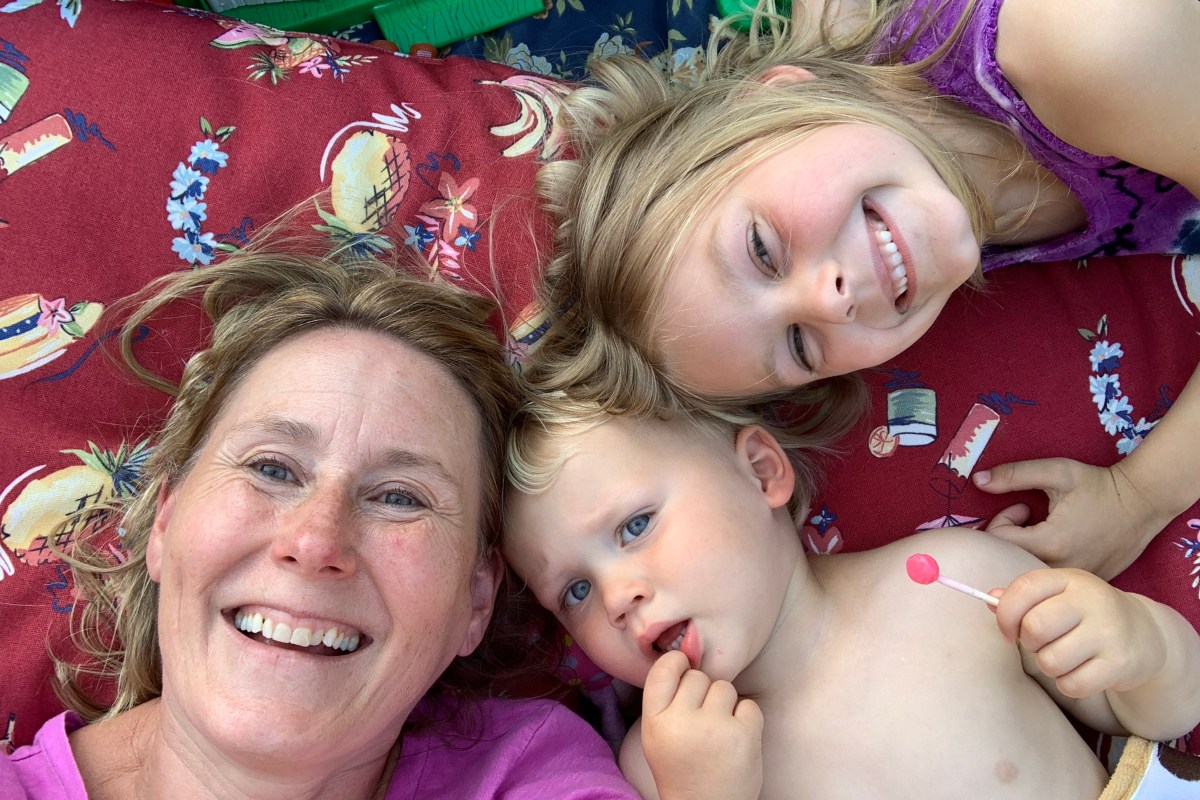
The other day I needed a photo of myself. I used the search feature of my phone to find pictures and although I wasn’t entirely shocked, I was a little surprised that it only came up with 3 of me by myself in 7 years. Virtually all of my pictures are with one or both of my children. And a few were with my beloved dog, Biscuit.

What I like to eat, where I want to go on vacation, what I do with my days – all these things have been hijacked in my life as a parent. I wouldn’t name this time as the marker of high personal happiness in my life – but wow, is it filled with joy. And it has been joy that has carried me through times when I’m sleep- deprived, achingly tired and spent. Which is why I wrote about happiness and joy in my Pointless Overthinking post this week: Good Mood of the Soul.