Memoir Writing: Understanding the Why

Growing up as a kid, we don’t notice that our parents are growing up too.” – unknown

This post was originally published on 6/7/2023. Heads up – you may have already read this.


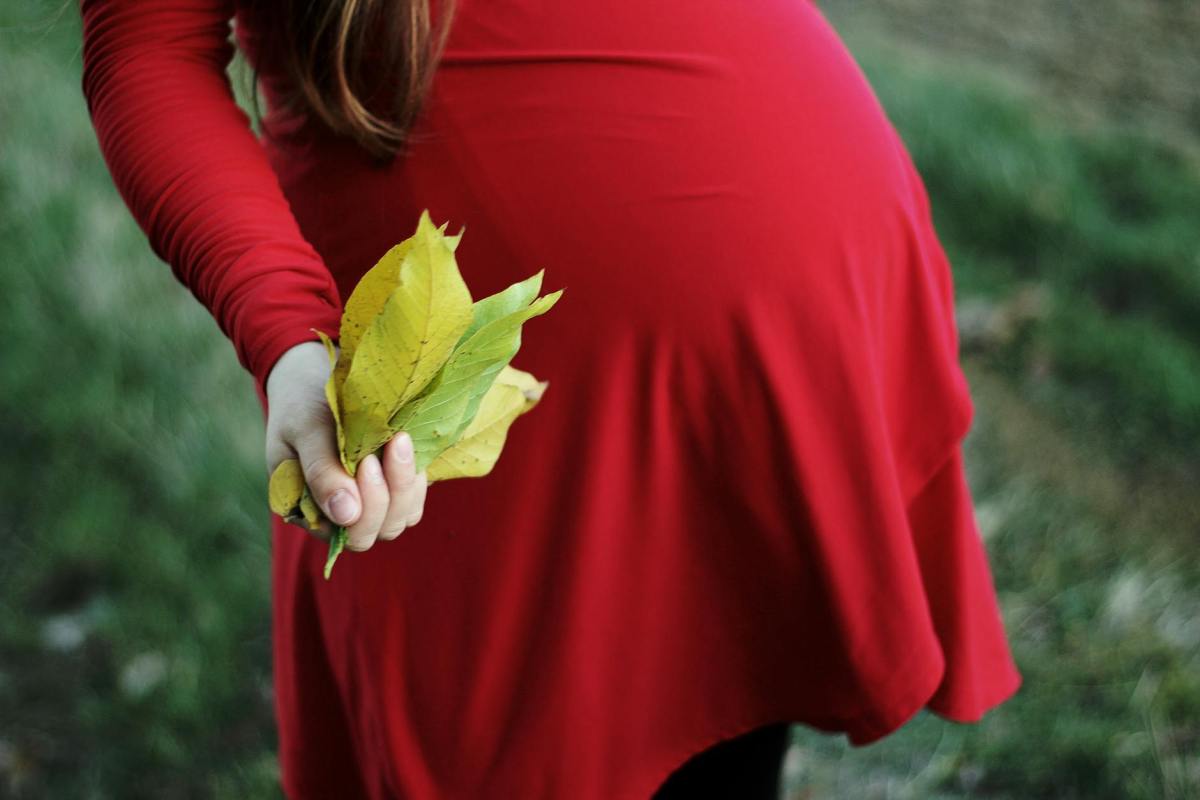
In the summer of 2015, I was pregnant with two projects. The most obvious was my daughter, but I was also about to give birth to a memoir about my father. My father had died in a bike accident the day after I finalized plans to become pregnant by invitro fertilization. His death kicked off an urgency to take the recordings I’d made of my conversations with him, and finish the effort I’d begun before he died to write about his life.

I spent the nine months of my pregnancy nurturing both projects, afraid that if I didn’t finish the book I might not be able to after my daughter was born. Then on a night in August 2015, at the end of the day on which I’d finished the very last line edits for the book, I went into labor with my daughter.

Essentially, I gave birth to both at the same time. And both events were joyous, scary, and full of “what now?”

I’ve also come to realize that there is another parallel between book projects and children – our understanding of them grows with time. This is the thing that surprises me the most – that with the benefit of hindsight, I continue to learn about what I myself have written. Who knew that was possible?

Here’s what I mean. I recently was reading Vicki Atkinson’s book Surviving Sue which is about Vicki’s journey with her mom, Sue, who suffered from anxiety, depression, alcoholism, Munchausen’s by Proxy, and Alzheimer’s. On the surface, I wouldn’t have drawn parallels between that and my memoir about my beloved father who didn’t suffer from any of those things.

But reading Vicki’s incredibly insightful, entertaining, and reflective words about her mom as she charted a trail through Sue’s life, I realized that we all navigate a path in our parents’ shadow. Whether we dig deep into what that was and write a memoir about it, or choose to go our own way and not think about it, the influence of a parent, present or absent, is powerful.

I think my beloved dad was an incredibly helpful influence on my life – and yet there are habits of his that I still carry, like aversion to conflict, that I need to heal. Maybe even more so because he didn’t do that work.

As I devoured Vicki’s well-written and insightful book about Sue, I found myself engrossed in the themes that Vicki wrote about, including:

  • Rethinking our parents as people
  • Understanding complicated family members and finding ways to love them anyway
  • Tending to unresolved childhood pain
  • Secrets and lies and how the weight of distortion impacts mental health
  • Dads and daughters and special bonds
  • Grace and patience

Whether the themes related to something in my life or not, reading a memoir from someone like Vicki who has done the work to understand the patterns in theirs is so inspirational. Whether our parents were hurtful or helpful, being able to tell their stories is an incredible gift to ourselves to uncover the a-ha of how their touch continues.

As we search for our “why’s” in life – the power behind what motivates us and defines us, figuring out our parent’s why’s is incredibly illuminating. Watching the way that Vicki uncovers that for her mom in Surviving Sue is like being at an archeology dig. Instructive to see the way she teases out the gems, suspenseful as we wade through the project, and thought-provoking for how we can apply it to our own lives. Then we can uncover, as Vicki does so masterfully, the objects and knowledge that give us the power and a chance for intergenerational healing.  

(featured photo from Pexels)

My book about my beloved father is available on Amazon: Finding My Father’s Faith

Vicki’s book: Surviving Sue print edition

Vicki’s book Surviving Sue Kindle edition

The Fullness of Time

“The years teach much which the days never know.” – Ralph Waldo Emerson

Miss O has been working on “time” problems in school. Like “It’s 12:40. Zach is supposed to meet his friend in 45 minutes. What time will it be when they meet?” She generally likes math but these problems are getting her goat at the moment.

So, we were settling into bed and she asked me, “Was time around when you were a kid?” Then she thought for a moment and continued, “Oh yeah, they’ve had it for a while.”

I couldn’t get out of the room fast enough to burst into laughter and write that one down. That she said this the night before my birthday wasn’t lost on me.

Hee, hee. Yes, they’ve had time long enough for me to count out 55 years. What else has the fullness of time given me?

Laughter

When we had a small party of family and friends to celebrate my birthday, as well as my mom’s and my friend Eric’s, the thing I enjoyed most was the laughter. Miss O and Mr. D put on a recital. There was great food and also presents, but the real gift was the just the lightness of being. Miss O asked why my eyes leak so frequently when I laugh. I don’t know exactly, but it has something to do with just being so happy to be here.

Perspective

Time has also given me the gift of perspective. It’s a bigger sea in which my hurts, my worries, and even my hopes feel less significant. They matter, but more as in a way that helps me set my sails instead of being the sea itself. I’m a far more patient person – but not because I’ve grown my patience but because the fullness of time helps me settle into the wait.

Heart

I have a favorite quote when it comes to the heart,

“God breaks the heart again and again and again until it stays open.”

-Hazrat Inayat Khan

When I first met that quote, it was like almost everything else that has become my teacher. I thought, “No, no, no.

But time has shown it is less about heart break and more about giving up control. There are people, things, dreams, and abilities that hurt so much when they go. But the heart has no hands to hang on to them. Leaning into that is like opening windows in my heart so that the breeze can flow through.

So, has anyone figured out the answer to the time problem at the top of the post? Clearly, it’s “Who knows because Zach is always running late? But we’ll hug him when we see him.” 🙂 Or at least that’s the answer that the fullness of time has given me.  

Safety in Stories

The one thing that you have that nobody else has is you. Your voice, your mind, your story, your vision. So, write and draw and build and play and dance and live only as you can.” – Neil Gaiman

Three stories that have come up recently in my house…

#1

Four-year-old Mr. D loves telling the story about the parking ticket I recently got outside my mom’s apartment. Even though I have the pay-to-park app on my phone, I choose not to pay thinking we’d only be inside for 15 minutes. It’s a story I’d rather not think about given that I ended up paying $43 instead of the $2, but I have to admit, he’s told it so many times that it’s starting to get funny.

#2

The other day, Mr. D wanted to wear shoes with laces and put them on himself. He got them on and then tied about 10 overhand knots as we drove to school. I heard him in the back seat say, “Yeah, that looks good.

#3

We bought a small red velvet cake at the grocery store recently. When eight-year-old Miss O had a slice of it, she pushed all the cream cheese frosting to the side. I asked if she didn’t care for it. When she said she didn’t, I swiped up a finger full.Ugh,” she groaned and then added, “Sorry, didn’t mean to ‘yuck’ your ‘yum.’”

The Point

One of the things that I aim for in my house, is that we can express ourselves without judgment. That is, I want to be the place where the kids can tell their stories without worrying how they land.

The funny thing is that it’s had a bonus effect on me where I have to get to talk about the bonehead mistakes I make (like the parking ticket.) I’ve found it’s helped greatly to learn to not let my inner editor curate only the stories I want to talk about.

The Bonus

When I talk with my dear friend and podcast partner, Vicki, I get the boost of knowing she is a really safe person to tell stories to. Not that I always communicate well the first time, but she is such a good and encouraging listener, she brings out the vulnerable and brave me.

By contrast, in our most recent podcast, Episode 71, Catching an Edge with Wynne and Vicki, we talk about the unexpected responses we sometimes get to our stories.

I know I’m not alone in being surprised sometimes by how a story is received. We tell about an experience to a person or persons and then are shocked at how it lands. We thought it was funny and they thought it stupid. We thought it was deep and they only appreciate the surface. Whatever it is, it is out of our control for better or worse.

When our inner editor starts curating the content we share, we sometimes short-circuit our ability to be fully seen. So Vicki and I talk about the healing effect of telling our stories, no matter how they land.

Here’s a snippet of the podcast where I tell Vicki about a recent exchange of stories with a long-time friend (6 minutes with subtitles so you don’t have to have the sound on):

Vicki Atkinson and I are big believers in the power of story – to connect us, to create intergenerational healing, and to make meaning out of the events of our lives. Each episode of our podcast starts with someone telling a story in each episode.

Search (and subscribe!) for Sharing the Heart of the Matter on Apple, Amazon, Spotify or Pocket Casts OR Listen to it from your computer on Anchor Episode 71: Catching an Edge with Wynne and Vicki

Or subscribe to our YouTube channel to see a video clip of each story: @SharingtheHeartoftheMatter.

Episode 71 transcript of the podcast

Links for this Episode:

Episode 71: Catching an Edge with Wynne and Vicki on Anchor

Vicki’s personal blog: Victoria Ponders

Vicki’s recently released book: Surviving Sue

Wynne’s book about her beloved father: Finding My Father’s Faith

(featured photo is Mr. D’s well-tied shoes)

The Choices We Make: My Mom the Spy

Nothing has a stronger influence on their children than the unlived lives of their parents.” – Carl Jung

The post was originally published on 5/10/2023. Heads up – you may have already read this.


There’s a family joke that my mom is a CIA agent. Even now at 83-years- old, when we mention it, she just smiles and shrugs her shoulders, or says there is no point in denying it because we wouldn’t believe her.

As with most jokes, there is a kernel of truth in it. My very smart and capable mom graduated from college in the early 60’s with a degree in Far Eastern Studies and fluency in Russian. The CIA was actively recruiting from college campuses at the time and offered her a job. Her story is that she turned down the job because she met and married my father instead.

But over all the years since, she’s maintained her fluency in Russian, she went back to school when I was in college to get another degree in Russian language and literature, and she’s traveled there – when it was the Soviet Union in the 1970’s and later when it was Russia, many times. Would there be a more perfect cover for an agent than being a pastor’s wife?

It took me becoming a parent myself to understand how ridiculous this story, as fun as it is, really is. Not only because I finally understood that she didn’t have the time while raising three kids, of which I’m the youngest, but also because there is no way her heartstrings could have been in both places.

She made her choice. Instead of translating documents, she took on the work of translating the patter of baby talk into something intelligible. And then developing the sources into people who could talk the language properly.

She gave up a life of intrigue and instead instilled intriguing thoughts and ideas into her children’s lives.

Instead of secret meetings at night, she was called to hold our hair when we threw up and calm our fears when the bad dreams came.

She traded briefings about the state of affairs for parent-teacher conferences and traveling to sports events. And instead of establishing confidence in sources and colleagues, she choose to do the work of instilling confidence from the ground up in three young people.

Instead of fighting the bureaucracy at a government agency, she taught her kids that we had agency and were capable of fighting our own battles for what we believed in.

Instead of patiently nurturing a career that would challenge her brilliant mind and sense of adventure, she choose to nurture her patience with three young people who challenged her peace and equanimity.

Instead of running agents with their own backstories and motivations, she choose to help build a solid and stable backstory for us, fully present to launch our own motivations.

Instead of changing the world balance as a spy, she was the world for us.

My mom has never framed it as a sacrifice, but now that I see how much it takes to lose oneself to take care of others, I know that it was. I understand now that she had to make all these choices, from what might have been interesting and rewarding to her mind to hopefully what was interesting and rewarding to her heart.

She made her choices in life so that I could make the choices in mine.

Thank you, Mom.  

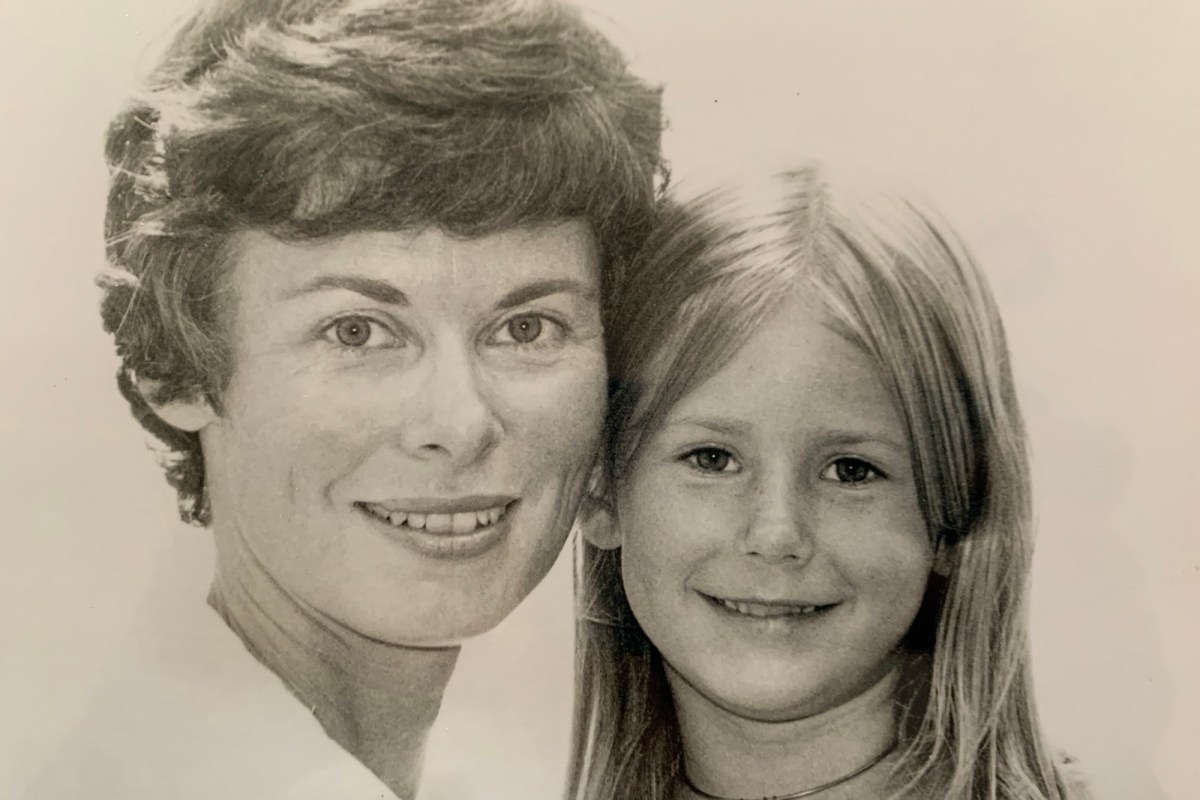
(featured photo is mind: Mom and me in 1974)

Related post: Looking In Through The Sliding Glass Door.

Three Things I Learned From My Dog About Getting Older

The little things are infinitely the most important.” – Sir Arthur Conan Doyle

When I was a brand new mom almost nine years ago, my 12 year old golden retriever, Biscuit, was my constant companion. He was such a comforting presence, especially with his ability to track where everyone was.

Lesson One

But one of the things that irritated me, especially in the early-on sleep deprived days, was when we all walked together. Biscuit had to go back and forth and back and forth over an area to pick a place to poop.

So it surprises me when I walk with Cooper who is now almost a one-year-old dog and he just poops. We’ll be walking along and then BAM, he stops and does his business.

My conclusion is that one privilege that comes with age is willingness to be choosy.

Lesson Two

It was the same with lying down. Biscuit would get a dog blanket and move it around with his front paws.  Then circling and circling, he’d settle in and lay down.

Cooper, on the other hand, just collapses anywhere.

This leads me to the conclusion that another sign of aging is the increase of the number of things we have to do before sleep. And again as we rise.

Lesson Three

On the morning of the day that he died, Biscuit walked up the stairs to the second floor. It was something he didn’t do as often after arthritis had set in. Then he lay down on the threshold to Miss O’s room as I was getting her out of the crib and ready for the day. Miss O was about 18 months old.

Biscuit lay with his head on his paws and watched every move we made. It was like he was touching each moment with intention.

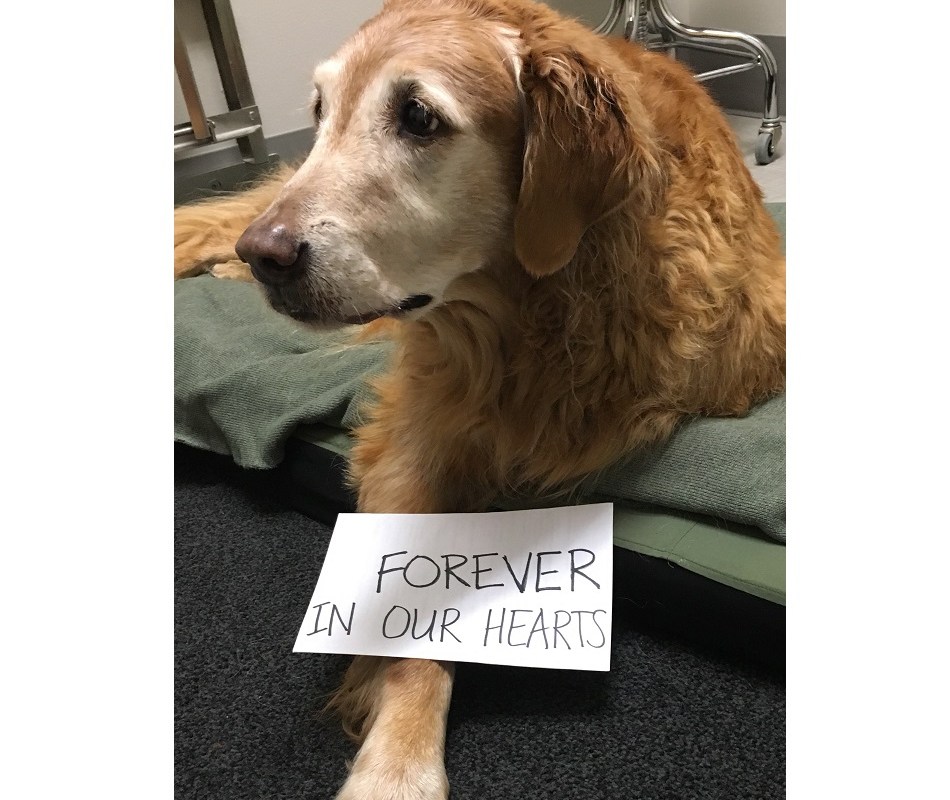
Then we went for a walk. He collapsed going up the hill. Five hours later, after we discovered he had tumors bleeding in his stomach, I had to say “goodbye” to my beloved dog. Something I think he knew all along.

Which leads me to the third lesson I learned from my beautiful dog. If we’re lucky, we gain the ability to appreciate how all the little things in life add up to one good life.

Photos of the Week: June 8

“Love is like an hourglass, with the heart filling up as the brain empties. ” – Jules Renard

We spent a weekend on Whidbey Island for a friend’s birthday party and we were in our element.

The beach we stayed at had hundreds of mussels. Want to guess what Cooper did after licking his lips? Yep, the only one surprised when he threw up later was Cooper.

Non-beach things we did on Whidbey Island included a really cool outdoor sculpture park.

Celebrating our new bikes.

And where did we go with our new bike skills? To get pies of different shapes and sizes!

Buddies and signs.

In Our Element

As far as we can discern, the sole purpose of human existence is to kindle a light in the darkness of mere being.” – Carl Jung

We rented an AirBnB over the weekend that touted bunk beds in the laundry room. Clearly the charm of this place lay in its location on a beach on Whidbey Island. And that it accepted dogs.

Mr. D has been calmed by water since day one. The babies that don’t like their first bath? Nope, not Mr. D. What did we do for at least an hour on his first day of daycare? Play in water.

I watched him this weekend pouring water with a clam shell for thirty minutes from one hole to another and then back. An incredibly long time for a four-year-old to stay with one focus. If it weren’t for the tide coming in, it looked like he would have done it for hours.

I wonder if we all have an element we are born with that calls to us. For Miss O, it seems to be singing. First mine and my mom’s, and now her own.

If given the option between beaches and mountains, I’d say “mountains.” One step onto a hiking trail and my stress level drops by five notches. Every step gives me further improvement in my mental health, resilience, and sense of humor.

But I’ve spent more time on these rugged beaches of the Pacific NW than mountains since I’ve had kids. And I’ve found the beaches remind me to breathe out all the stale air I hold in. Whether it’s because Mr. D has water and Miss O can sing by the campfire, or because I can walk along the sea and the surf, I’m not sure. Whatever it is, it works magic.

Who cares if the bunk beds are in the laundry room if the location puts us in our element?

(featured photo is mine – Mr. D by the sea)

Five Ways to Be a Happier Parent

Children are great imitators, so give them something great to imitate.” – unknown

A friend who is pregnant asked if I had any tips. There are so many parenting philosophies and opinions out there. I can’t imagine I have anything to add. Besides, each kid and each parent is so unique.

But I do know what has made me a happier parent.

  1. Finding a way to ground the central nervous system. I remember walking into a room where my kids had spent a happy day hanging out with my brother and his wife. Miss O was about five-years-old and Mr. D was about one-years-old. As soon as they saw me, they started crying and clamoring for my attention.
    It wasn’t that they were unhappy. It’s just that they had spent the longest time away from me so far. I was the lightning rod for the relief they felt after all the bravery and novelty they had experienced.
    Having a way to calm myself – meditation, breathing exercises, time spent in nature – has lessened the overwhelm I feel when my kids need that extra boost.
  2. Understanding that life is a science experiment. One morning when Miss O was about three-years-old, I was trying to get us ready to leave the house to meet my friend, Katie. I found Miss O at the art table where she’d made a huge mess cutting into a squishy into her scissors. I was incredulous, “Why would you do that?”
    When I saw Katie, whose kids are grown, she laughed and said, “Life is a science experiment.” Understanding that has made such a difference to my parenting attitude. We all try things to see what happens next. Sometimes the kids will do this and it messes with my sense of order. But it isn’t personal, just a part of learning.
  3. Following their lead. On a recent Saturday morning, Mr. D and I were out front as he drove a remote control car down the sidewalk. When we were in front of our favorite neighbors’ house, Mr. D said, “Let’s ask them to play.” I demurred, thinking we might bother them, but Mr. D said, “Follow my lead.” I did and my neighbors, a couple in their 70’s were delighted to see us and have a turn to drive the remote control car.
    Dr. Alison Gopnik, a research psychologist at UC Berkley says kids’ neural pathways look like the streets of Old Paris, many, windy paths where you don’t go very fast. They are wired to look for what can teach them the most. On the other hand, our adult brains have neural paths that look like boulevards. Not very many but you can go faster. We are wired for getting things done.
    When we follow kids’ leads, they get us out of our ruts and help us be creative.
  4. Being creative to connect. The early years of parenting can be so isolating. Spending time with other parents who are also overwhelmed, and conversations that are constantly interrupted by attention to little ones often isn’t satisfying. Working, blogging, pursuing one interest that puts you in the path of adults you can connect with has made such a difference.
  5. Accepting that a great and happy parent is perfectly imperfect. I remember walking my dog past a house where a kid was crying when I was pregnant with my first child and thinking, “I’ll never let my kids cry it out.” Hah!
    Giving up the idea that I would be a perfect parent – always calm, with a clean and orderly house, and full of ideas that would keep my kids entertained and screen free – is the best thing I’ve done for myself and them.
    Instead I have come to see that a perfect parent knows if they lose it and yell, they can also show kids how to own it and apologize. And laugh at themselves, and be okay with being flexible with any no screen, all organic, and any other high-minded ideals to do their best for that moment.  

Anything you would add to the list?

(featured photo from Pexels)
I pulled this list from other parenting story posts I’ve told:

Lost and Found People

The good road and the road of difficulties, you have made me cross; and where they cross, the place is holy.” – Black Elk, Oglala Lakota Medicine Man

The other day I was sitting at the kitchen table with Miss O. One of the 20-somethings in our lives had just shared with us that she was pregnant and Miss O was so excited.

She asked, “Mommy, how did you tell Nana [my mom] that you were pregnant with me?

I replied, “Well, it wasn’t that much of a surprise with IVF because she knew I went in to have an embryo implanted. Then 10 days later they did a blood test to determine whether I was pregnant. So I think I called her or I texted her.

Then she surprisingly asked, “And she was happy?”

Trying to figure out the phrasing, I raised an eyebrow and replied. “She was thrilled.”

And then Miss O revealed why she’d asked like that, “Even though Bumpa [my dad] had just died?

Oohhh, she was putting together the news with the story that she already knew which is that my dad died just as I was getting pregnant with her.

And then, my not quite 9-year-old daughter, replied, “We are the lost and found people.

Whoa.

I’ve often thought of those months when I was writing a book about my dad, his remarkable life, our connection, and the reward for being open with him when Miss O was in utero. It felt like a dance between birth and death. I was saying good-bye to having him present in life as I waited for Miss O to come. Such a sacred dance.

But Miss O’s comment about lost and found people made me think that maybe we all are. It seems like many new chapters are ushered in after we’ve given something up: a job, a partner, a story we believe about ourself.

And then, when we’ve given it up, we can proceed. Seems like the trick is not to get mired in the lost, so that we keep working towards the found.

We are the lost and found people. I couldn’t be more grateful to my beautiful daughter for pointing that out.

(featured photo is my dad and me when I was 2-years-old)

My book about my journey to find what fueled my dad’s indelible spark and twinkle can be found on Amazon: Finding My Father’s Faith.

Sometimes The Dead Speak

See, broken things always have a story to tell, don’t they?” – Sara Pennypacker

Funny how much we want the voices of the dead to weigh in on some subjects. I published a post on Monday, The Set Up, that told the story of a family incident that happened 35 years ago. The code of secrecy between kids being what it is, it’s an incident that I never told my dad about. Especially as the youngest kid, it would have been a serious breach to tell my dad what happened so I don’t know what his response would be.

But I found a sermon that he wrote almost 38 years ago that gives me a pretty good idea of his approach. It’s long as a piece of writing. If you want to skip down to the family story, skim down to the paragraph near the end that starts with “Several years ago Carolyn and I.” Carolyn is my mom’s name.


Parenting

October 12, 1986

Dr. Richard H. Leon

This is the both the worst of themes and the best of themes to address. It is the worst because who can speak with clean hands about parenting? Surely not I. We all have so much to learn and so much we would like to forget that it is a bit ludicrous to stand up and speak about parenting as if we knew best!

But this is also the best of themes because it is the arena of our lives that consumes the most energy and that concerns us the most. Every small group experience I have had reminds me that when we talk about the rhythms of daily life they nearly always revolve around our family-life… relationships with our parents, our spouse, our children, their children…etc., etc., etc..

From the start I want to say tha the church has not always been the best place for honest parenting-talk. I don’t know your experience. But in my lifetime I have seen the church err more often than not in two ways: in an effort to uphold moral law we have come down hard in judging wrong behavior… and in an effort to celebrate successful family life we have made it hard for people to face their pain openly. Tolstoy said, “Happy families are all alike, but every unhappy family is unhappy in its own way.” And this morning I want to open the door to the Biblical perspective on the painful side and the grace-ful side of parenting.

Coping with guilt and grief

The first concern I have is the painful side of guilt over ways we fail our children as parents and the grief that comes when children do not live up to our dreams and ideals. Life tells me these feelings are almost universal in parents. Don’t we all feel like we have failed in one way or another in raising our children? And don’t we all feel the grief for lost dreams for our children? I can still recall the first time I felt this…it was when one of our children first defied Carolyn and me and refused to follow our direction and meet our expectations. And that was at age 3…not to mention the broken dreams during their teen-years!

How do we keep from concluding that their failures are all our fault? How can we learn to accept that each of our children are separate from us with a mind and will and personality of their own?

It is helpful to me to name the full sweetp of the realities that shape us. The point here is to note that although parents have a great influence over children … there are many other ingredients in the recipes for our children’s lives. Let me list at least seven of these ingredients.

Genes – from the first moment of birth, before parents can do anything to influence children, it is clear that every child is different. It is a simple matter of genetics. We look at our three children and see that their responses to life were distinctly different from day one. Our first child was laid back and relaxed…our second was wound up so tight she couldn’t keep her head still to nurse…our third child was happy and charming. They had those marks when they were born…they still have them!

Growth patterns – every day is a time of growth and development and the setting for each child is different so that given their different temperaments and these different circumstances they all follow different patterns of growth. A lot has been done lately with our birth-order. First children grow accustomed to take the lead (bossing others around, some say), middle children get caught between not being the oldest in the lead or the youngest who is always the “cute” one; and youngest children come into their world with experienced parents who are too tired to push like they did the first times around!

Parenting – make no mistake about it. How we raise our kids does make a difference. We bear a heavy weight here … but it is not the only force at work in our children’s lives.

Culture – I have lived in enough different countries to see both the common humanity that we share and the cultural differences that train us up with different beliefs and values and realities. The irony of this matter of culture is that those places the western world calls “backward” are the same places where children are raised to respect and obey their parents!

Peers – a graph would show that the degree of parental influence in a child’s life starts high and steadily declines, and the degree of peer-power starts at nothing and steadily increase until by the teen years these two lines cross and the end is near! The force of peers soon becomes the dominant force in life… until a time in early adulthood … sooner for some and much later for others… when self0rule takes over from peer-control.

Church – I may seem strange to include church as an influence in many of our children’s lives..but hopefully this is true. The place of Christian families and friends, teachers and church school and worship and young leaders … all this is potentially a great force for balance and health.

God – We are born by god’s grace, created in God’s image and we all one day return to face God. And the force of God in our lives is something we acknowledge by faith even though we know many cannot see it. Scripture teaches that God seeks us all out as a shepherd searches for his single lost sheep. If we simply give God a chance he will move mightily in our lives and the lives of our children. I must confess that this truth gives me more comfort, hope and confidence in the future than anything else I may say this morning. God loves our children even more than we do and he is not idle about his love!

So, there are at least seven forces at work in the lives of our children. Our places a parents is central and strong … but all that happens in our children’s lives is neither all our fault … nor all to our credit!

Coping with the tension between “law” and “grace”

Let me speak second about another prime issue in parenting … the constant tension between laying it on (the law) and laying off (grace).

One of the best passages in scripture to examine in this regard is the parable of the Prodigal Son … or better yet, the Loving Father. This may be the most astounding store in all literature. It touches every one of us on several levels and all at once.

The story builds on a father’s relationship with two sons. Both are raised in the same household with the same values. Notice how different the sons are in their views of life. Is it the parent’s fault that one is strong-willed and self-centered and the other is compliant enough to stay at home? (We also learn that the older son was jealous, harbored hurt and anger, was unforgiving and self-righteous … but that’s a different story!)

Look at the tension in the father’s life when his son asks for his inheritance and wants to leave home. We have to assume the son was old enough to leave. We have to assume that the father did not respond with this same generosity and grace when his son said that at 3 years old … or at 10 … or even 16. Can you picture what the father must have thought about at this request? Like:

  • “…What will my neighbors think?”
  • “…is this fair to my oldest son?”
  • “…will I look weak?”
  • “…if he squanders it will I be responsible?”
  • …”my father would never have let me do this!”
  • “…and I never would have thought that way!”
  • “…if I hit him hard enough will he change his views?”

The tension was between reading his son the law … or giving his son his freedom. And the amazing turn of the story is that contrary to his culture and his own family values the father in Jesus’ story lets his son go free. It is almost as if the father is saying … “the only way I can win my son’s heart is to let my son go.”

Lessons from the gospel to guide parents

I would like to see if we can extract some lessons from Jesus’ story of this loving father than can help us in the task of parenting. It should be noted from the start, however, that these lessons are not given in the passage just because it worked with this second son but because these lessons are consistent with a parent’s love. In other words, the justification is not one of success … do it because it always words … but one of love … do it because you love your child and this is how God loved you!

There really is only one lesson to note, it is the lesson of unconditional love. There is no other way to describe this father’s love for his son. He loves his son without asking him to conform to his standards, expectations, or dreams. He loves his son even though it brings great pain to himself … and as he might have guessed, even to his son. There are three choices the father made that mark unconditional love as a parent.

The first mark is in 15:12 “So he divided his property” and it is the choice between acceptance-release or rejection-restraint. For a father to release a son with his inheritance in that culture was to invite mockery. It meant taking the insult of one’s son who in effect is saying “I wish you were dead” and not fighting back. The temptation to reject his son must have been enormous.

And this may help us see that unconditional love is not an instinct, it is a decision. We do not love like this with our feelings … we love like this because we make a decision that it is most loving. And this truth applies to our relationships as husbands and wives as well as parents and children. When insulted you need to ask a question that short-circuits your feelings: “what is the loving response?” It may not always be acceptance and release. There are times for discipline and restraint. But it will only be acceptance and release if you decide it will be that!

A second issue is waiting and hoping or giving up on someone. Look at the 20th verse: “he saw him a long way off.” You only see someone a long way off if you are looking for him and waiting for him.

When he gave his son his portion and saw his son off to the far country it would have been very easy to conclude the son has chosen his own way and there was no way he would ever take him back.

The pain of separation must have been so intense that it is not hard for us to imagine a response of simply trying to forget that this son was still living. You and I see this often, don’t we? I recall one family that we were very close to in our pastorate. When one of their daughters got pregnant and had to get married it hurt the mother so much that she simply dismissed her from her life. Even though she lived only a few miles away in the same little township the mother chose to terminate the whole relationship.

But this father in Jesus’ story did not give up. He must have gone to a view-point that looked out on that road to the far country every day to watch for his son’s return. He prayed for his son and waited for his son to come home. He did not hurt less by doing this. But he hurt better. That is he did not let the pain of the separation destroy the hope of his love.

And thirdly, we see unconditional love as making the choice between forgiveness or punishment. Verse 22 goes like this: “But the father said to the servants, quick bring the best robe and put it on him. Put a ring on his finger and sandals on his feet. Bring the fattened calf and kill it. Let’s have a feast and celebrate. For this son of mine was lost and is found.

This is not cheap restoration, it is as costly to the father as letting him go because all the village would have expected the father to punish the son for his insult and foolishness. But love sees the beauty of the future relationship rather than holds the pains of the past rejection. His son has paid for his sin in his own way and it is now for the father to celebrate his return not punish for his wrong.

Several years ago Carolyn and I were going through a time of considerable pain and struggle with our middle child. At that same time I was studying this passage for my own sake and for helping others. We tried to shape our love with the encouragement of these lessons. It was not easy. Let me see if I can describe the situation without too many details that betray trust.

We had had one of those summers-at-home-after-a-first-year-of-college situations. We were trying to let her live on her own as she had at college while at the same time stay sane when that meant doing things at considerable variance with our wishes. The summer went well by avoiding conflict … not the best model to follow, by the way. When school started and we began writing to each other, the issues then surfaced again and it was just plain painful. By November it moved beyond pain to trauma for all of us. Then Carolyn and I received a letter that opened up a new dimension… in it she spilled out long-held feelings of being the “least-loved” of the kids and “most criticized” for what she did when the others were just as “bad!”

Well, this time it was my turn to reply and I found myself faced with several choices. How did I handle her anger? How did I respond to her judgment of our treatment of her? I could have lashed back and defended our side of the relationship. I could have tried to document the ways she deserved any anger or judgment we had shown her. I could have closed the door to the whole issue and pushed her further away. But largely because of the prodigal’s story and lessons I wrote back and said: “You’re right … we have not loved you in the way you needed. Please forgive us. We are really sorry for our part in your hurt.” It was not just a posture … it was genuine sadness and a genuine apology.

The response to that letter was like a shaft of light in a dark storm. She actually had a dream about it. In the dream, she was waiting with Carolyn for me to come to church … I was late … she asked Carolyn why and finally was told I was dead. She didn’t believe it, she went to see for herself, and found it was true. And then she came back to Carolyn and asked, “Is it too late?” Carolyn asked, “Too late for what?” And she answered: “Too late to tell Dad how much I love him.” She called the next night and told us about the dream and about her love. The dream was so strong that it turned our whole relationship around … and I believe it was God’s way of intervening in our relationship. We are closer now than ever before.

I am convinced that the letters that uncovered those deep feelings, the encouragement of scriptures that helped Carolyn and me respond through prayer and confession rather than through emotional reactions and self-defense, and God’s intervention through a dream (a familiar tool of God!) all brought about a miracle.

There are no guarantees when it comes to parenting … but the pattern of the prodigal’s father is God’s way with us. It is a pattern of swallowing pain and accepting the person … waiting, praying, hoping for that return from the far country … and forgiveness and restoration to the fullness of relationship. I do not believe this because it always works … I believe it because it is the way of health and truth and love. It is God’s way with us and in Christ it is God’s call to our love for one another.


I wish I could say that my dad’s relationship with my sister was all sunshine and rainbows from then on. It wasn’t. But by the time my dad died in a bicycle accident, they were probably as close as ever. A blessing for sure.

P.S. If you ever wonder if it’s worth writing down your stories and thoughts for future generations, here’s one example of how it absolutely does matter.

P.P.S. My book about my journey to find what fueled my dad’s indelible spark and twinkle can be found on Amazon: Finding My Father’s Faith.