The Glass is Refillable

Only the closed mind is certain.” – Dean Spanley

This was previously published on 9/28/2022. Heads up – you may have already read this.


I was traveling last week, something I haven’t done without my kids in 7 years. I’d perfectly engineered the school drop-off and transfer to the nanny, filled the fridge with food, done all the laundry, and even unloaded the dishwasher. I thought I had everything well in-hand.

But then I got to the airport and all my planning fell like a stack of cards. My flight was delayed. My transportation to the hotel when I arrived at the destination changed so I needed a last minute rental car. I took a wrong turn and had to back up in a strange car on a dark road. I didn’t know how to navigate New Jersey turnpike tolls and was guessing. I got to the hotel so late that they were no longer serving food so I ended up eating the cup-of-soup noodles you get by pouring hot water over and they are only marginally less chewy than styrofoam. Then as I gave up and just tried to sleep, I could hear a very faint security beep if I lay on my left side so I had to only lie on my right. Anytime I forgot and turned over, I woke up.

I was tired, pissy, disappointed and completely spent.

More than that – I was surprised. My congenital optimism as described in  Rose-Colored Glasses had predicted none of this. When a couple of days later I talked this over with my friend who is a self-proclaimed pessimist, I asked if optimists and pessimists suffer the same amount: optimists from disappointment and pessimists from catastrophizing.

My friend asked something like, “Why can’t you set your expectations differently?” Well, I’m pretty sure I wouldn’t get that right either. I could imagine how things would go wrong but I doubt I’d be any closer to reality.

“People who wonder if the glass is half empty or full miss the point. The glass is refillable.”

unknown

Refillable – yes! But first I have to empty it of all the bubbly stuff I put in there to begin with. What works for me is to get up every morning and meditate to make friends with uncertainty. That practice of mindfulness helps me to embrace that I have no idea how things are going to unfold, no matter how much I’ve planned…or maybe even more poignantly, how much I’ve dreamed.

Whether we come at it from a perspective that everything is going to be great or that nothing is going to work, the truth remains that we don’t know. Even the people that I’ve met who identify as realists don’t know how something will unfold. Being optimists, pessimists or realists might set the tone of how we feel about the day before us but the mystery of life remains that we can’t predict how life will turn before us.

This brings to me something I heard Franciscan Priest Father Richard Rohr say about certitude.

“The thing called certitude is a product of the enlightenment, and it did so many good things for us, science and medicine but it made us feel that we have a right to something that we really don’t. Our ancient ancestors grew up without expecting that. So they were much more easily able to hold on to mystery in general, God in particular. Whereas we worship workability, predictability, answers – we like answers.

We think we have a right to certitude.”

Father Richard Rohr

With the help of meditation, I come back to knowing that I don’t know and then I feel more able to improvise. When I touch uncertainty, I let go of my plans. When I empty my head and hands of the vision of me being in charge, I more readily accept the mystery unfolding before me.

The glass is refillable. Indeed it is. I concede that it might be my optimism that gets me up and ready to practice refilling it. But whatever it is, I have to work at it every day, meditating in order to make friends with uncertainty in a practice to embrace the mystery again and again.

Meditating on uncertainty on my recent trip helped me enjoy the experience: it wasn’t as I had expected but it had lots of twists and turns that fed me in significant way. That interpretation might sound optimistic but it’s much deeper than that – its meaningful. And isn’t that part of what we ultimately want from life?

(featured photo from Pexels)

Writing Last Lines That Count

Vulnerability sounds like truth and feels like courage. Truth and courage aren’t always comfortable but they’re never weaknesses.” – Brene Brown

This post was originally published on 4/19/2023. Heads up that you may have already read this.


On the last morning I saw my beloved dad, he greeted me with a hearty “You look great.

His untimely death a short time later has permanently etched all the details of that breakfast into my treasure box of memories: the yellow walls of the Varsity Restaurant on NE 65th street, the booth in the open section, the jeans and sweater I was wearing, the cupcakes I gave my parents for their upcoming drive to Arizona, the eggs and waffles, but it is those words that are most precious.

Because both my dad and I both knew that he wasn’t talking about anything to do with my hair, make-up or clothes – he was talking about the light in my eyes. How did I know that it wasn’t just my dad being his effusive self? Let me explain.

Here’s the thing I’ve learned about last lines. As much as we’d like to prepare for them, many (most?) don’t happen how and when we think. Take my dad’s line – neither of us knew that in 6 days time, after arriving and unpacking for a winter in Tucson, that he’d get on a bike, hit a car, and die almost instantly.

That might be an extreme example, but even for the end of a friendship or relationship, the speeches we plan are not what end up expressed. Life, interplay, and random things happen to make things unexpected. So we have to instead do the work to speak honestly and communicate authentically whenever we can.

For me, that work began when three years before my dad’s death when I went on a whim to a meditation class. After 90 minutes of seemingly innocuous visualization and breathing exercises, I spent the rest of the day weeping. It turned out to be just what I needed to start opening all the compartmentalized boxes within and let life flow again. The grief, and shame that came from my recent divorce and that I wasn’t as successful at everything I believed I was supposed to be, came pouring out and I was given openness in return.

So that in the two years before my dad died I was able to choose to broach the subject of spiritual beliefs with him. To talk about what mattered the most to him as a Presbyterian pastor of 40 years. It was a risk because we didn’t talk about religion in my family once all of us kids were grown. Out of respect for keeping things amiable, we’d just stopped talking about our differences.

When we braved the waters of deep beliefs and possible differences to engage in conversation about why he believed what he did and vice versa with me, that meaningful dialogue changed the perception of difference between us and removed the barrier of what we thought were off-limits zones.

Peeling back that veneer of friendly and loving banter in which my dad and I always talked, to delve into deeper issues created a closeness that was precious. My dad knew I was interested in him, I’d spent hours recording our conversations, and I gained relief from my fear that I was doing life “wrong” in his eyes by focusing on meditation instead of theology.

And that is how I knew that my dad’s last line to me was not about the surface details of appearance but instead about a light that had dulled in the last years of my troubled marriage and then divorce. And then through meditation, openness, and vulnerability, that light had been stoked back to its full glow. Sharing that journey with my dad made it possible for him to comment on it.

His death affixed all the details of that breakfast in my mind. But my heart will always remember, “You look good.” It was a gift that started with changing our patterns long before the last line. It’s so hard to talk with our loved ones about the topics that seem most fraught. But in the grief of losing someone, knowing that kinship was there helps.

If we want to have great last lines, we have to risk the vulnerability to be seen.

You look good.” Which as last lines go, was pretty damn amazing.

My book about our conversations and my journey to find what fueled my dad’s indelible spark and twinkle can be found on Amazon: Finding My Father’s Faith.
Sometimes The Dead Speak

See, broken things always have a story to tell, don’t they?” – Sara Pennypacker

Funny how much we want the voices of the dead to weigh in on some subjects. I published a post on Monday, The Set Up, that told the story of a family incident that happened 35 years ago. The code of secrecy between kids being what it is, it’s an incident that I never told my dad about. Especially as the youngest kid, it would have been a serious breach to tell my dad what happened so I don’t know what his response would be.

But I found a sermon that he wrote almost 38 years ago that gives me a pretty good idea of his approach. It’s long as a piece of writing. If you want to skip down to the family story, skim down to the paragraph near the end that starts with “Several years ago Carolyn and I.” Carolyn is my mom’s name.


Parenting

October 12, 1986

Dr. Richard H. Leon

This is the both the worst of themes and the best of themes to address. It is the worst because who can speak with clean hands about parenting? Surely not I. We all have so much to learn and so much we would like to forget that it is a bit ludicrous to stand up and speak about parenting as if we knew best!

But this is also the best of themes because it is the arena of our lives that consumes the most energy and that concerns us the most. Every small group experience I have had reminds me that when we talk about the rhythms of daily life they nearly always revolve around our family-life… relationships with our parents, our spouse, our children, their children…etc., etc., etc..

From the start I want to say tha the church has not always been the best place for honest parenting-talk. I don’t know your experience. But in my lifetime I have seen the church err more often than not in two ways: in an effort to uphold moral law we have come down hard in judging wrong behavior… and in an effort to celebrate successful family life we have made it hard for people to face their pain openly. Tolstoy said, “Happy families are all alike, but every unhappy family is unhappy in its own way.” And this morning I want to open the door to the Biblical perspective on the painful side and the grace-ful side of parenting.

Coping with guilt and grief

The first concern I have is the painful side of guilt over ways we fail our children as parents and the grief that comes when children do not live up to our dreams and ideals. Life tells me these feelings are almost universal in parents. Don’t we all feel like we have failed in one way or another in raising our children? And don’t we all feel the grief for lost dreams for our children? I can still recall the first time I felt this…it was when one of our children first defied Carolyn and me and refused to follow our direction and meet our expectations. And that was at age 3…not to mention the broken dreams during their teen-years!

How do we keep from concluding that their failures are all our fault? How can we learn to accept that each of our children are separate from us with a mind and will and personality of their own?

It is helpful to me to name the full sweetp of the realities that shape us. The point here is to note that although parents have a great influence over children … there are many other ingredients in the recipes for our children’s lives. Let me list at least seven of these ingredients.

Genes – from the first moment of birth, before parents can do anything to influence children, it is clear that every child is different. It is a simple matter of genetics. We look at our three children and see that their responses to life were distinctly different from day one. Our first child was laid back and relaxed…our second was wound up so tight she couldn’t keep her head still to nurse…our third child was happy and charming. They had those marks when they were born…they still have them!

Growth patterns – every day is a time of growth and development and the setting for each child is different so that given their different temperaments and these different circumstances they all follow different patterns of growth. A lot has been done lately with our birth-order. First children grow accustomed to take the lead (bossing others around, some say), middle children get caught between not being the oldest in the lead or the youngest who is always the “cute” one; and youngest children come into their world with experienced parents who are too tired to push like they did the first times around!

Parenting – make no mistake about it. How we raise our kids does make a difference. We bear a heavy weight here … but it is not the only force at work in our children’s lives.

Culture – I have lived in enough different countries to see both the common humanity that we share and the cultural differences that train us up with different beliefs and values and realities. The irony of this matter of culture is that those places the western world calls “backward” are the same places where children are raised to respect and obey their parents!

Peers – a graph would show that the degree of parental influence in a child’s life starts high and steadily declines, and the degree of peer-power starts at nothing and steadily increase until by the teen years these two lines cross and the end is near! The force of peers soon becomes the dominant force in life… until a time in early adulthood … sooner for some and much later for others… when self0rule takes over from peer-control.

Church – I may seem strange to include church as an influence in many of our children’s lives..but hopefully this is true. The place of Christian families and friends, teachers and church school and worship and young leaders … all this is potentially a great force for balance and health.

God – We are born by god’s grace, created in God’s image and we all one day return to face God. And the force of God in our lives is something we acknowledge by faith even though we know many cannot see it. Scripture teaches that God seeks us all out as a shepherd searches for his single lost sheep. If we simply give God a chance he will move mightily in our lives and the lives of our children. I must confess that this truth gives me more comfort, hope and confidence in the future than anything else I may say this morning. God loves our children even more than we do and he is not idle about his love!

So, there are at least seven forces at work in the lives of our children. Our places a parents is central and strong … but all that happens in our children’s lives is neither all our fault … nor all to our credit!

Coping with the tension between “law” and “grace”

Let me speak second about another prime issue in parenting … the constant tension between laying it on (the law) and laying off (grace).

One of the best passages in scripture to examine in this regard is the parable of the Prodigal Son … or better yet, the Loving Father. This may be the most astounding store in all literature. It touches every one of us on several levels and all at once.

The story builds on a father’s relationship with two sons. Both are raised in the same household with the same values. Notice how different the sons are in their views of life. Is it the parent’s fault that one is strong-willed and self-centered and the other is compliant enough to stay at home? (We also learn that the older son was jealous, harbored hurt and anger, was unforgiving and self-righteous … but that’s a different story!)

Look at the tension in the father’s life when his son asks for his inheritance and wants to leave home. We have to assume the son was old enough to leave. We have to assume that the father did not respond with this same generosity and grace when his son said that at 3 years old … or at 10 … or even 16. Can you picture what the father must have thought about at this request? Like:

  • “…What will my neighbors think?”
  • “…is this fair to my oldest son?”
  • “…will I look weak?”
  • “…if he squanders it will I be responsible?”
  • …”my father would never have let me do this!”
  • “…and I never would have thought that way!”
  • “…if I hit him hard enough will he change his views?”

The tension was between reading his son the law … or giving his son his freedom. And the amazing turn of the story is that contrary to his culture and his own family values the father in Jesus’ story lets his son go free. It is almost as if the father is saying … “the only way I can win my son’s heart is to let my son go.”

Lessons from the gospel to guide parents

I would like to see if we can extract some lessons from Jesus’ story of this loving father than can help us in the task of parenting. It should be noted from the start, however, that these lessons are not given in the passage just because it worked with this second son but because these lessons are consistent with a parent’s love. In other words, the justification is not one of success … do it because it always words … but one of love … do it because you love your child and this is how God loved you!

There really is only one lesson to note, it is the lesson of unconditional love. There is no other way to describe this father’s love for his son. He loves his son without asking him to conform to his standards, expectations, or dreams. He loves his son even though it brings great pain to himself … and as he might have guessed, even to his son. There are three choices the father made that mark unconditional love as a parent.

The first mark is in 15:12 “So he divided his property” and it is the choice between acceptance-release or rejection-restraint. For a father to release a son with his inheritance in that culture was to invite mockery. It meant taking the insult of one’s son who in effect is saying “I wish you were dead” and not fighting back. The temptation to reject his son must have been enormous.

And this may help us see that unconditional love is not an instinct, it is a decision. We do not love like this with our feelings … we love like this because we make a decision that it is most loving. And this truth applies to our relationships as husbands and wives as well as parents and children. When insulted you need to ask a question that short-circuits your feelings: “what is the loving response?” It may not always be acceptance and release. There are times for discipline and restraint. But it will only be acceptance and release if you decide it will be that!

A second issue is waiting and hoping or giving up on someone. Look at the 20th verse: “he saw him a long way off.” You only see someone a long way off if you are looking for him and waiting for him.

When he gave his son his portion and saw his son off to the far country it would have been very easy to conclude the son has chosen his own way and there was no way he would ever take him back.

The pain of separation must have been so intense that it is not hard for us to imagine a response of simply trying to forget that this son was still living. You and I see this often, don’t we? I recall one family that we were very close to in our pastorate. When one of their daughters got pregnant and had to get married it hurt the mother so much that she simply dismissed her from her life. Even though she lived only a few miles away in the same little township the mother chose to terminate the whole relationship.

But this father in Jesus’ story did not give up. He must have gone to a view-point that looked out on that road to the far country every day to watch for his son’s return. He prayed for his son and waited for his son to come home. He did not hurt less by doing this. But he hurt better. That is he did not let the pain of the separation destroy the hope of his love.

And thirdly, we see unconditional love as making the choice between forgiveness or punishment. Verse 22 goes like this: “But the father said to the servants, quick bring the best robe and put it on him. Put a ring on his finger and sandals on his feet. Bring the fattened calf and kill it. Let’s have a feast and celebrate. For this son of mine was lost and is found.

This is not cheap restoration, it is as costly to the father as letting him go because all the village would have expected the father to punish the son for his insult and foolishness. But love sees the beauty of the future relationship rather than holds the pains of the past rejection. His son has paid for his sin in his own way and it is now for the father to celebrate his return not punish for his wrong.

Several years ago Carolyn and I were going through a time of considerable pain and struggle with our middle child. At that same time I was studying this passage for my own sake and for helping others. We tried to shape our love with the encouragement of these lessons. It was not easy. Let me see if I can describe the situation without too many details that betray trust.

We had had one of those summers-at-home-after-a-first-year-of-college situations. We were trying to let her live on her own as she had at college while at the same time stay sane when that meant doing things at considerable variance with our wishes. The summer went well by avoiding conflict … not the best model to follow, by the way. When school started and we began writing to each other, the issues then surfaced again and it was just plain painful. By November it moved beyond pain to trauma for all of us. Then Carolyn and I received a letter that opened up a new dimension… in it she spilled out long-held feelings of being the “least-loved” of the kids and “most criticized” for what she did when the others were just as “bad!”

Well, this time it was my turn to reply and I found myself faced with several choices. How did I handle her anger? How did I respond to her judgment of our treatment of her? I could have lashed back and defended our side of the relationship. I could have tried to document the ways she deserved any anger or judgment we had shown her. I could have closed the door to the whole issue and pushed her further away. But largely because of the prodigal’s story and lessons I wrote back and said: “You’re right … we have not loved you in the way you needed. Please forgive us. We are really sorry for our part in your hurt.” It was not just a posture … it was genuine sadness and a genuine apology.

The response to that letter was like a shaft of light in a dark storm. She actually had a dream about it. In the dream, she was waiting with Carolyn for me to come to church … I was late … she asked Carolyn why and finally was told I was dead. She didn’t believe it, she went to see for herself, and found it was true. And then she came back to Carolyn and asked, “Is it too late?” Carolyn asked, “Too late for what?” And she answered: “Too late to tell Dad how much I love him.” She called the next night and told us about the dream and about her love. The dream was so strong that it turned our whole relationship around … and I believe it was God’s way of intervening in our relationship. We are closer now than ever before.

I am convinced that the letters that uncovered those deep feelings, the encouragement of scriptures that helped Carolyn and me respond through prayer and confession rather than through emotional reactions and self-defense, and God’s intervention through a dream (a familiar tool of God!) all brought about a miracle.

There are no guarantees when it comes to parenting … but the pattern of the prodigal’s father is God’s way with us. It is a pattern of swallowing pain and accepting the person … waiting, praying, hoping for that return from the far country … and forgiveness and restoration to the fullness of relationship. I do not believe this because it always works … I believe it because it is the way of health and truth and love. It is God’s way with us and in Christ it is God’s call to our love for one another.


I wish I could say that my dad’s relationship with my sister was all sunshine and rainbows from then on. It wasn’t. But by the time my dad died in a bicycle accident, they were probably as close as ever. A blessing for sure.

P.S. If you ever wonder if it’s worth writing down your stories and thoughts for future generations, here’s one example of how it absolutely does matter.

P.P.S. My book about my journey to find what fueled my dad’s indelible spark and twinkle can be found on Amazon: Finding My Father’s Faith.
Writing In the Dark

Go into yourself and see how deep the place is from which your life flows.” – Rainier Maria Rilke

This post was originally published on 4/12/2023. Heads up – you may have already read this.


I wrote this post early Monday morning. Around 3:43am that is. I have all sorts of things I do in the middle of the night when I can’t sleep. Mostly worry. Then I review my to-do list. Then I go back to worrying some more. Usually after about a half an hour of tossing and turning, I remember to start meditating and praying. After a few minutes of meditating, I kinda just flow into writing.

It’s all in my head in the dark. I know that there’s a lot of sleep wisdom that says to keep a notebook beside the bed for writing things down. But this composing in my head works for me. It’s not that I remember everything I write, it’s just that it slips me into a different mode. Eventually I’ll write myself back to sleep. The best part is that I even retain some of it when I awaken.

I recently learned of some interesting research from a Ten Percent Happier podcast with Professor Lindsey Cameron. She studied whether meditation helps at work, specifically focused on customer facing jobs, and the results were fascinating. She found that traditional breath work meditations helped with centering the person in a bigger perspective so that the ups and downs weren’t as jarring. And she found that loving-kindness meditation increased the ability to place ourselves in other’s shoes.

There’s research that shows loving-kindness practice reduces activity in part of the brain that’s active when we are anxious. And a study that showed we don’t want to practice mindfulness when doing emotionally taxing work. The example I heard in that case was a flight attendant who is having to pleasantly telling people to buckle their seat belts over and over again does not benefit from being more mindful in those moments.

Back to the point about writing in the dark. It seems our brain research is catching up with what our spiritual traditions have taught us for millennia. There are practices that help to literally change our minds. They’ve given us a tool set that we can use to help put ourselves in the best frame of mind to create, to understand, to be less anxious, to change, to be more altruistic, and so on. It’s no wonder I start writing in the dark after I start meditating, because the practice helps to shut down worry, and then I open up to creativity.

And it matches what works for me during daylight hours. In my post When I Write, I looked at what time of day works for me and it’s always after I’ve done the work to be quiet, to meditate, and to get a little perspective on life.

It feels a little clinical to separate out the meditation and prayer practices from the spiritual traditions and beliefs that tie us to a Higher Power. But in the middle of the night as I’m settling into a rhythm of breathing and repeating “faith over fear,” it’s also kind of fun to know I’m setting up the conditions for calming my brain. And that I might even get a post out of it.

(featured photo from Pexels)

Upward Spirals

The morning whispers hope, the afternoon sings of possibilities, and the evening reminds us to cherish the moments. Embrace each part of the day with gratitude.” – unknown

This was originally published on 8/17/2022. Heads up – you may have already read this.


As I was writing my post last week, Good Mood of the Soul, I came across the research that joy and gratitude often result in an upward spiral. The more we focus on gratitude, the easier it is to perceive joy. And when in the midst of joy, we are more open to gratitude.

So here’s the list of things I’m grateful for this week:

For everyone that is willing to read what I am grateful for

That I can still hear the Click and Clack, the Car Talk brothers in the Cars movies.

The quiet way my three-year-old son says, “you are my best mom friend” to me so that I have to lean down to hear. In that position it goes directly from my ear to my heart.

That we have the ability to take pictures with our hearts.

The way it sounds when my seven-year-old daughter says, “I’m thankful for the tooth fairy.” while missing her two front teeth.

For out-of-the blue notes from individuals I admire telling me something I’ve done right.

That I’ve been able to learn, to some degree, how to fix the things that I’ve done wrong.

That broken eggs make food, literal and metaphorical.

For whoever invented yoga pants and made messy hair look sexy, at least on the West Coast. And if that was only in the 90’s and is no longer a thing, for anyone that continues to let me think that.

Speaking of inventions, whoever invented self-sealing water balloons that fill 20 at a time.

That life keeps giving me opportunities to learn that suffering just softens me up for the next great thing.

For every grown-up that showed me what vulnerability looked like when I was a kid.

For every grown-up that shows me what vulnerability is when I’m a grown-up.

For this necklace I bought on a whim and have worn for 20 years that says, “Strength is having a grateful life” and that I have grown into knowing what that means.

Cool sheets on a hot night.

That I have a bed to sleep in.

Green tea on dark mornings.

That connect-the-dots works in art and in life.

For the human traits of kindness, courage and generosity.

For the Divine traits of grace, faith, hope and love.

For the times I’ve been on my knees needing loyalty, courage, generosity, grace, faith, hope and love – and that what I’ve received in those moments has opened me up to knowing what those traits are in my bones.

I am grateful for upward spirals.

What are you grateful for this week? What have you learned about upward spirals?

Finding the Rhythm

When anxious, uneasy and bad thoughts come, I go to the sea, and the sea drowns them out with its great wide sounds, cleanses me with its noise, and imposes a rhythm upon everything in me that is bewildered and confused.” – Rainier Maria Rilke

On my first mountain climbing attempt, a guided climb of Mt. Rainier in the summer of 1998, the lead guide introduced us to the poetry of Robert Service. Whether you or not you like his poetry, he delivers a cadence that I found helpful in keeping a climbing rhythm:

“There’s a race of man who won’t give in
A race that can’t stand still.
So they break the heart of kith and kin
And roam the world at will.”

The Men Who Don’t Fit In by Robert Service

Climbing depends on a steady pace. If you go too fast when roped to your teammates, you create too much slack ahead, and end up pulling the climber behind. If you go too slow, you create drag on someone else. When climbs would get tough, I’d recite the poems in my head and it would regulate my head, heart, and feet.

Thought I don’t climb any more, I still find evidence of pacing in all of the rest of my life. At work, knowing the cadence of team meetings helps to know when we can address issues. At home, rhythm is such a large part of how my little family stays stable. The waking up, eating breakfast, packing lunches, off to school rhythm is the cornerstone of our weekdays. When we get out of sync, it’s like a band that’s lost the beat.

Miss O recently learned to play Ode to Joy on the piano. When feeling like she wants to show off her mastery, she plays it somewhere between double and triple time. Played like that, it quickly becomes Ode to Indigestion.

I’m thinking of all these examples of rhythm and cadence because of an incredible podcast conversation that Vicki and I had with Edgerton award winning playwright, Jack Canfora. As a playwright and trained Shakespearean actor, he thinks a lot about cadence in writing. But for him, it extends beyond the theater. It applies to humor writing and essays as well.

Jack describes himself as a rhythmic writer. I’m thinking of You Make a Mean Salad as an example of his writing and humor. Or perhaps it’s best heard in a play. Step 9 is available as a theatrical podcast.

Thinking of my own writing as someone who tends to extended sentences, I have a lot to learn about calibrating sentences from Jack. Here’s a clip from our podcast where he talks about how Shakespeare balances sentences.

If you’re in the mood for a podcast, listen to this one. It’s got a great rhythm: Episode 56: Master Class In Creativity with Jack Canfora – Part II or search for Sharing the Heart of the Matter on Apple, Amazon Music, Spotify or Pocketcasts.

Links for this Podcast episode:

Jack’s website: Jack Canfora | Playwright | Podcaster | Writing Coach

Jack’s Online Theater Company: New Normal Rep

Jericho by Jack Canfora on Amazon

Jack Canfora on Instagram and Twitter: @jackcanfora

Other podcast episodes featuring Jack:

Episode 4: Why Theater Matters

Episode 55: Master Class in Creativity with Jack Canfora – Part I

From the hosts:

Vicki’s personal blog: Victoria Ponders

Wynne’s personal blog: Surprised by Joy

Vicki’s recently released book: Surviving Sue

Wynne’s book about her beloved father: Finding My Father’s Faith

(featured photo from Pexels)

Maniacs

Faith gives flight to the imagination.” – Lailah Gifty Akita

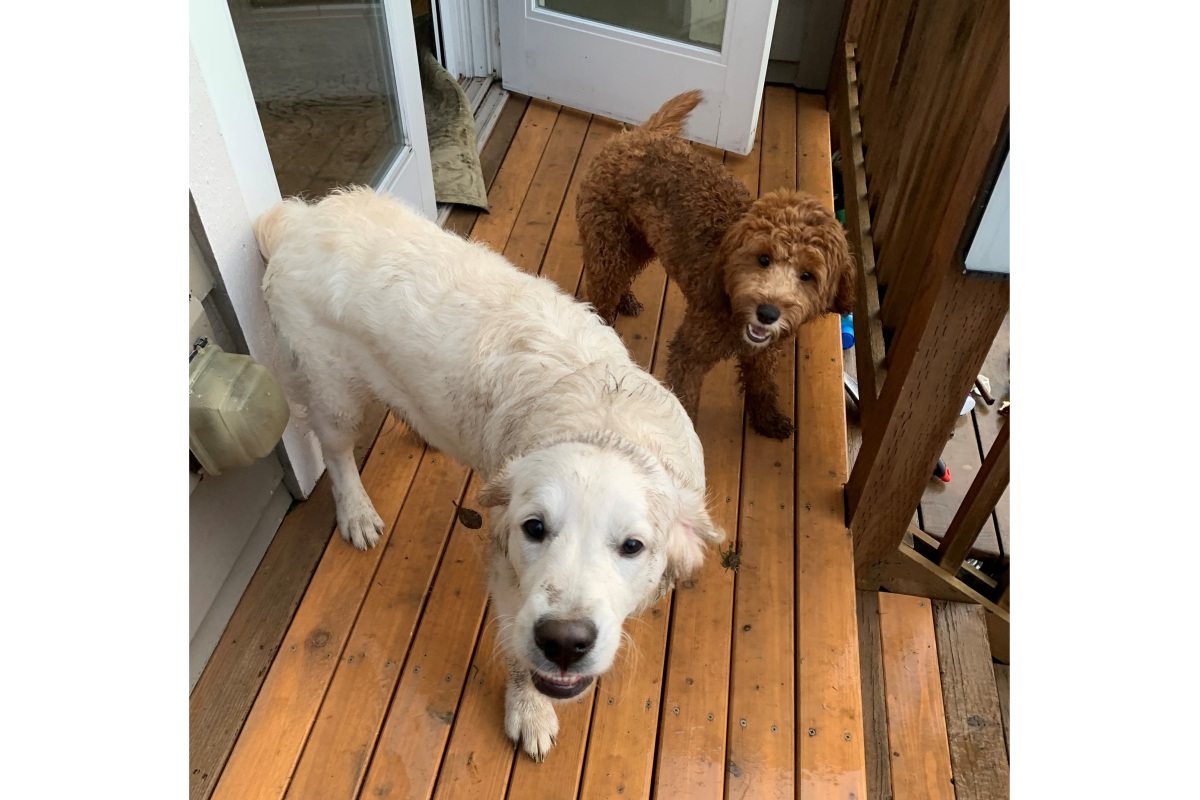
The other day Cooper (the dog) had a play date with a neighbor’s puppy, Ziggy. Four-year-old Mr D. heard me say to the pups, “What are you two maniacs up to?

And Mr. D fell in love – with the word “maniac.

We were at the store a short while later and he yelled from the other end of an aisle, “Mom, call me a maniac!

And he sometimes greets me, “Hi Mom. You maniac!

It’s a rule in our house that we don’t call each other names but maniac seems like a term of affection to me. At least, I was saying it affectionately when I used it on the dogs.

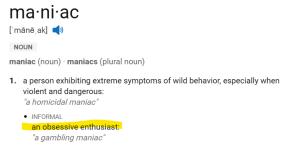
So I looked it up in the dictionary and found that the informal definition matched my liking: An obsessive enthusiast (from Oxford Languages).

As I mentioned in My Love Affair with Words post, the word enthusiastic or enthusiast always reminds me of my dad since it comes from the root, en-Theos or “with God.” I’m at my best when I leave my logical nature and go with the flow of God, life, and the Universe.

So, yes, call me a maniac. On fun days, I have a whole houseful of them!

Gratuitous Noise Appreciation

The quieter you become, the more you can hear.” – Buddha

The other day I was driving to pick up four-year-old Mr. D from preschool with Cooper the puppy riding shotgun. Coop looked at me and then started making noise like he was a cat spitting up a furball. “Khak, khak,” and then came a terrifying pause after which he let out a huge belch, “Gluuuuuuck” followed by a little cough.

Whew! Of course I told Mr. D about it as soon as he got into the car and he made me imitate the sounds for the next five minutes. It made me laugh and think about Click and Clack, the Magliozzi brothers. Remember their show, Car Talk? And they laughed with such glee as they had people describe what noises their cars were making.

And then writing noises down – isn’t that even more fun?

Like my vacuum who frequently chokes on all the puppy hair and traces of mud. It starts wheezing, “runk, runk, runk” til I clean out the filter.

Or the sound of eight-year-old Miss O practicing her hoverboard. “Wheeeee, ooohh.” Then “Clunk” and “ooof” combined as she stops herself against the wall.

As much as I love (and sometimes am overwhelmed by) the sounds coming from my little family, I usually sit in complete silence after my kids have gone to bed. But the other night, there was a rhythmic, and a little creepy, bomp, bomp bomp coming from the dining room. Upon further investigation, it was a balloon from the day bouncing on an air vent.

Early in the morning when I take the dog for a walk, I’m used to the steady patter of January rain. But the other day, it sounded peculiar. It was a “splonk” and “squitz” so I left my hood off to figure it out. It wasn’t actually raining at the moment, so the noise was the houses, trees, bushes, and wires pooling and then shaking off the recent precipitation in fat bursts.

I immediately start smiling when I hear the epic sound tracks for movies like Indiana Jones, Star Wars, and Out of Africa. But I love the sound track of my life.

Khak, khak, gluuuuck

Runk, runk, runk

Wheee, ooohh, clunk & ooof

Bomp, bomp, bomp

Splonk, squitz

What does your life sound like these days?

Editing That Six-Word Story

The other day we were holding a family meeting where eight-year-old Miss O and I where hotly debating the next thing to do and I asked four-year-old Mr. D if he had an opinion.

“No, I’m not a good talker,” he replied.

Whoa, there’s a six-word story!

I’m sure with his very verbal older sister and his mom that is fascinated by words, it feels like he can’t get a word in edgewise. Funny thing is that he is interested in following along. I notice that the more we talk, the more still he gets. And then when we least expect it, he pops off with a perfectly positioned sentence like on January 1st when he said, “I told you last year not to step on lava.”

It feels like helping these young people write and change their stories as they grow is one of my biggest responsibilities and honors. In this case, I’m hoping to convince Mr. D that his six-word story is better said as, “I’m not a good talker…yet.”

And for more about six-word stories, please tune in to my podcast with Dr. Victoria Atkinson. We know and love her as our blogging, writing, and podcasting friend. But in this case, she brings all her experience as a therapist, professor, college dean, and author to bear to teach us how potent these little stories can be.

Search for Sharing the Heart of the Matter on Apple podcasts, Amazon Music, Spotify, and Pocket casts. And please subscribe! Or click here for the show notes and link to listen to the podcast on Anchor.

(featured photo is mine. I offer these six words as a caption: Despite our care, another worm died)

My Love Affair With Words

Be sure to taste your words before you spit them out.” – unknown

The other night I was fixing dinner while my seven-year-old daughter was in the family room working on her very first short story. “Momma, how do you spell persevere?” she asked. As I replied, I took in the really sweet scene and thought to myself “there’s another leaf that’s going to stick on my word associations tree.”

Because that’s how my brain likes to work — by creating associations to words. Like with smells or sights, words themselves conjure memories and the older I get, the more associations I have – or in my mental image, leaves on my word tree.

For example, enthusiasm – from en-Theos or with God – reminds me of my beloved father who was a Presbyterian pastor. There isn’t a word that describes his remarkable energy better and I can’t hear it without thinking of him.

Or plethora which is my best friend’s favorite word. And since we’ve been friends since we were seven-years-old, there are a plethora of memories that come to mind when I hear that word, especially of high school when life was abundant in opportunity, boys, and screw ups to learn from.

Then there’s the phrase “pit stop” that with the hard “t” and “p” sounds reminds me of my sister. She used the phrase in a letter she sent to the whole family when we were in 20’s when she was mad at my brother for not breaking off a relationship with one of her friends properly. In trying to smear him for using others as a “pit stop from himself,” she instead attached that phrase in my mind to my image of her, along with “misdirection” for her ability to distract from the work she needs to do.

Plenitude is a recent favorite that comes in accordance with meditation which almost always leaves me with the reminder that at that moment I have enough.

When I first started going to meditation class ten years ago as I was healing from my divorce, there was a bowl of inspirational words on a table to pick from. I kept getting “transformation” and I was so completely tired of it I just want to scream, “Haven’t I changed enough for a life time? Leave me alone.” And fortunately when I vented that thought, I was usually down on my knees in prayer pose and from there could bend to accept more renewal.

Because renewal has a friendly association for me. That means my cup is being refilled and hopefully my energy too. I’m friends with renewal in a way that I will never be with transformation.

Calibrating sentences” is one of my recent favorites that comes from playwright and writer, Jack Canfora, on a podcast that he did bout the creative process. Isn’t that a beautiful way to measure the weight and balance the best utterances come with? And given that it comes from such a gifted writer, it gives me hope that if I work at it too, I might be able to calibrate a few great sentences in my lifetime.

Fledgling gained new attachment for me when I had kids. Never before had I been able to appreciate the delicate nature of holding newness in my arms combined with the potent desire to provide a platform strong enough to see them take flight.

Bivouac reminds me of my climbing friend, Phil, who is always joking that it’s French for mistake. It’s not, it means a temporary camp without cover according to Oxford languages, but since Phil bivouacked high on Mt. Everest during the climb when he became the first American to climb the North Side of Everest, it’s a well-earned attachment.

Say the word “authentic” and I think of my meditation teacher and friend, Deirdre. It’s the attribute that makes it so she can somehow manage to lead a yoga class and yell, without missing a beat, “Move on, Motherf*$)#^!” out the door at someone she thinks is casing her car.

The word I associate with me three-year-old son is observer. The other day I turned on some kitchen lights I don’t usually use for a house guest. When my son saw them, he took me by hand to show me where other lights of that same type were in the house. He sees the quarter moon and says, “The moon is missing a piece.” And most recently, in one of his most profound observations, we were watching a storm out the window and he said to his sister, “Sshh, I can’t see.

There’s “constellation” and it reminds me of my brother and one of his favorite songs by the same name by Jack Johnson and Eddie Vedder. It also is attached because my brother is always seeing the patterns in things.

Love has so many associations that it has become cluttered. But dedication, commitment, intimacy, fun, play, expansiveness, laughter, loyalty, selflessness and desire each conjure a particular person or memory in my life so that all together, they jumble into a delicious mix of how love feels to me.

I can’t hear the word “condensation” without thinking of my very verbal daughter. As a four-year-old, someone was telling her he had water forming on the inside of his camper van on cold nights and she responded, “You mean condensation?”

My love of words has infected me so much that for almost any person in my life, I have a word association for them. It makes me wonder that if, by the time I’m really old, if I’m lucky enough that my body perseveres that long, every time I construct a sentence, there will be a memory and person hanging off of it.

Maybe that will be my tree of life and I’ll be able to enjoy each delightful word with the memory that comes with it.

(featured photo from Pexels)