Ropes are Relational

A friend may well be reckoned the masterpiece of nature.” – Ralph Waldo Emerson

I awoke Friday morning to the sound of a drip in my bathroom. Amazing how a drop of water in another room landing on a bath mat that’s designed to absorb water can penetrate the unconscious. It felt like I came abruptly awake and then sat straight up listening. It reminds me of something I heard from acoustic ecologist Gordon Hempton that our ears never sleep, even when our brain does.

The vent on the fan was the source of the leak. So this weekend I got out one of my climbing ropes so that I could do some repair work on the roof. Afterwords, as I was coiling the rope, I was struck by how ropes are like friendship. It takes me a long time to coil a 60 meter rope so perhaps I was just delirious but I don’t think it’s too much of a stretch.

Ropes help us cross dangerous terrain: In the mountains when conditions are icy, steep, or pitted with crevasses, being roped to a team helps ensure safety if someone falls. We know from research, like the longitudinal study that Dr. Robert Wallinger talks about in his TED talk, that friendship has a similar effect. Good relationships keep us happy and healthy.

It’s easier to unkink a rope when it’s not frozen: Ropes, like friendships, get knotted and kinked sometimes. Ropes, like friendships, are easier to unkink when they aren’t frozen. When guides come back into camp after a summit or training exercise, they take care of the ropes right away. Even when the conditions are rough and people are tired and sore, it’s worth the effort to straighten and coil it before it freezes. In my experience, this is true for friendships as well.

Ropes are heavy: Carrying a climbing rope adds around 10 pounds to your pack, more if the rope is wet. When my friends and I climbed together, we’d divvy up the group gear to spread the load. But often when a climber isn’t feeling well, a team member will carry the rope for them. In my experience of good friendships, the same thing happens with carrying the weight of the relationship. Often, it isn’t a completely equitable split of time and effort that makes a friendship work but the willingness of both parties to switch off carrying the load when things get rough or busy.

Here’s the other thing that I love about ropes – they require me to find someone to hold the other end. I tend towards the stubbornly independent so this slows me down enough to get help. As I coiled the rope back up, I also appreciated how reassuring it was to have my mom and sister-in-law there when I roped up to repair the seal around the fan vent. I never slipped or needed the rope to catch me but I knew it was there and it made me feel safer. Just like my friendships.

(featured photo is mine of a rope coiling at the climbing gym)

You can find me on LinkedIn: https://www.linkedin.com/in/wynneleon/ and Instagram @wynneleon

I host the How to Share podcast, a podcast celebrates the art of teaching, learning, giving, and growing.

I also co-host the Sharing the Heart of the Matter podcast, an author, creator and storytelling podcast with the amazing Vicki Atkinson.

The Rope Team

“Sometimes life is too hard to be alone, and sometimes life is too good to be alone.” – Elizabeth Gilbert

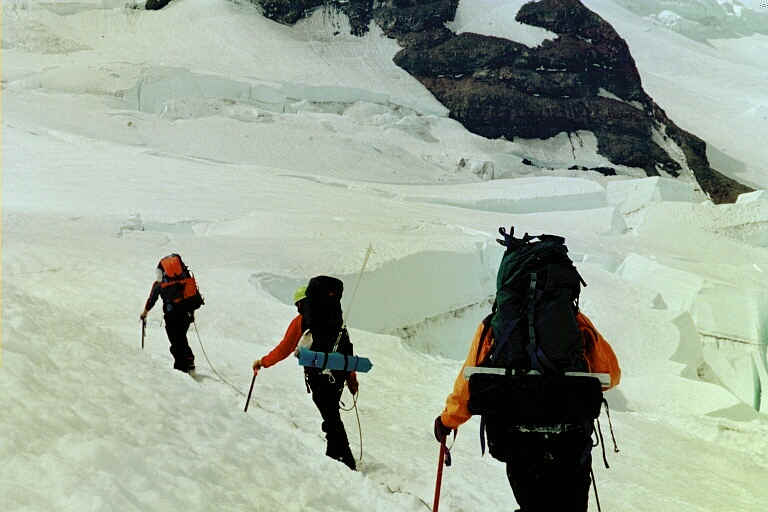
When I was climbing mountains, I noticed a funny thing when we roped up on the higher slopes of a mountain. We transformed from being individual hikers to becoming a team. The physical manifestation made a psychological difference.

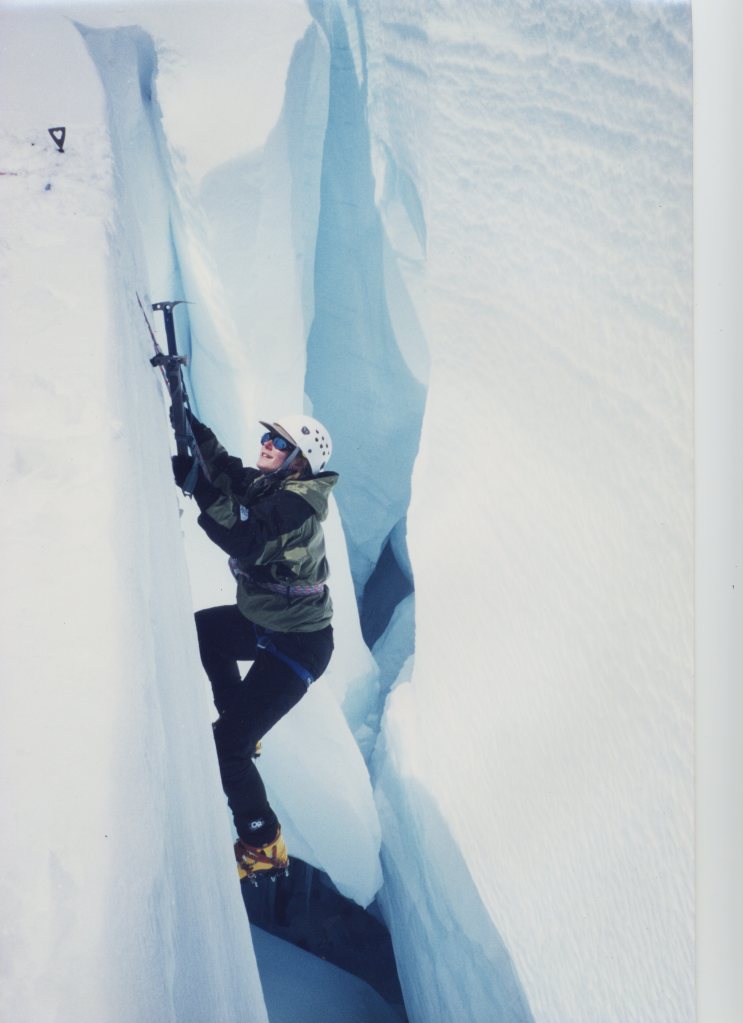
Fortunately, I’ve never had to arrest the fall of someone else while on a rope team. But I have willingly climbed into a crevasse. It made me immensely grateful for the people above holding on to the rope.

A similar team phenomenon happened to me and my kids a couple of weeks ago when we were on vacation.

It was perfectly smooth when the kids and I decided to go paddleboarding after dinner. But by the time we got our paddleboards into the water, it was starting to blow again.

We’d been paddling every day for ten days to get the feel for the tides and current. At the beginning of the vacation, six-year-old Mr. D was paddling with me riding on the back of his board. Once he’d gotten proficient enough with his strokes, he graduated to be on his own.

So Mr D was on his own paddleboard. Ten-year-old Miss O had decided she just wanted to ride along on mine. On this night, Mr. D wanted to go all the way down the bay to the pirate flag, a notable marker about a mile down the beach from where we launched.

When we were about halfway there, the wind was present but not too much of a factor. We held a family meeting to make sure we wanted to continue. Mr. D had looked at that flag for 10 days and was determined to get there.

We celebrated momentarily when we reached the pirate flag. Then Mr. D said he was tired and just wanted to rest. At nearly the same moment, the wind whipped up and started pushing us farther away from home.

I said aloud, mostly for Miss O’s benefit, “Please, God, help us.” We weren’t in immediate danger but it was going to be a hard paddle back. At any point, we could have paddled 20 yards to the to the beach and walked back. It would have been a slog pulling the boards but it was a viable option.

Miss O got philosophical about how we ask God for help. We weren’t asking for it to be easy – just for help in any form. As it was, Miss O volunteered to get on Mr. D’s board to both give it more weight and to paddle.

Even with the two of them, they were being pushed backwards by wind. So I attached my leash to their board and we paddled back as a team. I paddled on my board, Miss O and Mr. D took turns paddling on theirs. Roped together, we slowly made our way home.

The overall feeling when we hit the beach? Gratitude. Thank God Miss O had opted to ride along and had fresh arms. Thank God she made the transfer from one board to another without mishap. Thank God for making us a team.

Because that was what stuck with us. Just like with climbing, roping together turned paddling into a team building exercise -and it worked. There are so many ways we are buffeted by the winds of life. A team can make all the difference.

(featured photo is mine)

You can find me on LinkedIn: https://www.linkedin.com/in/wynneleon/ and Instagram @wynneleon

I host the How to Share podcast, a podcast about collaboration – in our families, friendships, at work and in the world.

I also co-host the Sharing the Heart of the Matter podcast, an author, creator and storytelling podcast with the amazing Vicki Atkinson.

And for anyone curious about the inside of a crevasse, here’s what it looks like:

My Go-To Metaphor

One climbs, one sees. One descends, one sees no longer, but one has seen. There is an art in conducting oneself in lower regions by memory of what one has seen higher up. When one can no longer see, one can at least still know.” – Rene Daumal

This was originally posted on another blog on 7/19/2023 and I’m republishing here to consolidate. Heads up – you may have already read this.


I recently had one of those weeks. You know the kind I mean? The ones where you have to dig extra deep to stay focused and get everything done but there’s a payoff at the end? Like the week before vacation where you have to get your work projects in order, home projects in order, buy extra food for the cat sitter, set the watering system, and pack all the while still feeding, watering, and caring for yourself and your family.

So, during this particular week I kept coming back to my go-to metaphor for life: mountain climbing. That’s the one that sticks for me even though I haven’t climbed a proper mountain in ten years.

One step at a time: For any mountain that I’ve climbed, there is a moment in the parking lot that I look up at the summit, or what I can see of it from the base, and doubt that I have any chance of reaching that point in two or three days time. The mountain looks massive and my stride looks incomparably small. But seeing the task ahead of me, I shoulder my pack, and start one step at a time.

Rest breaks: The first time I climbed a mountain it was with a guide named Jason. For every hour we climbed, we took a 10 minute rest break and he would lie down on the breaks. He had a simple philosophy: Why stand when you can sit and why sit when you can lie down? He was a master of not only making sure we stopped to care for ourselves, but also capitalizing on that time.

Team work: On the higher reaches of most mountains we rope up in teams of five or so, with about 30 feet of rope between each climber so that if someone falls, the rest of the team can dig into the snow with their ice axes. This method either keeps them from falling very far, or serves an anchor to pull the climber out if they’ve fallen into a crevasse. Is there a better metaphor for remembering that others are there to help us?

Self-care tricks: When you stop to rest, especially during the pre-dawn hours, the sweat instantly freezes on your skin and you get really cold, really quick. So the trick is to have your parka handy. And here’s the key, you load your parka pockets with yummy snacks so that when you put it on, it’s like one-stop shopping. By yummy snacks, I mean trail mix with candy mixed in or your favorite nuts, not protein bars that are going to look, feel and chew like leather. Because when you’re so incredibly tired that feeding yourself feels like a chore, it has to be appetizing and handy.

Set a turn-around time: The idea of a turn-around time makes me think of the guide Rob Hall who died on Everest in 1996. He was so focused on getting his client to the top that he ignored the time he had told his team they would turn-around no matter whether they’d summitted or not. While the consequences are usually not nearly as dire, there is often a similar limit in life, whether it be bedtime or the time you have to leave for the airport. There’s a moment where you just have to stop what you are doing and call it good.

The slide down: One of my favorite mountains to climb is Mt. Adams in Washington State. We leave our camp in the middle of the night to head for the summit. About 20 minutes out of camp there’s a 50-degree slope that takes hours to tackle. But what takes about five hours to climb only takes 45 minutes to slide down on our butts for one of the best payoffs ever.

So that’s my metaphor for life – climbing. I haven’t even touched on false summits, the rest step, and the pressure breath. When I’m tackling something hard, it works for me to envision the components that will get me through: put one step in front of the other, take regular rest breaks, rely on my teammates, make it easy to take care of oneself when things are hard, set a limit for when you have to stop and then enjoy the payoff.

What’s your go-to metaphor?

You can find me on Instagram @wynneleon and LinkedIn: https://www.linkedin.com/in/wynneleon/

I co-host a storytelling podcast featuring authors and artists with the amazing Vicki Atkinson. To tune in, search for Sharing the Heart of the Matter on Spotify, Apple, Amazon Music or Pocketcasts (and subscribe) or click here. Or the YouTube channel features videos of our interviews. Please subscribe!

My other projects include work as a CEO (Chief Encouragement Officer), speaking about creativity and AI through the Chicago Writer’s Association, and my book about my journey to find what fueled my dad’s indelible spark and twinkle can be found on Amazon: Finding My Father’s Faith.

Envisioning The Future Without the Filter of the Past

We have more possibilities available in each moment than we realize.” – Thich Nhat Hanh

After almost two years of working for the company that I sold my company to, I’m back in the business of working for myself. I’ve spent two-thirds of my career as a self-employed computer consultant. The inclination to build my business exactly as I did before is so strong – kinda like muscle memory. But that doesn’t honor that all the ways I’ve learned and changed since I did this previously.

So I love the inspiration I find to build outside of the box. Here’s one from Mark Nepo:

“It was a curious thing. Robert had filled the bathtub and put the fish in the tub, so he could clean their tank. After he’d scrubbed the film from the small walls of their make-believe deep, he went to retrieve them.

He was astonished to find that, though they had the entire tub to swim in, they were huddled in a small area the size of their tank. There was nothing containing them, nothing holding them back. Why wouldn’t they dart about freely? What had life in the tank done to their natural ability to swim?”

The Book of Awakening by Mark Nepo

In addition, my meditation teacher, Deirdre recently gave me some powerful imagery. She said we need to envision the future without the filter of our past.

I’ve spent enough years hiking and climbing to know the wisdom of why we continue on the same path we’ve always used. It helps keep us from getting lost and if we have to backtrack, we know the way.

But for almost every trail system I’ve been on, there are certain intersections where you can easily traverse to another path. Because some paths don’t go to the place we are trying to reach.

I’m trying to keep that in mind as I navigate my next steps. I feel so lucky that I am at an intersection point that has made doing something different not only possible but also preferable. It’s like the Universe has left some bread crumbs to a different route. I just need to follow them. It’s easier to type than it is to do.

For anyone navigating a similar intersection, consider this as an encouragement to envision the future without the filter of the past. As Thich Nhat Hanh says, “We have more possibilities available in each moment than we realize.

(featured photo is my daughter, Miss O, when she was almost two years old confidently finding her path)

Signs and Mystics

If you were waiting for a sign, this is it.” – unknown

I would never describe my father as a mystic. He was a Presbyterian pastor through and through. His theology and rituals were aligned with the institutions he served.

But my mom told me a funny story about when he decided to retire. She reports that he came home and said, “I’ve decided to retire because the clock stopped working and the stapler ran out.

 Isn’t it interesting how we interpret the signs in our life? Something happens and it resonates with what we’ve been thinking, feeling, or intuiting. And often, speaking for myself, that resonation can have great power to shift what previously seemed immoveable.

Three things I need to align with the signs in life: quiet, curiosity about new ideas and ventures, and awareness of the world around me. I’m quite sure I’ve never seen a sign when my head is down, the blinders are on, and I’m marching towards a deadline. Or maybe I have, and just failed to take it in. Maybe mystics are simply the people who open to possibility more often than not.

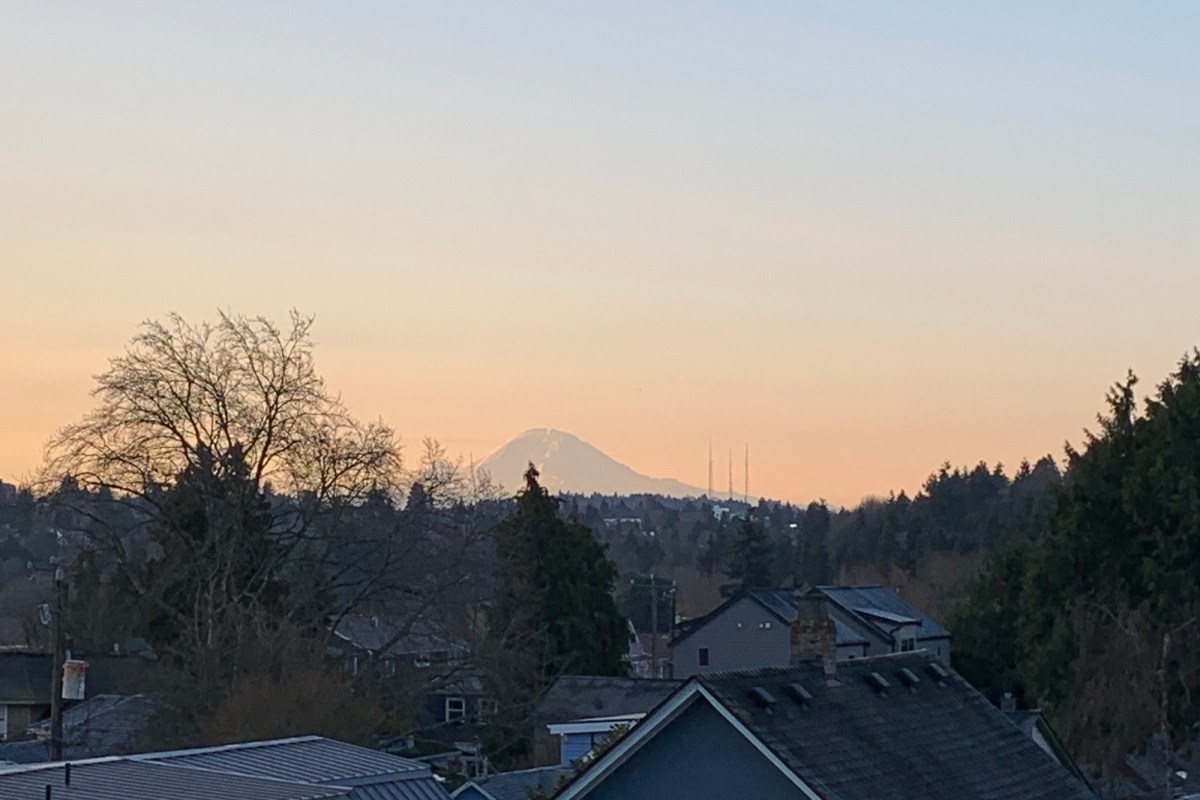
One of my favorite signs comes from when I was in my late 20’s. I was driving to work on a sunny Spring morning with the top down on my little VW Cabrio convertible. I’d just broken up with a boyfriend and was wondering what to do next. I took the exit for I-90 bridge over Lake Washington and as the traffic slowed, Mt. Rainier loomed over the view. I thought, “I should climb that.It launched my amateur climbing pursuits that took me throughout the Pacific Northwest as well as Russia, Nepal, Peru, and Mexico.

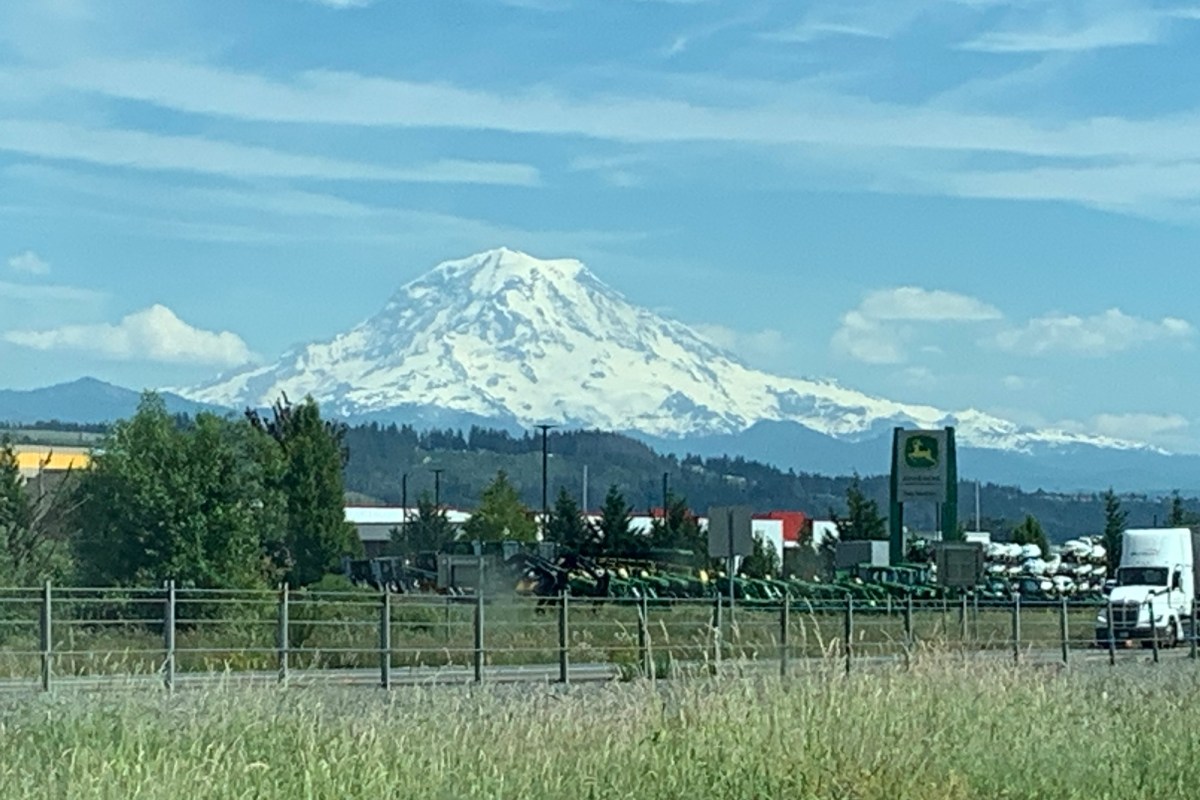
Every time I see Mt. Rainier, especially from the freeway, I’m reminded of the power of signs. I get a powerful goose to put the top down, whatever my proverbial top is at the moment, and look around.

Leadership Lessons From Climbing

Great people are those who make others feel that they, too, can become great.” – Mark Twain

We went to Mt. Rainier this weekend and spent two nights at Paradise Inn, one of the historical National Park Lodges first opened in 1917. It’s has no Wi-Fi connectivity: instead it has this fantastic lobby area where guests can hang out by the fireplaces, listen to ranger talks in the evening, find a majestic wood table and play cards, or post a postcard in the “mail stump” – a huge stump next to the registration desk. The rooms are like tiny postage stamps in which you have to be creative about where to hang your wet clothes.

Paradise Inn is at 5,420 feet and is the entry point for most of the guided climbs. There are many routes up the mountain, but this is the route I took for the times I climbed on Mt. Rainier (summit is at 14,410 feet). That sounds like I did a lot, which is not the case – four climbs, two of which we summitted. But I did spend a lot of time doing training hikes on the paths out of Paradise.

Arriving at Paradise was like plugging myself into a higher voltage circuit. I don’t think I stopped grinning all weekend. So, buckle up for some climbing metaphors….

My friend Eric traveled with us this weekend. He did a fair amount of climbing back in the day as well so between the two of us, we have a fair number of climbing stories.

Leading my kids out for a couple of hikes this weekend reminded me of all the good and bad things about hiking with a group. The path up from Paradise starts out paved. But at this time of year, it was still covered with slushy snow.

Eric had a story about a guy he used to climb with named Dave. Dave was 6’3” with size 13 shoes. Apparently, everyone cheered when Dave was leading because he’d kick in the best steps. When the snow is fresh or icy, the person in the lead does the work to kick in solid steps. It’s like doing two or three stomps with each step. It’s exhausting. But for the rest of the team, if the steps kicked in are nicely spaced and solid, it’s a far easier experience, somewhat akin to climbing a set of stairs.

And that’s just one factor in which the person leading can affect the whole group. Going at a steady pace, not too fast and not too slow, and calling breaks at the right time all help everyone settle into a rhythm. Then there’s also the matter of encouragement.

I remember a practice climb on Mt. Rainier I did years ago when I felt totally spent halfway through. My friend encouraged me to take a break to eat and drink before deciding whether I could continue. He was absolutely right – I was totally fine to continue. Great guides are so good at making this call, knowing who needs to take a break and who needs to turn back. It’s not a one-size-fit-all encouragement train.

And climbers have great phrases to encapsulate the down sides, not that they own them by any stretch. There’s “Embrace the suck” to encourage leaning in when the going is tough. And there’s also the acknowledgement that someone has to carry the poop bucket – literally and metaphorically, our stuff goes with us.

Funny that my happy place is one where all those realities, including the suck, are parts of the experience.

Leading my own little team reminded me that life is better when we kick in steps for others, set a sustainable pace, and get a feel for when to encourage and when to walk alongside others when they need to go down to camp.

(featured photo is mine: Mt. Rainier taken from Paradise)

Related climbing metaphor posts:

Frozen Heart

Guides for Transformation

Finding a Rhythm

Climbing Out of My Gunk

Friendship Brownies

The Return Trip

Frozen Heart

The best and most beautiful things in the world cannot be seen or even touched — they must be felt with the heart.” – Helen Keller

I was digging around in my hiking gear this weekend and came across one of my CamelBak backpacks. Such an amazing concept to carry your water with an attached hose so that you could take a drink without stopping.

CamelBaks came with their own downsides though too. Slow leaks, fast leaks, and the time my friend Jill, had a hose that was stuck open. She kept turning around to try to grab as it sprayed in 360 degrees around.

A guide on Mt. Rainier once told me why they never recommended clients wear them while climbing. It surprised me because staying hydrated is so important to performance. The issue was that on the upper mountain above 10,000 feet, CamelBaks often froze. The result is that a climber ends up carrying an ice block next to their heart. If that happens, it cools blood flowing in and out, sometimes accelerating hypothermia.

That was an aha moment for me. It totally made sense why it would be detrimental to staying warm and having functioning extremities when climbing but I’d never thought of it. And well, you know how I like climbing metaphors. It also works to describe how dangerous it is to hold some things close to the heart. In my case, I’m thinking how anger, blame, guilt, shame, or fear reduce my overall warmth if I carry them around.

For better or for worse, what we hold next to the heart affects everything that’s pumped out.

(featured photo is mine of our group leaving the 17,160 foot summit of Mt. Ixtaccihuatl, October, 2000)

Stories Matter

I began to realize how important it was to be an enthusiast in life. Embrace it with both arms, hug it, love it and above all become passionate about it. Lukewarm is no good. Hot is no good either. White hot and passionate is the only thing to be.” – Roald Dahl

This past Tuesday, eight-year-old, Miss O was working on a school project and announced “Volcanoes are boring.”

I harumphed thinking about all the beautiful, scenic, and climbable volcanoes in our vicinity. “I love volcanoes,” I said.

She shot back, “I bet you could make volcanoes interesting.

So at bedtime that night, I told her and four-year-old Mr. D. about when I was 11-years-old and living in Spokane, Washington. We were driving home from church on a Sunday afternoon in May, 1980. We stopped to talk with a neighbor who told us that Mt. St. Helens had erupted. Mt. St. Helens was on the opposite side of the state from us. The eruption blew the top 1,300 feet and the north side of the mountain off. We nodded with interest and went about our day as usual thinking it had no bearing on us.

As we drove home from a playdate four hours later, the sunny May sky turned gun metal gray and ash started falling. We carefully drove home with our windshield wipers pushing the dusty pile off our windshield.

In Spokane where it snows usually from October through March, school is never canceled because of weather. But after Mt. St. Helens blew, they told us to stay indoors, and school was canceled for a week. Everyone tried to figure out what to do with Mt. St. Helens ash. We collected it to polish silverware. Others used it to make ceramics. My friend, Jiffy and I used it to build sand (ash?) castles. When we drove across the state on vacation that summer, we stopped on several occasions to watch impressive ash dust devils form in fields across the state.

Then I told my kids about how, in the year 2000, twenty years after it erupted it, I climbed Mt. St. Helens for the first time. It’s hard to get permits to climb in the summer. The park service limits traffic to help the flora to grow back. [And here I may have embellished a little side story imagining how excited the scientists were when they discovered the first flow to grow back after the eruption. “Look, look, the first tiny flower has come back to St. Helens!!”]

In order to bypass the permit lottery process my friend, Jill, and I climbed in the late spring when the traffic is low so it’s easy to get a permit. We climbed up 6,000 feet on a sunny April Saturday to look over the rim. Even though it wasn’t very high (any more) was a long one-day climb.

The view over the rim of Mt. St. Helens to the little pot-belly lava dome in the top center.

And the rim? Well, it was fascinating to look over the edge into gaping hole below with a little pot-belly lava dome in the middle. And then to have a sense of surreal shock that nothing was below us.

The rim of Mt. St. Helens 20 years after the top and half the mountain blew off.

For as exhilarating as it is to stand on a mountain top, it’s a little dizzying to stand on only half of one.

This bedtime story session was on Tuesday night. By Wednesday afternoon, Miss O was telling me facts about volcanoes. “Mom, did you know there are three types of volcanoes?

I didn’t even try to hide my glee.

This theme shows up for me again and again. When we share our stories – it matters. Our authentic voice telling our experiences are more than just a bedtime story. It’s the passing on of energy, passion, and warmth.

(photos in this post are mine – the featured photo is my favorite volcano, Mt. Rainier)

And speaking of authentic stories, Vicki and I talk with writer and blogger, Cheryl Oreglia on our podcast today about her experience at the San Francisco Writer’s conference. She sells us the idea that not only are we the only one to tell our stories – we might be obligated to. It’s such a great episode. Please tune in by searching for (and subscribing to) Sharing the Heart of the Matter on Apple, Amazon, Spotify or Pocketcasts

Or click through to the show notes Episode 61: The Writers Conference with Cheryl Oreglia for the link to listen on Anchor on whatever device you are using.

A Peak Behind the Lens

Only those who attempt the absurd can achieve the impossible.” – Albert Einstein

When I trekked to Everest base camp in 2001, we flew a fixed wing aircraft from Kathmandu to a dusty hilltop in the Himalayas. Then a helicopter swooped in and flew us to Lukla at about 10,000 feet of elevation. And then we trekked about 30 miles to base camp from there.

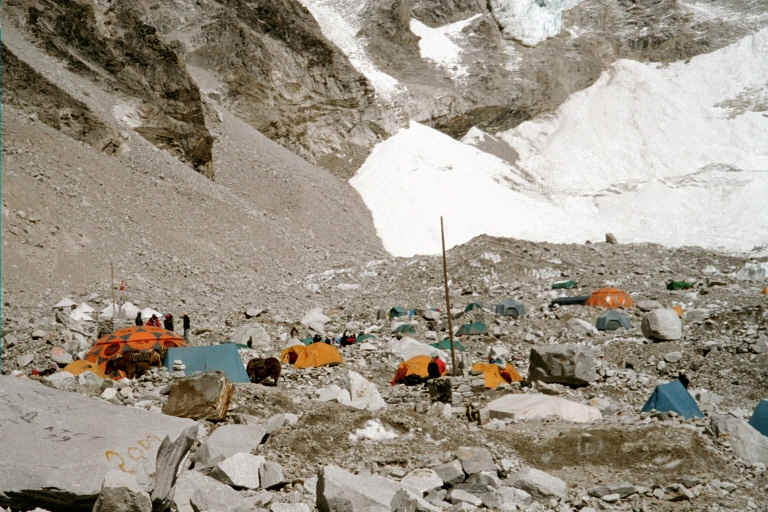
Base camp, which sits at an elevation of about 17,600 feet, was a small city with each team having a dozen or more tents around a central dining tent and communications tent.

A small section of base camp from my photos taken in 2001.

I recently watched two Everest films. The Man Who Skied Down Everest recommended by Dr. Gerald Stein. It’s a Canadian documentary filmed in 1970 and won the Academy Award for Best Documentary in 1975. Six sherpa were killed during the expedition in a collapse of the Khumbu icefall.

The second was Everest recommended by Vicki Atkinson.  It was a Hollywood film production released in 2015 about the 1996 Everest blizzard that killed eight people.

In the 1975 film, it took a team of 800 people to support getting the supplies the expedition needed to the mountain. But there were very few other climbers on the mountain.

In the Everest film, they got to the mountain much like I did and there were so many more climbers. Teams tried to organize the summit attempts so that climbers weren’t slowed down and freezing while waiting for their turn at choke points like the Hillary Step. In that film, they attributed the change in the number of climbers to Rob Hall, the incredibly infusive and strong guide from New Zealand who died in the storm, being willing to guide amateur climbers up Everest.

In a lot of climbing circles, it’s believed the trend actually started when Dick Bass (who owned Alta ski resort in Utah) and Frank Wells (who was President of Disney) dreamed up the project to climb the tallest peak on each continent, The Seven Summits. Dick and Frank then they hired people like my friend, Phil, to guide them up the mountains.

Regardless, there is no doubt there are challenges climbing Everest today that come from overcrowding and general human behavior like selfishness, ego, and disregard for nature. It’s not hard to imagine the Everest challenges as a fitting allegory about our world overall.

Thankfully, there are also heroes in the story.

When Beck Weathers needed to be helped down the mountain, filmmaker David Breashears and climber Ed Viesturs tied him in between them and basically walked him down as far as they could. David and Ed were up there along filming an IMAX film with Jamling Norgay, the son of the Tenzing Norgay. Tenzing was the Sherpa that successfully achieved the first ascent of Everest with Edmund Hillary.

I am in awe of the filmmakers who capture this incredible climbing footage. In an interview, I heard David Breashears describe how he practiced loading the IMAX film in a special cold room. He had to do it without gloves on because a speck on that film would look enormous on an IMAX screen. Each roll of film only captured 90 seconds of footage.

Filmmakers like David Breashears and Jimmy Chin (Free Solo and Meru), do all the work to film it, manage the extra weight, and execute their creative artistry while they are also doing the hard work of climbing. When they do it well, they make it easy to forget that they are climbing too.

In 1996, when the blizzard hit, the IMAX team was at base camp. They’d seen the crowds and had decided to delay their summit bid. When they heard that people were in trouble and dying, David Breashears told rescuers they could take any of the IMAX team supplies like oxygen tanks, batteries, and food stashed on the upper mountain they needed.

After David and his team offered their supplies and helped evacuate injured climbers, they still managed to summit Everest a couple weeks later and complete their project, albeit with very heavy hearts. The resulting movie Everest (same title as the film above but released in 1998) is the highest-grossing IMAX film.

I was writing this post about the differences on Everest from these two movies when I learned that mountain-climber Lou Whittaker died at age 95. So I switched to writing the post, The Lingering Effects of One Good Person. In the process, I learned that David Breashears also died in March of natural causes. He was 68-years-old. In recent years, David Breashears started Glacier Works, a non-profit highlighting changes to Himalayan glaciers.

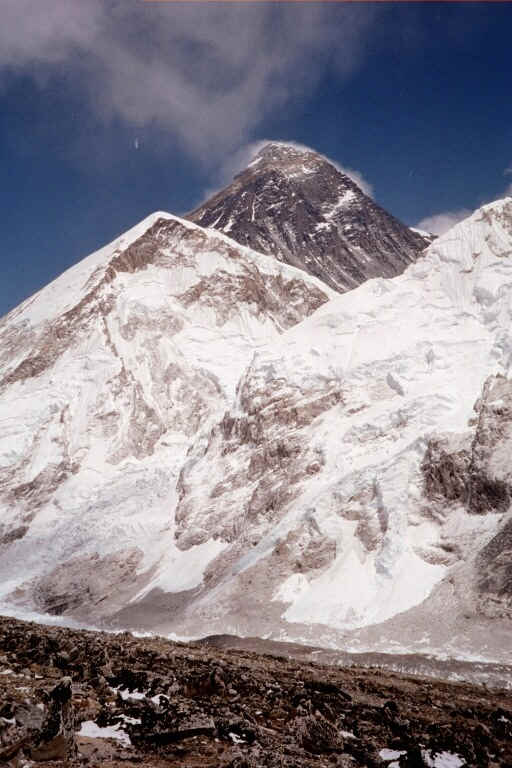
(featured photo is mine of Everest, the dark peak in the back)

The Lingering Effect of One Good Person

Great things are done when men and mountains meet.” – William Blake

I was eating dinner with Mr. D this past Wednesday night when I couldn’t stop looking at the pictures on my laptop. I have a no device rule at the table but Mr. D kept getting up to do other things during dinner. In his absence, I would flip to the next picture in the slideshow from Lou Whittaker’s obituary in the Seattle Times.

Lou Whittaker, a legendary mountain climber and guide, died on Sunday, March 24 at age 95. In my book, one of the most important accomplishments for a climber is to die of old age.

Lou and his twin brother, Jim, were sometimes referred to as the First Family in American Mountaineering climbing. These two incredibly tall (6’5”) and skinny kids from West Seattle climbed Rainier at age 16, and all the peaks in Washington by age 18.

Lou started Rainier Mountaineering Inc. (RMI) which was the only guiding service on Mt. Rainier for about forty years. When I first attempted Mt. Rainier in 1998, I signed up and climbed with RMI.

Jim started REI (Recreational Equipment, Inc.) and was the first American to climb Everest. Jim is still living.

The Seattle Times obituary captured the brothers relationship well:

“After his brother gained international fame for becoming the first American to climb Everest in 1963, Lou Whittaker — who had declined to join the expedition — said if he had, “Fifty feet from the top, we’d have wrestled there in the snow to see who’d be the first up.”

The Seattle Times

Which isn’t to imply that Lou didn’t do the big peaks too. He climbed Denali, K2, Everest, and more. But more importantly, he trained generations of responsible and thoughtful guides.

My friend, Phil Ershler, the first American who climbed the North side of Everest, trained as a guide with RMI.

As did Ed Viesturs, another Seattle boy, who guided for RMI for many years. Also he climbed fourteen 8,000 meter peaks, the world’s highest mountains, without supplemental oxygen and starred in the IMAX film about Everest released in 1998.

I never met Lou but I’ve climbed with and encountered at least 40-50 guides from his company while spending time on Mt. Rainier. To a person, they were helpful people who wanted to teach others about climbing, respect and appreciation of the mountains, and safety. They made the mountain a safer place by participating in rescues and maintaining marked routes.

More than any other accomplishment, and Lou had many, it is that company ethic that stands out to me. There is a whole generation of guides and mountaineers that will likely die of old age because RMI taught them how to be safe and respectful in the mountains. And tens of thousands of mountaineers who know how to handle garbage, waste, and their impact in the mountains because of the lessons taught by RMI.

Lou’s amazing summit pictures celebrate the high points in life. But I thought it worth also memorializing the long effort and incredible impact one guide and leader can have.

(featured photo from Pexels)

P.S. I love telling stories about the remarkable guides that I’ve met or climbed with and the life lessons they passed along. Here are some of my favorites:

  • The time that Ed Viesturs reached the central summit on Shishapangma at 26,273 (8,008m) feet climbing alone. He looked over the 100 meter traverse to the true summit (26,335 feet) and decided it was too dangerous. He had to return eight years later to claim the summit in a safe way.
  • The story of Beck Weathers being left for dead on Everest and Ed Viesturs and filmmaker, David Breashears, giving up their own summit plans to help Beck descend the mountain.
  • My friend, guide, and amazing climber, Phil Ershler who taught me about objective versus subjective risks.
  • The lasting impact Phil had teaching me how to walk lightly in the mountains and in life.
  • How I learned from Phil about how different things look on the return trip.