What I Know, Not What I Think

The Heart has its reasons, that reason does not know.” – Blaise Pascal

I have a lot of opinions about all that’s going on in the world. Don’t worry – I’m not going to tell you them. I realized the other day that not only do I get a steady dose of news from my media intake, but I also am getting a whole lot of other people’s opinions about it from newsletters, expert commentary, inexpert commentary, memes, and more.

This a-ha made me realize that I needed to take a breath and find ground in what I know instead of just what I think. My dad was a great believer in the wisdom of the heart. The quote for this post was one of his favorites.

So here’s what I know:

No one knows the future, no matter what credentials they have.

People working together can accomplish great things.
Pitting people against each other can lead to temporary gains but comes at a cost.

There are real feelings in the pancake vs. waffle debate.

One suffering soul can hurt a lot of people

Healing is always possible but it takes hard work.
It’s my responsibility to do my work so that I can try not to add suffering to the world.

Believing is a way of life. If something requires me to check what I believe at the door, I should be doing everything I can to resist.

When I feel rushed, oppressed, and worried, the best thing to do is slow down, remember what I know, and find the next right thing to do. The rest is in God’s hands.
Believing that there is Higher Power helps me to work hard in the day and sleep at night.

There are an infinite number of things that can bug me – and the at least the same number that can delight me.
Whether I find one or the other, depends on me.
Developing the discernment between what is irritating and what needs to be fixed is a constant practice.

Love is all there is, to quote the Fab Four.
Being mindful of expansive love changes my experience: love of all the precious people around, the beauty of nature, the delight in the air I breathe, the gift of the day I’m in.
Uncertainty triggers fear and moves me out of love.

Navigating uncertainty takes energy.
Patience takes energy.
So sleeping and eating well can truly change the world.

When choosing between the standard and the ultra, always make the ultimate pancake recipe

The golden rule to treat others the way that I want to be treated works to reminds me to flip my perspective.
But I will never know what anyone else’s experience is like.

Sharing of authentic stories is transformative.
Opinions rarely brings us together. Swapping stories often does.

There is no one else I can be.
Conversely there is no one else others can be.
People change; but not how you want or when you want them to.

Slowing down how I roll helps me find more opportunities to be kind.

Effort brings outcome.
Exercise is worth it.
Setting goals that are bigger than I believe I can accomplish will take me somewhere.
There is nothing I can wear that will replace confidence.
It is possible to live through hard times and learn from them.

My dad once wrote, “The distance between our heart and our head is about 13 inches. When our hearts are right, our heads will follow along by believing.
And that leads to the last thing I know for this post: A hopeful heart is a powerful thing.

(featured photo is mine)

You can find me on Instagram @wynneleon and LinkedIn: https://www.linkedin.com/in/wynneleon/

I co-host a storytelling podcast featuring authors and artists with the amazing Vicki Atkinson. To tune in, search for Sharing the Heart of the Matter on Spotify, Apple, Amazon Music or Pocketcasts (and subscribe) or click here. Or the YouTube channel features videos of our interviews. Please subscribe!

My other projects include work as a CEO (Chief Encouragement Officer), speaking about collaboration and AI through the Chicago Writer’s Association, and my book about my journey to find what fueled my dad’s indelible spark and twinkle can be found on Amazon: Finding My Father’s Faith.

The Way of Unifying Energy

But where was I to start? The world is so vast, I shall start with the country I know best, my own. But my country is so very large. I had better start with my town. But my town too, is large. I had best start with my street. No: my home. No: my family. Never mind, I shall start with myself.” – Elie Wiesel

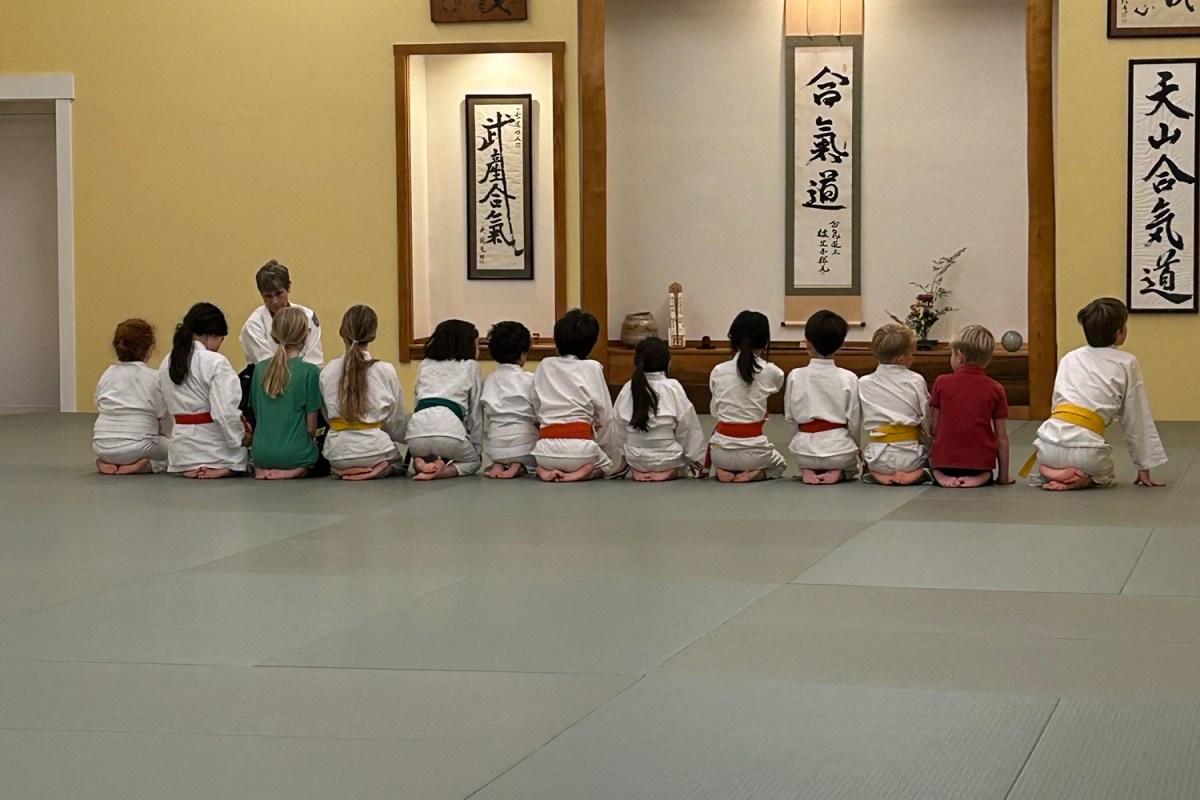
Our Aikido dojo recently had open house day. We recruited my brother, sister-in-law, and a dear young friend and all headed off to give it a try.

Let me tell you. It’s a lot easier to watch kids get up and down from the mat 30 times (or more) in an hour than to do it. Yeah, that’s not news to anyone reading this.

But I was captivated by the philosophy behind this martial art. It’s a way of redirecting energy. Or, as Wikipedia puts it, defending oneself while protecting the attacker from injury.

Aikido, the way of unifying energy, is a way of helping attackers calm down according to our Sensei. Watching my kids practice, I can see how the moves are intended to help the energy move past. It isn’t meeting a blow with a blow but instead stepping out of the way and using the attacker’s energy to pin them.

It seems like there are so many practical ways to employ this. It’s like not resisting our emotions, but instead leaning in to see what we can learn. It’s not telling others that they shouldn’t upset, but instead actively listening to understand the experience. It’s not fighting fire-with-fire but instead poking a hole in the roof so that the dangerous smoke can dissipate.

I imagine all the ways practicing Aikido, the way of unifying energy, the way of defending oneself while protecting the attacker from injury, could make a difference in this world. Our national politics come to mind. But I’m only a white belt so I’ll start by practicing on myself. That’s a head up to my inner critic.

(featured photo is one of mine of our dojo)

Little Steps of Calm

These mountains that you are carrying, you were only supposed to climb.” – Najwa Zebian

Now that I’ve spent a dozen years practicing meditation and trying mindfulness, I find it interesting to take a look back at the time I spent mountain climbing. Because mountain climbing is kind of a mindless activity.

In a journey of 50,000 steps or so for a climb, you don’t necessarily want to remember each one. In fact, it might be a little painful if you did.

So while the endurance and grit is transferrable to life down low, perhaps the mindless moving forward is best left on the mountain. Speaking for myself that is. I don’t want to sleep walk through the days of my life.

This is just one of the many reasons that I love the warm and inviting conversation I had this week on the Sharing the Heart of the Matter podcast with my co-host, Vicki Atkinson.

I think it’s fair to say that we all have times where life feels frenzied. And it isn’t only because our to-do lists get too long. It’s also because of the pace of the world around us, and our exposure to the news, in whatever way we consume it.

Both Vicki and I start the day with sacred time. It’s non-negotiable for me so that I can at least start the day with a measure of faith and perspective.

But we know that doesn’t work for everyone. So we talk about our tricks to instill some calm. Vicki tells us about how she sets aside multi-tasking to focus on one thing at a time. And more than that, how to slow tasks to reap the full benefit.

For me, music can help to disrupt the stress swirl. Tuning in to songs from my youth delivers a noticeable energy lift as well. We touch on the research of Harvard psychology professor Dr. Ellen Langer about how our brains can impact our bodies.

It’s not hard to imagine that Vicki is an inveterate smile-r. She shares a story about how offering friendliness to others brings a side benefit of joy.

I’m confident you’ll love the scenic and beautiful places we explore as we share the power of storytelling.

We know you’ll love it!

Search (and subscribe!) for Sharing the Heart of the Matter on Apple, Amazon, Spotify or Pocket Casts OR Listen to it from your computer on Anchor: Episode 88: Meditative Moments with Wynne and Vicki

Episode 88 transcript

AND subscribe to our YouTube channel to see a video clip of each story: @SharingtheHeartoftheMatter.

Links for this Episode:

Episode 79: Sometimes You Have to Laugh with Author Pete Springer – The Heart of the Matter (sharingtheheartofthematter.com)

Remembering How to Bounce Back – Dr. Gerald Stein

Kindness all around us! – Brian Hannon

The Subtle Shaping of Our Brains – The Heart of the Matter (sharingtheheartofthematter.com)

Meditate on this! – The Heart of the Matter (sharingtheheartofthematter.com)

Write it Out – The Heart of the Matter (sharingtheheartofthematter.com)

From the hosts:

Vicki’s book: Surviving Sue

My book about my beloved father: Finding My Father’s Faith

Do It Again: The Magic of Repetition

Next time you’re afraid to share your ideas, remember someone once said in a meeting let’s make a movie with a tornado full of sharks.” – unknown

This post was originally published on 8/9/2023. Heads up – you may have already read this.


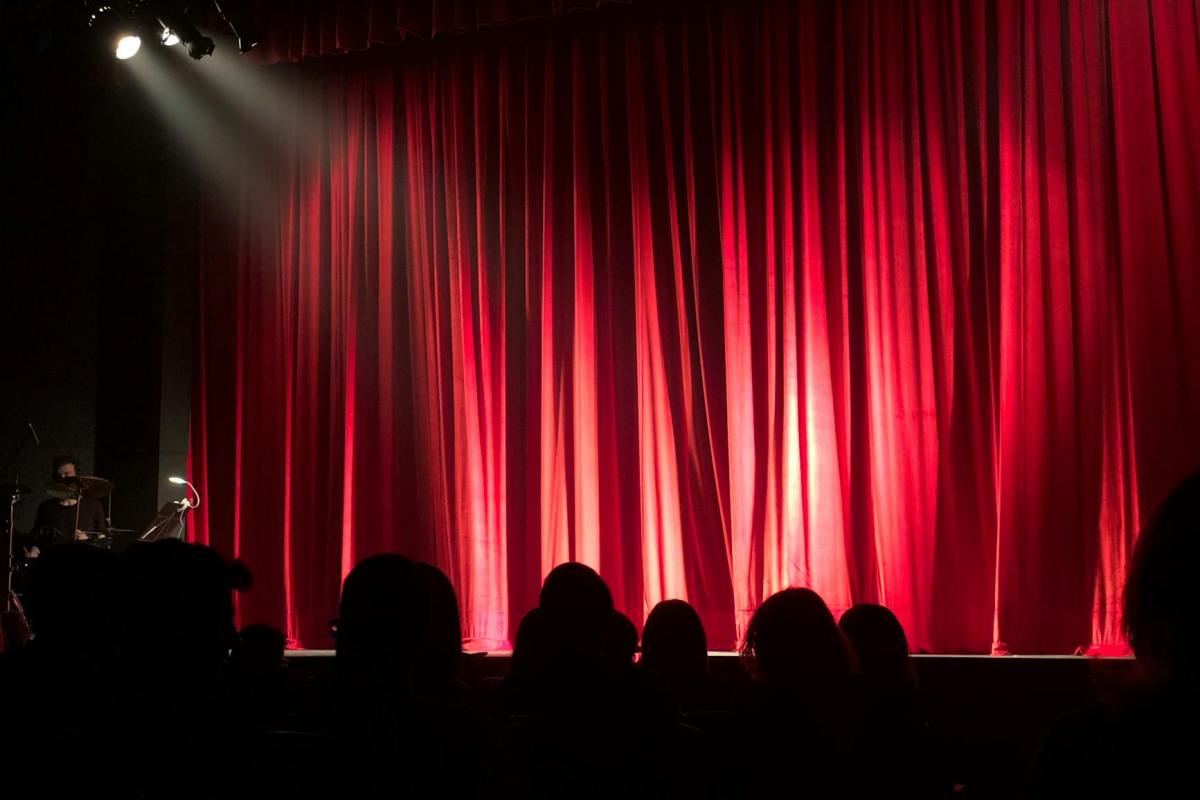
I was recently lucky enough to be able to talk about the magic of theater in a podcast conversation with writer, playwright, and Wise & Shine colleague, Jack Canfora. As we talked about the powerful feeling of a night in the theater when it all comes together and just works, he told me a story about Laurence Olivier and young Maggie Smith.

After a night where the performance was particularly magical, Laurence Olivier angrily stormed into his dressing room. Maggie Smith inquired after him, asking him “What’s the matter, Larry? It was brilliant.” Laurence replied, “I know. And I have absolutely no idea how I did it, and it’ll be gone tomorrow.”

Wow, that story speaks to me! About how I want to capture magic, to define it, and put it into a bottle. Also about the repetitive nature of life. Preparing a meal, writing a post, or having a moment with friends – there are so many things that I do repeatedly and when it goes well, want to know why. Laurence Olivier’s reply gets to the desire to capture it in a formula so that we know exactly how to do it again.

The elusive nature of life seems to ensure that there is no perfect replica. Even for someone with the talent of a great actor cannot control all the factors that go into a delivery.  Yet we still strive for those wonderful moments when it all comes together.

If you’re anything like me, that striving actually takes away from the moment. Instead of savoring the now moment, when everything went wonderfully well, and being grateful, I start thinking of what I have to do next, or how things might go differently in the future.

Fortunately, I keep getting the chance to do it again. I’ve found that life requires us to repeat ourselves and then begs us to stay present for each show. I feel this most starkly when it comes to writing. Every time I sit down to write, it feels like breaking through my barrier of protectiveness and layers of my own BS to try to write something meaningful. Then I post something, for better or for worse, and then think, “I’ve got to do that again?”

Of course I do, because life isn’t static. I’ve found that writing rubs off that tarnish or moss that grows when I don’t do the work to show up authentically. For me, that’s where the magic happens. I can only imagine that something similar was at work for Laurence Olivier.

(featured photo from Pexels)

A Piece of Advice

“I always pass on good advice. It is the only thing to do with it. It is never of any use to oneself.” – Oscar Wilde

This was originally published on 5/18/2022. Heads up – you may have already read this.


Enjoy this time, it goes so fast” is the single most repeated piece of parenting advice that I’ve heard since having kids. Since I chose to become a single mom at an older age than my friends, having my kids at age 46 and 50, I hear it both from my peers and the older generations which makes it bear even more weight for me.

My kids are now 2-years-old and 6-years-old – there are a lot of parenting years I have not yet covered. But in the phase of parenting I’m now in, there are very many life skills my kids haven’t mastered both in terms of basic care and feeding and also regulating the emotional ups and downs of life. It’s a very physical job that takes a lot of patience. But while I’m needed often for kissing boo-boos, the beauty of this phase is that my kids’ problems are small and my kiss can fix almost anything that happens to them.

Breaking the advice down and applying it to where I’m at: “Enjoy this time.”

Enjoy this time which means enjoy this phase that’s a lot of work and is full of ups and downs. Enjoy this time which means celebrating it even when my shoulders are heavy with the responsibility and worry for this family. Enjoy this time which means treasuring every drop of this intimate closeness even when it’s full of sticky, raw emotion both positive and negative. Enjoy this time which means cherishing the weeks when it’s completely impossible to complete my personal tasks and create a stable experience for my kids when they are sick, the world is sick, or even when I’m sick.

And then “it goes so fast.”

It goes so fast implies that if I look away for a second, it will change to something else. It goes so fast means that time is ticking even when it’s not fun. It goes so fast tells me that if I’m dreaming of a moment in which I can have a routine that isn’t so urgently tied to others’ needs, I will miss something unfolding in the life of today.

And back together, “Enjoy this time, it goes so fast.”

Enjoy this time, it goes so fast tells me to savor what I have. Enjoy this time, it goes so fast implies a richness to the mess of a life I have now. Enjoy this time, it goes so fast means that this is the heart of life experience beating right now.

Now that I break it down “enjoy this time, it goes so fast” doesn’t seem specific at all to parenting. Perhaps we all need this reminder to touch this moment we are in.

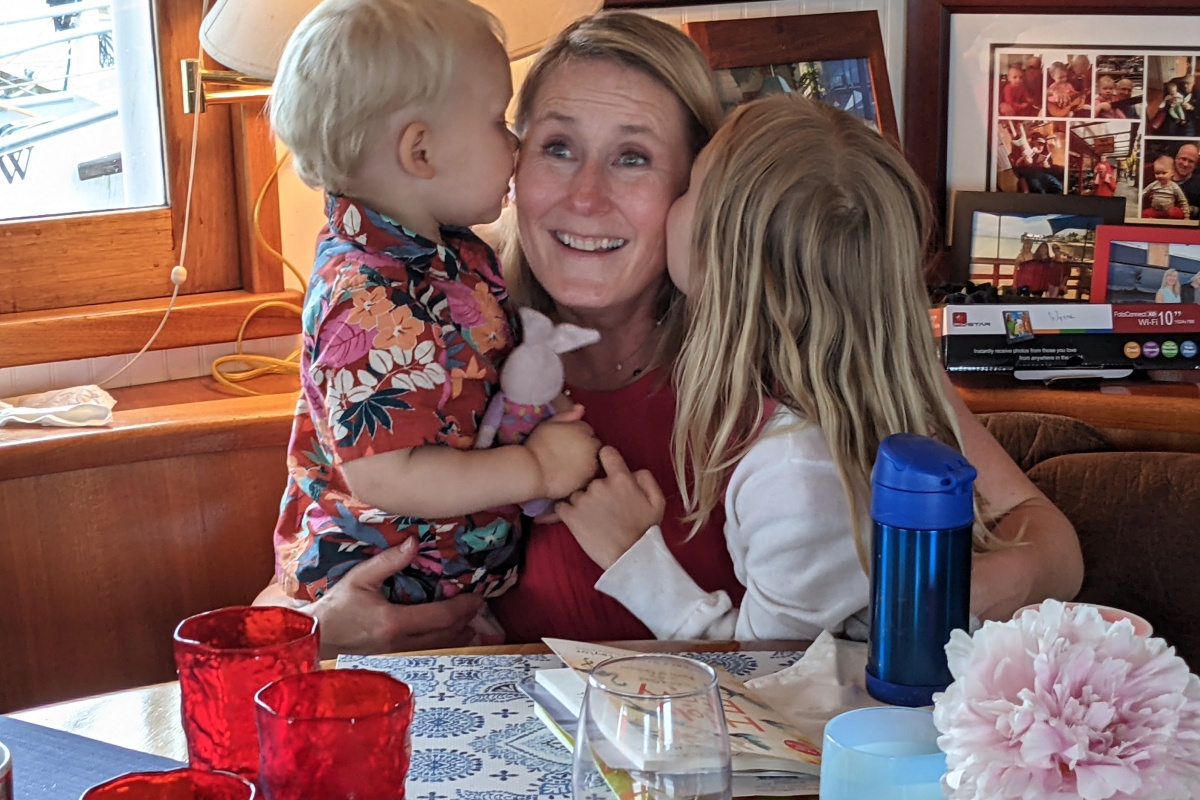
(featured photo is mine of me and my kids, at age 2 and 6)

The Glass is Refillable

Only the closed mind is certain.” – Dean Spanley

This was previously published on 9/28/2022. Heads up – you may have already read this.


I was traveling last week, something I haven’t done without my kids in 7 years. I’d perfectly engineered the school drop-off and transfer to the nanny, filled the fridge with food, done all the laundry, and even unloaded the dishwasher. I thought I had everything well in-hand.

But then I got to the airport and all my planning fell like a stack of cards. My flight was delayed. My transportation to the hotel when I arrived at the destination changed so I needed a last minute rental car. I took a wrong turn and had to back up in a strange car on a dark road. I didn’t know how to navigate New Jersey turnpike tolls and was guessing. I got to the hotel so late that they were no longer serving food so I ended up eating the cup-of-soup noodles you get by pouring hot water over and they are only marginally less chewy than styrofoam. Then as I gave up and just tried to sleep, I could hear a very faint security beep if I lay on my left side so I had to only lie on my right. Anytime I forgot and turned over, I woke up.

I was tired, pissy, disappointed and completely spent.

More than that – I was surprised. My congenital optimism as described in  Rose-Colored Glasses had predicted none of this. When a couple of days later I talked this over with my friend who is a self-proclaimed pessimist, I asked if optimists and pessimists suffer the same amount: optimists from disappointment and pessimists from catastrophizing.

My friend asked something like, “Why can’t you set your expectations differently?” Well, I’m pretty sure I wouldn’t get that right either. I could imagine how things would go wrong but I doubt I’d be any closer to reality.

“People who wonder if the glass is half empty or full miss the point. The glass is refillable.”

unknown

Refillable – yes! But first I have to empty it of all the bubbly stuff I put in there to begin with. What works for me is to get up every morning and meditate to make friends with uncertainty. That practice of mindfulness helps me to embrace that I have no idea how things are going to unfold, no matter how much I’ve planned…or maybe even more poignantly, how much I’ve dreamed.

Whether we come at it from a perspective that everything is going to be great or that nothing is going to work, the truth remains that we don’t know. Even the people that I’ve met who identify as realists don’t know how something will unfold. Being optimists, pessimists or realists might set the tone of how we feel about the day before us but the mystery of life remains that we can’t predict how life will turn before us.

This brings to me something I heard Franciscan Priest Father Richard Rohr say about certitude.

“The thing called certitude is a product of the enlightenment, and it did so many good things for us, science and medicine but it made us feel that we have a right to something that we really don’t. Our ancient ancestors grew up without expecting that. So they were much more easily able to hold on to mystery in general, God in particular. Whereas we worship workability, predictability, answers – we like answers.

We think we have a right to certitude.”

Father Richard Rohr

With the help of meditation, I come back to knowing that I don’t know and then I feel more able to improvise. When I touch uncertainty, I let go of my plans. When I empty my head and hands of the vision of me being in charge, I more readily accept the mystery unfolding before me.

The glass is refillable. Indeed it is. I concede that it might be my optimism that gets me up and ready to practice refilling it. But whatever it is, I have to work at it every day, meditating in order to make friends with uncertainty in a practice to embrace the mystery again and again.

Meditating on uncertainty on my recent trip helped me enjoy the experience: it wasn’t as I had expected but it had lots of twists and turns that fed me in significant way. That interpretation might sound optimistic but it’s much deeper than that – its meaningful. And isn’t that part of what we ultimately want from life?

(featured photo from Pexels)

Writing In the Dark

Go into yourself and see how deep the place is from which your life flows.” – Rainier Maria Rilke

This post was originally published on 4/12/2023. Heads up – you may have already read this.


I wrote this post early Monday morning. Around 3:43am that is. I have all sorts of things I do in the middle of the night when I can’t sleep. Mostly worry. Then I review my to-do list. Then I go back to worrying some more. Usually after about a half an hour of tossing and turning, I remember to start meditating and praying. After a few minutes of meditating, I kinda just flow into writing.

It’s all in my head in the dark. I know that there’s a lot of sleep wisdom that says to keep a notebook beside the bed for writing things down. But this composing in my head works for me. It’s not that I remember everything I write, it’s just that it slips me into a different mode. Eventually I’ll write myself back to sleep. The best part is that I even retain some of it when I awaken.

I recently learned of some interesting research from a Ten Percent Happier podcast with Professor Lindsey Cameron. She studied whether meditation helps at work, specifically focused on customer facing jobs, and the results were fascinating. She found that traditional breath work meditations helped with centering the person in a bigger perspective so that the ups and downs weren’t as jarring. And she found that loving-kindness meditation increased the ability to place ourselves in other’s shoes.

There’s research that shows loving-kindness practice reduces activity in part of the brain that’s active when we are anxious. And a study that showed we don’t want to practice mindfulness when doing emotionally taxing work. The example I heard in that case was a flight attendant who is having to pleasantly telling people to buckle their seat belts over and over again does not benefit from being more mindful in those moments.

Back to the point about writing in the dark. It seems our brain research is catching up with what our spiritual traditions have taught us for millennia. There are practices that help to literally change our minds. They’ve given us a tool set that we can use to help put ourselves in the best frame of mind to create, to understand, to be less anxious, to change, to be more altruistic, and so on. It’s no wonder I start writing in the dark after I start meditating, because the practice helps to shut down worry, and then I open up to creativity.

And it matches what works for me during daylight hours. In my post When I Write, I looked at what time of day works for me and it’s always after I’ve done the work to be quiet, to meditate, and to get a little perspective on life.

It feels a little clinical to separate out the meditation and prayer practices from the spiritual traditions and beliefs that tie us to a Higher Power. But in the middle of the night as I’m settling into a rhythm of breathing and repeating “faith over fear,” it’s also kind of fun to know I’m setting up the conditions for calming my brain. And that I might even get a post out of it.

(featured photo from Pexels)

Be a Campfire, Not a Conflagration

Don’t set yourself on fire to keep others warm” – Rumi

We traveled this weekend to visit a friend in Eastern Washington. On Saturday morning, I crawled out of bed early for my sacred meditation time. After I meditated, I built a fire in the wood stove to take off the chill of the early morning in the woods.

The sequence made me realize the similarities between meditation and fire building.

We accumulate the debris from our lived days – the celebrations, the joys, the annoyances, the worries. It sits like stacked wood until we are ready to coax out the heat and the warmth. Somethings are easier to ignite than others while others need some tending to burn.

It requires a spark to convert it to something other than dead wood that we carry around. The spark can come from something like writing, introspection, or meditation. It can come from people around us or circumstances can set us off. But one way or another something is likely to light us up in good ways or in bad.

Some sort of ventilation is necessary in order for the process to work. We can talk it out, sweat it out, write it out, pray it out, cry it out, or some combo of it all.

Thinking about these parallels as I sat watching the fire in the stove, I found myself mesmerized by the beauty and warmth. But there are few things that scare me as much as when fire escapes its boundaries and roars out of control.

I came home from the weekend with a new motto: Be a campfire, not a conflagration.

Give Me A List

To meditate means to go home to yourself. Then you know how to take care of things that are happening inside of you, and you know how to take care of the things that happen around you.” – Thich Nhat Hanh

This post was originally published on 10/26/2022. Heads up – you may have already read this.


Have you thought about the effectiveness of lists in writing? Take a moment and think of the famous lists that come to mind like My Favorite Things from The Sound of Music or the Ten Commandments from the Bible. Even when we can’t name them all, I bet we can name a few or most.

Lists can help us as writers be concise, ordered and on topic. They also let the reader draw their own inferences. One of my favorite lists is Jack Canfora’s post, Dear Lord, Not Another Post on This Blog about Gratitude and I’m grateful it made me want to continue to write. AP2 polled the readers on the Wise & Shine blog and created 9 Pieces of Indispensable Life Advice From Your Future Self. And Dr. Gerald Stein’s list of How to Become Your Own Best Friend has so many nuggets of wisdom to mine. I can name those lists as impactful off the top of my head plus some items on them because at least I find lists are more memorable.

So, here’s a list I’ve written.

Why I Meditate

I meditate because it is the one thing that has improved the quality of my life the most.
The quality prior to meditation was only manageable if I drank a bottle of wine a day.

Meditation helps me live in my heart, not my head.
Because the voice in my head is an asshole.*
And I was sometimes an asshole when I listened to it.

Meditation has helped me to eat at the table of what IS and stopped begging at the table of what ISN’T.

I meditate to so that at least once I day I’m listening to the right things instead of the wrong things.
Right things include love, empathy, patience, wonder, awe, curiosity, grace, laughter.
Wrong things include judgment, self-flagellation, anxiety, comparison.

Meditation has helped me give up two key stories: that situations are win/lose and that choosiness leads to joy.

Instead I believe in bowing down to openness and creating porous boundaries where I try not to hang out to things as they come and go.

I meditate because it helps me exercise my grace muscle instead of my judgment reflex.

Sitting quietly in meditation has helped me to hear the heartbeat of life and trust in its timing and flow.
I almost always get this wrong and push ahead of the envelope but I’ve learned to respect it, especially in hindsight.

Meditation has helped me find internal quiet and be able to rest there.
When resting in that space, I can more easily find my way to others.

It takes repetition but meditation in five-fifteen minute daily increments has been the most gentle way of changing my life.
The other ways change has come to my life through loss, suffering and chaos have been a lot less fun.

And when I get all of the above wrong, which I do all the time, meditation helps me not judge myself too harshly, breathe and begin again.

How’s that for a list? Do you use lists in your writing? How about meditation?

*I give credit to former newsman Dan Harris, a self-described cynical but committed proponent of meditation and mindfulness for the phrase “the voice in my head is an asshole.” His podcast, Ten Percent Happier has great guests who discuss the science of mindfulness and it also has free, short 8-10 minute guided meditations. And for anyone looking for an app, Healthy Minds has 5-minute meditations. I am not affiliated with either.

** Update on 9/5: Another related post on meditation: Does Loving-Kindness Actually Matter?


Speaking of lists, I’ve compiled a list of favorite writer quotes submitted by bloggers in response to my poll of favorites on the Wise & Shine blog: Your Favorite Writer Quotes

(featured photo from Pexels)

Presently

If you are depressed you are living in the past. If you are anxious you are living in the future. If you are at peace you are living in the present.” – Lao Tzu

This quote from the Chinese philosopher, Lao Tzu, seems like an over-simplification to me but one that still makes me stop and consider. Thankfully we’ve come a long way since the 6th century BC in understanding that anxiety and depression have much deeper causes and roots than a simple tie to time-focus.

However, I take the point that what I’m prone to is living in the future and it robs me of some peace. I tend to march toward it with a single-minded determination that is at best, mindless, and at worst, anxiety-inducing. Getting out of this rut is the topic of my Wise & Shine post: Asking Questions When a Groove Becomes a Rut

(featured photo from Pexels)