Life Begins Now: The Parenting Trap

“It still amazes me that we insist on teaching algebra to all students when only about 20 percent will ever use it and fail to teach anything about parenting when the vast majority of our students will become parents.” – Nel Noddings

My dad used to tell this joke: Three religious leaders were asked the question, “When does life begin?”

The Catholic priest said, “At conception.

The Protestant pastor replied, “At birth.

The Rabbi answered, “When the last kid goes to college and the dog dies.

I’m laughing. Wow do I feel this. As a parent of young children, I do more things in a day that I wouldn’t choose to do than things I would choose. That alone can make me feel as if my life is not my own. Add in the noise and chaos and it’s hard to find peace. Taken all together, that can make this phase of life seem like one to rush through.

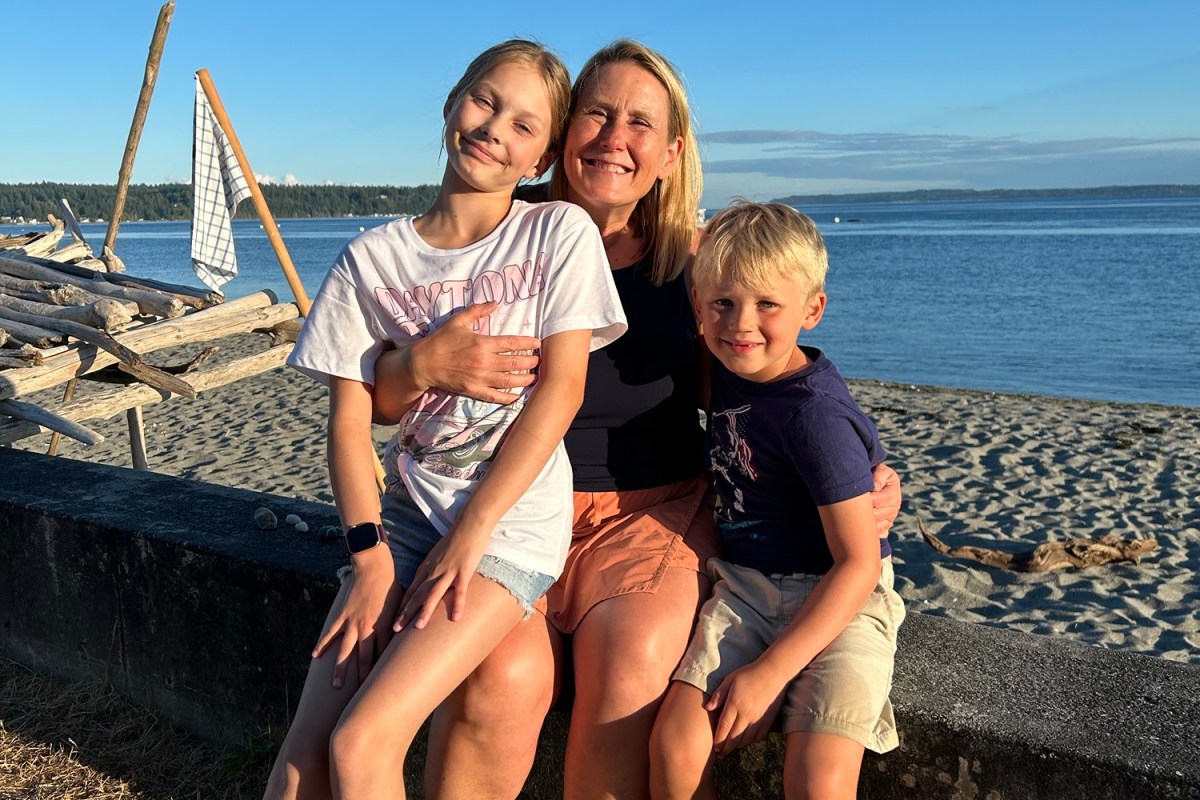
 But I know I can’t assume that I’ll be able to enjoy my kids when they are mature adults. I had my kids when I was aged 46 and then 50. When my youngest is 30, I’ll be 80-years-old. Hopefully an alive, healthy, and active 80 years old but nothing is a given. I know that’s true at any age.

So I try to flip the punchline and enjoy my kids, and life, now.

Cleaning up messes

Things in my house are spilled nearly every day. Sometimes by me. Often not very big deals like when a glass of milk with a top on spilled the other day. It just left a corona of milk dotting the carpet.

Here’s the thing I’ve realized. It’s a chance to convey to my dear children that I’ll love them when things are messy.

Bonus points: Longevity specialist Dr. Peter Attia includes getting up from the floor with max of one arm for support on his Centenarian Decathlon list. It includes the ten most important physical tasks you will want to be able to do for the rest of your life. Every time I’m down on the floor cleaning, I celebrate working out the strength and neuromuscular control that I need.

Helping with personal hygiene

It’s funny that kids don’t come with personal hygiene habits baked in. I’d prefer not to have to remind others to brush their teeth or wipe their tush. Add a dog, cat and a crested gecko in the mix and I can pretty much guarantee that most days will have some involvement in someone else’s hygiene.

I love this one because it’s foundational to my outlook. It’s forced me as a congenital optimist, to accept that every day is not going to be perfect, comfortable, or even pretty.

And long after I’m gone, I can trust my kids will have some idea of how to keep their bodies safe.

Bonus points: My personal hygiene has suffered as a parent. Kudos to me when I remember to take care of myself as well.

Feeding them

There are some days where I make food, clean up from making food, only to find that by that time, more food is already required.

But, whether real or metaphorical, I’d argue that giving others fuel to live by is what we are here for.

Bonus points: This is a reminder that cooking is all about exercising our creative muscles. How can I make something when I realize I’m missing an ingredient? How do I make something that’ll last with what I have?

Melt downs

Oh, those moments when big emotions take over and make us uncomfortable. And by us, I mean not only the person melting down but also everyone close at hand. It can be precarious, unpredictable, and draining. It’s also 100% real.

Recently, I took my kids rock climbing. My six-year-old son got stuck halfway up the rock face. He couldn’t find a way past – not moving right or left or shifting his weight. He started to cry. Since I was belaying him, there was nothing I could do except be there with him. And it was the perfect metaphor because I was connected to him by a rope.

From 40 feet away, I shouted up my empathy for his frustration, tried some suggestions, told him he could come down, emphasized that I knew he could do it – everything I could do to help from afar. Finally he shook it off. Then he managed the coolest move — palming the rock with his right hand and smearing the face with his left foot, he leveraged himself up high enough to the next good hold.

It was as rousing of a feat of personal triumph as I’ve ever witnessed.

Here’s where you get to pick your image: port in the storm, rope anchor on a mountain, sacred ground – you have the chance to be that for someone else. And to learn a little bit about what it kicks off in you as well. We don’t often get to see adults do that – the trying, melt down, return and overcoming is usually a longer (and more hidden) process for grown-up risks and triumphs. There is nothing as powerful as watching someone overcome some real adversity. With young kids we get to see that nearly every day.

And then we get to celebrate their success.

Bonus points: It’s hard to stay regulated when someone else is dysregulated. Whether it’s my verbal 10-year-old daughter talking grown-up sounding sass that covers for her childlike emotions underneath or a stranger at the store, I feel it all the way through. But all this practice is helping my central nervous system to be buff!

Distraction

When awake and nearby, my kids provide continual distraction. I could be inside sitting at my computer typing and instead I’m out in a creek skipping rocks. Or I could be sitting on the couch with my phone in hand texting and instead I’m having a dance party and moving my hips. I hunt for snails and hold my kids’ hands while they learn to hoverboard.

Oh, that’s right – I’ve never once regretted a dance party, a rock skipping contest, time in nature, or moving my body.

Bonus points. Psychologist Dr. Alison Gopnik says that kids have lantern brain. They see everything that is around. Adults have spotlight brain – we focus on what needs to be done. Switching into lantern brain can help us solve problems, be creative, and open us to new insights. The distractions can actually help us with solutions for our work when we return to it.

Invasion of personal space

Yesterday my six-year-old son stuffed something in the pocket of my jeans. Gah.  

I’m all for enforcing the boundaries necessary to maintain healthy relationships. But before I decide what those boundaries are, I consider that my kids embody what we look like as open creatures that assume other people will help you carry your stuff.

Bonus points: Ask someone else to help you carry your stuff.

Time

I’m the only one that cares about time in my house. Being on time, getting to bed, the school bell is about to ring, dinner time, time for annual physicals, or it’s about time. All of it.

Because I’m the one that understands time is limited.

Bonus points: Stop caring about the future and enjoy the now.

I’m not guaranteed to get to 80 years old. But I bet that if I do, parenting will have extended my healthspan so that I enjoy it more. And I know I’ll be glad that I didn’t wait until the kids went to college and the dog died to begin living.

(featured photo is mine)

You can find me on LinkedIn: https://www.linkedin.com/in/wynneleon/ and Instagram @wynneleon

I host the How to Share podcast, a podcast about collaboration – sharing leads to success.

I also co-host the Sharing the Heart of the Matter podcast, an author, creator and storytelling podcast with the amazing Vicki Atkinson.
How to Share Creativity

Creative people are curious, flexible, persistent, and independent with a tremendous spirit of adventure and a love of play.” – Henri Matisse

I’ve often joked that I have a math brain. But have I mentioned how much of a math geek I am? When I was in college, I loved math so much that I looked through all the engineering majors to see which one required the most math classes. That’s how I ended up with an electrical engineering degree.

Nothing in the more than 30 years after I graduated from college has convinced me that I’m a natural creative. Not the three books I’ve published (because two of which are technical so that doesn’t count, right?), more than 2,000 blog posts I’ve written, or anything else.

Until now.

Because Pia Mailhot Leichter’s book, Welcome to the Creative Club, is a myth-busting, research-based, fantastically inspiring book that will change your perspective and power. The clip below gives a small taste of that.

Vicki Atkinson and I were recently blessed enough to be able to talk with the amazing creative director, entrepreneur, and author Pia Mailhot Leichter on the How to Share podcast.

Pia’s book is an incredible invitation into our own creative power. She beautifully weaves agency and awe together in a way that helps bring us alive again. Pia delivers a reminder to move out of autopilot and a perspective to help with adversity, and everything else!

She tells us the story of how coming undone was a trip back to knowing herself and remembering that she’s the creative director of her life. We talk about creating evidence of our resilience.

Pia’s view of creativity will leave you feeling empowered. Which is part of her mission helping others live and lead from creativity.

Takeaways

  • We often need to lose ourselves to find our true selves.
  • Creativity is a response to life’s challenges.
  • Creativity is not just for artists; it’s for everyone.
  • Embracing uncertainty can lead to greater joy and creativity.
  • Vulnerability fosters connection and understanding.
  • Storytelling is a way to honor our journeys and experiences.
  • Collaboration enhances the creative process and outcomes.
  • We are all natural born creators, regardless of our paths.
  • Reclaiming our creativity is essential for a fulfilling life.

This is a great conversation full of energy and inspiration. Buckle up for a beautiful ride. We know you’ll love it!

Here are some ways you can listen and watch this powerful episode:

Please listen, watch, provide feedback and subscribe.

46: The Quiet Transformation That Changes Everything The Life of Try: Personal growth, one try at a time.

What if “trying” doesn’t have to mean pushing harder?In this episode, host Wynne Leon talks with author and New York Insight Meditation Center co-founder Joseph Schmidt about The Torchbearer—a collection of short stories born from an unexpectedly effortless creative process. Together they explore the mindset shift from effort to openness:how letting go of the agenda can create space for insight, transformation, and a deeper, more alive way of meeting each moment.Try smarter, not harder: why forcing outcomes can block creativity—and what changes when you partner with the process instead.Mindset shift to “empty hands”: Joseph’s Zen chaplaincy training and the practice of entering a room (or a moment) without an agenda.Personal growth through discovery: how his characters—and we as readers—find the next move by noticing what’s already here.Feeling alive at the edge of the unknown: mindfulness as the place where consciousness meets what happens next.Belonging as a practice: building a bond of belonging by showing up with curiosity, care, and presence.If you’ve been working hard but feeling flat, this conversation is an invitation to loosen your grip, step back into the present, and discover a more natural flow—one where growth comes from attention, not strain. Listen in for a gentler (and often more powerful) way to create, connect, and keep beginning again.Perfect for you if:you’re craving a mindset reset, rebuilding your creative confidence, deepening a mindfulness practice, or simply want to feel more awake and engaged in your everyday life.The Life of Try is a personal growth and self‑help podcast about getting unstuck, navigating uncertainty, and choosing to try—even when it’s uncomfortable, inconvenient, or not your idea.Hosted by Wynne Leon, the show explores how realgrowth, reinvention, and discovery often begin not with confidence or clarity—but with a single attempt. Through thoughtful interviews, reflective conversations, and real‑world case studies, each episode examines what it lookslike to keep going when doubt shows up, plans fall apart, or life forces a change you didn’t ask for.This podcast is for anyone who:Feels stuck or uncertain about what's nextIs navigating change, burnout, or reinventionWants to live more intentionally without pretending that growth is easyBelieves (or wants to believe) progress starts by trying – again and againThe Life of Try isn’t about hustle or perfection.It’s about learning as you go, surfacing what matters, and sharing what you discover along the way.If you’re ready to surf the uncertainty, outlast the doubts, and step into your own try‑cycle, you’re in the right place.Links for this episode:Creating Without Elbow Grease transcriptThe Torchbearer: and other Stories of Borderline Redemption by Joseph Schmidt on AmazonJoseph Schmidt bio – New York Insight Meditation Center
  1. 46: The Quiet Transformation That Changes Everything
  2. 45: The Life of Try: Alex Honnold Case Study
  3. How to Share a Reimagined Sci-Fi Trilogy with Dr. Wayne Runde
  4. How to Share Advocacy with Sam Daley-Harris Part 2
  5. What Do You Know To Be True?

Transcript for How to Share Creativity with Pia Mailhot Leichter

Links for this episode:

Welcome to the Creative Club on Amazon, Audible and Barnes and Noble

Famished a spoken word album on Spotify

Pia’s site: kollektiv studio

From the Hosts:

Vicki’s book about resilience and love: Surviving Sue; Blog: https://victoriaponders.com/

Wynne’s book about her beloved father: Finding My Father’s Faith; Blog: https://wynneleon.com/

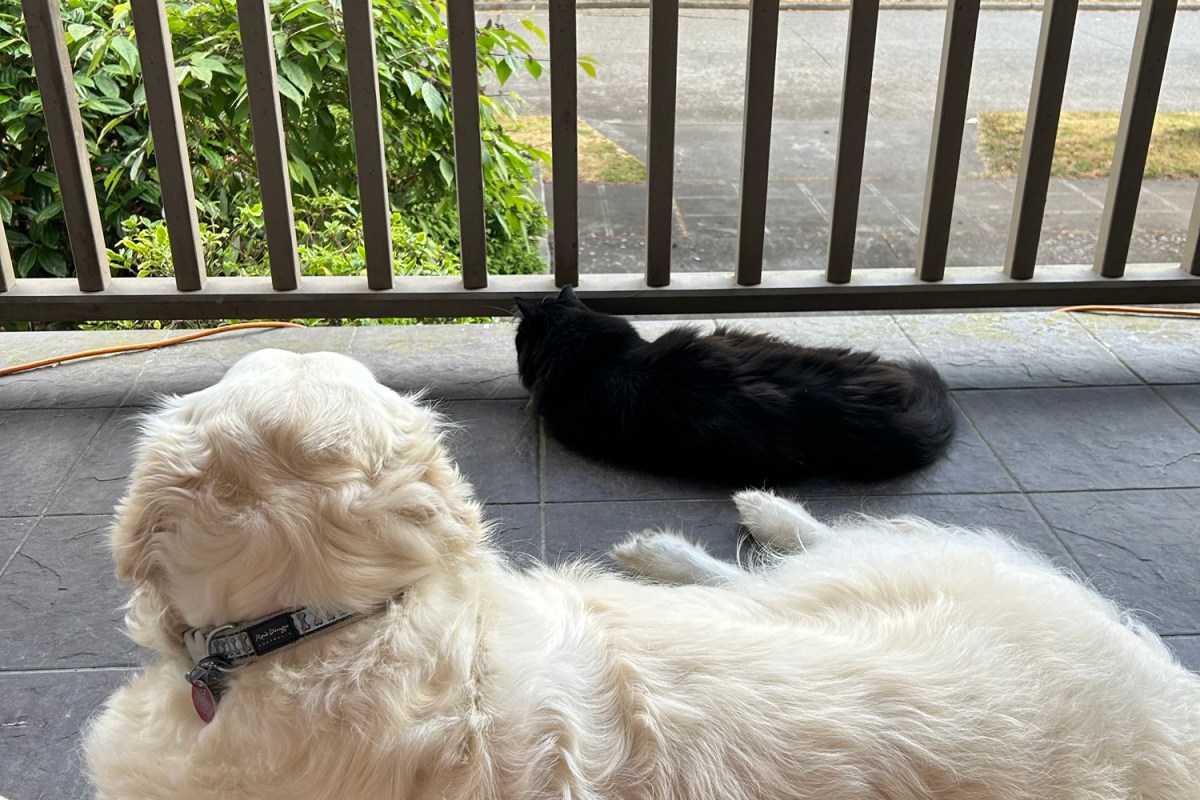
(featured photo from Pexels)

The Mysterious Case of the Barking Dog

In school we learn that mistakes are bad, and we are punished for making them. Yet, if you look at the way humans are designed to learn, we learn by making mistakes. We learn to walk by falling down. If we never fell down, we would never walk.” – Robert Kiyosaki

On a recent afternoon I was going through the mail in the mailbox and found an unsigned, handwritten note on a plain piece of paper that read (including word error),
“Please do not leave you dog out barking. It is unpleasant for neighbors.”

My ten-year-old daughter, Miss O, saw the look on my face as I tried to discern the message. She came to read over my elbow. Sensing a family meeting, six-year-old Mr. D wandered over and asked what we were doing. We read the note through one more time.

But Cooper doesn’t bark,” Mr. D said. And he’s right, Cooper isn’t a barker. He’ll steal your socks and your steak but he’s quiet about it.

And we don’t leave him outside,” Miss O added. Also true. Cooper is in the habit of lying on the front porch to watch the neighborhood but that’s when we’re home and the door is open.

Maybe they have us confused with someone else,” I mused.

We couldn’t figure out the note but we were united in our righteous indignation in defense of Cooper’s honor. Mr. D suggested he rip up the note and throw it as far as he could.

It wasn’t until the next morning in the shower that I connected the dots. One day the week before we were getting ready to leave the house so that I could drive the kids to camp. Cooper was out on the front porch. I called him in and locked the door.

But when I came home about 90 minutes later after dropping the kids and picking up supplies, Cooper was on the front porch and the door was unlocked. One of the kids must have opened the door to check the weather and Cooper snuck out. He wasn’t barking when I came home so I didn’t realize it right away. He must have barked when he realized he was trapped out there.

The funny thing was that I almost didn’t tell the kids once I figured it out. Our righteous indignation felt so comfortable that I kinda wanted to keep wearing it.

But I also know that it builds up over time. The vulnerability of confession doesn’t come naturally to me, but I’ve found owning my errors and frailty keeps my pipes clean. Everything flows better when I don’t let the grime build up. More than that, I feel everything more fully when I shake off the protective coat of righteous indignation or defensiveness.

And it creates space for learning. When I told the kids my solution to the mysterious case of the barking dog, they both nodded and went, “Ooohhh, right!” I bet we’ll remember that lesson.

(featured photo is mine)

You can find me on LinkedIn: https://www.linkedin.com/in/wynneleon/ and Instagram @wynneleon

I host the How to Share podcast, a podcast about collaboration – sharing leads to success.

I also co-host the Sharing the Heart of the Matter podcast, an author, creator and storytelling podcast with the amazing Vicki Atkinson.
The Rope Team

“Sometimes life is too hard to be alone, and sometimes life is too good to be alone.” – Elizabeth Gilbert

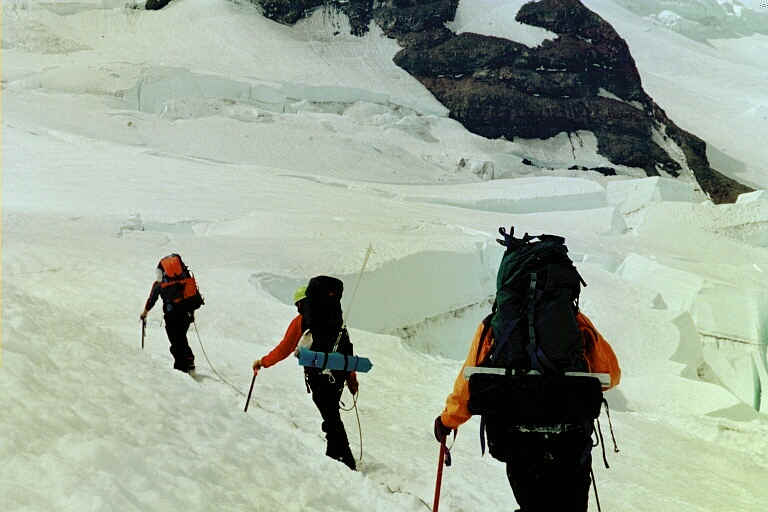
When I was climbing mountains, I noticed a funny thing when we roped up on the higher slopes of a mountain. We transformed from being individual hikers to becoming a team. The physical manifestation made a psychological difference.

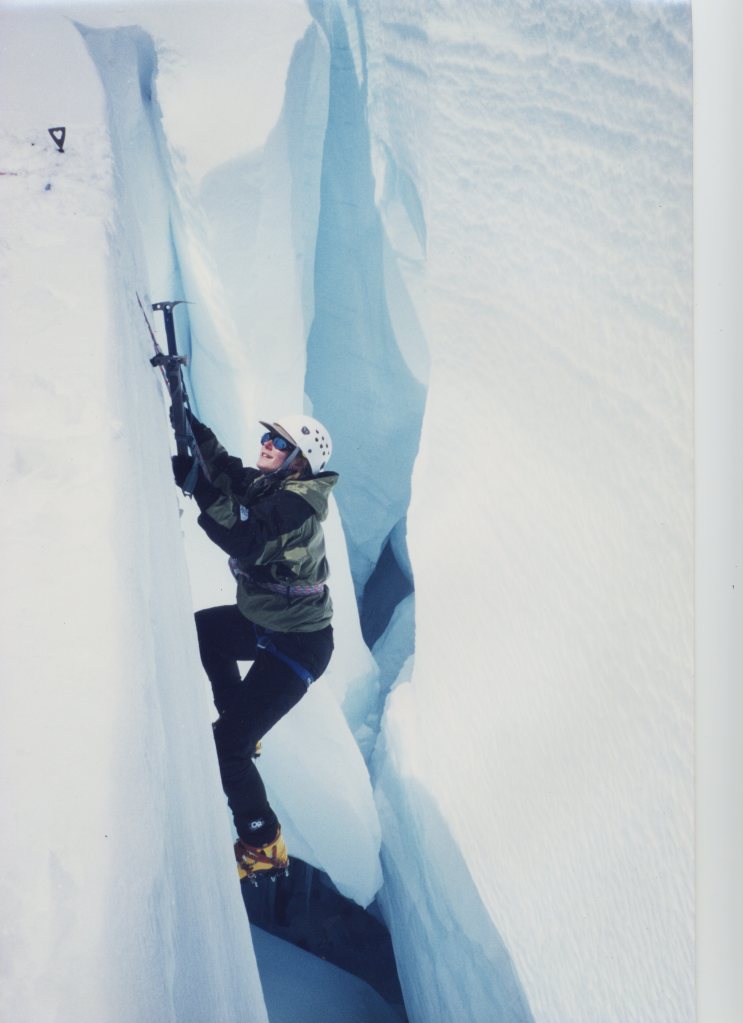
Fortunately, I’ve never had to arrest the fall of someone else while on a rope team. But I have willingly climbed into a crevasse. It made me immensely grateful for the people above holding on to the rope.

A similar team phenomenon happened to me and my kids a couple of weeks ago when we were on vacation.

It was perfectly smooth when the kids and I decided to go paddleboarding after dinner. But by the time we got our paddleboards into the water, it was starting to blow again.

We’d been paddling every day for ten days to get the feel for the tides and current. At the beginning of the vacation, six-year-old Mr. D was paddling with me riding on the back of his board. Once he’d gotten proficient enough with his strokes, he graduated to be on his own.

So Mr D was on his own paddleboard. Ten-year-old Miss O had decided she just wanted to ride along on mine. On this night, Mr. D wanted to go all the way down the bay to the pirate flag, a notable marker about a mile down the beach from where we launched.

When we were about halfway there, the wind was present but not too much of a factor. We held a family meeting to make sure we wanted to continue. Mr. D had looked at that flag for 10 days and was determined to get there.

We celebrated momentarily when we reached the pirate flag. Then Mr. D said he was tired and just wanted to rest. At nearly the same moment, the wind whipped up and started pushing us farther away from home.

I said aloud, mostly for Miss O’s benefit, “Please, God, help us.” We weren’t in immediate danger but it was going to be a hard paddle back. At any point, we could have paddled 20 yards to the to the beach and walked back. It would have been a slog pulling the boards but it was a viable option.

Miss O got philosophical about how we ask God for help. We weren’t asking for it to be easy – just for help in any form. As it was, Miss O volunteered to get on Mr. D’s board to both give it more weight and to paddle.

Even with the two of them, they were being pushed backwards by wind. So I attached my leash to their board and we paddled back as a team. I paddled on my board, Miss O and Mr. D took turns paddling on theirs. Roped together, we slowly made our way home.

The overall feeling when we hit the beach? Gratitude. Thank God Miss O had opted to ride along and had fresh arms. Thank God she made the transfer from one board to another without mishap. Thank God for making us a team.

Because that was what stuck with us. Just like with climbing, roping together turned paddling into a team building exercise -and it worked. There are so many ways we are buffeted by the winds of life. A team can make all the difference.

(featured photo is mine)

You can find me on LinkedIn: https://www.linkedin.com/in/wynneleon/ and Instagram @wynneleon

I host the How to Share podcast, a podcast about collaboration – in our families, friendships, at work and in the world.

I also co-host the Sharing the Heart of the Matter podcast, an author, creator and storytelling podcast with the amazing Vicki Atkinson.
And for anyone curious about the inside of a crevasse, here’s what it looks like:

Life is A Puzzle

Learn how to see, realize everything connects to everything else.” – Leonardo da Vinci

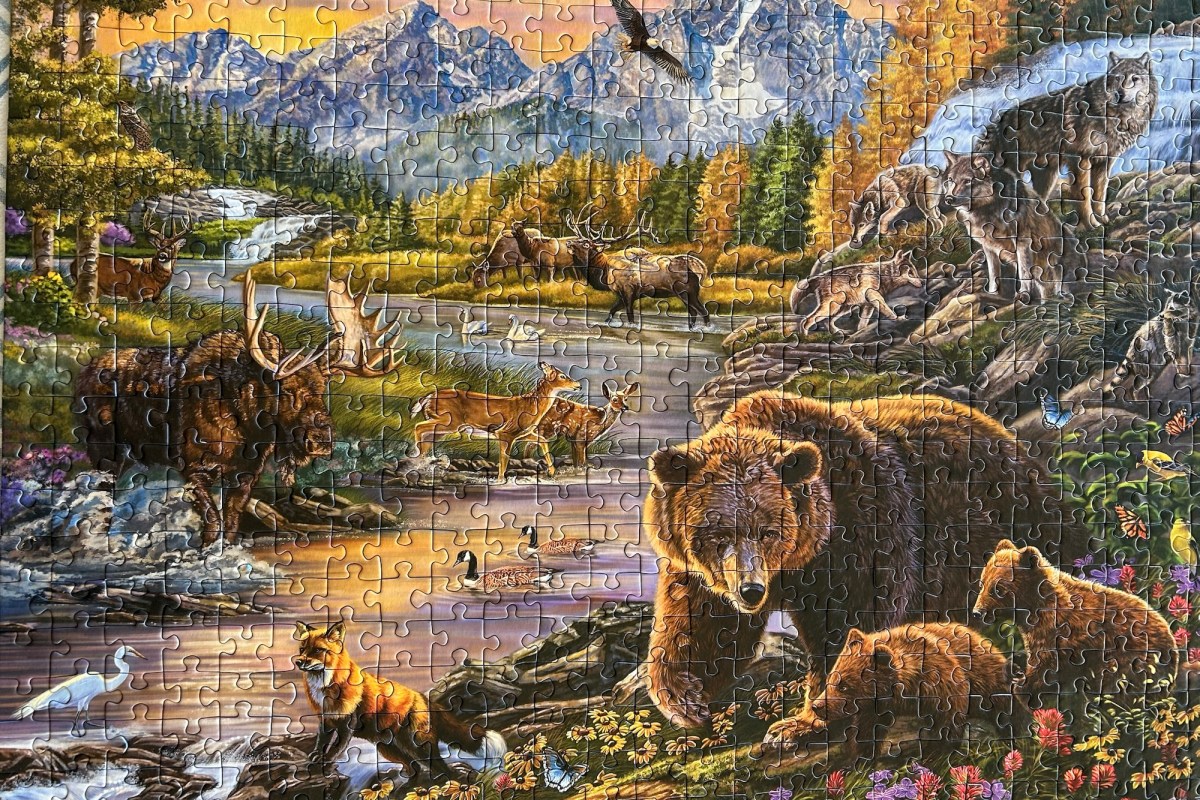
We did a few puzzles in the past couple of weeks while we were on vacation at the beach. Mostly Miss O and I chipped away at them with occasional assists from Mr. D and friends that came up to visit.

Five things I noticed about how doing a puzzle is like life. Or how life is like a puzzle.

  1. When you first sit down, all the pieces look the same and it feels impossible. The puzzle doesn’t start itself. Having an approach like turning all the pieces right side up and putting together the border pieces together makes it feel doable.
  2. You don’t find a piece unless you look. Sure, every once in a while you might get lucky and find something that fits as you walk by. But mostly, you have to be in the game if you want to make a match.
  3. There are many ways to find a piece – by color, by shape, by content. This reminds me of perspective and how we all see things differently.
  4. You can’t make something fit no matter how much you want it to. It goes easier when you honor the “no’s” in life.
  5. There’s nothing like the feeling of slotting in the last piece. But you can relish the satisfaction of connecting any two pieces if you aren’t too much in a hurry to get to the big picture. Enjoy the little moments.

I keep learning that playing IS life. It seems like we are just spending idle time but really we are gaining perspective on everything else. Because at least for me, those moments when you see the big picture help to inspire the awe in the everyday.

Just like the photo on the front of the puzzle box helps when putting it together. Right?

(featured photo is mine)

You can find me on LinkedIn: https://www.linkedin.com/in/wynneleon/ and Instagram @wynneleon

I host the How to Share podcast, a podcast about collaboration – in our families, friendships, at work and in the world.

I also co-host the Sharing the Heart of the Matter podcast, an author, creator and storytelling podcast with the amazing Vicki Atkinson.
Life(cycle) of the Party

You knew it would be hard and it would be uncomfortable and it might be awkward and you did it anyway. That’s courage.” – Arnold Schwarzenegger

I did it. We did it, I should say. We threw a backyard birthday party for Mr. D’s sixth birthday and hosted 21 kids under the age of eight plus about a dozen parents. And the we? I hired Miss O and two of her 10-year-old friends to help. I also had the invaluable assistance of a young woman who was Mr. D’s pre-school teacher and has become a great family friend.

Here are ten things I seem to learn and re-learn about the life(cycle) of the party.

  1. Parties are a great forcing function. I’m guessing it would be easier to rent a party venue. But I love the opportunity to invest in my home. I try to do a home improvement project and a purge project before every party. I don’t think I sat down for three days leading up to the event. But I laid more pavers to expand my backyard seating area and filled eight bags of dishware, textiles, and toys to give away. That alone made the party a win before it even started!
  2. You have to sleep on it to learn. I walked 22,160 steps on the day of the party. At the end of the day, I was too exhausted to know or feel anything…other than tired. The lessons learned didn’t show up til the next morning.
  3. Even the happiest of events will exhaust you. Mr. D loved his party. It was a fair theme with Crocodile Cave water slide on one side of the yard, an inflatable hot tub on the other and in between a bottle-ring toss game, Skee ball setup, fishing game, and a flipping rings game. After lunch and birthday cake, we made shaved ice cones, cotton candy, applied tattoos and had a ballon art station.

    Mr. D almost fell asleep in his dinner.
  4. You plan, plan, plan… and then let it happen. Miss O had beautifully drawn out the time table for three party phases: WET,  DRYING, and DRY. We had roles assigned for each. We were about 15 minutes into the party when we made our first substitution.
  5. There is that guy at parties regardless of age. In one terrifying moment, I came eyeball-to-eyeball with a six-year-old that said, “I’m going to open the gecko’s cage.” I had to race the kid to the keys. I never thought twice about leaving the enclosure key in the door like we always do.

    The party shtick of that guy (not meant to be gender specific) starts early.
  6. The messy middle happens every time. There was a moment right before birthday cake where it all felt impossible. We took a deep breath and made it through.
  7. No one naturally markets their stuff. Each of the “fair activities” had its own arc. But when the lines at a particular stand ebbed, nobody wanted to be the carnival barker to attract an audience.
  8. Mixing up the ages benefits everyone. In this case it was letting older kids take care of younger kids. It made both ages feel special.
  9. Save time for the after part. My favorite part was after all the guests left. The workers, Miss O, and Mr. D got to really enjoy the fun.
  10. There are a few people that will go the extra mile to appreciate the effort. Keep them close. All the parents were lovely and grateful. A couple went out of the way to tell me afterwards what they appreciated. I suspect these are also the people I know, online and in real life, that take the time to leave good reviews. I want to be more like them.

Looking this over, I think it might be the lifecycle of all the hard things I’ve done. What do you think – is there a predictable arc of big to-dos? Did I miss any lessons learned?

(featured photo from Pexels)

You can find me on LinkedIn: https://www.linkedin.com/in/wynneleon/ and Instagram @wynneleon

I host the How to Share podcast, a podcast about collaboration – in our families, friendships, at work and in the world.

I also co-host the Sharing the Heart of the Matter podcast, an author, creator and storytelling podcast with the amazing Vicki Atkinson.
How to Share Inspiration

The one thing that you have that nobody else has is you. Your voice, your mind, your story, your vision. So, write and draw and build and play and dance and live only as you can.” – Neil Gaiman

The other day I was at a salon getting my hair done and I couldn’t stop reading bits of filmmaker and philanthropist Peter Samuelson’s book Finding Happy aloud to my hairdresser.

Here’s a snippet of when he made the first pitch for First Star, his organization for educating foster kids in grades 9-12 on college campuses.

I asked for a meeting with the chancellor of UCLA, Gene Block. Back then he was in charge at UCLA. I believe he still thinks I went to UCLA first because I thought it was a top-notch university, which is true. Ranked the number one public university in the United States by US News and World Report, and number eight in the whole world. But actually, I went there first because I lived down the road. I thought, “I’ll start with UCLA…. They’re probably all going to say no, so I might as well start with the closest one.”

Peter Samuelson in Finding Happy

But they did say yes. Now First Star has 10 academies in the US and 3 in the UK.

How did Peter do it? Not just for his philanthropic efforts but also to get films like Arlington Road, Wilde and Revenge of the Nerds made? And how can we borrow from his playbook to get others to join us in efforts to improve the world? I was lucky enough to have Peter Samuelson come on the How To Share podcast to talk about how to share inspiration.

In this episode, filmmaker and philanthropist Peter Samuelson discusses his new book, Finding Happy, exploring themes of inspiration, storytelling, and the importance of empathy in connecting with others. He explains why storytelling is so vital in capturing other’s hearts when pitching an idea. He shares personal anecdotes about his journey, the power of collaboration, and the significance of love and mentorship in fostering resilience among young adults, especially in the aftermath of COVID-19. The conversation emphasizes the Jewish concept of Tikkun Olam, or healing the world, and the idea of showing up to make a difference.

Takeaways

  • Selflessness can be selfish, as it often leads to personal fulfillment.
  • Success in life is rooted in storytelling and persuasion.
  • To pitch an idea you have to catch the audience’s hearts to create a window in which they can be moved.
  • Generating empathy through storytelling is essential for connection.
  • Humor can create openness and foster relationships.
  • Every young adult needs someone who loves them unconditionally.
  • People change when they feel cherished and valued.
  • Finding love often requires collaboration and shared goals.
  • Mentorship plays a crucial role in personal development and support.
  • Tikkun Olam emphasizes our responsibility to heal the world.

This is a great episode in which Peter does a fantastic job of catching our hearts to show us how to share inspiration. I know you’ll love it!

Here’s a short clip to give you a taste of the great conversation with the delightful Peter Samuelson.

Here are some ways you can listen and watch to the full episode:

Please listen, watch, provide feedback and subscribe.

46: The Quiet Transformation That Changes Everything The Life of Try: Personal growth, one try at a time.

What if “trying” doesn’t have to mean pushing harder?In this episode, host Wynne Leon talks with author and New York Insight Meditation Center co-founder Joseph Schmidt about The Torchbearer—a collection of short stories born from an unexpectedly effortless creative process. Together they explore the mindset shift from effort to openness:how letting go of the agenda can create space for insight, transformation, and a deeper, more alive way of meeting each moment.Try smarter, not harder: why forcing outcomes can block creativity—and what changes when you partner with the process instead.Mindset shift to “empty hands”: Joseph’s Zen chaplaincy training and the practice of entering a room (or a moment) without an agenda.Personal growth through discovery: how his characters—and we as readers—find the next move by noticing what’s already here.Feeling alive at the edge of the unknown: mindfulness as the place where consciousness meets what happens next.Belonging as a practice: building a bond of belonging by showing up with curiosity, care, and presence.If you’ve been working hard but feeling flat, this conversation is an invitation to loosen your grip, step back into the present, and discover a more natural flow—one where growth comes from attention, not strain. Listen in for a gentler (and often more powerful) way to create, connect, and keep beginning again.Perfect for you if:you’re craving a mindset reset, rebuilding your creative confidence, deepening a mindfulness practice, or simply want to feel more awake and engaged in your everyday life.The Life of Try is a personal growth and self‑help podcast about getting unstuck, navigating uncertainty, and choosing to try—even when it’s uncomfortable, inconvenient, or not your idea.Hosted by Wynne Leon, the show explores how realgrowth, reinvention, and discovery often begin not with confidence or clarity—but with a single attempt. Through thoughtful interviews, reflective conversations, and real‑world case studies, each episode examines what it lookslike to keep going when doubt shows up, plans fall apart, or life forces a change you didn’t ask for.This podcast is for anyone who:Feels stuck or uncertain about what's nextIs navigating change, burnout, or reinventionWants to live more intentionally without pretending that growth is easyBelieves (or wants to believe) progress starts by trying – again and againThe Life of Try isn’t about hustle or perfection.It’s about learning as you go, surfacing what matters, and sharing what you discover along the way.If you’re ready to surf the uncertainty, outlast the doubts, and step into your own try‑cycle, you’re in the right place.Links for this episode:Creating Without Elbow Grease transcriptThe Torchbearer: and other Stories of Borderline Redemption by Joseph Schmidt on AmazonJoseph Schmidt bio – New York Insight Meditation Center
  1. 46: The Quiet Transformation That Changes Everything
  2. 45: The Life of Try: Alex Honnold Case Study
  3. How to Share a Reimagined Sci-Fi Trilogy with Dr. Wayne Runde
  4. How to Share Advocacy with Sam Daley-Harris Part 2
  5. What Do You Know To Be True?

Links for this episode:

More about Finding Happy and Peter Samuelson

Order Finding Happy on Amazon (also available at Barnes & Noble, Target and other booksellers)

First Star

Starlight Children’s Foundation

Waiting Well

If you do follow your bliss you put yourself on a kind of track that has been there all the while, waiting for you, and the life that you ought to be living is the one you are living. Follow your bliss and don’t be afraid, and doors will open where you didn’t know they were going to be.” – Joseph Campbell

Waiting well. I admit that the title of this post is aspirational. But I’ve been working on it and have to say that I’ve made progress in the last few years.

Here’s the latest thing I’ve been waiting for. I’m buying a car from my neighbors who are moving back to England.  I need a car that has a third row of seats for when I carpool. And I’m such a terrible negotiator that if I went into car dealership to buy one, I’d probably introduce myself by saying, “how can I pay you more?”  Suffice it to say, buying my neighbors car is a great option for me.

But the timeline is pretty variable. I planted the seed and they liked the idea. Then I’ve had to let it ride as they worked out all their more important tasks: securing a new house in England, shipping all their stuff, moving the kids and getting them settled in their new schools, and selling their house here in Seattle.

Here’s what’s helped me getting better at waiting: I’ve realized I’m not in charge. And I think that no matter your spiritual beliefs, we can all agree Wynne Leon isn’t running the show.

I’ve come to see that intent is like throwing an inner tube into the stream of life and then riding it wherever it goes.

My metaphorical inner tube snagged on a tree last week when my car died with about a week to go before I can buy the new one. I’d loaded my kids and the dog into the car on a Saturday morning to go on an adventure and it wouldn’t start. Of all the places and times to not start, in the garage on a Saturday morning isn’t a bad one.

So I rented a car. When I got to the agency, they said they I had a choice between a Jeep and a VW. We choose the VW — and it was even the same model we are buying. Funny how this stream of life flows.

Soon we’ll close on buying our friend’s car and be on to waiting for the next thing or milestone. It seems that the trick is enjoying the float down the river.

(featured photo from Pexels)

You can find me on LinkedIn: https://www.linkedin.com/in/wynneleon/ and Instagram @wynneleon

I host the How to Share podcast, a podcast about how to share anything – to the appropriate audience, with the right permissions, at the most opportune time.

I also co-host the Sharing the Heart of the Matter podcast, an author, creator and storytelling podcast with the amazing Vicki Atkinson.
To Pick Up or Not to Pick Up

Happiness and freedom begin with a clear understanding of one principle: Some things are within our control, and some things are not.” – Epicetus

During an early morning walk with Cooper the dog a couple of weeks ago, I noticed a dog poop that hadn’t been picked up. It sat on the little strip of grass between the sidewalk and the street in front of a house a couple streets away from ours.

So I picked it up. And then the next day, I found one in nearly the same spot. I picked it up.

When it happened the third day, something clicked in my head that reasoned that the odds that it was an owner walking their dog and not picking up in the exact same area every day were too great. Instead it was more likely that someone in that house has a dog and was letting them potty out front.

I didn’t pick it up.

Putting up with other people’s sh!t is tiring, isn’t it? And yet, it seems to be a fundamental part of being part of a country and community. Now that’s food for thought. Happy Memorial Day!

(featured photo from Pexels)

You can find me on LinkedIn: https://www.linkedin.com/in/wynneleon/ and Instagram @wynneleon

I host the How to Share podcast, a podcast about how to share anything – to the appropriate audience, with the right permissions, at the most opportune time.

I also co-host the Sharing the Heart of the Matter podcast, an author, creator and storytelling podcast with the amazing Vicki Atkinson.

Best Mother’s Day Gift

You are imperfect, you are wired for struggle, but you are worthy of love and belonging.” – Brené Brown

As I type this, I can hear my kids 10 feet away slurping their hot chocolate. It’s the end of a busy weekend. We had our family over for Mother’s Day and now are winding down.

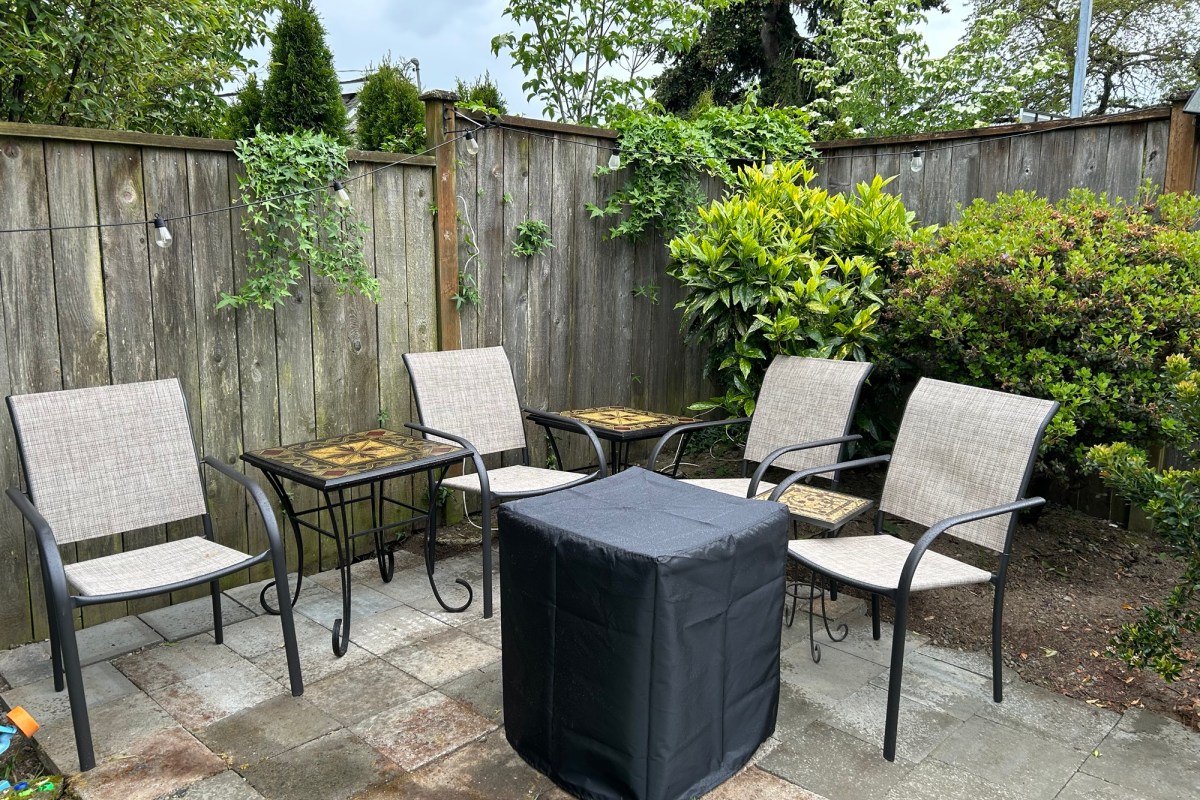
I’m trying to put my finger on the feeling. Over the course of the weekend, in addition to hosting a family party, my kids and I played a lot of baseball, done chores, cooked meals, watched movies and worked on a project outside to transform an area of our back yard. That last activity involved a lot of manual labor as we dug out a flat space and installed pavers to turn what used to be the base of the kids’ playhouse into a cozy place to sit in the garden.

In the last 48 hours, we’ve hurt our knuckles on the rough paving stones, cried some, especially when we lost our baseballs, and laughed a lot more than we cried. Along the way to finishing our project, we also bought this silly ball pitching machine that sends small 1.6 inch diameter foam balls zinging across the yard at 30 miles per hour. My body aches from moving heavy stones and gravel and chasing small yellow balls.

But my heart is so full. It’s the camaraderie with our extended family. Also this feeling that I’m right where I should be. I love my children whole-heartedly…and I like them too.

When I chose to start a family as a single parent ten years ago I had very little idea of how much work would be involved. I was listening to a God whisper about what came next for my life.

The Mother’s Day feeling I’m having right now? That I belong in this life. I suspect that might be one of the best gifts ever.

(featured photo is mine of our work in progress garden seating area)

You can find me on LinkedIn: https://www.linkedin.com/in/wynneleon/ and Instagram @wynneleon

I host the How to Share podcast, a podcast focused on the wisdom and research about how to share anything – to the appropriate audience, with the right permissions, at the most opportune time.

I also co-host the Sharing the Heart of the Matter podcast, an author, creator and storytelling podcast with the amazing Vicki Atkinson.
My other projects include work as a CEO (Chief Encouragement Officer), speaking about collaboration and AI through the Chicago Writer’s Association, and my book about my journey to find what fueled my dad’s indelible spark and twinkle can be found on Amazon: Finding My Father’s Faith.