The Fate Worse Than No

If you believe it will work out, you’ll see opportunities. If you believe it won’t, you will see obstacles.” – Wayne Dwyer

When my friend, Eric, was over for dinner last week, I asked him if he had room in his car to take his chairs home. In the pause as he considered it, Miss O jumped in and said, “Yeah, they were just dumped here.”

Eric surprisingly showed up with chairs unbidden on the morning of Thanksgiving of 2023. And while we used them around the table for that Thanksgiving and this past one, they haven’t been used otherwise.

I think Miss O was doing the thing we often do – saying one sentence too much when there’s a pause because we’re afraid the answer will be “no.” Call it pressing the point or making the case, often it’s trying to shift the answer in our favor. Sometimes it comes with an unnecessary punch.

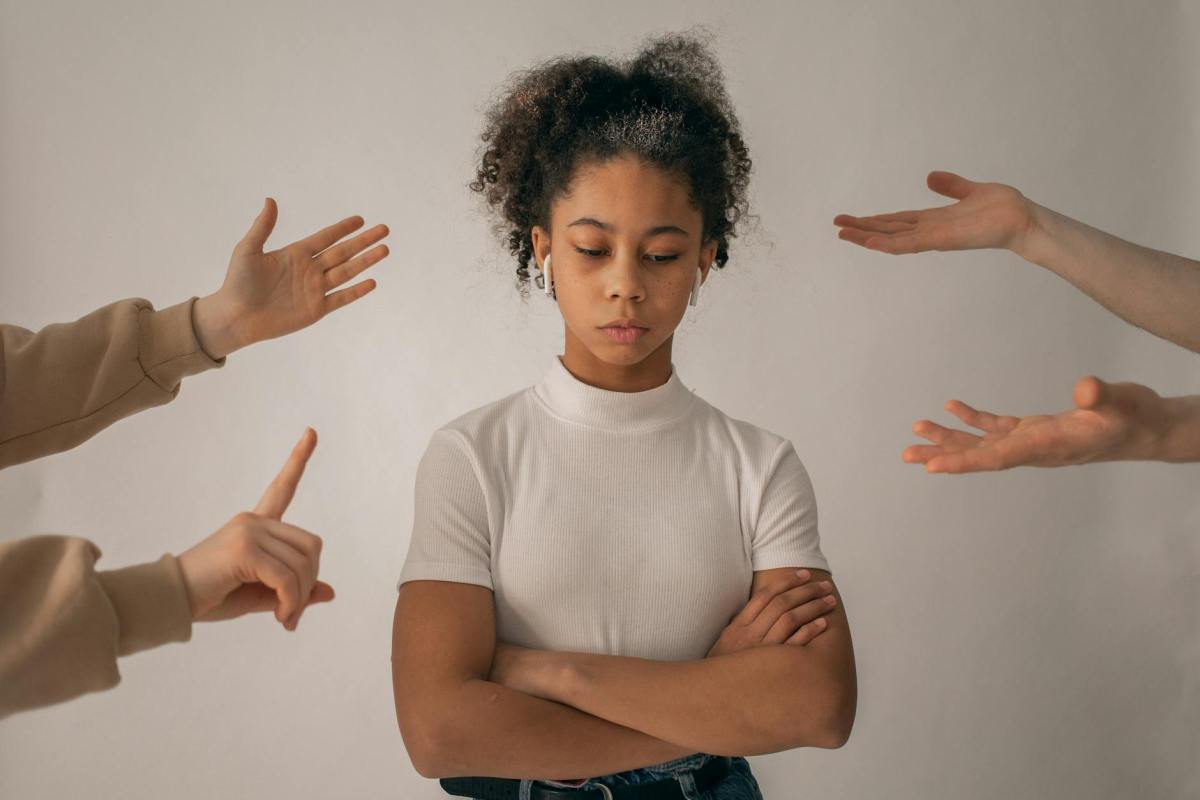
Because “no” isn’t the worse thing we can hear. Sure, it means we aren’t getting our way for the moment. But consider all the missed opportunities if we didn’t ask at all. Things like dates you didn’t go on, the path you didn’t take, and the pitches you didn’t make.

And the chairs we stored for 420 days because I hadn’t asked my friend to take them. Fortunately, Eric did have room for chairs in his car that night. As we carried them to his car, he and I had a good laugh about the chairs that were “dumped.” Not the word I’d use because they came with good intent and thankfully left in the same spirit.  

(featured photo from Pexels)

The Love You Can’t Wipe Off

How bold one gets when one is sure of being loved.” – Sigmund Freud

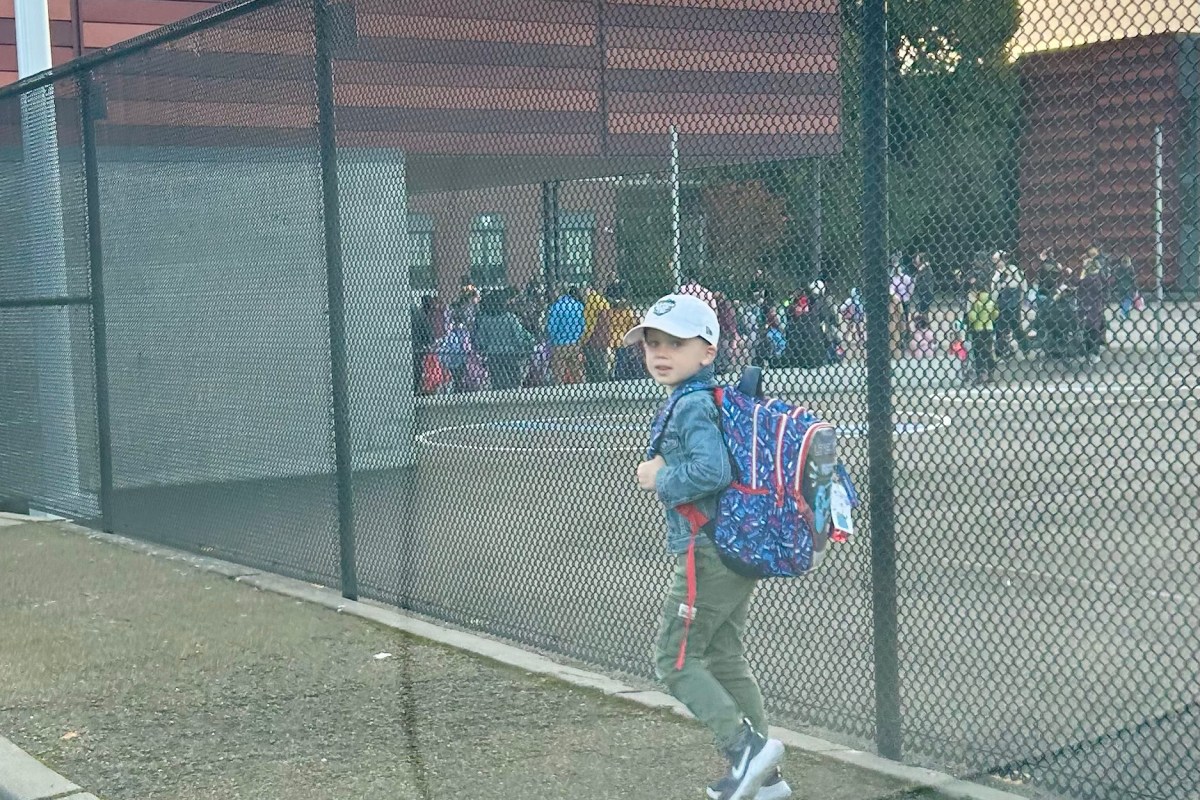
One morning last week, I gave five-year-old Mr. D a kiss on the cheek as he was getting out of the car at school. He turned and said, “Sometimes I wipe your kisses off.” I laughed and then he jumped out of the car and ran to join his class line.

I was still laughing when this retort popped to mind: “Nice try but the mark of love doesn’t wipe away that easily.”

It’s in the clean clothes you have to wear. And packed with the lunch I’ve taken the time to try to balance nutrition with edibility.

It’s with the reading practice we did last night so you can feel more confident today. And in the jobs I let you “help” with to gain a since of accomplishment.

Love is in the echo of you saying “My best mom in the world” when we snuggle on the couch in the morning.

It’s in the tilt of your head when you speak because you know you are worth being listened to.

And it’s in the even-handed way you treat other people and the dog and cat with curiosity and companionship.

We don’t have everything and sometimes butt heads, but love shows up to help smooth out our edges.

Love is in your knowledge that you can tell me that you wipe my kisses off. And that I’ll still keep trying on your way out the door.

The Risk Factor

Take risks: if you win, you will be happy; if you lose, you will be wise.” – unknown

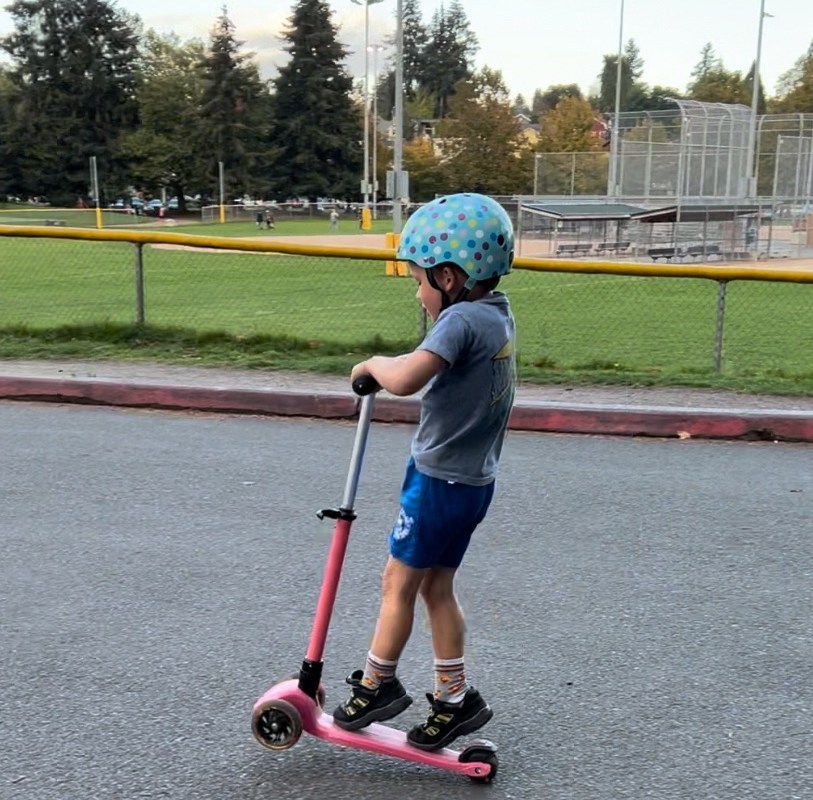
A couple of weeks ago, on the third time I took five-year-old Mr. D to the skate park, we ran into a fifth grader at school who is the boy that Mr. D admires the most. And this boy is a terrific scooter rider. Is that the right way to put it? I’m unsure of my skate park lingo.

This boy rides a scooter and can drop in to the steepest of the bowls, propel himself out, kick the base of the scooter around so it does a 360 and then land it, bringing all the energy to an elegant stop. It is truly impressive.

I watched Mr. D observing this boy and wondered if it would make him reckless. Mr. D stood quietly for a while just taking it all in and then he started scootering back and forth on the flat concrete practicing popping a wheelie.

On the next visit, he found the most gradual of the slopes and started practicing going down one side and back up the other. This sport is not in my wheelhouse so I’m of no help to him. But he figured out how to bend his knees at the bottom of the slope.

He keeps making incremental risks and discoveries with each visit. I remarked on this to my friend, Eric, and he quipped, “Even five-year-olds have a built in risk meter.

To which I’d add – “that works.A certain amount of risk is necessary in order to learn. We have to be willing to look foolish, expose ourselves as newbies, and try something in order to quit it. I mention that last one because it’s often my barrier – I hate quitting things so I often won’t start something so that I can prevent having to quit.

So, I’ll speak for myself when I say that one way that life becomes rutted for me is when my risk meter breaks. Everything new will peg too high on the meter so then I try nothing. I’ll claim my past risks as badges that insulate me from ever having to try anything new again. And then I stop learning.

The funny thing about risk is that it’s a little contagious as well. The next time we went to the skate park my nine-year-old daughter, Miss O, came along. Seeing her brother try the gradual slopes encouraged her to do the same.

So here’s to being open to taking the right risks in life.

Staying in My Own Lane

Always be a first rate version of yourself and not a second rate version of someone else.” – Judy Garland

My brother and I like to talk about Wordle strategies. It seems to be our easy, go-to conversation. To be fair, my brother has all the strategies and I’m just a decent guesser.

His goal is to have more successes getting the word in three guesses than in four. I hadn’t thought of that particular challenge. So when I changed computers a while back, I had to relog in to the NY Times and it started my stats all over again. I thought this was a great chance to give his approach a try.

For a while my 3’s and 4’s were neck in neck. But then I realized, taking the time to be strategic about getting it in three was irritating me. I’d rather go faster and get it in four.

Taking the time to play Wordle is pleasureful, but taking time to think through all the possible combinations to land on the most likely was just unrealistic.

I was chagrined to realize that life had just given me another opportunity to learn to stay in my own lane. The only way I’ve figured out how to be happy playing the game of life is to find my own goals – not try to live up to others.

(featured photo from Pexels)

The Whole-Hearted Profile

Very often what people would accurately claim as what they DO isn’t where they want to GO.” – Dr. Vicki Atkinson

I wonder if Leonardo da Vinci would have had trouble creating a LinkedIn profile. Here’s how Wikipedia describes him: painter, draughtsman, engineer, scientist, theorist, sculptor, and architect.

We might not have a list as long as da Vinci’s but we’re all Renaissance people to a degree, right? People who pivot between roles and evolve to own different titles throughout life. Writers, moms or dads, professionals, leaders, caretakers, gardeners, woodworkers, advocates, seekers, athletes to name a few.

A few months ago I asked my dear friend, Dr. Vicki Atkinson, for some tips about updating my LinkedIn profile. And then I sat on her expert advice for two months because marketing one’s self seems so vulnerable.

When I sat down to actually follow her clear and helpful advice, it only took me about 90 minutes. So we podcasted about this effort to build profiles that honor all our facets.

Dr. Atkinson has so much good guidance on how to build a presence that reflects our many facets. Her professional experience as a career counselor, therapist, and educator comes shining through in this episode. We learn some great how-to’s in this episode.

I found updating my LinkedIn profile to be challenging. I have 30+ years in the technology industry and I’m unsure how to marry that with my writing and experience as an author.

So Vicki walks me through using headlines instead of titles. She provides a great tip about using tags to introduce some dynamism into our profile and ability to be found.

Dr. Atkinson talks me through the idea of integrity as it applies to building a profile that honors ALL of who we are. As we pivot from professional experiences, interests and passions, she coaches us to do the story-telling to paint a picture of our whole-hearted experience.

And finally, we talk about the use of images to compliment our presentation.

I’m confident you’ll learn a lot — and also love the scenic and beautiful places we explore as we share the power of storytelling in our profiles.

We know you’ll love it!

Search (and subscribe!) for Sharing the Heart of the Matter on Apple, Amazon, Spotify or Pocket Casts OR Listen to it from your computer on Anchor: Episode 87: LinkedIn Tweaks for Authors with Dr. Vicki Atkinson

AND subscribe to our YouTube channel to see a video clip of each story: @SharingtheHeartoftheMatter.

Links for this Episode:

HoTM episode 87 transcript

PDF presentation of Vicki’s recommendations and LinkedIn changes

Wynne Leon | LinkedIn

Dr. Victoria Atkinson, Ed.D. | LinkedIn

It’s Never Too Late for Courage – Victoria Ponders

Realizing Potential – Victoria Ponders

Vicki’s book: Surviving Sue

Being Difficult

There will never be an “us” if I play small.” – Sharon Preiss

Last Monday when Miss O, Mr. D, and I were getting ready for bike camp, nine-year-old Miss O was dragging her feet. She had a ton of “problems” that were blocking her: she couldn’t find shoes, Cooper the dog was in her way, her helmet was missing one unicorn ear, she didn’t remember the route we usually use to go down to the lake, yadda, yadda, yadda.

I turned to her and said, “You are being difficult.”

She replied, “I am.” And then added, “I wish I could tell you when you are being difficult too.”

To which I replied, “Please do. But I’d especially love to know when I’m being difficult when others are trying to be helpful and supportive or if it’s when you all are dragging your feet.”

I’ve been troubled by this conversation ever since. In fact, I’m finding it hard to write about. Here’s my best guess at why.

I think I’m starting to experience the generational BS that women in my family pass down. And it’s so ingrained and insidious, I’m not even doing it intentionally.

You are being difficult.” It’s like code for saying that I expect her to fall in line and be agreeable. To be flexible and accommodating like a young woman.

To be fair, she was being difficult. It’s just that the word hits a note of a gender stereotype that I’ve tried to avoid my whole life. I had no intention of passing it on. Then it slipped out of my mouth.

I’m naturally pretty agreeable. But inheriting the expectations of how a woman should behave has kept me from speaking up when I needed to – both in pursuing my own interests and also when something is wrong. And it kept me playing small. Trying not to stand up or stand out has kept me quiet about what I know or am capable of doing. It’s made me intentionally dim my light so I’m not too much.

It’s taken me decades in leadership positions to figure out that I can be genial AND forthright. And when needed, it’s acceptable to be hard-headedly, certainly, yet kindly, difficult.

So, I’m officially okay with Miss O being difficult. While I prefer she not do it when we are heading out the door, it’s fine if she does that too. Because sometimes that is when we learn to flip the script.

(featured photo from Pexels)

It’ll Be Alright In the End

Everything will be alright in the end, and if it is not alright, it is not the end.” – The Best Exotic Marigold Hotel

Months ago, when I signed Mr. D up for his very first summer camp (rock climbing, in case it matters), I assumed that it would start at the same time as Miss O’s. For his age group 3-5, the camp ends at noon. Miss O’s older group goes until 3pm. But certainly they’d start all the groups at 9am, right?

When I took a closer look before the camp started this week, I discovered Mr. D’s doesn’t start until 9:30am. When I realized that detail, I started inwardly groaning about the inconvenience.

But just briefly. Because in the last dozen years, I adopted a shift that has made an immense difference to my happiness. I started assuming that “it” is for the best. That whatever is irritating me is just an opportunity opening that I can’t yet see. Or that I may never totally understand because it’s above my pay grade.

This has a Biblical basis (Romans 8:28), and a Buddhist basis, but I don’t think it requires a particular spiritual tradition. It’s just an act of staying open to the possibility that there’s a perspective that I can’t yet see.

For anyone that is thinking this sounds Pollyana-ish, I get it. But this change came from the darkest days of my life when I was stuck in all the feelings of failure after my divorce and clueless about what I was going to do next.

So many things came from that vulnerable time in the dark: my meditation practice and faith, the conversations with my father, my two beautiful children, my writing. And also this idea that I should stop doubling-down on irritation and instead stay present for whatever is unfolding.

It’s easier to do this for things like camp drop-offs. In this case, the payoff came almost instantly. Of course, it was beneficial to have Mr. D’s camp start a half hour later. He got to see his sister get dropped off, and then have some time warming up on his own.

 It gets harder when the kids are sick and I have to cancel my hair appointment. Or the babysitter cancels and I can’t go out with my friends.

So, I practice with the small irritations – believing that it’ll be alright in the end. And if it’s not alright, it’s not the end.

It Makes Me a Learner

Courage doesn’t always roar. Sometimes courage is the quiet voice at the end of the day, saying, ‘I will try again tomorrow.’” – Mary Anne Radmacher

A couple of days before Miss O had her field day at school, I mentioned it to her. Much to my surprise she groaned.

Why that response?” I asked, thinking of past years where she loved all the silly games like the Mustache Dash where you run with a piece of licorice between your lip and nose, and the water balloon toss.

My almost nine-year-old daughter replied, “I don’t like it when I try my best and don’t win. It makes me feel like I’m a loser.”

Oh. All I could think to say in the moment was, “Well, the only way you have a chance of winning is to try.”

But I couldn’t stop thinking about how early we learn that it hurts not to win and the feeling of competition.

I think the trait that has served me the best is my willingness to try. So I find it fascinating to consider all the things that teach us not to try.

To be fair, parenting has also given me insight into the many things I’m not interested in trying. Weird foods, holding insects, and playing with slime come to mind. Even trying comes with some limits. Or wisdom. Whichever way you want to look at it.

Fortunately, the topic of field day came up the next day so I had another shot at handling it. Miss O brought up the topic of practicing. And I concurred that we don’t practice things like potato sack races on a regular enough basis to have any predictable chance that we’ll win.

But then I was magically gifted the next thing to say, “When I don’t win, I don’t think it makes me a loser. It makes me a LEARNER. There isn’t a thing I can think of that I’ve lost that hasn’t taught me something.

Funny how hard it is to continue to stay open to being a try-er!

(featured photo is Miss O trying a game at field day)

The Choices We Make: My Mom the Spy

Nothing has a stronger influence on their children than the unlived lives of their parents.” – Carl Jung

The post was originally published on 5/10/2023. Heads up – you may have already read this.


There’s a family joke that my mom is a CIA agent. Even now at 83-years- old, when we mention it, she just smiles and shrugs her shoulders, or says there is no point in denying it because we wouldn’t believe her.

As with most jokes, there is a kernel of truth in it. My very smart and capable mom graduated from college in the early 60’s with a degree in Far Eastern Studies and fluency in Russian. The CIA was actively recruiting from college campuses at the time and offered her a job. Her story is that she turned down the job because she met and married my father instead.

But over all the years since, she’s maintained her fluency in Russian, she went back to school when I was in college to get another degree in Russian language and literature, and she’s traveled there – when it was the Soviet Union in the 1970’s and later when it was Russia, many times. Would there be a more perfect cover for an agent than being a pastor’s wife?

It took me becoming a parent myself to understand how ridiculous this story, as fun as it is, really is. Not only because I finally understood that she didn’t have the time while raising three kids, of which I’m the youngest, but also because there is no way her heartstrings could have been in both places.

She made her choice. Instead of translating documents, she took on the work of translating the patter of baby talk into something intelligible. And then developing the sources into people who could talk the language properly.

She gave up a life of intrigue and instead instilled intriguing thoughts and ideas into her children’s lives.

Instead of secret meetings at night, she was called to hold our hair when we threw up and calm our fears when the bad dreams came.

She traded briefings about the state of affairs for parent-teacher conferences and traveling to sports events. And instead of establishing confidence in sources and colleagues, she choose to do the work of instilling confidence from the ground up in three young people.

Instead of fighting the bureaucracy at a government agency, she taught her kids that we had agency and were capable of fighting our own battles for what we believed in.

Instead of patiently nurturing a career that would challenge her brilliant mind and sense of adventure, she choose to nurture her patience with three young people who challenged her peace and equanimity.

Instead of running agents with their own backstories and motivations, she choose to help build a solid and stable backstory for us, fully present to launch our own motivations.

Instead of changing the world balance as a spy, she was the world for us.

My mom has never framed it as a sacrifice, but now that I see how much it takes to lose oneself to take care of others, I know that it was. I understand now that she had to make all these choices, from what might have been interesting and rewarding to her mind to hopefully what was interesting and rewarding to her heart.

She made her choices in life so that I could make the choices in mine.

Thank you, Mom.  

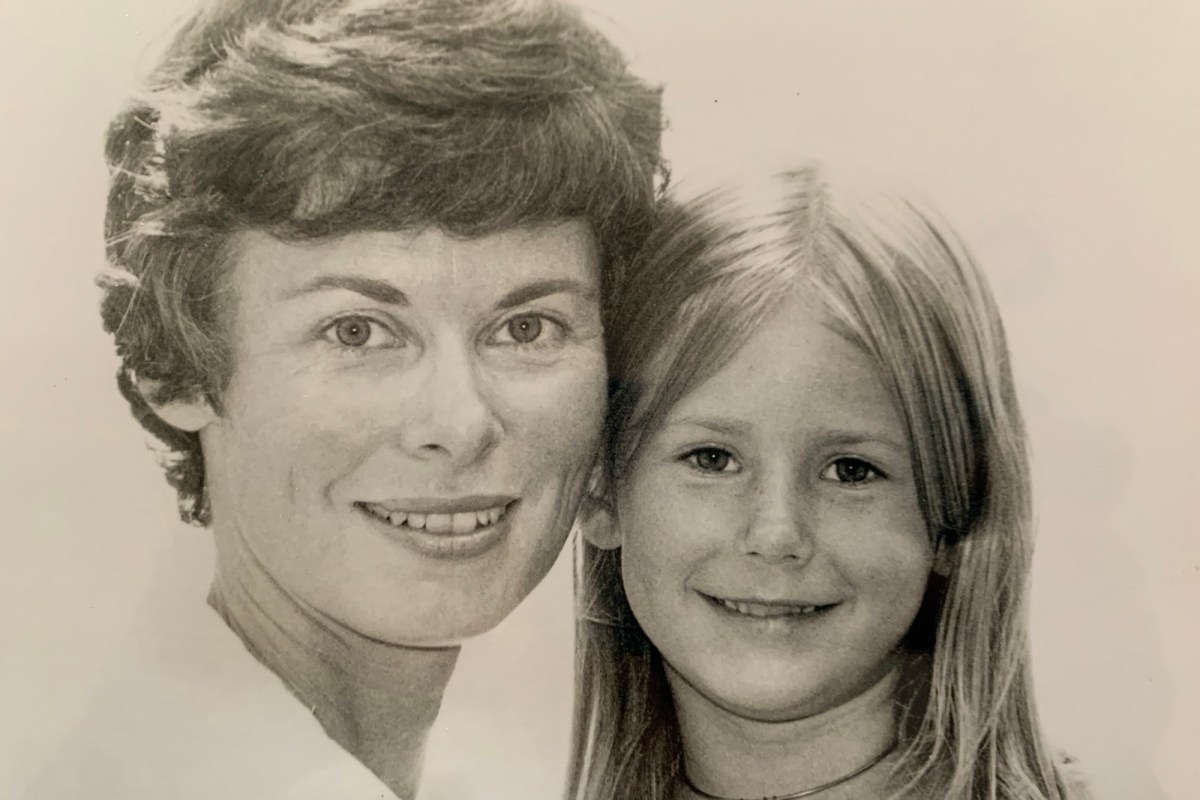
(featured photo is mind: Mom and me in 1974)

Related post: Looking In Through The Sliding Glass Door.

It’s Just Like Riding a Bike

I have great respect for the past. If you don’t know where you’ve come from, you don’t know where you’re going.” – Maya Angelou

Riding bikes with my kids has given me a new appreciation for the learning process. That is to say, I’ve come to see “two steps forward, one step back,” in a more growth-minded way.

I bought eight-year-old Miss O a bigger bike (24 inch wheel) with gears. She hopped on and owned it. It was like she aged five years in that one move because it was bigger and sat her up higher.

As a result, four-your old Mr. D got her old bike, a medium sized bike (18 inch wheel). I moved the training wheels over from his small bike. But even with training wheels, he got a huge boost in confidence and speed from having a bigger sprocket.

We’ve spent the week riding everywhere and in all sorts of conditions. We’ve gone round the block so many times we must have worn a groove. Then one night we rode around our local little lake to get pizza. The next night we went up the hill to get pie. All the while, I’m riding behind Mr. D watching him wobble back and forth before he gains his balance, my fingers crossed that the training wheels will hold.

Then, we got the small bike out of the garage to pass on to another kid in the neighborhood. Mr. D hopped on his old bike, now without training wheels.

I held the back of the small bike for a moment. Before any of us could really think about it, Mr. D took off – riding the bike without training wheels. So, Miss O and I took turns running up and down the block a dozen times holding the seat for the start until Mr. D mastered that too.

All this has made me think of the rhythm of growth. Sometimes you have to go back a step to see how far you’ve gone.

It makes me think of the feeling I get when I go back to the town where I went to high school. With the swirl of old memories all around, it’s easier to see where I’ve grown.

Or when I dust off an old favorite recipe and discover how I’m better at trusting the timing.

Or when I hike a familiar trail and feel the burn of my muscles within the certainty that I can make the summit.

Or when I re-read something I wrote years ago and I can discern how it’s gotten easier to put my authentic self on the page.

Sometimes we have to go back to figure out how much we’ve learned.