Widening the Circle of Compassion

Our task must be to free ourselves by widening our circle of compassion to embrace all living creatures and the whole of nature and its beauty.” – Albert Einstein

On Monday night after the kids went to bed, I was outside in my pajamas wearing my hat with the built-in head lamp sorting through the dirt of a terrarium. In a moment of sanity, I thought, “What the eff am I doing?”

On one level, it was easy to understand what I was doing. I was trying to find our pet snail after the terrarium accidentally slid off the shelf when five-year-old Mr. D tried to put it up. We’d cleaned up the dirt and put it back in the terrarium but didn’t see Snail-D, also known as Gary, when we did. Since it happened during the middle of dinner time and on bath night, we hadn’t had time to return to try to see if he’d survived the fall.

So maybe the better question was why was I doing it? I have a limit to how much I can do in a day. I often say that I’m off the clock after the kids go to bed. It’s when I finally get some downtime. While I will sometimes do the dishes, I try to be pretty good about just having a cup of tea and reading a book.

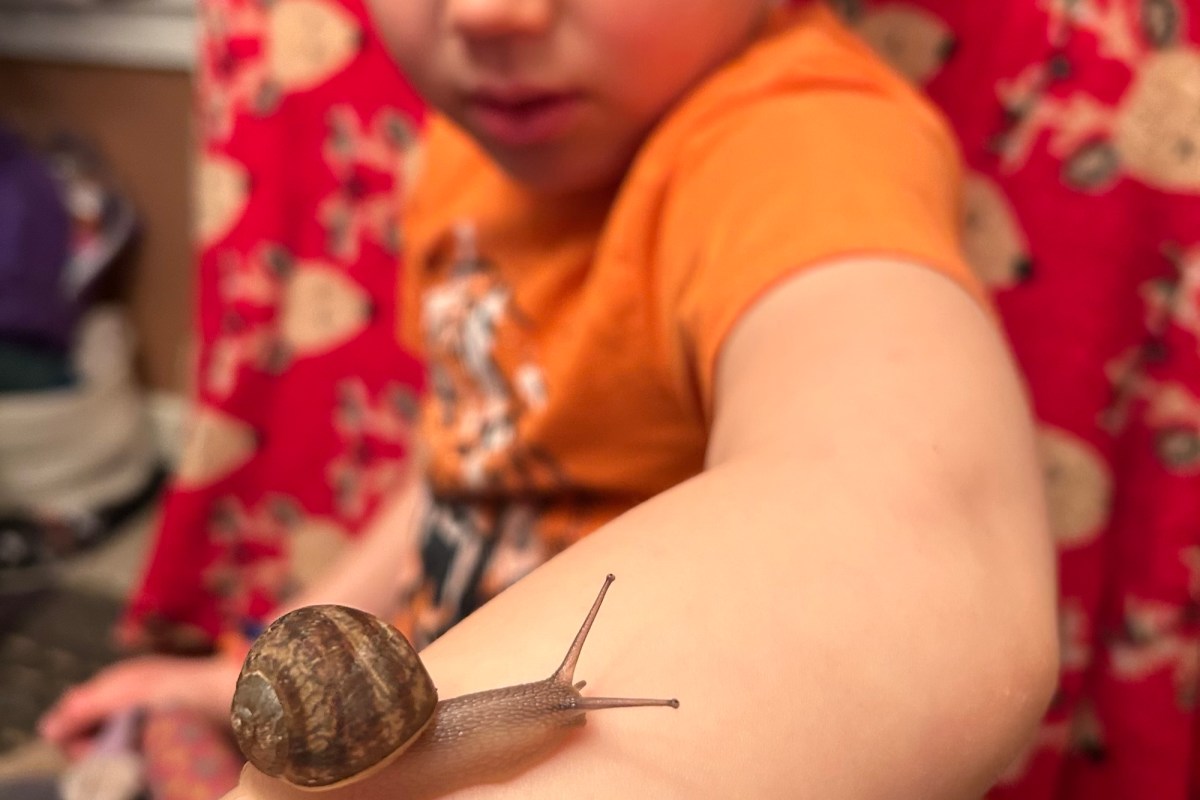
We hadn’t intended to adopt another creature but Mr. D discovered Gary the snail crawling up the side of our entertainment center. He must have come in on the cat’s coat. So, it seemed like he’d found us and Mr. D was really excited about having his own “pet.” I didn’t think we’d manage to keep him alive for a day. But now, a month later, Gary seems to be thriving.

Until the accident, at least. I have to admit, I have come to sort of like Gary. He’s pretty social anytime the kids get him out of his terrarium. And he eats all my left-over lettuce.

But I suspect that the real reason I spent my me-time on Monday night looking through the dirt for Gary was because life is precious and precarious. Deep down I know the conditions of my life could change because of an accident or because of the whim of a whacky autocrat.

So helping others, even mollusks, also helps me to feel better.

You’ll be happy to know that Gary survived.

(featured photo is Gary before the accident)

You can find me on Instagram @wynneleon and LinkedIn: https://www.linkedin.com/in/wynneleon/

I co-host a storytelling podcast featuring authors and artists with the amazing Vicki Atkinson. To tune in, search for Sharing the Heart of the Matter on Spotify, Apple, Amazon Music or Pocketcasts (and subscribe) or click here. Or the YouTube channel features videos of our interviews. Please subscribe!

My other projects include work as a CEO (Chief Encouragement Officer), speaking about creativity and AI through the Chicago Writer’s Association, and my book about my journey to find what fueled my dad’s indelible spark and twinkle can be found on Amazon: Finding My Father’s Faith.

The Daring Practice of Compassion

Love and compassion are necessities, not luxuries. Without them, humanity cannot survive.” – Dalai Lama

Yesterday Miss O was with me when I dropped Mr. D at his daycare for the last time in 2022. There was another little person having a hard time with drop-off. She didn’t want to cross the threshold to go in and her dad needed to step away.

As we walked out of the building, we could hear the little girl’s cries. Miss O said, “I hate hearing little ones cry.” We talked all the way to the car about what the little girl could be feeling and why.

When we got home, I pulled out Atlas of the Heart by Brené Brown and looked up compassion. Brené’s working definition of compassion is, “Compassion is the daily practice of recognizing and accepting our shared humanity so that we treat ourselves and others with loving-kindness, and we take action in the face of suffering.”

I read this to Miss O along with some supporting paragraphs about how compassion is scary because of it reminds us that we all have pain and struggle. It isn’t feeling better than or fixing it, it’s being with another in their experience.

Brené includes a passage from The Places That Scare You by Buddhist nun Pema Chödrön:

“When we practice generating compassion, we can expect to experience our fear of pain. Compassion practice is daring. It involves learning to relax and allow ourselves to move gently toward what scares us… In cultivating compassion we draw from the wholeness of our experience – our suffering, our empathy, as well as our cruelty and terror. It has to be this way. Compassion is not a relationship between the healer and the wounded. It’s a relationship between equals.”

The Places That Scare You by Pema Chödrön

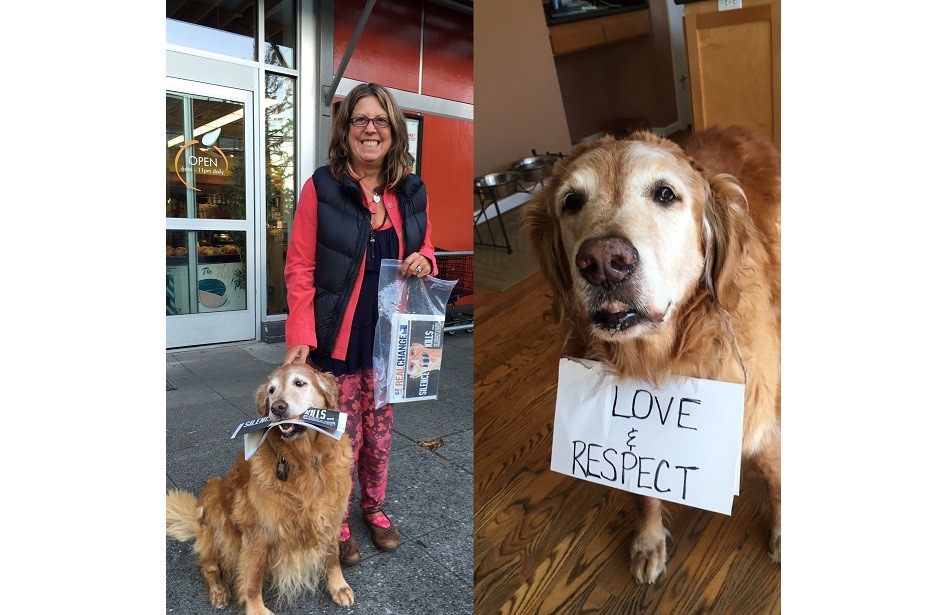
It is this feeling of fear that resonated with me. Before I had kids, I got to know the homeless people in my neighborhood that sell the Real Change newspaper, a Seattle newspaper that exists to give low-income and homeless people a job opportunity. Walking around the neighborhood with my dog, I got to know their names and some of their stories. At Christmas I would prepare Christmas cards with $20 in them and walk my dog around until I found them.

Then I had kids and stopped. Now I realized that it wasn’t just because my budget was more squeezed but because it became so much more uncomfortable for me to consider their situation. Somehow the high hopes I have for my little ones never to suffer made me so much more ill-at-ease with the journey of these people who have some pretty hard life stories.

Brené, Pema and Miss O all touch on the difficulty that comes with compassion. It hurts to see people cry and struggle and the action that is often the most helpful is just to be with others as they move through it.

Miss O summarized, “It’s being with them to show them its normal to feel that way.” And now that I know that compassion is supposed to be scary, it helps normalize my reluctance to feel it at times. It helps put me back into the holiday spirit of giving to my homeless friends.

***As a sidenote, my friend and colleague Todd Fulginiti has released a single of a holiday single, Snowfall performed by The Fulginiti Family Band. All proceeds/donations for anyone that wants to download it go to an organization that helps the homeless in Lancaster, PA. For more info see: Todd Fulginiti Music

(featured photo is my dog Biscuit taking the paper from one of our favorite Real Change sellers)

Lying or Telling the Truth?

We are here to live out loud.” – Balzac

I remember reading a parenting book that stated that by age 4, kids lied on average about once every 2 hours and by age 6, every 90 minutes. I’ve never seen a statistic about how much grown-ups lie, it’s probably not even measurable.

But I generally believe most things people, including my children, tell me. I think what is truly dangerous aren’t lies but instead when we forget to tell our truth. It’s the subject of my latest post on Pointless Overthinking: Conditions of Truth.

(featured photo from Pexels)

Open Up, Buttercup

Self-pity in its early stages is as snug as a feather mattress. Only when it hardens does it become uncomfortable.” – Maya Angelou

The other day on the carpool home from school, my daughter teed off when her friend said something about being called on in class. “I never get called on in class!” and “I never get to say my ideas!”

Self-pity is the emotion that I have the most trouble with. I think the idea that we should never feel or express self-pity was inculcated in me from an early age. My memory is that it was communicated in statements like “You can join us again when you are feeling more positive.” Or “Can I join the pity party?” or “Toughen up, Buttercup.”

So I think I came by my intolerance of self-pity in myself or others honestly from probably generations of family habits. But a little self-reflection shows me that the complete shutdown in my ability to listen and feel when self-pity appears is neither the person or parent I want to be.

I was mulling this over when I heard a Ten Percent Happier podcast with therapist Dr. Jacob Ham that helped clarify the underlying question. In the course of the conversation the topic of whether you have to love yourself to love another came up. Dr. Ham’s answer was it depends – “It depends if your fear is so great that it inhibits connection to yourself or another.”

While my natural inclination is not to name the feeling as fear, it gets at the heart of the question of solving things in ourselves so they don’t hinder our connection to others. I still have trouble thinking of self-pity as anything useful – but I also know my resistance tells me that it’s inhibiting the Flow of life somewhere and it’s worth a look.

In the car when I was listening to my daughter’s complaints, I could relate that I often see a skewed version of events when I’m tired or not feeling well. In my daughter’s case, I think she was both tired and hungry so I asked if we could come back to it after we filled her tank.

She said it was frustrating not to feel seen at times but after acknowledging that, we made a list of things she wants to do so that she can speak up about her ideas like raising her hand more enthusiastically. We’ll see if it works but I’m just grateful that I held on long enough to participate in the conversation.

(featured photo from Pexels)

Facing Our Fears Together

Be a lamp, a lifeboat or a ladder.” – Rumi

At bedtime last night my 6-year-old confessed to me that she runs ahead on the way to bed so that she can check under the bed for thieves. Not burglars, not robbers but thieves. But it was such an intimate moment that I didn’t ask about the word selection.

It struck me as I was listening what a privilege it is to hear someone else’s fears. Because what seems so real to us can feel childish to someone else. I remember confessing shortly after my daughter was born to a friend who doesn’t have kids that this was the hardest thing I’d ever done. My friend laughed, not unkindly but dismissively and I felt so exposed that I couldn’t say more.

Conversely I have friends to whom I can tell my biggest fears and know they won’t talk me out of them but instead will help me walk through them. In this way each monster we’ve faced together has been a bridge to closeness. It’s created the bond of facing things together.

When I’ve been the one entrusted with a friend’s hardship, I feel the honor of providing reassurance. Life has taught me we all fear different things but trust is built when we honor that they are real to the person who faces them.

So I told my daughter that it’s unlikely a thief would be patient enough to wait under the bed but I’d help her check. And I told her that when I was her age that I feared snakes under my bed. She thought that was weird until I told her that I had a prized set of four National Geographic books – puppies, kittens, frogs and snakes. I loved the puppies and kittens but I was fascinated by the snakes. So I could totally picture the hooded King Cobra ready to strike unless I cleared the bed by a good margin.

We talked about the probability that when her little brother is 6-years-old, he’ll probably have his own thing that he fears and she prepared her answer for how she’ll reassure him. Hand-in-hand we talked about facing our fears, looked under the bed and then had a great night’s sleep.

(featured photo by Pexels)

Together In Sickness

A year from now, what will I wish I had done today?” – unknown

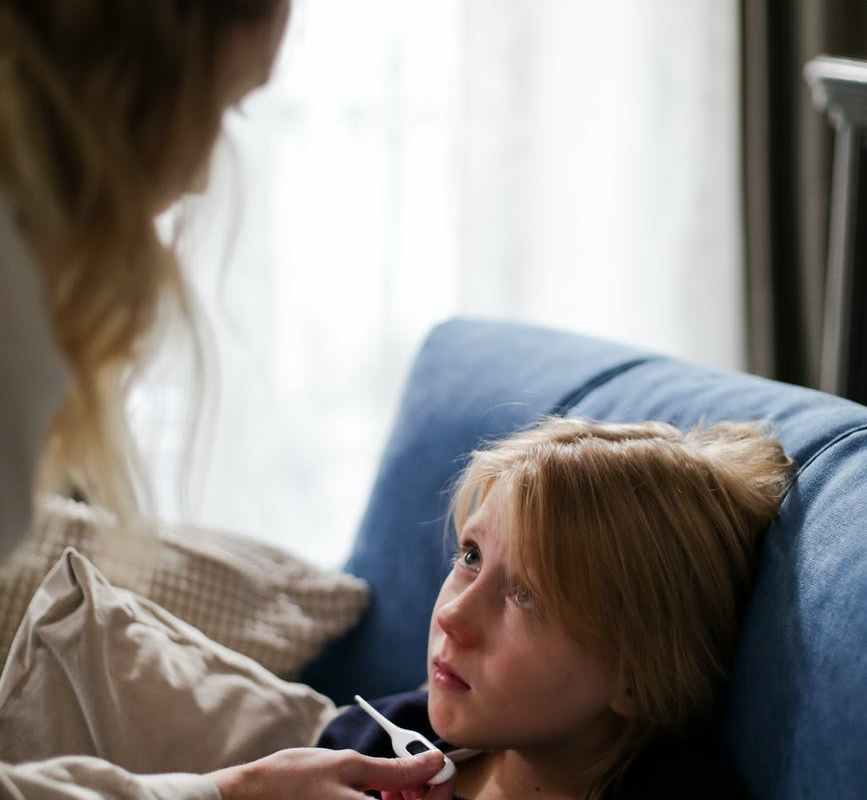
This week of my family coming down with a cold has made me think of attitudes about getting sick. Rina, my best friend in college, was the first person I learned from that being sick could be fun. From her stories, I gathered that her mother made the days she had to be home sick to be like spa days with lots of good food, sympathy and glossy magazines. Rina is Finnish and I’ve wondered if this particular way to embrace sick time is cultural.

By contrast in my family when you were sick, you stayed in bed, had no special privileges and if you were sick in the morning, you had to be sick all day so you couldn’t go play with your friends in the afternoon, even if you felt better. It was an experience designed to make sure there was no psychological advantage to being sick. In our house of Protestant productivity, being sick and the resulting impact on our usefulness was to be avoided at all costs.

So I find myself torn when my kids have to stay home from school because they are sick. On one hand I want to enjoy the break from routine and sympathetically help them feel better. On the other hand, it usually represents a stress to my work productivity that I have a hard time setting aside. But more than that, it goes against the grain of the self-worth as measured by productivity that was ingrained in me from the early days.

When I heard of the word hygge (pronounced hooga) it made me think of Rina and her mom. Hygge is a Danish word without any direct translation to English but according to this article on Quartz, has a meaning that encompasses both coziness and togetherness. It makes me think of that warmth that comes from deep companionship through better and worse.

The warmth of that word and idea, combined with my sense that being together should be celebrated in a family plus the lack of compassion I have for myself when I’m sick has spurred me to try to forge a new path for my little family when we are sick. I’ll probably never be able to reform so much that I drop everything, buy glossy magazines and bath bombs but I think a little fun and great food to help make it through when we feel crummy is worth aiming for. May it bring a sense of hygge to us, especially when we aren’t feeling well.

(featured photo from Pexels)

Receiving Pain

Only love, with no thought of return, can soften the point of suffering.” – Mark Nepo

When I trimmed my 2-year-old son’s hair recently, he’s started saying “Ow” with each snip. I checked to make sure I wasn’t pulling his hair or in any way touching his head with the tip of the scissors and continued. And he kept saying, “Ow.” It was possible he was the first person I’ve ever heard of to have feeling in his hair but his body language and smile told me it was more likely he was saying something that got a reaction.

But it brought to mind for me all the different ways I’ve received other people’s pain. I’ve dismissed it as not as bad as they are reporting. I’ve wondered when they will get over it. I have compared it (both inwardly and outwardly) as not as bad as something I’ve experienced. And I can report that none of these methods are helpful. The only way that I’ve found to bear witness to pain and to help alleviate suffering is to believe that every word they say is true and to listen as they process their story.

This makes me think of a winter climb I once did on Mt. Whitney with a good friend about 3 months after her boyfriend died of cancer. He’d been cremated and she was climbing with him in a little urn attached to her pack. She kept on mentioning Rick to the other people in the group we were climbing with, none of whom knew us from before the trip. And because she was talking about Rick as if he was with us (and I suppose he was if you counted the urn), they would get a pretty confused look on their faces and eventually take me aside to ask me who Rick was. But it was a group of really nice people who let her talk and talk and talk about him. We were slogging in thigh deep snow up the side of the mountain and had days to listen.  It was like an extreme walking meditation.

After a while, I thought we’d heard enough about Rick. I fortunately never said anything. Because it wasn’t until my dad died that I understood that the telling of the story of his sudden death in a bike accident and talking about what an amazing person he was were both such healing ways to help process the surprise of finding him gone.

So I’ve adopted some of my dad’s wisdom. As a retired pastor, he often was asked by friends, mentees and former parishioners to go to coffee for advice or to air the pain of living. And if you asked him how it went, he’d smile kindly and say, “Mostly I listened.”

My kids give me lots of opportunities to practice to listen to their pains and I do my best to calmly bear witness, not lecture about safety (at that moment at least) and just slather them with love. As I cut my son’s hair and he giggled and said “ow,” I started narrating that he was the bravest person on earth to get his hair cut. In that way, we made it through together!

Difficult Compassion

It’s not how much we give but how much love we put into giving.” – Mother Teresa

Recently my kids and I have had a couple of encounters with apparently homeless people that along with the proliferation of tents in the parks that came with COVID have my almost 6-year-old daughter asking a lot of questions. In one encounter, a man with a belt still tying off his arm for shooting up was hollering and trying to take off his pants and another man was threatening him with a baseball bat to emphasize that he should keep his pants on. In another, a man was crawling down the busy street near where we live with a look of sheer agony on his face and one arm outstretched.

I often am confused about how to talk with my daughter about these matters. She may only be going in to first grade but she talks like she is a 9-year-old, is very observant and asks a lot of good questions. To top it off, the homeless problem is so apparent and pervasive that I certainly don’t have any great ideas about how we are going to fix it. But we came up with an idea that she could draw something and we could make some care packages for people that we see.

Yesterday she wrote this note without any help from me:

We nowe you are homeless but we care. Sorry you are homles.

Do not smoc. Do not take drugs becus they make you feel bedder for a few minets but wen it goes a way it makes you feel wurs.

My daughter – age 5.9 years

She then started taping on extra pieces of paper so that she could continue. In addition to being fascinated about what content she’s taken in from our many discussions, I noticed how hard it is to stay in empathy before moving to advice or judgment.

The other day my friend, Doug, asked if I could remember the name of a guy we used to work with. He said something like, “You know, the guy who’s wife left him, house burned down and his dog died?” “Oh my goodness,” that’s terrible I thought and still had no idea who he was talking about. But it wasn’t long before the thought crossed my mind that this poor man really must have pissed off God.

So I know first-hand how hard it is to stay in empathy. I start moving to judgment or advice because it feels like having an explanation of why bad things happen makes me feel safer that they won’t happen to me. Understanding that tendency has helped me practice a better kind of compassion, one that tries not to presume to know the journey another person has walked but is willing to help. It haven’t gotten any less confused about how to talk about these huge problems with my kids but I think it has helped me to have more open-ended conversations with them where we can recognize the humanity of others and be curious about how we can help.

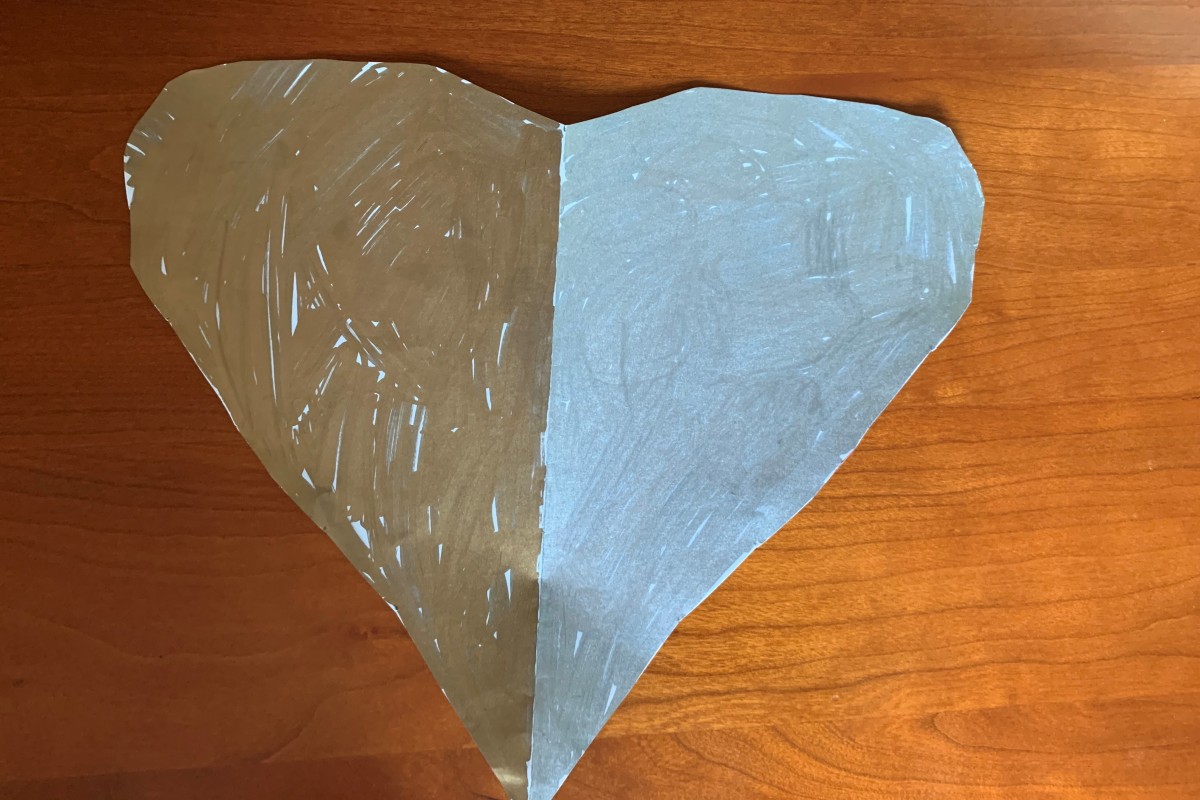
In that spirit, my daughter and I settled on just drawing hearts that say “we care” on the back. I don’t think they will solve homelessness but I do hope that they bring a moment of being seen.

Five Pieces of Writing that Inspired Me: #4 Leaving a Mark

“Be kind whenever possible. It is always possible.” – Dalai Lama

This meditation from Mark Nepo made me think about how we touch the people we are closest to all the time. Even if not physically, our presence and especially our words shape everyone around us. Whenever I think of how we rub off on each other with every encounter, this meditation is what I’ve come to see in my head.

The Work of Love

“Love courses through everything.” – Fakhruddin Iraqi

I recently learned that the first form of pencil was a ball of lead. Having discovered the lead, if scratched, would leave markings, people then wrestled with chunks of the stuff in an attempt to write. Through the work of many, the chunks were eventually shaped into a useable form that could fit the hand. The discovery became a tool.

I am humbled to confess after a lifetime of relationship that love is no different. Be it a lover or a friend or a family member, the discovery of closeness appears in our life like a ball of lead – something that if wrestled with, will leave markings by which we can understand each other.

But this is only the beginning. The work of love is to shape the stuff of relationship into a tool that fits our hands. With each hardship faced, with each illusion confronted, with each trespass looked at and owned, another piece of the chunk is whittled and love begins to become a sacred tool.

When truth is held in compassionate hands, the sharpness of love becomes clear and not hurtful.

The Book of Awakening by Mark Nepo

Self-Care

“You can search throughout the entire universe for someone who is more deserving of your love and affection than you are yourself, and that person is not to be found anywhere. You yourself, as much as anybody in the entire universe, deserve your love and affection.” – Buddha

Sitting on my meditation cushion today, I started to squirm because my right hip hurt. But I still stayed until finally it occurred to me that there was no honor in enduring the pain. I could meditate while lying on my back and stretching my hip. As I did that, I realized that I do this often – fail at self-care because I believe I am accomplishing something more important.

One of the reasons I’m thinking about this was another great podcast this week. The On Being podcast with Alex Elle. She talked about doing more than surviving this life. She wants to break the cycle in her family where the women just give until there is not one drop left for themselves. The line she said that really caught my attention was, “Choosing to do this work – it doesn’t just heal me, it heals my lineage.”

Wow, that rolls it all into one. If I believe that, and it rang true to me, then I can’t ignore my own care. I can’t martyr myself in the name of raising these two beautiful children because I would be teaching them, among other things, that motherhood is no fun. It makes me rethink my pattern of never going out at night so that I’m always here to put my kids to bed. I think there is a lot of goodness in that but always/never might be a little extreme.

As I stretched the right hip and then the left, I realized that the thing that I am good at is seeking out others stories to inspire me. In podcasts and blog posts, I find so much interesting and thought-provoking material that makes me grow. It gives me hope that I learn to take care of myself in other ways too!