How to Share A Re-Imagined Sci-Fi Trilogy

The power of imagination makes us infinite.” – John Muir

Vicki Atkinson and I recently recorded a podcast conversation with someone with a remarkable resume. Wayne Runde is an author, physician and veteran US Navy Commander, Wayne Runde. How’s that for a combo?

Wayne tells us about his book, Shadow of the Deceiver, the third installment in The Genesis Trust series. It’s a re-imagining of Isaac Asimov’s Foundation Series. We hear about why he was called to start writing even with his busy schedule and a fascinating set of hobbies from gardening to developing software.

Vicki and I ask about the intersection of science, morality and humanity that is a cornerstone for his writing and stories. Wayne tells us where he finds inspirations for characters from his professional life and his personal interactions within his church community.

This is a great episode with an author that has done a fabulous job of reimagining this classic series. We know you’ll love it.

Here’s a clip of Wayne helping to connect the dots of how his disparate interests and hobbies come together:

Here are some ways you can listen and watch this interesting episode:

Please listen, watch, provide feedback and subscribe.
How Writing Helps Us Survive Chronic Illness and Loss The Life of Try: Personal growth, one try at a time.

What does it means to keep showing up when life asks more of you than seems possible?In this episode of The Life of Try, Wynne Leon talks with Kathryn M. B. Johnson, author of Invisible, Until I’m Not, a memoir-in-essays about chronic illness, caregiving, grief, and resilience. Together, they explore what it means to live with fibromyalgia and invisible illness, how caregiving reshapes identity, and why being seen matters so deeply when pain is hard to explain. This conversation offers honest insight, emotional validation, and hope for anyone navigating chronic pain, caregiver burnout, loss, or the daily work of endurance. If you’re looking for a thoughtful podcast episode about chronic illness, caregiving, trauma, faith, and finding strength in difficult seasons, this episode is for you.In this episode, we discuss: → Chronic illness can reshape identity, relationships, and daily life in ways that are often invisible to others. → Caregiving is an act of love, but it also carries grief, exhaustion, and the need for self-compassion. → Writing can become a lifeline—a way to process pain, preserve connection, and reclaim a sense of self. → Being believed and truly seen matters deeply for people living with chronic pain or complex health conditions. → Rest is not laziness; caring for yourself is part of being able to care for others.📘 Order Invisible, Until I'm Not: https://www.amazon.com/Invisible-Until-Im-Not-Illness-ebook/dp/B0GSB7QQMH/🌍 Show notes and more inspiration: https://wynneleon.com🔔 Subscribe to The Life of Try for more conversations on: personal growth, creativity, reinvention, resilience, writing, and mindset.📌 Subscribe & Stay Updated: → https://www.youtube.com/@thelifeoftry?sub_confirmation=1ABOUT ME Hi, I’m Wynne Leon — host of The Life of Try, a personal growth and self-improvement podcast exploring resilience, reinvention, uncertainty, and the courage to keep trying. Through thoughtful interviews, reflective conversations, and real-life stories, I share insights to help you navigate change, get unstuck, and move forward with more intention.🎥 Watch Next➡️ Letting Go Of Outcomes: The Mindset That Keeps You Moving➡️ 48: How to Get Unstuck: Michael Yang on Saying Yes, Resilience and Coming Alive
  1. How Writing Helps Us Survive Chronic Illness and Loss
  2. Near Death, Deep Faith, New Life | Liza Anderson’s Extraordinary Story
  3. Encouraging Effort, Not Outcome: The Secret to Helping People Keep Trying
  4. How to Celebrate the Try
  5. How to Reclaim Fun in Adult Life; Michael Rucker, PhD on Joy, Burnout, and The Fun Habit

Links for this episode:

Transcript for How to Share a Reimagined Trilogy with Dr. Wayne Runde

Wayne Runde’s website

Shadow of the Deceiver: The Genesis Trust, Book 3 on Amazon and Barnes & Noble

From the hosts:

Vicki’s book about resilience and love: Surviving Sue; Blog: https://victoriaponders.com/

My book about my beloved father: Finding My Father’s Faith

(featured photo from Pexels)

Reach Out and Touch Someone

Compliment people wherever you go. Praise every single thing you see. Be a ray of sunshine to everyone you meet.” – Rhonda Byrne

A couple of weeks ago my friend, Scott was watching the movie The Net and it reminded him of me. When that movie came out 27 years ago (I looked it up), it was in the brief time we worked together and I commented on a small technical detail about an IP address that pertained to the work we were doing at the time. He saw that detail as he watched the movie again and texted me.

I wonder what it is that makes us pick up the phone when reminded of someone from a long time ago – or answer when someone else does.

It seems like our imaginations often get in the way because I think more often than not I think we think of people and DON’T pick up the phone – we can’t imagine what their reaction will be because it’s been too long or we imagine that it will take more time that we have. And then we stop before we’ve even dialed or written the note.

Many years ago, I had a friend who was writing a novel and was trying to think of a plausible way to introduce time travel. We brainstormed ideas and I remember not having much to offer. Thinking about it now – I realize that reaching out to someone when we think of them is a great way to travel in time.

Because whenever I take the time to pick up the phone, write a letter or make a comment, I get a boost of good feeling. Even in the cases that it doesn’t work out the way I expected, I feel more connected to others for making the effort. It is another way of experience the goodness of our interconnected humanity.

So when Scott texted, I said “yes” to meeting him for tea to catch up. Not only did I get to find out how he, his wife and kids are doing, I got a little chance to travel in time and remember the energy and promise of those days when we were getting paid to wire people to the Internet. It probably was back when AT&T ran the commercials reminding us, “Reach out and touch someone.”

Have you called an old friend lately?

(featured photo from Pexels)

Difficult Compassion

It’s not how much we give but how much love we put into giving.” – Mother Teresa

Recently my kids and I have had a couple of encounters with apparently homeless people that along with the proliferation of tents in the parks that came with COVID have my almost 6-year-old daughter asking a lot of questions. In one encounter, a man with a belt still tying off his arm for shooting up was hollering and trying to take off his pants and another man was threatening him with a baseball bat to emphasize that he should keep his pants on. In another, a man was crawling down the busy street near where we live with a look of sheer agony on his face and one arm outstretched.

I often am confused about how to talk with my daughter about these matters. She may only be going in to first grade but she talks like she is a 9-year-old, is very observant and asks a lot of good questions. To top it off, the homeless problem is so apparent and pervasive that I certainly don’t have any great ideas about how we are going to fix it. But we came up with an idea that she could draw something and we could make some care packages for people that we see.

Yesterday she wrote this note without any help from me:

We nowe you are homeless but we care. Sorry you are homles.

Do not smoc. Do not take drugs becus they make you feel bedder for a few minets but wen it goes a way it makes you feel wurs.

My daughter – age 5.9 years

She then started taping on extra pieces of paper so that she could continue. In addition to being fascinated about what content she’s taken in from our many discussions, I noticed how hard it is to stay in empathy before moving to advice or judgment.

The other day my friend, Doug, asked if I could remember the name of a guy we used to work with. He said something like, “You know, the guy who’s wife left him, house burned down and his dog died?” “Oh my goodness,” that’s terrible I thought and still had no idea who he was talking about. But it wasn’t long before the thought crossed my mind that this poor man really must have pissed off God.

So I know first-hand how hard it is to stay in empathy. I start moving to judgment or advice because it feels like having an explanation of why bad things happen makes me feel safer that they won’t happen to me. Understanding that tendency has helped me practice a better kind of compassion, one that tries not to presume to know the journey another person has walked but is willing to help. It haven’t gotten any less confused about how to talk about these huge problems with my kids but I think it has helped me to have more open-ended conversations with them where we can recognize the humanity of others and be curious about how we can help.

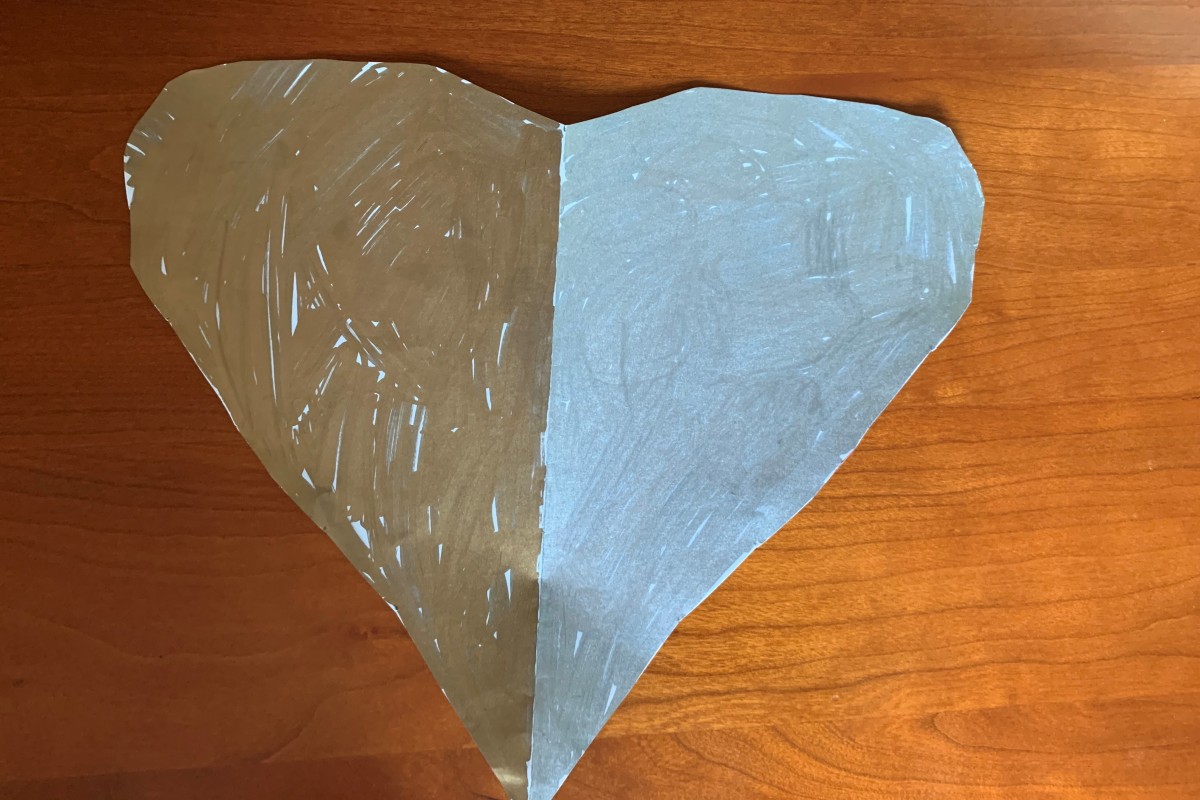
In that spirit, my daughter and I settled on just drawing hearts that say “we care” on the back. I don’t think they will solve homelessness but I do hope that they bring a moment of being seen.