How to Share a Sandwich

When we do the best that we can, we never know what miracle is wrought in our life, or the life of another.” – Helen Keller

Karen Olson shares a statistic in her book Meant for More: Following Your Heart and Finding Your Purpose that one in thirty children in the United States experience homelessness annually.

That means that when I volunteered last week at my kids’ elementary school last week to walk the approximately 400 students at school down to have their photo taken for Picture Day, statistically speaking, 13 of them could have experienced homelessness in the last year. It’s overwhelming to even try to comprehend that.

So I love the conversation that Vicki Atkinson and I had with Karen Olson because she has done so much to help homeless families. Karen is the founder and CEO emeritus of Family Promise, an organization committed to ending family homelessness.

Karen shares the story of her encounter with Millie, a woman experiencing homelessness, and how that her decision to not only share a sandwich but also her time as she listened to Millie’s story changed her life forever (see clip below).

She tells us how her sons who were 10 and 12 at the time got involved. And she shares how the “no’s” she received help shape her mission into something even better – an organization that has involved a million volunteers and a nation-wide presence.

In her book, Meant for More, Karen tells not only her story but also some stories of the people Family Promise has helped – from those who experienced homelessness to the volunteers.

In this episode we talk about some of the reasons we hesitate to help people experiencing homelessness. Karen’s guidance is so helpful to help direct our efforts in ways that make a difference.

This is a great episode with a woman who was wired to help others. We know you’ll love it.

Takeaways from this episode:

  • Karen Olson founded Family Promise to help homeless families.
  • The organization mobilizes community resources to provide shelter and support.
  • 80% of families in the program find housing within nine weeks.
  • Personal acts of kindness can lead to significant change.
  • Engaging with the homeless can break down barriers and stereotypes.
  • Community service fulfills the needs of both the giver and receiver.
  • Advocacy is essential for systemic change in homelessness.
  • Many homeless families are hidden from public view.
  • Compassion and kindness can inspire others to act.
  • The journey of helping others can lead to personal healing.

Here’s Karen telling the story about the sandwich that started it all.

Here are some ways you can watch this heartwarming and inspiring episode:

How to Share a Sandwich transcript

Barbara Nickless on A Voice In The Dark, Online Gaming and The Power of Story The Life of Try: Personal growth, one try at a time.

In this episode of The Life of Try, host Wynne Leon talks with Wall Street Journal bestselling author Barbara Nickless about her new psychological suspense novel, A Voice in the Dark. Their conversation moves from the dark corners of online gaming and internet manipulation to the real-world vulnerabilities of teenagers, families, and people searching for belonging. Barbara shares how deep research, FBI consultants, and her own curiosity shape her fiction, especially as she writes about FBI profiler Helen Belle, criminal humanist Benedict Hoffman, addiction, trauma, and the question of what draws people toward danger.This thoughtful author interview explores how storytelling can help us understand complicated human experiences, including moral injury, PTSD, addiction, grief, law enforcement, cybercrime, and the healing power of writing. Barbara also reflects on teaching writing to military veterans and civilians, researching dangerous places and difficult subjects, and using narrative to “de-other” people we might otherwise misunderstand. Key Takeaways:→A Voice in the Dark explores the dangers young people can face in online communities, especially when vulnerable teens and young adults are targeted by manipulative influencers.→Storytelling can help us “de-other” people by taking us inside their motivations, histories, and struggles in ways that facts and news stories alone often cannot.→Curiosity is at the heart of Barbara Nickless’s writing process. Her research into online gaming, FBI investigations, addiction, trauma, and moral injury helps make her fiction vivid, compassionate, and grounded in real human experience.→Researching modern crime fiction requires balancing accuracy with readability, particularly when writing about cybercrime, AI, online manipulation, and evolving law enforcement tools.→The conversation highlights a core Life of Try theme: trying begins with curiosity, openness, and a willingness to enter unfamiliar worlds in order to understand ourselves and one another more deeply.If you love conversations about books, personal growth, curiosity, crime fiction, psychological thrillers, resilience, and what it means to keep trying, this episode offers a rich and compassionate look at the stories that help us make sense of ourselves and one another.📘 Order A Voice In the Dark: https://www.amazon.com/Voice-Benedict-Hoffman-Helen-Belle-ebook/dp/B0FTGGHSWL/🌐 Show notes and more inspiration: https://wynneleon.com🔔 Subscribe for more: Subscribe to The Life of Try for more conversations on: personal growth, creativity, reinvention, resilience, writing, and mindset.ABOUT MEHi, I’m Wynne Leon — host of The Life of Try, a personal growth and self-improvement podcast exploring resilience, reinvention, uncertainty, and the courage to keep trying.Through thoughtful interviews, reflective conversations, and real-life stories, I share insights to help you navigate change, get unstuck, and move forward with more intention.🌍 Website: https://wynneleon.com🎥 Watch Next➡️ Letting Go Of Outcomes: The Mindset That Keeps You Moving➡️ 48: How to Get Unstuck: Michael Yang on Saying Yes, Resilience and Coming Alive➡️ How to Finally Write That Book You've Been Dreaming About | Writing Motivation
  1. Barbara Nickless on A Voice In The Dark, Online Gaming and The Power of Story
  2. Embracing What Makes You Different | Kym Gordon Moore
  3. Motive + Means = Opportunity: A Life of Try Story
  4. How Writing Helps Us Survive Chronic Illness and Loss
  5. Near Death, Deep Faith, New Life | Liza Anderson’s Extraordinary Story

Links for this episode:

Karen’s book: Meant for More: Following Your Heart and Finding Purpose on Barnes & Noble , Bookshop.org and Amazon

Karen Olson, Author

Family Promise Organization

From the hosts:

Vicki’s book about resilience and love: ⁠Surviving Sue⁠; Blog: ⁠https://victoriaponders.com/⁠

My book about my beloved father: ⁠Finding My Father’s Faith⁠;

(featured photo from Pexels)

The Daring Practice of Compassion

Love and compassion are necessities, not luxuries. Without them, humanity cannot survive.” – Dalai Lama

Yesterday Miss O was with me when I dropped Mr. D at his daycare for the last time in 2022. There was another little person having a hard time with drop-off. She didn’t want to cross the threshold to go in and her dad needed to step away.

As we walked out of the building, we could hear the little girl’s cries. Miss O said, “I hate hearing little ones cry.” We talked all the way to the car about what the little girl could be feeling and why.

When we got home, I pulled out Atlas of the Heart by Brené Brown and looked up compassion. Brené’s working definition of compassion is, “Compassion is the daily practice of recognizing and accepting our shared humanity so that we treat ourselves and others with loving-kindness, and we take action in the face of suffering.”

I read this to Miss O along with some supporting paragraphs about how compassion is scary because of it reminds us that we all have pain and struggle. It isn’t feeling better than or fixing it, it’s being with another in their experience.

Brené includes a passage from The Places That Scare You by Buddhist nun Pema Chödrön:

“When we practice generating compassion, we can expect to experience our fear of pain. Compassion practice is daring. It involves learning to relax and allow ourselves to move gently toward what scares us… In cultivating compassion we draw from the wholeness of our experience – our suffering, our empathy, as well as our cruelty and terror. It has to be this way. Compassion is not a relationship between the healer and the wounded. It’s a relationship between equals.”

The Places That Scare You by Pema Chödrön

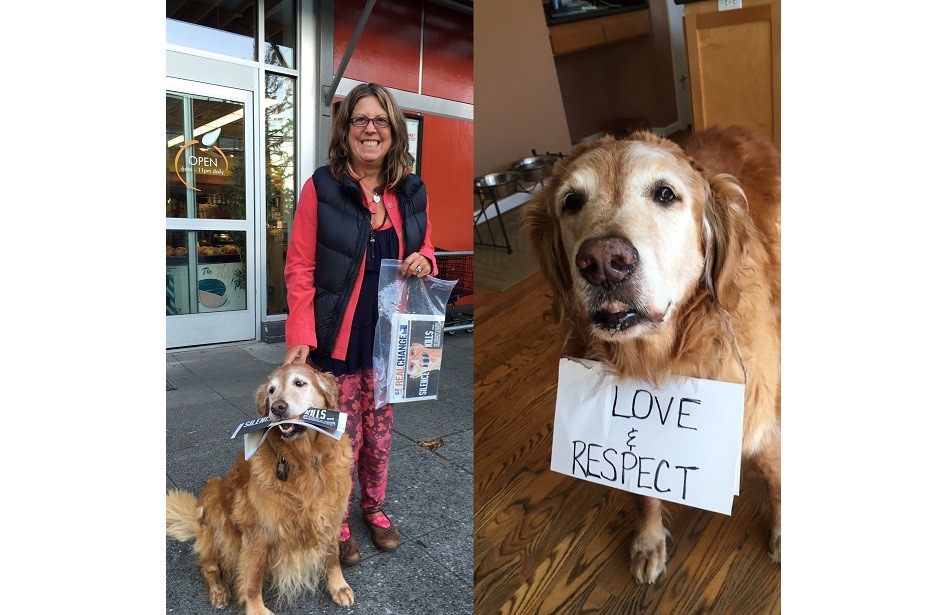
It is this feeling of fear that resonated with me. Before I had kids, I got to know the homeless people in my neighborhood that sell the Real Change newspaper, a Seattle newspaper that exists to give low-income and homeless people a job opportunity. Walking around the neighborhood with my dog, I got to know their names and some of their stories. At Christmas I would prepare Christmas cards with $20 in them and walk my dog around until I found them.

Then I had kids and stopped. Now I realized that it wasn’t just because my budget was more squeezed but because it became so much more uncomfortable for me to consider their situation. Somehow the high hopes I have for my little ones never to suffer made me so much more ill-at-ease with the journey of these people who have some pretty hard life stories.

Brené, Pema and Miss O all touch on the difficulty that comes with compassion. It hurts to see people cry and struggle and the action that is often the most helpful is just to be with others as they move through it.

Miss O summarized, “It’s being with them to show them its normal to feel that way.” And now that I know that compassion is supposed to be scary, it helps normalize my reluctance to feel it at times. It helps put me back into the holiday spirit of giving to my homeless friends.

***As a sidenote, my friend and colleague Todd Fulginiti has released a single of a holiday single, Snowfall performed by The Fulginiti Family Band. All proceeds/donations for anyone that wants to download it go to an organization that helps the homeless in Lancaster, PA. For more info see: Todd Fulginiti Music

(featured photo is my dog Biscuit taking the paper from one of our favorite Real Change sellers)

Digging Deep Into the Christmas Spirit

We are only as blind as we want to be.” – Maya Angelou

For an outing this weekend, I took my kids to downtown Seattle to see the Christmas decorations and we rode the bus, my toddler’s first time. He was wide-eyed by being able to be inside the vehicle that he admires too much.  

It’s been a while since I’ve taken that bus so I selected a stop too early and we had to walk a ways down one of the streets downtown. My 6-year-old daughter found this distressing because of the homelessness. Eventually stepped into a Starbucks to get out of the cold and have a moment of reprieve from humanity.

Eating our snacks outside, my daughter got worried again. We were in Westlake Center park sparkling beautiful Christmas lights but someone was cooking heroin 10 feet away. Not that she knew that specifically but she has an eagle eye for anything out of the ordinary. And a woman stopped us to ask for a couple of dollars to get something to eat. I didn’t have any cash accessible so I said “no” and she started yelling at us.

I am completely aware of my hypocrisy of feeling like our adventure to see the Christmas lights and decorations was in part spoiled by the presence of such need. In the gentle way that meditation often shows me where I need work, I realize it is so unkind of me to say that and is completely antithetical to the Christmas spirit not to help.

When it was just me and my dog, we walked everywhere in the neighborhood and got to know all the homeless in our area. I used to prepare Christmas cards with $20 in them to give to people I’d encounter on my walks this time of year. I also had time to do things like to volunteer for an organization that fed homeless teens.

Now I’m so challenged these days about how to help. Now that I’ve had kids, I have fewer resources both in time and money. And the homeless problem has gotten so much more visible in the COVID era when the shelters reduced capacity and the mayor decided to stop enforcing the laws not to camp in parks. Also for the part of the population who is suffering from addiction, empathetically I have a harder time relating to people suffering from opoid addiction as opposed to alcohol addiction, probably simply because I’ve never dreamed of trying heroin but I had many years when I drank too much.

With all that said, the incongruity of this weekend when I felt angry that the homeless were spoiling my kids’ Christmas celebration instead of the Christmas spirit I should have felt has spurred me that I need to find other ways to help. My protective instincts are too overwhelming when I have my kids in tow but turning my back is neither what I want to be nor what I want to teach my children. “There but for the grace of God” rings in my head as I try to fix my heart on some solution of what I can do to help.

(featured photo from Pexels)