Vulnerability

To share your weakness is to make yourself vulnerable; to make yourself vulnerable is to show your strength.” – Criss Jami

This post was previously published on 2/2/2022. Heads up – you may have already read this.


The other day my friend, Doug called when I was working on a blog post. When I responded to his question to tell him what I was doing, he said, “Oh, that’s awesome. Send me the link to that blog.”

I did and then….<nothing.>

Did he not like my latest post? Did he not like any post? Maybe he didn’t read it? But he asked for it? <Gulp>

Vulnerability is hard.

When I applied to be a writer for the Pointless Overthinking blog (now Wise & Shine), I didn’t tell anyone in my in-person life. I was excited that I might have the opportunity to be a writer for a shared blog but telling someone seemed too scary — I didn’t have the guts to admit it out loud.

Six weeks went by. Because it was well within the window of expected response, I didn’t think about it much one way or the other.

Then from deep inside, my courage to follow-up won over the vulnerability of confessing that it mattered. I sent a follow-up email pointing out how well I can pointlessly overthink. And I got a response within the day.

This internal struggle reminds me how much I’ve learned about vulnerability in recent years, primarily from Dr. Brené Brown’s research. She defines vulnerability as “the emotion that we experience during times of uncertainty, risk and emotional exposure.” It is where we go when things matter and yet they are out of our control. Which I believe is the heart of life.

But she has researched extensively the connection between vulnerability and courage.  “In my most recent research on courage and leadership, the ability to embrace vulnerability emerged as the prerequisite for all of the daring leadership behavior.” Or said more succinctly in one of her most oft repeated quotes, “I believe that we have to walk through vulnerability to get to courage.

Whether it is leadership, creativity or intimacy, we have to risk emotional exposure in order to show up. If something matters, it will hurt if not met with success, acclaim or acceptance. But I’ve learned that showing up always results in SOMETHING that keeps moving me forward on my journey. I’ll never be able to say that I don’t consider what the potential audience might think as I write this – but I get closer to knowing what it is that I think of my effort.

And what about what my friend Doug thinks? Something I read in a book published by blogger, Julia Preston’s “Voices: Who’s In Charge of the Committee In My Head?” about her life and blogging experience gave me insight into the reactions, or lack thereof, of my non-blogging friend.

“One of the most valuable lessons that I ever learned about vulnerability is that the more willing I am to tell the truth about myself to a trusted listener – someone who will not judge me for whatever heinous crime that I believe I may have committed, the more of me there is to love. The more others trust me enough to share from within the depths of their being, the more that I realize that we’re all struggling with the same human foibles.”

Voices: Who’s in Charge of the Committee In My Head? by Julia Preston

My mountain climbing friend and former IT work colleague, Doug, isn’t a blogger or writing in any format that I know of to share his authentic life. If I took up knitting, I certainly wouldn’t expect any insightful commentary from him on that pursuit. So why do I expect it about writing?

Because to speak to anyone else, writing has to be vulnerable and authentic. Sometimes opening that vein to pour onto the page takes a lot of guts but it’s the only way to reach to others who are willing to walk through vulnerability to get to courage.


I’ve written a related post on the Wise & Shine blog inspired by Miss O’s 3rd grade teacher about the reader’s experience: Writing Windows and Mirrors

(featured photo from Pexels and featured quote from Mitch Teemley: Be Humble. Or Be Humbled )

Our Gratefuls

Wear gratitude like a cloak and it will feed every corner of your life.” – Rumi

At bedtime after we’ve read books and told stories, I’ve been asking the kids what they are grateful for and how they helped that day. The latter is a question I got from Vicki early on in our blog buddy relationship. If I remember correctly, it was a question that her mom asked her sister Lisa on a regular basis.

The other night Mr. D answered that he was grateful for being grateful. It could be a three-year-old’s version of passing on the question, but he seemed to mean it.

While I sometimes envy the simplicity and directness of the animal life around, I wonder if there’s any other creature that feels gratitude. This started me down the rabbit hole of doing research on the Internet and as I encountered AI along the way, delved into Scientific American, and hopped over to the Greater Good Lab at UC Berkeley. My summary:

  1. There are a lot of cute animal article and videos on the Internet that can eat all your free time.
  2. No one knows if animals feel gratitude.
  3. Gratitude is a complex emotion that has components of reminiscence and reflection.

In her book, Atlas of the Heart, Brené Brown quotes Robert Emmons, professor of psychology at University of California, Davis and one of the world’s leading gratitude experts:

I think gratitude allows us to participate more in life. We notice the positives more, and that magnifies the pleasure you get from life. Instead of adapting to goodness, we celebrate goodness. We spend so much time watching things – movies, computer screens, sports – but with gratitude we become greater participants in our lives as opposed to spectators.

Roberts Emmons

Now who doesn’t want to become a greater participant in life? I’m grateful for my kid’s answers the other night. Mr. D. who’s grateful for being grateful and Miss O who added, “I’m grateful for family and that we are a unit, even though we sometimes fight.” Right – ditto what they said!

For a snapshot of a small moment of gratitude, I’ve written about one that I particularly enjoyed on the Heart of the Matter blog, A Brief Moment in Time.

The Vibe of the Group

If you want to lift yourself up, lift up someone else.” – Booker T. Washington

In my job as an IT consultant, I get to be the fly on the wall of other people’s businesses and watch how organizations work (or not work together). In the twenty-five years I’ve done this, it’s become a game to figure out the personality of the leader based on the vibe of the group. Or vice versa, if I meet the leader first, and then I try to guess the vibe of the group.

In a large organization like Microsoft, I might work with a group that is harsh and quick to blame and when I meet the manager, it’s no surprise that he’s a complete jerk – and willing to wear that persona on the outside.

I’ve seen it in so many ways: if the group is loud and comical, the manager is likely the life of the party character; if the group vibe is nerdy and quiet, then the manager is often brilliant and introverted.

So I was fascinated recently to work with a small company of independent, self-starters who felt to me as if they were disconnected and uninterested. They were all doing really great work but when the language switched to what the company was doing, it felt flat.

And then I met the leader — someone who was saying all the right things about being a great group of people but frequently only used “I” language. As in, “what I’m looking to accomplish, this is what I’m good at, and here’s what I need.”

Over a few months, I’ve watched how that is reflected in meetings and their work. If the leader is doing something, he wants to know how he did and will share his metrics. But if anyone else presents or finishes a project, he rarely comments or even seems to notice.

Brené Brown defines a leader as “anyone who holds him or herself accountable for finding potential in people or processes.”  I come back to that definition again and again because I’ve seen many styles of leadership – and tried it myself. Groups seem to be more successful, no matter what the persona, as long as the leader is interested in something bigger than themselves.

As Booker T. Washington says in the quote for this post, if we lift up others, it will lift us up as well. In many ways that is self-serving – but the paradox lies in the fact that if people are truly self-serving, they can’t do it authentically.

My little game keeps me entertained and less nervous when I’m meeting a group of new people. But it has also taught me, again and again, that who we are influences the people around us in ways that we might not even know. And if who we are is someone who lifts others up, it’s rippling out in a vibe to everyone around.

(featured photo from Pexels)

Turning Towards

Know all the theories. Master all the techniques. But as you touch a human soul be just another human soul.” – Carl Jung

“Guess what?” Miss O says to me and when I reply, she says, “I love you.” It’s a little call and response that I started with her when she was about 4 years-old. But I stopped doing it. She asked me why the other day and I don’t know. Was it because Mr D got older and I didn’t want to leave him out? Or was it because she started to know what I was going to say every time?

These little bids for connection matter according to Drs John and Julie Gottman of the Gottman Institute. They are our ways of turning towards our loved ones and even though the Gottmans primarily focus on partner love relationships, I think it applies to children as well.

On a recent Unlocking Us podcast with Brené Brown, they were talking about their latest book, The Love Prescription: Seven Days to More Intimacy, Connection and Joy, and what caught my attention was how grounded in research their advice is. Not surprisingly since these are the psychologists and researchers who proved their ability to tell if relationships would last and be happy from just 15 minutes of observation with a 90% degree of accuracy.

They made the distinction between turning toward a bid of attention (responding or engaging when your partner says something like “look at that blue jay out the window”), turning away (ignoring) and turning against (responding with something like “why are you interrupting me?”).

In happy relationships, people turn toward their partner’s bids for attention 86% of the time, couples who were not successful only turn toward each other 33% of the time. John Gottman explained the result, “Couples who increase their turning toward wind up having more of a sense of humor about themselves when they are disagreeing with one another, when they are in conflict.

As Brené Brown summarized “Turning toward gives us a sense of confidence about our togetherness.”

“Love is a practice. It’s more than a feeling. It’s an action. It’s something you do and not something that just happens to you and you need to give and get a daily dose to maintain a healthy and thriving relationship.”

The Love Prescription: Seven Days to More Intimacy, Connection and Joy by John Gottman and Julie Gottman

The funny thing about when Miss O does the call and response with me lately is that she gets me almost every time. She says “Guess what?” and my busy head doesn’t anticipate the next part. It’s the surprise that breaks through the momentum of the day.

I can’t remember why I stopped this particular ritual but now that I’ve been reminded, I am delighted to start doing it again. Because what relationship doesn’t need to be grounded in connection and fun?

Making Good Choices

Creative people are curious, flexible, persistent, and independent with a tremendous spirit of adventure and a love of play.” – Henri Matisse

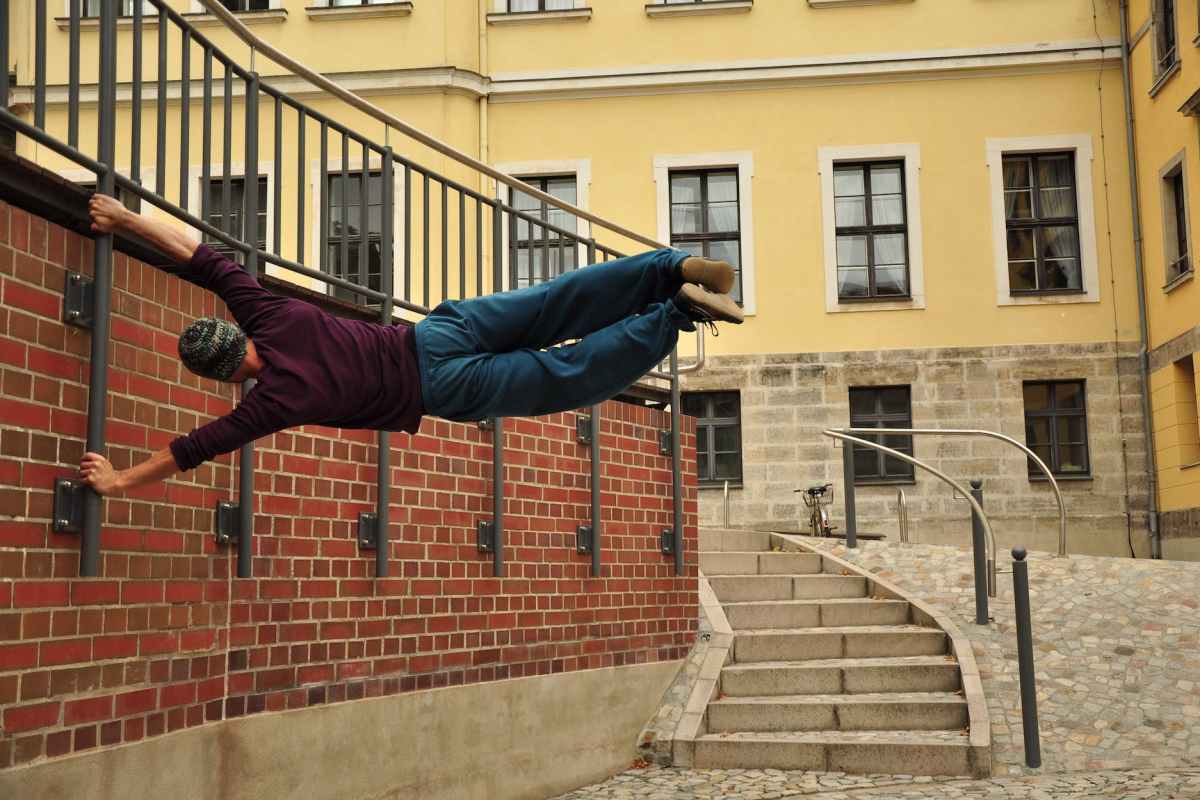
Yesterday we were driving to Parkour camp when Miss O said, “I really like Coach Kurt because he’s always teaching us about making good choices. Which is important in Parkour.” Then after a short pause she added, “I think it might be really important in life.”

Parkour derives its name from the French phrase meaning obstacle course. A year into the pandemic, I think I would have signed Miss O up for any in-person class that gave her an outlet to use all the extra energy building up from having to do online Kindergarten but I was fortunate enough to make the good choice of Parkour.

Watching the kids learn Parkour, it appears that they are just running, vaulting, climbing, and dodging. But what Coach Kurt as the founder of his Parkour training company and his other coaches seem to be emphasizing is that we have choices in how we navigate an environment. Social emotional learning shows up in most curricula for kids these days but as I digested Miss O’s statement, it struck me just how much she was learning… from play.

Thinking about this sent me to my copy of Gifts of Imperfection by author and researcher Brené Brown. She cites the work of psychiatrist Dr. Stuart Brown about the benefits of play as derived from his research and work in the fields of biology, neurology and psychology. “Brown explains that play shapes our brain, helps us foster empathy, helps us navigate complex social groups, and is at the core of creativity and innovation.”

More than that, Brené Brown’s entire book is on the choices we make in life and how cultivating the right things can help us to live more whole-heartedly, as she terms it. “Wholehearted living is about engaging in our lives from a place of worthiness.” It is all about making the right choices in life, to build on Miss O’s statement. Here are the ten guideposts that Brené offers:

Guidepost #1: Cultivating Authenticity: Letting Go of What People Think

Guidepost #2: Cultivating Self-Compassion: Letting Go of Perfectionism

Guidepost #3: Cultivating a Resilient Spirit: Letting Go of Numbing and Powerlessness

Guidepost #4: Cultivating Gratitude and Joy: Letting Go of Scarcity and Fear of the Dark

Guidepost #5: Cultivating Intuition and Trusting Faith: Letting Go of the Need for Certainty

Guidepost #6: Cultivating Creativity: Letting Go of Comparison

Guidepost #7: Cultivating Play and Rest: Letting Go of Exhaustion as a Status Symbol and Productivity as Self-Worth

Guidepost #8: Cultivating Calm and Stillness: Letting Go of Anxiety as a Lifestyle

Guidepost #9: Cultivating Meaningful Work: Letting Go of Self-Doubt and ‘Supposed To’

Guidepost #10: Cultivating Laughter, Song and Dance: Letting Go of Being Cool and ‘Always in Control’

The Gifts of Imperfection by Brené Brown

(Anyone interested in these guideposts might want to take the assessment that Brené Brown offers for free on her website.)

Thinking about how we are always making choices on how to navigate this obstacle course of life, I think Miss O summed it up that it’s important to make good ones. Or at least the choices that are meaningful to us. So when I saw Coach Kurt at Parkour camp yesterday, I made the choice to pause and tell him what my daughter had learned from this company and curriculum he so thoughtfully has put together. With glittering eyes he thumped his hand to his heart a couple of times and then said, “Thank you for sharing that with me.”

(featured photo from Pexels)

No Name Calling

Success is going from failure to failure without losing your enthusiasm.” – Winston Churchill

About ten days ago, a week before my daughter’s elementary school let out for the summer, there was a school Field Day where the entire student body of 400 kids played games at 28 stations to earn food and prizes. They were looking for volunteers so I tended the soccer kick station with another parent.

It was an easy 10 feet kick into a goal. We had a lot of kids come by – Kindergartners who had feet about the size of a deck of cards, differently abled kids that came by with their instructional aides, and most of the student body including the 5th graders who looked like they were ready to take on the world.

Everyone was displaying great spirits until one girl, perhaps in the 4th grade came by with a friend and gave the ball a kick. I shouted “Wuhoo” and she said, “Don’t say ‘Wuhoo.’ I’m a failure.” And I said that she kicked the ball with lots of strength and she repeated, “I’m a failure.”

Her ball hadn’t gone in (we didn’t really require that) but most kids could get it in, even the little Kindergartners. So I gave it her the ball again and said, “Kick it again.” And she did – without even really trying and it didn’t go in. She said, “See, I’m a failure.”

I was flummoxed. Her assertation that she was a failure was a wall that seemed to keep everything from going in. With that up, it didn’t seem like anything could penetrate.

With the first post I wrote about confidence, I can, I quoted author and psychiatrist Neel Burton who distinguished confidence from similar concepts by explaining confidence is feeling “I can,” self-esteem is feeling “I am” and pride is the feeling of “I did.”

When the little girl came to the soccer kick station, she both asserted that she couldn’t and that she was a failure. And once that was in the air it seemed to operate like a foregone conclusion for which there was no quick fix.

Because we can fail over and over again and still be confident. Here are some examples.

I’ve missed more than 9000 shots in my career. I’ve lost almost 300 games. 26 times I’ve been trusted to take the game winning shot and missed. I’ve failed over and over and over again in my life. And that is why I succeed.” – Michael Jordan

Failure is only an opportunity to begin again more intelligently.” – Henry Ford

A woman who never gives up can’t fail.” – Abby Wambach

The distinction seems to lie between admitting we’ve failed without calling ourselves a failure. I hadn’t thought much about that small difference until I heard researcher and author, Brené Brown tell a story about when her daughter was in pre-school. The pre-school teacher told Brené that one day after Brené’s daughter had been doing art at the glitter table the teacher said to her, “You are a mess.” And the daughter retorted, “I might be messy right now but I’m not a mess.”

In the retelling, Brené laughed and said that her roots as a shame researcher were visible. We can describe our current situation without calling ourselves names. No name calling is a rule in my household since I heard that story, and I apply that to the conversations I have with myself as well.

My daughter overheard me telling my mom about the little girl who called herself a failure at Field Day and was fascinated by the story. It was a great opportunity to talk with her about what happens if we believe the names we call ourselves. I hope the ripple effect is that she won’t call herself names and maybe even say something if she hears someone else doing it.

This is my fifth post about confidence. Here are the others:

I Can

Fear and Confidence

Growth Mind-set

Bossy Pants – Confidence and Leadership

Fear and Confidence

Everything you’ve ever wanted is on the other side of fear.” – George Adair

The other night our iPad fell on the ground. My kids and I were getting in the car after visiting my brother and his wife. My brother folded the stroller and the iPad that my 6-year-old daughter always uses fell out of the pocket and landed on its corner. We picked it up and went on our way but as we drove, my daughter discovered that the power button had been slightly crimped down by the fall and so all the iPad would do was show the Apple icon and then go black over and over again.

This iPad is her favorite thing in the world. It represents her agency in the world to discover things that other 6-year-olds are doing. It has her books, videos and games so it is also her main source of entertainment. That iPad holds a lot of power and possibility in one sleek package.

She started wailing in the backseat that it was broken. I calmly said, “Don’t worry, I’ll take a look at it when we get home. We’ll try to fix it.” And she wailed back, “We can’t try. It won’t work.”

What?? We fix things all the time. This was the little girl that just an hour before had confidently stood up on a paddle board and was paddling it by herself on Lake Union. And then she was jumping off the paddle board over and over into the lake to swim around with not a worry in the world.

And now she was saying we couldn’t even try. That all was lost. Everything was broken and would stay broken. This wasn’t normal or rational, this was fear.

It struck me that confidence can’t show up when fear is running the show. So in my ongoing inquiry into confidence, I went digging in to get some perspective into this.

In their book The Confidence Code, authors Katty Kay and Claire Shipman distill the definition of confidence from all their sources of research and erudition into “Confidence is the stuff that turns thoughts into action.” They also describe the other positive attributes that often go hand in hand with confidence, what they label as the confidence cousins: self-esteem, optimism, self-compassion, and self-efficacy. But all of these things, confidence and the cousins that work to create belief that you can make something happen, are part of our rational/thinking brain.

Neuropsychiatrist Dan Siegel and parenting expert Tina Payne Bryson have great illustrations in their book The Whole-Brained Child that illustrate how fear is a downstairs (limbic) brain function and that when we flip our lids, we temporarily lose access to the upstairs brain that supports thinking. The downstairs brain that provides quick reaction so when we are in critical moments of fight of flight doesn’t stop to think about it.

So in our moments of fear we lose, maybe just momentarily, access to the stuff that creates confidence until we move though it. This brought to mind for me of one of the rapid fire questions Brené Brown often asks her guests on her podcast Unlocking Us: “You are called to be very brave but your fear is real and you can feel it in your throat, what is the very first thing do you do?” And the answers from her guests are things like:

  • Oprah: “Take a deep breath. Remind myself to breathe.
  • Dr. Angus Fletcher: “I think of the bravest person I know who happens to be my son who is much, much braver than me.
  • Dr. Julie Gottman: “Put my hand on my heart.

Coming back to my daughter in the car I asked her if what she was saying was because she was afraid of losing her iPad. She said she guessed it was. And owning that, we then could reason through the fact that the only sure outcome was the one if we didn’t try. If we did nothing, the iPad would stay broken. So we had nothing to lose by trying.

Sure enough, we got home, fiddled with the button and it came back to life. The button is a little tricky now but our confidence is restored. We could try – and it worked. As the quote for this post says, and it is one of my all-time favorite quotes because it has gotten me through many barriers of my own making, “Everything you’ve always wanted is on the other side of fear.

This is my second post delving into confidence. I Can was the first.

(featured photo from Pexels)

An Honest Mistake

Make your ego porous. Will is of little importance, complaining is nothing, fame is nothing. Openness, patience, receptivity, solitude is everything.” – Rainier Maria Rilke

I wrote a post for today to celebrate one year of doing a post every day. Then I looked back at my posts to confirm whether it was May 19th or May 18th when I started the practice, I found that I skipped a post on June 11th. Damn! If I hadn’t looked, I could have posted my victory lap and it would have been an honest mistake but once I knew, then I couldn’t celebrate because it became a dishonest mistake.

Not that I think anyone who reads the blog would have noticed. In fact, there could be some followers who wished I skipped more than one day, if you know what I mean… 😉

But somehow it matters to me because I think that if I’m going to go to the effort to write about my life, I might as well be as honest as I can be. I’m sure I have blind spots that keep me from seeing who I am in totality but at the very least I can not believe the BS my brain produces when I see it. Because when I do buy into the fiction, it just wraps one more layer between me and my experience of life that keeps me from feeling the beautiful, joyful, and yes, sometimes gritty reality.

I dated a guy when I was in my early 30’s who was always telling me what a nice guy he was. He’d usually say that as an addendum to a story he’d be relating from work or his first marriage that involved a kerfuffle of some sort. And because he got into a lot of disagreements that related to him needing to be in control or not listening very well, he had to tell me quite often what a nice guy he was. I think he really thought of himself that way but (and this probably goes without saying) I think that he was many things good and bad but objectively speaking, he wasn’t that nice of a guy.

Reflecting on the relevance of this to life, I went looking through Brené Brown’s book Atlas of the Heart to find the section on Places We Go To Self-Assess. There are three definitions offered there:

Pride: Pride is a feeling of pleasure or celebration related to our accomplishments or efforts.”

Hubris: Hubris is an inflated sense of one’s own innate abilities that is tied more to the need for dominance than to actual accomplishments.”

Humility: Humility is openness to new learning combined with a balanced and accurate assessment of our contributions, including our strengths, imperfections, and opportunities for growth.”

I loved that Brené Brown includes that word humility derives from the Latin word meaning groundedness. So I’m practicing humility to try to accurately assess my blogging contribution and opportunities for growth until I actually reach the 365 days of posting. And then I’ll celebrate the milestone with pride, not hubris, I hope!

Anyone else meet a “nice” guy that wasn’t? Or discovered an honest mistake recently?

(featured photo from Pexels)

The Inner Hustler

We drink the poison our minds pour for us and wonder why we feel so sick.” – Atticus

I woke up this morning in a sheer panic at 5am worried about money. Getting up at that time isn’t unusual but the panic is. And I wasn’t worried about money now – I was worried about money in 6 months for no particularly good reason because as a self-employed person (or maybe even an employed person), the future that far out is never possible to see.

Sitting on the meditation cushion 15 minutes later, I went diving to find the source of the panic. As I peeled back the layers, I kept stumbling on the idea that I hadn’t been working hard enough.

Taking two days off to take care of Mr. D as he’s recovered from his cough had been enough to awaken my inner hustler. And this beast was telling me I wasn’t keeping up with my hustle for self-worth.

I find it so insidious that the more work I do to meditate and be aware of my internal state, the more I sometimes have to face the things that are as natural as breathing. Hustling for self-worth being one of them. As the daughter of two parents with a strong Protestant work-ethic, I like to say that I come by my productivity panic honestly.

Sure, I have to be responsible for my little family and that means constantly juggling trade-offs and boundaries as they relate to the work I do. But managing practicalities is a completely different reality from appeasing my inner hustler – you know the one that tells me that I have to DO something to be WORTH something.

Looking for some perspective on this panic, I found this passage from The Gifts of Imperfection by researcher, professor and author Brené Brown. “We convince ourselves that if we stay busy enough and keep moving, reality won’t be able to keep up. So we stay in front of the truth about how tired and scared and confused and overwhelmed we sometimes feel. Of course, the irony is that the thing that’s wearing us down is trying to stay out in front of feeling worn down.”

The remedy that Brené prescribes for letting go productivity as self-worth is cultivating play and rest. She quotes psychiatrist, clinical researcher and author Dr. Stuart Brown, “Play helps us deal with difficulties, provides a sense of expansiveness, promotes mastery of our craft, and is an essential part of the creative process.”

Play, as in activities that have no purpose, isn’t a part of my life that I have been focusing on even though I have two very willing playmates. I count this morning’s panic as my wake-up call to incorporate more of it.

(featured photo from Pexels)

Do One Thing Well

A year from now, what will I wish I had done today?” – unknown

Deep into the section on expectations in Brené Brown’s book Atlas of the Heart, I had a huge a-ha moment. She was talking about a conversation with her husband in which they both confessed to each other that they had an easier time parenting on the weekends they did it solo. Because they set aside their expectations to be able to do anything other than parent for that weekend.

This put a shape to the experience I have had as a single parent. Because I never expect that someone else will take the night shift or be there on the weekend, I have had to set really clear boundaries on the work and hobbies that I do because I know I won’t be able to duck out for a couple of hours.

That means that nights and weekends, I pretty much focus on hanging out with my kids. I do get a few chores around the house done with their “help.” The tradeoff for giving up Saturday morning hiking with my friends has been the gift of not believing I can try to do both things.

I know many of my parenting friends do an incredibly great job of splitting up the parental labor. One person will do the 9am-noon shift on Saturdays so that the other can go swimming and then they switch and the other gets “time off.” I have a pretty good inkling that if I was doing parenting with a partner that I would try for that approach and be a lot more confused about what I could handle.

I don’t know who said “Do one thing at a time and do it well.” My mom? Winnie-the-Pooh? Or maybe it’s not ascribed to a particular person because everyone who has learned the wisdom repeats it. When I wrote the post a couple of weeks ago about being invited to climb a mountain this summer, so many of my dear and wise blogging friends reminded me that parenting goes fast and there will likely be time to return to my hobbies later.

I believe that at some point I will have a partner again and more personal freedom. However, there isn’t anything I would trade for this uncomplicated time where I learned to really spend time with my children and enjoy it. Sometimes not having help forces us to distinctly draw boundaries we wouldn’t know to set otherwise.

(featured photo from Pexels)