Leadership Lessons From Climbing

Great people are those who make others feel that they, too, can become great.” – Mark Twain

We went to Mt. Rainier this weekend and spent two nights at Paradise Inn, one of the historical National Park Lodges first opened in 1917. It’s has no Wi-Fi connectivity: instead it has this fantastic lobby area where guests can hang out by the fireplaces, listen to ranger talks in the evening, find a majestic wood table and play cards, or post a postcard in the “mail stump” – a huge stump next to the registration desk. The rooms are like tiny postage stamps in which you have to be creative about where to hang your wet clothes.

Paradise Inn is at 5,420 feet and is the entry point for most of the guided climbs. There are many routes up the mountain, but this is the route I took for the times I climbed on Mt. Rainier (summit is at 14,410 feet). That sounds like I did a lot, which is not the case – four climbs, two of which we summitted. But I did spend a lot of time doing training hikes on the paths out of Paradise.

Arriving at Paradise was like plugging myself into a higher voltage circuit. I don’t think I stopped grinning all weekend. So, buckle up for some climbing metaphors….

My friend Eric traveled with us this weekend. He did a fair amount of climbing back in the day as well so between the two of us, we have a fair number of climbing stories.

Leading my kids out for a couple of hikes this weekend reminded me of all the good and bad things about hiking with a group. The path up from Paradise starts out paved. But at this time of year, it was still covered with slushy snow.

Eric had a story about a guy he used to climb with named Dave. Dave was 6’3” with size 13 shoes. Apparently, everyone cheered when Dave was leading because he’d kick in the best steps. When the snow is fresh or icy, the person in the lead does the work to kick in solid steps. It’s like doing two or three stomps with each step. It’s exhausting. But for the rest of the team, if the steps kicked in are nicely spaced and solid, it’s a far easier experience, somewhat akin to climbing a set of stairs.

And that’s just one factor in which the person leading can affect the whole group. Going at a steady pace, not too fast and not too slow, and calling breaks at the right time all help everyone settle into a rhythm. Then there’s also the matter of encouragement.

I remember a practice climb on Mt. Rainier I did years ago when I felt totally spent halfway through. My friend encouraged me to take a break to eat and drink before deciding whether I could continue. He was absolutely right – I was totally fine to continue. Great guides are so good at making this call, knowing who needs to take a break and who needs to turn back. It’s not a one-size-fit-all encouragement train.

And climbers have great phrases to encapsulate the down sides, not that they own them by any stretch. There’s “Embrace the suck” to encourage leaning in when the going is tough. And there’s also the acknowledgement that someone has to carry the poop bucket – literally and metaphorically, our stuff goes with us.

Funny that my happy place is one where all those realities, including the suck, are parts of the experience.

Leading my own little team reminded me that life is better when we kick in steps for others, set a sustainable pace, and get a feel for when to encourage and when to walk alongside others when they need to go down to camp.

(featured photo is mine: Mt. Rainier taken from Paradise)

Related climbing metaphor posts:

Frozen Heart

Guides for Transformation

Finding a Rhythm

Climbing Out of My Gunk

Friendship Brownies

The Return Trip

Endurance Versus Enjoyment

Believe you can and you’re halfway there.” – Theodore Roosevelt

This was originally published on 4/26/2023. Heads up – you may have already read this.


I was recently reminded of the time I did a long-distance bike trip on a bike with mountain biking tires. Here’s how that colossal misjudgment came to happen.

The first time I did a really intense workout to prepare for an upcoming mountain climb, my legs were shaking, I thought I’d pass out or throw up, possibly both, and instead I hung in there with the thought, “I can do anything for 20 minutes.”

And I could. So when it came to the next progression in the training, a fast, steep hike, I was equally as wobbly but thought, “I can do anything for a couple of hours.

By the time it came to actually climb the mountain, I arrived with a 50-pound pack and the mantra, “I can do anything for two days.” I didn’t summit the mountain on that particular attempt but I did prove that I could endure for two days.

So when a friend invited me to do a long-distance bike ride down the California coast and my work schedule meant I could only be on the trip for two days. I thought, “No problem, I can do anything for two days.” It seemed to me that biking is very similar to mountain climbing – takes a lot of leg strength and more importantly, the same endurance muscle.

But I didn’t think long-distance biking was going to be the mainstay of my hobbies so when it came to shipping my bike to the starting point, for reasons of time and money, plus a little ignorance, I just sent my bike that had mountain bike tires. Not super heavy duty, grip the trail mountain biking tires but grippy enough to have a high amount on friction on a paved surface.

By lunch on the first day of the bike trip, my legs were completely gassed. I don’t think I’d experienced that level of fatigue even on the toughest mountain climb I’d done. I made it to the end of the day and then had to immerse myself in an ice bath to have any hope of getting my muscles flushed and restored to ride the second day.

But hey, I can do anything for two days and I made it.

Which is to say, it was a good lesson in endurance. Now when I look at a particular phase with my children that is getting my goat, I think “I can do anything for two years.”

But, and this is a big one for me, I’ve learned that enduring and enjoying are two different things.

On a recent Sunday morning, I was at home with my kids who are now 7 and 3 years old, and they were happily engaged with each other on a project. It left me with 20 minutes of discretionary free time and I was thrilled. As I actually took my time with some self-care, I marveled at the feeling of freedom and enjoyment I was experiencing.

That’s when it hit me. I thought “I can do anything for 20 minutes.” But that’s “anything” said with a sense of wonder and good fortune of an unexpected gift. That’s “anything” that acknowledges the enjoyment that comes with a little lessening of the strictures I tighten around myself. That’s “anything” that remembers that life is to be enjoyed and not just endured.

I’m so good at putting my head down and grinding out the miles to the end of the planned route each day. But it’s completely different training to raise my nostrils to the wind and my eyes to the scenery and notice each mile as it goes by. It’s a practice that is a lot less of a dramatic story tell but instead makes for a story worth telling.

So on Sunday, with a nod to the authors of The Power of Awe, I intentionally savored having unexpected moments to myself and micro-dosed some mindfulness full of gratitude and enjoyment and that made the experience even more impactful.

So I’m entering a new phase of training, one where I’m allowing myself the freedom and unscripted time so “I can do anything for 20 minutes.” I’d like to work up to “I can do anything for 2 days” but I’m taking my workouts slowly.

Open Up, Buttercup

The opposite of faith isn’t doubt, it’s cynicism.” – Billy Bragg

I was telling my kids the other day that my mom used to say to me about my chores, “If you’re going to do a bad job, I might as well do it myself.”

My kids looked at me quizzically, an expression that I’m quite sure mirrored mine as a kid when my mom said it. As a parenting trope, that might be one of the worst.

Because I would immediately think, but not say (after all, this was parenting in the 1970’s), “Go ahead and do it yourself.”

Little did I know that a half century later, I’d come to see that it’s pattern I fight against. I tend to do things myself and not ask for help. It’s a tendency that isolates me – which I mean that I sometimes ignore the bridges others throw my direction.

I recognize that I have two different types of, “I’ll do it myself.” There’s the “It’s okay, I’m good – I’ve got this.” And there’s the “Argh, I’m disappointed with other humans. It’s enervating to just think about communicating my needs to someone else so I’m just going to hunker down and do it myself.”

It’s the second type, the one that’s a little cynical, that I need to watch for. I’m come to think of it as when I get a little heart-sore. It happens when I get tired, when someone is spinning out at work, have watched too much news, or when I’ve tried to say something that matters to someone dear to me and they miss the point.

I’ve come to recognize this state of cynicism because the dialogue in my head starts to run a roll call of my disappointments. When the litany starts to get long, involve old wounds, or last for more than a day, I know I’ve got more than a situation, I’m a little heart sore. It may be imperceptible from the outside but my willingness to be vulnerable goes down and my protective shield goes up.

It’s funny – just like with my mom’s phrase, the only person I hurt when I close in on myself is me. I work better in life when I’m open. It behooves me to recognize when I get cynical and do some movement (the modified side plank pose opens up that space so that I can breath elasticity into the heart space when it’s tight), have lunch with a friend, or write a post about it.

Ah, I feel better now…

Speaking of great conversations with friends, check out the Sharing the Heart of the Matter podcast this week. I talk with my dear friend and co-host, Vicki Atkinson about the Keys to Collaborative Success. Being open is just one of them.

Also, I’m so grateful to Edward Ortiz from the Thoughts about leadership, history, and more blog to writing a review of my book. I so appreciate his incredibly thoughtful and deep analysis about life in his writings. I couldn’t be more appreciative that he spent the time to read and review my book: Book Review: Finding My Father’s Faith

The Lingering Effect of One Good Person

Great things are done when men and mountains meet.” – William Blake

I was eating dinner with Mr. D this past Wednesday night when I couldn’t stop looking at the pictures on my laptop. I have a no device rule at the table but Mr. D kept getting up to do other things during dinner. In his absence, I would flip to the next picture in the slideshow from Lou Whittaker’s obituary in the Seattle Times.

Lou Whittaker, a legendary mountain climber and guide, died on Sunday, March 24 at age 95. In my book, one of the most important accomplishments for a climber is to die of old age.

Lou and his twin brother, Jim, were sometimes referred to as the First Family in American Mountaineering climbing. These two incredibly tall (6’5”) and skinny kids from West Seattle climbed Rainier at age 16, and all the peaks in Washington by age 18.

Lou started Rainier Mountaineering Inc. (RMI) which was the only guiding service on Mt. Rainier for about forty years. When I first attempted Mt. Rainier in 1998, I signed up and climbed with RMI.

Jim started REI (Recreational Equipment, Inc.) and was the first American to climb Everest. Jim is still living.

The Seattle Times obituary captured the brothers relationship well:

“After his brother gained international fame for becoming the first American to climb Everest in 1963, Lou Whittaker — who had declined to join the expedition — said if he had, “Fifty feet from the top, we’d have wrestled there in the snow to see who’d be the first up.”

The Seattle Times

Which isn’t to imply that Lou didn’t do the big peaks too. He climbed Denali, K2, Everest, and more. But more importantly, he trained generations of responsible and thoughtful guides.

My friend, Phil Ershler, the first American who climbed the North side of Everest, trained as a guide with RMI.

As did Ed Viesturs, another Seattle boy, who guided for RMI for many years. Also he climbed fourteen 8,000 meter peaks, the world’s highest mountains, without supplemental oxygen and starred in the IMAX film about Everest released in 1998.

I never met Lou but I’ve climbed with and encountered at least 40-50 guides from his company while spending time on Mt. Rainier. To a person, they were helpful people who wanted to teach others about climbing, respect and appreciation of the mountains, and safety. They made the mountain a safer place by participating in rescues and maintaining marked routes.

More than any other accomplishment, and Lou had many, it is that company ethic that stands out to me. There is a whole generation of guides and mountaineers that will likely die of old age because RMI taught them how to be safe and respectful in the mountains. And tens of thousands of mountaineers who know how to handle garbage, waste, and their impact in the mountains because of the lessons taught by RMI.

Lou’s amazing summit pictures celebrate the high points in life. But I thought it worth also memorializing the long effort and incredible impact one guide and leader can have.

(featured photo from Pexels)

P.S. I love telling stories about the remarkable guides that I’ve met or climbed with and the life lessons they passed along. Here are some of my favorites:

  • The time that Ed Viesturs reached the central summit on Shishapangma at 26,273 (8,008m) feet climbing alone. He looked over the 100 meter traverse to the true summit (26,335 feet) and decided it was too dangerous. He had to return eight years later to claim the summit in a safe way.
  • The story of Beck Weathers being left for dead on Everest and Ed Viesturs and filmmaker, David Breashears, giving up their own summit plans to help Beck descend the mountain.
  • My friend, guide, and amazing climber, Phil Ershler who taught me about objective versus subjective risks.
  • The lasting impact Phil had teaching me how to walk lightly in the mountains and in life.
  • How I learned from Phil about how different things look on the return trip.

The Monster of My Own Making

Fear is the cheapest room in the house. I’d like to see you in better living conditions.” – Hafiz

Eight-year-old Miss O told me that she is afraid to go to the bathroom in the middle of the night because she’s scared there could be a thief in my walk-in closet.

I told her about being scared of snakes and lava as a kid. I spent two whole years jumping onto my bed from about six feet out so that the King Cobras wouldn’t get me. I jumped off too.

Miss O thinks her fear is more reasonable than mine was. I asked why a thief would come into the room only to stand in a closet?

Funny how strange other people’s fears are when our own feel so familiar and fitting. May we all learn to shake off the monsters of our own making.

(featured photo from Pexels)

The Dog Ate My Holiday Cards

“If we learn to open our hearts, anyone, including the people who drive us crazy, can be our teacher.” – Pema Chӧdrӧn

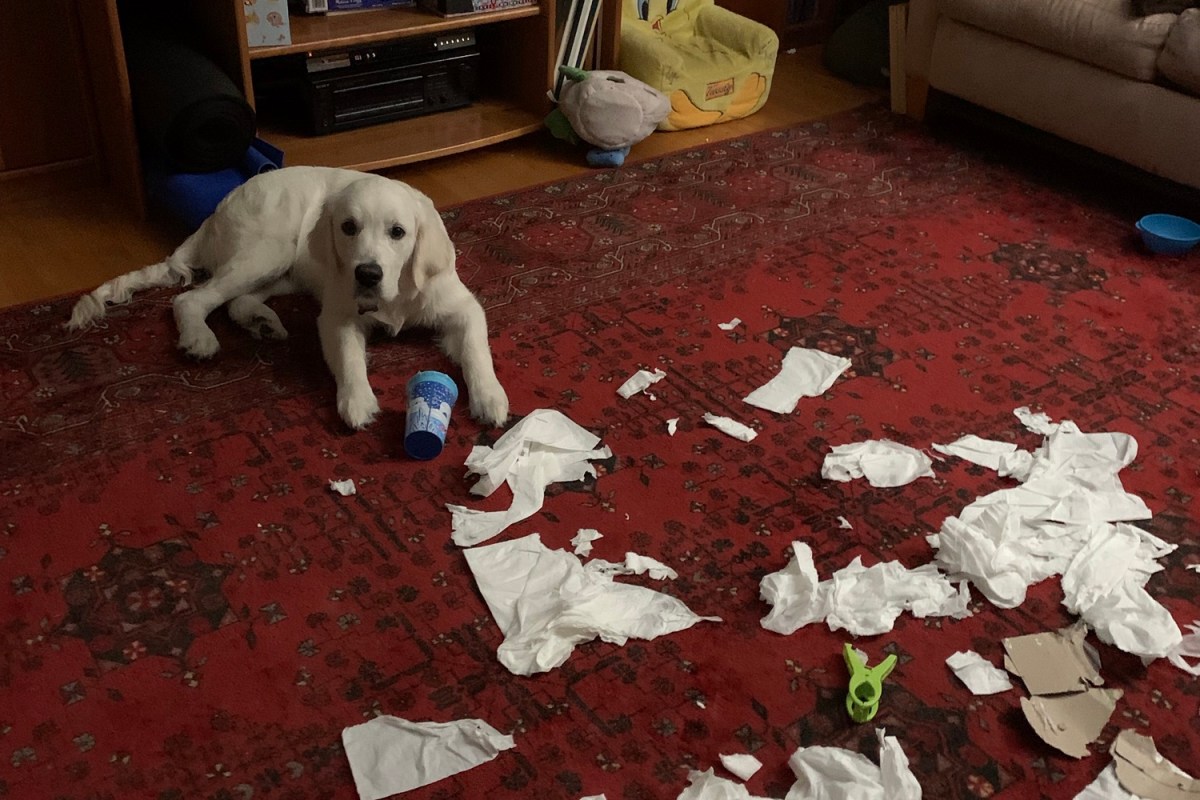
Cooper, the puppy, ate my holiday cards. Not all of them, thankfully. I managed to send quite a few out before he got into the box. But what really got me, is that he chewed some that I’d already written.

Sheesh! It’s hard enough to get it done in the midst of the holiday season. But then to have to redo some? It kind of derailed me. I’m still finishing up sending them out now.

But what’s more interesting to me than my ability, or lack thereof, to get the task done is HOW it happened that the puppy ate the Christmas cards.

When I go with the kids upstairs to do their bedtime routine, I was leaving Cooper in the family room/kitchen with the doors closed. Dealing with two young ones in that last hour when we are all so tired was all that I could handle. I thought that solution was to keep Cooper out of the mix.

One night after getting the kids to bed, I came back downstairs and Cooper had eaten the Kleenex box. I got out a new one and <doh> put it in the same place.

The next night, he ate the new Kleenex box. So I put the new new box up on the shelf and then gave him a chew to work on when we were upstairs. He ate the chew – and then the napkins in the napkin holder on the table.

Okay, Cooper likes paper. So I removed the napkins from the table. But then the next night he got the holiday cards.

Grrr. At this point I was nearing my wits end. Then a friend that came to stay with us offered, “Maybe it’s separation anxiety.”

I thought that was an interesting idea. So I tried giving Cooper his chew and left the doors open. Guess what? He’s stopped marauding the place. And he doesn’t even come upstairs to mess with our routine. Every once in a while he’ll come to visit, but he’s calm and unbothered.

If I had to count the number of times that I’ve had to learn the lesson to lean in to the problem instead of trying to shut it down or lock it away – well, it’d be a pretty high number. Funny how unintuitive it is to open up as a response to a problem instead of shut down. But it’s equally as amazing at what an effective solution it can be.

Now I just need to train Cooper to help me finish sending my holiday cards.

Emotional Literacy

Let us fill our hearts with our own compassion, toward ourselves and towards all living beings.” – Thich Nhat Hanh

This was originally published on 1/11/2023. Heads up – you may have already read this.


When I was 20 years old, I went on a trip with other college kids to spend five weeks in Ecuador. On the part of the trip where we spent two weeks living with an Indian tribe in the Amazon river basin, I got into a debate with another young woman in the expedition.

She was from Brown University and she seemed to navigate the world with an air of intellectual superiority. In this case, she had moved on from the disdain of my friends on the trip who were pursuing English degrees (“what exactly will that teach you?” she’d say), and was expressing pity for the tribe we lived with because their language had primarily words that were related to the life they lived, not the spectrum of life in and out of the jungle.

So I shot back with something I’d heard about a Noam Chomsky study showing that in cultures where their language only has words for light and dark (white or black) as related to color, they still have the ability to identify specific colors. I thought I was proving that we aren’t limited by our language.

Thirty years later I look back at what I remember of this particular conversation with a little bit of a shudder. All that I think I knew at age 20 and was willing to argue about….

Because I’ve found how I’ve been limited by language – not in any way counter to Noam Chomsky who I believe was saying that the ability to think about things not named was possible, but in the practice of actually doing it.

In my family growing up, we didn’t talk about negative emotions. Words like anxiety, depression, dread, loneliness, disconnection – we didn’t talk about any of that. In fact, the only “negative” emotion that I recall that was fair game was “stressed” because it came with an assumption of Protestant productivity.

Then I had kids and somewhere in the wonderful book Brain Rules for Baby by John Medina was the guidance to help kids name emotions as they experience big feelings. Because to name them is to help tame them. And then the book counseled that parents needed to model owning and naming their own emotions. Reading that, I thought, “No way I’m doing that.

Fortunately for me and my emotional literacy, there are books like Brené Brown’s Atlas of the Heart which maps out 87 different emotions and experiences. Because a few years into this parenting experience and I see how powerful naming emotions is for our human experience. And even though I’m late to the game in both recognizing and talking about these emotions, I’ve found so much goodness in being able to start to parse them now.

Anxiety

Any time I’d climb a big mountain, I used to write out a will. It was a bit silly given that my likelihood of dying on the mountains I was climbing was small but I recognize this now as a way I was trying to curb my anxiety. Now I feel it way more frequently – every time I take my two non-proficient swimmers to a swimming pool, travel any distance far from my kids, or just those days or weeks when I can’t put my finger on the source.

Anxiety and excitement feel the same, but how we interpret and label them can determine how we experience them.

Even though excitement is described as an energized state of enthusiasm leading up to or during an enjoyable activity, it doesn’t always feel great. We can get the same “coming out of our skin” feeling that we experience when we’re feeling anxious. Similar sensations are labeled “anxiety” when we perceive them negatively and “excitement” when we perceive them positively.”

Brené Brown in Atlas of the Heart

I found this information so helpful – because I think I often am both anxious and excited. I feel it in situations that deviate from the norm and/or I don’t have control of, and I flip between the positive and negative interpretations repeatedly.

Sadness

I came into this world on the light-hearted side and I’ve worked hard to cultivate gratitude. But my lack of language around sadness has led me to grind out life a good deal of the time, all cloaked in a positive spin.  When I am not able to spend time alone, get outdoors, experience loss and doubt, and feel the weight of the world on my shoulders, I wither. And still I just push on through. No wonder my dentist made me a night-guard for my teeth years ago because of all the grinding I do.

“I’m not going to tell you that sadness is wonderful and we need it. I’m going to say that sadness is important and we need it. Feeling sad is a normal response to loss or defeat, or even the perception of loss or defeat. To be human is to know sadness. Owning our sadness is courageous and a necessary step to finding our way back to ourselves and each other.”

Brené Brown in Atlas of the Heart

When I resist sadness, I resist feeling. ANYTHING. More than that, when I communicate only the positive of my experience, it’s far less relatable.

Foreboding Joy

I can’t tell you how relieved I was to learn what foreboding joy was. I thought the feeling I experience when watching my kids sleep and then flip to “what if I lose them” was a premonition. Until I learned that there’s something called foreboding joy.

“When we lose our tolerance for vulnerability, joy becomes foreboding. No emotion is more frightening than joy, because we believe if we allow ourselves to feel joy, we are inviting disaster. We start dress-rehearsing tragedy in the best moments of our lives in order to stop vulnerability from beating us to the punch. We are terrified of being blindsided by pain, so we practice tragedy and trauma. But there’s a huge cost.

When we push away joy, we squander the goodness that we need to build resilience, strength, and courage.”

Brené Brown in Atlas of the Heart

Oh no – something else I need to learn to do better: embrace vulnerability.

Back in the jungles of Ecuador when I was 20 years-old, I was clearly experiencing some defensiveness when engaged in my debate. Another emotion defined in the Atlas of the Heart. Thank goodness I’ve learned that I have so much to learn about this thing called life.


I’ve posted on the Wise & Shine blog today: The Internet is Sometimes Desperate

(featured photo from Pexels)

The Mirror of Love

Spend time with people who are good for your mental health.” – unknown

This week I was up on a ladder trying to hang some extra Christmas lights when eight-year-old Miss O walked in the room and said with a laugh, “I don’t like this lip gloss. It’s all over my teeth. Want to come down and see?”

I launched into a laundry list of things on my to-do list that precluding me pausing to see lip gloss on teeth. She laughed again and repeated something I told her the other day when she was frustrated with her Xmas gift making. “You’re a Leon. We expect to get things done. We experience stress when that doesn’t happen as quickly as we’d like.

Then she brought me a hand strengthener and a stress ball to take my frustrations out on.

Isn’t it funny that we need other people to repeat our own observations back to us? My on-going battle is that my ideas of what I can accomplish, and the time I have available, are forever mismatched. I’m aware of it and yet I’m still like a fly against the window, bumping against it over and over again. Every once in a while, I’ll have a miraculous day where I feel like I accomplished what I set out to do.

But mostly, I just spend a lot of time practicing letting go of the list to be present. My kids help me do that. A lot.

Fatherly Wisdom

“I cannot do all the good that the world needs, but the world needs all the good that I can do.” – Jana Stanfield

I met a friend when I was in my 20’s who summed up his dad’s advice to him:

  1. Always buy the best tires you can afford
  2. Never buy a cheap garden hose
  3. Buy tools with a lifetime guarantee

I marveled upon hearing that about how straightforward that fatherly advice was. Because my dad’s advice was a lot more ephemeral – not surprising given his profession as a Presbyterian pastor.

Jane Fritz of the Robby Robin’s blog recently asked what my dad would say about answering the big questions and challenges of our time: war, climate change, inequality. If you haven’t read her incredible post, Profound questions, seeking our attention and deserving action that builds on Rose’s wonderful and thought-provoking post Meaningful Intelligent Conversations, please do.

Our exchange reminded me of three pieces of advice from my dad, Dick Leon:

  1. Do the next right thing: This is a continual instruction, not a one time thing. Do the right things to make this planet a better place to live in whatever way that you can and according to your passions. Stand up for those that have been treated unfairly. Be kind. Take action on the social issues that are meaningful. Do all that you can to work, support, and encourage a better planet.

    The Dick Leon approach was not to play it safe either. Over the years he worked for Civil Rights, on behalf of Russian citizens during the Cold War, and at the end of his life he was working on land rights for peaceful Palestinian Christians in the West Bank. Most of those issues got him in trouble with some factions of his congregations and his life.
  2. Be cheerful about it: My dad often said that doing the right thing often means doing the hard thing. He recognized that it wasn’t/isn’t easy. So his instruction to be cheerful was two-fold. First, do what you can, and be happy about it. Because if you’re gritting your teeth every step of the way, it’s not sustainable. 

    The second part is that when you are in the groove of doing what you can cheerfully, you attract other people to the cause. Even if they don’t agree, others are more likely to engage in conversation with someone who appears not to already be irritated. Hence how my dad managed controversial topics within a church congregation of varying viewpoints.

    Cheerfulness is not synonymous with toxic positivity. Some of the issues my dad advocated didn’t work out. Others took a long time. My dad’s definition of cheerfulness was what one can do with a happy heart.
  3. When you’ve done all that you can, give up the rest to God: Or a higher power or whatever thing bigger than yourself that you believe in. This was my dad’s way of not worrying about the stuff that was outside of his control. Less energy spent on anxiety equals more energy for doing the next right thing.

I envied my friend from my 20’s for the simplicity of a list of dad advice. But now that I’m middle-aged, appreciate my father’s wisdom more. I believe his list is the reason that I’m still paraphrasing him almost a decade after he died. I’m not sure my dad had any awareness of his impact beyond his lifetime. But I think his advice guaranteed that he did have impact because it was the way he created legacy with his actions every day.

It’s harder to check off things from my dad’s list. But when I follow it, I find great comfort. And cheerfulness, of course!

(featured photo is mine: Dick Leon, on a Dia de los Muertos ofrenda)

For another great list, please listen to Dr. Gerald Stein on the Sharing the Heart of the Matter podcast talk about Being Your Own Best Friend. Dr. Stein comes through with such wisdom and warmth as he provides some great tips for living our best lives.

Life Is An Echo

Life is an echo. What you send out — comes back.” – unknown

A couple of weeks ago, my son, four-year-old Mr D, got a new boxing toy, a small punching bag anchored on a vertical stick. We were home alone together when we assembled it and then went a couple of rounds with it.

We took a break in the yard to cool off and play with our dog, Cooper. As we were throwing the ball, I was coaching Mr. D on what he’d say when his eight-year-old sister came home and asked to play with his toy.

What are you going to say when Miss O asks to box with your toy?” I started.

Well, ummm, uhhh.” Mr. D stalled

Say, ‘yes.’” I whispered.

And we went a couple of rounds practicing that which was every bit as hard as actually boxing.

Then Mr. D asked where his shovel was. As I looked in one hidey-hole and then another, he asked, “Want to go find some worms with me?”

Uhhh,” I stalled.

Say, ‘yes.’” he whispered.

And I did.

If we ever need a reminder that what we put out in the world comes back to us, just spend time with children.

(featured photo is Mr. D with his boxing toy)