“Give light and people will find the way.” – Ella Baker
The other day, my six-year-old son, Mr. D, announced that he wasn’t going back to finish out the last 12 days of first grade. After some delicate probing, I discovered he was worried about a math test.
It’s hard to know what to say to help in a situation like that, isn’t it? And what does real support actually look like—especially when someone is struggling, failing, or figuring things out?
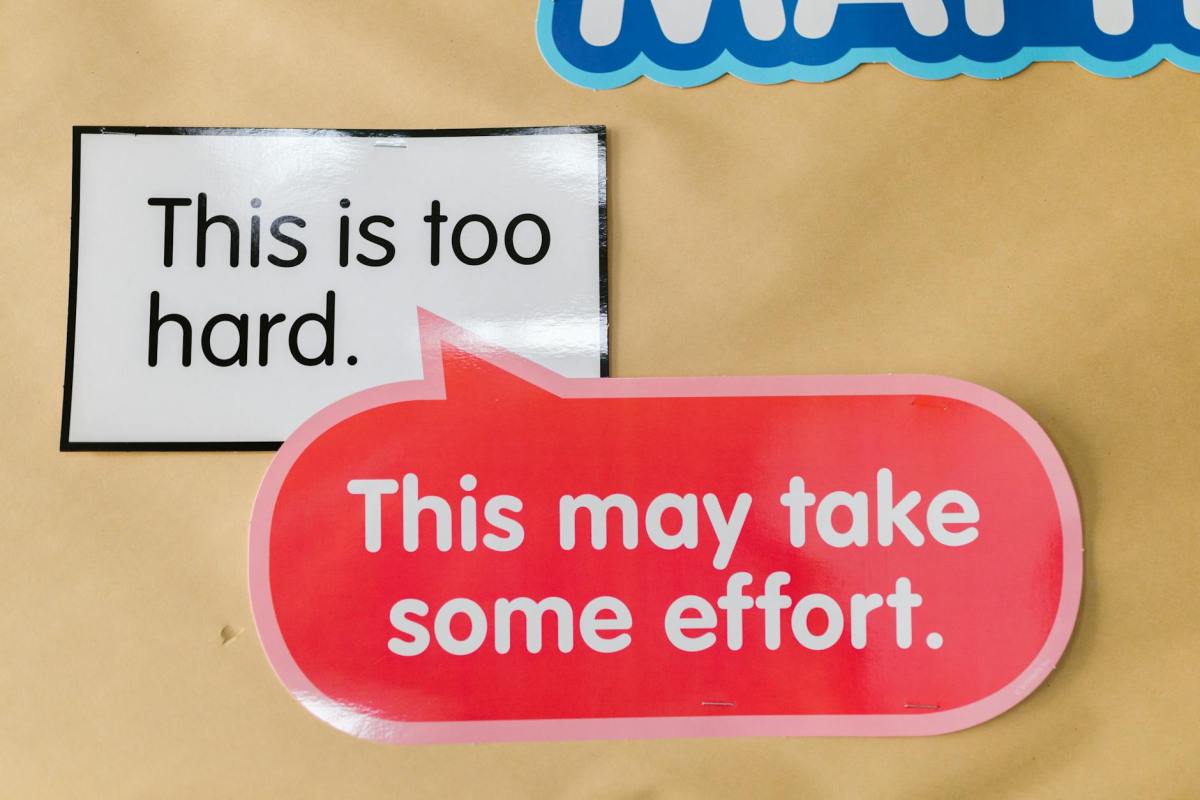
So in this episode of The Life of Try, I explore how to support others without adding pressure, and why focusing on effort instead of outcome can make all the difference.
Whether you’re a parent, coach, friend, or teammate, it’s easy to unintentionally turn encouragement into expectations. But research—and stories from figures like basketball coach John Wooden and psychologist Carol Dweck—show that when we shift our focus to effort, persistence, and growth, we help people stay in the process longer and build real resilience.
This episode dives into:
- Why it’s often harder to watch someone try than to try ourselves
- How subtle signals can create pressure without us realizing it
- The difference between encouragement and expectation
- How to support kids, friends, and colleagues in a way that builds confidence and persistence
- Practical ways to reinforce effort, not just results
And fortunately this research helped provide me a roadmap to help with Mr. D’s math test. I reminded him that he’d already done the work and practice and so the test was just like a baseball game. All he had to do was do his best.
If you’ve ever wondered how to truly support someone you care about—especially when things aren’t going well—this episode offers a powerful reframe. Because sometimes the best support isn’t helping someone succeed… …it’s helping them keep going.
Here are some other ways you can listen and watch this episode:
- The podcast player embedded below
- Click this link to watch in a browser: Encouraging Effort, Not Outcome: The Secret to Helping People Keep Trying
- Subscribe to The Life of Try on Spotify, Amazon Music, or Apple Podcasts
- Subscribing to the YouTube channel: https://www.youtube.com/@thelifeoftry

Growth Takes Energy| How Rest Helps Habits Stick – The Life of Try: Personal growth, one try at a time.
Links for this episode:
- Encouraging Effort, Not Outcome: The Secret to Helping People Keep Trying transcript
- John Wooden – Wikipedia (Overview & Career)
- John Wooden – UCLA Anderson (Official Bio)
- About Coach John Wooden (Official Site)
- The Pyramid of Success – History
- The Power of Believing That You Can Improve (TED Talk – Carol Dweck)
- Carol Dweck – Stanford Profile & Research
Other Episodes you Might Enjoy:
Letting Go Of Outcomes: The Mindset That Keeps You Moving
48: How to Get Unstuck: Michael Yang on Saying Yes, Resilience and Coming Alive
How to Reclaim Fun in Adult Life | Mike Rucker, PhD, on Joy, Burnout and the Fun Habit
(featured photo from Pexels)
 Surprised By Joy
you used the perfect metaphor to inspire mr. d. all of a sudden he knew he could do it and try his best in the big game. he’s got this.
LikeLiked by 2 people
Thank you, Beth. He got past it and went to school so I consider that a win. 🙂
LikeLiked by 1 person
A worthy lesson, Wynne. We expect or hope for so much in a country that has set the standard for being the best.
A different sort of approach to outcome was offered to me by a Bulgarian patient. He said to me, “Those of you in this country live to work. In my country, we work to live.”
With your guidance, Mr. D will be fine.
LikeLiked by 1 person
Oh, such a good point, Dr. Stein! Right! Thanks for the great comment!
LikeLiked by 1 person
All you can do is give it your best Wynne.
TRYING is and always will be the most important thing.
Mr D will be fine.
He has a wonderful mom 🤗
LikeLiked by 1 person
Thank you, Maggie!! I appreciate you encouraging me as I encourage him!! So sweet!
LikeLiked by 1 person
Wynne 💖
LikeLike
Excellent, Wynne. You’re a good mom!
LikeLiked by 1 person
Thanks, Dale!
LikeLiked by 1 person
This is good practice for when your children pass the age of 18 because their early adult years, I’ve found, are the most difficult years of parenting. They struggle as they enter adulthood and make many mistakes, taste failure, but are completely beyond your protection and control. You can give guidance when they ask, but boys at least, aren’t prone to asking, too much pride. What you’re left with is gentle, supportive guidance. So keep practicing, sweetheart! Being a parent doesn’t end, it shifts, and your kids will always need you even if that need is only that you be there. And I agree with Dale, you are a good mom, a thoughtful mom.
LikeLiked by 2 people
Ah, this is such a wise perspective!! Thank you – I really appreciate the encouragement and I’ll keep practicing!!
LikeLiked by 1 person
💕
LikeLike
Really helpful discussion. Thanks, Wynne. There’s something there about teaching children and continuing to learn ourselves to live with self, accept self, be OK with self, whatever the outcome; setting high standards and expectations, but accepting that we don’t always reach them.
LikeLiked by 1 person
You said it so well, Malcolm. Learn to live with ourselves and be OK whatever the outcome. Right!
LikeLiked by 1 person
Learning how to support others without adding pressure is such a valuable skill to learn. Thanks for sharing this, Wynne!
LikeLiked by 1 person
A valuable skill – exactly, Erin! Thanks, my friend!
LikeLiked by 1 person
This is really good. I liked the stories about Coach Wooden. I need to learn the difference between encouragement and expectation for sure! We can create so many problems for others if we are performance focused.
LikeLiked by 1 person
I like the stories about Coach Wooden as well. Isn’t that fun that he started with putting on socks?? Thank you so much for listening! I love hearing what stands out for you!
LikeLiked by 1 person
Yes, the socks was a great way to begin their refocus training!
LikeLike
You are such a great encourager Wynne! These were good examples of supporting someone as they try, in a way that builds confidence and persistence. I have Carol Dweck’s book “Mindset”, and it has some good tips. It can be so discouraging for us to try something new we’re interested in doing, if we struggle repeatedly or compare ourselves to others who have skills far beyond our own. I think of when I got my motorcycle license as a ‘middle-aged’ woman, in a class filled with young people who were in MotoCross Racing and had wild riding skills (popping wheelies, etc…). I considered backing out and trying again later, with a group more my own age and skill level. I did fine and passed the tests easily, but it was intimidating to watch the group with skills beyond my own.
LikeLiked by 1 person
What a great story, Rose. I would have been intimated too! But I’m not surprised that you did fine. Good for you!
LikeLiked by 1 person
Oh….the difference between encouragement and expectation! Looking forward to listening to this episode, Wynne. 😊❤️😊
LikeLiked by 1 person
It’s a fine line, isn’t it? Thanks, dear Vicki!
LikeLiked by 1 person
Yes! Xo! 😉❤️😉
LikeLike
This is so good! I will definitely give this a listen. I never thought about the difference between encouragement and expectation, but the distinction can make a difference between being truly helpful and adding additional anxiety.
LikeLiked by 1 person
Well said, Deborah! A distinction that makes a big difference. Yes! Thanks for tuning in!
LikeLike
“I reminded him that he’d already done the work and practice and so the test was just like a baseball game. All he had to do was do his best.”
There is so much anxiety now with young people, mostly thanks to social media. Even when kids aren’t consuming much if any, they still interact with kids who are, and the performance anxiety gets shared. Almost like it’s a necessary part of life, and they haven’t had a lot of experience separating themselves from the social expectations.
Your encouragement is perfect, and hopefully he will share it with other socially anxious kids!
LikeLiked by 1 person
What a good point about social anxiety. It does spread, doesn’t it? Well, just one step at a time like you often show us! Thanks, Tamara!
LikeLike
Exactly! Do what we can in a given moment.
LikeLike
You’re such a great mom! And wonderful advice, ” I reminded him that he’d already done the work and practice and so the test was just like a baseball game. All he had to do was do his best.”
LikeLiked by 1 person
Oh, thank you for this tender comment, Mary! I appreciate it!
LikeLiked by 1 person
“Practical ways to reinforce effort, not just results.” Oh, I could have used this podcast about fifteen years ago Wynne. Ha, ha, I still cringe about a brouhaha that my daughter and I got into over one of her report cards. She heard me say that I wanted “straight A’s.” I heard her complaining about having to buckle down and work. Talk about two people not listening to the other. Ha, ha. Love this topic.
LikeLiked by 1 person
Oh, the first child. Well, that’s a hard one, isn’t it? You’ve raised three remarkable kids so I’m sure you got it right! Thanks, Brian!
LikeLiked by 1 person
Praising effort instead of results. Yay! I think of this quite often when the Olympics are taking place. There is such an expectation of winning that sometimes athletes feel like failures unless they win the gold medal. Instead, the thinking should be, “How many people can say I’m one of the best at this activity in the world? Did you know that John Wooden wrote a children’s book? https://www.amazon.com/Inch-Miles-John-R-Wooden/dp/0756914108. It was such a great idea to use the baseball analogy to help Mr. D understand that his effort on his test was more important than the outcome.
LikeLiked by 1 person
I didn’t know he wrote a kid’s book. How interesting!! Thanks for the pointer, Pete. I thought of you when I was trying to talk with Mr. D because I knew that you’d know what to say! Thanks for the great comment!
LikeLiked by 1 person
Oh, my heart went out to Mr. D who was anxious enough about a test that he would rather not finish out the last 12 days of school. I know he’s not alone out there, either. I love this week’s “try” topic of helping OTHER people try. As a parent, sure, I think many of us guided/guide with a thread of our own expectations sewn in. But if a parent can successfully communicate that it’s not the end result as much as it is about getting the best out of yourself… what an excellent message. I’ll be passing this on, Wynne.
LikeLiked by 2 people
“a thread of our own expectations sewn in” – what a beautiful metaphor, Melanie!! It’s so hard, isn’t it? We may not even intend it but in wanting the best for others, it just happens! Thanks for listening and the great comment!
LikeLiked by 1 person
Great analogy with baseball- I’m glad D decided to finish out the year 🙂. Looking forward to another good episode!
LikeLiked by 1 person
I’m laughing, Todd. Can you imagine skipping out on the last couple of weeks of school? Those are the fun ones!! 🙂
LikeLiked by 1 person
Definitely! 🙂
LikeLike
I’ve discovered, Wynne, you can do anything you want, except sketch: I’v always liked to but it was always half-hearted and the truth was I had no aptitude: you gotta have the talent
LikeLiked by 1 person
Ah, the half-hearted thing rarely works well, doesn’t it? Great point, John!
LikeLiked by 1 person
Excellent quote by Ella Baker. Great job with the analogy, Mr. D probably connected with it right away. Well, I went through a few of those, and what worked in our case was explaining that grades 1 through 8 are really practice, getting students into the habit of studying, test taking, and learning basic skills that will be needed for high school. High school is really where grades, study habits, and the overall school environment count, and will set the conditions for either college or entering the workforce. I guess that removed a lot of pressure early on, and he is doing well so far. One more year to go. 🤞I’m going over to the podcast now to listen to this episode. I hope you have a great weekend, my friend.
LikeLiked by 2 people
Oh, what a great way to think of the early education, Edward. I can’t believe how close you are to that end of high school. Bittersweet, I imagine! Thanks for tuning in, my friend!
LikeLiked by 1 person
You’re so welcome. Yes, bittersweet, but he is planning to attend a local college, so we will have him for a few more years.
LikeLike
I love this message – as a parent, as a coworker and as a fellow human being. Love the example of John Wooden and his team and focusing on the trying part rather than outcome. It’s a great metaphor for baseball too and I can see how it supports Mr D at baseball or a math test. 🙏 I think this guidance is also what sets good teachers apart from those that are test and exam oriented.
LikeLike
We can all learn from your lesson – Just do your best – trying is winning – thank you!
LikeLiked by 1 person