It’s in the Comments

To listen with an open heart and ask questions to better help us understand the other person is a spiritual exercise, in the truest sense of the word.” – Harriet Lerner

Yesterday I re-blogged a post about sliding glass door moments, the moments where you see the life you could have on the other side and choose whether to open the door and cross that threshold. Deb commented on it and mentioned that solid door moments, those times when we have no real sense of what’s ahead yet we know we need something in our life to change, might take even more courage to pass through.

Wow, did that make me think. It is just one example of the very many where a comment has expanded the envelope of my thinking. Which is the wonderful effect of comments. They often drive me to a deeper understanding of myself or the topic, sometimes both.

But when I first started blogging, I found commenting hard. Did I know the author well enough that a typed comment would be relevant? Was I interpreting the material correctly and would I be on point?

Maybe first time comments are like tiny solid doors – we often have no real idea who’s on the other side and whether our typed message which is often a bid for friendship will be accepted or even acknowledged. But you have to open it to find out whether or not the person on the other side wants to sit around your coffee table, to use my analogy of blogging from last week, or just speak from the podium.

What do you think about comments? How about the experience of commenting?

Holding Space

True friends are those who lift you up when no one else has noticed you’ve fallen.” – unknown

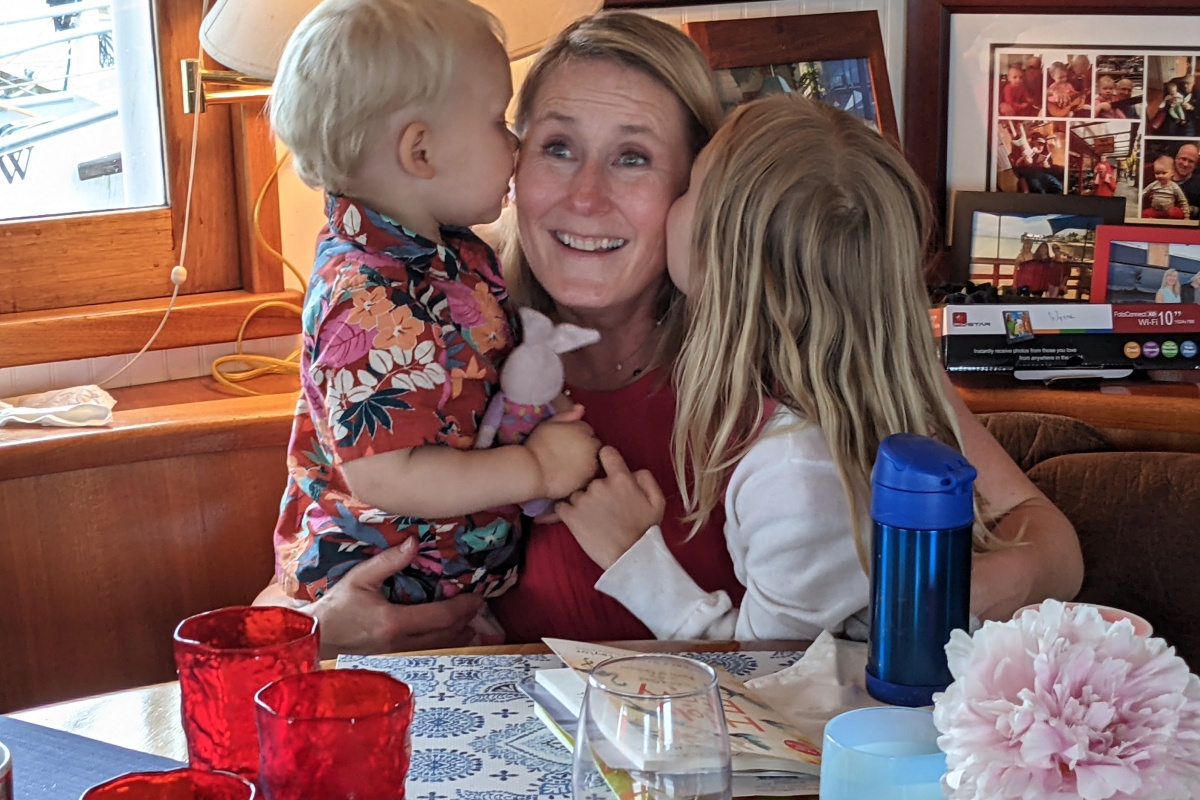
The other night I was reading books with my two-year-old and he whispered in my ear, “You are the best girl.” It was such a sweet and tender moment that gave me the shiver of recognition of what happens when we hold space for one another.

In the Disney Cars movie, Lightning McQueen starts out as the hot shot rookie that only cares about himself until he discovers the feeling of community and values in Radiator Springs and then finally emerges as the worthwhile competitor that knows that there is more to life than winning.

It’s actually in the third installment, Cars 3, that they use the line that Doc Hudson, Lightning’s gruff mentor (voiced by Paul Newman), “Saw something in you that you couldn’t see in yourself.” It’s a wonderful statement about hope and potential.

When we hold space for others, we store the image of their highest, purest selves so that when they are in the messy middle of anything, we can reflect it back to them. This reminds me of friend who became disoriented and demoralized while trying to reach a goal and we sat on a bench overlooking Puget Sound and unraveled why it was she started.

When we hold space for others, we capture the essence of who they are they are in the squishy, vulnerable core underneath any job or external validation so that if they get lost in work or a relationship, we can huddle with them and tell them we still see them.

This brings to me the moment when my friend Doug called to ask if I would climb Mt. Adams with him and his son this summer. He knows I am knee deep in raising these two kids, have been distracted by all that entails and I’ve not been a very present friend, but his offer stirred me deep within and I was so grateful he remembered me.

When we hold space for others as they age, we become the safety line back to the boat of their life, even when they don’t remember themselves. When my great-aunt Wilma was suffering from Alzheimers and nearing the end of her life, her son arrived on his weekly visit to talk with her and bring her favorite treats. She sweetly said to him, “You are so nice. You remind me so much of my beloved son Gary.”

When my son uttered, “You are the best girl.” he was just parroting back what he’s heard said. But he also reminded me that there’s a purity in the simple way he sees me that has everything to do with our relationship and nothing to do with what I accomplish. It made me think that relationships, parenting and families, when they are functional, can be repositories for our essential selves. We hold space for each other for the moments we need to come “home” and recharge.

What does the phrase holding space mean to you? Do you have a good holding space story?

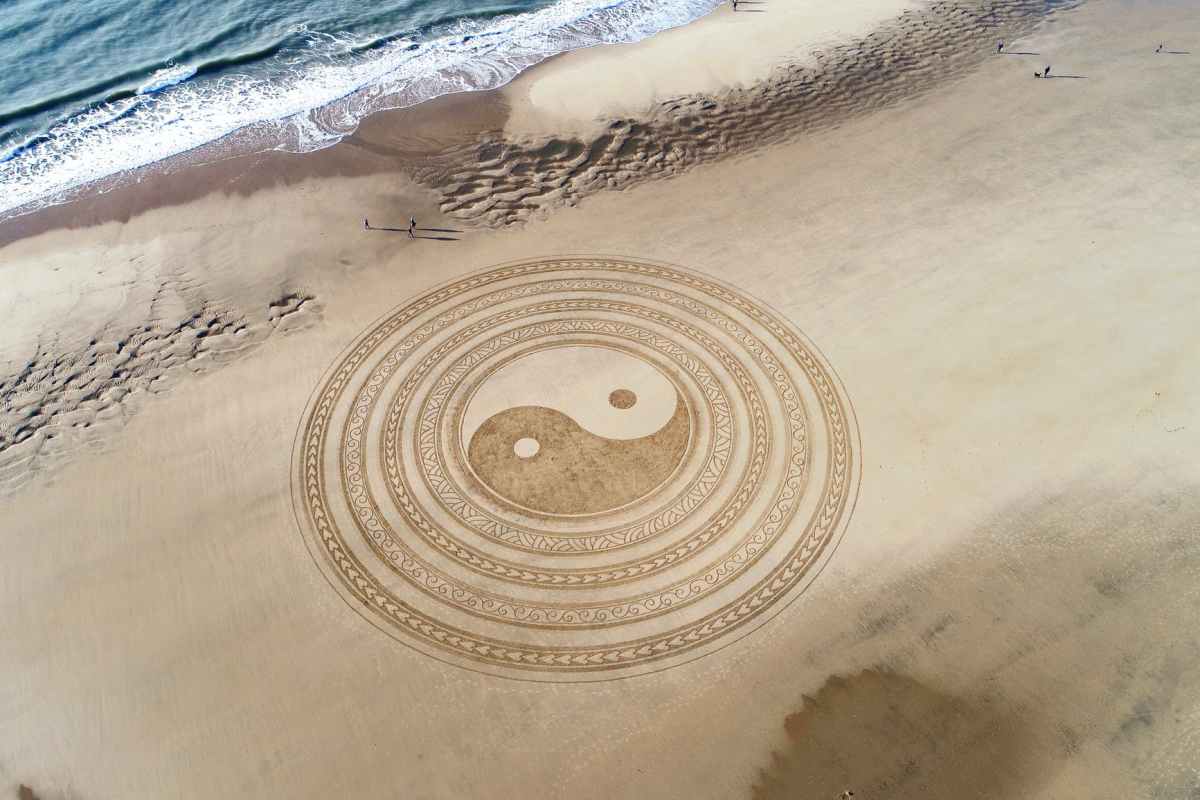
Ying and Yang

We spend the first year of a child’s life teaching it to walk and talk and the rest of its life to shut up and sit down. There’s something wrong here.” – Neil deGrasse Tyson

The other day I was driving in the car with my kids when my 2-year-old son, who’s favorite show these days is the British cartoon Peppa Pig, started doing a great imitation of Daddy Pig snoring.

My 6-year-old daughter laughed and then asked, “When we get a daddy will he always be falling asleep, snoring and messing up the map reading like Daddy Pig?”

Which made me want to snort with laughter like Mommy Pig does.

It seems like toxic masculinity is a term we bandy about these days. It reminds me of when I was a kid in the 70’s and Bobby Riggs and Billie-Jean King played their Battle of the Sexes and male chauvinism was such a hot topic.

But years ago I read something from University of Toronto psychology professor Jordan Peterson that made me think that this topic is deeply seeded in humans. In his book 12 Rules for Life, he talked about selection of male partners.

Woman are choosy maters (unlike female chimps, their closest animal counterparts). Most men do not meet female human standards. It is for this reason that women on dating sites rate 85 percent of men as below average in attractiveness. It is for this reason that we all have twice as many female ancestors as male (imagine that all the women who have ever lived have averaged one child. Now imagine that half the men who ever lived have fathered two children, if they had any, while the other half fathered none).

I thought that was a stunning statistic of the big picture view that only 50% of men, averaged over all time, have fathered children. But then it’s the next part of the passage that gave a hint about toxic masculinity:

It is Woman as Nature who looks at half of all men and says, “No!” For the men, that’s a direct encounter with chaos, and it occurs every time they are turned down for a date. Human female choosiness is also why we are very different from the common ancestor we shared with our chimpanzee cousins, while the latter are very much the same. Women’s proclivity to say no, more than any other force, has shaped our evolution into the creative, industrious, upright, large-brained (competitive, aggressive, domineering) creatures that we are.

I know Dr. Peterson is a controversial character. But taking this argument at face value, but it doesn’t seem like too much of a leap to believe that women have sought out men who are certain, successful, strong and seemingly invulnerable. And so perhaps women can help to change that nature too, or at least I’d like to think we can help:

By raising sons who are free to grapple with their emotions.

By being a safe place for our brothers and friends to talk about the pressures they feel.

By helping out with map reading.

By letting our daughters know that it’s great to choose men who let their non-aggressive flags fly.

By listening and supporting everyone who says this is hard.

Maybe when I have a partner in life again, he’ll fall asleep and snore. But like Daddy Pig, he’ll be able to laugh about it because he knows we don’t expect him to be perfect, just true.

What do you think? Can women help with toxic masculinity? Is it too much of a buzz word to have much meaning? Is it okay to quote someone like Dr. Peterson even if I don’t agree with how he’s been politicized?

(featured photo from Pexels)
We Carry Them With Us

“At some point, you have to realize that some people can stay in your heart but not in your life.” – Sandi Lynn

When I woke my daughter up last Friday for the last day of school, she had a frown. I thought perhaps it was just the fog of sleepiness still lifting but she told me otherwise.

I was happy that it was the last week of school but I’m not happy that it is the last day. It’s not like you can ever go back.

She didn’t want to leave her beloved 1st grade teacher. I thought the buildup and anticipation of summer would carry the day so I was caught off-guard, something fairly common for me as a parent.

The grief of the school year ending reminded me of a Ten Percent Happier podcast about the science of loss and grieving with Mary-Frances O’Connor, Associate Professor of Clinical Psychology at the University of Arizona. She talked about what happens when we bond with someone – it actually changes the brain so that we encode that person is special. In the brain imaging studies O’Connor recounted, yearning for someone lit up the part of the brain that is the reward center of the brain, the nucleus accumbens.

Her conclusion was that even when our memories tell us that something has changed – someone is gone, an experience has ended – even when we know all that, the part of our brain that was transformed when we bonded still lights up. In O’Connor’s example, when she goes to pick an Easter dress, she’s still impacted by her mother. She may pick the dress her mother would like or the one that her mother would hate, but either way her mother is still present.

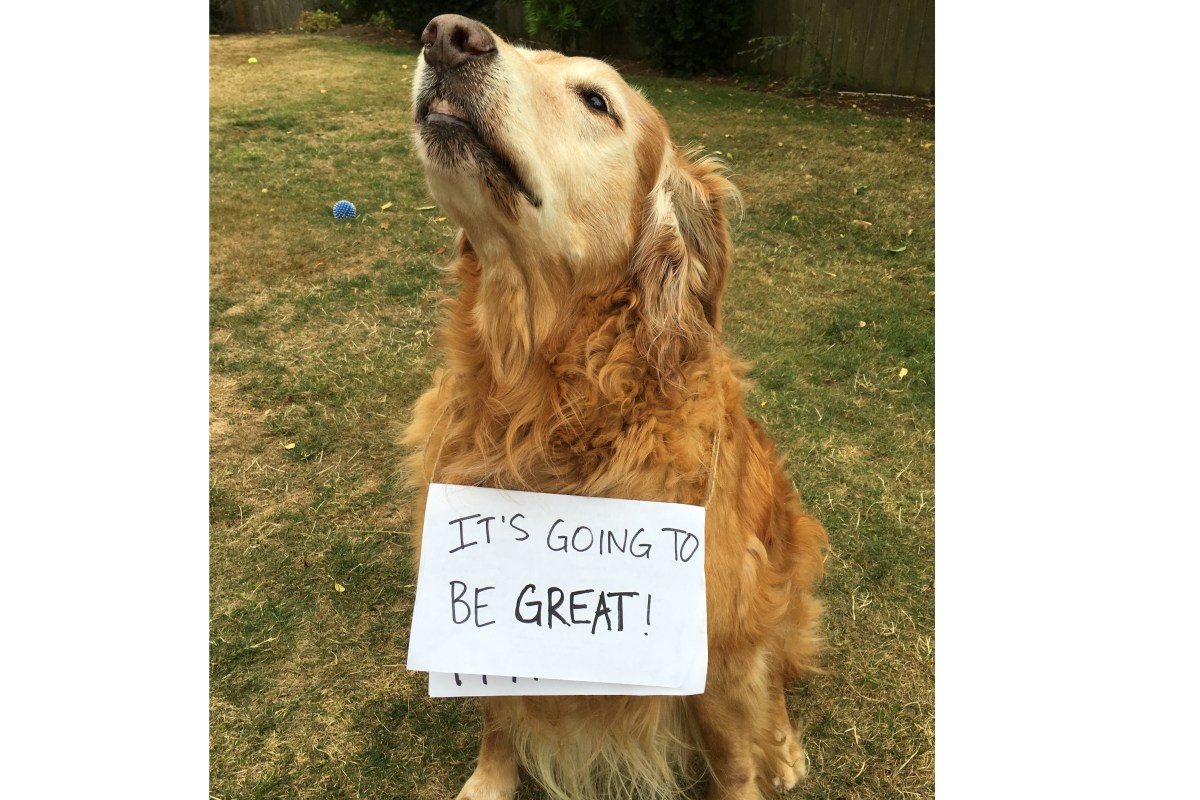
This explanation resonated with me. It explains that warmth I get when I think of my dad putting his arm around me and saying “It’s going to be great, Kid!” Or the little skip in my step I experience when I hike a trail my beloved dog Biscuit liked and I think of how he’d run back and forth.

I’ve often said that the longer my dad is gone, the more that I feel him inside me as if I have to act out the parts that I used to rely on him playing. O’Connor’s research says that in a way, that is true because he lives on inside my brain. I’d say that same about my dog which is true but also I’ve always had a personality much like a golden retriever.

Knowing that I’ll always exist in my kid’s heads gives me a little perspective on what that voice should say. Is the soundtrack that wants them to pick up after themselves or the one that says that they are lovable, kind and capable of anything? I’m aiming for a little bit of the former but mostly the latter.

As we moved through this past weekend, my daughter kept asking, “what would I be doing at school now?” She was processing the experience of being done by remembering all her school activities and quoting her teacher to me. Knowing a little about the science of how we record things didn’t help me know what to say, but it did give me a lot of patience for her yearning.  

By the end of the weekend, my daughter said, “I’m so happy for the Kindergartners that will have my teacher next year.” To get to our new experience, we have to cross the threshold of leaving the old. But the bonds we formed in the old experience go with us.

Sorry Your Head Hurts, Do You Want Something to Eat?

I am becoming water; I let everything rinse its grief in me and reflect as much light as I can.” – Mark Nepo

Last night we were having dinner on my brother’s World War II era tugboat. He has lovingly renovated it over more than 20 years so that it’s very comfortable for him and my sister-in-law to live on, but it still has a lot of steel edges to bump into. Which is what happened – my 2-year-old son was looking out a port hole, stood up quickly and bonked his head. My sister-in-law was standing there with me, saw him do it and as I picked him up, showered him with sympathy.

But 30 seconds later (maybe longer but not much), my sister-in-law said to my son, “What’s the matter, Buddy? Are you hungry?”

It struck me as a common thing we do as humans. It’s hard to witness someone else’s pain. So we express sympathy and then we are ready to move on. Three things strike me about this.

First, we often move to trying to solve the problem. I find this impulse, especially as a parent, to be so alluring.

Second, if things last longer than we expect, we try to conflate the pain with something else as my sister-in-law did. Is it not surprising that we grow up confused about what our feelings are if the grown-ups around us think that what is wrong is that we are hungry when really our head hurts?

Third, we compound the original pain with our discomfort at sitting with someone in pain. So that they often are moved to pretend the pain has stopped so that they don’t have to contend with both their own pain and the pain of the people who are witnessing it.

It’s hard but sometimes the best thing to do when someone is in pain, is just sit with them. As a mom, I want to reach for the ice pack, the bandage or the song but I’m working on just letting the tears fall onto my arms as I hold them. We have to clean our wounds before we bandage them and, in a way, letting the injured party cry for as long as necessary is the best first step.

Still Waters

God leads me to still waters that restore my spirit.” – Psalm 23

Today is my birthday. When my 6-year-old daughter realized that earlier this week, she said “Great, can you wake us up early on your birthday so we can make you a surprise?”

Wait a minute…this is a trick. So sweet of her but that morning time is my sacred time. Waking my kids up early is the opposite of a birthday present.

I’ve often thought that the transition between my quiet morning time when I do yoga, meditate, read and write to the time when I get the kids up and ready for school was a hard transition because I was selfish and wanted more quiet time. But something I read this week sparked the thought that it’s really something deeper.

In those quiet morning moments, I find my own stillness. I breathe into the space beyond myself and feel that unity with the Universe. And in that place, the feelings settle, the rush quiets down and it feels like I see beyond all of our physical boundaries if just for a moment.

And I feel that love for my kids that came the moment they became real for me. It’s bigger than a reaction to something they’ve done or the way we express ourselves. It’s that pure connection between the core of them and the core of me, not complicated by any movement. It’s that overwhelming feeling that I get when I creep in and watch them sleep. They are quiet and I’m quiet.

When I’m still, it feels like I’m standing in one of the clear lakes in Northern Idaho we used to visit in my childhood on a hot day without wind. I can see all the way to my feet and beyond.

Then it’s time to wake them up – and any movement stirs the waters. I reach for them and stir up the waters between us. It’s time to accomplish things, meet a timeline and respond to any worries. It’s like going from my peaceful standing in the lake to a full-on water fight. I have trouble traversing that threshold because I miss the quiet view of my little loves.

It’s not just these relationships either. When I’m quiet and peaceful, all my relationships seem clearer and easier to understand than when we are in front of each other talking and stirring up all the things that come with interplay. It’s harder to feel the full appreciation for the depth of each relationship in the busier moments, I just have to hold the quiet snapshot in my heart.

My friend Betsy, who is a more experienced parent than I am, suggested what to do about my birthday. Get them up just a couple of minutes early – so I get my morning quiet time and then also get to feel their love in full audio as well.

Simple and Direct

The problem of distinguishing what we are and what we are not responsible for in this life is one of the greatest problems of human existence.” – Dr. Scott Peck

We were at a community swimming pool the other day when we walked by a grown-up forcefully saying to a boy who looked about 12 years-old, “Stop talking. All I hear from you is blaming others, saying how they made you do what you do instead of taking responsibility. Stop talking.”

It was easy to have great sympathy for both of them. The grown-up who also had 3 other children younger than the boy with her and the boy who looked stunned to have a grown-up yelling in his face.

Thinking about it, it reminds me of the quote for this post, a great line from psychiatrist and author, Dr. Scott Peck, “The problem of distinguishing what we are and what we are not responsible for in this life is one of the greatest problems of human existence.

We all personalize or project. When we personalize, we think that everything happens has to do with us. If the boy at the swimming pool personalized, perhaps he thought that the grown-up’s mood was his fault. And when we project, we take our feelings and color everything around us.  In the swimming pool scenario, the grown-up could have been tired and frustrated after the effort to get four children dried off and changed after swimming so she projected that frustration onto the boy.

Dr. Peck wrote that we all exist on a continuum between neurotic and character disordered. When we are neurotic, as I tend to be, we take too much responsibility for things and when we are character disordered, we take too little. We see it all through our lens and then it’s a struggle to find a way to just own our part.

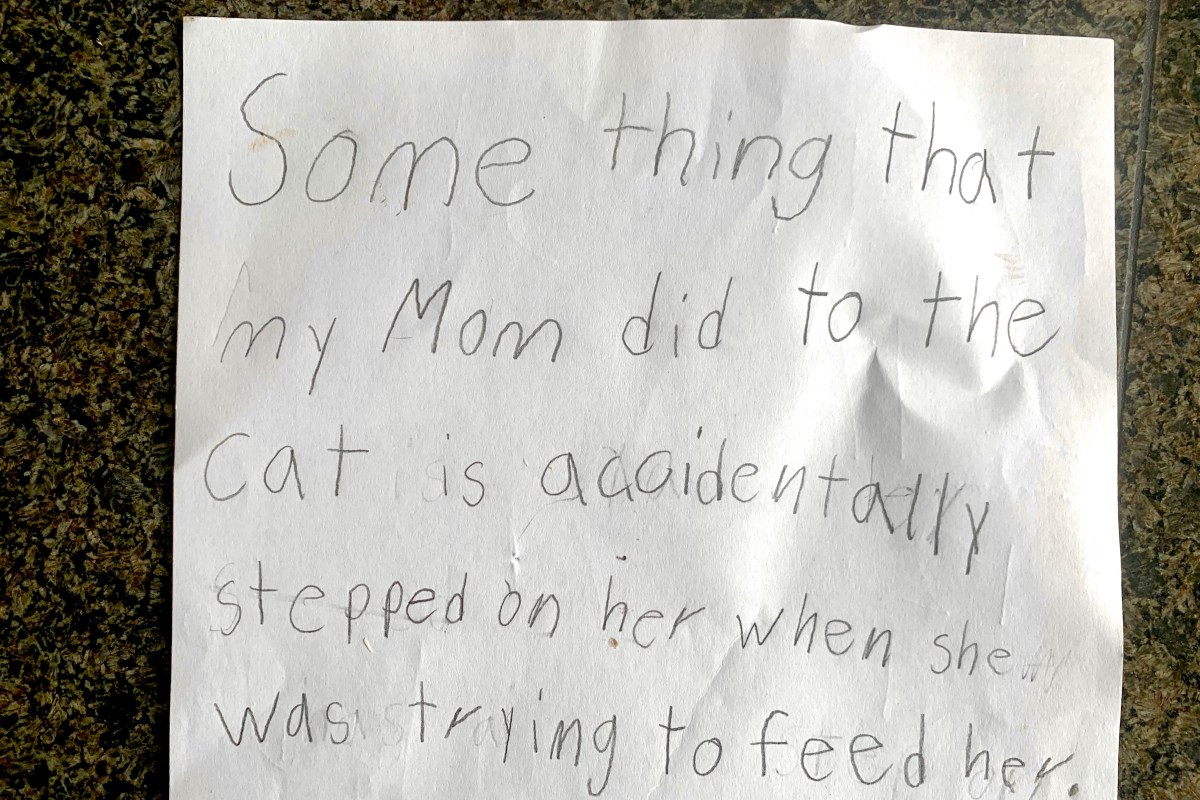
It’s a hard thing to teach to my kids since I’m still working it out myself. But I’ve been practicing just being direct – not embellishing either why it happened or owning too much or the scenario. When I step on the cat’s paw when she is winding her way around my ankles as I feed her, I try to model just saying “I’m sorry I stepped on your paw” instead of “I’m so sorry, it’s all my fault” or “you made me do it, you shouldn’t have been underfoot.”

At the swimming pool, I walked by the intense scene and then went out the double doors just past them. I’ll never know if the boy was able to say, “I’m sorry I did that” and the woman to say, “I’m sorry I took my frustration out on you” but I hope so.

The Choices We Have

Life is the sum of all your choices.” – Camus

I was talking with my friend, Betsy of the ParentingisFunny blog (possibly going to be renamed the Chex and Balances blog) but a delightful and fun blog about life, Jui Jitsu and the Universe at any name. We were discussing the idea of choices that behavioral economist Dan Ariely discusses in his book Predictably Irrational. He gives so many great examples of how our brain works to make choices based on the options presented. Like if we are looking to be a house and are comparing two ranch style homes, one that needs work and another that doesn’t, and a colonial, our brain will make the choice based on the price/work of the two ranch homes because they are similar. And even if it isn’t a totally rational choice if you really figured in the third option (the colonial), it’s repeatable because of way the brains anchors the choice by comparison.

Betsy said something lovely about admiring my ability to read and listen to interesting stuff. I replied that being single gives me more free time in which I fill with listening to content. And maybe it even fulfills a need for this intellectual stimulation since I’m not getting that from a partner at this point in life.

Which isn’t to say that I’m recommending being single, it just is a little amazing how much time being in a partnership can take. Choosing to do fun stuff, watch tv or even make dinner together – wonderful things to enjoy in a relationship but it fills time in a way that is hopefully fulfilling but might not leave time for reading behavioral economists. Or it could be deemed rude to put a podcast in at night when folding laundry or working out.

So I have the great pleasure of having time to listen and read great content. And then I have so much life in my house and little ones that I get great joy in processing the ideas and trying them out on them. Like with choices, if I think my little one should wear sneakers instead of rain boots, it works marvelously well to give him the choice of two pairs of sneakers and the rain boots. Just like the houses, it works!

Then Betsy generously added, “Your brain is being so enriched. And then you share your newfound knowledge with others. What a service! Especially when you share the highlights to those of us who don’t have time to learn things ourselves.” Which was a delightful thing to hear but also explained by behavioral economics.

In Predictably Irrational, Dan Ariely describes an experiment they did at a college campus. They had pictures of two attractive people – Student A and Student B. They created a triptych of pictures with student A, Student B and a third picture where they altered student A to be less symmetrical and therefore less attractive.

When students were given the choice of who they found to be most attractive, the majority picked Student A. The third picture, the altered student A gave them something to compare against that steered them towards student A. They did this with several pictures to make sure it wasn’t specific to Student A.

Applying that to life, the choices are

  1. Being single with a rich blogging/writing life
  2. Being in a partnership with a great intellectual conversation
  3. Being single but feeling isolated because I’m not discussing the ideas that have inspired me.

Since option B isn’t really viable right now, it’s a no brainer that I happily choose to listen, write and share since it enriches the option that I have.

(featured photo from Pexels)

Open Up, Buttercup

Self-pity in its early stages is as snug as a feather mattress. Only when it hardens does it become uncomfortable.” – Maya Angelou

The other day on the carpool home from school, my daughter teed off when her friend said something about being called on in class. “I never get called on in class!” and “I never get to say my ideas!”

Self-pity is the emotion that I have the most trouble with. I think the idea that we should never feel or express self-pity was inculcated in me from an early age. My memory is that it was communicated in statements like “You can join us again when you are feeling more positive.” Or “Can I join the pity party?” or “Toughen up, Buttercup.”

So I think I came by my intolerance of self-pity in myself or others honestly from probably generations of family habits. But a little self-reflection shows me that the complete shutdown in my ability to listen and feel when self-pity appears is neither the person or parent I want to be.

I was mulling this over when I heard a Ten Percent Happier podcast with therapist Dr. Jacob Ham that helped clarify the underlying question. In the course of the conversation the topic of whether you have to love yourself to love another came up. Dr. Ham’s answer was it depends – “It depends if your fear is so great that it inhibits connection to yourself or another.”

While my natural inclination is not to name the feeling as fear, it gets at the heart of the question of solving things in ourselves so they don’t hinder our connection to others. I still have trouble thinking of self-pity as anything useful – but I also know my resistance tells me that it’s inhibiting the Flow of life somewhere and it’s worth a look.

In the car when I was listening to my daughter’s complaints, I could relate that I often see a skewed version of events when I’m tired or not feeling well. In my daughter’s case, I think she was both tired and hungry so I asked if we could come back to it after we filled her tank.

She said it was frustrating not to feel seen at times but after acknowledging that, we made a list of things she wants to do so that she can speak up about her ideas like raising her hand more enthusiastically. We’ll see if it works but I’m just grateful that I held on long enough to participate in the conversation.

(featured photo from Pexels)

The Deep Story

Our days are happier when we give people a bit of our heart, rather than a piece of our mind.” – unknown

I have a perception problem that caused a disagreement. I adore my brother. I see him as smart, likeable, responsible, resilient and industrious. I also know he has faults and avoids conflicts, will disengage instead of work things out or stand up for himself and has trouble being vulnerable.

We have another family member that sees him as manipulative, irresponsible, underhanded and arrogant.

Generally, we know the same history of my brother with the ups and downs of his life and interpret the story with our own lenses. I see him as the older brother I can always call and she seems him as the schmuck that dated her best friend in junior high.

In this On Being podcast, sociologist and Professor Emeritus Arlie Hochschild talks about the idea of a deep story which she defines as what you feel about a highly salient situation that’s very important to you. A story that explains how we can look at the same set of facts but come up with different conclusions because of the emotions that underlie the story. Her work has been primarily about our political divide – the deep stories of the red states and blue states.

But I see it at work in the stories of my family. It explains why we see things differently and have this perception problem that no amount of facts can solve. It points to the amount and type of work my brother and our family member would have to do in order to rewrite the deep story.

It also predicts that my brother and I will probably always be in accord through the rest of our lives. For me it makes some sense out of the unconditional love and adoration I have always felt and acted on through our many different phases of life.

Finally, it reminds me that the work of empathy for and listening to others is not only necessary for our relationships but also possibly the most transformative. Because even when we don’t agree on the facts, understanding someone else’s deep story at least brings the a-ha moment of understanding.

Are their deep stories in your family? Are there places where facts don’t seem to matter?

(featured photo from Pexels)