Love at First Write

Write what you need to read.” – adage

I’ve been mulling over online relationships, specifically the WordPress blogging buddy ones, lately. Mostly because last week when I was in NY, I got to hang out with two blog friends, Libby Saylor aka The Goddess Attainable, and Jack Canfora, from The Writing on the Padded Wall blog.

So now I’ve met three bloggers that I regularly read, including a wonderful hike with the amazing Deb from the Closer to the Edge blog. And a fourth, Betsy Kerekes from the Motherhood and Martial Arts blog is coming to visit this week.

In all these cases, I love to read the writing of these wonderful people – and when I’ve met them, they’ve been exactly who I’d expected they’d be, with the added bonus of being able to feel their energy and presence.

If you add to that Vicki Atkinson from the Victoria Ponders blog and my partner in the Heart of the Matter blog, with whom it feels like we are like-minded sisters even though we’ve only met by Zoom or Teams video calls, and all the lovely people we’ve gotten to meet doing podcasts – it feels like I’ve been lucky enough to meet a lot of bloggers.

And in all the cases, they are as delightful to interact with in real-time as they are to read. This makes me realize that when we write from our authentic, deep and vulnerable places, it speeds our ability to get to know each other. In fact, I regularly have more vulnerable conversations in the blogging community than in real life because I’m writing and reading about topics that are really meaningful to me or the author.

So yesterday, when I was reading Vicki’s blog, Finding Our People, it brought the topic full circle for me. I’m grateful to be part of this wonderful and supportive community of people that I cherish. It’s an honor to read everyone’s deep, fun, and beautiful writing. It’s a pleasure to meet people in person. And it’s a leg up on wonderfully meaningful and authentic friendships when we get to do both!

I’ve written a companion piece to this one on the HoTM blog about being open to new people: Love at First Sight. Check it out!

(featured photo from Pexels)

The Usefulness of Play

We are what we repeatedly do. Excellence, therefore, is not an act but a habit.” – Aristotle

In 2006 I went to a book reading and slide show by legendary alpine climber Ed Viesturs. He’d just published his book about summiting the world’s 14 peaks over 8,000 meters (26,26 feet) without supplemental oxygen, No Shortcuts to the Top and my friends and I had a front row seat for his show.

We were there early watching as he got his slide show ready. Ed came off the stage that was about 2 ½ feet above the level of the auditorium floor to fix the angle of the projector and then walked around to climb the stairs back onto the stage. As he did this when it would have been so easy for him to jump up, I joked, “No shortcuts to the top” and we howled in laughter.

There’s a famous story about Ed getting to the central summit (8,008m or 26,273 feet) of Shishapangma in Tibet and looking across the 100 meters of knife-edge climbing to get to the true summit that was a few meters higher in elevation (8,027m or 26,335 feet). He was by himself and decided it was too dangerous so he went home without summitting. Then he returned 8 years later to do it all again, this time shimmying across the knife ridge to get there.

So Ed has earned the reputation of being the boyscout of the climbing world and perhaps it’s no surprise he’d live out the motto of no shortcuts to the top. But I’ve revisited that scene in my head again and again when pondering the consistency of life on and off the mountain or more generally speaking, consistency between who we are at play versus “real” life.

I was recently moved to think differently about play by an interview I heard with Nikki Giovanni, the poet laureate of Virginia Tech. She said that her “grandmother didn’t waste anything. There was nothing that came into her kitchen that she didn’t find a use for.” Then she continued, “I feel the same way about experiences and words. Nothing is wasted.”

Looking back on the things that I’ve chosen as my hobbies, I see that they have not just been pastimes but instead the proving grounds to work through ideas and attributes that I would come to and continue to need.

When I took up amateur mountain climbing in my late 20’s, I thought it was a way to see the world from a different viewpoint. Now I see it was a way to build my endurance to push through in those moments when I’m physically exhausted, something I’ve needed a lot in these early years of parenting.

Rock climbing at the indoor climbing gym was a way to get a workout and build upper body strength. There is almost always a move, the crux move, on a route that requires flexibility and faith to push through, bending your body in a way that allows you to reach past the obstacle or overhang without seeing the next hold. Now I see it as a physical way to practice the ability to move through the many challenging changes and tough transitions in life.

Recently I got a mosaic art kit for my daughter so that she could create designs by gluing small pieces of colored glass near each other. It was so fun that I’ve started doing it myself. It has very little to do with what I create and a great deal to do with seeing how all the small things in life come together to create the arc of life.  

Here’s what I’ve come to believe: that play helps simulate the tough moments of life when you have to make decisions, have faith and maybe even carry on in conditions when you are tired, hungry and feeling defeated. The choices we make in those situations carry through to the paths we follow in life. We build confidence and get to know ourselves one step at a time on the proving ground and then know how to live.

Aristotle said, “We are what we repeatedly do. Excellence, therefore, is not an act but a habit.” We are what we practice, in play and in real life. Perhaps that’s how Ed Viesturs managed the fourteen 8,000 meter peaks without supplemental oxygen. By practicing who he was, on and off the stage.

Our Gratefuls

Wear gratitude like a cloak and it will feed every corner of your life.” – Rumi

At bedtime after we’ve read books and told stories, I’ve been asking the kids what they are grateful for and how they helped that day. The latter is a question I got from Vicki early on in our blog buddy relationship. If I remember correctly, it was a question that her mom asked her sister Lisa on a regular basis.

The other night Mr. D answered that he was grateful for being grateful. It could be a three-year-old’s version of passing on the question, but he seemed to mean it.

While I sometimes envy the simplicity and directness of the animal life around, I wonder if there’s any other creature that feels gratitude. This started me down the rabbit hole of doing research on the Internet and as I encountered AI along the way, delved into Scientific American, and hopped over to the Greater Good Lab at UC Berkeley. My summary:

  1. There are a lot of cute animal article and videos on the Internet that can eat all your free time.
  2. No one knows if animals feel gratitude.
  3. Gratitude is a complex emotion that has components of reminiscence and reflection.

In her book, Atlas of the Heart, Brené Brown quotes Robert Emmons, professor of psychology at University of California, Davis and one of the world’s leading gratitude experts:

I think gratitude allows us to participate more in life. We notice the positives more, and that magnifies the pleasure you get from life. Instead of adapting to goodness, we celebrate goodness. We spend so much time watching things – movies, computer screens, sports – but with gratitude we become greater participants in our lives as opposed to spectators.

Roberts Emmons

Now who doesn’t want to become a greater participant in life? I’m grateful for my kid’s answers the other night. Mr. D. who’s grateful for being grateful and Miss O who added, “I’m grateful for family and that we are a unit, even though we sometimes fight.” Right – ditto what they said!

For a snapshot of a small moment of gratitude, I’ve written about one that I particularly enjoyed on the Heart of the Matter blog, A Brief Moment in Time.

Family Dynamics

Gotta move different when you want different.” – unknown

Last Monday I got frustrated with Miss O when we were getting ready for school. Or should I say, not getting ready for school. I prompted her five times to get her shoes on, she got mad at me for repeating myself. I told her that I wouldn’t have to repeat myself if she would put her shoes on…nothing new. I’m sure a conversation that happens between kids and parents in households all over the world since the beginning of time. Or at least since shoes became a thing.

So we were both irritated when I dropped her off to school. And then Mr. D was silent as we drove on. By the time we walked in the front door of his pre-school, it was clear that he was upset. We sat in the chairs outside his classroom for a while, and then had a tearful drop-off which is unusual for Mr. D.

This has happened enough times for me to discern the pattern – Mr. D is so attuned to the emotions of the household that any disturbances in our mostly good natured vibe affect him, even when the upset doesn’t involve him.   

Wow, families are complex. Now I don’t have to just be responsible for my own emotions but also the impact that I’m having on the group and vice versa?

I think about what it was like in my family growing up. My sister was usually upset about something, my brother was tired of hearing her complain and just disconnected, and I felt that I needed to be no problem since my parents were having to deal with my sister. It’s a pattern we maintain, by and large, to this day.

My mathematical nature likes patterns – they are so useful to predict what will happen next. But sometimes patterns just hold us in a mindless call and response. Until one person breaks out by saying, “I’m so tired of this banter that keeps us from saying anything real,” the other person(s) in the pattern may not realize there is something habitual that has been holding everyone in place.

Thinking back to my little family, I think this applies too. When I get tired of the same conversation about the same shoes, I’m always surprised how effective it is to change the dynamic by changing the order. Shoes before breakfast helps break the stalemate. What’s harder is changing the natural tendency that Mr. D has to carry the tension. Maybe that’s a case of where making it visible helps to dispel it. Hopefully that works because we aren’t going to stop wearing shoes.

I’ve written a companion piece on the Heart of the Matter blog about some advice I got from a friend long ago to never back a kid into a corner and instead always offer them a way out: Building Bridges to Each Other. Please check it out if you have a moment.

(featured photo is a pair of Converse high tops that Miss O got as hand-me-downs)

Bemoaning Our Fate

You’re allowed to scream. You’re allowed to cry. But do not give up.” – unknown

This is a repost of writing I posted on 1/12/22. Heads up – you may have already read this.


Year ago I was writing a technical book with two business partners. It was a beast – 737 pages of dense and technical content. We divided up the chapters that each of us was going to write. I agreed to do more than the others because I’d written a technical book before. But it was still a pretty equitable split until one of my partners said he couldn’t do it. He said something to me like, “It’s so easy for you to do. You should take my chapters.” I was shocked. It wasn’t easy for me at all — I’d been sitting at my desk 12 hours a day, 6 days a week to get my portion done by the publisher’s deadline. I’d simply been too busy to sit around talking about how hard it was!

Which has always made me wonder, is there any benefit to bitching about life or bemoaning our fate?

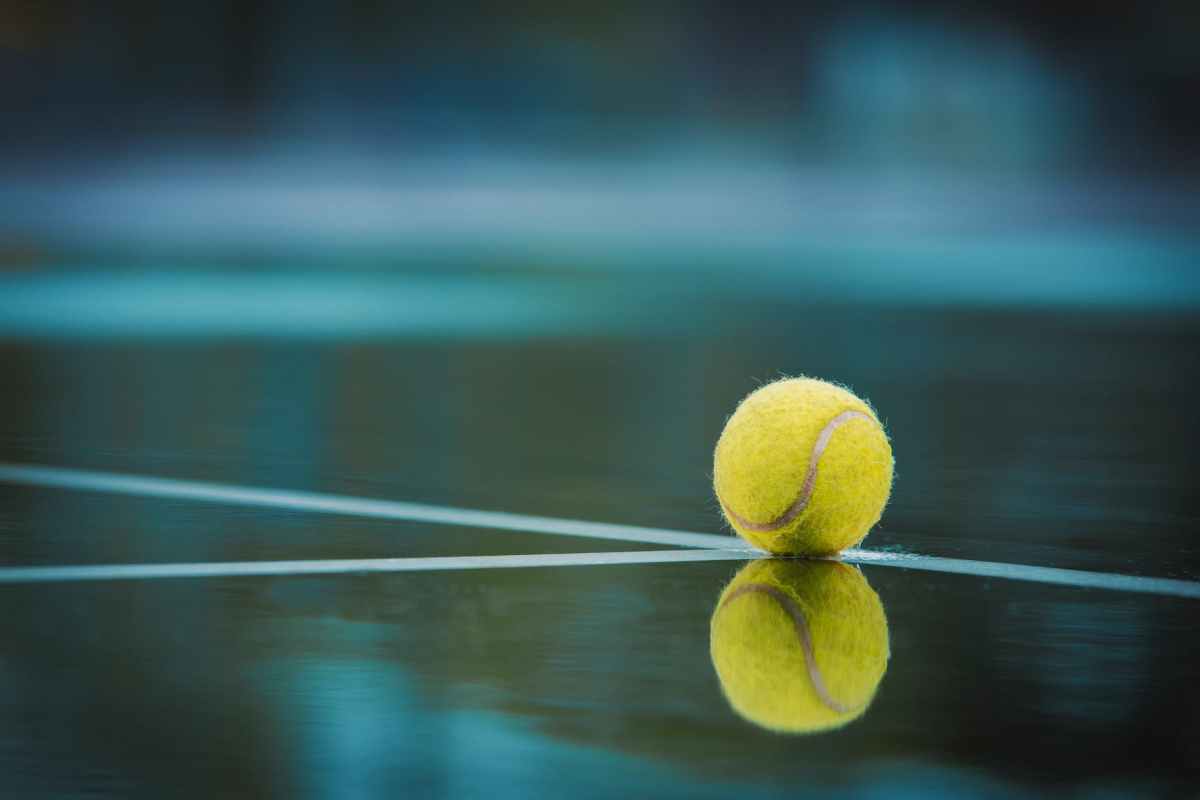
This question makes me think of the tennis player John McEnroe. Given his reputation as someone who would contest a line call, did he get better calls from judges who wanted to make sure they were solid when they called a ball he hit out?

Even if there was an advantage to his tantrums, the fact remained that he had to be a person who could throw them.

It’s actually being a referee (aka a parent) that has taught me that there are two components to whether or not expressing our hardships in life makes a difference: authentic expression and boundaries.

The other day my 2-year-old son wanted to play with water in the sink. It was almost time to go somewhere and I didn’t want him soaked so I told him “no.” He said for the very first time, “I fustated!” I told him how incredibly proud I was of him for recognizing that he was frustrated. “Good for you for knowing that! But you still can’t play in the sink.”

Which leads me to my conclusion about whether or not life is easier if we expound on the pains of life to others. We have to express our life conditions authentically and that expression will improve our own ability to cope. There is always a need to speak to our honest experiences and when we do that, others understand us in a deeper way that supersedes whether or not it changes the outcome.

And the second part is that we all need to set and hold our personal boundaries of what we can or cannot do. Expressing ourselves probably won’t change how other people defer to us one way or the other. But it will change the one thing that matters – how we feel about the work we do.

As I parent, I know I change a little based on how my kids might react. I’m likely to soft pedal something that I know is going to start a fit, especially if I know my kids are tired. But even though I’ll change the delivery, I don’t change my decisions based on how it’ll be received because I have to hold the boundaries. In the case of my toddler playing in the water, I didn’t have the time or patience to change his clothes one more time before we left the house. I appreciated his ability to express to me that he was frustrated. The answer was still “no.”

John McEnroe wrote a book (co-authored with James Kaplan) published in 2002. The title, You Cannot Be Serious, was derived from his most often used phrase during the fantastic fits he used to throw when he disagreed with a line call. YOU CANNOT BE SERIOUS!!

In the book, he’s pretty reflective of his emotions and maturity between age 18 when he started winning on the tour and age 43 when he wrote the book. He recounts a time he went off during a match the summer when he was 18, “I ended up winning the match, but I was incredibly embarrassed – as I should have been. I was totally spent, and showing the strain.

Then near the end of the book, John McEnroe talked about his life as a father of eight kids and provided a telling reflection about maturity:

“I loved being a father. It was also the hardest work, by far, that I’d ever done. When your children range in age from the teens down to the teeny, it feels as though you’re in charge or a laboratory conducting multiple experiments, all of them dangerous and combustible, but just possibly life-saving. Every day seemed to bring situations that would try the patience of a saint – let alone John McEnroe. Of course there were times I lost it (there still are), but when you’re responsible to other people, and especially very young people, you quickly learn that you have to find ways to control yourself. However much you may feel the need to let off steam, the needs of people who depend on you for everything come first.”

You Cannot Be Serious – John McEnroe

In other words, we have the right to express our feelings about our experience. That expression will change as we mature and become more responsible to others. And if we lose it in as public of a forum as John McEnroe, we may have to write a book to apologize.

And then as we mature, we hold the boundaries of what we can or cannot do. Because at the end of the day, the only human who will likely think in great depth about our life is ourselves. And the only person who knows what we can handle is ourselves. As Vicki from Victoria Ponders writes so beautifully – it’s My Life, My Happiness.

When I took on the chapters that my business partner was not able to write, I did tell him that writing was hard for me too. (And I know there are many writers, especially technical writers who read this blog and can attest to the difficulty). But I didn’t belabor the point. It isn’t my personality. Writing more chapters was within my boundaries of what I could do. In the end, I was proud of the book we wrote, non-equitable distribution of work and all.

I have a new post today on the Wise & Shine blog: How to Recover From a Bad Post

(Featured photo from Pexels)

Being Different

People take different roads seeking fulfillment and happiness. Just because they’re not on your road doesn’t mean they’ve gotten lost.” – Dalai Lama

I’ve only met one other person who intentionally choose to have kids as a single parent. Of course, I’ve heard of plenty, and known a lot of wonderful people who have become single parents because of circumstance, including my dear blog friends. I also know others that think they’d be better off as parents without their partners. Clearly, there are so many ways to do this parenting thing and no matter how we do it, it comes with plenty of challenges.

But back to the story about the woman I met who intentionally became a single parent. I was with my kids at the local wading pool last summer when I started talking to a woman who was there with her five-year-old twin girls. We hadn’t talked long when she revealed that she had chosen to become a single parent at 50-years-old and was just in town for a couple of weeks to visit her mom because she and the twins lived on the East Coast. She also had a 16-year-old son from a previous marriage.

Does it matter to meet people who have made similar life choices? It took me a long time trying everything else that I thought would work to have a family before I moved forward to become a single parent. It felt so vulnerable to have to intentionally walk down this path. As if everyone would know that I was the one that wanted to have kids and I couldn’t hide behind a “shared decision.” I’m laughing as I type this because now I don’t care at all if people know that. Hello? Obvious, please meet irrelevant.

And I thought it would signal that I wasn’t capable of a relationship. Well, that may or may not be true but again, who cares? After all, I created two people that I now have a relationship with so that worry seems beside the point.

But the instinctive social programming to not be different is strong, isn’t it? And I know you all are nodding because I believe there’s something each of us have done differently that caused angst – maybe being a vegetarian in a family of meat eaters, moving away from a family home, being an introvert, being an extrovert, going to college, not going to college, coming out, getting divorced, the list goes on and on.

In the case of meeting this woman who also chose to become a single parent, I’m glad that I didn’t meet her before I choose to have kids because she might have made me more neurotic about walking this path. She kept asking me over and over again, “People in your life didn’t tell you not to do this?” And I answered repeatedly, “Nope.” She was distracted, overwhelmed by her young daughters, and not at peace, like she was in the midst of some battle with naysayers.

I gave her the benefit of the doubt that life was more stressful because she was traveling. I know that without the regular supports of routine and familiarity, being alone with two kids, no matter how you got there, is harder.

But it reminded me we all represent something to someone – whether it be a choice, a lifestyle, a belief, an attitude, or anything else remarkable. Would I recommend choosing single parenthood to everyone? No, for a lot of reasons, including the fact that I adored my dad and I think it would be great if everyone had at least one awesome dad in their life.

But do I want people that I meet to know that parenting, even when, or especially if, you choose it later in life, is full of joy, inspiration, and wonder? Absolutely!

Do I want anyone that I meet to feel a little energy and inspiration for whatever notion inside them tells them to do something in a non-traditional way? For sure!

Do I want to represent the message that there is goodness when we stop caring what other people think and pursue our dreams? Most definitely.

I think about that sometimes when I’m out with my delightful little ones. Who knows who we are going to meet and how we’ll rub off on them. Let’s hope it’s for good.

Speaking of people who inspire for the good, this week Vicki and I got to talk with writer, and blogger, E.A. Wickham on the Sharing the Heart of the Matter podcast. Elizabeth reveals so much inspiration and wisdom about leading a creative life: Episode 21: A Creative Life with Elizabeth Wickham.

It’s a great episode, please give it a listen and subscribe! Search for Sharing the Heart of the Matter on Apple Podcasts, Amazon Music, Spotify, or PocketCasts or click on the link above.

Holding Out for a Hero

Go into the world and do well. But more importantly, go into the world and do good.” – Minor Myers, Jr.

The other day my 6-year-old daughter asked me “What is a hero?” As I stumbled through the words to describe someone who is admirable and inspires us to be better, I wondered if the idea of having heroes resonates as much in our world. Sometimes it feels like we know too much about our public figures these days to pick someone from that realm.

It also made me think of my personal hero, my dad.

It took me years to realize that he was my hero. It wasn’t until I’d traveled enough through life to have failures as well as successes that I started looking closer at my dad who was then in his 70’s. I wanted to try to identify what made him so unstoppably enthusiastic and delightful.

On first glance, it was easy to attribute his goodness to his career as a Presbyterian pastor for 40 years. Certainly that made him a person who worked hard to do good, but there was another equation that underscored who he was. Here’s what I’ve boiled it down to in three points, the number he always used for sermons:

He was dedicated to being useful. For him that meant rolling up his sleeves and pitching in where help was needed. If he came to my house for dinner, he would jump in to do the dishes before the dinner was even served. Sometimes I had to tell him to stand down if I wasn’t actually done with a pot. He’d laugh and look for something else. And that applied to plumbing, tiling, gardening, service projects, whatever he could find.

But he had the gift of making it a two way street because he’d ask for help. When he and my mom were building a cabin in the San Juan islands, he recruit people for “work parties” to clear the land or raise the foundation. Or if you were a member of his church, he’d recruit you for committees and service. And this back and forth made it feel not like his help was charity but that it was community because he wouldn’t hesitate to ask when he needed help.

He loved people. For him that usually meant listening. Although he was a preacher and a very good one, he thought that was a very small part of his job. He loved people for who they were and that included their imperfections too. If I ever asked him about people who he found frustrating, he’d shrug his shoulders and say something like “You never know all that’s going on with someone. We’re all weird and once you accept that, you can just love them anyway.”

He didn’t often give advice but when he did, there was no penalty for not listening. As the pastor who was performing my wedding to my now ex-husband, he sat us down for marriage counseling as he did with everyone he married. He very eloquently described what was wrong with us (my words, not his) because our personal and professional lives were too intertwined. We did nothing to correct this and he did a beautiful job of marrying us anyway.

He was obedient. That was his word for listening to the small voice of God within him. This was the part that most interested and confounded me. He was such a delightful person with many talents and a great attitude so what part did faith play in his life? It took me a long time to come up with an answer I could understand. And that was, he listened to where God led him, he abided by what he thought a Godly life was AND he lived life in partnership with God. He knew when things were above his pay grade and then he turned them over to God. That gave him an enormous amount of comfort and confidence.

My dad died suddenly in a bike accident at age 79. One of his friends eulogized him perfectly as “a battery on feet just looking for someone to jump start.” Fortunately in the years before he died, I’d started developing my own faith and the small voice of God within me led me to ask him questions about his life and record them. It was all part of my hero worship and a such a gift to be able to delve into this man from whom I’d inherited much of his way of looking at the world.

This is what was running through my mind as I answered my daughter about heroes and why we need them. They show us a little bit of the way so we can go further and faster. We stand on the shoulders of those that go before us. Recognizing heroes who resonate most with each of us is one great step forward in knowing what to study. They are part of our stories and give us connection and warmth to the inspiration we glean.

My memoir about my father is available on Amazon: Finding My Father’s Faith

The Art of Packing

Strip away the non-essential, and the essential will reveal itself.” – Tao Te Ching

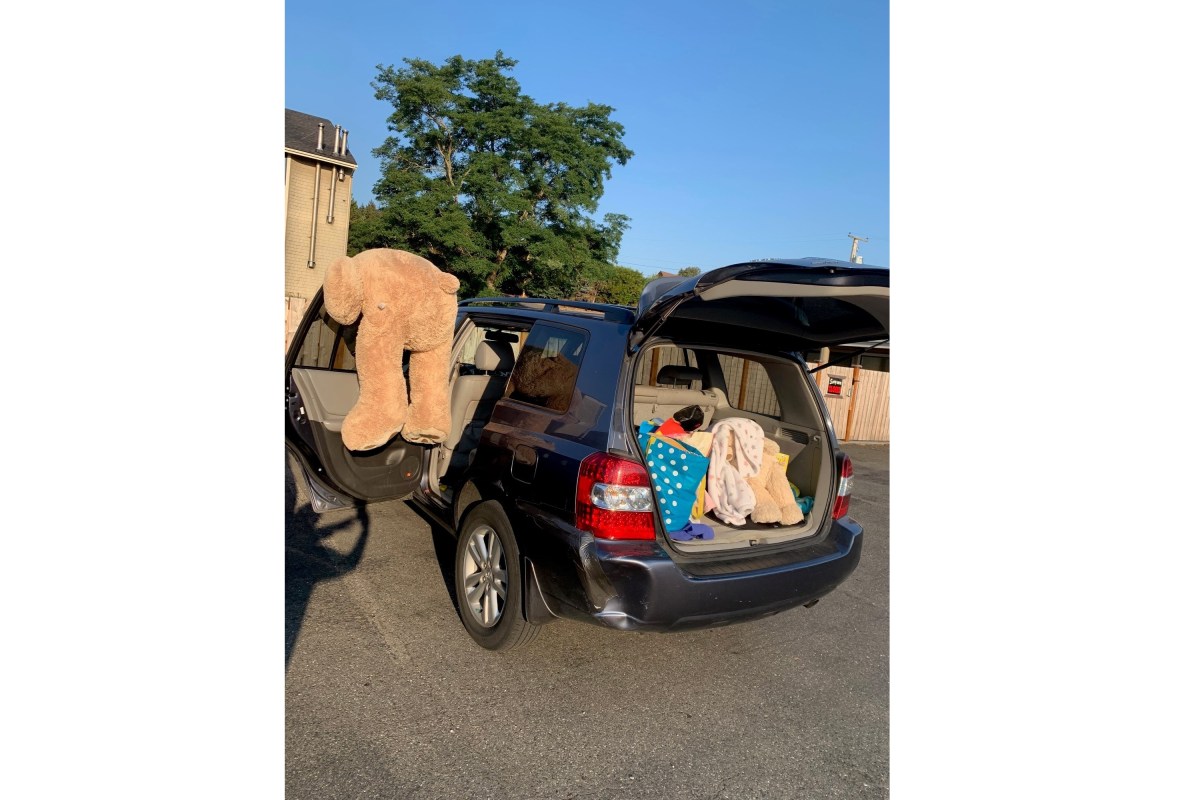
Mr. D has been really excited about vacation, or as he says it “bacation.” For several days now he’s been piling rocks into the car for us to take TO the beach. He tells me, “This is a rock for vacation water.” Also, in his suitcase – two pairs of pjs, a robe, three books, and a toy boat.

What’s not in his suitcase? Undies, socks, or shoes. But hey, he’s only three-years-old.

Miss O at seven-years-old is a little more practical. She’s got her toiletries, two pairs of pajamas, some skorts and tank tops, her iPad, and a lot of room for stuffies.

Also, no undies, socks, or shoes.

Packing fascinates me. Mostly because it can be so illuminating to see what’s top of the list. Like on mine is a scrub brush for dishes because we’ve rented this AirBnB before and they have no tools for scrubbing dishes. Also, undies and socks because last time I was so focused on packing those for everyone else that I forgot my own.

Isn’t that terribly utilitarian? What about remembering to not bring my busy-ness? And speaking of things to leave at home: my penchant for schedules, the belief that I have to get everything done on my to-do list, and my expectation that I’ll time while on vacation to catch up on some emails I missed. Instead, I can have room to bring an expanded sense of wonder.

My inspiration for this is from one of my favorite meditations from my meditation teacher, Deirdre. With our eyes closed, she leads us through feeling the pack on our backs as we hike down a trail. We feel the breeze tickle across our skin, the sun peak through the trees to create occasional warm patches as we glide along the path. But then, when we are a couple of minutes in, we realize that the pack on our backs feels heavier than the water and snack we put in there for the trip.

Deirdre offers us the opportunity to sit down and unpack what we don’t need. For me that is when I get a good look at the things I carry along without thinking about it: the worries, the hidden expectations, the weight of past failures, the anxiety about where I’m going in the big picture. Then, as I repack my backpack, I can decide which one of those things, if any, are worth bringing along.

To me it’s an exercise of intention. It’s okay if I want to bring along whatever agenda I have for a vacation as long as I’m doing it purposefully. As soon as I say that, I know that I don’t want to. As much as I gently tease my kids for what they don’t bring along, it also reminds me that they might have the right spirit.

When I was coordinating with my friend, Eric, when we should meet up to leave for “bacation,” he offered we better meet earlier. Because after hearing what Mr. D was packing to bring to the beach, he quipped it might take him some time to get his driftwood in the car…

Secret versus Private

Travel and tell no one, live a true love story and tell no one, live happily and tell no one, people ruin beautiful things.” – Kahlil Gibran

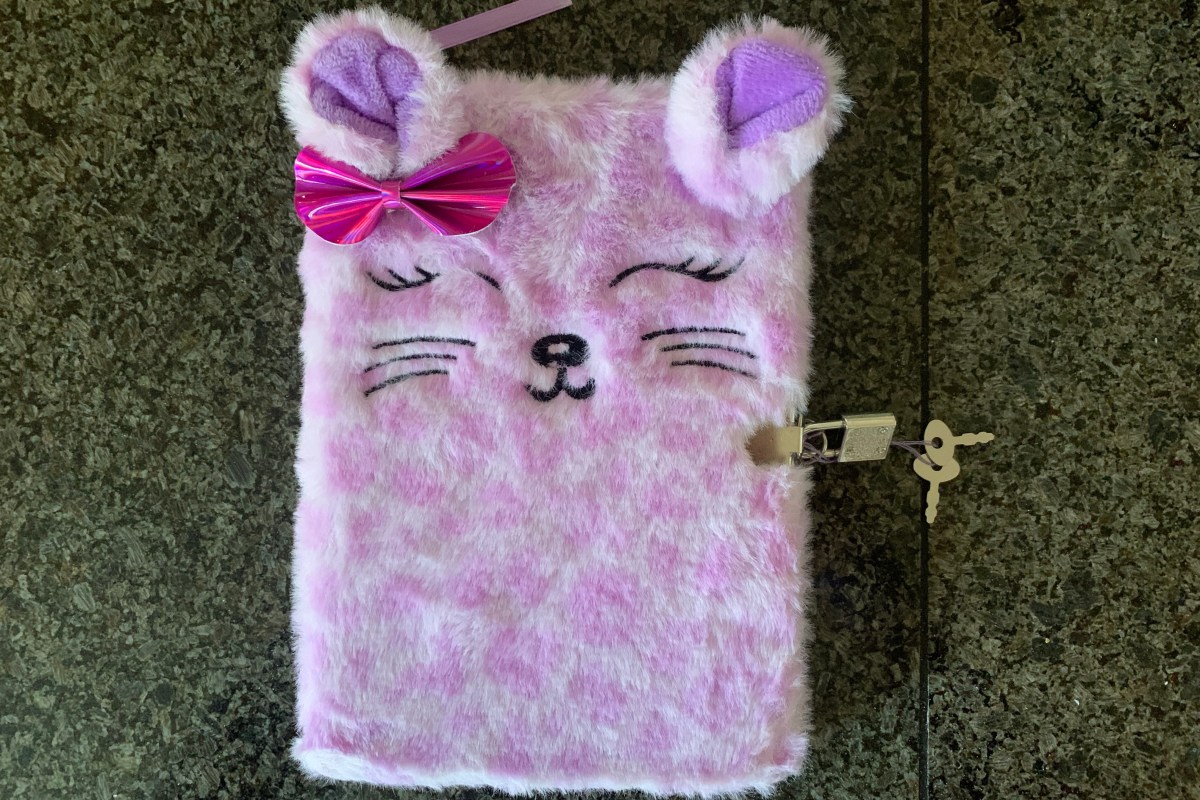
My daughter’s elementary school just had their annual book fair. One of the things Miss O selected was a fuzzy journal with a lock. She took it directly to my mom and had her sew the keys on to the journal so she wouldn’t lose them.

Miss O and I have been talking about secrets lately. Her second grade class is doing a section on identity and she’s learning the distinction between what is secret and what is private. One of the large parts of Miss O’s identity is that she doesn’t have a dad. Is that secret or is that private?

When she first asked me if she had a dad, she was three-years-old. It went like this: “Did I have a dad when I was born?” I answered “no” and waited for the follow-on question. And then she asked, “Did I have a dog when I was born?” I said “yes” and then she moved on to, “Did I have a cat?”

Following her cues, I’ve told her more and more as she’s asked. Mostly that I wanted kids so much that I went to a doctor to help me have them. It’s not a secret in any way and I want them to feel complete openness from me about how we came to be a family, even if they choose to keep it private.

The other day, Mr. D asked for the first time if we had a dad and when I said “no,” Miss O jumped in to say, “We’re special because Mama had us without one.” Okay, so I have to work on the messaging but not having a dad definitely isn’t a secret.

I suppose we all go through the figuring out the difference between what is secret and what is private. For me, what is private doesn’t take any energy to keep boxed up. It’s like inviting people over to my home. I don’t invite everyone I know into my house. And, for those that do come over, most people just visit in the kitchen. There aren’t many people that I invite up to the tiny space on the third floor. It’s messy up there but I don’t keep it locked.

When we were talking about secrets, Miss O wanted an example. I dug deep into my memory from high school to find an appropriate scenario understandable by a seven-year-old. I came up with the story about my best friend who was dating a boy named Craig. A new girl had recently been hanging out with my best friend and me, and one day when my best friend wasn’t present, the new girl told me she’d been making out with Craig behind my best friend’s back. But of course, I wasn’t supposed to tell anyone, especially my best friend. Ugh, I can still feel the weight of that secret.

I landed on the distinction that secrets are something you’d be ashamed if anyone found out. Things that are private aren’t anyone else’s business.

Maybe the keys sewed to the journal are a great metaphor. The lock reminds others to stay out but the barrier isn’t so high that you have to hide the keys away.

I wrote a related post about my learning not to keep secrets on the Wise & Shine blog: Can I Tell You a Secret?

Looking in Through the Sliding Glass Door

May your choices reflect your hopes, not your fears.” – Nelson Mandela

The other night, I was standing at the kitchen sink putting the final dishes for the day in the dishwasher when my kids walked into the kitchen after bedtime. I caught sight of them – seven-year-old Miss O in the lead hugging her stuffy close and three-year-old Mr. D seeking a little comfort by standing in the shadow of his sister and wearing his little dinosaur shorty pajamas. I had to turn back to the sink for a moment to try to put my game face on. It was a clear violation of bedtime rules and I needed to try to assemble some sort of serious countenance because seeing them quietly standing there had totally melted my heart.

It was like I caught a vision of the reverse of Brené Brown’s sliding glass door moments. She describes those as the small glimpses where you see the life you could have on the other side and have to decide whether or not to cross the threshold.

In this case, it was like I was on the outside looking back in at the life that I created for myself when I made the choice to have kids. I had a fleeting flash of what walking through that sliding glass door into this life has delivered.

I saw my life has been redefined to drop most standards of cleanliness and order, and all attempts at perfection. Instead it has become a continuous re-sorting of my priorities so that I’m trying to do what is important in the moment. And in the shuffling, I’ve come to discover that I can repeatedly choose my kids, myself, and family instead of arbitrary external markers of success.

The glimpse let me see that I’ve gotten better at “being” instead of “doing.” My kids are a lot of work and in a strange paradox they have taught my how to let work go – to relax and slow down. I get so much less done – but I laugh so much more while I do it. And when I don’t laugh, when I’m all bound up and tight – these two are my sanity check to reground myself in why.

I glimpsed how the power of believing this all is my choice has carried me through some really tough times of sickness, sleeplessness, and carrying too much weight. Simply knowing that I chose this has given me strength I didn’t know I had before.

I saw my transformation to believe in miracles – because I’m living with two. And my kids continue to be miracles long after they were born because they’ve become my teachers. I thought I would be the teacher and they would be the learners – only to find out that I’m the one learning about how to have a meaningful and authentic life. Those lessons come from the myriad of interactions that we have had to crouch and look at bugs, stuff our pockets full of rocks, snuggle together to talk about feelings, quietly draw and color together, run excitedly to the beach on vacation, fold into each other while reading books, lash out in anger at boundaries, fear, and discomfort, and heal together holding hands when we’ve talk/acted/laughed it out.

By becoming their lightening rod for big emotions, I have learn to cultivate my own emotional intelligence about the weather inside me. They’ve taught me to choose joy. Not happiness, but joy!

In that moment, I caught a sense of how everything that transpired before I had kids has come together to help – my love of outdoors, my family, my gaining a sense of going with the flow, the endurance training. And most of all, my faith, and that has the goodness of my dad all wrapped up in it too.

I saw that “me” had been completely replaced with “we.” That I have given up the ability to make unilateral decisions and in return have been gifted with a life filled with heart.

From all of this, I was left with a heart melting feeling. Seeing my kids both as the precious, earnest, and delightful little ones that they are and the courageous, free, and integrated people they are becoming. And seeing myself as the same.

After being gifted with this glimpse of things, I finally turned to my kids to hear them out as to why they were out of bed. They’d been fighting and needed a referee. My little flash of perspective helped me choose not to be irritated or impatient but instead just listen. I told them I loved them and sent them back to bed.

My post on Wise & Shine today is about my mom’s choices: The Choices We Make: My Mom the Spy